Why Off-Peak Supercharging Matters for Your EV Budget
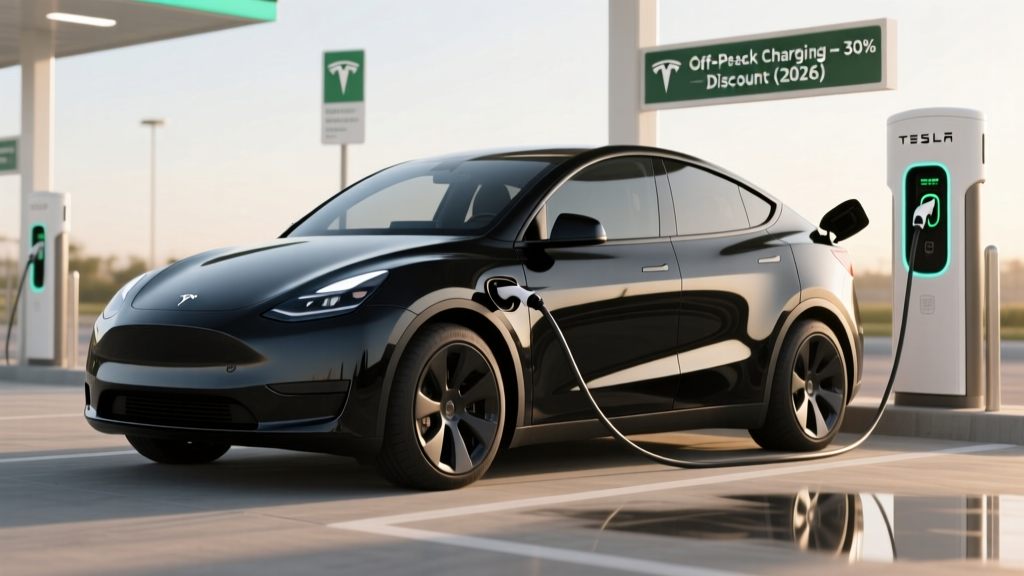
If you've noticed your Tesla Supercharger session costs fluctuating depending on the time of day, you're not imagining things. Tesla has progressively rolled out time-of-use (TOU) pricing at many Supercharger stations across the United States, meaning the tesla supercharger off peak hours can save you 30% to 50% per session compared to peak rates. In 2026, with the Supercharger network open to non-Tesla EVs via the built-in NACS connector or Magic Dock adapter, understanding these pricing tiers matters more than ever — whether you drive a Model Y, a Ford F-150 Lightning, or a Hyundai Ioniq 5.
But Supercharger TOU pricing is just one piece of the charging-cost puzzle. This guide breaks down what off-peak hours actually look like, how public DC fast charging costs compare to home Level 2 charging, and what it takes to set up a home charger that makes Supercharging a road-trip luxury rather than a daily necessity.
Understanding EV Charging Levels: Speeds in kW and Miles Per Hour
Before comparing costs, you need to understand the three charging levels and what each delivers. The critical distinction: kW (kilowatts) measures power — how fast energy flows into your battery. kWh (kilowatt-hours) measures energy — the total amount stored. Think of kW as the width of a hose and kWh as the size of the bucket.
| Level | Voltage | Power (kW) | Miles of Range Added Per Hour | Typical Use Case |
|---|---|---|---|---|
| Level 1 | 120V AC | 1.0–1.4 kW | 3–5 miles/hr | Overnight trickle; PHEVs or low-mileage drivers |
| Level 2 | 240V AC | 7.2–19.2 kW | 25–75 miles/hr | Home daily charging; workplace; destination |
| DC Fast Charge | 400–800V DC | 50–350 kW | 150–1,000+ miles/hr (peak) | Road trips; quick top-ups; Tesla Superchargers |
A Tesla Supercharger V4 stall delivers up to 250 kW (and newer V4 deployments are rated for up to 350 kW on compatible vehicles). At peak power, a Model Y Long Range (75 kWh usable battery) can add roughly 200 miles of range in 15 minutes. However, charging speed is not linear — the charge curve tapers significantly above 80% state of charge (SoC) to protect the battery. A 10–80% session at a 250 kW Supercharger takes approximately 25–30 minutes for a Model Y, while pushing from 80–100% can take another 25 minutes or more.
- Tesla Model Y Long Range (75 kWh): ~25 min at 250 kW Supercharger; ~8.5 hrs at 7.2 kW Level 2
- Ford F-150 Lightning Extended Range (131 kWh): ~41 min at 150 kW DC fast; ~15 hrs at 7.2 kW Level 2
- Hyundai Ioniq 5 (77.4 kWh): ~18 min at 350 kW charger (800V architecture); ~10 hrs at 7.2 kW Level 2
- Chevrolet Equinox EV (85 kWh): ~30 min at 150 kW DC fast; ~11 hrs at 7.2 kW Level 2
Tesla Supercharger Off-Peak Hours: What You'll Actually Pay
Tesla's time-of-use Supercharger pricing varies by station, but a typical pattern in 2026 looks like this:
| Period | Hours (Typical) | Price Per kWh | Cost for 60 kWh Session (≈200 mi in Model Y) |
|---|---|---|---|
| Off-Peak | 9:00 PM – 6:00 AM | $0.24–$0.30 | $14.40–$18.00 |
| Mid-Peak | 6:00 AM – 12:00 PM, 7:00 PM – 9:00 PM | $0.33–$0.39 | $19.80–$23.40 |
| Peak | 12:00 PM – 7:00 PM | $0.42–$0.52 | $25.20–$31.20 |
Some high-traffic urban Superchargers in California and the Northeast corridor charge peak rates exceeding $0.55/kWh during summer afternoons. Conversely, rural stations in the Midwest may offer flat rates around $0.28/kWh with no TOU variation. Always check the rate displayed in your Tesla app or the vehicle's navigation screen before plugging in — Tesla shows the current price per kWh at each stall.
Cost Per Mile: Supercharger vs. Home Charging vs. Gas
The real comparison EV buyers need is cost per mile. Here's how Supercharger off-peak rates stack up against home Level 2 charging and a comparable gas vehicle:
| Charging Method | Cost Per kWh | Cost Per Mile | Annual Cost (12,000 mi) |
|---|---|---|---|
| Home Level 2 (national avg electricity) | $0.16 | $0.046 | $552 |
| Home Level 2 (off-peak TOU rate) | $0.09 | $0.026 | $312 |
| Tesla Supercharger Off-Peak | $0.28 | $0.080 | $960 |
| Tesla Supercharger Peak | $0.48 | $0.137 | $1,644 |
| Electrify America / EVgo (avg) | $0.43 | $0.123 | $1,476 |
| Gas Vehicle (30 MPG, $3.40/gal) | — | $0.113 | $1,356 |
The takeaway is clear: home charging during off-peak utility hours delivers the lowest per-mile cost of any fueling method. Even Supercharger off-peak rates beat gasoline on a per-mile basis, but peak Supercharger sessions can actually cost more per mile than fueling a 30 MPG gas car. This is why installing a home Level 2 charger remains the single highest-impact decision for EV ownership economics.
Home Level 2 Charger Installation: Requirements, Costs, and Panel Upgrades
Most EV owners charge at home over 80% of the time, according to fueleconomy.gov. A properly installed Level 2 charger on a dedicated 240V circuit delivers 25–75 miles of range per hour of charging — enough to fully replenish any EV overnight.
Electrical Requirements
A standard home Level 2 installation requires:
- Voltage: 240V (same as a dryer or oven outlet)
- Amperage: 40A circuit for a 32A continuous charger, or 60A circuit for a 48A continuous charger (EVSE must be rated at 80% of breaker capacity per NEC code)
- Dedicated circuit: The charger must have its own breaker — no sharing with other appliances
- GFCI protection: Required for outdoor installations per NEC 2023/2026 updates
- Outdoor rating: If mounted outside, the unit must carry a NEMA 4 or NEMA 4X weatherproof rating
Installation Cost Breakdown
| Component | Simple Install (Panel Nearby) | Complex Install (Long Run / Panel Upgrade) |
|---|---|---|
| Level 2 EVSE Equipment (hardwired, 48A) | $400–$700 | $400–$700 |
| Electrician Labor | $400–$800 | $1,200–$3,000 |
| Electrical Permit | $50–$150 | $50–$200 |
| Panel Upgrade (100A → 200A, if needed) | $0 (not needed) | $1,500–$3,500 |
| Conduit / Wiring (long runs, trenching) | $0–$200 | $500–$2,000 |
| Total Estimated Cost | $850–$1,850 | $3,350–$9,400 |
Connector Compatibility: NACS, CCS, and CHAdeMO in 2026
The connector landscape has consolidated significantly. Tesla's North American Charging Standard (NACS) is now the dominant connector in North America, with Ford, GM, Rivian, Volvo, Polestar, and others shipping vehicles with native NACS ports as of the 2025–2026 model years. Here's where things stand:
| Connector | Brands Using It (2026) | Supercharger Access | Notes |
|---|---|---|---|
| NACS (Tesla) | Tesla, Ford, GM, Rivian, Volvo, Polestar, Mercedes, Hyundai (select) | Native access at all Superchargers | Industry standard going forward; lighter, more compact |
| CCS1 | Legacy VW ID.4, BMW iX (pre-2025), some Stellantis models | Requires Tesla Magic Dock adapter or CCS-to-NACS adapter | Still supported at Electrify America, EVgo, ChargePoint DC stations |
| CHAdeMO | Nissan Leaf (discontinued after 2025), Mitsubishi Outlander PHEV (legacy) | Not compatible with Superchargers | Effectively deprecated in North America; limited public infrastructure |
If you drive a CCS-equipped vehicle and want Supercharger access, Tesla's built-in Magic Dock adapter (available at select Supercharger stalls) or a third-party CCS-to-NACS adapter ($200–$350 from brands like Lectron or A2Z) will get you connected. Note that adapter use may reduce peak charging speeds slightly due to communication-protocol translation.
Recommended Home Level 2 Chargers for 2026
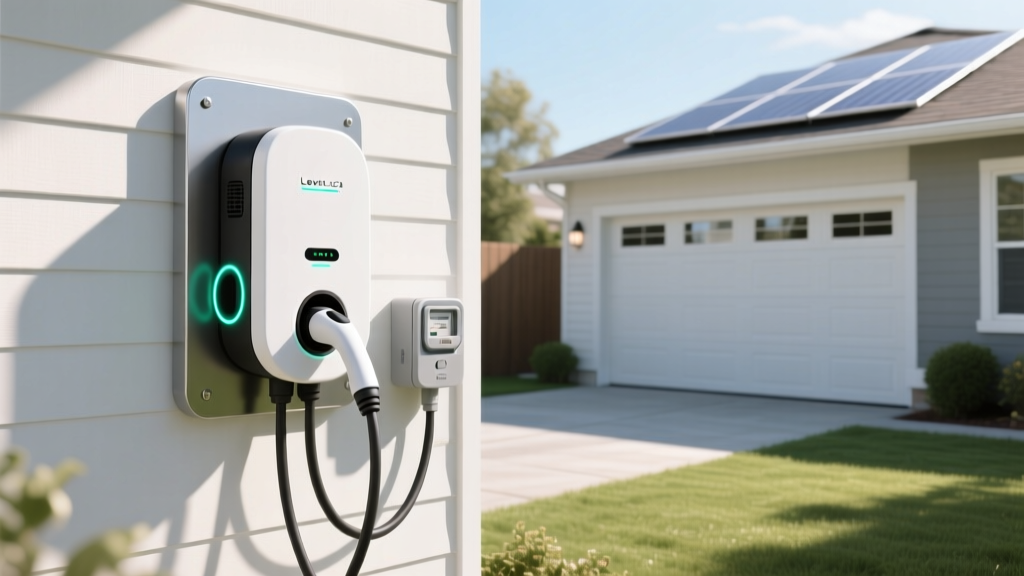
Not all Level 2 chargers are created equal. Here are top picks based on power output, smart features, cable management, and build quality:
Tesla Wall Connector (Gen 4)
- Power: Up to 48A / 11.5 kW (on 60A circuit)
- Connector: NACS native
- Cable: 24 ft
- Smart Features: Wi-Fi, OTA updates, Tesla app scheduling, load sharing (pair two units on one circuit)
- Price: ~$475
- Best For: Tesla owners; NACS-equipped Ford/GM/Rivian drivers
ChargePoint Home Flex
- Power: Up to 50A / 12 kW (configurable, on 60A circuit)
- Connector: NACS (2026 model); CCS adapter available
- Cable: 23 ft
- Smart Features: Wi-Fi, app scheduling, Alexa integration, TOU rate optimization
- Price: ~$599
- Best For: Multi-EV households; utility TOU rate automation
Emporia Vue Level 2 EV Charger
- Power: Up to 48A / 11.5 kW (on 60A circuit)
- Connector: NACS (2026 model)
- Cable: 24 ft
- Smart Features: Wi-Fi, Emporia energy-monitoring integration, solar-aware charging, TOU scheduling
- Price: ~$399
- Best For: Budget-conscious buyers; solar-panel owners wanting integrated energy tracking
Grizzl-E Smart
- Power: Up to 40A / 9.6 kW (on 50A circuit)
- Connector: NACS or J1772 (configurable)
- Cable: 24 ft
- Smart Features: Wi-Fi, OCPP-compatible, adjustable amperage via DIP switches
- Price: ~$449
- Best For: Cold-climate durability (rated to -40°F); Canadian-built; older panels limited to 50A
Safety and Electrical Code: What Your Installation Must Include
A Level 2 charger installation is not a DIY project. The National Electrical Code (NEC) and local building codes require specific safety measures:
- Dedicated circuit: Your EVSE must have its own breaker in the panel — no sharing with a dryer, HVAC, or other load.
- Hardwired vs. plug-in: Hardwired units (no plug) are preferred for 48A+ installations and eliminate the failure point of a NEMA 14-50 receptacle. If using a 14-50 outlet, it must be an industrial-grade receptacle rated for daily EV use — cheap residential outlets have been linked to overheating and fires.
- GFCI breaker: Required for outdoor installations and increasingly required indoors per NEC 2023 and 2026 updates. Your electrician will specify the correct breaker type.
- Permit and inspection: Most jurisdictions require an electrical permit ($50–$200) and a post-installation inspection. Skipping this can void home insurance coverage in the event of an electrical fire.
- Wire gauge: 6 AWG copper for 60A circuits, 8 AWG for 40A circuits. Aluminum wire requires larger gauge. Your electrician will size this correctly.
Frequently Asked Questions
What are Tesla Supercharger off-peak hours, and how do I find them?
Off-peak hours are typically between 9:00 PM and 6:00 AM local time, though this varies by station. Open the Tesla app or your vehicle's navigation, select a Supercharger, and the current pricing tier (off-peak, mid-peak, or peak) is displayed along with the per-kWh rate. Some stations also show a pricing schedule so you can plan ahead.
How much does it cost to install a home EV charger?
A straightforward installation with the panel nearby typically costs $850–$1,850 including equipment, labor, and permit. Complex installations requiring long wire runs, conduit, trenching, or a 200A panel upgrade can range from $3,350 to $9,400. Get a load calculation and at least two quotes from licensed electricians before proceeding.
How fast will each charging level add range?
Level 1 (120V) adds 3–5 miles per hour — adequate for plug-in hybrids with small batteries but impractical for full EVs. Level 2 (240V) adds 25–75 miles per hour depending on amperage, replenishing most EVs overnight. DC fast charging at a Tesla Supercharger or equivalent station adds 150–1,000+ miles per hour at peak power, enabling a 10–80% charge in 18–40 minutes depending on the vehicle and charger rating.
Which connector is compatible with my EV?
In 2026, most new EVs sold in North America use the NACS (Tesla) connector. If your vehicle has a CCS1 port (common on 2022–2024 models from VW, BMW, and others), you can access Tesla Superchargers using a CCS-to-NACS adapter or the Magic Dock at participating stations. CHAdeMO is effectively discontinued for new vehicles. Check your vehicle's charge port or consult the manufacturer's spec sheet to confirm.
How much does charging cost per mile compared to gas?
Home Level 2 charging at the national average electricity rate of ~$0.16/kWh costs roughly $0.046 per mile for an efficient EV — about 60% less than a 30 MPG gas car at $3.40/gallon ($0.113/mile). Tesla Supercharger off-peak rates (~$0.28/kWh) come in around $0.08/mile, still cheaper than gas. However, peak Supercharger rates ($0.45–$0.55/kWh) can push costs to $0.13–$0.16 per mile — more expensive than gasoline. This is why home charging is the economic foundation of EV ownership.
What electrical upgrades might I need for a home charger?
The most common upgrade is a panel replacement from 100A to 200A service, which costs $1,500–$3,500 and is needed in many pre-1990 homes. Other potential upgrades include adding a sub-panel closer to the garage, running new conduit for long wire distances (detached garages), or upgrading the utility service drop if your home's total capacity is insufficient. A licensed electrician will perform a load calculation to determine whether your existing panel can handle a 40A or 60A EV circuit alongside your current electrical loads.
Can I schedule my home charging to match off-peak utility rates?
Yes. Most smart Level 2 chargers (Tesla Wall Connector, ChargePoint Home Flex, Emporia) allow you to set charging schedules through their apps. Pair this with your utility's time-of-use rate plan — many utilities offer rates as low as $0.07–$0.10/kWh overnight — and you'll minimize your per-mile cost. Some vehicles also have built-in scheduled charging that works independently of the charger's software.