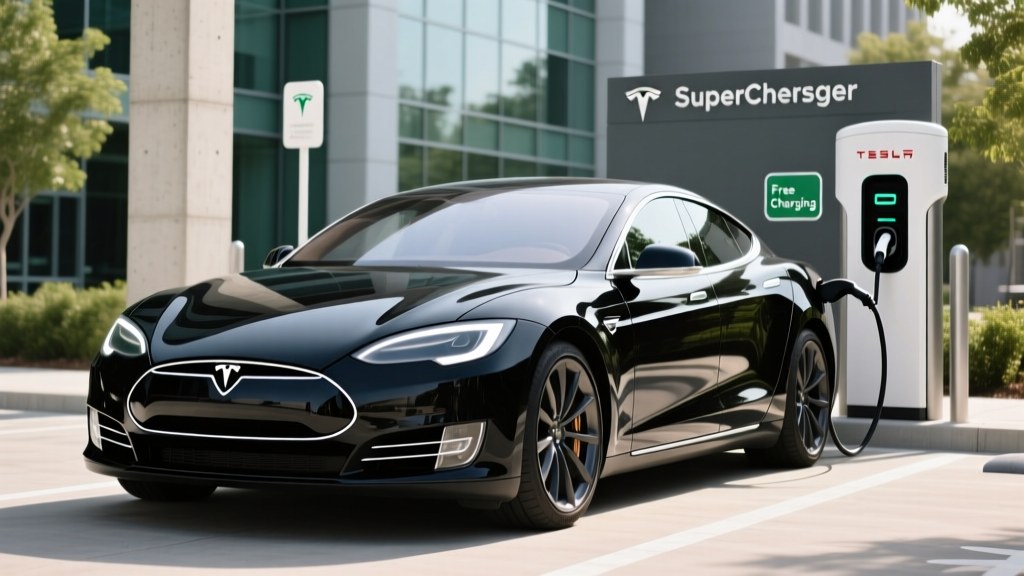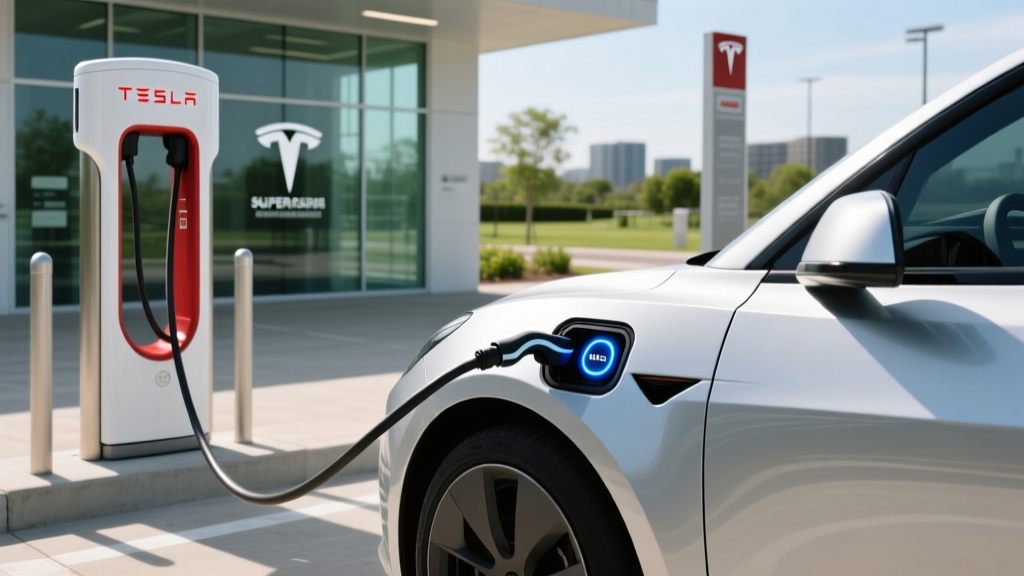
Tesla's Supercharger network — long the gold standard for DC fast charging reliability — is now open to nearly every electric vehicle on the road. If you drive a Ford Mustang Mach-E, Hyundai Ioniq 5, Rivian R1T, or virtually any other modern EV, you can pull up to a Tesla stall and charge. But the logistics of how to use Tesla Supercharger with other cars depend heavily on your vehicle's native connector, the station type, and whether you need an adapter.
This guide breaks down exactly how non-Tesla EVs access Superchargers in 2026, the connector landscape (NACS, CCS1, and the Magic Dock), real-world charging speeds, costs per mile, and how to set up a capable home Level 2 charger so you rely on public DC fast charging only when road-tripping.
The Connector Landscape: NACS, CCS1, and the Magic Dock
Before plugging in, you need to know what's physically on the end of the cable and what's on your car. Here's the 2026 connector reality:
| Connector | Native Vehicles | Adapter Needed for Tesla Supercharger? | Notes |
|---|---|---|---|
| NACS (J3400) | Tesla (all), Ford (2025+), GM (2025+), Rivian (2025+), Hyundai/Kia/Genesis (2026+), Volvo/Polestar (2025+), BMW (2026+), Lucid (2025+), Fisker, Mercedes (2026+) | No — plug directly into NACS Supercharger stalls | Industry standard as of 2025–2026 |
| CCS1 | Older VW ID.4 (pre-2025), some legacy models still on road | Yes — CCS-to-NACS adapter, or use Magic Dock station | Being phased out; adapters widely available |
| CHAdeMO | Nissan Leaf (legacy) | Yes — CHAdeMO-to-NACS adapter (limited availability) or Magic Dock | Largely deprecated; few new vehicles use it |
Key distinction: Tesla has deployed two types of Supercharger access for non-Teslas. First, many newer and retrofitted Supercharger stalls now feature the NACS (J3400) connector natively. If your 2025+ EV has a NACS port, you plug in directly — no adapter, no app gymnastics. Second, Tesla installed Magic Dock adapters at select stations. These are built-in CCS1 adapters attached to the NACS cable, allowing CCS1-equipped vehicles to charge without carrying a separate adapter.
For CCS1 vehicles without access to a Magic Dock station, third-party adapters like the Lectrify CCS-to-NACS adapter or the A2Z Typhoon adapter (rated for up to 300A DC) let you connect to any NACS Supercharger stall. Expect to pay $150–$300 for a quality, UL-listed adapter.
How Fast Will Non-Tesla EVs Charge at Superchargers?
Charge speed at a Supercharger depends on three factors: the stall's maximum output (V2 = 150 kW, V3 = 250 kW, V4 = up to 350 kW), your vehicle's maximum DC charge acceptance rate, and battery state of charge (SoC) plus temperature.
| Level | Power (kW) | Voltage/Amperage | Miles of Range Per Hour | Typical Use Case |
|---|---|---|---|---|
| Level 1 | 1.2–1.9 kW | 120V / 12–16A | 3–5 mi/hr | Emergency/top-up; PHEVs overnight |
| Level 2 | 3.3–19.2 kW | 240V / 16–80A | 12–75 mi/hr | Home daily charging; workplace; public L2 |
| DC Fast (V2 Supercharger) | Up to 150 kW | 400–500V DC | ~300–500 mi/hr (peak) | Road-trip charging; 10–80% in 25–40 min |
| DC Fast (V3 Supercharger) | Up to 250 kW | 400–800V DC | ~500–1,000 mi/hr (peak) | Fastest widespread option; 10–80% in 15–25 min |
| DC Fast (V4 Supercharger) | Up to 350 kW | 800V+ DC | ~700–1,200 mi/hr (peak) | 800V vehicles (Ioniq 5, Taycan, EV6); 10–80% in 12–18 min |
Critical nuance on charge curves: A "250 kW" V3 Supercharger does not deliver 250 kW for the entire session. Peak power occurs at low SoC (typically 10–30%) and tapers significantly above 50–60%. A Hyundai Ioniq 5 (84 kWh usable, NMC battery, 800V architecture) can sustain ~230 kW from 10–50% on a V3 stall, reaching 10–80% in roughly 18 minutes. A Ford Mustang Mach-E Extended Range (91 kWh usable, NMC, 400V architecture) peaks around 150 kW and takes approximately 32–38 minutes for the same 10–80% session. Your vehicle's thermal management and preconditioning matter enormously — always enable battery preconditioning in your car's nav system before arriving.
Real-World Charging Reality: EPA-rated range and actual road-trip efficiency diverge significantly at highway speeds. A vehicle rated at 310 miles EPA may deliver 240–260 miles at 75 mph in moderate weather, and as little as 200–220 miles in sub-freezing temperatures. Plan Supercharger stops around 200-mile intervals for comfort margin, not the sticker number.
Step-by-Step: Actually Using a Supercharger With a Non-Tesla EV
The physical process differs slightly depending on your connector situation:
If Your EV Has a NACS Port (2025+ Ford, GM, Rivian, Hyundai, Kia, Volvo, etc.)
- Open the Tesla app or use the in-car navigation to find a Supercharger with NACS stalls (most 2025+ stations).
- Pull up to any open stall — the NACS connector plugs directly into your charge port.
- Charging begins automatically if your vehicle is linked to your Tesla account; otherwise, tap "Start" in the app or use Plug & Charge if your automaker supports it.
- Monitor SoC in your vehicle's display. Expect peak kW at low SoC with taper above 60%.
- Unplug when done. No latch release button needed on NACS — simply press the vehicle's charge-port release or use the app.
If Your EV Has a CCS1 Port (Older Models, Some VW ID.4)
- Check the Tesla app or Tesla Supercharger map for stations with Magic Dock (built-in CCS adapter).
- At a Magic Dock stall: press the release on the dock housing, pull the CCS adapter end toward your vehicle, and plug in.
- At a non-Magic Dock station: use your own CCS-to-NACS adapter. Connect the adapter to the NACS cable first, then plug the CCS end into your vehicle.
- Initiate charging via the Tesla app (you'll need an account linked to your non-Tesla vehicle).
If Your EV Has CHAdeMO (Nissan Leaf)
Options are limited. Seek Magic Dock stations or carry a CHAdeMO-to-NACS adapter if available. Realistically, Leaf owners will find the Electrify America or EVgo CCS/CHAdeMO networks more broadly compatible.
What Does Supercharger Charging Cost Per Mile vs. Gas?
Tesla prices Supercharger sessions per kWh (in most states) or per minute (in states where per-kWh retail electricity sales are restricted). Here's a realistic cost comparison:
| Scenario | Rate | Vehicle Efficiency | Cost Per Mile |
|---|---|---|---|
| Home Level 2 (off-peak utility rate) | $0.13/kWh | 3.5 mi/kWh (avg EV) | $0.037 |
| Home Level 2 (peak rate) | $0.28/kWh | 3.5 mi/kWh | $0.080 |
| Tesla Supercharger (avg US) | $0.35/kWh | 3.0 mi/kWh (highway) | $0.117 |
| Electrify America / EVgo DC fast | $0.48/kWh | 3.0 mi/kWh | $0.160 |
| Gasoline car (30 MPG combined) | $3.40/gal | 30 mi/gal | $0.113 |
| Gasoline car (22 MPG combined, truck/SUV) | $3.40/gal | 22 mi/gal | $0.155 |
The takeaway: Home charging at off-peak rates is roughly 3× cheaper per mile than gasoline. Supercharger pricing is now roughly cost-competitive with a 30 MPG gas car on the highway, which eliminates the "free fuel" narrative but still provides savings for most owners who charge at home most of the time. The real economic advantage of an EV comes from home Level 2 charging, not exclusive DC fast charging.
Home Level 2 Charger Installation: Costs, Electrical Requirements, and Equipment
Since home charging delivers the lowest per-mile cost and the most convenience, here's what a proper Level 2 installation requires in 2026:
Electrical Requirements
- Voltage: 240V (standard residential split-phase, same as a dryer or oven circuit).
- Amperage: 32A–48A typical for EV charging (delivers 7.7–11.5 kW). A 40A circuit requires a 50A breaker (NEC 80% continuous-load rule). A 48A circuit requires a 60A breaker.
- Dedicated circuit: Required by code. You cannot share an EV charger circuit with other appliances.
- GFCI protection: NEC 2023/2026 requires GFCI breakers for EV charging circuits in garages and all outdoor installations.
- Panel capacity: Most homes need a 200A main panel to support a 48A EV charger alongside existing loads. Older homes with 100A or 150A panels will likely need a panel upgrade ($1,500–$3,500) or a load-management device.
- Permit: Required in virtually all jurisdictions. Typically $50–$200 depending on locality.
| Item | Low End | High End | Notes |
|---|---|---|---|
| Level 2 charger (hardware) | $350 | $700 | 32A–48A Wi-Fi-enabled units |
| Electrician labor (standard install) | $400 | $1,200 | Short run from panel; conduit and wiring |
| Electrician labor (long run / complex) | $1,200 | $3,000 | Long conduit runs, attic crawls, subpanel addition |
| Permit & inspection | $50 | $250 | Varies by municipality |
| Electrical panel upgrade (if needed) | $1,500 | $3,500 | 100A → 200A upgrade; older homes |
| Total (no panel upgrade) | $800 | $2,150 | Typical for modern 200A-panel homes |
| Total (with panel upgrade) | $2,300 | $5,650 | Older homes or high-load situations |
Always get at least two quotes from licensed electricians. Ask specifically about panel headroom (a load calculation per NEC Article 220), whether a hardwired or plug-in (NEMA 14-50) setup is recommended, and whether your jurisdiction requires GFCI breakers (they almost all do now). Hardwired installations are generally preferred for 48A+ chargers — NEMA 14-50 receptacles are rated for 50A but can overheat under continuous 40A+ draw if not installed with commercial-grade outlets.
Recommended Level 2 Home Chargers (2026)
Tesla Wall Connector (Gen 4)
- Power output: Up to 11.5 kW (48A @ 240V)
- Connector: NACS native; includes J1772 adapter in box
- Cable length: 24 ft
- Smart features: Wi-Fi, OTA updates, power sharing (link two units on one circuit), load management, access control
- Price: ~$475
- Best for: NACS-equipped vehicles, Tesla ecosystem users, multi-EV households
ChargePoint Home Flex
- Power output: Up to 12 kW (50A @ 240V, configurable down to 16A)
- Connector: J1772 native (NACS adapter sold separately)
- Cable length: 23 ft
- Smart features: Wi-Fi, Alexa integration, scheduling, ChargePoint network access, flexible amperage settings
- Price: ~$550
- Best for: CCS1/J1772 vehicles, renters who may move (adjustable amperage fits various circuits)
Emporia Level 2 EV Charger
- Power output: Up to 11.5 kW (48A @ 240V)
- Connector: J1772 (NACS version available)
- Cable length: 24 ft
- Smart features: Wi-Fi, solar integration (pairs with Emporia Vue energy monitor), time-of-use scheduling, energy tracking
- Price: ~$400
- Best for: Solar-panel households, budget-conscious buyers, energy-monitoring enthusiasts
Grizzl-E Smart (United Chargers)
- Power output: Up to 10 kW (40A @ 240V)
- Connector: J1772 or NACS (choose at purchase)
- Cable length: 24 ft
- Smart features: Wi-Fi, OCPP compatibility, rugged outdoor rating (IP67), -40°C cold-weather tested
- Price: ~$450
- Best for: Cold-climate installations, outdoor mounting, Canadian/Northern US owners
Safety and Electrical Code Considerations
EV charging is a high-draw, continuous-load application. Cutting corners on installation creates fire risk. Non-negotiable requirements:
- Dedicated circuit: Your EV charger must have its own breaker — never share with a dryer, HVAC, or workshop circuit.
- GFCI breaker: Required for all EV charging circuits under NEC 2023 and 2026 codes, both indoor (garage) and outdoor.
- Outdoor rating: If mounting outside, ensure the charger carries at minimum an IP55 rating (IP67 preferred). Use a weatherproof conduit entry and in-use cover if plug-in.
- Wire gauge: 6 AWG copper for 48A circuits (60A breaker); 8 AWG for 32A circuits (40A breaker). Aluminum wire requires larger gauge — confirm with your electrician.
- NEMA 14-50 caution: If using a plug-in setup, use a commercial-grade outlet (Hubbell, Bryant) rated for continuous duty. Residential-grade 14-50 receptacles have shown overheating issues under sustained 40A EV loads.
- Load calculation: Your electrician must perform an NEC Article 220 load calculation to confirm your panel can handle the added draw without exceeding 80% of its rated capacity.
Frequently Asked Questions
How much does it cost to install a home EV charger?
A typical Level 2 home installation runs $800–$2,150 total (equipment + electrician + permit) for homes with an existing 200A panel. If your home needs a panel upgrade from 100A to 200A, add $1,500–$3,500. Hardwired installations on short wire runs from the panel are the cheapest; long conduit runs, subpanel additions, or outdoor trenching push costs higher.
How fast will each charging level add range?
Level 1 (120V, 1.4 kW): about 3–5 miles per hour — adequate for PHEVs with small batteries but impractical for full BEVs. Level 2 (240V, 7.7–11.5 kW): about 25–45 miles per hour, enough to fully recharge most EVs overnight. DC fast charging at a V3 Supercharger (250 kW peak): adds roughly 150–200 miles in 15–20 minutes at optimal SoC, tapering significantly above 80%.
Which connector and charger is compatible with my EV?
Check your vehicle's charge port. Virtually all 2025+ EVs sold in North America now use NACS (the Tesla connector). Older CCS1 vehicles (pre-2025 VW ID.4, some early Ford/GM EVs) need either a CCS-to-NACS adapter ($150–$300) or must seek Supercharger stations with Magic Dock. CHAdeMO vehicles (Nissan Leaf) have the most limited Supercharger access. For home charging, match your Level 2 charger's connector to your vehicle or buy the appropriate adapter.
How much does EV charging cost per mile compared to gas?
Home off-peak charging averages $0.037/mile — roughly one-third the cost of a 30 MPG gas car at $3.40/gallon ($0.113/mile). Supercharger charging at the national average of $0.35/kWh costs about $0.117/mile, which is essentially gas-equivalent. The economic case for an EV depends heavily on access to affordable home or workplace charging. See the EPA's EV cost calculator for vehicle-specific comparisons.
What electrical upgrades might I need for a home charger?
The most common upgrade is a panel capacity increase from 100A to 200A ($1,500–$3,500), required when your existing panel lacks headroom for a 40A–60A dedicated EV circuit. Other potential needs: a subpanel addition if the charger is far from the main panel, conduit runs through walls or attics, trenching for detached garages, or a load-management device (like the Emporia or Tesla Gateway) that dynamically reduces charger draw when other high-load appliances activate — avoiding a panel upgrade entirely.
Do I need the Tesla app to use a Supercharger with a non-Tesla EV?
Yes, in most cases. Download the Tesla app, create an account, and add your non-Tesla vehicle. Many 2025+ EVs from Ford, GM, Rivian, and Hyundai now support Plug & Charge at NACS Superchargers — the car identifies itself automatically when you plug in, and billing goes through your automaker's app or your linked Tesla account without manual steps.
Will my EV charge at full Supercharger speed?
Only if your vehicle's DC charge acceptance rate matches or exceeds the stall output. A V3 Supercharger delivers up to 250 kW, but a Ford F-150 Lightning (max ~150 kW acceptance) will cap at 150 kW regardless. 800V-architecture vehicles like the Hyundai Ioniq 5, Kia EV6, and Porsche Taycan can take advantage of higher-power stalls. Battery temperature also matters — always precondition your battery via navigation routing to the Supercharger for optimal charge speed.
Access to Tesla's Supercharger network has fundamentally changed the public-charging equation for non-Tesla EV owners. With NACS now the North American standard, adapter-free charging is available to most 2025+ vehicles, and the network's reliability record (consistently above 95% uptime per Tesla's reports to the NHTSA and industry monitors) makes it the default choice for road trips. Pair that with a properly installed home Level 2 charger, and you have the two-pillar charging strategy that makes EV ownership practical: cheap, effortless home charging for daily driving, and fast, reliable DC charging for the open road.