Why Tesla Opened Its Supercharger Network to Non-Tesla EVs
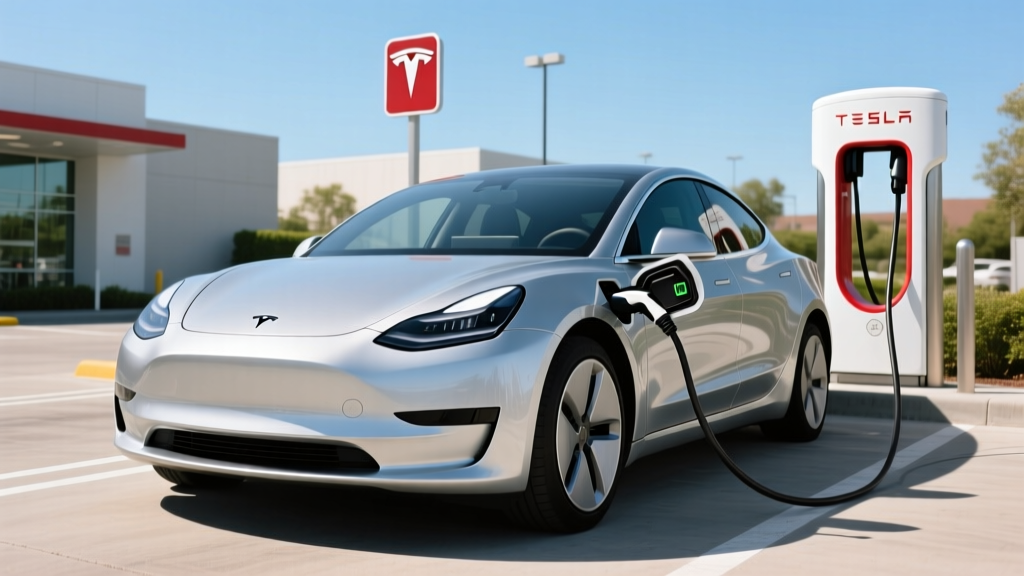
For years, the Tesla Supercharger network was the most reliable fast-charging ecosystem in North America — and it was locked behind a proprietary connector. That changed in stages: first through the federal §30D tax credit requirements that pushed Tesla to open at least a portion of its network, then through the industry-wide shift to the North American Charging Standard (NACS). As of 2026, thousands of Supercharger stalls across the U.S. are accessible to non-Tesla EVs, either natively (vehicles built with NACS ports) or via adapters.
But "accessible" doesn't mean "plug and play for everyone." Whether you can actually pull up, plug in, and charge depends on your vehicle's connector, the specific Supercharger station, and Tesla's evolving app-based access system. This guide walks through exactly how it works in practice — the hardware, the software, the costs, and the limitations you need to know before relying on Superchargers for road trips.
Which Superchargers Accept Non-Tesla EVs?
Not every Supercharger stall is open to non-Tesla vehicles. Tesla designates specific stations — and often specific stalls within a station — for non-Tesla access. These are marked in the Tesla app and on in-car navigation for Tesla vehicles. Here's how the landscape breaks down in 2026:
- Magic Dock stations: These are Supercharger stalls retrofitted with a built-in CCS1 adapter (called the "Magic Dock"). You pull up, and the stall has both a NACS connector and a CCS1 connector integrated into the cable housing. No separate adapter needed — just plug the CCS1 end into your car.
- Open NACS stations: At stations without Magic Dock hardware, non-Tesla vehicles with native NACS charge ports (most new EVs from Ford, GM, Rivian, Hyundai, Kia, and others starting in the 2025–2026 model years) can plug in directly.
- Tesla-only stalls: Many high-traffic urban Superchargers and older V2 stalls remain Tesla-exclusive, either due to space constraints (short cables can't reach non-Tesla charge ports, which are often on different sides of the vehicle) or because Tesla hasn't upgraded them.
You can check which stations are open to non-Tesla vehicles through the Tesla Supercharger map in the Tesla app (available to anyone, not just Tesla owners). Look for the "Your non-Tesla vehicle" filter. Third-party apps like PlugShare and A Better Routeplanner (ABRP) also flag open Supercharger stalls.
Connector Compatibility: NACS, CCS1, and Adapters
The single biggest factor in whether you can use a Supercharger is your vehicle's charge port connector. Here's the compatibility matrix for 2026:
| Your EV's Connector | Supercharger Access Method | Adapter Required? | Example Vehicles |
|---|---|---|---|
| NACS (native) | Direct plug-in at open stalls | No | 2025+ Ford F-150 Lightning, 2025+ GM Ultium vehicles, 2025+ Rivian R1T/R1S, 2026 Hyundai Ioniq 5/6 (NACS trims) |
| CCS1 | Magic Dock stalls only, or use a third-party NACS-to-CCS adapter | Yes (built-in at Magic Dock; aftermarket adapter otherwise) | 2024 and earlier Ford/GM EVs, VW ID.4, BMW i4/iX, most pre-2025 non-Tesla EVs |
| CHAdeMO | Not supported — no adapter path to Superchargers | N/A | Nissan Leaf (all years), older Mitsubishi Outlander PHEV |
Important caveat on third-party adapters: Several companies sell NACS-to-CCS1 adapters (Lectron, A2Z EV, and others) priced between $150 and $300. These work at many open Supercharger stalls, but not all — Tesla's software occasionally restricts adapter-based connections, and you should verify compatibility before a road trip. Adapters rated for up to 250 kW DC are available, but your actual charge speed will be limited by your vehicle's onboard charge controller.
If you're buying a new EV in 2026, choosing one with a native NACS port eliminates adapter hassle entirely. Automakers like Hyundai, Kia, Ford, GM, Rivian, and Volvo have transitioned to NACS for their 2025–2026 model-year vehicles.
Charging Speeds: What to Expect at a Supercharger
Tesla Superchargers come in three generations, and your charge speed depends on both the stall type and your vehicle's maximum DC charge acceptance rate:
| Supercharger Type | Peak Power (kW) | Typical 10–80% Time | Miles Added per 15 Min* |
|---|---|---|---|
| V2 (legacy) | 150 kW | 35–50 min (vehicle-dependent) | ~80–120 miles |
| V3 | 250 kW | 15–25 min (vehicle-dependent) | ~150–200 miles |
| V4 (2025+ rollout) | 350 kW (cabinet); ~250 kW typical vehicle-limited | 12–20 min (vehicle-dependent) | ~175–225 miles |
*Miles added per 15 minutes varies enormously by vehicle efficiency. A highly efficient sedan like the Hyundai Ioniq 6 (~4.0 mi/kWh) gains more miles per minute of charging than a heavy truck like the Ford F-150 Lightning (~2.0 mi/kWh), even at the same kW rate.
The charge-curve reality: Peak kW is not sustained kW. A vehicle rated for 250 kW peak charging will typically only hold that rate between roughly 10% and 30% State of Charge (SoC). Above 50% SoC, the rate tapers significantly — often dropping to 60–80 kW by the time you hit 80%. This is why manufacturers quote "10–80%" times rather than "0–100%" times. Charging from 80% to 100% at a DC fast charger can take as long as the 10–80% session. For road trips, plan to charge to 80% and move on.
For context on how DC fast charging compares to home charging:
| Charging Level | Power (kW) | Miles of Range Added per Hour | Typical Use Case |
|---|---|---|---|
| Level 1 (120V household outlet) | 1.2–1.9 kW | 3–5 miles | Overnight top-up, PHEVs, emergencies |
| Level 2 (240V home/public) | 7.2–19.2 kW | 20–60 miles | Daily home charging, workplace, shopping centers |
| DC Fast Charging | 50–350 kW | 150–1,000+ miles/hr (at peak) | Road trips, rapid top-ups |
Step-by-Step: How to Charge a Non-Tesla EV at a Supercharger
The process differs slightly from charging a Tesla. Here's the exact workflow:
- Download the Tesla app (iOS/Android) and create an account. You do not need to own a Tesla.
- Add your non-Tesla vehicle to the app. You'll enter the make, model, and year.
- Find an open Supercharger using the app's map. Filter for "non-Tesla" compatible stations. The app will show available stalls, current pricing ($/kWh), and whether Magic Dock is available.
- Navigate to the station. Pay attention to which specific stalls are marked for non-Tesla use — they're often on the periphery of the station, and cable length may require you to park at an angle if your charge port is on a different side than Tesla's rear-driver-side standard.
- Plug in. If it's a Magic Dock stall, pull the CCS1 connector from the integrated housing. If you have a native NACS vehicle, plug in directly. If using a third-party adapter, attach it to the NACS cable first.
- Start the session in the Tesla app. The app identifies the stall by number (posted on the charger pedestal). Tap "Start Charging."
- Monitor and stop via the app. You'll see real-time kW, SoC, and cost. You can set a charge limit or stop manually.
Payment: Non-Tesla users are charged per kWh (not per minute, in most states). Pricing is displayed in the app before you start. As of 2026, Supercharger pricing for non-Tesla vehicles typically ranges from $0.35 to $0.55 per kWh, depending on location and time of day. Tesla owners sometimes pay a lower rate at the same station — typically $0.25 to $0.40/kWh — so expect a non-Tesla premium of roughly 20–40%.
Supercharger Cost vs. Home Charging vs. Gas
Charging at a Supercharger is convenient for road trips, but it's the most expensive way to charge your EV. Here's a realistic cost comparison for a 300-mile trip in a mid-efficiency EV (3.5 mi/kWh, roughly 86 kWh consumed):
| Charging Scenario | Rate | Cost for 300 Miles | Cost per Mile |
|---|---|---|---|
| Home Level 2 (off-peak utility rate) | $0.12/kWh | $10.32 | $0.034 |
| Home Level 2 (average U.S. residential) | $0.17/kWh | $14.62 | $0.049 |
| Public Level 2 (e.g., ChargePoint, EVgo) | $0.25–$0.35/kWh | $21.50–$30.10 | $0.072–$0.100 |
| Tesla Supercharger (non-Tesla rate) | $0.35–$0.55/kWh | $30.10–$47.30 | $0.100–$0.158 |
| Gas vehicle (28 MPG combined, $3.40/gal) | $3.40/gallon | $36.43 | $0.121 |
The takeaway: even at the highest Supercharger rates, you're paying roughly the same or less per mile than a 28 MPG gas car — but home charging is dramatically cheaper. If you can charge at home 80% of the time and use Superchargers only for road trips, your blended cost per mile will be well under $0.05.
Some utilities offer time-of-use (TOU) rates where off-peak electricity drops to $0.08–$0.10/kWh overnight. If you're on a TOU plan and schedule charging between 11 PM and 6 AM, a full home charge for an 80 kWh battery costs just $6.40–$8.00.
Home Charging Setup: Installation Costs and Electrical Requirements
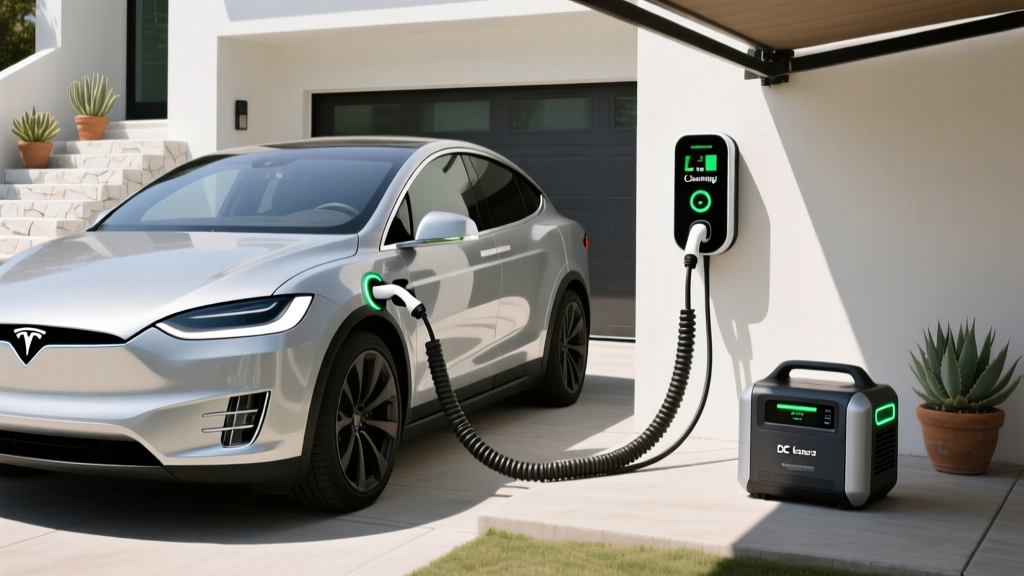
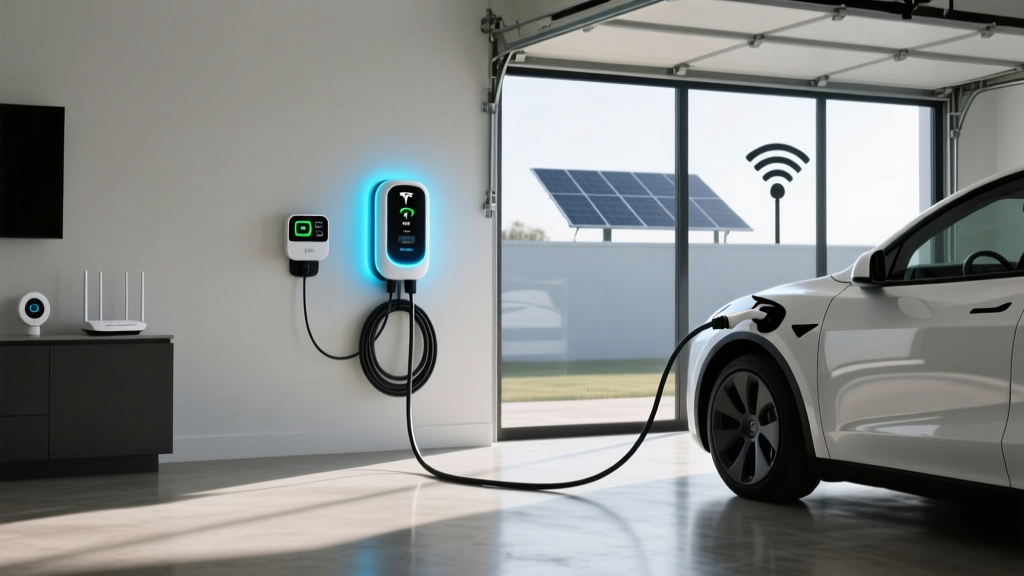
While Superchargers handle road trips, home Level 2 charging is where 80–90% of EV charging happens. Here's what a typical 240V Level 2 home installation requires:
Electrical requirements: A dedicated 240V circuit, typically 40A to 60A, on a NEMA 14-50 outlet or hardwired connection. A 40A circuit supports up to 9.6 kW continuous charging (32A continuous draw, per NEC 80% rule); a 60A circuit supports up to 11.5 kW (48A continuous). Most EVs accept 7.2 kW to 11.5 kW on Level 2, so a 40A or 50A circuit covers the majority of vehicles.
Panel capacity: Your home's electrical panel must have enough spare amperage to support the new circuit. A typical 200A panel in a modern home can usually accommodate a 40–60A EV circuit without an upgrade. Older homes with 100A or 150A panels may need a panel upgrade — a significant added cost.
| Cost Component | Typical Range | Notes |
|---|---|---|
| Level 2 charger hardware | $300–$700 | Varies by brand, power output, smart features |
| Electrician labor (standard install) | $500–$1,500 | Short run from panel to garage; longer runs cost more |
| Permit and inspection | $100–$300 | Required by most jurisdictions; varies by municipality |
| Electrical panel upgrade (if needed) | $1,500–$3,500 | 100A→200A upgrade; not needed in most modern homes |
| Total (no panel upgrade) | $900–$2,500 | Most common scenario |
| Total (with panel upgrade) | $2,400–$6,000 | Older homes with 100A service |
Federal tax credit: Under IRS §25C, you may qualify for a 30% tax credit on home EV charger hardware and installation, capped at $1,000 per year. This applies to both the charger unit and electrician labor. Eligibility depends on your tax liability and whether the installation is at your primary residence. Consult a tax professional for your specific situation.
Recommended Home Level 2 Chargers for 2026
Here are three proven Level 2 chargers that pair well with Supercharger road-trip use (charge at home daily, Supercharge on trips):
ChargePoint Home Flex
- Power: Up to 12 kW (50A) — configurable from 16A to 50A
- Connector: NACS (2025+ models); CCS1/J1772 available for older vehicles
- Cable length: 23 feet
- Smart features: Wi-Fi, app scheduling, Alexa integration, energy tracking
- Price: ~$550–$650
- Best for: Flexible amperage for homes with limited panel capacity
Emporia Level 2 EV Charger
- Power: Up to 11.5 kW (48A)
- Connector: J1772 (NACS adapter included in 2026 package)
- Cable length: 24 feet
- Smart features: Wi-Fi, app control, solar integration, TOU scheduling
- Price: ~$350–$400
- Best for: Budget-conscious buyers who want smart features and solar pairing
Grizzl-E Smart
- Power: Up to 10 kW (40A)
- Connector: J1772 or NACS (select at purchase)
- Cable length: 24 feet
- Smart features: Wi-Fi, OCPP support, adjustable amperage via dip switches
- Price: ~$450–$550
- Best for: Outdoor installations (IP67 rated, -40°F to +122°F operating range)
Safety, Electrical Code, and Installation Best Practices
EV charging draws sustained high current for hours — unlike a dryer or oven that cycles on and off. This makes proper installation critical:
- Dedicated circuit: Your Level 2 charger must be on its own dedicated breaker. Sharing a circuit with other appliances is a code violation and a fire risk.
- GFCI protection: The 2023 NEC (adopted by most states by 2025–2026) requires GFCI protection for all EV charging outlets. Hardwired installations may have different requirements — your electrician will determine compliance.
- Outdoor rating: If your charger is installed outdoors (driveway, exterior wall), it must carry at least an IP55 rating (protected against water jets). IP67 is preferable for harsh climates.
- Wire gauge: A 50A circuit requires 6 AWG copper wire; a 60A circuit requires 4 AWG. Undersized wire is a serious fire hazard — never let an installer cut corners here.
- Permit and inspection: Most municipalities require a permit for EV charger installation. The inspection ensures your electrician followed code. Skipping the permit can void your homeowner's insurance in the event of an electrical fire.
Hire a licensed electrician experienced with EV charger installations. Ask for references and verify they pull permits. The U.S. Department of Energy maintains resources on home charging best practices and qualified installer finders.
Limitations and Real-World Considerations
Using Superchargers with a non-Tesla EV works — but it's not yet a seamless experience. Here are the practical limitations to plan around:
- Cable reach: Tesla vehicles have charge ports on the rear driver side. Supercharger cables are designed for this location. If your EV's port is on the front fender (some older models) or the rear passenger side, you may need to park awkwardly or the cable may not reach. Native NACS vehicles from Ford, GM, and Rivian typically have rear-quarter-panel ports that align well.
- Idle fees: Tesla charges idle fees (up to $1.00/minute) if your vehicle remains plugged in after reaching its charge limit and the station is at high utilization. This applies to non-Tesla vehicles too.
- Station availability: Not all Superchargers on your route may be open to non-Tesla vehicles. On long road trips, always have a backup charging plan using networks like Electrify America, EVgo, or ChargePoint.
- Preconditioning: Tesla vehicles automatically precondition the battery when navigating to a Supercharger, optimizing charge speed. Non-Tesla vehicles won't receive this signal. If your EV has a manual battery preconditioning feature, activate it 15–20 minutes before arriving at the charger — especially in cold weather, where skipping preconditioning can cut charge speeds by 30–50%.
Frequently Asked Questions
How much does it cost to install a home EV charger?
A standard Level 2 home installation (40A–50A, short wire run, no panel upgrade) typically costs $900–$2,500 including equipment, electrician labor, and permit. If your home needs a panel upgrade from 100A to 200A service, add $1,500–$3,500. The federal §25C tax credit covers 30% of hardware and installation costs, capped at $1,000.
How fast will each charging level add range?
Level 1 (120V) adds 3–5 miles of range per hour. Level 2 (240V) adds 20–60 miles per hour depending on amperage and vehicle efficiency. DC fast charging at a Supercharger adds 150–1,000+ miles per hour at peak rate, but sustained speeds taper significantly above 50% SoC. A typical 10–80% DC fast charge session takes 15–30 minutes.
Which connector/charger is compatible with my EV?
Check your vehicle's charge port. If it's NACS (standard on most 2025+ EVs from Ford, GM, Rivian, Hyundai, Kia, Volvo), you can plug directly into open Supercharger stalls. If it's CCS1, you need a Magic Dock-equipped Supercharger or a third-party NACS-to-CCS adapter ($150–$300). CHAdeMO vehicles (Nissan Leaf) cannot use Superchargers at all.
How much does charging cost per mile vs gas?
Home Level 2 charging at average U.S. electricity rates ($0.17/kWh) costs roughly $0.04–$0.05 per mile for a mid-efficiency EV. Supercharger rates ($0.35–$0.55/kWh) bring that to $0.10–$0.16 per mile. A comparable gas vehicle at 28 MPG and $3.40/gallon costs about $0.12 per mile. Even at peak Supercharger prices, EVs are cost-competitive with gas — and home charging is dramatically cheaper.
What electrical upgrades might I need?
The most common upgrade is a panel capacity increase. If your home has a 100A electrical panel and high existing load (electric heat, dryer, range), you'll likely need an upgrade to 200A service ($1,500–$3,500). Homes with 200A panels generally have sufficient capacity for a 40–60A EV circuit without modification. Your electrician will perform a load calculation to determine if an upgrade is necessary.
Can I use a NACS-to-CCS adapter at any open Supercharger?
Not guaranteed. Third-party adapters work at many open Supercharger stalls, but Tesla's software may restrict certain adapter connections, and Magic Dock stations don't require an adapter at all. Before a road trip, test your adapter at a local Supercharger and have backup charging options mapped out.