Tesla Supercharger idle fees are the silent budget-killer of public EV charging. Park at a busy Supercharger, finish charging, and forget to move your car — and you could rack up $1.00 per minute in penalties. For a 20-minute overstay, that is a $20 hit on top of whatever you paid for electricity.
But idle fees are just one piece of the public charging puzzle. Whether you drive a Tesla, a Ford with NACS access, or a Hyundai on CCS, understanding the economics, speed tiers, and etiquette of DC fast charging will save you real money. This guide breaks down idle fees, public charging costs, and the home-charging setup that makes them largely irrelevant.
What Are Tesla Supercharger Idle Fees?
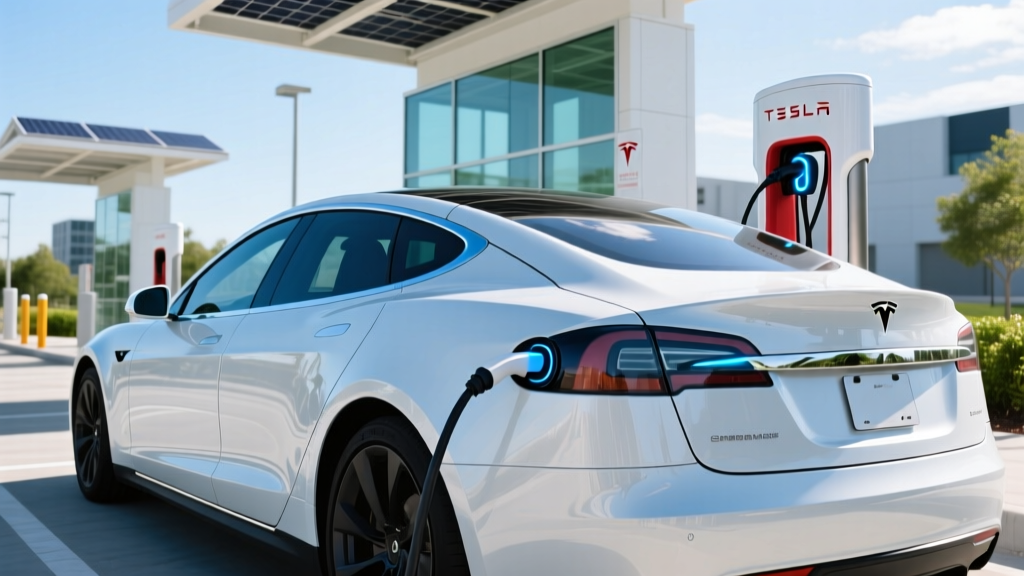
Idle fees are per-minute penalties Tesla charges when your vehicle remains plugged into a Supercharger after reaching its charge limit — but only at stations that are at least 50% occupied. The structure is tiered:
- $0.50 per minute when the station is 50–100% full
- $1.00 per minute when the station is 100% full
- No fee if the station is under 50% capacity
- Grace period: 5 minutes after charging completes before fees begin
Tesla sends push notifications to the Tesla app when your charge reaches completion — and again when the 5-minute grace period is about to expire. If you have the vehicle's charge limit set to 80% (the recommended threshold for battery longevity on NMC packs), the car finishes sooner than you might expect, especially at newer V3 and V4 Superchargers delivering peak rates of 250 kW.
How to Avoid Idle Fees Every Time
- Enable Tesla app notifications and keep your phone's sound on.
- Set a lower charge limit (60–80%) on road trips so charging completes faster and you have less energy to sit on.
- Use the in-car navigation to route to Superchargers — the car preconditions the battery, which speeds up the charge curve and reduces total plug-in time.
- Move the car immediately after reaching your target SoC. If you need to wait, unplug and park in a non-charging spot.
- Check station occupancy in the Tesla app before pulling in. If it shows 8/8 stalls occupied, idle fees are at the $1.00/min tier the moment you finish.
Public DC Fast Charging vs. Home Charging: Speed and Cost
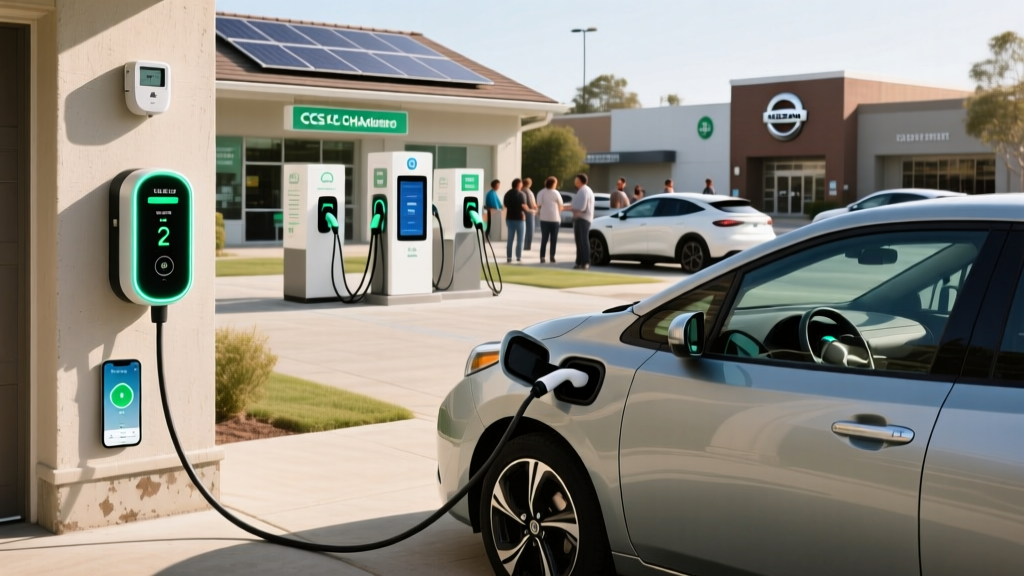
Public charging exists on three tiers. Understanding the difference between kW (power — how fast energy flows) and kWh (energy — how much your battery stores) is essential to comparing them.
| Level | Voltage | Power (kW) | Miles of Range per Hour | Best For |
|---|---|---|---|---|
| Level 1 | 120V AC | 1.0–1.8 kW | 3–5 mi/hr | Overnight top-ups, PHEVs |
| Level 2 | 240V AC | 7.2–19.2 kW | 25–65 mi/hr | Daily home charging |
| DC Fast (Level 3) | 400–800V DC | 50–350 kW | 150–1,200 mi/hr (peak) | Road trips, rapid top-ups |
A DC fast charger at 250 kW can theoretically add 750+ miles of range per hour — but no EV sustains peak rate for the full session. Charging follows a curve: power is highest between 10–40% State of Charge (SoC), tapers through 40–80%, and drops sharply above 80% to protect the battery. A "10–80% in 18 minutes" spec means the last 20% might take another 20+ minutes.
Cost to Charge: Home vs. Public vs. Gas
| Scenario | Rate | Cost per kWh | Cost to Add 200 mi* | Cost per Mile |
|---|---|---|---|---|
| Home (off-peak utility) | Level 2, TOU plan | $0.08–$0.14 | $5.60–$9.80 | $0.03–$0.05 |
| Home (standard rate) | Level 2, flat rate | $0.13–$0.18 | $9.10–$12.60 | $0.05–$0.06 |
| Tesla Supercharger (V3/V4) | DC Fast, 250 kW | $0.28–$0.48 | $19.60–$33.60 | $0.10–$0.17 |
| Electrify America / EVgo | DC Fast, 150–350 kW | $0.32–$0.56 | $22.40–$39.20 | $0.11–$0.20 |
| Gas vehicle (30 MPG) | $3.40/gal | — | $22.67 | $0.11 |
*Based on a vehicle consuming 3.5 miles per kWh (approx. 28.5 kWh/100mi), a common efficiency for midsize electric SUVs like the Tesla Model Y or Hyundai Ioniq 5.
Home charging at off-peak rates delivers fuel costs at one-third to one-half the price of gasoline. Public DC fast charging, by contrast, often costs as much or more per mile than gas — especially when you add idle fees. According to fueleconomy.gov, the 2025 Tesla Model Y Long Range achieves 122 MPGe combined (roughly 3.6 mi/kWh), making home charging at $0.12/kWh just $0.033 per mile.
Charging Time Examples: 10–80% by Battery Size
Charging speed depends on the vehicle's maximum acceptance rate (in kW), the charger's output, battery chemistry, and temperature. Here are representative 10–80% times for popular platforms:
| Vehicle | Battery (kWh usable) | Chemistry | Peak DC Rate (kW) | 10–80% Time (est.) |
|---|---|---|---|---|
| Tesla Model Y LR (2025) | 75 kWh | NMC | 250 kW | ~22 min (V3 Supercharger) |
| Hyundai Ioniq 5 (2025) | 77.4 kWh | NMC | 238 kW | ~18 min (350 kW charger) |
| Ford F-150 Lightning Ext. (2025) | 131 kWh | NMC | 150 kW | ~41 min (150 kW charger) |
| Chevrolet Equinox EV (2025) | 85 kWh | NMC | 150 kW | ~32 min |
| Tesla Model 3 RWD (2025) | 57.5 kWh | LFP | 170 kW | ~25 min (V3 Supercharger) |
Home Charger Installation: Costs, Electrical Requirements, and Panel Upgrades
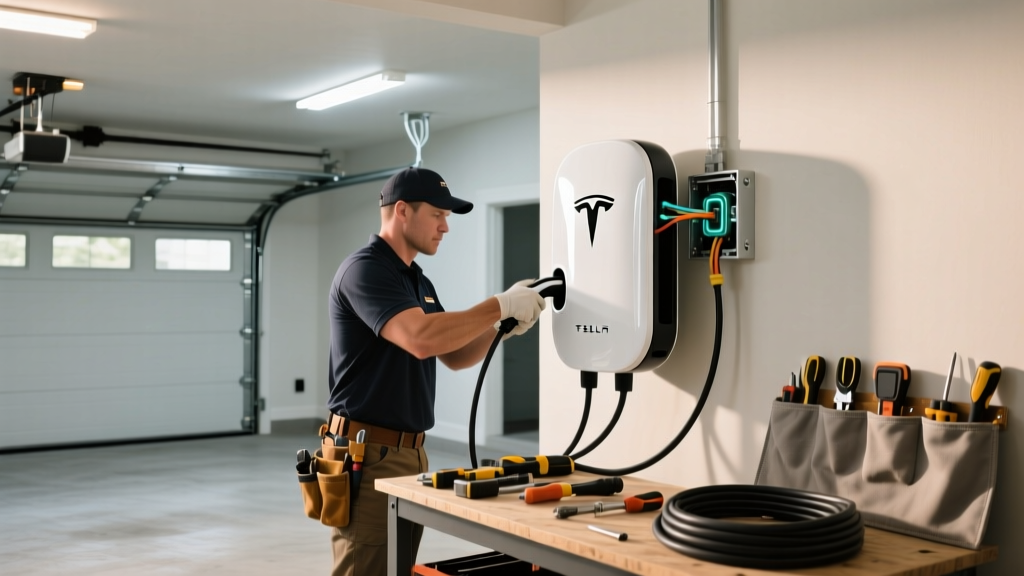
The single best defense against idle fees, unreliable public chargers, and peak electricity rates is a properly installed Level 2 home charger. Here is what that actually costs in 2026.
Electrical Requirements
A typical Level 2 home charger requires a dedicated 240V circuit. The most common configurations:
- NEMA 14-50 outlet (50A circuit): Supports chargers up to 40A continuous (9.6 kW). Most popular for residential installs.
- Hardwired 60A circuit: Supports chargers up to 48A continuous (11.5 kW). Required for higher-power units like the Tesla Wall Connector at full output.
- NEMA 6-20 outlet (20A circuit): Supports up to 16A (3.8 kW). Budget option for garages with limited panel capacity.
Installation Cost Breakdown
| Component | Simple Install (near panel) | Standard Install (50–80 ft run) | Complex Install (panel upgrade needed) |
|---|---|---|---|
| Charger equipment | $300–$650 | $300–$650 | $300–$650 |
| Electrician labor | $300–$600 | $600–$1,500 | $1,500–$3,000 |
| Permit and inspection | $50–$150 | $100–$300 | $150–$400 |
| Electrical panel upgrade | — | — | $1,500–$3,500 |
| Conduit, wiring, misc. | $50–$150 | $200–$600 | $300–$800 |
| Total | $700–$1,550 | $1,200–$3,050 | $3,750–$8,350 |
Safety and Code Considerations
- Dedicated circuit: NEC 2026 requires EV chargers to have their own dedicated circuit — no sharing with other appliances.
- GFCI protection: Required for all outlets in garages and outdoor locations. Hardwired chargers must also have GFCI breakers in most jurisdictions.
- Outdoor rating: If mounting outside, the charger must carry a NEMA 4 or IP65 rating for weather resistance.
- Wire gauge: A 50A circuit requires 6 AWG copper wire; a 60A circuit requires 4 AWG. Undersized wire is a fire hazard and will fail inspection.
- Permit: Nearly all jurisdictions require an electrical permit for new 240V circuits. Skipping the permit risks insurance denial in case of electrical fire.
Connector Compatibility: NACS, CCS, and CHAdeMO in 2026
The connector landscape has consolidated significantly. Tesla's North American Charging Standard (NACS) has been adopted by nearly every major automaker for new vehicles starting in the 2025–2026 model years. CCS1 remains on many 2022–2024 vehicles, and CHAdeMO is effectively legacy (Nissan Leaf only).
| Connector | Brands Using It (Native) | Adapter Needed For | DC Fast Network Access |
|---|---|---|---|
| NACS (Tesla) | Tesla, Ford, GM, Rivian, Volvo, Polestar, Mercedes, Hyundai/Kia (2025+) | CCS vehicles need NACS-to-CCS adapter | Tesla Supercharger, Electrify America (select), EVgo |
| CCS1 | VW, BMW, Stellantis, some 2022–2024 Ford/GM/Hyundai | NACS-to-CCS adapter for Supercharger access | Electrify America, EVgo, ChargePoint, Ionity (EU) |
| CHAdeMO | Nissan Leaf (discontinued for new sales) | No practical adapter to NACS/CCS | Limited; shrinking network |
If you own a CCS-equipped vehicle from 2022–2024 (such as a Ford Mustang Mach-E or VW ID.4), Tesla and third-party companies sell NACS-to-CCS adapters for $150–$250, granting access to the Supercharger network. Ford and GM began shipping these adapters to owners in 2024–2025.
Recommended Home Chargers: 2026 Picks
Tesla Wall Connector (Gen 3)
- Power: Up to 11.5 kW (48A) hardwired / 9.6 kW (40A) NEMA 14-50
- Connector: NACS native
- Cable: 24 ft
- Smart features: Wi-Fi, OTA updates, load sharing, power sharing between two units
- Price: $475 (NACS), $400 (J1772 variant)
- Best for: Tesla owners, NACS-equipped Ford/GM/Rivian drivers
ChargePoint Home Flex
- Power: Up to 12 kW (50A) hardwired / 9.6 kW (40A) NEMA 14-50
- Connector: J1772 (NACS adapter included)
- Cable: 23 ft
- Smart features: Wi-Fi, Alexa/Google integration, scheduling, energy dashboard
- Price: $549
- Best for: CCS/J1772 vehicles, multi-EV households
Emporia Vue Level 2 Charger
- Power: Up to 11.5 kW (48A) hardwired / 9.6 kW (40A) plug-in
- Connector: J1772 (NACS adapter available)
- Cable: 24 ft
- Smart features: Wi-Fi, solar integration, TOU scheduling, energy monitoring
- Price: $399
- Best for: Budget-conscious buyers, solar-panel households
Grizzl-E Smart
- Power: Up to 10 kW (40A) NEMA 14-50
- Connector: J1772
- Cable: 24 ft
- Smart features: Wi-Fi, OCPP protocol, adjustable amperage
- Price: $499
- Best for: Cold-climate durability (rated to -40°F), outdoor installs
Frequently Asked Questions
How much does it cost to install a home EV charger?
A straightforward Level 2 installation near your electrical panel costs $700–$1,550 including the charger, electrician labor, and permit. A standard install with a 50–80 foot wire run costs $1,200–$3,050. If your home needs a panel upgrade from 100A to 200A service, expect $3,750–$8,350 total. Always get a licensed electrician's load calculation first.
How fast will each charging level add range?
Level 1 (120V) adds 3–5 miles per hour. Level 2 (240V, 40A) adds 25–35 miles per hour depending on vehicle efficiency. DC fast charging at 150–250 kW can add 150–300+ miles in a 20-minute session, though the charge curve tapers significantly above 80% SoC.
Which connector is compatible with my EV?
2025–2026 vehicles from Tesla, Ford, GM, Rivian, Hyundai, Kia, Volvo, and Polestar use NACS natively. Older 2022–2024 models from these brands (except Tesla) use CCS1 and need an adapter ($150–$250) for Supercharger access. The Nissan Leaf uses CHAdeMO, which has a shrinking public network and no practical NACS adapter.
How much does EV charging cost per mile compared to gas?
Home charging at off-peak rates ($0.10/kWh) costs roughly $0.03 per mile for a typical EV. Public DC fast charging at $0.35/kWh costs $0.10–$0.17 per mile. A 30 MPG gas car at $3.40/gallon costs $0.11 per mile. Home charging is 3–4× cheaper than gas; public fast charging is roughly comparable.
What electrical upgrades might I need for a home charger?
The most common upgrade is a new 240V dedicated circuit (50A or 60A). Older homes with 100A main panels may need a full service upgrade to 200A, costing $1,500–$3,500. Homes with modern 200A panels usually have sufficient headroom. Your electrician will perform a NEC Article 220 load calculation to determine this.
Can I get a tax credit for installing a home EV charger?
The federal §30D new vehicle credit does not cover charger installation. However, the §25D Residential Clean Energy Credit may cover up to 30% of qualified alternative energy equipment, including EV charging infrastructure, through 2032. Eligibility depends on your tax liability and specific equipment. Consult a tax professional and review current IRS guidance before claiming.
Why do Tesla Supercharger idle fees exist?
Idle fees exist to keep high-demand charging stalls available for active users. A Supercharger stall occupied by a fully charged car is a stall unavailable for someone on a road trip who needs to charge. The tiered penalty ($0.50/min at 50%+ occupancy, $1.00/min at 100%) creates a financial incentive to move promptly.
The Bottom Line: Home Charging Eliminates the Idle Fee Problem
Tesla Supercharger idle fees are a solvable problem — and the best solution is not better app notifications, but a Level 2 home charger that makes public DC fast charging a road-trip-only affair. At $700–$3,000 for a standard installation, a home charger pays for itself within 12–24 months of avoided public charging costs and idle penalties. Set your charge limit to 80%, wake up to a full battery every morning, and leave idle fees to the drivers who forgot to move their cars.