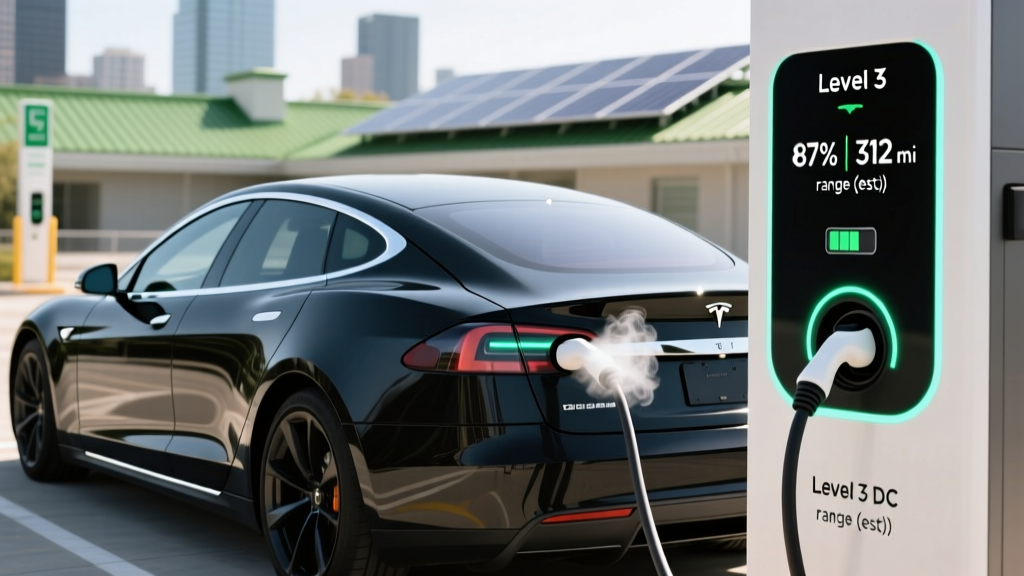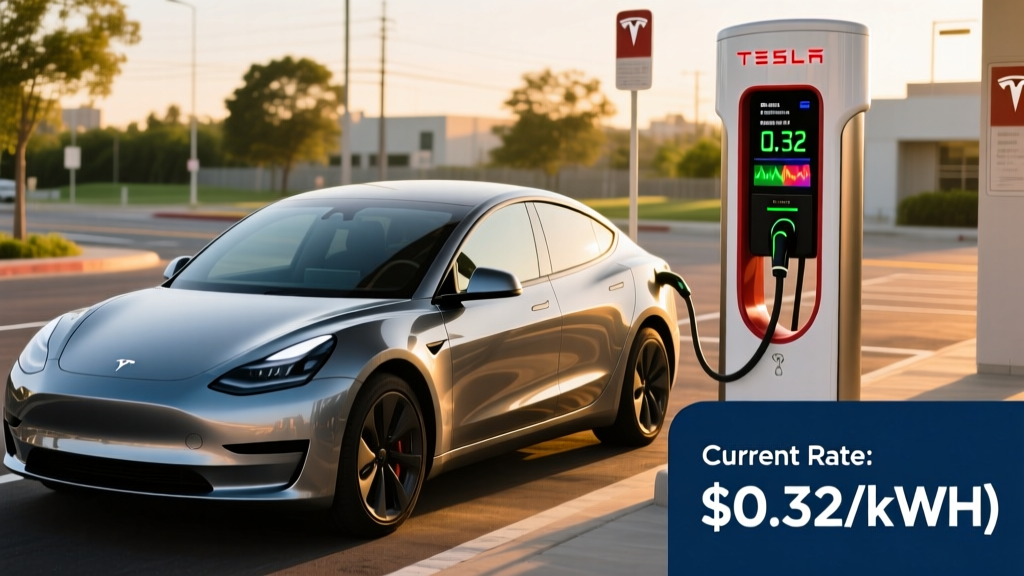
If you've ever left your EV plugged in at a busy Supercharger station after reaching your target state of charge, you may have returned to an unexpected charge on your Tesla app. The Tesla Supercharger idle fee is designed to keep high-traffic DC fast-charging stalls available for active charging, but it catches plenty of owners off guard — especially those new to public charging etiquette. In 2026, idle fees at Superchargers range from $0.50 to $1.00 per minute depending on station occupancy, and they begin accruing the moment your charge session completes while the station is at least 50% occupied.
For frequent road-trippers, idle fees are a minor annoyance. But for daily driving, relying on public DC fast charging — idle fees or not — is the most expensive way to power your EV. This guide breaks down the real math behind public versus home charging, explains every charging level with exact speeds and costs, and walks through what a Level 2 home installation actually requires in 2026.
Understanding the Tesla Supercharger Idle Fee Structure
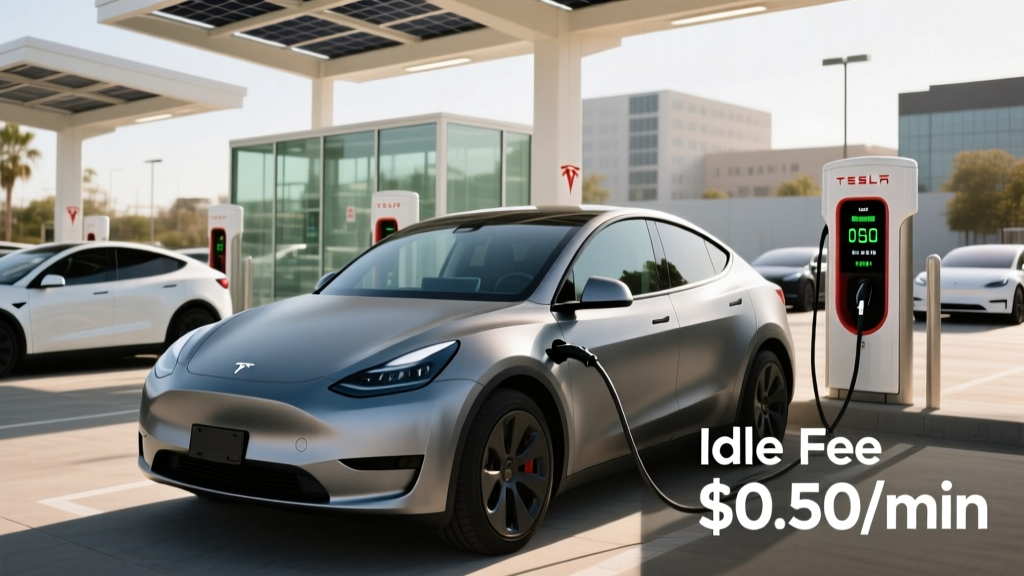
Tesla's idle fee policy is straightforward but strict. Once your vehicle finishes its charging session at a Supercharger stall, you have a 5-minute grace period to move your car. After that window, fees accrue per minute:
- $0.50/minute when the station is 50% or more occupied
- $1.00/minute when the station is 100% full
These fees are billed automatically through your Tesla account. They apply at every Supercharger globally and are non-negotiable — there's no way to dispute them through the app. Tesla sends a push notification to your phone when charging completes, but if you're in a restaurant without cell service or simply forget, a 30-minute overstay at a full station costs $30 on top of your charging bill.
The policy exists for a practical reason: a 250 kW V3 Supercharger stall can add roughly 200 miles of range to a Model Y in about 15-20 minutes. When a fully charged vehicle occupies that stall, it blocks other drivers who may have 20-30 miles of range remaining and genuinely need to charge. As the Supercharger network has opened to non-Tesla EVs via the NACS standard and Magic Dock adapters, stall availability has become even more critical.
Charging Levels Explained: Speeds, Power, and Range Added Per Hour
Before comparing costs, it's essential to understand the three charging tiers available to EV owners. The key distinction: kW (kilowatts) measures power — the rate at which energy flows into your battery. kWh (kilowatt-hours) measures energy — the total capacity of your battery, like gallons in a fuel tank.
| Level | Voltage | Power (kW) | Miles of Range Added Per Hour | Best For |
|---|---|---|---|---|
| Level 1 | 120V AC | 1.0–1.4 kW | 3–5 miles | Overnight top-ups, PHEVs, emergency backup |
| Level 2 | 240V AC | 3.3–19.2 kW | 12–75 miles | Daily home charging, workplace, destinations |
| DC Fast Charging | 400–900V DC | 50–350 kW | 150–1,000+ miles (peak rate) | Road trips, rapid replenishment |
Real-world charging times for a common 75 kWh battery (such as a Tesla Model Y Long Range or Ford Mustang Mach-E Extended Range) from 10% to 80% state of charge:
- Level 1 (1.4 kW): ~37 hours — impractical for full charges but adequate for PHEVs with 30-40 mile batteries
- Level 2 at 11.5 kW (48A): ~4.5 hours — the standard home-charging sweet spot
- Level 2 at 19.2 kW (80A): ~2.7 hours — requires heavy-duty home electrical or commercial installation
- DC Fast at 250 kW peak (e.g., V3 Supercharger): ~18-22 minutes (10-80%), though sustained rate averages ~150 kW due to charge-curve taper above 60% SoC
That charge-curve taper is critical to understand: a 250 kW peak rate does not mean you receive 250 kW for the entire session. Battery management systems reduce charging power as the battery fills to protect cell longevity. Expect peak rates from 10-50% SoC, a gradual taper from 50-70%, and a significant slowdown above 80%. This is why manufacturers and reviewers quote 10-80% times rather than 0-100%.
How Much Does It Cost to Install a Home EV Charger?
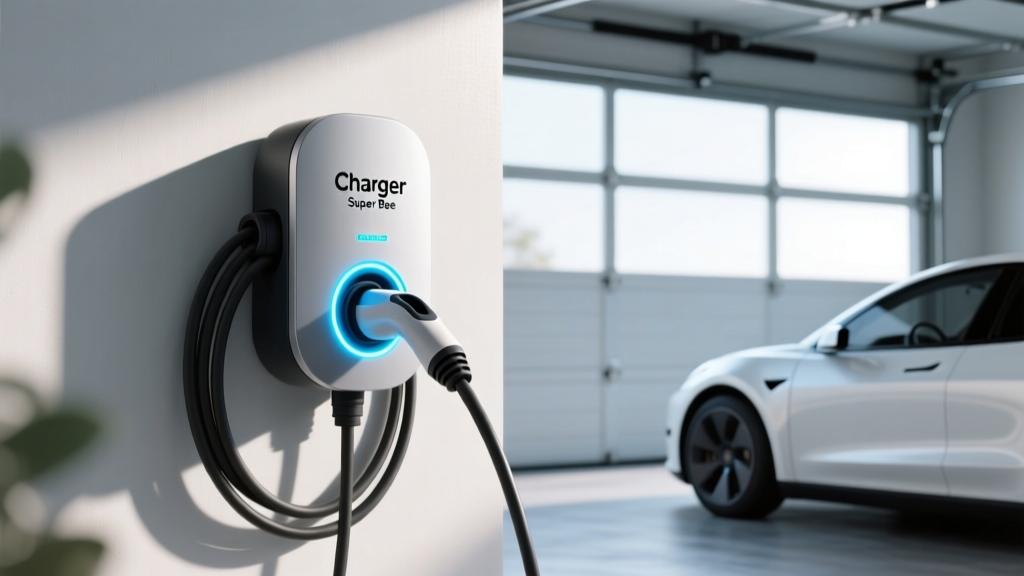
Home Level 2 charging is where the economics of EV ownership shift dramatically in your favor. But installation costs vary enormously depending on your home's electrical panel, the distance from the panel to your garage or driveway, and local permitting requirements.
Most homes with a 200-amp electrical panel can accommodate a 40-amp or 48-amp dedicated circuit for a Level 2 charger without a panel upgrade. Older homes with 100-amp panels often require a service upgrade to 200 amps — a significant added expense.
| Component | Simple Install (Panel Nearby, No Upgrade) | Complex Install (Long Run or Panel Upgrade) |
|---|---|---|
| Level 2 Charger Equipment | $400–$700 | $400–$700 |
| Electrician Labor (2-4 hrs simple / 6-12 hrs complex) | $600–$1,200 | $1,800–$4,000 |
| Electrical Panel Upgrade (if needed) | $0 | $1,500–$3,500 |
| Permit and Inspection | $50–$200 | $100–$350 |
| Conduit, Wiring, and Materials | $100–$300 | $400–$1,200 |
| Total Estimated Cost | $1,150–$2,400 | $4,200–$9,750 |
The single largest variable is whether your panel needs upgrading. A licensed electrician can assess your panel's available capacity during a site visit — most offer this evaluation for free or a nominal trip fee. If you have spare breaker slots and at least 50-60 amps of unused capacity, a 48A charger circuit is typically straightforward.
Federal incentive note: The IRS Residential Clean Energy Credit covers 30% of home EV charger equipment and installation costs up to $1,000 (through 2032, subject to income and location requirements). This is separate from the §30D vehicle purchase credit. Consult a tax professional for your specific eligibility.
Charging Cost Per Mile: Home vs. Public DC Fast vs. Gasoline
Here's where the Tesla Supercharger idle fee becomes a rounding error compared to the bigger picture: the baseline cost of DC fast charging versus home Level 2.
| Charging Scenario | Rate | Cost to Add 200 Miles* | Cost Per Mile |
|---|---|---|---|
| Home Level 2 (off-peak utility rate) | $0.08–$0.14/kWh | $5.60–$9.80 | $0.028–$0.049 |
| Home Level 2 (peak utility rate) | $0.18–$0.30/kWh | $12.60–$21.00 | $0.063–$0.105 |
| Tesla Supercharger V3 (2026 avg.) | $0.28–$0.40/kWh | $19.60–$28.00 | $0.098–$0.140 |
| Electrify America / EVgo DC Fast | $0.35–$0.55/kWh | $24.50–$38.50 | $0.123–$0.193 |
| Gasoline Vehicle (28 MPG combined, $3.40/gal) | $3.40/gallon | $24.29 | $0.121 |
*Based on an EV averaging 3.5 miles/kWh (approximately 100 MPGe), typical of a midsize crossover like the Tesla Model Y, Hyundai Ioniq 5, or Ford Mach-E. Per fueleconomy.gov, efficiency varies by model and driving conditions.
The numbers are stark. Home off-peak charging costs roughly $0.03–$0.05 per mile — one-quarter to one-third the cost of gasoline. Even Tesla Supercharging at $0.35/kWh averages about $0.12/mile, competitive with gas but not the dramatic savings EV ownership promises. Add idle fees to a Supercharger session and the economics erode further: a $15 idle fee on a $25 charge session pushes your effective cost to $0.20/mile — more expensive than many efficient hybrids.
This is why home Level 2 charging is the foundation of economical EV ownership. If you can install a charger at home and charge overnight on off-peak utility rates, your annual fuel savings versus a gasoline vehicle typically range from $800 to $1,500 depending on mileage and local electricity rates.
Connector Compatibility: NACS, CCS, and CHAdeMO in 2026
The connector landscape has consolidated significantly since 2023, when Ford, GM, Rivian, and most major automakers committed to the North American Charging Standard (NACS), originally developed by Tesla. As of the 2026 model year, virtually every new EV sold in the United States ships with a native NACS charge port.
| Connector | Brands (2026 Models) | DC Fast-Charge Availability | Adapter Needed? |
|---|---|---|---|
| NACS (Tesla) | Tesla, Ford, GM, Rivian, Hyundai, Kia, BMW, Mercedes, Volvo, Polestar, and most others | Tesla Supercharger, Electrify America (selected), EVgo, and expanding networks | No — native port |
| CCS1 | Legacy models (pre-2025 VW ID.4, some Stellantis EVs); adapters available for NACS-port vehicles | Electrify America, EVgo, ChargePoint | NACS-to-CCS adapter (~$150–$250) for newer vehicles |
| CHAdeMO | Discontinued — no new 2026 models use this standard (Nissan Leaf ended production) | Limited and shrinking network | Not practical for new EV buyers |
For home Level 2 charging, all vehicles use the J1772 connector standard — or, for 2025+ NACS-equipped vehicles, a NACS port that accepts J1772 via a simple adapter typically included with the vehicle. When purchasing a home charger, choose one with a J1772 plug (universal) or a NACS plug if your vehicle is NACS-native and you want to skip the adapter.
Recommended Home Level 2 Chargers for 2026
Here are four well-regarded Level 2 chargers that cover a range of budgets and feature sets. All are UL-listed for safety and compatible with most residential electrical systems.
Tesla Wall Connector (Gen 4)
- Power Output: Up to 11.5 kW (48A on a 60A circuit)
- Connector: NACS native; J1772 adapter included
- Cable Length: 24 feet
- Smart Features: Wi-Fi, OTA updates, load sharing (pair two units on one circuit), Tesla app integration
- Price: ~$475
- Best For: Tesla owners and NACS-native EVs wanting a clean, integrated experience
ChargePoint Home Flex
- Power Output: Up to 12 kW (50A, configurable from 16A–50A)
- Connector: J1772 (universal); NACS adapter available
- Cable Length: 23 feet
- Smart Features: Wi-Fi, Alexa integration, scheduling, ChargePoint app with energy tracking
- Price: ~$550–$650
- Best For: Multi-EV households needing flexible amperage configuration
Emporia Vue Level 2 Charger
- Power Output: Up to 11.5 kW (48A on a 60A circuit)
- Connector: J1772
- Cable Length: 24 feet
- Smart Features: Wi-Fi, solar integration with Emporia Vue energy monitor, scheduling
- Price: ~$400–$500
- Best For: Budget-conscious buyers and solar-panel households wanting energy monitoring
Grizzl-E Smart
- Power Output: Up to 10 kW (40A on a 50A circuit)
- Connector: J1772 (NACS version available)
- Cable Length: 24 feet
- Smart Features: Wi-Fi, OCPP support, adjustable amperage, extreme cold rated (-40°F)
- Price: ~$450–$550
- Best For: Cold-climate owners needing rugged outdoor durability
When selecting a charger, match its maximum amperage to your EV's onboard charger capacity. Most 2026 EVs accept 11.5 kW (48A) on Level 2, but some base-trim models are limited to 7.7 kW (32A). Paying for a 48A charger when your vehicle maxes out at 32A wastes money — though it does future-proof for your next EV.
Safety, Electrical Code, and Installation Requirements
EV chargers draw sustained high current for hours — a fundamentally different load profile than a dryer or oven that cycles on and off. The National Electrical Code (NEC) treats EV charging as a continuous load, meaning the circuit must be rated for 125% of the charger's maximum draw. A 48A charger requires a 60A breaker and appropriately gauged wire (typically 4 AWG copper for runs up to 50 feet).
Key safety and code requirements your electrician will address:
- Dedicated circuit: Your EV charger must have its own breaker — it cannot share a circuit with other appliances
- GFCI protection: The 2023 NEC update (adopted by most jurisdictions by 2026) requires ground-fault circuit interrupter protection for all EV charging outlets; hardwired installations may have different GFCI requirements depending on local code
- Outdoor rating: If your charger is installed outside (driveway, exterior wall), the unit must carry a NEMA 4 or IP65 weatherproof rating — all four chargers recommended above qualify
- Permit and inspection: Nearly all jurisdictions require an electrical permit for a new 240V circuit. The inspection ensures the installation meets code and protects your homeowner's insurance coverage
- Hardwired vs. plug: Hardwired chargers eliminate the NEMA 14-50 receptacle (which can be a failure point under sustained high-current use) and are increasingly recommended by electricians for 48A+ installations
Do not attempt a DIY installation of a 240V EV circuit unless you are a licensed electrician. The sustained-current nature of EV charging means that undersized wire, loose connections, or improper breakers create fire risk that may not manifest for months or years.
Practical Strategies to Avoid Idle Fees and Minimize Charging Costs
If you rely on Tesla Superchargers or other public DC fast-charging networks, a few habits eliminate idle fees and keep your per-mile cost low:
- Set a charge limit in your vehicle's app. If you only need 80% SoC, set the limit to 80%. The vehicle stops drawing power at that threshold, and the idle-fee clock starts — but at least you aren't paying for unnecessary kWh while waiting.
- Stay nearby and monitor your app. Tesla's app shows real-time SoC and sends a push notification when charging completes. The 5-minute grace period is generous if you're within earshot.
- Plan charging stops around activities shorter than 30 minutes. A 250 kW Supercharger adds 150-200 miles in roughly 15-20 minutes. Grab coffee, use the restroom, and return — don't sit down for a full meal at a full station.
- Install a home Level 2 charger. The most reliable way to avoid idle fees entirely is to charge at home, where your car sits in your garage overnight and there is no penalty for staying plugged in.
Frequently Asked Questions
How much does it cost to install a home EV charger?
A straightforward Level 2 installation with an adequate electrical panel typically costs $1,150–$2,400 including equipment, electrician labor, and permit. Homes requiring a panel upgrade from 100A to 200A should budget $4,200–$9,750 total. Get at least two quotes from licensed electricians, and confirm they have specific EV charger installation experience.
How fast will each charging level add range?
Level 1 (120V) adds roughly 3–5 miles per hour — adequate only for plug-in hybrids or emergency top-ups. Level 2 (240V at 48A/11.5 kW) adds approximately 35–45 miles per hour for a typical midsize EV, fully replenishing a 75 kWh battery overnight. DC fast charging at 250 kW can add 150–200 miles in 15–20 minutes, though the rate tapers significantly above 60-80% SoC.
Which connector or charger is compatible with my EV?
For 2026 models, nearly all new EVs use the NACS connector for DC fast charging and accept J1772 (or a J1772-to-NACS adapter) for Level 2 home charging. If you own a pre-2025 EV with a CCS1 port, you can use a NACS-to-CCS adapter (~$150–$250) to access Tesla Superchargers. CHAdeMO is effectively discontinued — no new vehicles use it.
How much does charging cost per mile compared to gas?
Home Level 2 charging on off-peak electricity costs $0.03–$0.05 per mile — roughly 75% less than gasoline at $3.40/gallon and 28 MPG. Public DC fast charging at $0.35–$0.45/kWh costs $0.10–$0.16 per mile, roughly comparable to gas. The Tesla Supercharger idle fee adds to this cost if you overstay, making home charging the clear economic winner for daily driving.
What electrical upgrades might I need for a home charger?
Homes with a 200-amp panel and available breaker capacity usually need only a new dedicated 60A circuit — no panel work required. Homes with 100-amp service, older wiring, or panels already near capacity may need a service upgrade to 200A ($1,500–$3,500), a sub-panel installation, or a smart load-management system that shares capacity between the EV charger and other appliances. Your electrician's initial assessment will determine which scenario applies.