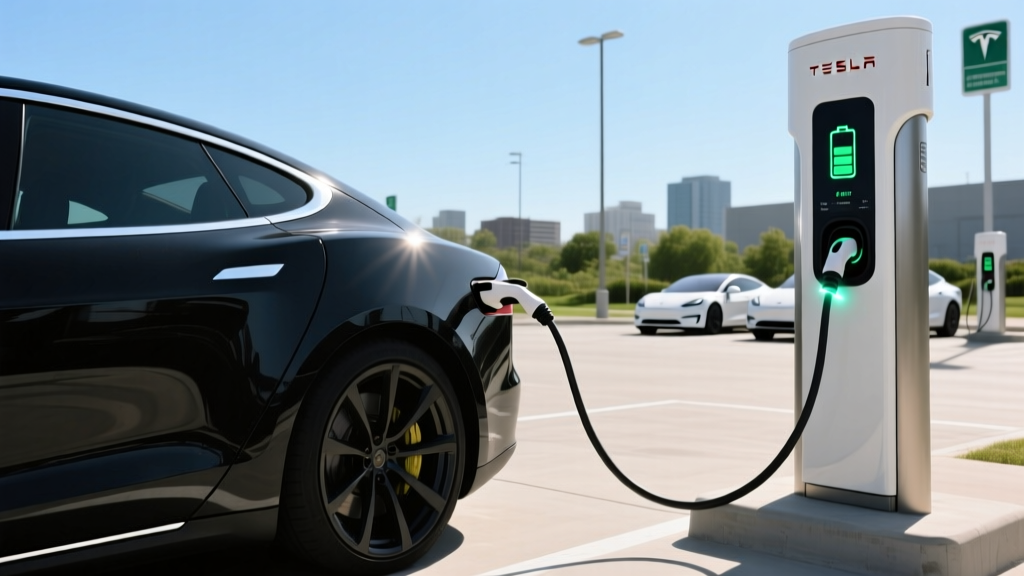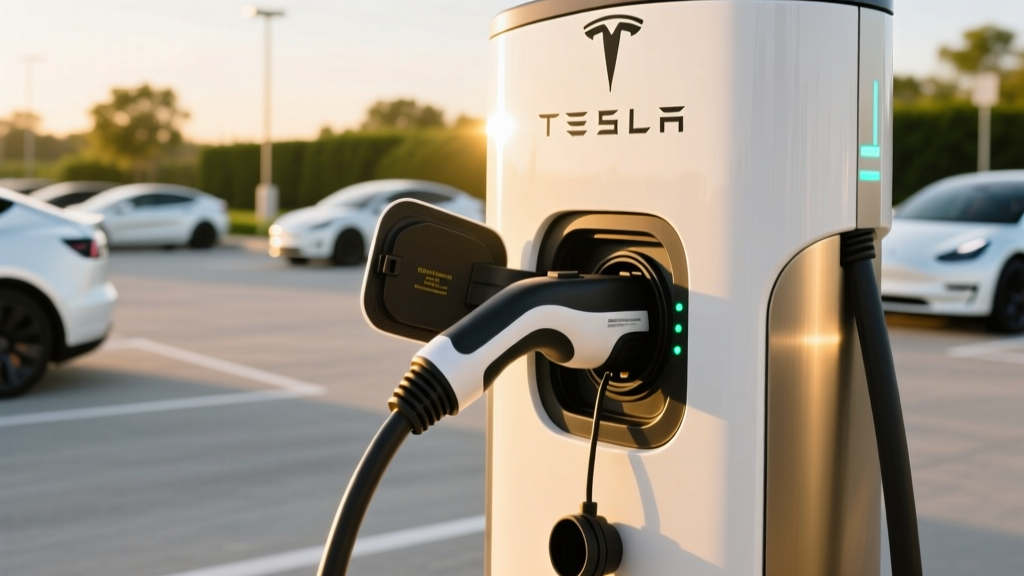
If you've searched for "Tesla Supercharger free" hoping to find unlimited, zero-cost fast charging, the short answer is: routine free Supercharging is mostly a thing of the past. Tesla phased out its legacy free Supercharging programs years ago, and in 2026, the vast majority of Tesla owners pay per kWh at every Supercharger stop. However, free or heavily discounted charging still exists in specific scenarios — referral credits, destination charging partnerships, utility off-peak rebates, and promotional vehicle bundles. This guide breaks down exactly where free charging still exists, what Supercharging actually costs today, and why a home Level 2 setup remains the cheapest way to fuel an EV by a wide margin.
The Current State of Tesla Supercharger Pricing (2026)
Tesla's Supercharger network now spans over 6,000 stations and 65,000+ connectors across North America, and it's no longer exclusive to Tesla vehicles. Since opening the network to non-Tesla EVs via the NACS (North American Charging Standard) connector and built-in Magic Dock adapters, pricing has standardized but varies by location, time of day, and membership tier.
As of early 2026, typical Supercharger rates in the U.S. range from $0.25 to $0.48 per kWh, with urban and coastal stations trending higher. Tesla also offers a Membership plan ($12.99/month) that unlocks lower per-kWh rates for non-Tesla EVs — rates comparable to what Tesla owners pay natively. Idle fees of $0.50–$1.00 per minute apply if your vehicle remains plugged in after reaching its charge limit.
Where Free Tesla Supercharging Still Exists
While the days of lifetime free Supercharging on every Model S are long gone, several legitimate pathways to free or near-free charging remain:
- Referral Credits: Tesla periodically offers referral-based Supercharging credits (typically 1,000–5,000 free miles) when existing owners refer new buyers. These credits are applied to your Tesla account and deducted automatically at Superchargers.
- New Vehicle Promotions: Tesla occasionally bundles limited-time free Supercharging (e.g., 6 months or 10,000 miles) during end-of-quarter or end-of-year delivery pushes. These promotions are unpredictable and vary by region.
- Destination Charging: Many hotels, resorts, and restaurants offer complimentary Level 2 Tesla Destination Chargers for guests and patrons. While not Superchargers (they're Level 2, typically 11.5–22 kW), they provide free overnight or extended parking charges.
- Utility and Municipal Programs: Some utilities offer free or heavily discounted public charging through partner networks. Check with your local provider — programs vary by jurisdiction.
- Legacy Free Supercharging: A small number of 2016–2017 Model S and Model X vehicles still carry transferable lifetime free Supercharging, but these are tied to the original vehicle VIN and are increasingly rare on the used market.
Charging Levels Explained: Speeds, Costs, and Range Added
Understanding the three charging levels is essential for planning both your daily routine and road trips. The critical distinction: kW (kilowatts) measures power — how fast energy flows into your battery. kWh (kilowatt-hours) measures energy — the total capacity of your battery. Think of kW as the flow rate of a hose and kWh as the size of the bucket.
| Level | Voltage / Power | kW Output | Miles of Range Per Hour | Typical Use Case |
|---|---|---|---|---|
| Level 1 | 120V / 12A | 1.4 kW | 3–5 mi/hr | Overnight trickle; emergency top-ups |
| Level 2 | 240V / 32–48A | 7.7–11.5 kW | 25–44 mi/hr | Home daily charging; workplace; destinations |
| DC Fast (Supercharger V3/V4) | 400–800V DC | 150–350 kW peak | 200–1,000+ mi/hr (peak) | Road trips; rapid top-ups |
Charging time examples for common battery sizes (10%–80%):
- 60 kWh battery (e.g., base Tesla Model 3 RWD): ~25–30 min on a 250 kW V3 Supercharger; ~6–7 hours on a 7.7 kW Level 2 home charger
- 75 kWh battery (e.g., Tesla Model Y Long Range): ~28–35 min on V3 Supercharger; ~7–9 hours on Level 2
- 100 kWh battery (e.g., Ford F-150 Lightning Extended Range): ~35–45 min on a 350 kW-capable charger; ~10–13 hours on Level 2
Important caveat: DC fast charging follows a charge curve. A station advertising 250 kW peak will only sustain that rate at low state-of-charge (SoC). Above 50–60% SoC, the rate tapers significantly to protect battery health. That 10–80% time is a far more useful metric than peak kW alone.
Home Charger Installation: Costs, Electrical Requirements, and Gotchas
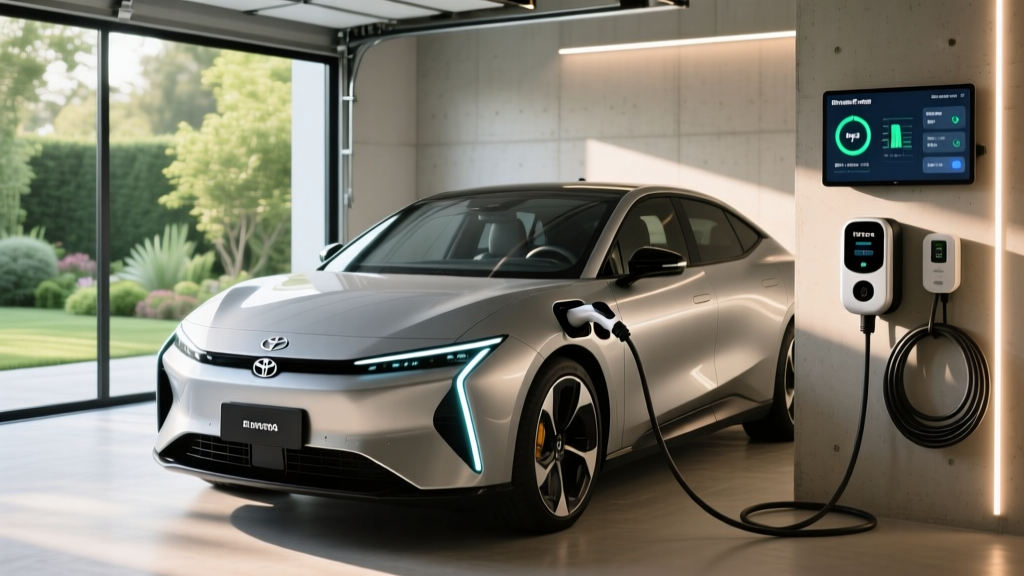
Installing a Level 2 home charger is the single most impactful upgrade for EV ownership convenience and cost savings. But the total investment depends heavily on your home's existing electrical infrastructure.
Electrical Requirements
A typical Level 2 home charger requires a 240V dedicated circuit, similar to what a clothes dryer or electric oven uses. Common configurations:
- NEMA 14-50 outlet (50A circuit, 40A continuous): The most popular setup. Supports up to 9.6 kW charging. Requires 6 AWG copper wire in most jurisdictions.
- Hardwired 60A circuit (48A continuous): Supports up to 11.5 kW. Required for higher-power chargers like the Tesla Wall Connector at full output. Eliminates the plug as a failure point and is often preferred by electricians for permanent installations.
- Existing dryer circuit (30A, 24A continuous): Yields ~5.8 kW. Workable for smaller batteries or lower daily mileage needs.
Panel Upgrade Considerations
If your home has a 100-amp electrical panel (common in homes built before 1990), adding a 50A EV circuit may exceed your panel's capacity, especially if you already have electric appliances (oven, dryer, HVAC). A panel upgrade to 200A typically costs $1,500–$3,500 depending on local labor rates and utility requirements. This is the single biggest "gotcha" in home charger installation — get a load calculation done by a licensed electrician before committing.
| Component | Low End | High End | Notes |
|---|---|---|---|
| Level 2 Charger (Equipment) | $350 | $750 | Smart Wi-Fi chargers; basic units from $250 |
| Electrician Labor | $400 | $1,500 | Depends on wire run length, wall type, conduit |
| Electrical Permit | $50 | $250 | Required in most jurisdictions; varies by municipality |
| Panel Upgrade (if needed) | $1,500 | $3,500 | 100A → 200A; only if load calculation requires it |
| Total (no panel upgrade) | $800 | $2,500 | Most homes with 200A panels |
| Total (with panel upgrade) | $2,300 | $6,000 | Older homes with 100A service |
The federal Residential Clean Energy Credit does not cover EV chargers as of 2026 (the Alternative Fuel Vehicle Refueling Property Credit under §30C expired for most residential installations, though some state and utility rebates remain — check your local jurisdiction).
Cost to Charge: Home vs. Supercharger vs. Gas — Per Mile
The economics of EV charging depend heavily on where and when you plug in. Here's how common scenarios compare on a cost-per-mile basis, using a vehicle averaging 3.5 miles per kWh (roughly the efficiency of a 2026 Tesla Model Y Long Range):
| Scenario | Rate ($/kWh or $/gal) | Cost Per Mile | Annual Cost (12,000 mi) |
|---|---|---|---|
| Home (national avg. $0.16/kWh) | $0.16/kWh | $0.046 | $549 |
| Home (off-peak TOU rate) | $0.08/kWh | $0.023 | $274 |
| Solar (amortized system cost) | ~$0.05/kWh | $0.014 | $171 |
| Tesla Supercharger (avg.) | $0.35/kWh | $0.100 | $1,200 |
| Electrify America / public DCFC | $0.43/kWh | $0.123 | $1,474 |
| Gasoline car (28 MPG avg., $3.40/gal) | $3.40/gal | $0.121 | $1,457 |
The takeaway is stark: exclusive Supercharger use costs roughly the same as gasoline per mile. The real savings come from home charging, especially with time-of-use (TOU) rates or solar. If you can charge at home even 80% of the time and use Superchargers only for road trips, your blended cost per mile drops to roughly $0.05–$0.06.
Connector Compatibility: NACS, CCS, and Adapters in 2026
The connector landscape has consolidated significantly since Ford, GM, Rivian, and nearly every major automaker adopted the NACS (Tesla's charging connector) as the North American standard. Here's where things stand for 2026 model-year vehicles:
| Connector | Brands Using It (New Vehicles) | Supercharger Access | Adapter Needed? |
|---|---|---|---|
| NACS (Tesla) | Tesla, Ford, GM, Rivian, Hyundai/Kia (2025+), Volvo, Polestar | Native access | No |
| CCS1 | Older VW ID.4, BMW iX (pre-2025), Stellantis models, legacy EVs | Via Tesla Magic Dock or NACS-to-CCS adapter | Yes — ~$200–$250 for adapter |
| CHAdeMO | Nissan Leaf (legacy only — discontinued for 2026) | Limited; no native Supercharger access | CHAdeMO-to-CCS adapters exist but rare |
If you own a CCS-equipped EV from model year 2023 or earlier and want Supercharger access, Tesla sells a CCS-to-NACS adapter (approximately $230) that enables charging at Supercharger stalls equipped with the Magic Dock. Confirm compatibility with your specific model on Tesla's adapter support page before purchasing.
Recommended Home Level 2 Chargers (2026)
These are our top-tested picks based on reliability, power output, smart features, and value. All require a 240V dedicated circuit.
Tesla Wall Connector
- Power: 11.5 kW (48A) max
- Connector: NACS native
- Cable: 24 ft
- Smart features: Wi-Fi, OTA updates, power sharing (load balance between two units), Tesla app integration
- Price: ~$475
- Best for: Tesla owners wanting max charge speed and seamless integration
ChargePoint Home Flex
- Power: Up to 12 kW (50A) configurable
- Connector: NACS (2025+ models) or J1772 with adapter
- Cable: 23 ft
- Smart features: Wi-Fi, Alexa/Google Home, scheduling, energy tracking, flexible amperage (16A–50A dip-switch)
- Price: ~$550–$650
- Best for: Multi-EV households; adjustable amperage fits various panel capacities
Emporia Level 2 EV Charger
- Power: 11.5 kW (48A)
- Connector: NACS (2025+) or J1772
- Cable: 24 ft
- Smart features: Wi-Fi, solar integration with Emporia Vue energy monitor, scheduled charging, load management
- Price: ~$399
- Best for: Budget-conscious buyers; solar households wanting energy-aware charging
Grizzl-E Smart
- Power: 10 kW (40A)
- Connector: NACS or J1772
- Cable: 24 ft
- Smart features: Wi-Fi, OCPP support, adjustable amperage, extreme cold rated (-40°F)
- Price: ~$449
- Best for: Cold-climate owners; rugged outdoor installs
Safety, Code, and Installation Best Practices
EV charging draws sustained high current for hours — far longer than a dryer cycle. Proper installation isn't optional; it's a fire-safety requirement.
- Dedicated circuit: Your Level 2 charger must be on its own dedicated breaker. Never share a circuit with other appliances.
- GFCI protection: The 2023 NEC (National Electrical Code) requires GFCI protection for all EV charging outlets (NEMA 14-50 and similar). Hardwired installations may be exempt depending on jurisdiction — ask your electrician.
- Outdoor rating: If installing outdoors, ensure the charger carries a NEMA 4 or IP65 rating. All recommended chargers above meet this standard.
- Permit and inspection: Most municipalities require an electrical permit for EV charger installations. This protects you — an unpermitted install may void home insurance claims in the event of an electrical fire.
- Wire gauge: A 50A circuit typically requires 6 AWG copper; a 60A circuit requires 4 AWG. Your electrician will size wire per NEC Table 310.16 and local amendments.
- Load calculation: Per NEC Article 220, your electrician must perform a load calculation to verify your panel can handle the additional draw. This is non-negotiable for safe operation.
Frequently Asked Questions
Is Tesla Supercharger free for new Tesla owners in 2026?
Generally, no. Tesla does not include free Supercharging as a standard feature on new vehicles. Occasionally, Tesla runs limited-time promotions (e.g., free Supercharging for 6 months or a set mileage) during end-of-quarter delivery pushes, but these are not guaranteed. Always check current offers on Tesla's website before ordering.
How much does it cost to install a home EV charger?
Expect $800–$2,500 for a standard installation in a home with a 200A electrical panel and a short wire run. If your home requires a panel upgrade from 100A to 200A, total costs can reach $2,300–$6,000. Always get a professional load calculation before proceeding.
How fast will each charging level add range?
Level 1 (120V) adds 3–5 miles per hour. Level 2 (240V) adds 25–44 miles per hour depending on amperage. DC fast charging (Supercharger V3 at 250 kW) can add up to 200 miles in approximately 15 minutes at peak rate, though charging speed tapers significantly above 60% state of charge.
Which connector does my EV need for home charging?
For 2026 model-year vehicles, most new EVs (Tesla, Ford, GM, Rivian, Hyundai, Kia, Volvo) use the NACS connector. Older EVs with CCS or J1772 connectors can charge at home using a J1772-to-NACS adapter or by installing a charger with the matching connector. Check your vehicle's charge port before purchasing equipment.
How much does EV charging cost per mile compared to gas?
Home charging at the national average electricity rate ($0.16/kWh) costs approximately $0.046 per mile for an efficient EV — about 62% less than a 28 MPG gas car at $3.40/gallon ($0.121/mile). Exclusive Supercharger use at $0.35/kWh costs roughly $0.10/mile, which is comparable to gasoline. See our EPA EV efficiency data for vehicle-specific calculations.
What electrical upgrades might I need for a home charger?
The most common upgrade is adding a 50A or 60A 240V circuit with appropriate wire gauge. If your home has a 100A electrical panel and high existing electrical loads (electric heat, oven, dryer), you may need a panel upgrade to 200A, costing $1,500–$3,500. A licensed electrician's load calculation will determine this before any work begins.
Can I use a regular household outlet to charge my EV?
Yes, but slowly. A standard 120V outlet (Level 1) delivers about 1.4 kW, adding 3–5 miles of range per hour. For a 75 kWh battery, a full charge from empty takes 48–54 hours. Level 1 is viable only for low daily mileage (under 30 miles) or as a backup while awaiting Level 2 installation.
Free Tesla Supercharging as a standard perk has effectively ended, but the economics of EV ownership remain compelling when you charge at home. A $1,200 Level 2 installation pays for itself within 12–18 months for most drivers through fuel savings alone — and the convenience of starting every morning with a full "tank" is something no gas station can match.