If you drive a Ford Mustang Mach-E, Hyundai Ioniq 5, Rivian R1T, or virtually any modern electric vehicle, the question isn't whether you can use a Tesla Supercharger for non-Tesla vehicles—it's which ones have opened their stalls to you. Since Tesla began retrofitting select Supercharger stations with the built-in "Magic Dock" CCS adapter and since major automakers adopted the North American Charging Standard (NACS) for their 2025–2026 models, the largest fast-charging network in North America has become accessible to the broader EV market.
This guide walks through exactly how non-Tesla drivers access Superchargers in 2026, what you need in terms of adapters and apps, how fast you'll actually charge, and what the per-mile cost looks like compared to gasoline. We'll also cover the broader charging ecosystem—home Level 2 setups, public DC fast charging, and the electrical work required—so you have a complete picture of EV fueling.
How Non-Tesla EVs Access the Supercharger Network
Tesla's Supercharger network includes over 30,000 stalls across North America as of early 2026. Non-Tesla access comes through two pathways:
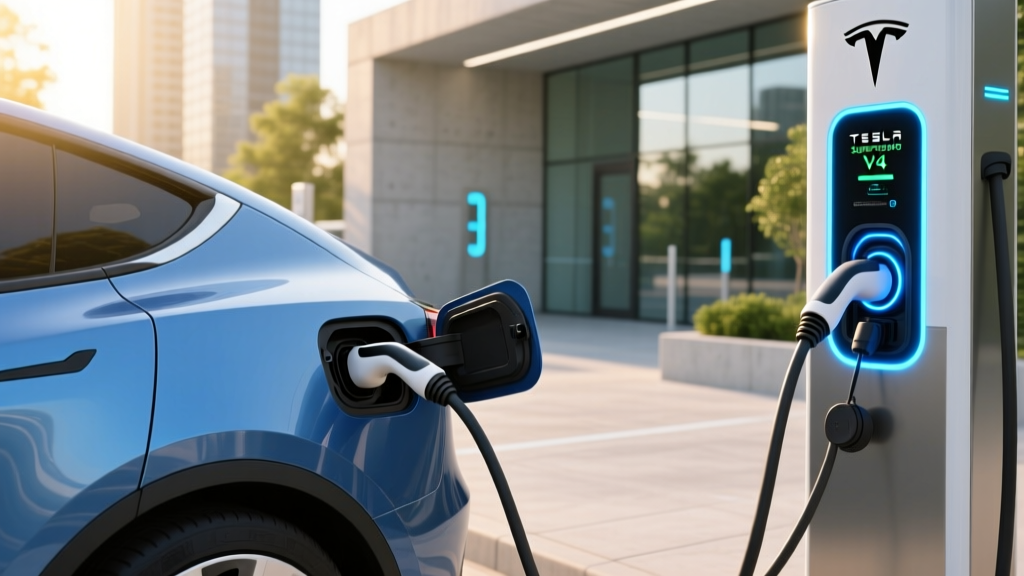
1. NACS-equipped vehicles (native Tesla connector). Automakers including Ford, General Motors, Rivian, Volvo, Polestar, Mercedes-Benz, Nissan, and Fisker have transitioned to the NACS charge port starting with 2025 model-year vehicles. If your 2025 or 2026 EV has a factory NACS port, you can plug directly into any V3 (250 kW) or V4 Supercharger stall—no adapter needed. You activate the session through the Tesla app or your automaker's integrated charging interface.
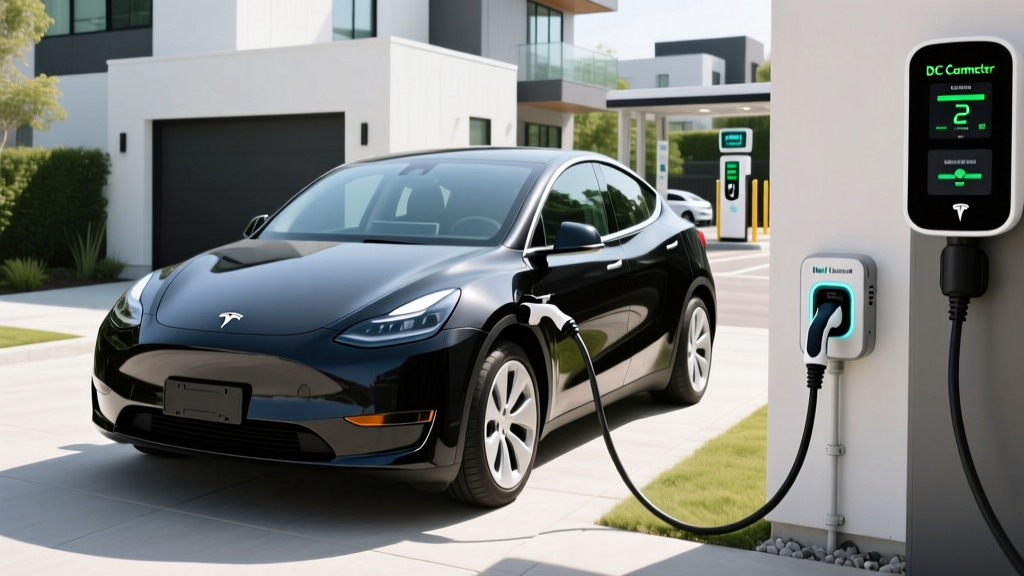
2. CCS-equipped vehicles using the Magic Dock adapter. At select Supercharger stations, Tesla has installed a built-in CCS1 adapter called the Magic Dock. This device is tethered to the Supercharger cable and extends a CCS1 connector for non-NACS vehicles. You unlock it via the Tesla app. As of 2026, Magic Dock-equipped stations remain a subset of the full network—roughly 200+ locations concentrated in high-traffic corridors. If your EV has a CCS1 port (most 2020–2024 models), check the Tesla app or your vehicle's navigation to confirm Magic Dock availability at a given station.
3. CHAdeMO vehicles. Older Nissan Leaf and Mitsubishi Outlander PHEV models with CHAdeMO ports have no practical path to Supercharger access. CHAdeMO-to-NACS adapters are not commercially available, and Tesla has not deployed CHAdeMO adapters at any station.
| Connector Type | Supercharger Access Method | Example Vehicles | Adapter Needed? |
|---|---|---|---|
| NACS (native) | Direct plug-in at any V3/V4 stall | 2025+ Ford F-150 Lightning, 2025+ GM Equinox EV, 2025+ Rivian R1T, all Tesla models | No |
| CCS1 | Magic Dock at select stations; or CCS-to-NACS adapter at standard stalls | 2022–2024 Hyundai Ioniq 5, 2022–2024 Ford Mach-E, VW ID.4, BMW iX | Yes (Magic Dock built-in or aftermarket adapter ~$200–$400) |
| CHAdeMO | No access | Nissan Leaf (all years), Mitsubishi Outlander PHEV | N/A |
Aftermarket CCS-to-NACS adapters. Several companies—including Lectron, A2Z EV, and Tesla itself (for approved vehicles)—sell CCS-to-NACS adapters rated for up to 250 kW DC fast charging. These cost between $200 and $400 and let CCS-equipped vehicles use any standard Supercharger stall. Before purchasing, confirm your vehicle is on the manufacturer's compatibility list, as firmware and communication protocols must align. Tesla's official adapter, priced around $250, is available through the Tesla app for vehicles enrolled in their non-Tesla Supercharger pilot.
Charging Levels Explained: Speeds, Power, and Range Added
Understanding EV charging requires distinguishing between kW (kilowatts), which measures the rate of power delivery, and kWh (kilowatt-hours), which measures total energy stored in your battery. Think of kW as the flow rate of a hose and kWh as the size of the tank you're filling. A 250 kW DC fast charger delivers energy much faster than a 7.2 kW Level 2 home charger, filling your battery's kWh capacity in minutes rather than hours.
| Level | Voltage / Phase | Power Output (kW) | Miles of Range Added per Hour | Typical Use Case |
|---|---|---|---|---|
| Level 1 | 120V AC, single-phase | 1.2–1.9 kW | 3–5 miles | Emergency/trickle; PHEV overnight top-ups |
| Level 2 | 240V AC, single-phase | 3.3–19.2 kW | 12–75 miles | Home daily charging; workplace; destination |
| DC Fast Charging (Level 3) | 200–900V DC | 50–350 kW | 150–1,000+ miles (peak rate) | Road trips; rapid top-ups |
Real-world charging time examples. At a Tesla V3 Supercharger (250 kW peak), a vehicle with an 80 kWh battery and a strong charge curve—like the Hyundai Ioniq 5 or Ford F-150 Lightning—can charge from 10% to 80% State of Charge (SoC) in approximately 18–25 minutes. However, charging speed is not linear. The battery management system (BMS) tapers power significantly above 80% SoC to protect cell health. That final 20% can take as long as the first 70%. This is why road-trip strategy focuses on 10–80% sessions rather than filling to 100%.
On a Level 2 home charger at 11.5 kW (48A), that same 80 kWh battery takes roughly 7–8 hours from 10% to 100%—ideal for overnight replenishment. Level 1 charging (1.4 kW from a standard 120V outlet) would require over 50 hours for the same charge, making it impractical for BEVs but viable for PHEVs with smaller 15–20 kWh batteries.
Cost to Charge: Home vs. Public vs. Gasoline
The economics of EV charging depend heavily on where you charge. Home charging on a Level 2 circuit is dramatically cheaper than public DC fast charging, and both are generally cheaper per mile than gasoline.
| Charging Scenario | Cost per kWh | Vehicle Efficiency (kWh/100 mi) | Cost per Mile |
|---|---|---|---|
| Home Level 2 (national avg. electricity, off-peak) | $0.13 | 30 kWh/100 mi | $0.039 |
| Home Level 2 (California, off-peak TOU rate) | $0.10 | 30 kWh/100 mi | $0.030 |
| Tesla Supercharger (non-Tesla pricing, avg.) | $0.35–$0.48 | 30 kWh/100 mi | $0.105–$0.144 |
| Electrify America / EVgo DC fast (avg.) | $0.38–$0.55 | 30 kWh/100 mi | $0.114–$0.165 |
| Gasoline vehicle (30 MPG combined, $3.40/gal) | $3.40/gallon | 3.33 gal/100 mi | $0.113 |
Key takeaway: Home-charged EVs cost roughly 3–4 cents per mile—about one-third the cost of gasoline. Supercharger pricing for non-Tesla vehicles is typically higher than for Tesla owners (a surcharge of $0.05–$0.10/kWh in many markets), placing DC fast charging at parity with or slightly above gasoline on a per-mile basis. The financial advantage of EV ownership is overwhelmingly tied to consistent home or workplace Level 2 charging.
Non-Tesla drivers should also be aware of idle fees at Supercharger stations. If your vehicle remains plugged in after reaching its charge limit (or the session's SoC target), Tesla charges $0.50–$1.00 per minute. Set a charge limit in the Tesla app and monitor your session.
Home EV Charger Installation: Electrical Requirements and Costs
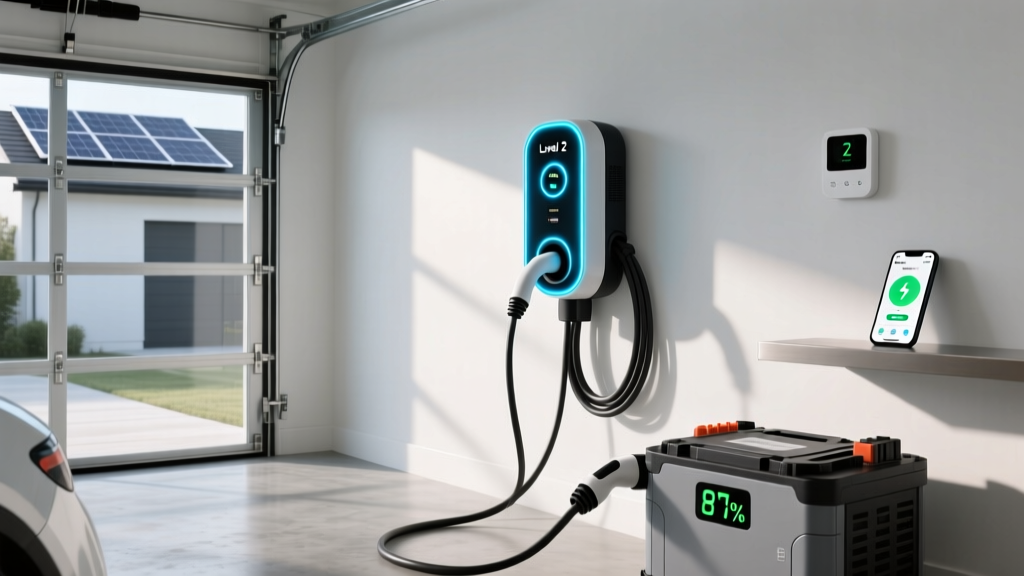
Installing a Level 2 home charger is the single highest-impact upgrade for EV ownership. Here's what's involved electrically and financially.
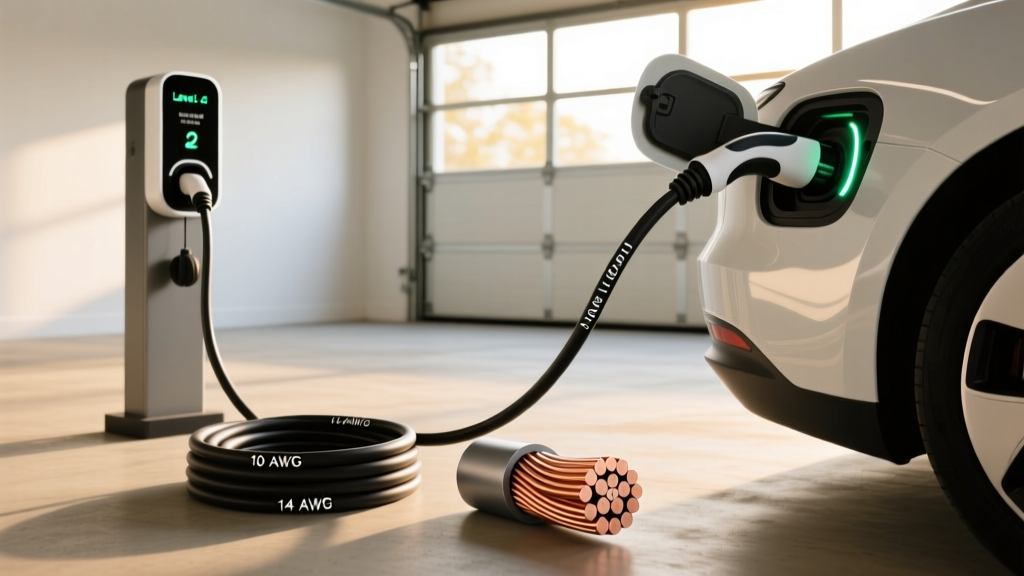
Electrical requirements. Most Level 2 home chargers operate on a 240V circuit, identical to what an electric dryer or oven uses. The amperage determines charge speed:
- 40A circuit (delivering 32A continuous / 7.7 kW) — sufficient for most EVs; the most common residential setup.
- 50A circuit (40A continuous / 9.6 kW) — recommended for larger batteries (100+ kWh trucks/SUVs) or faster overnight charging.
- 60A circuit (48A continuous / 11.5 kW) — maximum for most hardwired chargers; requires robust panel capacity.
Panel upgrade considerations. Most modern homes have a 200A electrical panel. Adding a 50A EV circuit is straightforward if you have spare capacity. However, older homes with 100A panels, or homes already running high-draw appliances (electric range, HVAC, dryer), may need a panel upgrade to 200A or even 400A. A panel upgrade costs $1,500–$4,000+ and is the single biggest variable in installation pricing.
| Component | Cost Range | Notes |
|---|---|---|
| Level 2 charger equipment | $350–$700 | Smart Wi-Fi chargers (ChargePoint, Emporia, Wallbox); Tesla Wall Connector ~$450 |
| Electrician labor (standard install) | $500–$1,500 | Running 240V circuit from panel to garage/carport; 10–40 ft run |
| Electrical permit | $50–$250 | Varies by municipality; required in most jurisdictions |
| Panel upgrade (if needed) | $1,500–$4,000+ | 100A → 200A upgrade; older homes or high-load panels |
| Total (no panel upgrade) | $900–$2,450 | Typical scenario for homes with adequate panel capacity |
| Total (with panel upgrade) | $2,400–$6,450+ | Older homes or those with maxed-out panels |
Federal tax credit for home charging equipment. The IRS Residential Clean Energy Credit (formally the Alternative Fuel Vehicle Refueling Property Credit, IRC §30C) covers 30% of home EV charger equipment and installation costs, up to $1,000 per year. This credit applies through 2032. To qualify, the charger must be installed at your primary residence. Consult a tax professional to confirm eligibility, as income and location-based restrictions may apply in certain census tracts.
Recommended Home EV Chargers for 2026
Below are proven Level 2 chargers with the specifications and features that matter for daily EV ownership. Each recommendation includes power output, connector type, and real-world practicality.
Tesla Wall Connector (Gen 4)
- Power output: Up to 11.5 kW (48A) on a 60A circuit
- Connector: NACS (native Tesla plug)
- Cable length: 24 ft
- Smart features: Wi-Fi, OTA updates, load sharing (pair two units on one circuit), Power Share with home energy
- Price: ~$450
- Best for: Tesla owners and 2025+ NACS-equipped Ford/GM/Rivian vehicles. Excellent build quality and the fastest residential charge rate available.
ChargePoint Home Flex
- Power output: Up to 12 kW (50A) on a 60A circuit; configurable down to 16A for lower-capacity panels
- Connector: J1772 (NACS adapter included or available separately)
- Cable length: 23 ft
- Smart features: Wi-Fi, ChargePoint app scheduling, Alexa integration, amperage adjustment via app
- Price: ~$550–$650
- Best for: CCS/J1772-equipped vehicles; flexible amperage makes it ideal for homes with limited panel capacity.
Emporia Vue EV Charger
- Power output: Up to 11.5 kW (48A) on a 60A circuit
- Connector: J1772 (NACS version available for 2025+ models)
- Cable length: 24 ft
- Smart features: Wi-Fi, integration with Emporia Vue energy monitor for whole-home load tracking, solar-aware scheduling
- Price: ~$400
- Best for: Budget-conscious buyers who want energy monitoring; strong value proposition with solar integration.
Wallbox Pulsar Plus
- Power output: Up to 11.5 kW (48A) on a 60A circuit
- Connector: J1772 (NACS adapter available)
- Cable length: 25 ft
- Smart features: Wi-Fi + Bluetooth, Power Boost (dynamic load balancing with home panel), compact form factor
- Price: ~$500–$600
- Best for: Tight garage spaces and homes where dynamic load management avoids a panel upgrade.
Safety, Code, and Installation Best Practices
EV charging equipment draws sustained high current for hours—unlike most household appliances that cycle on and off. This makes proper installation non-negotiable.
- Dedicated circuit. Your Level 2 charger must be on its own dedicated breaker. Sharing a circuit with other appliances is a code violation and a fire risk.
- GFCI protection. The 2023 National Electrical Code (NEC) requires GFCI protection for all EV charging outlets rated 60A or less. Hardwired chargers may have GFCI built into the unit; plug-in units require a GFCI breaker.
- Outdoor rating. If your charger is installed outdoors (carport, driveway post), ensure it carries a NEMA 4 or IP65 weather-resistance rating. All chargers listed above meet this standard.
- Hardwired vs. plug-in. Hardwired installations (no plug; direct connection to junction box) allow higher amperage (48A+) and eliminate the need for a 240V receptacle. Plug-in units using a NEMA 14-50 outlet offer portability but are limited to 40A continuous draw (NEC derating rules). A licensed electrician should make this determination based on your panel and usage needs.
- Permit and inspection. Most municipalities require an electrical permit and post-installation inspection for EV charger circuits. Skipping this step can void homeowner's insurance coverage in the event of an electrical fire.
Supercharger Charging Speeds for Non-Tesla Vehicles: Real-World Expectations
When using a Tesla Supercharger for non-Tesla EVs, your actual charge speed depends on three factors: the Supercharger generation, your vehicle's maximum DC charge acceptance rate, and battery temperature/preconditioning.
V3 Superchargers deliver up to 250 kW peak. However, most non-Tesla CCS vehicles connecting via Magic Dock or adapter will see peak rates of 150–200 kW, limited by their onboard BMS and the adapter's communication protocol. For example:
- Hyundai Ioniq 5 (84 kWh battery, NMC): EPA range 305 mi. Peaks at ~233 kW natively; via adapter, expect 180–210 kW peak. 10–80% in approximately 20–24 minutes.
- Ford F-150 Lightning (extended range, 131 kWh usable, NMC): EPA range 320 mi. Peaks at ~150 kW via CCS adapter. 10–80% in approximately 40–45 minutes due to the large battery.
- Rivian R1T Dual-Motor (2025+, NACS native): 149 kWh battery. Peaks at ~200 kW on V3 Supercharger. 10–80% in approximately 35–40 minutes.
V4 Superchargers, deployed at newer stations, support up to 350 kW for capable vehicles and include a CCS cable option, eliminating the need for the Magic Dock adapter at those locations. V4 rollout is ongoing through 2026, concentrated along major interstate corridors.
Preconditioning matters. If your battery is cold (below 50°F / 10°C), charge acceptance drops significantly—potentially to 50–80 kW until the BMS warms the pack. Many EVs automatically precondition the battery when you navigate to a charging station. If yours doesn't, initiate a charge session 15–20 minutes before you need maximum speed, or drive the vehicle to warm the pack.
According to fueleconomy.gov, real-world DC fast charging efficiency is typically 85–90% of the rated power due to thermal losses and taper. Plan road-trip stops assuming sustained rates of 60–70% of peak kW over the 10–80% session.
Frequently Asked Questions
How much does it cost to install a home EV charger?
A standard Level 2 home charger installation costs $900–$2,450 including equipment ($350–$700), electrician labor ($500–$1,500), and permit fees ($50–$250). If your home requires an electrical panel upgrade from 100A to 200A, add $1,500–$4,000+. The federal §30C tax credit covers 30% of costs up to $1,000 through 2032.
How fast will each charging level add range?
Level 1 (120V) adds 3–5 miles per hour. Level 2 (240V, 48A) adds approximately 30–45 miles per hour depending on vehicle efficiency. DC fast charging at 150–250 kW adds 3–5 miles per minute at peak rate, though this tapers significantly above 80% SoC. See the charging levels table above for detailed figures.
Which connector is compatible with my EV for Tesla Supercharger access?
If your 2025+ vehicle has a NACS port (Ford, GM, Rivian, Volvo, and others), you can plug directly into any Supercharger. If your vehicle has a CCS1 port (most 2020–2024 EVs), you need either a Magic Dock-equipped station or a CCS-to-NACS aftermarket adapter ($200–$400). CHAdeMO vehicles cannot access Superchargers.
How much does charging cost per mile vs. gas?
Home Level 2 charging costs approximately $0.03–$0.04 per mile—roughly one-third the cost of gasoline at $3.40/gal in a 30 MPG vehicle ($0.113/mile). Public DC fast charging at Tesla Superchargers ($0.35–$0.48/kWh for non-Tesla vehicles) costs $0.10–$0.14 per mile, roughly on par with gasoline. The cost advantage of EVs is maximized with consistent home charging.
What electrical upgrades might I need for a home charger?
Homes with a 200A electrical panel and spare breaker slots typically need no upgrades—just a new 240V circuit. Homes with 100A panels, or those already running multiple high-draw appliances (electric HVAC, dryer, range, water heater), may require a panel upgrade to 200A or 400A, costing $1,500–$4,000+. A licensed electrician can perform a load calculation to determine your specific needs. As noted by the NHTSA and electrical safety organizations, never attempt EV charger installation without a licensed professional.
Do non-Tesla drivers pay more at Superchargers?
Yes, in most markets. Tesla charges non-Tesla vehicles a higher per-kWh rate—typically $0.05–$0.10/kWh more than Tesla owners pay. In some regions, enrolling in Tesla's free membership tier within the app reduces the non-Tesla surcharge. Pricing varies by station, time of day, and local utility rates.
Can I charge to 100% at a Supercharger?
You can, but it's not recommended for regular use. Charging above 80% SoC triggers aggressive taper—power drops to 50 kW or below—and adds significant time. For NMC battery chemistry, frequent 100% charges accelerate long-term degradation. Reserve 100% charges for road-trip departure days. LFP batteries (found in some Tesla Model 3/Y Standard Range vehicles) tolerate 100% charges better, but most non-Tesla EVs use NMC chemistry.