Tesla Supercharger Pricing: What You'll Actually Pay in 2026
If you're shopping for a Tesla or any NACS-equipped EV, one of the first questions is practical: how much do Tesla Superchargers cost, and how does that compare to charging at home or using other public networks? The answer depends heavily on where you charge, what time of day you plug in, and whether you're paying Tesla's member or non-member rate.
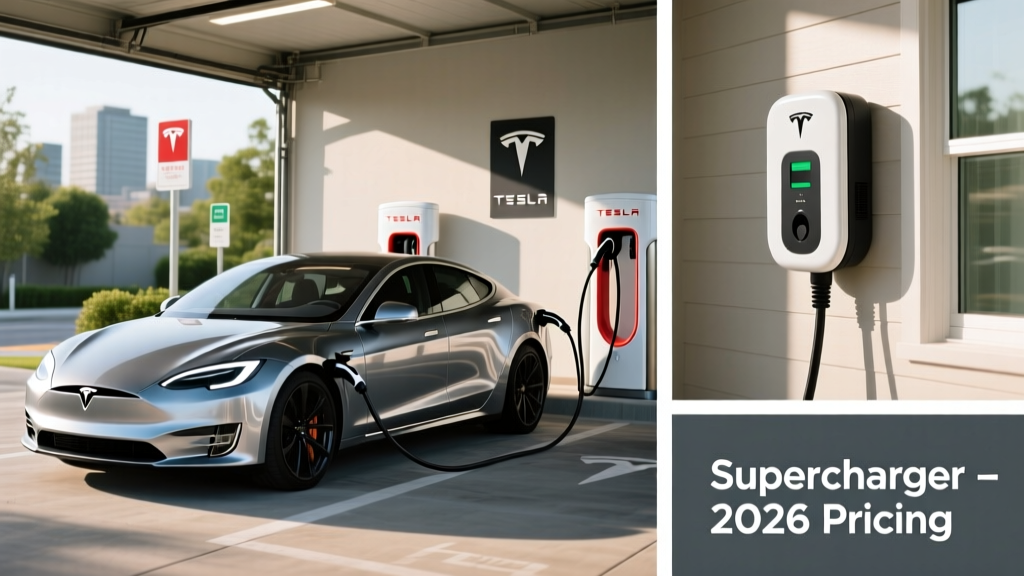
As of early 2026, Tesla Supercharger pricing in the United States typically ranges from $0.25 to $0.55 per kWh, with a national median hovering around $0.35–$0.40/kWh. Prices vary by station location, local utility rates, and time-of-use tiers where applicable. Tesla owners pay the standard member rate; non-Tesla vehicles accessing Superchargers via the NACS connector or Magic Dock adapter generally pay a 15–30% premium unless they subscribe to Tesla's monthly membership plan.
To put that in real-world terms: charging a Tesla Model Y Long Range (75 kWh usable battery, NMC chemistry) from 10% to 80% at a Supercharger costs roughly $18–$29 depending on local rates, adding approximately 210 miles of EPA-rated range. That same charge at home on a residential off-peak rate of $0.13/kWh? About $10.
Charging Levels Explained: Speeds, Costs, and Range Added
Understanding EV charging requires distinguishing between kW (kilowatts), which measures power delivery rate, and kWh (kilowatt-hours), which measures total energy stored. Think of kW as how fast water flows from a hose, and kWh as the total gallons in your tank. This distinction matters every time you evaluate charging speed or cost.
| Level | Voltage | Power (kW) | Miles of Range/Hour | Typical Use Case |
|---|---|---|---|---|
| Level 1 | 120V AC | 1.0–1.4 kW | 3–5 mi/hr | Overnight trickle, PHEVs, emergency backup |
| Level 2 | 240V AC | 3.3–19.2 kW | 12–75 mi/hr | Daily home charging, workplace, destinations |
| DC Fast (V3 Supercharger) | 400–800V DC | 50–250 kW | 180–1,000+ mi/hr | Road trips, quick top-ups |
| DC Fast (V4 Supercharger) | 400–900V DC | Up to 350 kW | Up to 1,200+ mi/hr | Next-gen highway stations |
For a typical 75 kWh battery pack (Tesla Model Y, Model 3 Long Range), here's what charging times look like across levels:
- Level 1 (120V, 1.2 kW): 10–80% takes approximately 52 hours — impractical for full charges, fine for PHEVs with 15–20 kWh batteries
- Level 2 (240V, 48A/11.5 kW): 10–80% in roughly 5.5 hours — ideal overnight charging
- Level 2 (240V, 32A/7.7 kW): 10–80% in about 7.5 hours — adequate for most daily needs
- DC Fast (250 kW V3 Supercharger): 10–80% in approximately 25–28 minutes, with charge rate tapering significantly above 60% SoC
Home Charger Installation: Real Costs and Electrical Requirements
The single biggest variable in home EV charging cost isn't the charger itself — it's whether your electrical panel can handle the load. Most homes built after 2000 have 200-amp service panels that can accommodate a dedicated 60-amp circuit (delivering 48 amps continuous to the vehicle, per NEC 80% derating rules). Older homes with 100-amp or 150-amp panels may need a service upgrade, which fundamentally changes the budget.
| Component | Simple Install (Panel Capacity Exists) | Complex Install (Panel Upgrade Needed) |
|---|---|---|
| Level 2 Charger (hardware) | $350–$700 | $350–$700 |
| Electrical permit | $50–$200 | $150–$400 |
| Electrician labor (run 240V circuit, ~20–50 ft) | $500–$1,500 | $800–$2,000 |
| Panel upgrade (100A → 200A service) | N/A | $2,000–$5,000 |
| Conduit, wiring (6 AWG copper for 60A) | $100–$400 | $200–$600 |
| Total estimated cost | $1,000–$2,800 | $3,500–$8,700 |
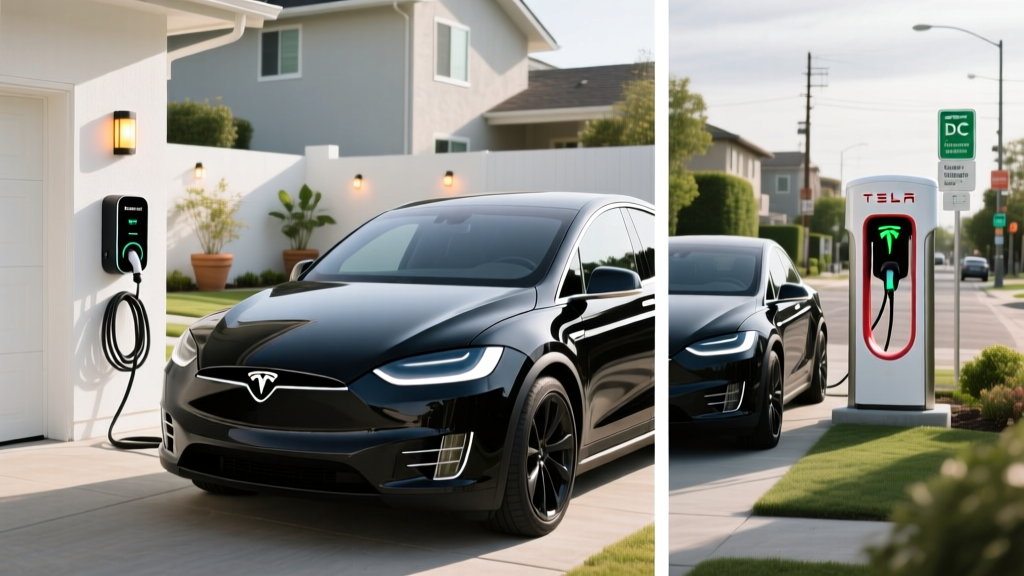
A few specifics matter here. A NEMA 14-50 outlet installation (allowing you to plug in a mobile connector or swap chargers later) costs about the same as a hardwired unit but offers more flexibility. Hardwired chargers can deliver the full 48A continuous on a 60A breaker, while NEMA 14-50 outlets are limited to 40A continuous (on a 50A breaker), yielding about 30 mi/hr vs. 36–44 mi/hr for a Tesla Model Y.
Connector Compatibility: NACS, CCS, and the Adapter Landscape
The connector situation has simplified considerably since 2024, when Tesla opened its Supercharger network and the North American Charging Standard (NACS) was adopted by nearly every major automaker. By 2026, NACS is the dominant DC fast-charging connector in North America, but CCS1-equipped vehicles remain on the road and at public stations.
| Connector | Native Vehicles | Tesla Supercharger Access | Adapter Needed? |
|---|---|---|---|
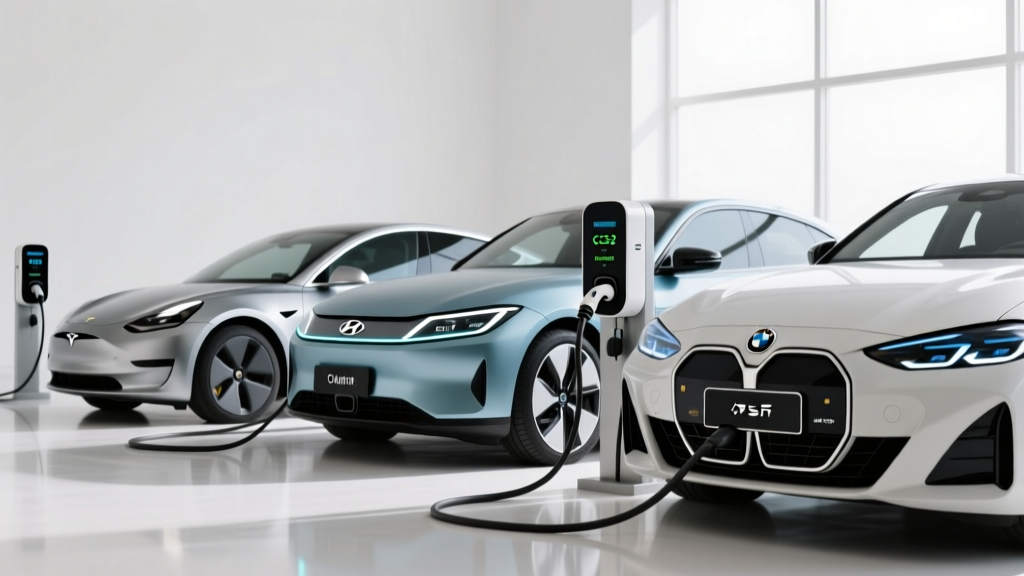
| NACS (Tesla) | Tesla (all), Ford, GM, Rivian, Volvo, Polestar, Mercedes, Nissan (2025+), Honda (2025+), Fisker, BMW (2025+) | Direct plug-in | No |
| CCS1 | Hyundai, Kia, VW, Audi, Porsche, BMW (pre-2025), older Nissan, Subaru Solterra | With Magic Dock or CCS-to-NACS adapter | Yes — OEM adapter or Tesla Magic Dock at station |
| CHAdeMO | Nissan Leaf (legacy), Mitsubishi Outlander PHEV | No — network is largely discontinued | N/A |
If you own a CCS1-equipped vehicle, most OEMs now sell or include a CCS-to-NACS adapter ($100–$300) that grants Supercharger access. Hyundai and Kia began shipping adapters with 2025+ models. The key limitation: CCS-to-NACS adapters are rated for up to 250 kW, matching V3 Superchargers but potentially bottlenecking future V4 stations. Always verify your adapter's maximum current rating with the manufacturer.
Cost Per Mile: Supercharger vs. Home Charging vs. Gasoline
The economics of EV charging become clearest when expressed as cost per mile. Below, we compare a Tesla Model Y Long Range (310 EPA miles, ~3.6 mi/kWh efficiency) against a comparable gasoline SUV averaging 28 MPG combined, using national averages.
| Charging/Fuel Method | Rate | Cost Per Mile | Annual Cost (12,000 mi) |
|---|---|---|---|
| Home charging (national avg.) | $0.16/kWh | $0.044 | $533 |
| Home charging (off-peak TOU rate) | $0.09/kWh | $0.025 | $300 |
| Tesla Supercharger (median) | $0.38/kWh | $0.106 | $1,267 |
| Tesla Supercharger (high-cost metro) | $0.52/kWh | $0.144 | $1,733 |
| Public Level 2 (ChargePoint, EVgo) | $0.28/kWh | $0.078 | $933 |
| Gasoline SUV (28 MPG) | $3.35/gal | $0.120 | $1,436 |
The takeaway is unambiguous: home charging on any residential rate is dramatically cheaper than gasoline or public DC fast charging. Even at the highest Supercharger rates in metro areas like San Francisco or New York, a Model Y costs roughly the same per mile as a 28-MPG gas SUV. But if you rely exclusively on Superchargers — say, living in an apartment without home charging access — your "fuel" costs will equal or exceed a gasoline vehicle's.
This is why home Level 2 installation, despite its upfront cost, is the single highest-ROI investment an EV owner can make. A $2,000 installation pays for itself in 2–4 years through the home-vs-Supercharger cost differential alone for a driver covering 12,000 miles annually.
Recommended Home Chargers: Power, Features, and Pricing
For NACS-equipped vehicles (all Teslas, plus Ford, GM, Rivian, and most 2025+ models), the charger ecosystem is mature and competitive. Here are three options covering different budgets and needs, all UL-listed and compatible with the federal Alternative Fuel Vehicle Refueling Property Credit (up to $1,000 for home charger hardware and installation, subject to census-tract eligibility per IRS Form 8911).
Tesla Wall Connector (Gen 3)
Power: Up to 11.5 kW (48A on 60A circuit)
Connector: NACS native, 24-ft cable
Smart features: Wi-Fi, OTA updates, load sharing (pair two units on one circuit), access control
Price: $475
Best for: Tesla-only households wanting seamless integration and power-sharing for two-vehicle garages.
ChargePoint Home Flex
Power: Up to 12 kW (50A on 60A circuit), configurable down to 16A
Connector: NACS (2025+ models) or J1772 with NACS adapter, 23-ft cable
Smart features: Wi-Fi, app scheduling, Alexa integration, detailed energy reporting
Price: $599
Best for: Multi-brand EV households wanting a flexible, well-supported smart charger with robust app features.
Emporia Level 2 EV Charger
Power: Up to 11.5 kW (48A on 60A circuit)
Connector: NACS or J1772, 24-ft cable
Smart features: Wi-Fi, real-time energy monitoring, solar integration with Emporia Vue panel monitor, TOU scheduling
Price: $399
Best for: Budget-conscious buyers who want smart features and solar-aware charging without the premium price.
For CCS1 vehicles (Hyundai Ioniq 5/6, Kia EV6/EV9, VW ID.4), ensure your charger either ships with a J1772 connector (you'll use your car's J1772-to-NACS adapter if applicable) or purchase a charger with a native CCS1 plug. Most Level 2 home chargers use J1772 for AC charging, which works universally — the NACS vs. CCS distinction primarily matters for DC fast charging.
Safety, Code Compliance, and Installation Best Practices
EV charging draws sustained high current for hours — this is fundamentally different from intermittent loads like a dryer or oven. The National Electrical Code (NEC) treats EV chargers as continuous loads, requiring the circuit to be rated at 125% of the charger's maximum draw. A 48-amp charger requires a 60-amp breaker and 6 AWG copper wire (or 4 AWG aluminum).
Key code and safety requirements for any 2026 installation:
- Dedicated circuit: Your EV charger must have its own dedicated breaker — no sharing with other appliances.
- GFCI protection: NEC 2020 and later require GFCI protection for all 240V receptacles in garages. Hardwired chargers may be exempt depending on local interpretation, which is one reason many electricians prefer hardwired installations.
- Outdoor rating: If your charger is mounted outside, it must carry a NEMA 4 or NEMA 4X rating for weather resistance. All three chargers recommended above carry outdoor ratings.
- Permit and inspection: Virtually all jurisdictions require an electrical permit for a new 240V circuit. Your electrician should pull this permit; the inspection ensures your installation meets code and protects your homeowner's insurance coverage.
- Utility notification: Some utilities require notification when adding an EV charger, particularly in areas with transformer capacity constraints. A few offer dedicated EV rate plans with lower off-peak pricing — contact your utility before installing.
Never use an extension cord, adapter plug, or outlet splitter with an EV charger. The sustained thermal load makes these a fire risk, and they will void both your charger warranty and potentially your insurance coverage.
Frequently Asked Questions
How much does it cost to install a home EV charger?
A straightforward Level 2 installation on an existing 200-amp panel typically costs $1,000–$2,800 including the charger hardware, electrician labor, wiring, and permit. If your home needs a panel upgrade from 100A to 200A service, expect $3,500–$8,700 total. Always get quotes from at least two licensed electricians, and confirm they have specific EV charger installation experience.
How fast will each charging level add range?
Level 1 (120V) adds 3–5 miles per hour — roughly 40 miles overnight. Level 2 (240V, 48A) adds 30–44 miles per hour for a Tesla Model Y, fully replenishing a depleted battery in 7–8 hours. DC fast charging at a 250 kW V3 Supercharger can add up to 200 miles in 15 minutes, though charge rate tapers significantly above 60% SoC, making 10–80% sessions the practical standard (roughly 25–28 minutes for a Model Y).
Which connector/charger is compatible with my EV?
If your vehicle is a Tesla or any 2025+ model from Ford, GM, Rivian, Volvo, or Mercedes, it uses NACS natively and plugs directly into Superchargers and NACS home chargers. If you drive a Hyundai, Kia, VW, or pre-2025 BMW with CCS1, you'll need a CCS-to-NACS adapter ($100–$300) for Supercharger access, and your home charger will use the universal J1772 AC connector. CHAdeMO vehicles (Nissan Leaf, Mitsubishi Outlander PHEV) cannot use Superchargers.
How much does charging cost per mile vs. gas?
Home charging at the national average of $0.16/kWh costs about $0.04–$0.05 per mile for a Tesla Model Y — roughly one-third the per-mile cost of a 28-MPG gasoline SUV at $3.35/gallon ($0.12/mile). Supercharging at the median rate of $0.38/kWh costs about $0.11/mile, still competitive with gasoline. Off-peak home charging at $0.09/kWh drops to $0.025/mile, making it the cheapest "fuel" available for personal transportation.
What electrical upgrades might I need?
The most common upgrade is a panel capacity increase from 100A to 200A service ($2,000–$5,000). You may also need a new breaker slot (most panels have spare slots, but some older panels are full), heavier-gauge wire if the run from panel to garage exceeds 50 feet, or a sub-panel if your garage is detached. Some utilities offer "make-ready" programs that cover the cost of wiring from the utility's infrastructure to your meter — check with your provider. Per the IRS Form 8911, the Alternative Fuel Vehicle Refueling Property Credit can offset up to $1,000 of home charging equipment and installation costs if you live in an eligible census tract.