What You'll Actually Pay at a Tesla Supercharger in 2026
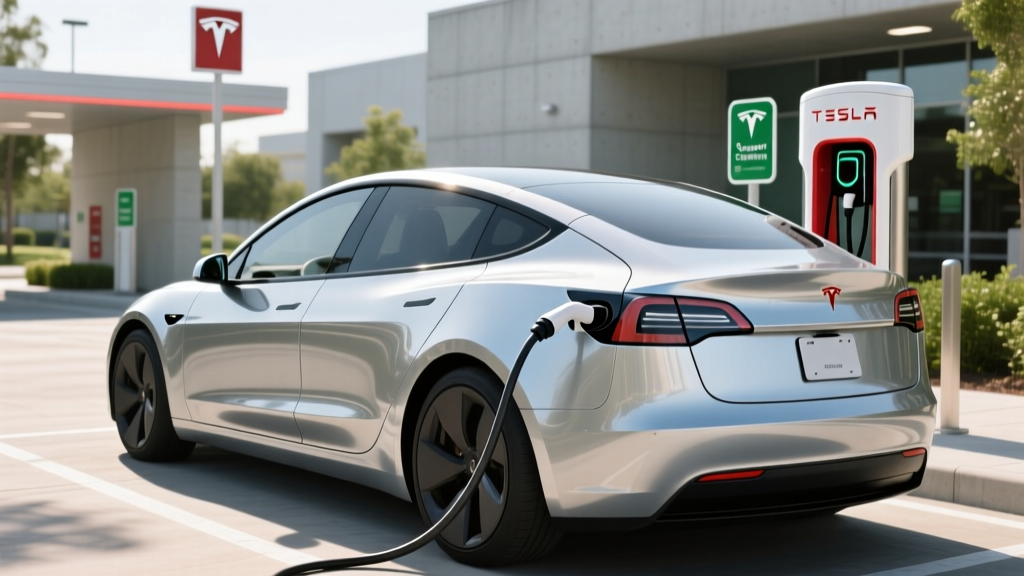
If you've typed "Tesla Supercharger cost per kWh near me" into your phone while watching your state of charge drop on the highway, you're not alone. Supercharger pricing is notoriously location-dependent, and Tesla rarely publishes a unified rate sheet. In 2026, the reality is this: Supercharger rates in the U.S. typically range from $0.28 to $0.52 per kWh, with the national average hovering around $0.35–$0.40/kWh at V3 and V4 stalls.
That's up from the $0.25–$0.30 averages we saw in 2022–2023, driven by utility demand charges, site-host fees, and Tesla's own margin adjustments. Urban Superchargers in California, New York, and Massachusetts consistently sit at the high end ($0.43–$0.52/kWh), while rural Midwest and Southern locations often remain closer to $0.28–$0.34/kWh.
Here's what a typical 10–80% session costs on a 75 kWh usable battery (like a Model Y Long Range) at various rates:
- $0.30/kWh: ~$15.75 for 52.5 kWh added
- $0.40/kWh: ~$21.00
- $0.48/kWh: ~$25.20
Compare that to filling a 15-gallon gas tank at $3.50/gallon ($52.50), and even the priciest Supercharger session is still a relative bargain — but only if you're not relying on DC fast charging as your primary fueling method. Home Level 2 charging remains the economic backbone of EV ownership.
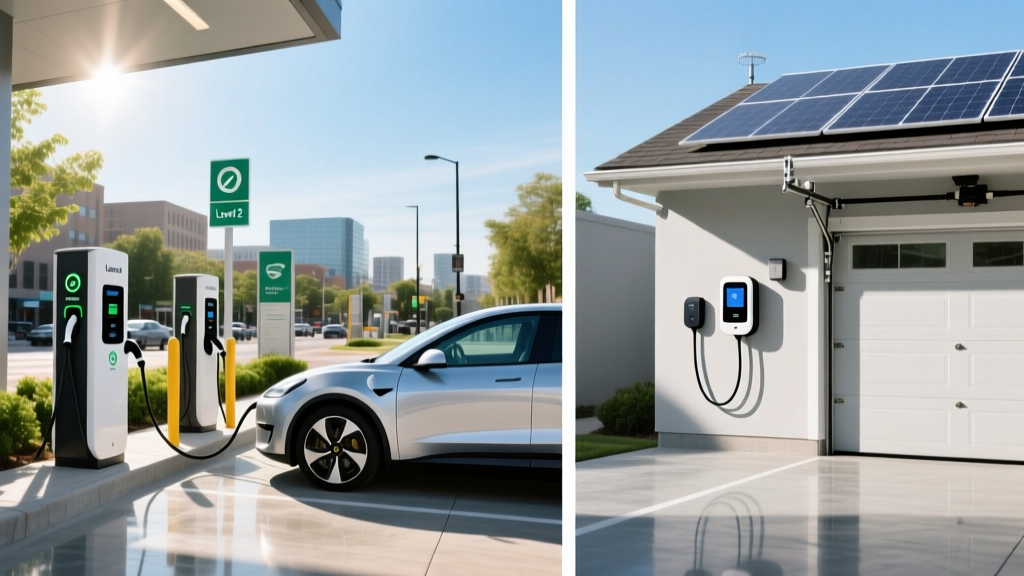
Charging Levels Explained: Speeds, Costs, and When to Use Each
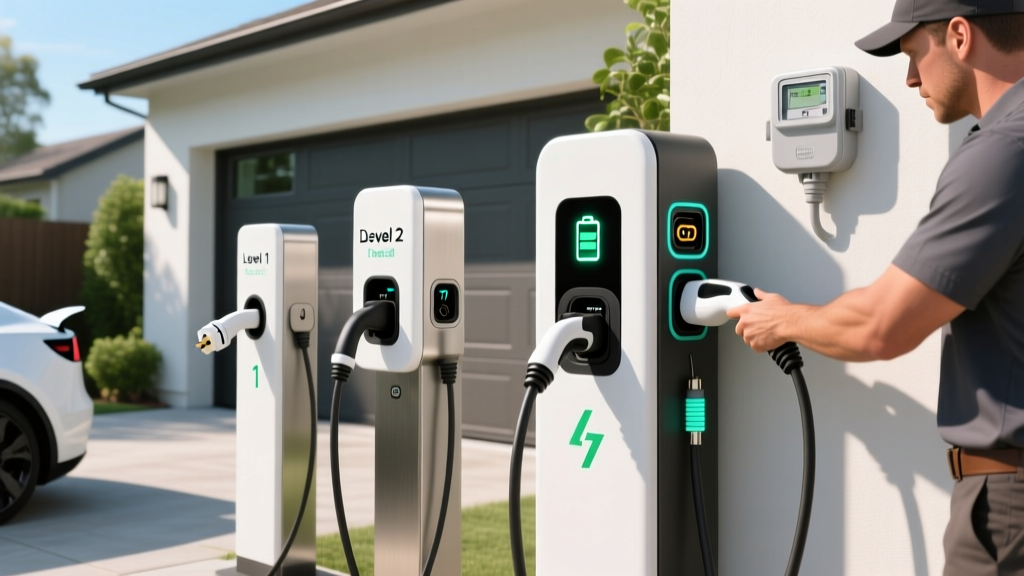
Before we break down home installation, let's clarify the three charging levels. A critical distinction every EV owner must internalize: kW (kilowatts) measures power — how fast energy flows. kWh (kilowatt-hours) measures energy — the total amount stored in your battery. Think of kW as the width of a hose, and kWh as the size of the bucket.
| Level | Voltage | Power (kW) | Miles Added/Hour | Typical Use Case | Cost per kWh (avg.) |
|---|---|---|---|---|---|
| Level 1 | 120V AC | 1.0–1.4 kW | 3–5 mi/hr | Overnight trickle, PHEVs, emergencies | $0.12–$0.18 (home) |
| Level 2 | 240V AC | 3.3–19.2 kW | 12–75 mi/hr | Daily home/work charging | $0.10–$0.22 (home) |
| DC Fast (V3 SC) | 400–800V DC | 50–250 kW | 150–1,000+ mi/hr (peak) | Road trips, rapid top-ups | $0.28–$0.52 (public) |
A few real-world caveats: those "miles per hour" figures assume peak power delivery. On a DC fast charger, your vehicle's charge curve means you'll see peak kW only between roughly 10–50% state of charge. Above 80%, charging slows dramatically to protect the battery — a 250 kW peak rate may taper to 40–60 kW past 80%. This is why we quote 10–80% times rather than 0–100%.
How Much Does It Cost to Install a Home EV Charger?
Home Level 2 charging is where the economics of EV ownership truly shine — but the upfront installation cost varies enormously based on your home's electrical infrastructure. Here's the realistic breakdown for a 240V / 48A hardwired Level 2 charger installation in 2026:
| Component | Low-End | Typical | High-End (Panel Upgrade) |
|---|---|---|---|
| Level 2 Charger (hardware) | $350 | $550 | $700 |
| Electrician labor (2–6 hrs) | $400 | $900 | $1,800 |
| Electrical permit | $50 | $125 | $200 |
| Wiring / conduit materials | $100 | $250 | $500 |
| Panel upgrade (100A → 200A) | $0 | $0 | $2,000–$4,000 |
| Total | $900 | $1,825 | $5,200–$7,200 |
What Electrical Upgrades Might I Need?
A Level 2 charger drawing 48A continuous requires a dedicated 60A circuit on a 240V line. The National Electrical Code (NEC) requires circuits to be rated at 125% of continuous load, so a 48A charger needs 60A breaker capacity. Here's when upgrades become necessary:
- 100A main panel: If your home has a 100-amp service panel (common in pre-1990 construction), adding a 60A EV circuit may exceed your panel's capacity. A licensed electrician will perform a load calculation. Upgrade to 200A service typically costs $2,000–$4,000.
- 200A panel with spare slots: Most modern homes can accommodate a 60A breaker without a panel upgrade — you just need two adjacent slots and sufficient remaining capacity.
- No 240V outlet near parking: If you're installing a NEMA 14-50 outlet (for a plug-in charger) or hardwiring, your electrician will run 6 AWG copper wire (or 4 AWG aluminum) from the panel to your garage or exterior wall. Longer runs = higher material cost.
Pro tip: Some utilities offer rebates of $250–$1,000 for Level 2 charger installation, especially if you agree to off-peak charging schedules. Check with your local utility before scheduling work.
Cost to Charge: $/kWh Scenarios and Cost Per Mile vs Gas
This is where EV ownership economics become concrete. Let's compare real charging costs across scenarios, then stack them up against gasoline.
| Scenario | Rate ($/kWh) | Vehicle Efficiency | Cost per Mile |
|---|---|---|---|
| Home Level 2 (off-peak TOU) | $0.11 | 3.5 mi/kWh (Model Y) | $0.031 |
| Home Level 2 (peak / standard) | $0.18 | 3.5 mi/kWh | $0.051 |
| Tesla Supercharger (avg.) | $0.38 | 3.5 mi/kWh | $0.109 |
| Tesla Supercharger (CA/NY peak) | $0.48 | 3.5 mi/kWh | $0.137 |
| Electrify America / EVgo | $0.43 | 3.5 mi/kWh | $0.123 |
| Gasoline car (28 MPG combined) | $3.40/gallon | 28 MPG | $0.121 |
| Gasoline car (22 MPG, truck/SUV) | $3.40/gallon | 22 MPG | $0.155 |
The takeaway: home off-peak charging is 3–5x cheaper per mile than gasoline. Even at the most expensive Supercharger rates, you're roughly breaking even with a 28 MPG gas car — and still saving versus a truck or large SUV. But if you only DC fast charge and never charge at home, your cost advantage shrinks dramatically.
To find the exact Tesla Supercharger cost per kWh near you, open the Tesla app or your vehicle's navigation — tap any Supercharger pin to see the current rate. Third-party apps like PlugShare also list user-reported pricing for most stations. Tesla's in-car navigation will show the rate before you route to a station.
Connector Compatibility: NACS, CCS1, CHAdeMO, and Adapter Realities
As of 2026, the North American Charging Standard (NACS) — originally Tesla's proprietary connector — has become the dominant standard. Ford, GM, Rivian, Volvo, Hyundai, and most major automakers now ship vehicles with native NACS ports. But millions of CCS1-equipped EVs remain on the road, and adapter logistics matter.
| Connector | Used By | Tesla Supercharger Access | Non-Tesla DCFC Access | Adapter Needed? |
|---|---|---|---|---|
| NACS (native) | Tesla (all), Ford, GM, Rivian, Volvo, Hyundai/Kia (2025+), most 2026+ models | Direct plug-in | CCS adapter may be needed for older EA/EVgo stalls | CCS1→NACS adapter ($150–$250) for legacy networks |
| CCS1 | VW ID.4 (pre-2026), older Hyundai/Kia, BMW iX/i4, Mercedes EQS, legacy models | Tesla Magic Dock (at select stalls) or NACS adapter ($200–$300) | Direct plug-in at Electrify America, EVgo, ChargePoint | May need NACS adapter for expanding Tesla network access |
| CHAdeMO | Nissan Leaf (legacy), Mitsubishi Outlander PHEV | Not compatible | Limited — CHAdeMO stalls being phased out | No practical adapter to CCS/NACS for DCFC |
Key 2026 update: Tesla has opened most of its Supercharger network to non-Tesla EVs via the built-in "Magic Dock" CCS adapter at select stations, and via the Tesla app for NACS-equipped vehicles from other manufacturers. Pricing for non-Tesla vehicles at Superchargers is typically $0.48–$0.66/kWh — a 20–40% premium over Tesla owners.
Charging Time Examples: 10–80% for Common Battery Sizes
How long does a charge session actually take? Here are real-world 10–80% times based on tested charge curves. Remember, peak kW is only sustained briefly; the average rate across the session is what matters.
- Tesla Model Y Long Range (75 kWh usable, NMC): Peak 250 kW on V3 Supercharger. 10–80% in ~22 minutes. Average sustained rate ~145 kW.
- Ford F-150 Lightning Extended Range (131 kWh usable, NMC): Peak 170 kW. 10–80% in ~44 minutes. Larger battery means longer sessions even at moderate peak rates.
- Hyundai Ioniq 5 (77.4 kWh usable, NMC, 800V architecture): Peak 240 kW on compatible 350 kW chargers. 10–80% in ~18 minutes — one of the fastest in its class.
- Chevrolet Equinox EV (85 kWh usable, NMC): Peak 190 kW. 10–80% in ~28 minutes.
- Home Level 2 at 11.5 kW (48A): Adds ~30–35 miles of range per hour. A full 10–80% on a 75 kWh battery takes ~4.5 hours — perfect for overnight.
Cold weather (below 32°F) can add 15–30% to these times due to battery preconditioning demands and reduced charge acceptance. Tesla vehicles precondition the battery automatically when you navigate to a Supercharger; most other EVs require you to activate preconditioning manually or via a route-to-charger workflow.
Recommended Home Level 2 Chargers (2026)
Based on reliability, feature sets, and real-world performance, here are the Level 2 chargers we recommend for home installation this year:
Tesla Wall Connector (Gen 4)
- Power Output: Up to 11.5 kW (48A) on a 60A circuit
- Connector: NACS native
- Cable Length: 24 feet
- Smart Features: Wi-Fi, OTA updates, load sharing (pair two units on one circuit), Tesla app integration, Powerwall integration
- Price: ~$475
- Best For: Tesla owners; seamless ecosystem integration
ChargePoint Home Flex (2nd Gen)
- Power Output: Up to 12 kW (50A) on a 60A circuit; adjustable down to 16A
- Connector: NACS (2025+ models) or J1772 with adapter
- Cable Length: 23 feet
- Smart Features: Wi-Fi, ChargePoint app scheduling, Alexa integration, utility demand-response compatible
- Price: ~$599
- Best For: Multi-EV households, non-Tesla owners, utility TOU programs
Emporia Level 2 Smart Charger
- Power Output: Up to 11.5 kW (48A)
- Connector: NACS or J1772
- Cable Length: 24 feet
- Smart Features: Wi-Fi, Emporia energy monitoring integration, solar-aware charging, scheduling
- Price: ~$399
- Best For: Budget-conscious buyers, solar-panel households
Safety and Code Considerations
EV charging involves sustained high-current draw — far more than any other household appliance. Cutting corners here is a fire risk. Here's what the NEC and best practices require:
- Dedicated circuit: Your Level 2 charger must be on its own dedicated breaker — not shared with other loads. A 48A charger needs a 60A breaker.
- GFCI protection: The 2023 NEC (adopted in most jurisdictions by 2026) requires GFCI protection for outdoor receptacles used for EV charging. Hardwired installations may be exempt in some jurisdictions — confirm with your inspector.
- Outdoor rating: If your charger is mounted outside or in an unenclosed carport, it must carry a NEMA 4 (or IP65+) weather rating. All three chargers recommended above are outdoor-rated.
- Wire gauge: 6 AWG copper for runs up to ~100 feet on a 60A circuit. Longer runs may require 4 AWG to prevent voltage drop. Your electrician will calculate this.
- Permit and inspection: Virtually all jurisdictions require an electrical permit for a new 240V circuit. The inspection ensures proper wire gauge, breaker sizing, grounding, and torque specifications. Never skip the permit — it protects you and is required for insurance claims and utility rebates.
Always use a licensed electrical contractor experienced with EV charger installations. Ask for references and confirm they pull permits — an unpermitted install can void your homeowner's insurance coverage for electrical fires.
Frequently Asked Questions
How do I find the exact Tesla Supercharger cost per kWh near me?
Open your Tesla's navigation or the Tesla app — every Supercharger pin displays the current per-kWh rate before you start driving there. Rates are set per station and can vary by time of day (some locations have peak/off-peak pricing). Third-party apps like PlugShare and A Better Routeplanner also crowdsource pricing data. Expect $0.28–$0.52/kWh depending on location, with urban coastal cities at the high end.
How fast will each charging level add range?
Level 1 (120V) adds roughly 3–5 miles per hour — enough for PHEVs with small batteries or emergency trickle charging. Level 2 (240V, 48A) adds 30–35 miles per hour for most EVs — a full overnight charge. DC fast charging at 150–250 kW can add 150–250+ miles in 15–20 minutes, but only up to ~80% state of charge; the final 20% tapers dramatically.
Is it cheaper to charge at home or use Superchargers?
Home charging is dramatically cheaper. At the national average residential electricity rate of ~$0.16/kWh (per EIA data), a full charge of a 75 kWh battery costs ~$12. The same session at a Supercharger averaging $0.38/kWh costs ~$28.50. Over a year of 12,000 miles, home charging saves $600–$900 vs. exclusive Supercharger use.
What if my home only has a 100-amp electrical panel?
A 100A panel may not support a 60A EV circuit alongside your existing loads. Your electrician will perform an NEC Article 220 load calculation. Options include: upgrading to 200A service ($2,000–$4,000), installing a lower-amperage charger at 32A (requiring only a 40A circuit), or using an automated load-management device like the Emporia Smart Load Manager that dynamically reduces charger draw when other appliances are running.
Do I need a Tesla Wall Connector if I own a Tesla?
Not necessarily. The Tesla Wall Connector offers the tightest ecosystem integration (Powerwall, solar, load sharing), but a ChargePoint Home Flex or Emporia charger at 48A delivers identical charging speed at the NACS port. If you value app scheduling flexibility or plan to own non-Tesla EVs in the future, a third-party charger with NACS connector is a smart choice.
Does the federal tax credit apply to home charger installation?
The IRS §30C Alternative Fuel Vehicle Refueling Property Credit covers 30% of home charger hardware and installation costs, up to a maximum of $1,000. However, eligibility is restricted to equipment installed in census tracts classified as low-income or non-urban. Check your eligibility at the IRS link before assuming you qualify. This is separate from the §30D vehicle purchase credit.