Tesla Supercharger Pricing in March 2026: What You Actually Pay
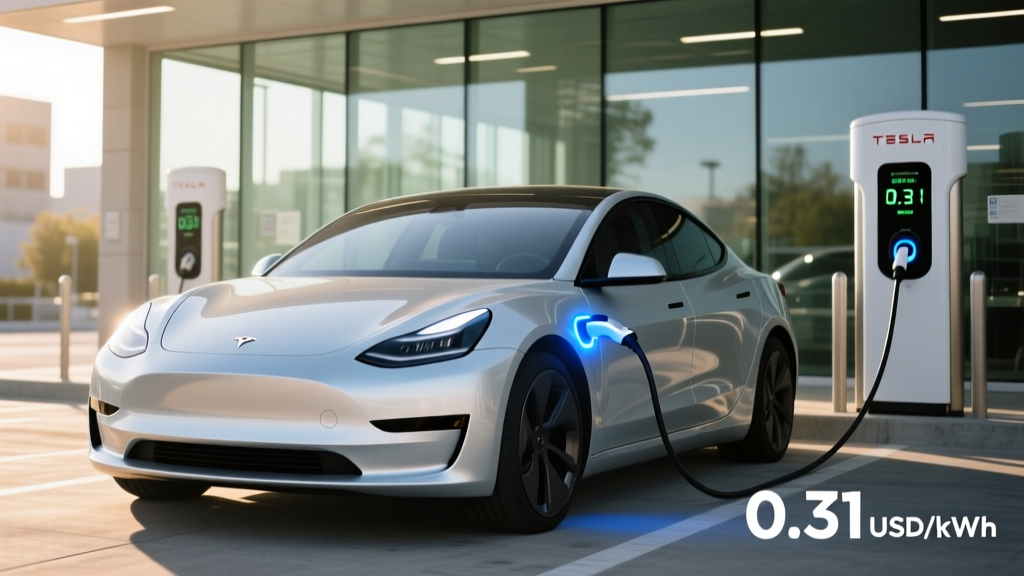
If you've pulled up to a Tesla Supercharger recently, you've probably noticed the per-kilowatt-hour price on the screen and wondered how it stacks up against filling a gas tank — or charging at home. As of March 2026, Tesla Supercharger cost per kWh in the United States ranges from roughly $0.28 to $0.48, depending on state electricity rates, local utility demand charges, time-of-use pricing, and whether you're at a V3 (250 kW) or V4 (up to 350 kW) station. The national average sits around $0.35/kWh.
That number alone doesn't tell the full story. What matters for your wallet is the cost per mile, how that compares to gasoline, and whether you can slash it by 60–80% with a home Level 2 charger. This guide covers Supercharger pricing, home installation costs, equipment recommendations, connector compatibility, and the math behind real ownership costs.
How Much Does a Supercharger Session Actually Cost?
Tesla prices Supercharging in one of two ways depending on the state: per kWh (the majority of states) or per minute (a handful of states where regulations restrict non-utilities from reselling electricity by the kWh). Where per-minute pricing applies, Tesla uses tiered rates based on charge speed.
March 2026 Per-kWh Supercharger Rates by Region
| Region / State | Typical $/kWh | Notes |
|---|---|---|
| California | $0.38–$0.48 | Higher during peak TOU hours (4–9 PM) |
| Texas | $0.28–$0.34 | Lower utility demand charges |
| Florida | $0.32–$0.38 | Consistent pricing, less TOU variation |
| Northeast (NY, MA, CT) | $0.36–$0.44 | Higher commercial electricity rates |
| Midwest (OH, IL, MI) | $0.30–$0.36 | Moderate rates, some rural stations cheaper |
| Pacific Northwest (WA, OR) | $0.28–$0.34 | Low-cost hydroelectric grid power |
| National Average | ~$0.35 | Weighted by station density |
Idle fees add another variable: Tesla charges $0.50/minute if your car remains plugged in after reaching its charge limit and the station is at least 50% full, doubling to $1.00/minute when the station is 100% full. Move your car promptly.
Charging Time and Cost: Real Session Examples
| Vehicle | Battery (kWh usable) | 10–80% Energy Added | 10–80% Time (V3, 250 kW) | Cost at $0.35/kWh |
|---|---|---|---|---|
| Tesla Model 3 Long Range | 75 kWh (NMC) | ~52.5 kWh | ~25–28 min | $18.38 |
| Tesla Model Y Long Range | 75 kWh (NMC) | ~52.5 kWh | ~27–30 min | $18.38 |
| Tesla Model S (2026) | 95 kWh (NMC) | ~66.5 kWh | ~32–36 min | $23.28 |
| Ford F-150 Lightning (Ext. Range) | 131 kWh (NMC) | ~91.7 kWh | ~45–55 min | $32.10 |
Charging Levels Explained: Speeds, Power, and Range Per Hour
Understanding the three charging levels is essential for planning both daily driving and road trips. Here's the breakdown:
| Level | Voltage | Power (kW) | Miles of Range Added Per Hour | Typical Use Case |
|---|---|---|---|---|
| Level 1 | 120V AC | 1.2–1.9 kW | 3–5 mi/hr | Overnight top-up, PHEVs, emergencies |
| Level 2 | 240V AC | 3.3–19.2 kW | 12–75 mi/hr | Home daily charging, workplace, hotels |
| DC Fast Charging | 400–800V DC | 50–350 kW | 150–1,000+ mi/hr (peak) | Road trips, rapid top-ups |
Level 1 uses a standard household 120V outlet. The included mobile connector with most EVs delivers about 1.4 kW, adding roughly 3–5 miles of range per hour. That's sufficient for plug-in hybrids with 25–40 miles of electric range, but painfully slow for a 300+ mile BEV.
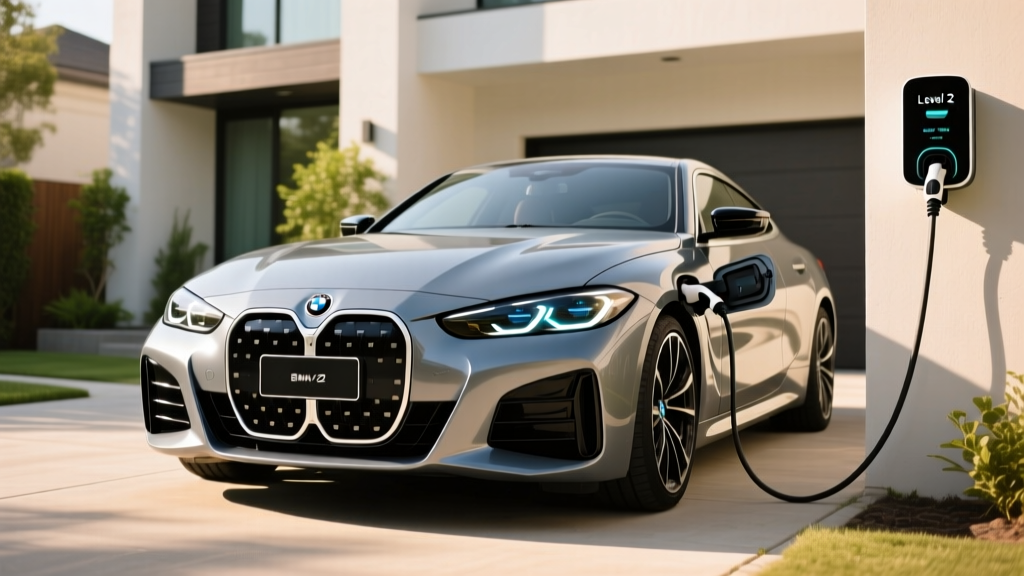
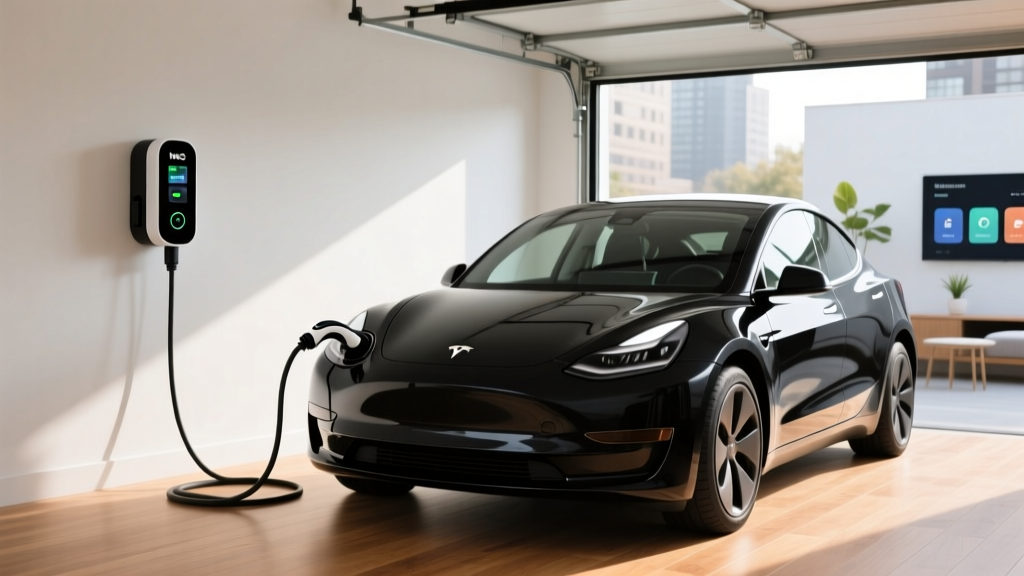
Level 2 is the home-charging standard. A 48-amp (11.5 kW) wall connector on a 240V circuit can fully recharge a 75 kWh battery overnight in about 7–8 hours. This is where most EV owners do 85–95% of their charging — and where the cost savings are dramatic.
DC Fast Charging bypasses the car's onboard charger and feeds DC current directly to the battery. Tesla V3 Superchargers deliver up to 250 kW; V4 stations (expanding through 2025–2026) support up to 350 kW for compatible vehicles. Non-Tesla networks like Electrify America and EVgo offer 150–350 kW chargers using CCS1 or NACS connectors.
Home EV Charger Installation: Costs, Electrical Requirements, and Gotchas
Installing a home Level 2 charger is the single highest-impact upgrade an EV owner can make. Here's what's involved and what it costs.
Electrical Requirements
A typical Level 2 home charger runs on a 240V dedicated circuit, similar to an electric dryer or oven. The most common setup:
- 40-amp circuit (delivering 32 amps continuous / 7.7 kW) — adequate for most daily charging
- 50-amp circuit (delivering 40 amps continuous / 9.6 kW) — faster, good for larger batteries
- 60-amp circuit (delivering 48 amps continuous / 11.5 kW) — maximum Level 2 speed for most EVs
The National Electrical Code (NEC) requires that continuous loads (like EV charging) use no more than 80% of a circuit's rated capacity. So a 50-amp breaker delivers 40 amps of continuous charging current.
Installation Cost Breakdown
| Component | Cost Range | Details |
|---|---|---|
| Level 2 Charger (Equipment) | $300–$700 | Hardwired or NEMA 14-50 plug; smart Wi-Fi models cost more |
| Electrician Labor | $400–$1,500 | Depends on run length from panel, wall type, conduit needs |
| Electrical Permit | $50–$200 | Required in most jurisdictions; varies by municipality |
| Panel Upgrade (if needed) | $1,500–$4,000 | Upgrading from 100A to 200A service; common in pre-1990 homes |
| Total (no panel upgrade) | $750–$2,400 | Most homes with 200A service and nearby panel |
| Total (with panel upgrade) | $2,250–$6,400 | Older homes or panels near capacity |
Safety and Code Considerations
- Dedicated circuit: Your EV charger must have its own dedicated breaker — no sharing with other appliances.
- GFCI protection: NEC 2020 and later require GFCI protection for outdoor receptacles used for EV charging. Hardwired installations may have different requirements; your electrician will determine this.
- Outdoor rating: If installing outside, ensure the charger carries a NEMA 4 or NEMA 4X rating for weather resistance.
- Cable management: Choose a charger with at least a 24-foot cable to reach your charge port regardless of parking orientation.
- Wi-Fi / smart features: Smart chargers enable scheduled charging during off-peak utility hours, energy monitoring, and remote start/stop — critical for time-of-use rate optimization.
Which Connector Is Compatible With Your EV?
The connector landscape shifted dramatically in 2024–2026 as Tesla's North American Charging Standard (NACS) became the dominant plug. Here's where things stand as of early 2026:
| Connector | Brands Using It (2026 Models) | Adapter Needed? |
|---|---|---|
| NACS (Tesla) | Tesla (all), Ford, GM, Rivian, Volvo, Polestar, Mercedes-Benz, Fisker | CCS→NACS adapter included with many non-Tesla EVs for legacy stations |
| CCS1 | Hyundai, Kia, BMW, Volkswagen, Stellantis (some), legacy models | NACS→CCS adapter available for Supercharger access on some networks |
| CHAdeMO | Nissan Leaf (2025 final model year), Mitsubishi Outlander PHEV | CHAdeMO infrastructure declining; no practical adapter to NACS |
Key 2026 development: Most new Supercharger stalls now include the "Magic Dock" — a built-in CCS1 adapter that allows non-Tesla CCS-equipped vehicles to charge without carrying their own adapter. Tesla has also opened its network to NACS-equipped vehicles from Ford, GM, and Rivian via their native NACS charge ports.
If you drive a CCS1-equipped EV and want Supercharger access, check your manufacturer's app for network compatibility. Ford and GM owners with NACS ports can use Superchargers natively. Hyundai/Kia Ioniq 5 and EV6 owners (CCS1) can use Electrify America, EVgo, and the growing number of NACS-equipped networks via adapter.
Cost Per Mile: Supercharger vs. Home Charging vs. Gasoline
This is the calculation that matters most. We'll compare a Tesla Model Y Long Range (EPA 310 miles, 75 kWh battery, ~3.6 mi/kWh efficiency) against a comparable gas SUV getting 25 MPG combined.
| Charging / Fueling Method | Cost Per Unit | Cost Per Mile | Annual Cost (12,000 mi) |
|---|---|---|---|
| Home Level 2 (national avg $0.14/kWh) | $0.14/kWh | $0.039 | $467 |
| Home Level 2 (off-peak TOU, $0.08/kWh) | $0.08/kWh | $0.022 | $267 |
| Tesla Supercharger (avg $0.35/kWh) | $0.35/kWh | $0.097 | $1,167 |
| Tesla Supercharger (CA peak, $0.48/kWh) | $0.48/kWh | $0.133 | $1,600 |
| Electrify America (avg $0.43/kWh) | $0.43/kWh | $0.119 | $1,433 |
| Gasoline SUV (25 MPG, $3.30/gal) | $3.30/gal | $0.132 | $1,584 |
The takeaway: Even at the highest Supercharger rates in California, charging a Model Y costs roughly the same per mile as fueling a 25 MPG gas SUV. At the national average Supercharger rate, you save about 27% per mile versus gas. Charge primarily at home on off-peak rates and you save 70–85%.
A Model Y owner who charges 80% at home ($0.12/kWh) and 20% at Superchargers ($0.35/kWh) pays an effective rate of ~$0.166/kWh — or about $0.046/mile, roughly $1,100 less per year than the gas SUV.
Recommended Home Level 2 Chargers for 2026
Based on reliability data, feature sets, and compatibility with the evolving connector landscape, here are our top picks:
Tesla Wall Connector (Gen 4)
- Power: 11.5 kW (48A) on 60A circuit
- Connector: NACS native
- Cable: 24 ft
- Smart features: Wi-Fi, OTA updates, power sharing between units, Tesla app integration
- Price: ~$475
- Best for: Tesla owners; non-Tesla NACS vehicles (Ford, GM, Rivian 2025+)
ChargePoint Home Flex (2nd Gen)
- Power: Up to 12 kW (50A) — adjustable via DIP switches
- Connector: NACS or CCS1 (configurable)
- Cable: 24 ft
- Smart features: Wi-Fi, Alexa, scheduling, energy dashboard, utility TOU integration
- Price: ~$550–$650
- Best for: Multi-EV households, CCS1 and NACS owners
Emporia Level 2 EV Charger
- Power: 11.5 kW (48A) on 60A circuit
- Connector: NACS or J1772 (with adapter)
- Cable: 24 ft
- Smart features: Wi-Fi, detailed energy monitoring, solar integration, load management
- Price: ~$400
- Best for: Budget-conscious buyers, solar-panel households
All three chargers support hardwired installation (preferred for reliability and maximum amperage) or NEMA 14-50 plug configuration. Hardwired installations avoid the NEC requirement for GFCI breakers on receptacles — saving $50–$100 on the breaker itself.
Frequently Asked Questions
How much does it cost to install a home EV charger?
A typical Level 2 home charger installation costs $750–$2,400 when no panel upgrade is needed. This includes the charger ($300–$700), electrician labor ($400–$1,500), and permit ($50–$200). Homes with older 100-amp electrical panels may need a service upgrade adding $1,500–$4,000, bringing the total to $2,250–$6,400.
How fast will each charging level add range?
Level 1 (120V) adds 3–5 miles per hour. Level 2 (240V, 48A) adds 30–45 miles per hour depending on vehicle efficiency. DC Fast Charging at 150–250 kW can add 150–250+ miles in 15–20 minutes, though the charge curve tapers significantly above 80% SoC.
Which connector/charger is compatible with my EV?
All 2025–2026 Tesla vehicles use NACS. Ford, GM, Rivian, Volvo, and Polestar have transitioned to NACS. Hyundai, Kia, and BMW still use CCS1 on most models. The Nissan Leaf (final year 2025) uses CHAdeMO. Check your vehicle's charge port or owner's manual, and verify network compatibility in your manufacturer's app before traveling.
How much does charging cost per mile vs gas?
Home charging averages $0.03–$0.05 per mile. Tesla Supercharging averages $0.08–$0.13 per mile depending on location. A comparable gas SUV at 25 MPG and $3.30/gallon costs $0.13 per mile. Home charging saves $900–$1,300 annually over gas for a typical 12,000-mile driver.
What electrical upgrades might I need?
If your home has a 200-amp panel with available capacity, you likely need only a dedicated 50–60A circuit. Homes with 100-amp service or panels near capacity may require a panel upgrade. An electrician will perform a NEC Article 220 load calculation to determine this. Some homes may also benefit from a smart load-management device (like the Emporia VUE or Span panel) that dynamically limits charger draw to avoid overloading the panel — eliminating the need for a full upgrade.
Does the federal tax credit cover home charger installation?
The Alternative Fuel Vehicle Refueling Property Credit (IRS §30C) covers up to 30% of home charger equipment and installation costs, capped at $1,000, for installations in eligible census tracts. Eligibility depends on your property location — check the IRS guidance or consult a tax professional. This is separate from the §30D vehicle purchase credit.
Sources: Tesla Supercharger pricing accessed via in-vehicle display and Tesla app (March 2026); fueleconomy.gov for EPA efficiency data; IRS §30C for refueling property credit rules.