What Tesla Supercharger Cost Per Kilowatt Hour Really Means
If you're weighing EV ownership, one question dominates the math: what does it actually cost to charge? For Tesla owners and non-Tesla EV drivers alike, the Supercharger network sets the baseline for public DC fast charging pricing. In 2026, Tesla Supercharger cost per kilowatt hour varies significantly by region, time of day, and vehicle — ranging from roughly $0.25/kWh in off-peak Midwest locations to over $0.50/kWh at premium urban stations in California and New York.
But raw $/kWh figures only tell part of the story. To make a real ownership decision, you need to compare Supercharger rates against home Level 2 charging, understand what drives pricing differences, and factor in installation costs for a home setup. This guide breaks down all three charging levels, real install costs, equipment recommendations, and the per-mile economics that determine whether an EV saves you money.
A critical distinction before we begin: kW (kilowatt) measures power — how fast energy flows. kWh (kilowatt-hour) measures energy — how much your battery stores. Your electricity bill charges you per kWh; your charger's speed is rated in kW. Confusing the two is the most common EV literacy gap.
The Three Charging Levels: Speed, Power, and Practical Use
Every EV sold in the US charges at one of three levels. Understanding which level fits your routine is essential before evaluating cost.
| Level | Voltage | Power (kW) | Miles of Range Added Per Hour | Best Use Case |
|---|---|---|---|---|
| Level 1 (120V) | 120V AC | 1.0–1.4 kW | 3–5 miles | Overnight top-up, PHEVs, low-mileage drivers |
| Level 2 (240V) | 240V AC | 3.3–19.2 kW | 12–75 miles | Home daily charging, workplace, destination |
| DC Fast Charging | 400–800V DC | 50–350 kW | 150–1,200+ miles (equivalent rate) | Road trips, quick top-ups, commercial fleets |
Level 1 plugs into any standard household outlet. It's adequate for plug-in hybrids with 25–40 miles of electric range, but painfully slow for a full BEV — adding 40 miles overnight to a 300-mile battery means you'd need a week to charge from empty.
Level 2 is the home charging standard. A 48-amp (11.5 kW) home charger adds roughly 35–45 miles per hour to a mid-size SUV like the Tesla Model Y or Hyundai Ioniq 5. That means a full overnight charge from 20% to 80% in 5–6 hours — more than enough for daily driving.
DC fast charging bypasses the car's onboard AC-to-DC converter and feeds DC power directly to the battery. Tesla Superchargers (V3 at 250 kW, V4 at up to 350 kW) and competitors like Electrify America's 350 kW stalls can add 150–200 miles of range in 15–20 minutes on compatible vehicles. But sustained speeds depend on the battery's state of charge, temperature, and chemistry — a concept called the charge curve.
Tesla Supercharger Cost Per Kilowatt Hour: 2026 Regional Breakdown
Tesla uses two pricing models across its Supercharger network:
- Per-kWh pricing: You pay for the energy delivered. This is now standard in most US states where regulations permit.
- Per-minute pricing: You pay for time plugged in. Used in states where utility regulations historically prevented non-utilities from reselling electricity by volume. This is becoming less common as legislation updates.
Here's what per-kWh Supercharger pricing looks like across major US regions in 2026:
| Region | Off-Peak $/kWh | Peak $/kWh | Notes |
|---|---|---|---|
| California (urban) | $0.38–$0.44 | $0.48–$0.55 | Highest in the US; time-of-use pricing common |
| Texas | $0.26–$0.32 | $0.33–$0.40 | Low energy costs; growing V4 station count |
| Midwest (IL, OH, MI) | $0.25–$0.30 | $0.32–$0.38 | Moderate pricing; good corridor coverage |
| Southeast (FL, GA, NC) | $0.28–$0.34 | $0.35–$0.42 | Expanding rapidly along I-95 and I-75 |
| Northeast (NY, MA, NJ) | $0.36–$0.42 | $0.45–$0.52 | Urban premium; parking-garage stations common |
| Pacific NW (WA, OR) | $0.27–$0.33 | $0.34–$0.40 | Clean hydro grid; moderate pricing |
For non-Tesla EVs using Superchargers via the NACS (North American Charging Standard) connector or a CCS-to-NACS adapter, pricing is typically 15–25% higher than Tesla-member rates. In California, a non-Tesla driver might pay $0.55–$0.65/kWh at peak times.
The Charge Curve Reality: Why Peak kW Isn't Sustained kW
A Tesla Model 3 Long Range with a ~75 kWh usable battery might peak at 250 kW on a V3 Supercharger — but only between roughly 10% and 30% state of charge. As the battery fills, the vehicle's battery management system (BMS) tapers current to protect cell health. By 60% SoC, you're likely charging at 100–120 kW; above 80%, it drops to 40–60 kW.
Real-world 10–80% charging time for a 75 kWh battery on a V3 Supercharger: approximately 25–30 minutes. On a V4 station with an 800V architecture vehicle (like the Hyundai Ioniq 5 or Kia EV6), that can drop to 18 minutes.
This taper means per-minute pricing penalizes you for slower charging at higher states of charge. Per-kWh pricing is fairer — and increasingly the standard.
Home Level 2 Charging: Installation Cost Breakdown
Home charging is where EV ownership economics shine. Residential electricity rates average $0.16/kWh nationally (per EIA data), with off-peak rates as low as $0.06–$0.10/kWh on time-of-use plans. That's 60–80% cheaper per mile than Supercharging.
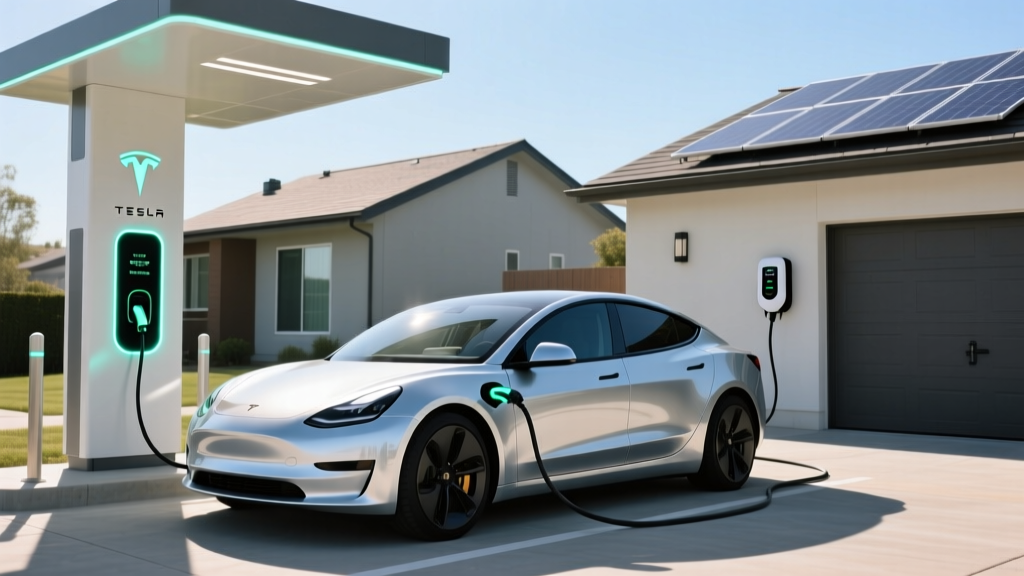
But getting a Level 2 charger installed requires a 240V circuit — the same voltage your electric dryer or oven uses. Here's what that actually costs:
| Component | Simple Install (Panel Nearby) | Moderate Install (50–100 ft Run) | Complex Install (Panel Upgrade Needed) |
|---|---|---|---|
| Level 2 Charger (hardwired or plug-in) | $350–$700 | $350–$700 | $350–$700 |
| Electrical Permit | $50–$200 | $50–$200 | $50–$200 |
| Electrician Labor (2–4 hrs typical) | $300–$600 | $600–$1,500 | $800–$2,000 |
| Conduit, Wiring, Breaker | $100–$300 | $300–$800 | $400–$1,000 |
| Electrical Panel Upgrade (100A→200A) | — | — | $1,500–$3,500 |
| Total Estimated Cost | $800–$1,800 | $1,300–$3,200 | $3,100–$7,400 |
The panel upgrade is the wildcard. Homes built before 1990 often have 100-amp service panels. Adding a 40–60 amp dedicated EV circuit to an already-loaded 100A panel may require a full upgrade to 200 amps — a $1,500–$3,500 job on its own. Your electrician will perform a load calculation per NEC Article 220 to determine if your panel has headroom. Some utilities offer rebates of $200–$500 toward panel upgrades for EV adoption.
Electrical Requirements for a Level 2 Home Charger
A typical 48-amp Level 2 charger requires:
- Circuit: 60-amp dedicated breaker (NEC requires circuits to be rated 125% of continuous load: 48A × 1.25 = 60A)
- Voltage: 240V, single-phase
- Wire gauge: 6 AWG copper (THHN in conduit) or 4 AWG aluminum for runs up to ~100 feet
- GFCI protection: Required for outdoor receptacles (NEC 2023+); hardwired installations may not require GFCI depending on local code
- Outlet type (if plug-in): NEMA 14-50 (most common) or NEMA 6-50
Always hire a licensed electrician. DIY 240V work carries fire and electrocution risk, and unpermitted installations can void homeowner's insurance claims.
Connector Compatibility: NACS, CCS, and CHAdeMO in 2026
The connector landscape has consolidated dramatically since 2023, when Ford and GM announced adoption of Tesla's NACS connector. By 2026, NACS is the dominant standard for new EVs sold in North America.
| Connector | Brands Using It (Native) | DC Fast Charge Availability | Adapter Needed For Superchargers? |
|---|---|---|---|
| NACS (Tesla) | Tesla, Ford, GM, Rivian, Volvo, Polestar, Hyundai/Kia (2025+), BMW, Mercedes | Tesla Supercharger network (50,000+ stalls) | No (native) |
| CCS1 | Legacy models (pre-2025 VW ID.4, older Bolt, some Stellantis) | Electrify America, EVgo, ChargePoint | Yes — CCS-to-NACS adapter ($150–$250) |
| CHAdeMO | Nissan Leaf (discontinued 2025), Mitsubishi Outlander PHEV | Limited and shrinking network | Not available — CHAdeMO stations are separate |
If you're buying a new EV in 2026, NACS is the connector to get. Tesla sells a CCS-to-NACS adapter (~$199) that lets CCS-equipped vehicles use Superchargers, and most Supercharger stalls now feature both NACS and CCS cables (sometimes called "Magic Dock" integrated adapters).
For home Level 2 charging, all modern EVs use the J1772 connector (or NACS, which includes J1772 signaling for Level 2). If your home charger has a J1772 plug and your car has NACS, you'll need a J1772-to-NACS adapter (~$50–$100) — or simply buy a NACS-connector home charger.
Cost Per Mile: EV Charging vs Gasoline
The ultimate ownership question: does an EV cost less per mile to "fuel"? Let's run the numbers with a concrete comparison.
| Scenario | Energy Cost | Vehicle Efficiency | Cost Per Mile |
|---|---|---|---|
| Home Level 2 (national avg rate) | $0.16/kWh | 3.5 mi/kWh (e.g., Model Y) | $0.046 |
| Home Level 2 (off-peak TOU rate) | $0.09/kWh | 3.5 mi/kWh | $0.026 |
| Tesla Supercharger (avg US) | $0.35/kWh | 3.5 mi/kWh | $0.100 |
| Electrify America (avg US) | $0.43/kWh | 3.5 mi/kWh | $0.123 |
| Gas vehicle (28 MPG combined) | $3.40/gallon | 28 MPG | $0.121 |
| Gas vehicle (22 MPG, truck/SUV) | $3.40/gallon | 22 MPG | $0.155 |
The takeaway is clear: home-charged EVs cost 60–83% less per mile than gas vehicles. Even exclusive Supercharger use is slightly cheaper than gas at 28 MPG, and significantly cheaper than a truck or large SUV at 22 MPG.
For a driver covering 12,000 miles annually:
- Home charging (national avg): ~$552/year
- Home charging (off-peak TOU): ~$312/year
- 100% Supercharger: ~$1,200/year
- Gas at 28 MPG: ~$1,457/year
Data sourced from fueleconomy.gov EV efficiency ratings and AAA's Your Driving Costs reports.
Level 2 Home Charger Equipment Recommendations (2026)
Not all Level 2 chargers are created equal. Here are three proven options across different budgets, each with NACS connector availability:
Emporia Vue Level 2 Charger — Best Value
- Power Output: 48 amps (11.5 kW) on a 60A circuit
- Connector: NACS native (J1772 version also available)
- Cable Length: 24 feet
- Smart Features: Wi-Fi, app scheduling, energy monitoring, solar integration
- Price: ~$399
- Best For: Budget-conscious buyers who want smart scheduling for off-peak TOU rates
Tesla Wall Connector (Gen 4) — Best for Tesla/NACS Owners
- Power Output: 48 amps (11.5 kW); supports power sharing across multiple units
- Connector: NACS native
- Cable Length: 24 feet
- Smart Features: Wi-Fi, OTA updates, vehicle authentication, Powerwall integration
- Price: ~$475
- Best For: Tesla owners and NACS-native EVs; seamless ecosystem integration
ChargePoint Home Flex — Most Flexible
- Power Output: Configurable 16–50 amps (3.8–12 kW) — adjustable to match your circuit
- Connector: J1772 or NACS (select at purchase)
- Cable Length: 23 feet
- Smart Features: Wi-Fi, Alexa/Google integration, scheduling, detailed session history
- Price: ~$649
- Best For: Homes with limited panel capacity (set to 32A on a 40A circuit); multi-EV households
Charging Time Examples: 10% to 80% on Level 2
How long does a home Level 2 session actually take? It depends on battery size and charger power:
| Vehicle | Usable Battery (kWh) | 11.5 kW Charger | 7.7 kW Charger (32A) |
|---|---|---|---|
| Tesla Model 3 RWD (LFP) | 57.5 kWh | ~3.5 hours | ~5.2 hours |
| Tesla Model Y Long Range | 75 kWh | ~4.5 hours | ~6.8 hours |
| Ford F-150 Lightning Ext. Range | 131 kWh | ~8 hours | ~12 hours |
| Hyundai Ioniq 5 (84 kWh pack) | 77.4 kWh | ~4.7 hours | ~7 hours |
| Chevrolet Equinox EV | 85 kWh | ~5.2 hours | ~7.8 hours |
Level 2 charging at 11.5 kW easily covers daily needs overnight. Even the massive F-150 Lightning battery refills from 10–80% in a single night. You rarely need DC fast charging unless you're on a road trip or need a quick mid-day top-up.
Safety, Code, and Installation Best Practices
EV charging involves sustained high-current draw — essentially running a large appliance for 6–10 hours straight. Safety margins matter:
- Dedicated circuit: Your EV charger must have its own breaker — never share a circuit with other loads.
- Hardwired vs. plug-in: Hardwired installations eliminate the receptacle (a potential failure point under sustained load) and may not require GFCI breakers in all jurisdictions. Plug-in NEMA 14-50 offers portability if you move.
- Outdoor rating: If installed outdoors, the charger must carry a NEMA 4 or NEMA 4X rating for weather resistance. All units listed above meet this standard.
- Permit and inspection: Most jurisdictions require an electrical permit for a new 240V circuit. The inspection ensures wire gauge, breaker size, and grounding meet NEC standards. Skipping this step risks insurance denial in the event of a fire.
- Cable management: Use a wall-mounted cable organizer to prevent tripping hazards and connector strain.
Per the National Electrical Code (NEC 2023, Article 625), all EV charging equipment must be listed by a qualified testing laboratory (UL, ETL). Avoid unlisted or counterfeit chargers from unknown marketplace sellers — they may lack critical overcurrent and ground-fault protection.
Frequently Asked Questions
How much does it cost to install a home EV charger?
A straightforward Level 2 installation (short wire run, adequate panel) costs $800–$1,800 including equipment, labor, and permit. If your electrical panel needs a 200-amp upgrade, total costs can reach $3,100–$7,400. Always get a load calculation from your electrician before committing.
How fast will each charging level add range?
Level 1 (120V) adds 3–5 miles per hour. Level 2 (240V, 48A) adds roughly 35–45 miles per hour for a mid-size EV. DC fast charging at 150–250 kW can add 150–200+ miles in 15–20 minutes, though charging speed tapers significantly above 80% state of charge.
Which connector/charger is compatible with my EV?
In 2026, most new EVs use NACS (Tesla's connector, now the North American standard). Older EVs may use CCS1. Check your vehicle's charge port. For home Level 2, NACS chargers work with all NACS vehicles; J1772 chargers work with all EVs via adapter if needed. For DC fast charging, confirm your car's connector matches the station.
How much does charging cost per mile vs gas?
Home charging at the national average rate ($0.16/kWh) costs about $0.046 per mile in a typical EV — roughly 70% less than gas at 28 MPG ($0.121/mile). Even exclusive Supercharger use at $0.35/kWh ($0.10/mile) undercuts most gas vehicles.
What electrical upgrades might I need?
The most common upgrade is a panel replacement from 100A to 200A service, needed when your existing panel lacks capacity for a new 60A EV circuit. Your electrician will calculate total existing load. Some homes may also need a new meter base or utility service drop upgrade. Check with your utility about EV-specific rebates — many cover $200–$500 of upgrade costs.
Is the federal tax credit available for home charger installation?
The §30D Alternative Fuel Vehicle Refueling Property Credit covers 30% of home charger installation costs, up to $1,000. However, eligibility is restricted to residents in census tracts that are classified as low-income or non-urban. Check IRS guidelines and consult a tax professional, as eligibility rules are specific and location-dependent.