The Real Cost of Tesla Supercharging: What You'll Actually Pay
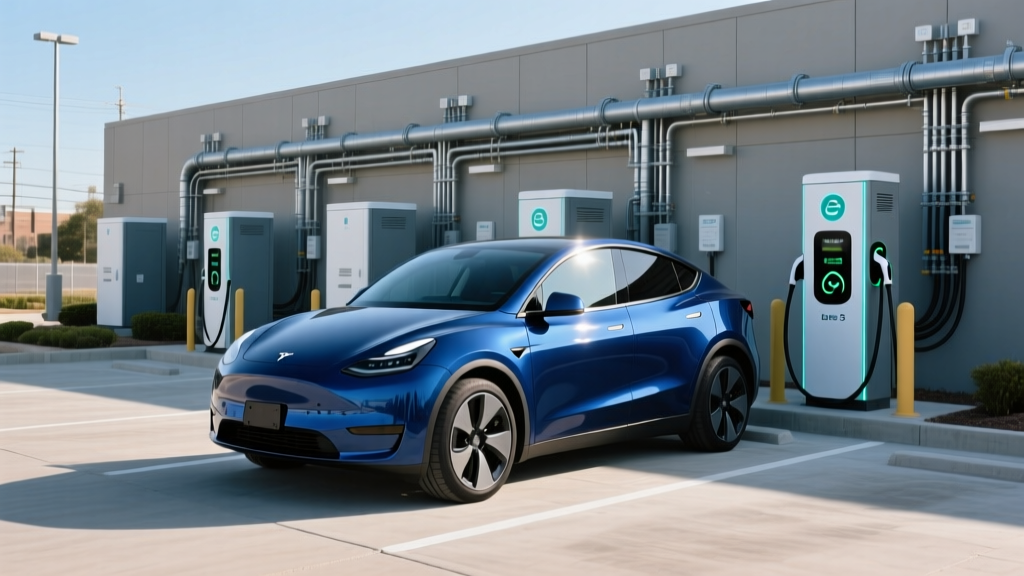
If you're considering a Tesla—or any EV with NACS access—the question "how much does it cost to use a Tesla Supercharger" doesn't have a single answer. Pricing varies by location, time of day, and whether you're a Tesla owner or driving a non-Tesla EV with NACS compatibility. As of early 2026, Tesla Supercharger rates in the U.S. typically range from $0.25 to $0.50 per kWh, with a national average hovering around $0.35 per kWh.
But per-kWh pricing is only part of the picture. To understand your true charging cost, you need to factor in your vehicle's efficiency (measured in kWh per 100 miles), how that compares to gasoline on a per-mile basis, and how home charging can slash your costs to a fraction of Supercharger rates. This guide covers all of it—from the Supercharger network to Level 2 home installation, connector compatibility, and the electrical upgrades your home might need.
Tesla Supercharger Pricing Breakdown: Per-kWh Rates and Cost Per Mile
Tesla uses variable pricing across its Supercharger network. Rates depend on the station's location, local utility demand charges, and time-of-use tiers where applicable. Here's what typical 2026 rates look like across different scenarios:
| Scenario | Rate ($/kWh) | Cost to Add 200 mi (Model Y, ~3.5 mi/kWh) | Notes |
|---|---|---|---|
| Supercharger (off-peak, rural) | $0.25–$0.30 | $14.29–$17.14 | Less common; mostly overnight or low-demand areas |
| Supercharger (average U.S.) | $0.32–$0.38 | $18.29–$21.71 | Most common rate band for Tesla owners |
| Supercharger (peak/urban) | $0.40–$0.50 | $22.86–$28.57 | Major metros, high-demand corridors, California peak |
| Supercharger (non-Tesla EV via NACS) | $0.48–$0.65 | $27.43–$37.14 | Higher rate for non-Tesla vehicles; membership plans may reduce |
| Home Level 2 (national avg electricity) | $0.16/kWh | $9.14 | Based on U.S. avg residential rate; varies by state |
| Home Level 2 (off-peak TOU rate) | $0.08–$0.12/kWh | $4.57–$6.86 | Time-of-use plans in CA, TX, Northeast |
To calculate your own cost: divide your vehicle's efficiency (miles per kWh) into the miles you need, then multiply by the per-kWh rate. A Tesla Model Y Long Range achieves roughly 3.5 miles per kWh (28 kWh/100 mi) according to EPA data on fueleconomy.gov. That means adding 200 miles of range requires about 57 kWh.
Cost Per Mile: Supercharger vs. Gas
| Vehicle / Fuel Type | Efficiency | Energy Cost | Cost Per Mile |
|---|---|---|---|
| Tesla Model Y (Supercharger avg $0.35/kWh) | 3.5 mi/kWh | $0.35/kWh | $0.10 |
| Tesla Model Y (home charging $0.16/kWh) | 3.5 mi/kWh | $0.16/kWh | $0.046 |
| Toyota RAV4 AWD (28 MPG combined) | 28 MPG | $3.40/gal | $0.121 |
| Ford F-150 4WD (20 MPG combined) | 20 MPG | $3.40/gal | $0.17 |
Even at peak Supercharger rates, EVs typically cost less per mile than comparable gas vehicles. At home charging rates, the savings are dramatic—often 60–75% cheaper than gasoline per mile.
Charging Levels Explained: Speeds, Times, and Range Added
Understanding the three charging levels is essential for planning both daily driving and road trips. Here's how each level delivers energy to your battery:
| Level | Voltage | Power (kW) | Miles of Range Per Hour | Typical Use Case |
|---|---|---|---|---|
| Level 1 | 120V AC | 1.0–1.4 kW | 3–5 mi/hr | Emergency/trickle; PHEV daily top-up |
| Level 2 | 240V AC | 7.2–19.2 kW | 20–60+ mi/hr | Home daily charging; workplace; public AC |
| DC Fast Charging | 400–800V DC | 50–350 kW | 150–1,000+ mi/hr (peak) | Road trips; Tesla Superchargers; public DC |
Real-World Charging Time Examples (10–80% SoC)
DC fast charging speed isn't constant—it follows a charge curve. Your battery accepts peak power only at low state of charge (SoC), then tapers as it fills to protect cell health. That's why manufacturers quote 10–80% times rather than 0–100%.
| Vehicle | Battery (kWh usable) | Peak DC Rate (kW) | 10–80% Time | Charger Required |
|---|---|---|---|---|
| Tesla Model Y Long Range | 75 kWh (NMC) | 250 kW | ~25 min | V3 Supercharger (250 kW) |
| Tesla Model 3 Highland LR | 75 kWh (NMC) | 250 kW | ~22 min | V3 Supercharger (250 kW) |
| Hyundai Ioniq 5 (2026) | 77.4 kWh (NMC) | 240 kW (800V) | ~18 min | 350 kW CCS station |
| Ford F-150 Lightning Ext. Range | 131 kWh (NMC) | 150 kW | ~41 min | 150+ kW CCS/NACS station |
| Chevrolet Equinox EV (2026) | 85 kWh (NMC) | 175 kW | ~28 min | 175+ kW NACS/CCS station |
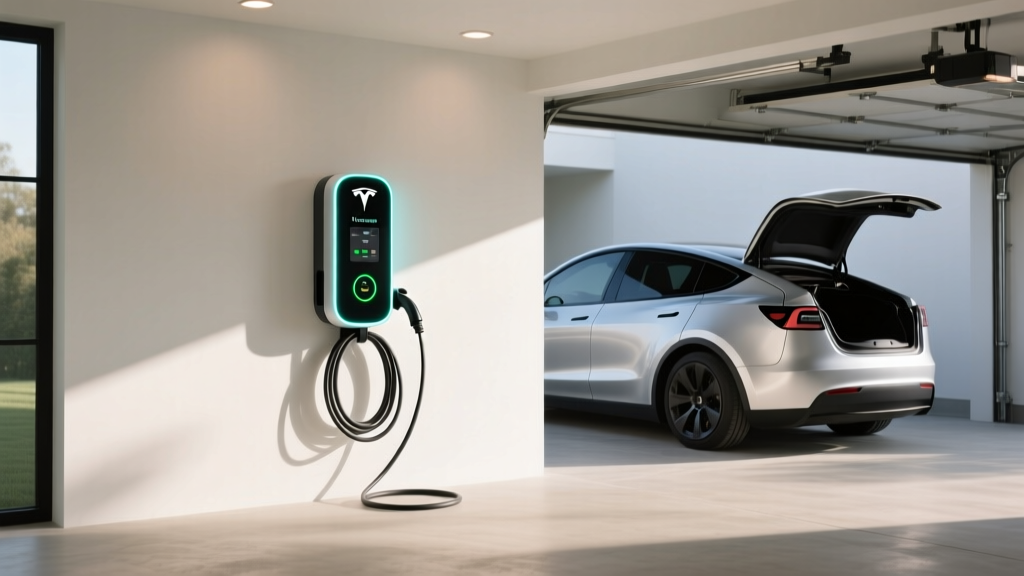
At home on Level 2, expect a full overnight charge. A Tesla Wall Connector delivering 11.5 kW (48A on a 60A circuit) will add roughly 44 miles of range per hour to a Model Y—enough to fully replenish a depleted 75 kWh battery in about 7 hours.
Home EV Charger Installation: Costs, Electrical Requirements, and Upgrades
Installing a Level 2 home charger is the single biggest ownership upgrade you can make. It transforms your EV from something you "fuel" on the road to something you wake up with full every morning—at the cheapest possible rate.
Electrical Requirements for Level 2 Charging
A Level 2 charger requires a 240-volt dedicated circuit, similar to what powers an electric dryer or oven. The most common configurations:
- 40A circuit / 32A continuous: Delivers 7.7 kW at 240V. Adequate for most daily needs. Uses 10 AWG wire.
- 50A circuit / 40A continuous: Delivers 9.6 kW. Good for larger batteries (F-150 Lightning, Rivian). Uses 6 AWG wire.
- 60A circuit / 48A continuous: Delivers 11.5 kW. Maximum for Tesla Wall Connector. Uses 6 AWG or 4 AWG wire depending on run length.
- 80A circuit / 64A continuous: Delivers 15.3+ kW. Requires 3 AWG or larger; uncommon in residential, more typical for commercial.
The National Electrical Code (NEC) requires EV circuits to be rated at 125% of the continuous load. So a charger drawing 48A continuous requires a 60A breaker. Your electrician will handle this calculation, but knowing it helps you evaluate quotes.
Installation Cost Breakdown
| Component | Simple Install (panel nearby) | Moderate Install (50–80 ft run) | Complex Install (panel upgrade + long run) |
|---|---|---|---|
| Level 2 Charger (hardware) | $400–$700 | $400–$700 | $400–$700 |
| Electrician labor | $300–$600 | $600–$1,500 | $1,500–$3,000 |
| Electrical permit | $50–$150 | $50–$200 | $100–$300 |
| Panel upgrade (if needed) | $0 | $0 | $1,500–$4,000 |
| Conduit, wire, misc. materials | $50–$150 | $150–$400 | $300–$800 |
| Total estimated cost | $800–$1,600 | $1,200–$2,800 | $3,800–$8,800 |
When You'll Need a Panel Upgrade
Many homes built before 2000 have 100A or 125A main service panels. Adding a 60A EV circuit to an already-loaded panel may exceed safe capacity. Signs you'll need a panel upgrade:
- Your panel is 100A and you run electric heat, an electric dryer, and an electric oven simultaneously
- Your panel has no open breaker slots (double-pole for 240V)
- Your home uses a Federal Pacific or Zinsco panel (known safety hazards that should be replaced regardless)
- Your electrician's load calculation shows you're above 80% of panel capacity with the EV circuit added
A panel upgrade to 200A typically costs $1,500–$4,000 depending on your utility's requirements, local labor rates, and whether a new meter base or service drop is needed. This is the single biggest variable in home charger installation cost, and it's often not apparent until an electrician performs a load calculation.
Connector Compatibility: NACS, CCS, and CHAdeMO Explained
The connector landscape has shifted dramatically. As of 2026, the North American Charging Standard (NACS)—originally Tesla's proprietary connector—is the dominant standard in the U.S. after Ford, GM, Rivian, Volvo, and most major automakers adopted it starting in 2024–2025.
| Connector | Brands Using It (2026 Models) | Max DC Power | Adapter Needed? |
|---|---|---|---|
| NACS (Tesla/J3400) | Tesla, Ford, GM, Rivian, Volvo, Polestar, Mercedes (new models), Honda (2026+) | Up to 350 kW | No (native); CCS-to-NACS adapters available ~$200 |
| CCS1 | Hyundai/Kia (some 2025 carry-over), BMW, VW (ID.4 2025), legacy non-Tesla EVs | Up to 350 kW | NACS-to-CCS adapter needed at Tesla Superchargers |
| CHAdeMO | Nissan Leaf (discontinued after 2025), Mitsubishi Outlander PHEV (legacy) | Up to 100 kW | Limited public availability; network shrinking |
If you're buying a 2026 model-year EV, it almost certainly has a NACS port (unless it's a Hyundai/Kia or BMW still on CCS1). Tesla provides a CCS-to-NACS adapter for non-Tesla vehicles to use Superchargers, and Tesla owners received or can purchase a NACS-to-CCS adapter for accessing third-party CCS networks like Electrify America.
For home Level 2 charging, the J1772 connector (round, 5-pin) is still used on many non-Tesla chargers. Tesla vehicles include a J1772-to-NACS adapter in the glovebox, or you can buy a NACS-terminated Wall Connector to avoid adapters entirely.
Best Home Level 2 Chargers: Equipment Recommendations
Here are the top Level 2 home chargers for 2026, selected for reliability, power output, smart features, and value:
Tesla Wall Connector (Gen 4)
- Power: 11.5 kW (48A) on a 60A circuit
- Connector: NACS native (J1772 version also available)
- Cable length: 24 ft
- Smart features: Wi-Fi, OTA updates, power sharing (link up to 6 units on one circuit), Tesla app integration, load management
- Price: ~$475
- Best for: Tesla owners wanting seamless integration and maximum home charge speed
ChargePoint Home Flex (NACS Edition)
- Power: Up to 12 kW (50A) on a 60A circuit; adjustable down to 16A for lower-capacity panels
- Connector: NACS or J1772 (configurable)
- Cable length: 23 ft
- Smart features: Wi-Fi, ChargePoint app, Alexa/Google Home, scheduled charging, energy tracking, works with all EVs
- Price: ~$599
- Best for: Multi-EV households or buyers wanting brand-agnostic flexibility
Emporia Level 2 Smart Charger
- Power: Up to 11.5 kW (48A) on a 60A circuit
- Connector: J1772 (NACS adapter included)
- Cable length: 24 ft
- Smart features: Wi-Fi, Emporia app, real-time energy monitoring, solar integration, TOU scheduling, works with Emporia Vue panel monitor
- Price: ~$399
- Best for: Budget-conscious buyers who want smart features and solar-aware charging
Grizzl-E Smart (United Chargers)
- Power: Up to 10 kW (40A) on a 50A circuit
- Connector: J1772 or NACS
- Cable length: 24 ft
- Smart features: OCPP-compatible, adjustable amperage (16–40A), rugged outdoor-rated enclosure, built in Canada
- Price: ~$499
- Best for: Outdoor installs in harsh climates; no-frills durability
Safety, Permits, and Code Requirements
EV charging draws significant continuous current for hours at a time—far longer than a dryer cycle. Proper installation isn't optional; it's a safety requirement. Here's what to expect and insist on:
- Dedicated circuit: Your Level 2 charger must have its own breaker—no sharing with other appliances. This prevents overloads and nuisance trips.
- GFCI protection: NEC 2023 (and 2026 adopted codes in most jurisdictions) requires GFCI protection for all EV charging outlets. Hardwired chargers (like the Tesla Wall Connector) have GFCI built in; receptacle-installed units need a GFCI breaker or a GFCI-protected outlet.
- Outdoor rating: If your charger is installed outside, ensure the unit carries a NEMA 4 or IP65 rating for weather resistance. All recommended chargers above meet this standard.
- Permit and inspection: Most municipalities require an electrical permit for EV charger installation. Your electrician pulls this; the city/county inspector verifies the work. Typical permit cost: $50–$300. Skipping the permit can void homeowner's insurance coverage for electrical fires.
- Wire gauge: Your electrician will size wire based on circuit amperage and run length. Longer runs require thicker wire to prevent voltage drop. This is why a 60A circuit might need 4 AWG instead of 6 AWG if the run exceeds 50 feet.
According to the National Highway Traffic Safety Administration (NHTSA), properly installed home EV charging equipment has an excellent safety record, with incidents almost exclusively tied to unpermitted DIY work or damaged cords.
Federal Tax Credits and Incentives for Home Charging
The Alternative Fuel Vehicle Refueling Property Credit (IRS §30C)—separate from the §30D new EV purchase credit—covers 30% of home charging equipment and installation costs, up to $1,000. As of 2026, this credit is available for installations in eligible census tracts (generally low-income or non-urban areas per IRS guidelines).
To claim it, your installation must be placed in service during the tax year, and you'll file IRS Form 8911. This credit is nonrefundable—it can reduce your tax liability to zero but won't generate a refund beyond that. Consult a tax professional to confirm your eligibility, as census tract rules and income limitations apply.
Many utilities also offer rebates of $200–$500 for installing a smart Level 2 charger, particularly models that support managed/TOU charging. Check with your local utility before purchasing.
Frequently Asked Questions
How much does it cost to use a Tesla Supercharger on a road trip?
For a typical Tesla Model Y Long Range (75 kWh battery, 3.5 mi/kWh), a 10–80% charge at the national average rate of $0.35/kWh costs approximately $18.38 and adds about 184 miles of range. On a 600-mile trip requiring two Supercharger stops, expect to spend roughly $35–$45 in total charging costs—compared to $65–$80 in gasoline for a comparable 28 MPG vehicle at $3.40/gallon.
How much does it cost to install a home EV charger?
A straightforward installation (panel has capacity, short wire run) typically costs $800–$1,600 including the charger hardware, electrician labor, and permit. If your panel needs upgrading to 200A, total costs can reach $3,800–$8,800. Always get a load calculation before committing.
How fast will each charging level add range?
Level 1 (120V): 3–5 miles per hour. Level 2 (240V, 48A): 35–44 miles per hour for a Model Y. DC fast charging (250 kW Supercharger): up to 200+ miles in 15 minutes at peak rate, though sustained speed tapers above 50% SoC. For daily driving, Level 2 is the sweet spot—you plug in at night and wake up fully charged.
Which connector/charger is compatible with my EV?
If you're buying a 2026 Tesla, Ford, GM, Rivian, Volvo, or Honda EV, your vehicle has a NACS port. Hyundai, Kia, and some BMW models still use CCS1. Nissan Leaf (discontinued) used CHAdeMO. For home charging, a NACS-terminated charger (Tesla Wall Connector or ChargePoint NACS edition) is the cleanest solution for NACS vehicles. Check your vehicle's charge port or manufacturer specs before purchasing a charger.
How much does charging cost per mile vs gas?
At the U.S. average residential electricity rate of $0.16/kWh, a Tesla Model Y costs roughly $0.046 per mile to charge at home. At Supercharger average rates ($0.35/kWh), it's about $0.10 per mile. A comparable gas SUV at 28 MPG with $3.40/gallon fuel costs $0.121 per mile. Home charging saves 60–75% per mile; even Supercharging saves 15–20% per mile.
What electrical upgrades might I need?
The most common upgrade is a panel upgrade from 100A to 200A service ($1,500–$4,000), needed when your existing panel lacks capacity for a 40–60A dedicated EV circuit. Other potential upgrades include adding a sub-panel closer to the garage (reducing wire run costs), upgrading your utility meter base, or replacing outdated wiring. A licensed electrician's load calculation will determine exactly what's needed.
Can non-Tesla EVs use Tesla Superchargers?
Yes. As of 2026, Tesla has opened many Supercharger stalls to non-Tesla EVs equipped with NACS ports (Ford, Rivian, GM, etc.). Non-Tesla drivers typically pay a higher per-kWh rate (often $0.48–$0.65/kWh) unless they subscribe to a Tesla charging membership. CCS-equipped vehicles may need a Tesla-provided adapter, and stall compatibility varies by location—check the Tesla app for station-specific access.