If you own a Tesla — or are about to buy one — you've likely asked: how much does a Supercharger cost Tesla owners on a per-session and per-mile basis? The answer depends on which network you use, what time of day you plug in, and whether you're charging at home or on the road. This guide breaks down every cost layer, from Tesla Supercharger per-kWh pricing to home Level 2 installation, so you can budget accurately for EV ownership.
Understanding Charging Levels: Speeds, Power, and Range Added
Before calculating cost, you need to understand the three charging tiers available to Tesla owners. The critical distinction: kW (kilowatts) measures power — the rate at which energy flows into your battery. kWh (kilowatt-hours) measures energy — the total amount stored. Think of kW as the speed of water from a hose, and kWh as the total gallons in the bucket.
| Level | Voltage | Power (kW) | Miles of Range Added per Hour | Typical Use Case |
|---|---|---|---|---|
| Level 1 | 120V AC | 1.2–1.9 kW | 3–5 mi/hr | Overnight trickle, emergency top-up |
| Level 2 | 240V AC | 7.2–19.2 kW | 22–58 mi/hr | Home daily charging, workplace |
| DC Fast (Supercharger) | 400–800V DC | 50–250 kW | 150–1,000+ mi/hr (peak) | Road trips, rapid top-ups |
A Tesla Model Y Long Range (75 kWh usable battery, ~310 miles EPA range) charging on a Level 2 wall connector at 11.5 kW will add roughly 35 miles of range per hour. That same vehicle at a V3 Supercharger peaking at 250 kW can add up to 200 miles in about 15 minutes — but only during the peak portion of the charge curve. Above 80% State of Charge (SoC), charging speed tapers significantly to protect battery health, dropping to as low as 20–40 kW.
Tesla Supercharger Pricing: What You Actually Pay per kWh
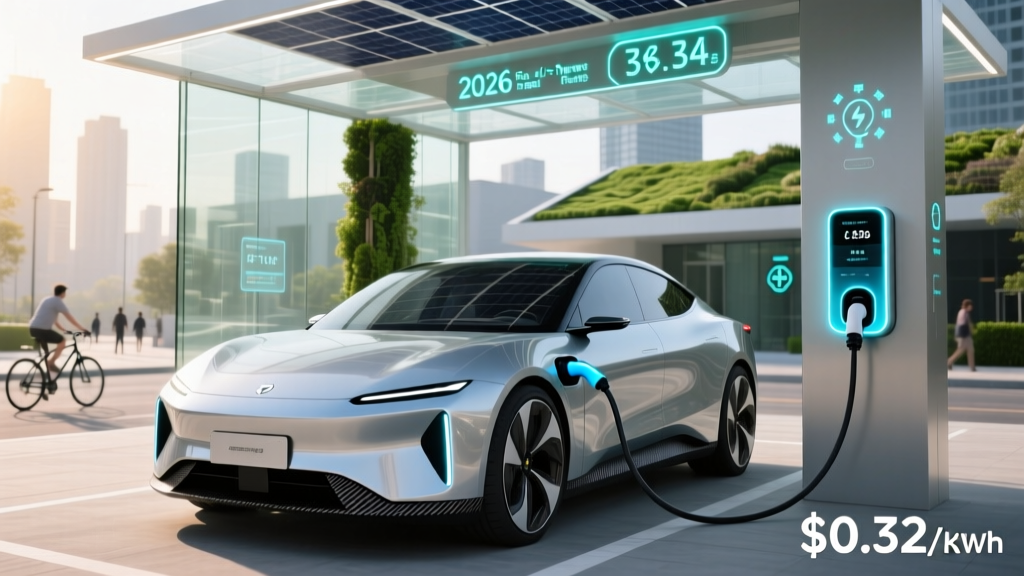
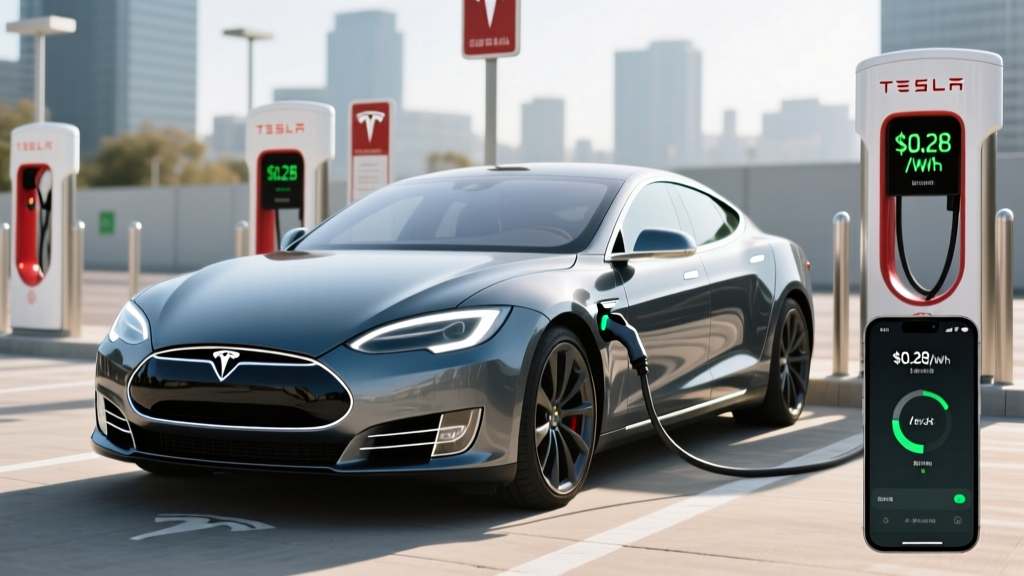
Tesla Supercharger rates vary by location, time of day, and whether your vehicle qualifies for free Supercharging credits. As of 2026, typical U.S. Supercharger pricing falls into these ranges:
- Off-peak (overnight, mid-day): $0.25–$0.35 per kWh
- Peak (evening commute hours): $0.35–$0.50 per kWh
- Idle fees: $0.50–$1.00 per minute if your car remains plugged in after reaching its charge limit at a busy station
For a Tesla Model 3 Long Range with an 82 kWh battery (roughly 75 kWh usable), a 10–80% Supercharger session requires about 52 kWh. At an average rate of $0.35/kWh, that session costs approximately $18.20 and adds around 215 miles of EPA-rated range. At peak rates of $0.48/kWh, that same session jumps to $24.96.
Tesla has also opened many Supercharger stations to non-Tesla EVs via the NACS (North American Charging Standard) connector or built-in Magic Dock CCS adapters. Non-Tesla vehicles typically pay 15–25% more per kWh unless they subscribe to Tesla's monthly membership plan (roughly $13/month), which brings the rate closer to what Tesla owners pay.
Home Level 2 Charging: Installation Cost Breakdown
The cheapest way to charge any Tesla is at home on a Level 2 circuit. But the upfront installation cost varies dramatically based on your home's electrical infrastructure. Here's a realistic breakdown:
| Component | Simple Install (Panel Adjacent) | Complex Install (Long Run / Panel Upgrade) |
|---|---|---|
| EVSE Equipment (Tesla Wall Connector) | $400–$500 | $400–$500 |
| Electrician Labor (2–8 hrs) | $500–$1,200 | $1,500–$3,500 |
| Permit & Inspection | $50–$200 | $150–$400 |
| Electrical Panel Upgrade (if needed) | $0 | $1,500–$3,500 |
| Conduit, Wiring, Misc. | $100–$300 | $400–$1,000 |
| Total Estimated Cost | $1,050–$2,200 | $3,950–$8,900 |
The single biggest variable is your electrical panel. A Tesla Wall Connector draws up to 48 amps continuous, which requires a 60-amp dedicated circuit with 6 AWG copper wire. If your panel is a 100-amp service (common in older homes), you likely cannot add a 60A circuit without upgrading to a 200-amp panel — a $1,500–$3,500 job on its own.
Alternative for limited panels: You can configure the Wall Connector (or choose a lower-amperage charger) to run on a 30A or 40A circuit, which draws 24A or 32A continuous respectively. This still adds 22–30 miles of range per hour — plenty for overnight charging for most drivers.
Many utility companies offer rebates of $250–$750 for home charger installation, and some states provide additional incentives. Check your local utility's EV programs before scheduling work.
Cost per Mile: Home Charging vs. Supercharger vs. Gas
The true measure of charging value is cost per mile driven. Here's how different scenarios compare for a Tesla Model Y Long Range (averaging 3.5 miles per kWh, or roughly 28 kWh/100mi):
| Charging Scenario | Cost per kWh | Cost per Mile | Cost to "Fill" 250 mi |
|---|---|---|---|
| Home (national avg. electricity, 2026) | $0.16 | $0.046 | $11.43 |
| Home (off-peak TOU rate) | $0.09 | $0.026 | $6.43 |
| Tesla Supercharger (off-peak) | $0.30 | $0.086 | $21.43 |
| Tesla Supercharger (peak) | $0.45 | $0.129 | $32.14 |
| Gas Vehicle (25 MPG, $3.50/gal) | — | $0.140 | $35.00 |
Even at peak Supercharger rates, Tesla owners pay less per mile than a 25 MPG gas car at $3.50/gallon. But the real savings come from home charging on time-of-use (TOU) rates, where you can charge for under $0.03/mile — roughly one-quarter the cost of gas and one-fifth the cost of peak Supercharging.
According to the U.S. Energy Information Administration, the national average residential electricity rate hovers around $0.16/kWh in 2026, but TOU plans in states like California, Texas, and Florida can drop to $0.06–$0.10/kWh during overnight hours.
Charging Times: How Long Does Each Level Take?
Charging time depends on battery size, starting SoC, charger power output, and the vehicle's charge curve. Here are realistic estimates for common Tesla models:
Tesla Model 3 Long Range (82 kWh battery, ~75 kWh usable)
- Level 1 (120V, 1.5 kW): 0–100% in ~50 hours
- Level 2 (240V, 11.5 kW): 0–100% in ~7 hours; 10–80% in ~4.5 hours
- V3 Supercharger (250 kW peak): 10–80% in ~28 minutes (sustained average ~100 kW due to taper above 55%)
- V4 Supercharger (350 kW capable): 10–80% in ~22 minutes for newer 4680-cell vehicles
Tesla Model Y Long Range (75 kWh usable)
- Level 2 (240V, 11.5 kW): 10–80% in ~4 hours
- V3 Supercharger (250 kW peak): 10–80% in ~25 minutes
Real-world note: Tesla's onboard charger maxes out at 11.5 kW for Level 2 AC charging. Even if your wall connector is rated for 19.2 kW (80A), the car will only accept 48A (11.5 kW). This is why a 60A circuit / 48A Wall Connector is the practical maximum for Tesla vehicles.
Cold weather (below 32°F) adds 15–30% to charging times at DC fast chargers because the battery management system must first warm the pack before accepting peak power. Always use the Tesla app or in-car navigation to precondition the battery by routing to a Supercharger — this brings the pack to optimal temperature before you arrive.
Connector Compatibility: NACS, CCS, and Adapters
Tesla's proprietary connector — now formally designated the North American Charging Standard (NACS) — is the dominant EV charging connector in the U.S. as of 2026. Here's what you need to know about compatibility:
| Connector | Used By | AC Level 2 | DC Fast | Adapter Needed? |
|---|---|---|---|---|
| NACS (Tesla) | Tesla (all models), Ford, GM, Rivian, Hyundai, Volvo, and most major OEMs (2025+) | Yes | Yes | Non-Tesla EVs may need OEM-provided adapter for CCS stations |
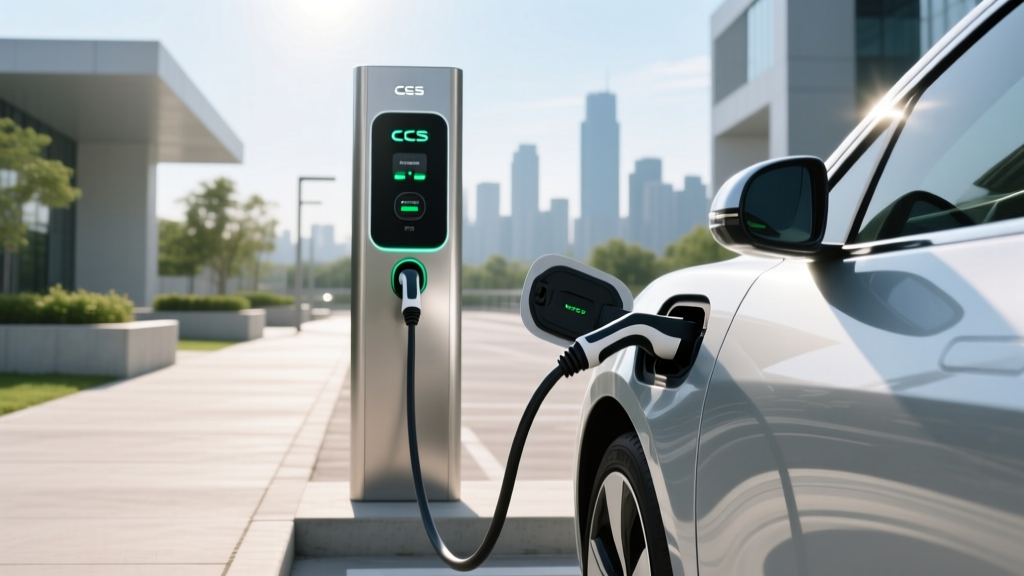
| CCS1 | Legacy non-Tesla EVs (2024 and earlier models) | Yes (via J1772) | Yes | Tesla owners need CCS adapter (~$175) for non-Tesla DC networks |
| CHAdeMO | Nissan Leaf, Mitsubishi (legacy, phasing out) | No | Yes | Tesla: no compatible adapter available |
| J1772 | All non-Tesla EVs (AC Level 1/2 standard) | Yes | No | Tesla includes J1772-to-NACS adapter with every vehicle |
Every new Tesla ships with a J1772 adapter (for public Level 2 stations) and a Mobile Connector with 120V and 240V plug attachments. Tesla also sells a CCS Combo 2 adapter (approximately $175) that allows Tesla vehicles to charge at Electrify America, EVgo, and other CCS-equipped DC fast-charging networks — useful when Superchargers aren't available.
Recommended Home Charging Equipment for Tesla Owners
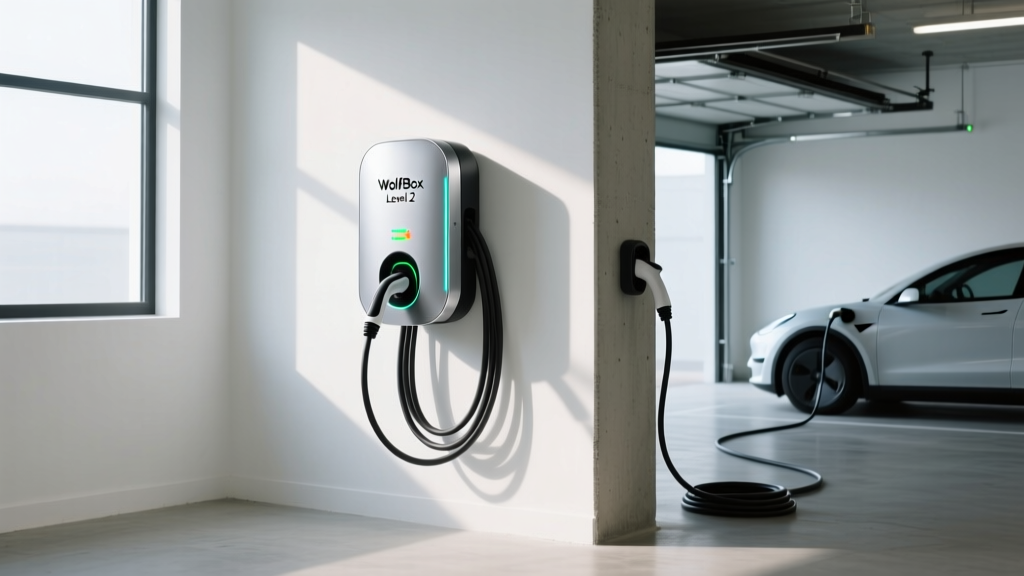
Tesla Wall Connector (Gen 4)
- Power Output: Up to 11.5 kW (48A) on a 60A circuit
- Connector: NACS (native Tesla)
- Cable Length: 24 feet
- Smart Features: Wi-Fi, over-the-air updates, load sharing between two units, access control, integrated Tesla app monitoring
- Price: ~$475
- Best For: Tesla-only households wanting seamless integration
ChargePoint Home Flex (NACS version)
- Power Output: Up to 12 kW (50A) on a 60A circuit; configurable down to 16A
- Connector: NACS (2025+ models) or J1772 with adapter
- Cable Length: 23 feet
- Smart Features: Wi-Fi, Alexa integration, scheduling, detailed energy reporting via app, works with all EVs via adapter
- Price: ~$550
- Best For: Mixed-EV households or those wanting detailed energy tracking
Emporia Vue EV Charger
- Power Output: Up to 11.5 kW (48A) on a 60A circuit
- Connector: J1772 (NACS adapter included) or NACS (2026 model)
- Cable Length: 24 feet
- Smart Features: Integrates with Emporia Vue home energy monitor, solar-aware charging, TOU scheduling, circuit-sharing
- Price: ~$400
- Best For: Solar-equipped homes wanting to charge from excess production
All three chargers above are hardwired units requiring a licensed electrician. Hardwired installations avoid the NEC requirement for GFCI breakers on plug-in 240V receptacles — saving $80–$150 on the breaker itself and eliminating nuisance trips.
Safety, Code, and Electrical Requirements
EV charger installation is governed by the National Electrical Code (NEC) Article 625 and local amendments. Key requirements every Tesla owner should understand before hiring an electrician:
- Dedicated Circuit: Your EV charger must be on its own dedicated circuit — it cannot share with other appliances. A 48A continuous load requires a 60A breaker (NEC requires circuits rated at 125% of continuous load).
- GFCI Protection: If you install a 240V receptacle (NEMA 14-50) rather than hardwiring, the NEC requires a GFCI breaker. These cost $80–$150 and can cause nuisance tripping. Hardwiring eliminates this requirement.
- Outdoor Rating: If your charger is installed outdoors, the unit must carry a NEMA 4 or NEMA 4X rating. The Tesla Wall Connector and ChargePoint Home Flex both meet this standard.
- Wire Gauge: A 60A circuit requires 6 AWG copper wire (THHN in conduit or NM-B/Romex where permitted by local code). Runs over 50 feet may require 4 AWG to prevent voltage drop.
- Permit and Inspection: Most jurisdictions require an electrical permit ($50–$200) and a post-installation inspection. Skipping the permit can void home insurance coverage for electrical fires.
Always hire a licensed electrician familiar with EV charger installations. Ask if they've installed Tesla Wall Connectors specifically — the load calculation and commissioning process differs from standard outlet work.
Frequently Asked Questions
How much does it cost to install a home EV charger for my Tesla?
A straightforward Tesla Wall Connector installation on an existing 200A panel typically costs $1,050–$2,200 including equipment, labor, and permit. If your home requires a panel upgrade from 100A to 200A, expect total costs of $3,950–$8,900. Get at least two quotes from licensed electricians and check for utility rebates before committing.
How much does a Supercharger cost Tesla owners per session?
A typical 10–80% Supercharger session for a Model Y or Model 3 costs $15–$25 depending on local rates and time of day. Peak-hour pricing in high-cost states like California can push sessions above $30. Tesla displays the exact per-kWh rate at each station in the vehicle's navigation screen and app.
How fast will each charging level add range to my Tesla?
Level 1 (120V) adds 3–5 miles per hour. Level 2 (240V at 48A) adds approximately 35 miles per hour for a Model Y. A V3 Supercharger at 250 kW peak can add up to 200 miles in 15 minutes, though the rate tapers significantly above 55% SoC. For daily driving, Level 2 overnight charging is sufficient for virtually all commutes.
Which connector and charger is compatible with my Tesla?
All Tesla vehicles use the NACS connector natively. This works at every Tesla Supercharger and Destination Charger. For public Level 2 stations with J1772 connectors, Tesla includes a J1772-to-NACS adapter. For non-Tesla DC fast-charging networks (Electrify America, EVgo), you'll need Tesla's CCS adapter ($175). As of 2025, most new non-Tesla EVs are switching to NACS, expanding your future charging options.
How much does charging cost per mile compared to gas?
Home charging at the national average electricity rate ($0.16/kWh) costs roughly $0.046 per mile in a Model Y — about one-third the cost of a 25 MPG gas vehicle at $3.50/gallon ($0.14/mile). Even at peak Supercharger rates ($0.45/kWh), the Tesla costs $0.129/mile, still undercutting gas. The savings widen further if you have solar panels or access to off-peak TOU electricity rates below $0.10/kWh.
What electrical upgrades might I need for a Tesla home charger?
The most common upgrade is a panel capacity increase from 100A to 200A service ($1,500–$3,500). You may also need a new conduit run from the panel to the garage ($400–$1,000 for long runs), a sub-panel if the main panel is full, or a utility service upgrade if your home's incoming service is below 100A. Your electrician will perform a load calculation per NEC Article 220 to determine what's required.
Can I charge my Tesla from a regular 120V outlet?
Yes, using the Tesla Mobile Connector with the included 120V (NEMA 5-15) adapter. This delivers about 1.2–1.5 kW, adding 3–4 miles of range per hour. It's adequate for overnight top-ups if you drive less than 30 miles per day, but insufficient as a primary charging strategy for most owners. A dedicated 240V outlet (NEMA 14-50) with the Mobile Connector delivers up to 7.2 kW — a viable mid-cost option between Level 1 and a hardwired Wall Connector.
Sources: Tesla Supercharger pricing is station-specific and displayed in-app; national electricity averages from the U.S. Energy Information Administration; electrical code requirements per NEC Article 625; vehicle efficiency data from fueleconomy.gov. Tax and incentive eligibility varies by jurisdiction — consult IRS Publication 936 and your tax professional for current §30D rules.