If you own a Tesla—or are considering one—charging costs are likely top of mind. The question how much does a Tesla Supercharger cost doesn't have a single answer, because Tesla's Supercharger network uses variable pricing that shifts by location, time of day, and whether you drive a Tesla or a non-Tesla EV using the network's open connectors. But understanding the full picture requires looking beyond Superchargers: home Level 2 charging, third-party DC fast networks, and the real cost-per-mile compared to gasoline all factor into your total ownership economics.
This guide breaks down exactly what you'll pay at a Supercharger in 2026, what it costs to install a home charger, and how those numbers stack up against filling a gas tank. We'll cover the electrical requirements, equipment picks, connector compatibility, and the panel-upgrade scenarios that can double your installation budget.
Tesla Supercharger Pricing in 2026: What You'll Actually Pay
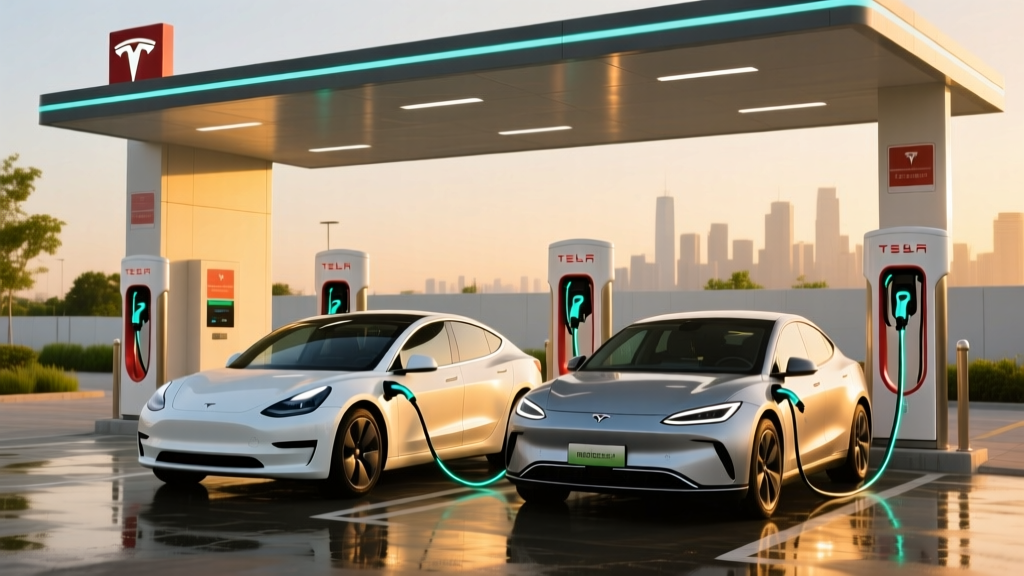
Tesla Supercharger rates are not uniform. They vary by state, station, and time of day. Here's what the landscape looks like in 2026:
- Tesla owners (member pricing): $0.25–$0.40 per kWh at most U.S. stations, with off-peak rates in some markets dipping to $0.20/kWh and peak urban rates reaching $0.48/kWh.
- Non-Tesla EVs (via built-in Magic Dock or NACS adapter): Typically 25–50% higher than member rates, ranging from $0.38–$0.65/kWh depending on location.
- Idle fees: $0.50/minute if your car remains plugged in after reaching its charge limit, doubling to $1.00/minute when the station is at full capacity.
For a concrete example: charging a Tesla Model Y Long Range (75 kWh usable battery, EPA-rated 310 miles) from 10% to 80% at a Supercharger requires roughly 52.5 kWh. At a national average member rate of $0.32/kWh, that session costs approximately $16.80. At peak urban pricing of $0.45/kWh, it jumps to $23.63.
Charging Levels Explained: Speeds, Power, and Range Added Per Hour
Before comparing costs, you need to understand the three charging levels and what each delivers. The critical distinction: kW (kilowatts) measures power—the rate at which energy flows. kWh (kilowatt-hours) measures energy—the total amount stored in your battery. Think of kW as the width of a pipe and kWh as the size of the tank you're filling.
| Level | Voltage | Power (kW) | Miles of Range Added Per Hour | Typical Use Case |
|---|---|---|---|---|
| Level 1 | 120V AC | 1.0–1.4 kW | 3–5 miles | Overnight top-up, PHEVs, emergency |
| Level 2 | 240V AC | 3.3–19.2 kW | 12–75 miles | Home daily charging, workplace, public AC |
| DC Fast Charging | 400–800V DC | 50–350 kW | 150–1,000+ miles (theoretical) | Road trips, rapid top-ups |
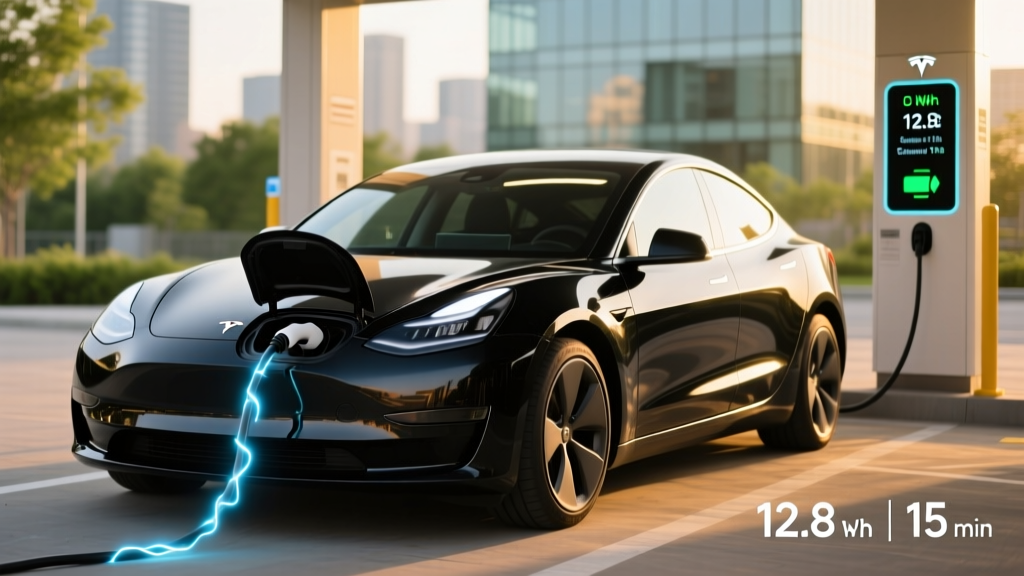
For a Tesla Model Y on a 48-amp (11.5 kW) Level 2 home charger, expect roughly 44 miles of range per hour of charging. A full overnight session (8 hours) adds about 350 miles—more than enough to replenish any day's driving. On a 250 kW V3 Supercharger, you'll recover approximately 200 miles in 15 minutes under ideal conditions (warm battery, low state of charge).
Home EV Charger Installation: Costs, Electrical Requirements, and Gotchas
Home Level 2 charging is where most EV owners do 80–90% of their charging, and it's also where costs vary the most based on your home's electrical infrastructure. Here's what's involved.
Electrical Requirements for a Level 2 Charger
A typical Level 2 home charger requires a 240-volt dedicated circuit, similar to what powers a clothes dryer or electric oven. The most common configurations:
- 40-amp circuit / 32-amp continuous (7.7 kW): Minimum recommended for EV charging; adds ~30 miles/hour. Requires a NEMA 14-50 outlet or hardwired connection.
- 50-amp circuit / 40-amp continuous (9.6 kW): Sweet spot for most EVs; adds ~37 miles/hour. NEMA 14-50 or hardwired.
- 60-amp circuit / 48-amp continuous (11.5 kW): Maximum for most residential chargers; adds ~44 miles/hour. Hardwired only (NEC code requires hardwiring for circuits above 50A).
Installation Cost Breakdown
The total cost to install a home EV charger depends heavily on your panel capacity, the distance from your electrical panel to the charger location, and local permit fees. Here's a realistic 2026 breakdown:
| Component | Simple Install (panel has capacity, short run) | Complex Install (long run, conduit, sub-panel) | Panel Upgrade Required |
|---|---|---|---|
| Charger equipment (Level 2, 40–48A) | $400–$700 | $400–$700 | $400–$700 |
| Electrician labor (2–8 hours @ $100–$175/hr) | $300–$600 | $800–$2,000 | $500–$1,000 |
| Materials (conduit, wire, breaker, outlet) | $100–$300 | $400–$1,200 | $200–$500 |
| Electrical permit | $50–$200 | $50–$200 | $50–$200 |
| Panel upgrade (100A → 200A service) | — | — | $2,000–$5,000 |
| Total | $850–$1,800 | $1,650–$4,100 | $3,150–$7,400 |
The Federal Tax Credit for Home Charging Equipment
Under IRS §30C, you may claim a tax credit of up to $1,000 (30% of equipment and installation costs, capped at $1,000) for home EV charging equipment placed in service. However, eligibility depends on whether your census tract qualifies as a "low-income" or "non-urban" area under current IRS guidance. Check your eligibility by census tract before counting on this credit—it's not universal. Consult a tax professional for your specific situation.
Charging Cost Per Mile: Supercharger vs Home vs Gas
The most meaningful comparison isn't cost per kWh—it's cost per mile. Here's how different charging scenarios stack up against a comparable gasoline vehicle (we'll use a Toyota RAV4 at 30 MPG combined as the baseline, with gas at $3.40/gallon national average).
| Scenario | Rate | Cost to Add 300 Miles (Tesla Model Y, ~3.5 mi/kWh) | Cost Per Mile |
|---|---|---|---|
| Home Level 2 (national avg $0.16/kWh) | $0.16/kWh | $13.71 | $0.046 |
| Home Level 2 off-peak TOU ($0.09/kWh) | $0.09/kWh | $7.71 | $0.026 |
| Tesla Supercharger (avg member $0.32/kWh) | $0.32/kWh | $27.43 | $0.091 |
| Tesla Supercharger peak ($0.45/kWh) | $0.45/kWh | $38.57 | $0.129 |
| Electrify America / third-party DC ($0.48/kWh) | $0.48/kWh | $41.14 | $0.137 |
| Gasoline (30 MPG, $3.40/gal) | $3.40/gal | $34.00 | $0.113 |
The takeaway: home charging is dramatically cheaper than any public option, and even peak Supercharger rates are competitive with gasoline on a per-mile basis. If you charge primarily at home on an off-peak time-of-use (TOU) plan, your "fuel" cost drops to roughly $0.03/mile—about one-quarter the cost of gasoline. But if you rely exclusively on public DC fast charging at peak rates, you could actually pay more per mile than a fuel-efficient gas car.
This is why home charging access is the single biggest financial variable in EV ownership. If you can install a Level 2 charger at home, the economics overwhelmingly favor an EV. If you're dependent on public charging, the savings narrow considerably.
Connector Compatibility: NACS, CCS, and What Fits Your EV
The connector landscape in North America has shifted dramatically since Tesla opened its Supercharger network to non-Tesla EVs and the industry adopted the North American Charging Standard (NACS) as the dominant connector. Here's where things stand in 2026:
| Connector | Type | Compatible Vehicles | Supercharger Access? |
|---|---|---|---|
| NACS (Tesla) | Native | All Tesla vehicles (Model S/3/X/Y, Cybertruck); Ford F-150 Lightning, GM Ultium vehicles, Rivian (2025+), Hyundai/Kia (2025+), and most new 2025+ EVs | Yes, native |
| CCS1 | Native | Most 2020–2024 non-Tesla EVs (VW ID.4, older Hyundai Ioniq 5, BMW i4, etc.) | Via Tesla Magic Dock or NACS adapter at select stations |
| CHAdeMO | Legacy | Nissan Leaf, Mitsubishi Outlander PHEV (legacy) | No |
| NACS adapter (CCS→NACS) | Adapter | Any CCS-equipped EV with a manufacturer-approved NACS adapter | Yes, at open Superchargers |
If you're buying a new EV in 2026, NACS is increasingly the default. If you own an older CCS-equipped vehicle, Tesla sells a CCS-to-NACS adapter (~$250) and many third-party options exist, but verify compatibility with your specific model before purchasing. Third-party networks like Electrify America and EVgo still support CCS natively, so you won't be stranded—but NACS access is becoming the broader-network advantage.
Recommended Home Level 2 Chargers for 2026
Not all Level 2 chargers are created equal. Here are four proven options across price tiers, with the specs that matter:
Tesla Wall Connector (Gen 4)
- Power: 48A / 11.5 kW (hardwired, 60A circuit)
- Connector: NACS native
- Cable length: 24 ft
- Smart features: Wi-Fi, OTA updates, power sharing (load-balance up to 6 Wall Connectors on one circuit), Tesla app integration
- Price: ~$475
- Best for: Tesla owners who want seamless integration and maximum home charge speed
ChargePoint Home Flex
- Power: Configurable 16A–50A / up to 12 kW (NEMA 14-50 or hardwired)
- Connector: NACS or J1772 (configurable)
- Cable length: 23 ft
- Smart features: Wi-Fi, ChargePoint app scheduling, Alexa integration, energy tracking
- Price: ~$550–$650
- Best for: Multi-EV households or renters who want a flexible, portable-friendly option (14-50 plug version)
Emporia Vue Level 2 Charger
- Power: 48A / 11.5 kW (hardwired or NEMA 14-50 at 40A)
- Connector: J1772 (NACS adapter included)
- Cable length: 24 ft
- Smart features: Wi-Fi, Emporia energy monitoring integration, solar-aware charging, scheduling
- Price: ~$399
- Best for: Budget-conscious buyers with solar panels or Emporia whole-home energy monitors
Grizzl-E Smart
- Power: 40A / 9.6 kW (NEMA 14-50 or hardwired)
- Connector: J1772 (NACS version available)
- Cable length: 24 ft
- Smart features: OCPP-compatible, app control, adjustable amperage (16–40A dip switches), extreme-cold rated (-40°F)
- Price: ~$449
- Best for: Cold-climate owners and those who want a rugged, no-nonsense charger with adjustable output for panel-limited homes
Safety, Code, and Installation Best Practices
EV charging draws sustained high current for hours—unlike most household appliances that cycle on and off. This makes proper installation critical. Here are the non-negotiable safety and code requirements:
- Dedicated circuit: Your EV charger must be on its own dedicated breaker. Never share a circuit with other appliances.
- Continuous-load derating: Under NEC Article 210.20, a circuit must be rated at 125% of the charger's continuous draw. A 40A charger requires a 50A breaker; a 48A charger requires a 60A breaker.
- GFCI protection: NEC 2020 and later require GFCI protection for outdoor receptacles used for EV charging (NEMA 14-50 included). Hardwired chargers with integrated ground-fault protection may satisfy this without an external GFCI breaker, but confirm with your local inspector.
- Outdoor rating: If your charger is installed outdoors (garage exterior, driveway, carport), ensure the unit carries a NEMA 4 or IP65 weather-resistance rating. All four chargers recommended above are outdoor-rated.
- Permit and inspection: Virtually all jurisdictions require an electrical permit for a new 240V circuit. Your electrician should pull this permit and schedule a post-install inspection. Unpermitted work can void homeowner's insurance claims and create resale complications.
- Wire gauge: A 50A circuit requires minimum 6 AWG copper wire; a 60A circuit requires 4 AWG. Undersized wire is a fire hazard—never cut corners here.
Frequently Asked Questions
How much does it cost to charge a Tesla at a Supercharger per session?
A typical 10–80% session for a Model Y (adding ~220 miles) costs $15–$25 at member rates ($0.25–$0.40/kWh), depending on your location and time of day. Peak urban stations can push a full session above $30. Non-Tesla EVs using the Supercharger network pay 25–50% more.
Is it cheaper to charge a Tesla at home or at a Supercharger?
Home charging is almost always cheaper. At the national average residential rate of $0.16/kWh, a full Model Y charge costs about $12. At an off-peak TOU rate of $0.09/kWh, it drops to under $7. The same charge at a Supercharger averages $17–$24. Over a year of 12,000 miles, home charging saves $600–$1,200 compared to exclusive Supercharger use.
How fast will a Level 2 home charger add range to my Tesla?
At 48 amps (11.5 kW) on a hardwired connection, a Tesla Model Y gains approximately 44 miles of range per hour. A Model 3 RWD with its smaller battery gains roughly 48 miles/hour at the same power level. An overnight 8-hour session fully replenishes either vehicle.
Do I need a panel upgrade to install a home EV charger?
Not always, but it's common in older homes. If you have a 100-amp service panel and already run electric HVAC, a dryer, and an electric range, adding a 40–60 amp EV circuit will likely exceed your panel's capacity. A licensed electrician will perform a NEC Article 220 load calculation to determine whether your panel can handle the additional circuit. If an upgrade is needed, budget $2,000–$5,000 for a 200-amp service upgrade.
Can non-Tesla EVs use Superchargers?
Yes. As of 2026, Tesla has opened thousands of Supercharger stalls to non-Tesla EVs via the built-in Magic Dock (CCS adapter integrated into the stall) or through owner-supplied NACS adapters. Non-Tesla vehicles pay higher per-kWh rates. Check the Tesla app for station-by-station compatibility before relying on Superchargers for a road trip in a non-Tesla EV.
What's the cheapest way to charge an EV overall?
Home Level 2 charging on a time-of-use (TOU) electricity plan, charging during off-peak hours (typically 10 PM–6 AM), is the lowest-cost option available—often under $0.10/kWh, or about $0.03/mile. Pair this with workplace Level 2 charging if your employer offers it for free, and your public-charging costs can drop to near zero.
Sources: U.S. EPA Fuel Economy, IRS §30C Alternative Fuel Vehicle Refueling Property Credit, Tesla Supercharger network pricing (in-app, varies by station).