How Long Does a Tesla Supercharger Actually Take?
If you're shopping for a Tesla or an EV that supports NACS, one question dominates the research phase: what is the real-world Tesla Supercharger charging time on a road trip? The marketing materials promise "up to 200 miles in 15 minutes," but sustained charge rates, battery temperature, and state of charge (SoC) all shape the number you'll see on the screen.
This guide breaks down exact Supercharger speeds by generation (V3 and V4), translates those into 10–80% charging times for current Tesla models, and then covers the other half of the ownership equation: home Level 2 charging, installation costs, and the equipment you'll actually plug in every night.
Supercharger Generations: V3 vs V4 Peak Power
Tesla operates two primary Supercharger generations in North America as of 2026. Understanding the difference matters because a stall's peak kW rating directly dictates how quickly your battery absorbs energy in the critical 10–80% SoC window.
| Generation | Peak Power | Connector | Typical Deployment |
|---|---|---|---|
| V3 | 250 kW | NACS (native Tesla) | Most existing stations |
| V4 | Up to 350 kW (cabinet-dependent) | NACS + CCS1 via integrated adapter | Newer highway corridors |
The V4 cabinet can deliver up to 350 kW, but the vehicle must also support that rate. The Cybertruck (with its 800V+ architecture) and refreshed Model 3/Model Y variants can approach these higher rates, while older Model S and Model X vehicles peak around 220–250 kW on V3 hardware. Always check your specific model-year spec sheet — Tesla updates charge curves via over-the-air software updates.
10–80% Charging Times by Tesla Model
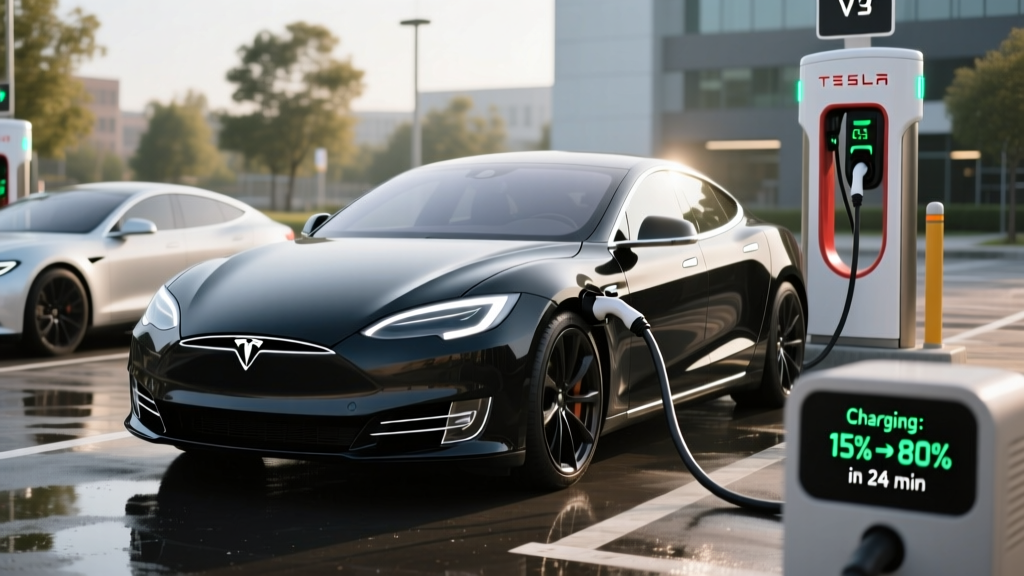
Here are real-world Supercharger times based on manufacturer data and independent testing. These assume a preconditioned battery (the car's navigation has routed you to the Supercharger, warming the pack) and ambient temperatures above 50°F.
| Model (2026) | Battery (usable kWh) | Peak Charge Rate | 10–80% Time | EPA Range |
|---|---|---|---|---|
| Model 3 Long Range AWD | ~75 kWh (NMC) | 250 kW | ~25–28 min | 341 mi |
| Model 3 Performance | ~75 kWh (NMC) | 250 kW | ~26–29 min | 315 mi |
| Model Y Long Range AWD | ~75 kWh (NMC) | 250 kW | ~27–30 min | 308 mi |
| Model S Long Range | ~95 kWh (NMC) | 250 kW | ~32–36 min | 402 mi |
| Model X Long Range | ~95 kWh (NMC) | 250 kW | ~34–38 min | 348 mi |
| Cybertruck AWD | ~123 kWh (NMC, 800V arch.) | ~350 kW (V4) | ~20–24 min | 340 mi |
Sources: fueleconomy.gov, Tesla owner's manuals, and third-party charge-curve testing.
Charging Levels Explained: Speeds and Miles Per Hour
Superchargers are just one tier of EV charging. Most miles you'll ever drive on electricity will be added at home, overnight, on Level 2 hardware. Here's how the three levels compare.
| Level | Voltage / Phase | Power (kW) | Miles of Range Added Per Hour | Typical Use |
|---|---|---|---|---|
| Level 1 | 120V / single-phase | 1.0–1.4 kW | 3–5 mi/hr | Emergency / trickle top-up |
| Level 2 | 240V / single-phase | 3.3–19.2 kW | 12–60+ mi/hr | Home daily charging, workplace |
| DC Fast (incl. Supercharger) | 400–800V DC | 50–350 kW | 150–1,000+ mi/hr | Road trips, rapid top-up |
The key distinction: kW is power (the rate of energy flow, like water pressure in a hose), while kWh is energy (the total amount stored, like gallons in a tank). A 250 kW Supercharger delivers energy 50× faster than a 5 kW Level 2 home charger — but only for short bursts during the charge curve's peak.
Home Level 2 Charger Installation: Costs, Electrical Requirements, and Upgrades
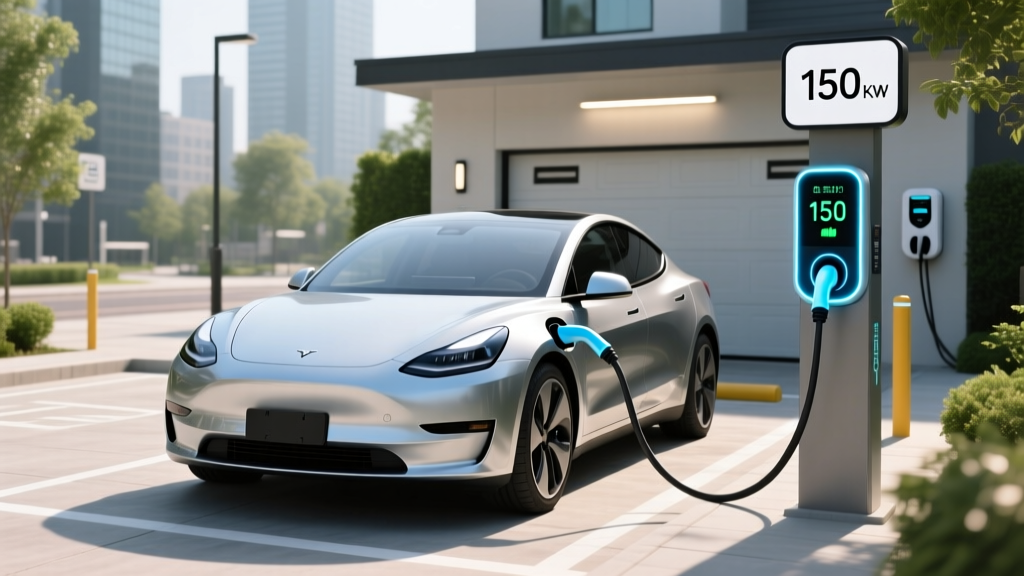
Installing a dedicated Level 2 home charger is the single highest-impact upgrade an EV owner can make. You'll wake up every morning with a full battery, avoid public charging entirely for daily driving, and add roughly 30–44 miles of range per hour of charging — enough to replenish any Tesla overnight.
Electrical Requirements
A typical home Level 2 installation requires a 240V dedicated circuit on a double-pole breaker. The most common configurations:
- NEMA 14-50 outlet: 50A breaker, supports up to 40A continuous draw (9.6 kW). The most popular choice for Tesla Mobile Connector or Wall Connector use.
- Hardwired 60A circuit: Supports up to 48A continuous draw (11.5 kW). Required for the Tesla Wall Connector at maximum output. No outlet — the charger is wired directly into the panel.
- Hardwired 80A circuit: Supports up to 64A continuous (15.3 kW). Useful for large-battery vehicles like the Cybertruck or for future-proofing.
Panel Upgrade Considerations
Older homes with 100A electrical service may not have capacity for a 50–60A EV circuit alongside existing loads (HVAC, electric range, dryer). A licensed electrician will perform a load calculation per NEC Article 220. If your panel is at capacity, you may need:
- A panel upgrade to 200A service: $1,500–$3,500 depending on your utility and local codes.
- A load-management device (e.g., Emporia or Span panel integration): $300–$800 installed, which throttles the charger when other circuits are heavily loaded — avoiding a full panel upgrade.
Installation Cost Breakdown
| Component | Low End | High End | Notes |
|---|---|---|---|
| Level 2 charger equipment | $300 | $700 | Wall Connector, ChargePoint, Emporia, etc. |
| Electrician labor (short run, <30 ft from panel) | $400 | $900 | Varies by region; garage installs cheaper |
| Electrician labor (long run or conduit required) | $900 | $2,500 | Detached garage, exterior wall, underground conduit |
| Permit and inspection | $50 | $250 | Required in most jurisdictions; some utilities rebate this |
| Panel upgrade (if needed) | $1,500 | $3,500 | 100A → 200A service upgrade |
| Total (no panel upgrade) | $750 | $3,850 | Most homeowners: $1,200–$2,000 |
| Total (with panel upgrade) | $2,250 | $7,350 | Older homes with 100A service |
Always get 2–3 quotes from licensed electricians. Check whether your utility offers a rebate or time-of-use rate for EV charger installations.
Safety and Code Requirements
Your installation must comply with NEC Article 625 (Electric Vehicle Charging System Equipment). Key requirements:
- Dedicated circuit: The EV charger must have its own breaker — no sharing with other outlets or appliances.
- GFCI protection: Required for outdoor receptacles (NEMA 14-50) and in many jurisdictions for indoor garage outlets as well. Hardwired chargers with integrated ground-fault protection may satisfy this without a GFCI breaker.
- Outdoor rating: If your charger is mounted outside, both the unit and the receptacle (if applicable) must carry a NEMA 4 or NEMA 4X weather-resistance rating.
- Strain relief: Hardwired installations require proper cable clamps and strain relief at the junction point.
Connector Compatibility: NACS, CCS1, and CHAdeMO
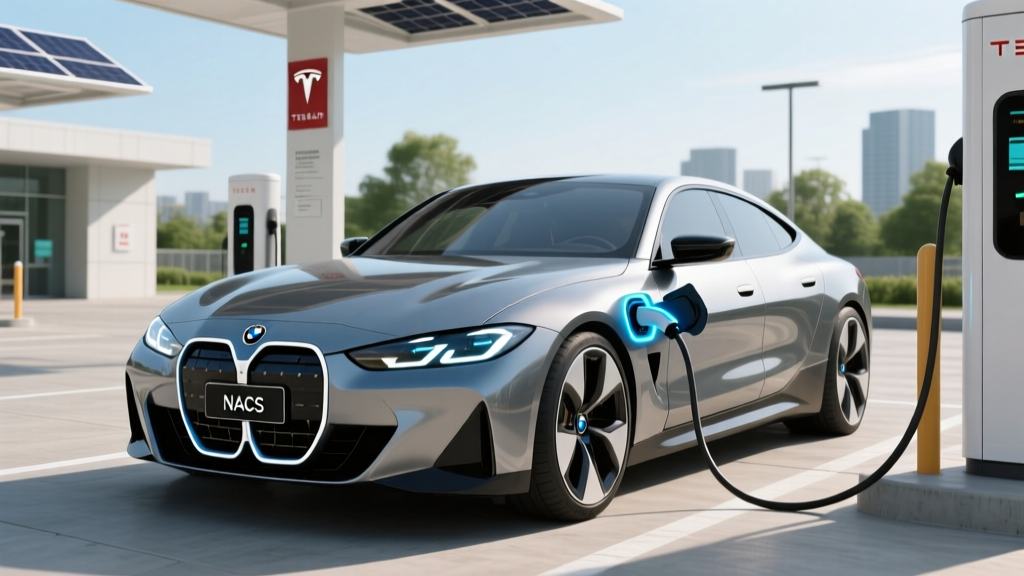
Tesla's North American Charging Standard (NACS) has become the dominant connector in North America. As of 2026, Ford, GM, Rivian, Volvo, Polestar, and others ship vehicles with native NACS ports or provide CCS-to-NACS adapters for Supercharger access.
| Connector | Brands Using It (Native) | Adapter Needed for Supercharger? |
|---|---|---|
| NACS (Tesla) | Tesla, Ford (2025+), GM (2025+), Rivian (2025+), Volvo, Polestar, Fisker | No — plug directly into Supercharger |
| CCS1 | Hyundai, Kia, BMW, VW, Mercedes-Benz, Stellantis | Yes — CCS-to-NACS adapter ($150–$250) or use Electrify America / non-Tesla DCFC |
| CHAdeMO | Nissan Leaf (legacy) | CHAdeMO-to-NACS adapters are rare and limited to 50 kW; not recommended for Supercharger use |
If you drive a non-Tesla EV with a CCS1 port, Tesla sells an official CCS-to-NACS adapter (~$190) that grants access to Superchargers via the Tesla app. Third-party adapters from Lectron and A2Z are also available, but verify they support the full kW rating your vehicle can accept.
Cost to Charge: Per-Mile Comparison vs. Gas
The economics of EV charging depend heavily on where and when you plug in. Here's a realistic cost breakdown using a 2026 Tesla Model Y Long Range (308 mi EPA, ~75 kWh usable battery, ~4 mi/kWh efficiency).
| Scenario | Rate | Cost for 300 mi | Cost Per Mile |
|---|---|---|---|
| Home Level 2 (off-peak TOU rate) | $0.09/kWh | $6.75 | $0.023 |
| Home Level 2 (standard residential avg.) | $0.16/kWh | $12.00 | $0.040 |
| Tesla Supercharger (avg. 2026) | $0.32/kWh | $24.00 | $0.080 |
| Non-Tesla DCFC (Electrify America, etc.) | $0.43/kWh | $32.25 | $0.108 |
| Gasoline (30 MPG combined, $3.40/gal) | $3.40/gallon | $34.00 | $0.113 |
At off-peak home rates, a Tesla Model Y owner pays roughly $0.02–$0.04 per mile — about one-quarter to one-third the cost of a 30 MPG gas car. Even at Supercharger rates, EV charging undercuts gasoline on a per-mile basis in most US markets. The savings compound: a driver covering 12,000 miles/year saves $800–$1,100 annually by charging primarily at home versus buying gas.
Rate data: U.S. Energy Information Administration, Tesla in-app pricing, Electrify America published rates.
Recommended Home Level 2 Chargers (2026)
Not all Level 2 chargers are equal. Here are four proven units with native NACS connectors or NACS-compatible configurations, chosen for reliability, smart features, and value.
Tesla Wall Connector
Power: Up to 11.5 kW (48A, hardwired 60A circuit)
Connector: Native NACS
Cable: 24 ft
Smart features: Wi-Fi, OTA updates, Power Sharing (link multiple units on one circuit), Tesla app integration
Price: ~$450
Verdict: Best-in-class for Tesla owners. Seamless integration, fastest home charging for Tesla vehicles. No J1772/CCS support without adapter.
ChargePoint Home Flex (NACS)
Power: Up to 12 kW (50A, NEMA 14-50) or 11.5 kW (48A, hardwired 60A)
Connector: NACS (2025+ models) or J1772 with adapter
Cable: 23 ft
Smart features: Wi-Fi, Alexa, ChargePoint app scheduling, utility TOU integration, load management
Price: ~$550
Verdict: Best for mixed-EV households. Flexible amperage settings (16A–50A) let you match your circuit without swapping hardware.
Emporia Level 2 EV Charger
Power: Up to 11.5 kW (48A, hardwired 60A)
Connector: J1772 (use J1772-to-NACS adapter for Tesla) or native NACS on newer SKUs
Cable: 24 ft
Smart features: Integrated with Emporia Vue energy monitor, solar-aware scheduling, TOU optimization, app control
Price: ~$400
Verdict: Best value with energy monitoring. Pairs with Emporia Vue for whole-home energy visibility and solar-charging optimization.
Grizzl-E Smart (NACS)
Power: Up to 10 kW (40A, NEMA 14-50) or 11.5 kW (48A, hardwired)
Connector: NACS or J1772
Cable: 24 ft
Smart features: Wi-Fi, OCPP protocol, adjustable amperage (16A–48A), outdoor-rated (NEMA 4X)
Price: ~$500
Verdict: Best for outdoor/cold-climate installs. Built in Canada, rated to -40°F, rugged aluminum enclosure.
Maximizing Your Supercharger Session
Whether you're on a V3 or V4 stall, a few practices shave meaningful minutes off your Tesla Supercharger charging time:
- Always precondition. Navigate to the Supercharger in the Tesla's built-in navigation, even if you know the route. The car will begin warming the battery 10–30 minutes before arrival, enabling peak charge rates immediately.
- Arrive at 5–15% SoC. The charge curve is steepest below 40% SoC. Arriving at 30% wastes the fastest portion of the curve; arriving at 2% risks range stress. Aim for 10%.
- Don't charge past 80% unless needed. Above 80%, charge speed drops dramatically. Charging from 80–100% at a Supercharger can take as long as 10–80%. Plan stops so you leave at 75–80% and arrive at the next stop at 10–15%.
- Choose stalls wisely. At older V2 Supercharger sites, stalls are paired (1A/1B, 2A/2B). Plugging into a stall whose pair is already occupied splits the available power. V3 and V4 stalls do not share power — any open stall delivers full output.
- Monitor via the app. The Tesla app shows real-time kW, SoC, and estimated time remaining. Step away for food or a walk — there's no benefit to sitting in the car.
Frequently Asked Questions
How much does it cost to install a home EV charger?
Most homeowners pay between $1,200 and $2,000 for a complete Level 2 installation (equipment + electrician + permit) when no panel upgrade is needed. If your home has older 100A electrical service and requires a panel upgrade to 200A, total costs range from $2,250 to $7,350. Always get multiple quotes and check for utility rebates, which can offset $200–$500 of the cost.
How fast will each charging level add range?
Level 1 (120V) adds 3–5 miles per hour. Level 2 (240V) adds 12–60+ miles per hour depending on the circuit amperage and your vehicle's onboard charger capacity. DC fast charging (including Tesla Superchargers) adds 150–1,000+ miles per hour at peak rates, though sustained rates taper as the battery fills.
Which connector or charger is compatible with my EV?
All Tesla vehicles use the NACS connector natively. Most 2025+ non-Tesla EVs from Ford, GM, Rivian, Volvo, and Polestar also ship with NACS. Hyundai, Kia, BMW, VW, and others still use CCS1 — these vehicles need a CCS-to-NACS adapter (~$150–$250) to access Tesla Superchargers. CHAdeMO (Nissan Leaf) has limited adapter options and is not well-suited for Supercharger use.
How much does charging cost per mile vs. gas?
Home charging at off-peak rates costs roughly $0.02–$0.04 per mile for a Tesla Model Y. Supercharging averages $0.08 per mile. A comparable 30 MPG gas car at $3.40/gallon costs $0.11 per mile. Over 12,000 annual miles, home EV charging saves $800–$1,100 versus gasoline.
What electrical upgrades might I need?
The most common upgrade is a new 240V circuit with a double-pole breaker (50A for a NEMA 14-50 outlet or 60A for a hardwired Wall Connector). Older homes with 100A service may need a full panel upgrade to 200A ($1,500–$3,500). A load-management device ($300–$800 installed) can sometimes avoid a panel upgrade by dynamically limiting charger draw when other circuits are active. A licensed electrician will determine your requirements via a NEC Article 220 load calculation.
Is it worth installing a Level 2 charger if I have access to a Supercharger nearby?
Yes. Daily Supercharger use is more expensive ($0.08/mi vs. $0.03/mi at home), adds wear from frequent fast-charging cycles (which accelerate long-term battery degradation), and requires you to drive to the station. A Level 2 home charger pays for itself within 1–3 years through lower per-mile costs and protects your battery's state of health by favoring slower, gentler charging for daily use. Reserve Superchargers for road trips.