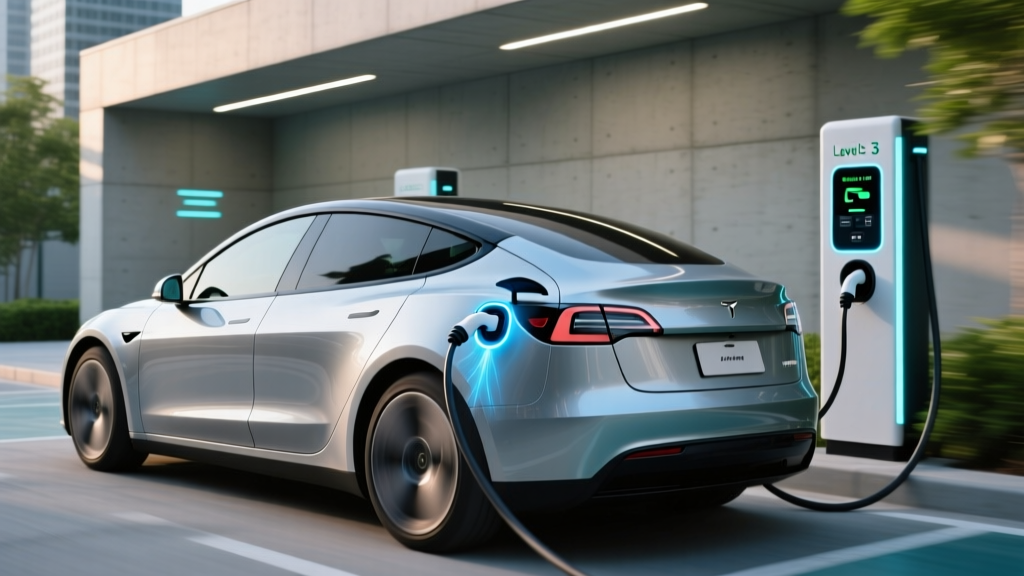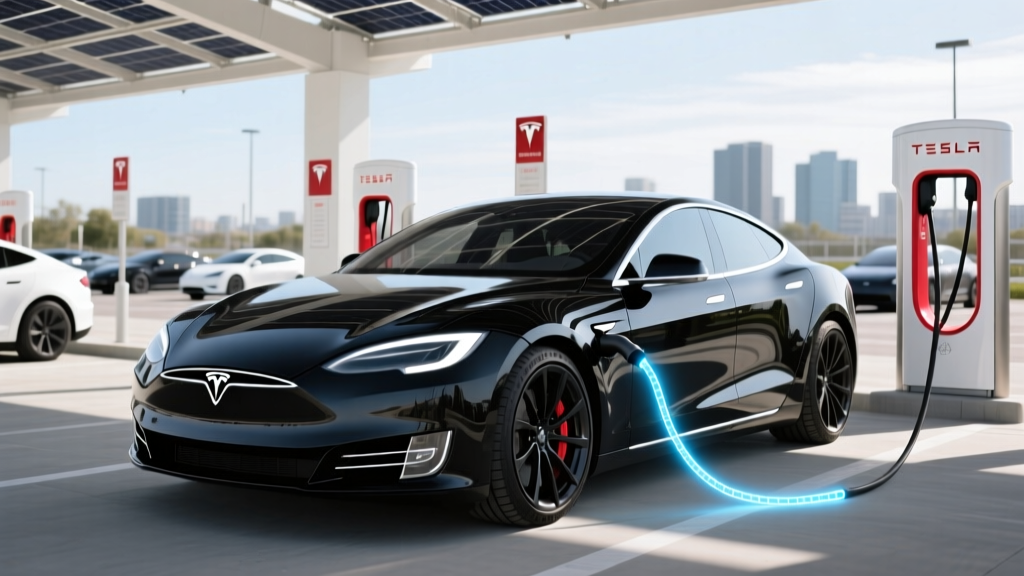
If you've ever pulled into a Tesla Supercharger with 10% battery and a full itinerary, one question dominates: how long to charge a Tesla at a Supercharger? The honest answer depends on your specific model, the charger generation you're plugged into, and where you are on the charge curve. This guide gives you exact minutes, real-world kW figures, and the cost math so you can plan road trips and daily driving without guesswork.
Tesla Supercharger Charge Times by Model (10–80%)
Tesla's current Supercharger network includes V2 (150 kW peak), V3 (250 kW peak), and the newer V4 (up to 350 kW peak) cabinets. Not every Tesla can accept the maximum rate, and no EV sustains peak kW for the entire session. The charge curve tapers significantly above 80% State of Charge (SoC) to protect battery health.
| Model / Trim | Battery (kWh usable) | Peak Charge Rate (kW) | 10–80% Time | Miles Added in 15 min |
|---|---|---|---|---|
| Model 3 Long Range AWD | 79 kWh (NMC) | 250 kW | ~25 min | ~175 mi |
| Model 3 Performance | 79 kWh (NMC) | 250 kW | ~25 min | ~170 mi |
| Model 3 RWD (LFP) | 60 kWh (LFP) | 170 kW | ~27 min | ~130 mi |
| Model Y Long Range AWD | 79 kWh (NMC) | 250 kW | ~27 min | ~162 mi |
| Model Y Performance | 79 kWh (NMC) | 250 kW | ~27 min | ~155 mi |
| Model S Long Range | 100 kWh (NMC) | 250 kW | ~30 min | ~200 mi |
| Model X Long Range | 100 kWh (NMC) | 250 kW | ~31 min | ~185 mi |
| Cybertruck AWD | 123 kWh (NMC) | 250 kW (V3) / 350 kW (V4) | ~28 min (V3) | ~145 mi (V3) |
Charging Levels Explained: kW, Miles per Hour, and What They Mean
Understanding kW (kilowatts — the rate of power delivery) versus kWh (kilowatt-hours — the energy stored in your battery) is the single most important piece of EV literacy. Think of kW as how wide the hose is, and kWh as the size of the bucket. A higher kW fills the bucket faster, but the bucket's total capacity is measured in kWh.
| Level | Voltage / Amps | Power (kW) | Miles of Range / Hour | Best For |
|---|---|---|---|---|
| Level 1 (120V outlet) | 120V / 12A | ~1.4 kW | 3–5 mi/hr | Overnight top-up for low-mileage drivers; PHEVs |
| Level 2 (240V home/public) | 240V / 32–48A | 7.7–11.5 kW | 25–44 mi/hr | Daily home charging; destination charging |
| DC Fast Charging | 400–800V DC | 50–350 kW | 150–1,000+ mi/hr (varies) | Road trips; rapid top-ups |
For a Tesla Model Y Long Range averaging 3.5 miles per kWh, a Level 2 charger at 11.5 kW (48A) delivers roughly 40 miles of range per hour. That means a full 10–80% charge at home takes about 5 hours — perfectly suited for overnight charging. At a V3 Supercharger, you're adding roughly 11 miles per minute during the peak portion of the curve.
How Much Does It Cost to Install a Home EV Charger?
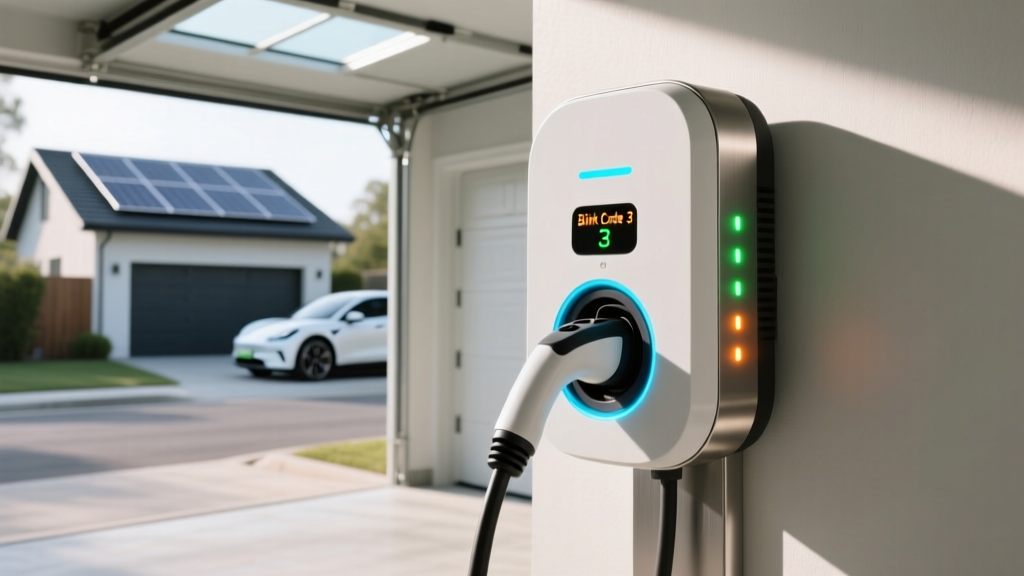
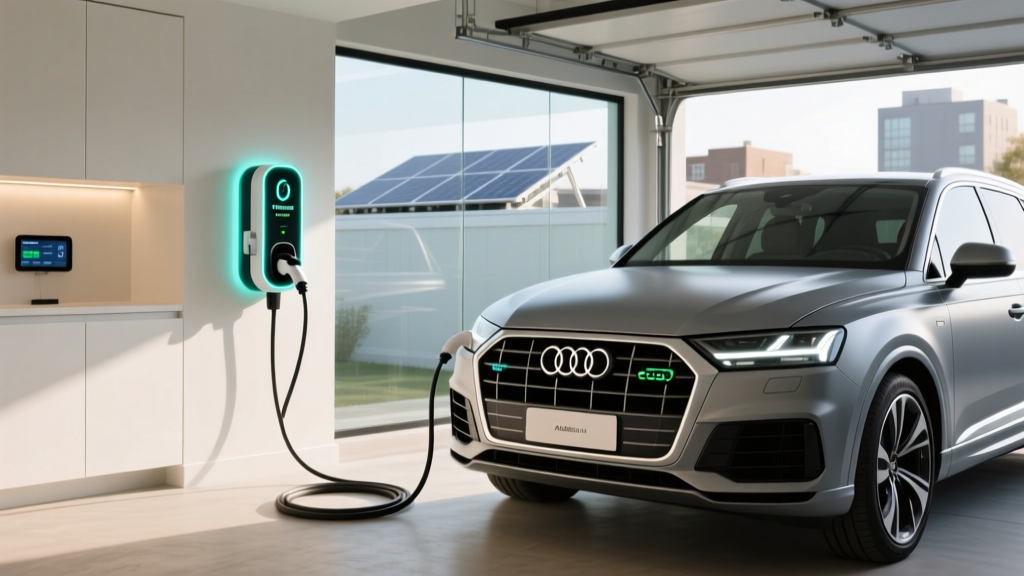
Most Tesla owners charge at home 80–90% of the time. A Level 2 home setup on a 240V circuit is the gold standard, but installation costs vary widely depending on your electrical panel, the distance from panel to charger location, and local permitting. Here's a realistic breakdown:
| Component | Low Estimate | High Estimate | Notes |
|---|---|---|---|
| EVSE Equipment (charger unit) | $200 | $700 | Tesla Wall Connector ~$420; third-party smart chargers $400–$700 |
| Electrician Labor | $400 | $1,800 | Depends on run length, conduit, wall material |
| Electrical Permit | $50 | $250 | Varies by municipality |
| Panel Upgrade (if needed) | $1,500 | $4,000 | Required if panel is 100A or near capacity; 200A service typical |
| Total (no panel upgrade) | $650 | $2,750 | Most homes with 200A service fall in this range |
| Total (with panel upgrade) | $2,150 | $6,750 | Older homes with 100A panels need this |
Electrical requirements: A Tesla Wall Connector at maximum output requires a 60A dedicated circuit (delivers 48A continuous, per NEC 80% rule). Most installations use a NEMA 14-50 receptacle (50A circuit, 40A continuous) for flexibility. Your electrician will verify that your panel has sufficient spare capacity — typically at least 40–60 amps of unused headroom on a 200A panel.
Panel upgrade gotcha: Homes built before 1990 frequently have 100A or 150A panels. Adding a 50–60A EV circuit may push total calculated load beyond panel capacity, requiring a service upgrade to 200A. This is the single biggest surprise cost in home EV charging. Always get a load calculation from your electrician before committing.
Connector Compatibility: NACS, CCS1, and Adapters
As of 2026, the North American Charging Standard (NACS) — originally Tesla's proprietary connector — has become the dominant EV charging connector in the U.S. Tesla vehicles use NACS natively. Non-Tesla EVs from Ford, GM, Rivian, Volvo, and others now also ship with NACS ports or include NACS adapters.
| Connector | Native Vehicles | DC Fast Networks | Adapter Needed? |
|---|---|---|---|
| NACS (Tesla) | Tesla (all), Ford, GM, Rivian, Volvo, Polestar, Mercedes (2025+) | Tesla Supercharger, Electrify America (new stalls), EVgo, ChargePoint | Non-Tesla EVs may need OEM NACS adapter for older CCS chargers |
| CCS1 | Hyundai, Kia, VW, BMW, older Ford/GM models | Electrify America, EVgo, ChargePoint (legacy stalls) | Tesla owners need CCS adapter (~$175) for non-Tesla DCFC |
| CHAdeMO | Nissan Leaf (legacy), Mitsubishi Outlander PHEV | Declining; some Electrify America legacy stalls | Not compatible with Tesla; adapters rare and expensive |
Tesla CCS adapter: Tesla sells a CCS1 adapter for approximately $175 that allows Tesla vehicles to charge at non-Tesla DC fast chargers with CCS1 connectors. This is useful on road trips through areas where Superchargers are sparse but Electrify America or EVgo stations exist. Tesla's Magic Dock adapter, built into some Supercharger stalls, also enables CCS1-equipped non-Tesla EVs to use select Superchargers.
Cost to Charge: Home vs. Supercharger vs. Gas
Charging cost is where EV ownership economics shine — or sting — depending on where you plug in. The spread between home off-peak rates and DC fast charging is significant.
| Scenario | $/kWh | Cost per Mile | Full 10–80% Cost (79 kWh battery) |
|---|---|---|---|
| Home (national avg residential) | $0.16 | $0.046 | ~$8.85 |
| Home (off-peak TOU rate) | $0.09 | $0.026 | ~$4.98 |
| Tesla Supercharger (avg U.S.) | $0.32 | $0.091 | ~$17.70 |
| Third-party DCFC (Electrify America) | $0.43 | $0.123 | ~$23.87 |
| Gas equivalent (25 MPG, $3.40/gal) | — | $0.136 | — |
At home on an off-peak time-of-use (TOU) plan, a Tesla Model Y owner pays roughly 2.6 cents per mile — about one-fifth the cost of gas at $3.40/gallon in a 25 MPG vehicle. Even at Supercharger rates, the Tesla costs about 9 cents per mile versus 13.6 cents for gas. However, exclusive Supercharger charging erodes the cost advantage substantially.
Home Charger Equipment Recommendations (2026)
Choosing the right Level 2 charger involves matching power output to your electrical panel, cable length to your parking setup, and smart features to your utility's TOU rates.
Tesla Wall Connector
- Power: 11.5 kW (48A) max
- Connector: NACS (native Tesla)
- Cable: 24 ft
- Smart features: Wi-Fi, OTA updates, load sharing (pair up to 6 units on one circuit), access control
- Price: ~$420
- Best for: Tesla-only households wanting clean integration
ChargePoint Home Flex
- Power: Up to 12 kW (50A) adjustable
- Connector: NACS or J1772 (configurable)
- Cable: 23 ft
- Smart features: Wi-Fi, Alexa, scheduled charging, utility TOU integration, energy tracking
- Price: ~$550
- Best for: Mixed-fleet households (Tesla + non-Tesla EVs)
Emporia Vue Level 2 Charger
- Power: 11.5 kW (48A)
- Connector: NACS or J1772
- Cable: 24 ft
- Smart features: Wi-Fi, solar integration with Emporia Vue energy monitor, load management
- Price: ~$400
- Best for: Solar-panel owners wanting EV + home energy visibility
Grizzl-E Smart
- Power: 10 kW (40A)
- Connector: NACS or J1772
- Cable: 24 ft
- Smart features: OCPP protocol, adjustable amperage, extreme-temp rated (-40°F)
- Price: ~$450
- Best for: Cold-climate garages and outdoor installations
All of these chargers require a hardwired connection or NEMA 14-50 receptacle on a dedicated 50–60A circuit. Hardwired installations are preferred for 48A+ chargers because NEMA 14-50 receptacles are rated for 50A maximum, and the NEC 80% continuous-load rule limits them to 40A continuous draw.
Safety, Electrical Code, and Installation Essentials
EV charging places a sustained high-amperage load on your home's electrical system — more like running an electric furnace for 6 hours than briefly using a microwave. Safety and code compliance are non-negotiable.
- Dedicated circuit: Your EV charger must be on its own dedicated breaker. Sharing a circuit with other appliances violates NEC Article 625 and creates a fire risk.
- GFCI protection: NEC 2020 and later require GFCI protection for EVSE receptacles in garages and outdoor locations. Hardwired EVSE units have built-in ground-fault protection.
- Outdoor rating: If your charger is mounted outside, ensure the EVSE and receptacle are rated NEMA 3R or NEMA 4 (weather-resistant). The Tesla Wall Connector and ChargePoint Home Flex are both outdoor-rated.
- Wire gauge: A 60A circuit requires 6 AWG copper wire (or 4 AWG aluminum). A 50A circuit requires 6 AWG copper. Your electrician will size wire based on run length and ambient temperature derating.
- Permit and inspection: Most jurisdictions require an electrical permit for EVSE installation. The inspection verifies wire sizing, breaker rating, grounding, and GFCI compliance. Skip the permit at your peril — unpermitted work can void insurance claims and complicate home sales.
Why the Charge Curve Matters More Than Peak kW
Tesla advertises "up to 250 kW" at V3 Superchargers, but that peak rate applies only between roughly 10% and 35% SoC on NMC batteries. After that, the rate steps down progressively: ~150 kW through 50%, ~100 kW through 65%, and ~50 kW from 80% to 100%. This taper protects battery longevity by reducing heat and lithium plating risk.
Here's what that means in practice for a Model Y Long Range (79 kWh):
- 10–35% SoC: ~250 kW peak → adds ~22 kWh in ~5 minutes (~77 miles)
- 35–65% SoC: ~150 kW average → adds ~24 kWh in ~10 minutes (~84 miles)
- 65–80% SoC: ~80 kW average → adds ~12 kWh in ~9 minutes (~42 miles)
- 80–100% SoC: ~30 kW average → adds ~16 kWh in ~30 minutes (~56 miles)
The practical takeaway: charging from 10–80% takes about 25 minutes, but charging from 80–100% takes nearly as long. On road trips, plan to charge to 80% and move on — the last 20% is painfully slow and not worth the wait unless you absolutely need full range for the next leg.
Frequently Asked Questions
How long does it take to charge a Tesla from 0 to 100% at a Supercharger?
Expect 55–75 minutes depending on model and charger generation. A Model 3 Long Range on a V3 Supercharger takes roughly 60 minutes for a full 0–100% session. However, the 80–100% portion alone accounts for 25–30 minutes due to charge-curve taper. Tesla recommends setting your charge limit to 80% for road-trip efficiency unless you need full range.
Is it bad to Supercharge a Tesla frequently?
Occasional Supercharging has minimal impact on battery health. However, daily DC fast charging accelerates degradation slightly compared to Level 2 home charging. Tesla's battery warranty covers 8 years or 120,000 miles (whichever comes first) with a minimum 70% capacity retention threshold. Real-world data from sources like Tesla's Impact Report shows average degradation of about 12% after 200,000 miles across the fleet.
Can non-Tesla EVs use Tesla Superchargers?
Yes, at select locations. Tesla has opened portions of its Supercharger network to non-Tesla EVs equipped with CCS1 connectors via the built-in Magic Dock adapter at participating stations. Availability varies by region and is expanding. Non-Tesla drivers can check station compatibility and initiate sessions through the Tesla app. Pricing for non-Tesla vehicles is typically 10–20% higher than Tesla-member rates.
What electrical upgrades might I need for a home charger?
The most common upgrade is a panel service increase from 100A to 200A, required when your existing panel lacks sufficient spare capacity for a 50–60A EV circuit. Other potential upgrades include: adding a sub-panel closer to the garage (reduces wire run cost), replacing a Federal Pacific or Zinsco panel (known fire hazards that fail inspection), or upgrading the utility service drop if your home's total load calculation exceeds the utility transformer capacity. Budget $1,500–$4,000 for a panel upgrade.
How much does it cost to charge a Tesla per mile compared to gas?
At home on the national average electricity rate of $0.16/kWh, a Tesla Model Y costs about 4.6 cents per mile. At a Supercharger averaging $0.32/kWh, it's about 9.1 cents per mile. A comparable gas vehicle getting 25 MPG at $3.40/gallon costs 13.6 cents per mile. Home charging saves roughly $900–$1,200 per year versus gas for a driver covering 12,000 miles annually. Check fueleconomy.gov for EPA efficiency ratings by model.
Do I need a Tesla Wall Connector, or can I use the Mobile Connector?
The Tesla Mobile Connector (included with some trims, ~$200 separately) delivers up to 6.5 kW on a NEMA 14-50 outlet (30A continuous) — adequate for overnight charging if you drive under 40 miles daily. For faster home charging (11.5 kW), the Tesla Wall Connector on a 60A circuit is the better choice. The Wall Connector also offers Wi-Fi connectivity, firmware updates, and load-sharing for multi-charger setups.