For Tesla owners and the growing number of non-Tesla EVs now accessing the Supercharger network, the most common question at the start of a road trip is simple: how long will this stop actually take? The answer depends on which Supercharger generation you pull into, your battery's state of charge (SoC), ambient temperature, and whether you preconditioned on the way. This guide breaks down real Tesla Supercharger charge time data across V2, V3, and V4 stalls, then maps out what charging looks like at home—including the exact electrical requirements, costs, and equipment you need.
Tesla Supercharger Charge Time by Stall Generation
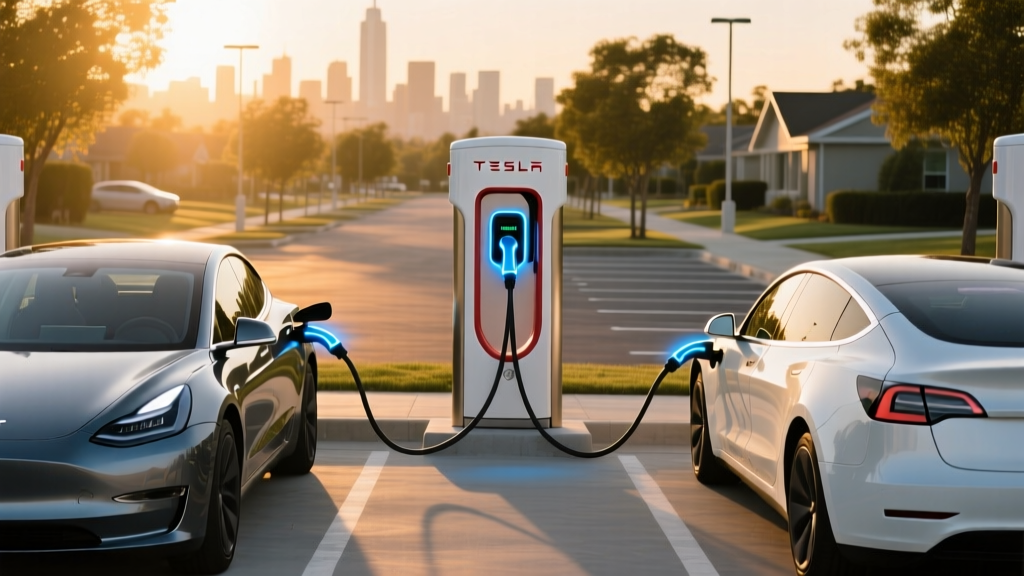
Tesla operates three main Supercharger generations in North America as of 2026, each with different peak power outputs. The kW (kilowatt) rating tells you the maximum power delivery rate—think of it as the width of the pipe filling your battery, which is measured in kWh (kilowatt-hours) of energy capacity. A higher kW means faster filling, but only up to the point your vehicle's onboard charge acceptance allows.
| Generation | Peak Power | Typical 10-80% (Model 3 LR, ~75 kWh) | Typical 10-80% (Model Y LR, ~75 kWh) | Miles Added in 15 Min |
|---|---|---|---|---|
| V2 (Urban & legacy) | 150 kW | ~35-40 min | ~38-45 min | ~130-150 mi |
| V3 | 250 kW | ~22-27 min | ~25-30 min | ~175-200 mi |
| V4 (newer deployments) | 350 kW (cabinet) | ~18-23 min* | ~20-25 min* | ~200-230 mi* |
*V4 times assume a vehicle capable of accepting >250 kW (e.g., Cybertruck with its higher charge-acceptance architecture). Most Model 3 and Model Y vehicles peak around 250 kW regardless of V4 cabinet capacity, so real-world gains at V4 stalls are modest for those models.
Why you'll never see a linear charge rate: Lithium-ion batteries accept charge fastest at low SoC and taper significantly above 80%. A V3 stall may deliver 250 kW from 10-30% SoC, drop to ~150 kW by 50%, and fall below 50 kW past 80%. This charge curve is why the industry standard measurement is 10-80%—charging beyond 80% on DC fast is slow enough that you're better off driving to the next stop. Cold weather (below 40°F) can extend these times by 20-40% unless you navigate to the Supercharger via the Tesla app, which triggers battery preconditioning.
Charging Levels Explained: Level 1, Level 2, and DC Fast
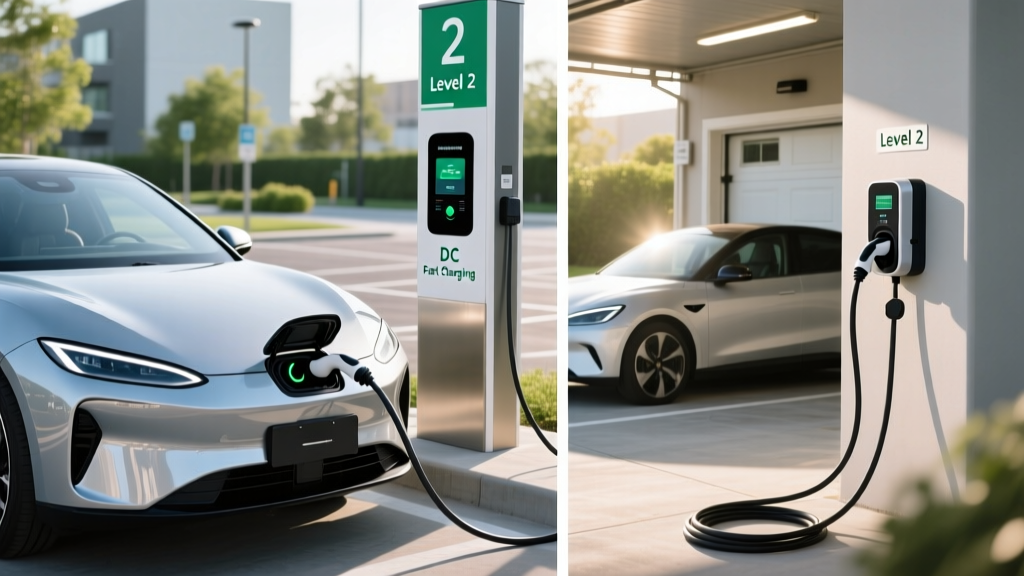
Whether you drive a Tesla or any other EV, charging falls into three tiers. Understanding the speed difference between them determines whether you wake up to a full battery or spend your afternoon at a charging plaza.
| Level | Voltage | Power (kW) | Miles of Range per Hour | Best For |
|---|---|---|---|---|
| Level 1 (120V outlet) | 120V AC | 1.0-1.4 kW | 3-5 mi/hr | Overnight top-ups, PHEVs, low-mileage drivers |
| Level 2 (240V home/public) | 240V AC | 3.3-19.2 kW | 12-75 mi/hr | Daily home charging, workplace, destinations |
| DC Fast Charging | 400-800V DC | 50-350 kW | 150-1,200+ mi/hr | Road trips, rapid top-ups, commercial fleets |
For most EV owners, Level 2 at home is the backbone of ownership. A 48-amp (11.5 kW) home charger replenishes roughly 35-44 miles of range per hour—enough to fully recharge a Tesla Model 3 Long Range (EPA 341 miles) from 20% to 100% in about 7-8 hours overnight. DC fast charging is for road trips: it's more expensive per kWh, generates more battery heat, and shouldn't be your daily routine if longevity matters.
Home Charger Installation: Electrical Requirements & Costs
Installing a dedicated Level 2 home charger typically requires a 240V circuit on a dedicated breaker. The most common setup is a NEMA 14-50 outlet (50-amp circuit, delivering up to 40 amps continuous to the vehicle) or a hardwired connection, which allows up to 48 amps continuous on a 60-amp breaker and avoids the GFCI breaker requirement that NEC 2020+ mandates for receptacles in garages.
What determines your installation cost? Three factors dominate: the distance from your electrical panel to the charging location, whether your panel has spare capacity (amperage headroom), and local permit requirements. A panel upgrade from 100A to 200A service is the single biggest cost variable and is common in homes built before 2000.
| Component | Low End | Typical | High End (with panel upgrade) |
|---|---|---|---|
| EV charger equipment (Level 2, 40-48A) | $350 | $500-$650 | $700 |
| Electrician labor (240V run, <30 ft) | $400 | $800-$1,500 | $2,500+ (long runs, conduit) |
| Permit & inspection | $50 | $100-$250 | $400 |
| Electrical panel upgrade (100A → 200A) | $0 (not needed) | $0 (not needed) | $1,500-$3,500 |
| Total | $800-$1,000 | $1,400-$2,400 | $3,500-$7,100 |
Connector Compatibility: NACS, CCS1, and CHAdeMO
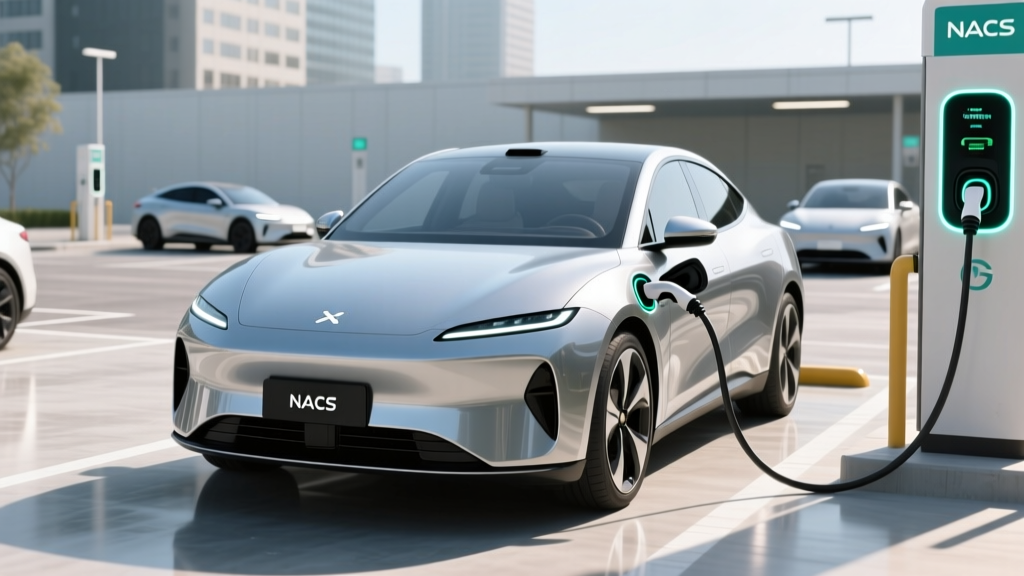
The connector landscape has consolidated dramatically since 2023, when Ford, GM, Rivian, Volvo, and nearly every major automaker committed to adopting Tesla's North American Charging Standard (NACS). By 2026, NACS is the dominant DC fast charging connector in North America, with CCS1 still present on older vehicles and at legacy public stations.
| Connector | Brands Using It (New Vehicles) | Supercharger Access | Adapter Needed? |
|---|---|---|---|
| NACS (Tesla standard) | Tesla, Ford, GM, Rivian, Volvo, Polestar, Mercedes, Hyundai, Kia (2025+) | Native at all Tesla Superchargers | None for Tesla SC; CCS adapter for legacy DC stations |
| CCS1 | Older VW ID.4, BMW i4/iX, pre-2025 Hyundai/Kia, Stellantis | Via Tesla Magic Dock or NACS adapter at select SCs | NACS-to-CCS adapter ($150-$250) for Tesla SC access |
| CHAdeMO | Nissan Leaf (legacy only, discontinued) | No Supercharger access | No practical adapter to NACS |
If you drive a CCS-equipped vehicle and want Supercharger access, Tesla sells a CCS-to-NACS adapter and has equipped select Supercharger locations with the "Magic Dock"—a built-in adapter on the stall cable that lets CCS vehicles plug in directly. Check the Tesla app for Magic Dock availability at stations along your route, as not all locations have it.
Charging Cost Per Mile: Home vs. Public vs. Gas
The economics of EV charging vary enormously depending on where you plug in. Home charging on a time-of-use (TOU) utility plan remains the cheapest option by a wide margin, while DC fast charging on road trips can approach or occasionally exceed the per-mile cost of a fuel-efficient gasoline car.
| Scenario | Rate | Cost per Mile (3.5 mi/kWh vehicle) | Notes |
|---|---|---|---|
| Home, off-peak TOU | $0.08-$0.12/kWh | $0.023-$0.034 | Best-case; schedule charging for 11pm-6am |
| Home, standard rate | $0.14-$0.18/kWh | $0.040-$0.051 | National avg residential electricity |
| Public Level 2 (ChargePoint, etc.) | $0.25-$0.49/kWh | $0.071-$0.140 | Varies widely by location and network |
| Tesla Supercharger (V3) | $0.28-$0.48/kWh | $0.080-$0.137 | Peak pricing at busy urban corridors can exceed $0.50 |
| Electrify America / IONNA DC | $0.35-$0.57/kWh | $0.100-$0.163 | Idle fees add $0.40/min if you don't unplug |
| Gasoline (30 MPG avg, $3.40/gal) | $3.40/gal | $0.113 | 2026 national average regular unleaded |
At home off-peak rates, a Tesla Model 3 Long Range owner pays roughly $0.03 per mile—about one-quarter the cost of gasoline. Even at Supercharger rates, most EV owners still pay less per mile than the average gas car, though the gap narrows considerably. The key insight: if 80%+ of your charging happens at home, your average cost per mile stays well below gas. If you rely exclusively on public DC fast charging (no home access), the economics become less compelling.
Best Home EV Chargers for 2026
The home charger market has matured, with several models offering reliable performance, smart scheduling, and robust build quality. Here are the units we recommend based on sustained real-world use, electrical code compliance, and value.
Tesla Wall Connector (Gen 3)
Power: 11.5 kW (48A) hardwired / 9.6 kW (40A) NEMA 14-50
Cable: 24 ft
Connector: NACS native
Smart features: Wi-Fi, OTA updates, load sharing with multiple units, access control
Price: ~$425
Best for: Tesla owners who want seamless integration and power-sharing in multi-charger garages.
ChargePoint Home Flex
Power: Up to 12 kW (50A) configurable, 240V
Cable: 23 ft
Connector: NACS (2025+ models) or J1772 with NACS adapter
Smart features: Wi-Fi, app scheduling, Alexa integration, flexible amperage setting
Price: ~$550-$650
Best for: Multi-EV households or renters who want a portable, configurable unit.
Emporia Level 2 EV Charger
Power: 11.5 kW (48A) hardwired / 9.6 kW (40A) plug-in
Cable: 24 ft
Connector: J1772 (NACS adapter included)
Smart features: Wi-Fi, energy monitoring, solar integration, TOU scheduling
Price: ~$350-$400
Best for: Budget-conscious buyers and solar-panel owners wanting detailed energy tracking.
Grizzl-E Smart
Power: 10 kW (40A) or 11.5 kW (48A) configurable
Cable: 24 ft
Connector: J1772 (NACS adapter available)
Smart features: OCPP protocol, app control, -40°F rated for outdoor use
Price: ~$450-$550
Best for: Cold-climate outdoor installations where durability matters most.
Safety, Code Requirements & Common Pitfalls
Home EV charger installation is electrical work governed by the National Electrical Code (NEC) and your local jurisdiction's amendments. Key requirements that affect your install:
- Dedicated circuit: Your Level 2 charger must be on its own dedicated breaker—no sharing with other appliances. A 48A charger requires a 60A breaker (NEC requires breakers rated at 125% of continuous load).
- GFCI protection: NEC 2020 and later requires GFCI protection for all receptacles in garages. This means if you install a NEMA 14-50 outlet, you'll need a GFCI breaker (~$100-$150 extra). Hardwired installations are exempt from this requirement, which is why many electricians recommend hardwiring.
- Outdoor rating: If your charger is mounted outside, the unit must carry a NEMA 3R or NEMA 4 rating for weather resistance. All units listed above meet this standard.
- Wire gauge: A 60A circuit typically requires 6 AWG copper wire (THHN in conduit) or 4 AWG for NM-B cable. Your electrician will size this based on run length and local code.
- Permit and inspection: Most jurisdictions require an electrical permit ($50-$400) and a post-install inspection. Skipping the permit risks insurance claim denial if an electrical fire occurs and voids many charger warranties.
The most common installation mistake we see: homeowners plugging a Level 2 charger into an existing dryer outlet using a splitter or adapter. This is a fire hazard. Dryer circuits are not rated for the sustained 4-hour+ draw that EV charging demands. Always install a dedicated circuit.
Frequently Asked Questions
How much does it cost to install a home EV charger?
A straightforward Level 2 installation (short wire run from a 200A panel, hardwired) typically costs $1,400-$2,400 including equipment, electrician labor, and permit. If your home has a 100A panel that needs upgrading to 200A, expect the total to reach $3,500-$7,100. Get at least three quotes from licensed electricians—pricing varies significantly by region and contractor.
How fast will each charging level add range?
Level 1 (120V) adds 3-5 miles per hour—suitable only for plug-in hybrids or very low daily mileage. Level 2 (240V, 48A) adds 35-44 miles per hour, fully recharging most EVs overnight in 7-10 hours. DC fast charging (Tesla Supercharger V3 at 250 kW) can add up to 200 miles in 15 minutes at low SoC, though the rate tapers significantly above 80%.
Which connector/charger is compatible with my EV?
All 2026 Tesla vehicles use the native NACS connector. Most non-Tesla EVs from Ford, GM, Rivian, Hyundai, and Kia (2025+ models) also ship with NACS. Older CCS-equipped vehicles can access Tesla Superchargers with a CCS-to-NACS adapter or at Magic Dock-equipped stations. CHAdeMO vehicles (Nissan Leaf) have no Supercharger access. Check your vehicle's charge port or the EPA's fueleconomy.gov listing for your specific model year.
How much does charging cost per mile vs gas?
Home charging at off-peak utility rates costs approximately $0.02-$0.03 per mile—roughly 75% cheaper than gasoline at $3.40/gallon in a 30 MPG vehicle ($0.113/mile). Public DC fast charging costs $0.08-$0.16 per mile, still generally cheaper than gas but the gap narrows. The IRS §30D federal tax credit for qualifying new EVs (up to $7,500, subject to MSRP caps, buyer income limits, and battery sourcing requirements) further improves the total cost equation.
What electrical upgrades might I need?
The most common upgrade is a panel service increase from 100A to 200A, required when your existing panel lacks capacity for a 48A continuous EV load alongside existing appliances. Homes with 150A+ panels and gas appliances (rather than electric range/dryer/HVAC) rarely need upgrades. A smart load-management device can sometimes avoid a panel upgrade by throttling charger amperage when other high-draw appliances activate. Consult a licensed electrician for a proper NEC Article 220 load calculation.