Why Commercial Hosts Are Eyeing Tesla Superchargers in 2026
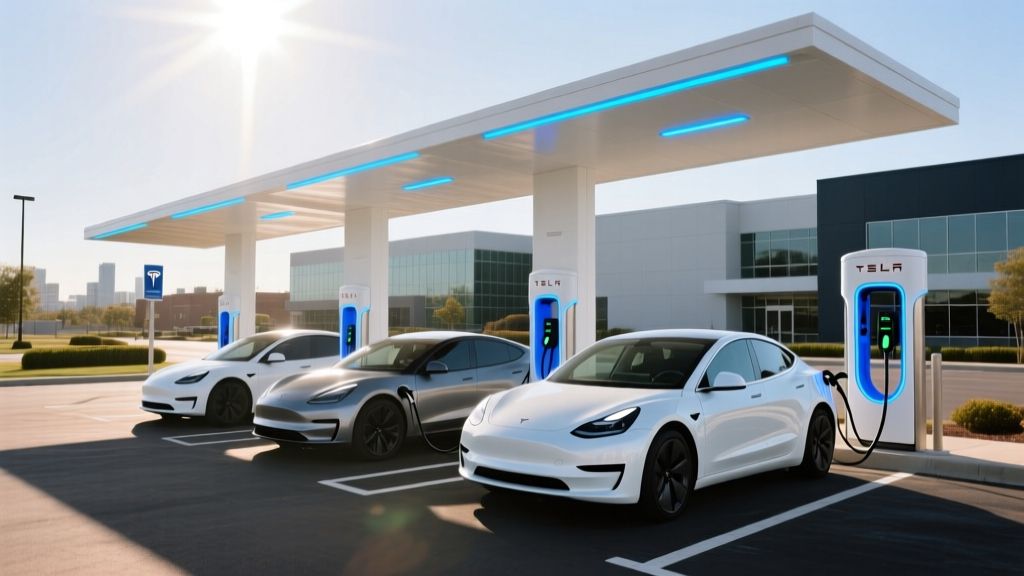
With the North American Charging Standard (NACS) now the de facto connector for nearly every major automaker, the Tesla Supercharger for business cost has become a serious line-item for hotels, retail centers, fleet depots, and workplace campuses. In 2026, Tesla offers two commercial pathways: the destination-style Wall Connector network and the DC fast-charging Supercharger host program. Both require different capital outlays, utility coordination, and revenue expectations. This guide dissects the real numbers — not the brochure — so you can decide whether hosting chargers pencils out for your property.
Understanding Charging Levels: Speed, Power, and Real-World Range Gains
Before quoting hardware, you need to know which charging level fits your use case. Power (measured in kilowatts, kW) determines how fast energy flows; energy (measured in kilowatt-hours, kWh) is what the battery stores. Confusing the two is the single most common mistake in commercial EV planning.
| Level | Power (kW) | Voltage / Amps | Miles of Range per Hour | Typical Use Case |
|---|---|---|---|---|
| Level 1 | 1.0 – 1.9 kW | 120V / 12–16A | 3 – 5 mi/hr | Overnight trickle; not viable commercially |
| Level 2 | 7.2 – 19.2 kW | 240V / 30–80A | 22 – 60 mi/hr | Hotels, workplaces, retail (2–8 hr dwell) |
| DC Fast (V4 Supercharger) | 150 – 350 kW peak | 400–800V DC | 200 – 1,000+ mi/hr (peak) | Highway corridor, fleet depot, quick-turnaround retail |
A Level 2 Wall Connector at 11.5 kW (48A on a 60A circuit) will add roughly 35–44 miles of range per hour to a Tesla Model Y or a NACS-equipped Ford F-150 Lightning. A V4 Supercharger cabinet can deliver up to 350 kW to 800V-architecture vehicles (like the Cybertruck or upcoming NACS-adapted Hyundai Ioniq 5), pulling a 10–80% session in roughly 15–18 minutes on compatible packs.
Tesla Supercharger for Business Cost: Hardware, Install, and Utility Upgrades
Tesla does not publish a fixed menu price for commercial Supercharger deployments — each site is custom-scoped based on stall count, utility capacity, and trenching distance. Based on 2025–2026 installer reports and host disclosures, here is the realistic capital range for a 4-stall V4 deployment:
| Cost Category | Low Estimate | High Estimate | Notes |
|---|---|---|---|
| V4 Supercharger cabinet + 4 posts | $120,000 | $180,000 | Tesla supplies hardware; host often funds |
| Utility transformer upgrade (if needed) | $25,000 | $125,000 | Depends on existing service; 1–2 MW site service common |
| Trenching, conduit, concrete pads | $30,000 | $90,000 | Longer runs from switchgear = higher cost |
| Electrical labor (licensed contractor) | $25,000 | $60,000 | Varies by region and union requirements |
| Permits, engineering, utility interconnect fees | $10,000 | $35,000 | Some utilities require impact studies |
| Total (4-stall V4 site) | $210,000 | $490,000 | Average ~$300K–$350K for suburban retail |
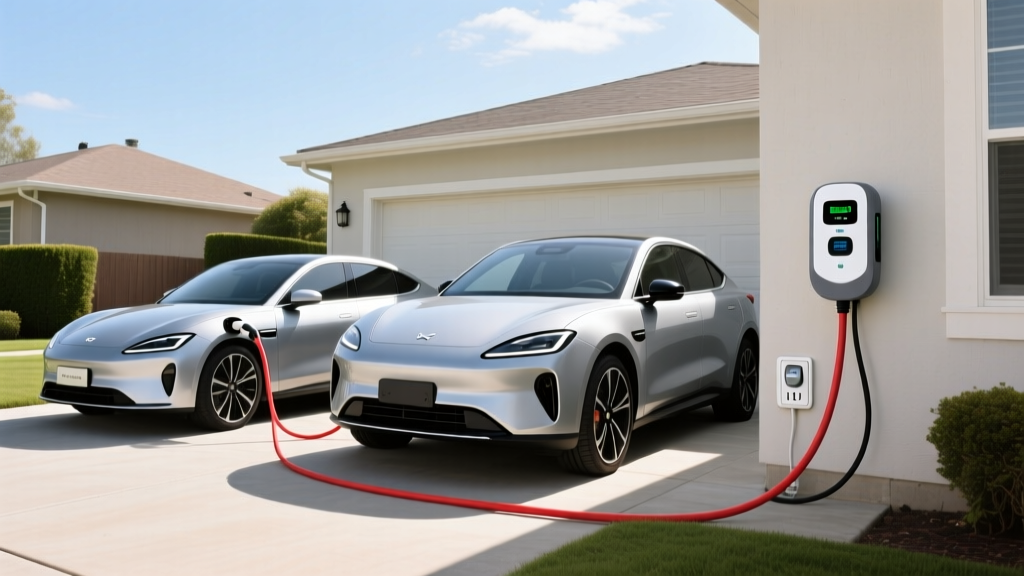
For Level 2 Wall Connector deployments (common for hotels and workplaces), costs drop dramatically. A 4-port Wall Connector setup on 60A circuits typically runs $8,000–$22,000 all-in, assuming your panel has spare capacity. If a panel upgrade from 200A to 400A service is required, add $3,000–$8,000 for residential-grade or $10,000–$25,000 for commercial switchgear.
What Electrical Upgrades Might You Need?
Most commercial Supercharger sites require a dedicated medium-voltage utility feed or a new pad-mounted transformer. Tesla's site team will request your utility's "service availability letter" early in scoping. Key questions to ask your electrical engineer:
- Do you have 480V three-phase service on-site, or will a step-down transformer be needed?
- Is your main switchgear rated for the additional 250–500 kW continuous load per cabinet?
- Does your utility offer demand-response or EV-specific commercial rate schedules that reduce peak charges?
- Will battery-buffered storage (like Tesla Megapack) reduce your demand charges and avoid a transformer upgrade?
Connector Compatibility: NACS, CCS1, and the Adapter Reality in 2026
As of 2026, NACS (J3400) is the standard on all Tesla vehicles and on new models from Ford, GM, Rivian, Volvo, Polestar, Hyundai, Kia, and BMW. CCS1 remains on legacy vehicles from the 2022–2024 model years and on some commercial vans. CHAdeMO is effectively discontinued for new light-duty vehicles but persists on older Nissan Leaf and Mitsubishi Outlander PHEV fleets.
| Connector | Native Vehicles (2026) | Adapter Needed at Tesla Supercharger? | Max DC Rate |
|---|---|---|---|
| NACS (J3400) | Tesla, Ford, GM, Rivian, Hyundai, Kia, BMW, Volvo, Polestar | No — plug directly | Up to 350 kW (V4) |
| CCS1 | Legacy 2022–2024 models, some commercial vans | Yes — CCS-to-NACS adapter (Magic Dock at select stations, or owner-supplied) | Up to 150–250 kW (adapter-limited) |
| CHAdeMO | Nissan Leaf (pre-2026), Mitsubishi | No reliable adapter; use Electrify America or EVgo | 50–100 kW |
Tesla has deployed "Magic Dock" built-in CCS adapters at a subset of Supercharger stalls to meet NEVI program requirements. If your business site is NEVI-funded, you must provide CCS1 compatibility — plan for Magic Dock-equipped posts or a third-party CCS cabinet alongside NACS posts.
Cost to Charge: Per-kWh Scenarios and Cost per Mile vs. Gas
Revenue modeling for a commercial Supercharger hinges on your local electricity rate structure and the pricing you set for drivers. Here are representative 2026 scenarios:
| Scenario | Electricity Cost ($/kWh) | Price to Driver ($/kWh) | Cost per Mile (EV at 3.5 mi/kWh) | Gas Equivalent (28 MPG at $3.40/gal) |
|---|---|---|---|---|
| Home off-peak (residential TOU) | $0.08 – $0.12 | N/A | $0.023 – $0.034 | $0.121 |
| Commercial Level 2 (workplace/hotel) | $0.14 – $0.22 | $0.25 – $0.39 | $0.040 – $0.063 | $0.121 |
| Public DC Fast (Supercharger) | $0.16 – $0.28 | $0.35 – $0.52 | $0.100 – $0.149 | $0.121 |
| Peak urban DC Fast (congestion pricing) | $0.28 – $0.45 | $0.55 – $0.69 | $0.157 – $0.197 | $0.121 |
At typical Supercharger pricing ($0.35–$0.48/kWh in most US markets in 2026), a driver paying $0.42/kWh spends about $0.12/mile — roughly equivalent to a 28 MPG gas car at $3.40/gallon. The host's margin depends on demand charges, utilization, and whether Tesla or the host sets the price. Under Tesla's host program, revenue sharing is typically structured per-session or per-kWh, with Tesla managing billing and the host providing the real estate and electrical infrastructure.
Charging Time Examples for Common Battery Sizes
How long a vehicle occupies your stall directly impacts your site's throughput and revenue. Here are realistic 10–80% times accounting for charge-curve taper (charging slows significantly above 80% to protect battery health):
- Tesla Model Y (75 kWh usable, LFP): ~18–22 minutes on V4 at 250 kW peak; ~35–40 minutes on 150 kW V3.
- Ford F-150 Lightning Extended Range (131 kWh usable, NMC): ~28–35 minutes on V4; ~50–60 minutes on V3.
- Hyundai Ioniq 5 (84 kWh usable, NMC, 800V architecture): ~15–18 minutes on V4 at 350 kW peak with NACS adapter.
- Chevrolet Equinox EV (85 kWh usable, NMC): ~22–28 minutes on V4; ~45–55 minutes on V3.
Plan your stall count around 25–35 minute average dwell times for DC fast sites, and 2–4 hour dwells for Level 2 destination sites.
Equipment Recommendations: Commercial Chargers Compared
If you're evaluating hardware for a business deployment, here are three proven options across the Level 2 and DC fast spectrum:
Tesla Wall Connector (Commercial Bundle)
- Power Output: 11.5 kW (48A) per unit on a 60A circuit
- Connector: NACS native; J1772 adapter available
- Cable Length: 24 ft
- Smart Features: Wi-Fi, OTA updates, load sharing across up to 6 units on one circuit, Tesla app management
- Price: ~$650/unit hardware; $3,500–$6,000/unit installed (assuming panel capacity)
- Best For: Hotels, workplaces, multi-family with 2+ hour dwell times
Tesla V4 Supercharger Cabinet + Post
- Power Output: Up to 350 kW per post (cabinet shared across 4 posts)
- Connector: NACS native; Magic Dock CCS1 adapter at select stalls
- Cable Length: ~9.8 ft (post-integrated)
- Smart Features: Tesla-managed billing, remote diagnostics, Plug & Charge authentication, idle fees
- Price: Not sold direct; site-specific deployment ~$30K–$45K per post (hardware share)
- Best For: Highway corridors, high-volume retail, fleet depots needing sub-30-minute turnaround
ChargePoint Express 250 (Third-Party DC Fast)
- Power Output: Up to 250 kW per connector (dual-connector cabinet)
- Connector: CCS1 native; NACS adapter or dual-cable option
- Cable Length: 25 ft
- Smart Features: ChargePoint Cloud management, payment terminal, NEVI-compliant uptime reporting, demand-response integration
- Price: ~$55,000–$85,000 per cabinet (hardware); $80,000–$140,000 installed
- Best For: NEVI-funded sites, mixed-fleet depots, hosts wanting multi-network roaming
Safety, Code, and Permitting Essentials
Commercial EV charging installations must comply with NEC Article 625 (Electric Vehicle Charging System Equipment) and local amendments. Key requirements that affect your budget:
- Dedicated circuits: Each Level 2 charger needs its own breaker; DC fast cabinets require dedicated switchgear with lockable disconnects.
- GFCI protection: Required for all receptacle-based Level 1/2 installations; hardwired units may be exempt depending on jurisdiction.
- Outdoor rating: NEMA 3R or NEMA 4 enclosures required for outdoor equipment; NEMA 4X for coastal or corrosive environments.
- ADA compliance: At least one stall must meet ADA accessibility standards — wider pull-through, accessible payment terminal height, and compliant path of travel.
- Utility demand charges: Many commercial rate schedules impose demand charges ($10–$25/kW of peak demand per month) that can exceed your energy charges. Battery buffering or solar integration can mitigate this.
How Much Does It Cost to Install a Home or Business EV Charger?
For a single Level 2 Wall Connector at a small business or home: $1,500–$4,500 installed if your panel has capacity. For a 4-port commercial Level 2 site: $12,000–$28,000. For a 4-stall V4 Supercharger site: $210,000–$490,000. Panel upgrades, trenching distance, and utility transformer needs are the biggest cost variables.
Federal Incentives: The §30C Commercial Charging Credit
Businesses installing EV charging infrastructure may qualify for the IRS §30C Alternative Fuel Vehicle Refueling Property Credit, which covers up to 30% of hardware and installation costs, capped at $100,000 per item of property. Eligibility depends on placement in a qualifying census tract (low-income or non-urban). Consult a tax professional — the prevailing wage and apprenticeship requirements must be met to claim the full 30% rate. This credit is separate from the §30D vehicle purchase credit and can significantly reduce your effective Supercharger for business cost.
ROI Framework: When Does Hosting a Supercharger Pay Off?
A 4-stall Supercharger site dispensing 2,500 kWh/day at a $0.10/kWh host margin generates roughly $91,000/year in gross revenue. Subtract demand charges, maintenance, and land opportunity cost, and payback typically lands in the 4–7 year range for well-sited highway locations. Urban retail sites with lower utilization may stretch to 8–10 years. Level 2 destination chargers have lower revenue per session but dramatically lower capital cost and can serve as a loss-leader to attract high-dwell-time customers to your business.
Choose DC Fast Supercharger Hosting If:
- Your site is within 1 mile of a highway interchange
- You have 24/7 access and 4+ dedicated parking spaces
- Your utility can deliver 500+ kW of new capacity without a multi-year upgrade timeline
- You can absorb $250K–$500K in upfront capital with a 4–7 year payback horizon
Choose Level 2 Wall Connector Deployment If:
- Your customers or tenants dwell for 2+ hours (hotels, offices, gyms, restaurants)
- Your existing electrical panel has 100A+ of spare capacity
- You want to attract EV drivers as a competitive amenity rather than maximize per-kWh revenue
- Your budget is under $30,000 for a multi-port deployment
Frequently Asked Questions
How fast will each charging level add range to a typical EV?
Level 1 (120V) adds 3–5 miles per hour. Level 2 (240V, 11.5 kW) adds 35–44 miles per hour. DC fast charging at 150–350 kW can add 200–1,000+ miles per hour at peak, though real sessions average 10–80% in 15–35 minutes due to charge-curve taper above 80% State of Charge.
Which connector or charger is compatible with my EV or my customers' EVs?
In 2026, NACS (J3400) is the dominant standard for new vehicles. CCS1 remains on 2022–2024 legacy models and requires an adapter (Tesla's Magic Dock or owner-supplied). CHAdeMO is effectively legacy-only. For a business site, deploying NACS-native hardware with CCS1 adapter capability covers 95%+ of the current EV fleet.
How much does charging cost per mile compared to gas?
At typical 2026 Supercharger pricing ($0.35–$0.48/kWh), an EV achieving 3.5 miles per kWh costs $0.10–$0.14 per mile — comparable to a 28 MPG gas car at $3.40/gallon ($0.12/mile). Home Level 2 charging at off-peak rates ($0.08–$0.12/kWh) drops to $0.02–$0.03 per mile, a 75–80% savings vs. gas.
What electrical upgrades might my business need for a Supercharger site?
Most DC fast sites require a new utility transformer (pad-mounted, 500 kVA–2 MVA), 480V three-phase service, new switchgear, and potentially a medium-voltage extension from the utility's nearest feeder. Costs range from $25,000 (minimal upgrade) to $125,000+ (new utility feed). Tesla's site team will coordinate the utility interconnect study during scoping.
Can I earn revenue from hosting a Tesla Supercharger, or do I just pay for it?
Under Tesla's host program, the business provides the site and electrical infrastructure; Tesla typically manages the charging hardware, billing, and network operations. Revenue sharing varies by contract but is commonly structured as a per-kWh or per-session payment to the host. High-utilization highway sites can generate $80K–$120K/year in gross host revenue; low-utilization urban sites may generate $20K–$40K/year.
Is the §30C tax credit available for commercial Supercharger installations?
Yes. The IRS §30C credit covers up to 30% of qualifying commercial charging infrastructure costs (capped at $100,000 per item), provided the site is in an eligible census tract and prevailing wage/apprenticeship requirements are met. This can reduce a $350,000 Supercharger deployment's net cost by $100,000 or more. Always verify eligibility with a tax professional.