If you've ever pulled into a Tesla Supercharger station and watched your EV claw back 200 miles of range in 15 minutes, the question is inevitable: Can I install a Tesla Supercharger at home?
The short answer is no — not in any practical or affordable sense. A true Supercharger delivers DC fast charging at 150–350 kW, requiring industrial-grade electrical infrastructure that would cost most homeowners $50,000–$150,000+ to install. But the spirit of the question — how do I get the fastest, most convenient home charging possible — has a very real answer: a high-amperage Level 2 wall connector.
This guide breaks down exactly what's involved in home EV charging, what electrical upgrades you might need, what it costs, and which equipment delivers the closest experience to having a Supercharger in your garage.
Why a Real Tesla Supercharger at Home Isn't Feasible
A Tesla Supercharger (V3 or V4) operates at 250–350 kW of DC power. For context, that's roughly equivalent to the electrical demand of 50–80 average American homes running simultaneously. Here's what would be required:
- Electrical service: A dedicated utility transformer and 480V three-phase power, which residential neighborhoods simply don't have
- Panel capacity: A commercial-grade switchgear panel rated for hundreds of amps beyond what any home panel supports
- Utility approval: Most utilities won't approve a residential DC fast-charging installation because it destabilizes the local grid transformer
- Cost: Between the utility upgrade ($30,000–$80,000), commercial switchgear ($15,000–$40,000), the charger unit itself ($20,000–$50,000), and installation labor, you're looking at $65,000–$170,000+
Tesla doesn't sell Supercharger hardware to individual consumers for residential use anyway. The network is proprietary to Tesla's commercial charging sites and select partner locations.
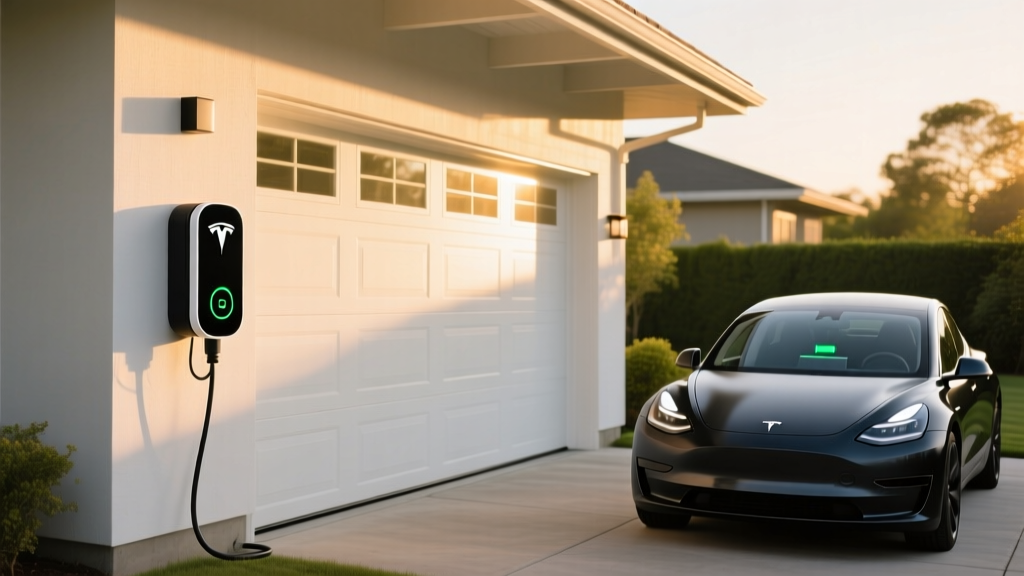
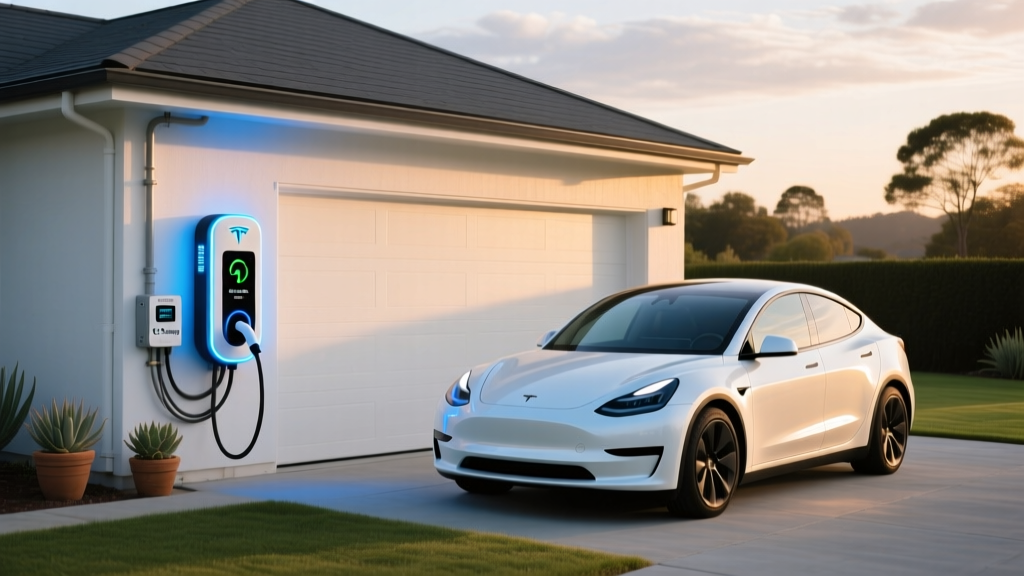
The practical solution? A high-power Level 2 home charger that fully replenishes your battery overnight while you sleep — which is how the vast majority of EV owners handle daily charging.
Charging Levels Explained: Speed, Power, and What You Get at Home
Understanding EV charging requires distinguishing between kW (kilowatts — the rate of power delivery, like water pressure from a hose) and kWh (kilowatt-hours — the total energy delivered, like gallons of water in a bucket). Your battery capacity is measured in kWh; charging speed is measured in kW.
| Level | Voltage | Max Power (kW) | Miles of Range Added Per Hour | Typical Use Case |
|---|---|---|---|---|
| Level 1 | 120V AC | 1.4–1.9 kW | 3–5 mi/hr | Overnight trickle; PHEV top-ups |
| Level 2 | 240V AC | 7.2–19.2 kW | 20–60+ mi/hr | Primary home charging; workplace |
| DC Fast Charging | 400–800V DC | 50–350 kW | 150–1,000+ mi/hr | Road trips; commercial stations |
Level 2 is the home-charging sweet spot. A 48-amp (11.5 kW) Level 2 charger adds roughly 35–44 miles of range per hour of charging. Over an 8-hour overnight session, that's 280–350 miles — enough to fully replenish even a long-range EV like the Tesla Model Y Long Range (75 kWh usable battery, ~310 miles EPA) or a Ford F-150 Lightning Extended Range (131 kWh usable, ~320 miles EPA).
For context, a DC fast charger at 250 kW can take a Tesla Model 3 from 10% to 80% State of Charge (SoC) in roughly 18–22 minutes. A 48-amp Level 2 charger takes about 7–9 hours for the same 10–80% fill on a ~75 kWh battery — but since you're sleeping, that's perfectly fine.
Electrical Requirements: What Your Home Actually Needs
Installing a Level 2 home charger isn't as simple as plugging in a dryer. Here's what's involved electrically:
Voltage and Amperage
Level 2 charging requires a 240-volt dedicated circuit — the same voltage your electric dryer or oven uses. The amperage determines charging speed:
- 32-amp circuit (40A breaker): Delivers up to 7.7 kW — adds ~25–30 mi/hr
- 48-amp circuit (60A breaker): Delivers up to 11.5 kW — adds ~35–44 mi/hr
- 80-amp circuit (100A breaker): Delivers up to 19.2 kW — adds ~55–60+ mi/hr (requires hardwired installation and a large panel)
Panel Capacity and Upgrade Needs
Most modern homes have a 200-amp electrical panel. Before adding a 60A EV circuit, a licensed electrician will perform a load calculation per NEC Article 220 to determine whether your panel can handle the additional draw. If you already have electric heat, an electric water heater, an electric dryer, and an electric oven, you may be close to capacity.
Panel upgrade warning: If your home has a 100-amp or 150-amp panel (common in homes built before 1990), you'll likely need a service upgrade to 200A or 400A. This is one of the biggest hidden costs in home EV charging. A panel upgrade from 100A to 200A typically costs $2,500–$5,000 depending on your utility, local labor rates, and whether new service lines need to be run from the transformer.
Permitting
Nearly all jurisdictions require an electrical permit for a new 240V circuit. Permit fees typically range from $50–$300. The work must pass inspection, and a licensed electrician must pull the permit. DIY 240V work is both dangerous and code-violating in most areas.
Installation Cost Breakdown: Equipment, Electrician, and Permits
Here's what you can realistically expect to pay for a Level 2 home charger installation in 2026. Costs vary significantly by region, home age, and panel proximity to the charger location.
| Component | Simple Install (panel nearby, 200A service) | Complex Install (panel far, load calc tight) | Panel Upgrade Required |
|---|---|---|---|
| Level 2 Charger (hardware) | $400–$700 | $400–$700 | $400–$700 |
| Electrician labor (240V circuit run) | $500–$1,200 | $1,500–$3,500 | $1,500–$3,500 |
| Electrical permit | $50–$200 | $50–$300 | $100–$300 |
| Panel upgrade (if needed) | — | — | $2,500–$5,000 |
| Conduit, wiring, junction boxes | $100–$300 | $300–$800 | $200–$500 |
| Total | $1,050–$2,400 | $2,250–$5,300 | $4,700–$10,000 |
Federal incentive note: The residential clean energy credit (IRS §25D) previously offered a 30% credit on EV charger equipment and installation, but as of 2026, the alternative fuel vehicle refueling property credit under §30C has specific census-tract eligibility requirements and a $1,000 cap for residential installations. Check irs.gov or consult a tax professional for your specific eligibility — rules change frequently and depend on your location and income.
Which Connector and Charger Is Compatible With Your EV?
The connector landscape has shifted dramatically. As of 2026, the North American Charging Standard (NACS) — originally Tesla's proprietary connector — has been adopted by nearly every major automaker. Here's where things stand:
| Connector | Brands Using It (Native) | Adapter Needed for Home Charging? |
|---|---|---|
| NACS (Tesla-style) | Tesla (all models), Ford, GM, Rivian, Volvo, Polestar, Nissan (2025+), BMW, Hyundai/Kia (2025+) | No — buy a NACS wall connector |
| CCS1 (J1772 + DC pins) | Legacy models: VW ID.4 (pre-2025), older BMW i4/iX, older Hyundai Ioniq 5, older Kia EV6, Audi e-tron (pre-2025) | Yes — CCS1-to-NACS adapter or buy a CCS1/J1772 wall connector |
| CHAdeMO | Nissan Leaf (discontinued 2025 but still on roads), Mitsubishi Outlander PHEV | Yes — CHAdeMO-to-J1772 adapter available but limited home-charging relevance |
Key takeaway: If you're buying a new EV in 2026, it almost certainly uses NACS. If you own a 2022–2024 EV from a non-Tesla brand, it likely has CCS1 and you'll either buy a J1772/CCS-compatible charger or use an adapter. The Tesla J1772-to-NACS adapter (~$250) allows CCS/J1772 vehicles to use Tesla Wall Connectors for Level 2 charging.
Best Home EV Chargers for 2026: Equipment Picks
Here are the top-performing Level 2 home chargers based on power output, build quality, smart features, and connector compatibility. All prices are approximate MSRP as of early 2026.
Tesla Wall Connector (Gen 4)
- Power output: Up to 11.5 kW (48 amps on a 60A circuit)
- Connector: NACS native
- Cable length: 24 ft
- Smart features: Wi-Fi, over-the-air updates, power sharing (load-balance up to 6 units on one circuit), Tesla app integration, scheduling
- Price: ~$475
- Best for: Tesla owners and any NACS-equipped EV (Ford, GM, Rivian, etc.)
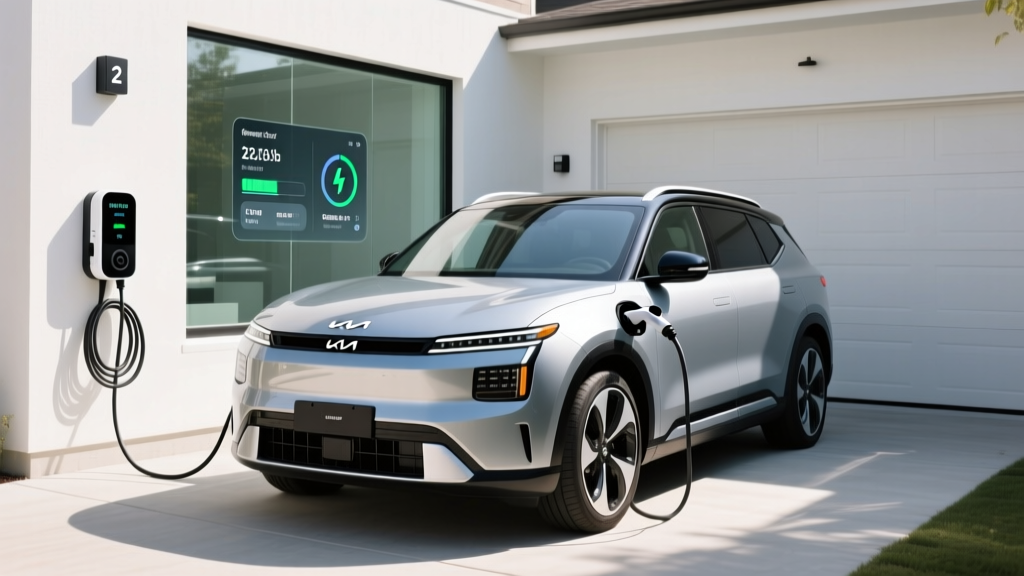
ChargePoint Home Flex (2nd Gen)
- Power output: Up to 12 kW (50 amps, configurable down to 16A for smaller circuits)
- Connector: J1772 (NACS adapter available separately)
- Cable length: 23 ft
- Smart features: Wi-Fi, Alexa/Google Home, ChargePoint app with scheduling and energy tracking, flexible amperage dial
- Price: ~$599
- Best for: CCS/J1772 vehicles or multi-EV households with mixed connectors
Emporia Level 2 EV Charger
- Power output: Up to 11.5 kW (48 amps)
- Connector: J1772 (NACS version available)
- Cable length: 24 ft
- Smart features: Wi-Fi, integration with Emporia Vue energy monitor for solar-aware charging, scheduling, real-time cost tracking
- Price: ~$399
- Best for: Budget-conscious buyers, solar-panel households wanting energy tracking
Grizzl-E Smart (United Chargers)
- Power output: Up to 10 kW (40 amps)
- Connector: J1772 (NACS version available)
- Cable length: 24 ft
- Smart features: Wi-Fi, OCPP-compatible (open protocol), extreme cold rating (-40°F), rugged aluminum enclosure
- Price: ~$549
- Best for: Cold-climate owners, outdoor installs, durability-first buyers
What It Costs to Charge at Home vs. Gas vs. Public DC Fast Charging
One of the strongest arguments for home charging is cost. Here's a realistic comparison using 2026 electricity and fuel prices.
| Scenario | Cost per kWh | Vehicle Efficiency | Cost Per Mile |
|---|---|---|---|
| Home Level 2 (national avg, off-peak TOU rate) | $0.13/kWh | 3.5 mi/kWh (~120 MPGe) | $0.037/mile |
| Home Level 2 (California, peak rate) | $0.35/kWh | 3.5 mi/kWh | $0.10/mile |
| Public DC Fast (Electrify America / EVgo) | $0.40–$0.55/kWh | 3.0 mi/kWh (highway) | $0.13–$0.18/mile |
| Tesla Supercharger (avg 2026) | $0.28–$0.40/kWh | 3.5 mi/kWh | $0.08–$0.11/mile |
| Gas vehicle (28 MPG combined, $3.40/gal) | — | 28 mi/gal | $0.12/mile |
| Gas vehicle (22 MPG combined, $3.40/gal) | — | 22 mi/gal | $0.15/mile |
The takeaway: Home charging on a time-of-use (TOU) off-peak rate is 3–4x cheaper per mile than gasoline. Even public DC fast charging is often cheaper or comparable to gas. But to maximize savings, you need home charging — relying exclusively on public DC fast chargers erodes much of the EV cost advantage.
For a driver covering 12,000 miles per year, home charging at the national average saves roughly $1,000–$1,200 annually compared to a 28 MPG gas vehicle.
Safety, Code, and Installation Best Practices
EV charging involves sustained high-current draw — often for 6–10 hours continuously. This is harder on your electrical system than intermittent loads like a dryer. Key safety and code requirements include:
- Dedicated circuit: Your EV charger must be on its own dedicated breaker — no sharing with other outlets or appliances (NEC Article 625)
- Continuous load derating: The NEC requires EV chargers to be treated as continuous loads, meaning the circuit must be rated for 125% of the charger's max draw. A 48-amp charger requires a 60-amp breaker.
- GFCI protection: The 2020 NEC and later require GFCI protection on all 240V EV charging circuits. Most quality Level 2 chargers have built-in GFCI, but your electrician must verify code compliance in your jurisdiction.
- Outdoor rating: If your charger is installed outdoors (carport, driveway), it must be rated NEMA 4 or NEMA 4X for weather resistance. All four chargers recommended above carry outdoor ratings.
- Cable management: Avoid running cables across walkways or driveways where they can be tripped over or driven on. Wall-mounted cord organizers or retractors are inexpensive and prevent damage.
- Wi-Fi connectivity: Not a safety issue, but smart chargers with Wi-Fi enable scheduled charging (to hit off-peak rates), energy monitoring, and remote diagnostics — well worth the minimal price premium.
Frequently Asked Questions
How much does it cost to install a home EV charger?
A straightforward Level 2 installation with a 200-amp panel nearby typically costs $1,050–$2,400 including the charger, electrician labor, and permit. If your panel is far from the garage or your home needs a service upgrade, expect $4,700–$10,000. Get 2–3 quotes from licensed electricians before committing.
How fast will each charging level add range?
Level 1 (120V standard outlet) adds 3–5 miles per hour — enough for PHEVs with small batteries but impractical for full EVs. Level 2 (240V, 48A) adds 35–44 miles per hour — sufficient to fully charge most EVs overnight. DC fast charging (150–350 kW) adds 150–1,000+ miles per hour but is only practical at commercial stations due to infrastructure cost.
Which connector or charger is compatible with my EV?
If your EV is a Tesla or a 2025+ model from Ford, GM, Rivian, Volvo, Hyundai, or Kia, it uses NACS natively — buy a Tesla Wall Connector or another NACS charger. If your EV is a 2022–2024 model from VW, BMW, Audi, or Hyundai/Kia, it likely has CCS1/J1772 — buy a ChargePoint Home Flex or use a J1772-to-NACS adapter with a Tesla Wall Connector.
How much does charging cost per mile vs. gas?
Home charging on off-peak rates costs roughly $0.03–$0.05 per mile. Gasoline at $3.40/gallon in a 28 MPG vehicle costs about $0.12 per mile. That's a 60–75% fuel cost reduction with home EV charging. Public DC fast charging narrows the gap to roughly $0.13–$0.18 per mile.
What electrical upgrades might I need?
The most common upgrade is a panel service increase from 100A or 150A to 200A ($2,500–$5,000). Some homes may need a new conduit run from the panel to the garage ($300–$1,500 depending on distance and wall construction). In rare cases, the utility may need to upgrade the transformer serving your home — this is typically at the utility's cost but can add weeks to the timeline. A licensed electrician's load calculation will identify all requirements before work begins.
Can I charge faster at home without a Supercharger?
Yes — by installing an 80-amp circuit (100A breaker) with a charger capable of 19.2 kW, such as the Tesla Wall Connector on a high-amperage setup. This adds roughly 55–60 miles per hour and can fully charge a 100 kWh battery in about 5–6 hours. However, this requires substantial panel headroom and is only practical in homes with 400A service or significant spare capacity.