Does Tesla Stop Charging During a Software Update?
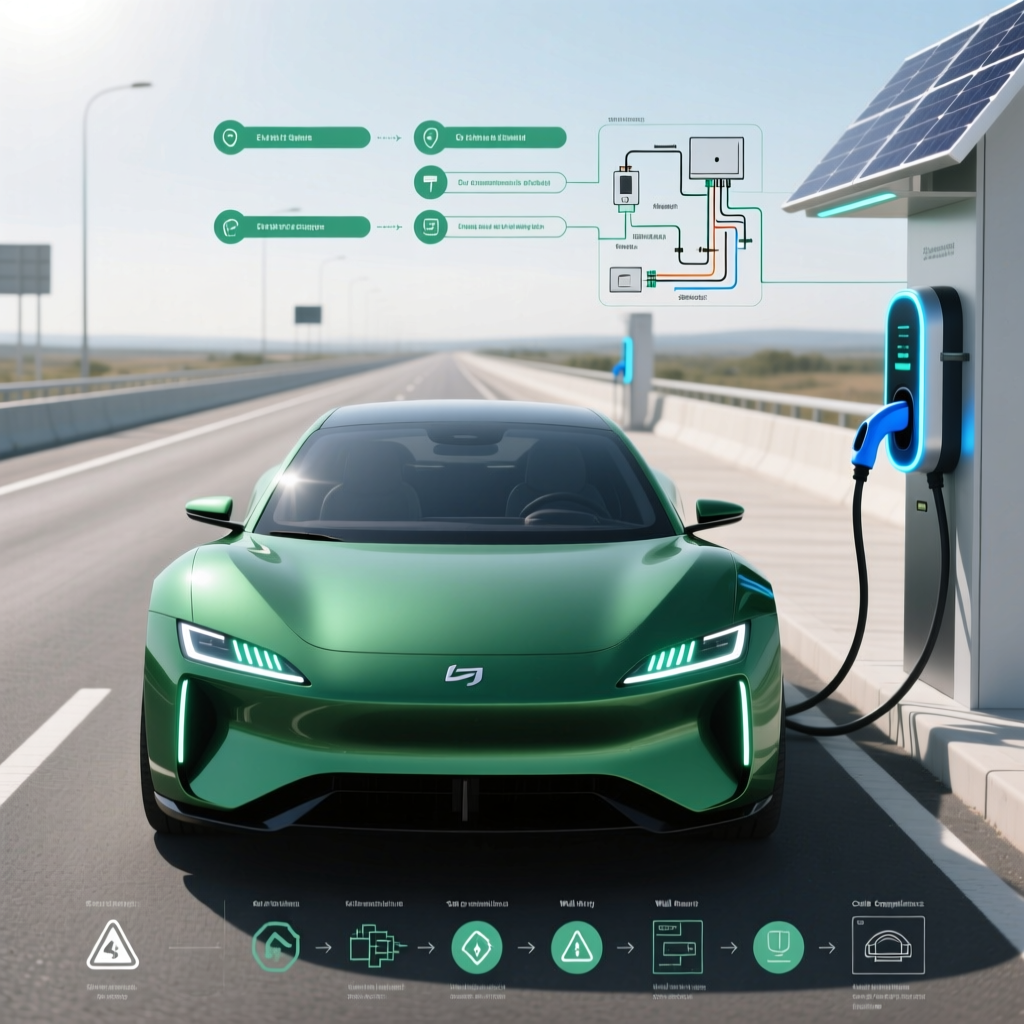
Yes. When a Tesla begins installing an over-the-air (OTA) software update, the vehicle suspends all active charging sessions — whether you are plugged into a Level 2 home wall connector or a DC fast Supercharger. The car's onboard computers need full access to the battery management system (BMS) and powertrain controllers during the installation phase, and Tesla's firmware deliberately pauses energy flow to prevent conflicts or data corruption.
In practice, here is what happens: If your Model Y or Model 3 is actively charging and an update is scheduled, the car will typically wait until the current charge session ends before downloading and installing. However, if an update begins mid-session (for example, you manually initiated it or it was scheduled during your charging window), charging halts. The update itself usually takes 25 to 45 minutes depending on the version size. Once the installation completes and the vehicle reboots, charging does not automatically resume — you will need to reconnect or restart the session manually via the Tesla app or in-car touchscreen.
This behavior is consistent across the 2025 and 2026 Tesla fleet running firmware versions in the 2025.x and 2026.x branches. Non-Tesla EVs handling OTA updates vary by manufacturer — some Hyundai/Kia E-GMP vehicles and Ford F-150 Lightnings have been known to continue Level 2 charging during smaller background downloads, but pause during major powertrain-related installs.
Understanding EV Charging Levels: Speeds in kW and Miles Per Hour
Before setting up home charging or planning road trips, it is critical to understand the three charging levels and what they actually deliver. The most common confusion in EV ownership is mixing up kW (kilowatts), which measures the rate of power delivery — like water pressure from a hose — and kWh (kilowatt-hours), which measures total energy stored in your battery — like the size of the water tank. A 72 kWh battery charged at 11.5 kW takes roughly 6.3 hours from empty to full (minus charging-curve taper near 100%).
| Level | Voltage | Power (kW) | Miles of Range Added Per Hour | Typical Use Case |
|---|---|---|---|---|
| Level 1 | 120V AC | 1.0–1.4 kW | 3–5 mi/hr | Emergency / trickle top-off |
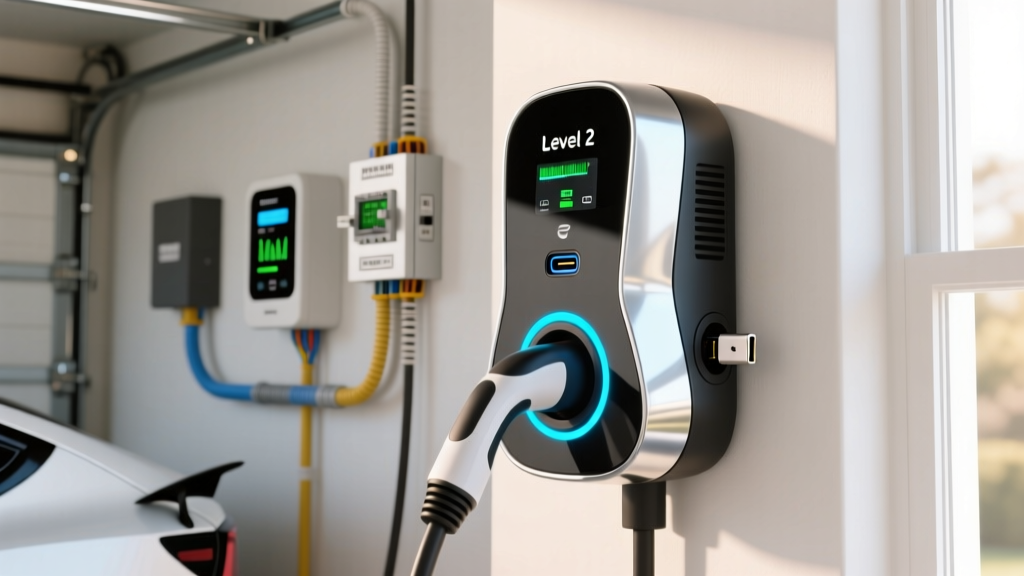
| Level 2 | 240V AC | 3.3–19.2 kW | 12–75 mi/hr | Home daily charging, workplace |
| DC Fast Charge | 400–900V DC | 50–350+ kW | 150–1,000+ mi/hr (peak) | Road trips, highway corridors |
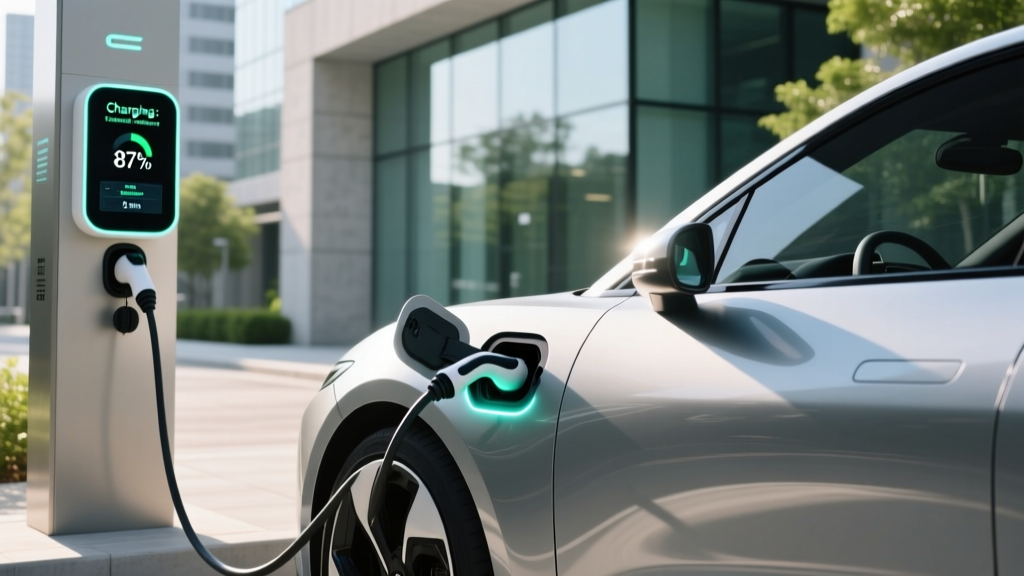
For a real-world example: a 2026 Tesla Model 3 Long Range with an ~82 kWh (usable) LFP or NMC battery pack charging on a Level 2 Tesla Wall Connector at 11.5 kW (48A on a 60A circuit) will add approximately 44 miles of range per hour, according to EPA efficiency data. A full 10% to 80% session at home takes roughly 5 hours. On a V4 Supercharger peaking at 250 kW, that same 10–80% session takes approximately 18 to 22 minutes, though the charge curve tapers significantly above 50–60% State of Charge (SoC).
Home Charger Installation: Electrical Requirements, Costs, and Panel Upgrades
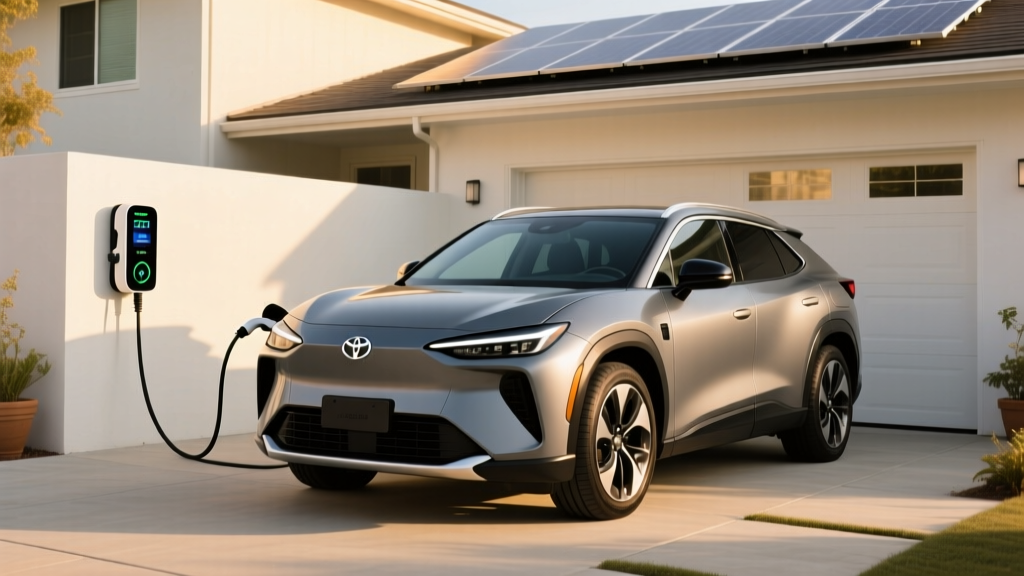
Installing a Level 2 home charger is the single biggest ownership convenience upgrade, but costs vary dramatically depending on your home's electrical panel capacity and the distance from the panel to your garage or driveway.
| Component | Low-End | High-End | Notes |
|---|---|---|---|
| Level 2 Charger (Equipment) | $350 | $750 | 32A–48A smart chargers |
| Electrician Labor (Standard Install) | $500 | $1,500 | Short run, accessible panel |
| Electrical Permit | $50 | $250 | Varies by municipality |
| Panel Upgrade (if needed) | $1,500 | $3,500 | 100A → 200A service upgrade |
| Conduit & Wiring (Long Run) | $200 | $800 | 50+ ft from panel to garage |
| Total (No Panel Upgrade) | $900 | $2,500 | Most typical scenario |
| Total (With Panel Upgrade) | $2,400 | $5,800 | Older homes with 100A service |
The standard electrical requirement for a full-speed Level 2 home setup is a 240V, 60A dedicated circuit (NEMA 14-60 outlet or hardwired), which delivers up to 48A continuous to the vehicle. If your panel cannot support this, a 40A circuit (NEMA 14-50, delivering 32A continuous) is a practical compromise that still adds 25–35 miles of range per hour for most EVs.
Safety and Code Considerations
Per the 2023 NEC (National Electrical Code), adopted in most US jurisdictions through 2026, outdoor EV charging outlets require a GFCI (Ground Fault Circuit Interrupter) breaker. Hardwired installations do not require GFCI at the breaker since the charger itself provides ground-fault protection. For outdoor-mounted chargers, ensure the unit carries a NEMA 4 or NEMA 4X rating for weather resistance. Always use a dedicated circuit — never share an EV charger circuit with other high-draw appliances.
Connector Compatibility: NACS, CCS1, CHAdeMO, and Adapters
As of 2026, the North American Charging Standard (NACS) — originally Tesla's proprietary connector — has become the dominant plug for new EVs sold in North America. Tesla vehicles (Model 3, Model Y, Model S, Model X, Cybertruck) all use NACS natively. Most legacy non-Tesla EVs from 2022 and earlier use CCS1 (Combined Charging System) or, in the case of older Nissan Leafs, CHAdeMO.
| Connector | Native Vehicles | Adapter Required For |
|---|---|---|
| NACS (Tesla/J3400) | Tesla (all), Ford (2025+), GM (2025+), Rivian (2025+), Volvo, Polestar, Fisker | CCS vehicles at Tesla Superchargers |
| CCS1 | Hyundai/Kia (pre-2026), VW ID.4 (pre-2026), BMW iX (pre-2026), Mercedes EQ | NACS vehicles at Electrify America, EVgo |
| CHAdeMO | Nissan Leaf (legacy), Mitsubishi Outlander PHEV | Phasing out — limited public availability |
If you own a non-Tesla EV with CCS1 and want access to the Tesla Supercharger network, you will need a CCS-to-NACS adapter. Tesla sells an official adapter for approximately $250, and third-party options from Lectron and A2Z are available for $150–$200. Conversely, Tesla owners rarely need an adapter since Tesla provides a CCS adapter (included with newer vehicles) for use on Electrify America and other CCS-only networks.
Charging Cost Per Mile: Home vs. Public vs. Gas
The economics of EV charging depend heavily on where and when you charge. Home charging on a time-of-use (TOU) plan during off-peak hours is dramatically cheaper than public DC fast charging, and both are typically cheaper than gasoline on a per-mile basis.
| Scenario | Rate | Vehicle Efficiency | Cost Per Mile |
|---|---|---|---|
| Home Off-Peak (TOU) | $0.08–$0.12/kWh | 3.5 mi/kWh (e.g., Model 3) | $0.023–$0.034 |
| Home Standard Rate | $0.14–$0.18/kWh | 3.5 mi/kWh | $0.040–$0.051 |
| Public Level 2 (ChargePoint, etc.) | $0.25–$0.40/kWh | 3.5 mi/kWh | $0.071–$0.114 |
| DC Fast (Tesla Supercharger) | $0.28–$0.42/kWh | 3.5 mi/kWh | $0.080–$0.120 |
| DC Fast (Electrify America) | $0.36–$0.52/kWh | 3.5 mi/kWh | $0.103–$0.149 |
| Gasoline (30 MPG combined, $3.40/gal) | — | 30 MPG | $0.113 |
A Tesla Model 3 Long Range driven 12,000 miles per year and charged primarily at home on an off-peak rate of $0.10/kWh costs approximately $343 per year in electricity. The same miles in a 30 MPG gas car at $3.40/gallon costs $1,360. That is a savings of over $1,000 annually — before factoring in reduced maintenance (no oil changes, fewer brake replacements due to regenerative braking).
Recommended Home EV Chargers: Equipment Picks for 2026
Based on reliability data, smart features, and power output, here are the top Level 2 home chargers for 2026:
Tesla Wall Connector (Gen 4)
- Power Output: Up to 11.5 kW (48A)
- Connector: NACS native, 24-ft cable
- Smart Features: Wi-Fi, OTA updates, Power Sharing for multi-unit installs, Tesla app integration
- Price: ~$475
- Best For: Tesla owners, hardwired installations
ChargePoint Home Flex
- Power Output: Up to 12 kW (50A) on 60A circuit
- Connector: NACS or J1772 (configurable), 23-ft cable
- Smart Features: Wi-Fi, Alexa integration, scheduled charging, energy tracking
- Price: ~$550–$650
- Best For: Multi-EV households, non-Tesla owners
Emporia Level 2 Smart Charger
- Power Output: Up to 11.5 kW (48A)
- Connector: J1772 or NACS, 24-ft cable
- Smart Features: Wi-Fi, solar integration, real-time energy monitoring via Emporia app
- Price: ~$399
- Best For: Budget-conscious buyers, solar-panel homes
Grizzl-E Smart
- Power Output: Up to 10 kW (40A) — adjustable
- Connector: J1772 or NACS, 24-ft cable
- Smart Features: OCPP-compatible, works with utility demand-response programs
- Price: ~$499
- Best For: Extreme cold climates (rated to -40°F), utility rebate programs
For Tesla owners, the Gen 4 Wall Connector is the obvious default — it integrates seamlessly with the Tesla app and supports Power Sharing if you want to install two units on a single 60A circuit. For households with mixed fleets (a Tesla and a Hyundai Ioniq 5, for instance), the ChargePoint Home Flex with its configurable plug is the most versatile option.
Charging Time Examples: 10% to 80% by Battery Size and Charger
Charging speed is not linear. Every EV follows a charge curve where the battery accepts peak kW only at low State of Charge (SoC), then progressively tapers as the battery fills. This is why manufacturers quote 10–80% times rather than 0–100% — the final 20% can take as long as the first 70%.
| Vehicle (Battery Size) | Level 2 at 11.5 kW | DC Fast at Peak kW | Peak DC kW |
|---|---|---|---|
| Tesla Model 3 LR (~82 kWh) | ~5.0 hours | ~22 min | 250 kW |
| Tesla Model Y LR (~82 kWh) | ~5.0 hours | ~22 min | 250 kW |
| Hyundai Ioniq 5 (~77.4 kWh) | ~4.7 hours | ~18 min | 350 kW (800V) |
| Ford F-150 Lightning Ext. (~131 kWh) | ~8.0 hours | ~41 min | 150 kW |
| Chevy Equinox EV (~85 kWh) | ~5.2 hours | ~26 min | 190 kW |
| Rivian R1S Dual Max (~149 kWh) | ~9.1 hours | ~45 min | 220 kW |
Cold weather significantly impacts charging speed. In sub-32°F conditions, a battery that has not been preconditioned (warmed via the vehicle's thermal management system before arrival at the charger) may accept only 50–70% of its peak kW rate. Tesla's navigation system automatically preconditioning the battery when you route to a Supercharger is a meaningful advantage in winter climates.
Frequently Asked Questions
How much does it cost to install a home EV charger?
A standard Level 2 home charger installation with a 60A dedicated circuit and no panel upgrade typically costs between $900 and $2,500 including equipment, electrician labor, and permits. If your home requires a 100A to 200A panel upgrade — common in pre-2000 construction — total costs rise to $2,400–$5,800. The federal Residential Clean Energy Credit (IRS §25D) does not cover EV chargers as of 2026, but the separate §30C Alternative Fuel Infrastructure Tax Credit offers up to $1,000 for home charger installation through 2032, subject to census-tract eligibility.
How fast will each charging level add range?
Level 1 (120V) adds roughly 3–5 miles per hour. Level 2 (240V) at 11.5 kW adds approximately 40–50 miles per hour for efficient sedans and 30–40 miles per hour for larger SUVs and trucks. DC fast charging adds 150–300+ miles in 15–20 minutes at peak rates, though the actual sustained rate depends on the vehicle's charge curve and battery temperature.
Which connector/charger is compatible with my EV?
If you drive a 2025+ Tesla, Ford, GM, Rivian, or Volvo EV, your vehicle uses NACS natively and can charge at any Tesla Supercharger without an adapter. If you drive a pre-2025 Hyundai, Kia, Volkswagen, or BMW EV, your vehicle uses CCS1 and will need a CCS-to-NACS adapter (~$150–$250) to access Tesla Superchargers. Check your owner's manual or the fueleconomy.gov vehicle listing for your specific connector type.
How much does charging cost per mile vs gas?
Home charging on an off-peak rate of $0.10/kWh costs roughly $0.03 per mile for an efficient EV like the Model 3. Even public DC fast charging at $0.38/kWh costs about $0.11 per mile, which is comparable to or cheaper than gasoline at $3.40/gallon in a 30 MPG car ($0.11/mile). The greatest savings come from consistent home charging.
What electrical upgrades might I need?
The most common upgrade is a panel capacity increase from 100A to 200A, required when your existing electrical load (HVAC, range, dryer, water heater) leaves insufficient headroom for a 60A EV circuit. Older homes with knob-and-tube wiring or aluminum branch circuits may also require rewiring the run from panel to garage. A licensed electrician's load calculation (typically $100–$200 as a standalone service) will determine whether an upgrade is necessary before you commit to equipment purchases.
Will my Tesla resume charging after a software update finishes?
No — this is the most common surprise for new Tesla owners. After an OTA update completes, the vehicle will not automatically restart a paused charging session. You will see a notification in the Tesla app that the update is complete, but you must manually re-initiate charging either through the app or by tapping the charging icon on the touchscreen. If you rely on scheduled overnight charging, set your update preferences to "Advanced" and choose a window that does not overlap with your charging schedule.