The Tesla Model 3 Standard Range (often searched as the "short range" variant) remains one of the most efficient electric vehicles on the road. But EPA stickers don't tell the whole story. If you're considering this car — or already own one — understanding how to extract maximum range and set up optimal charging is the difference between a stress-free EV experience and one plagued by range anxiety and unnecessary charging costs.
This guide breaks down the Tesla Short Range Model 3 range in real-world conditions, then walks through every charging scenario: home Level 2 installation (with real electrician costs), public DC fast charging, connector compatibility, and exactly what you'll pay per mile compared to gasoline.
Real-World Tesla Short Range Model 3 Range: Beyond the EPA Sticker
The current-generation Tesla Model 3 Rear-Wheel Drive (the standard/short-range trim) carries an EPA-estimated range of approximately 272 miles on its ~57.5 kWh usable LFP (lithium iron phosphate) battery pack. That efficiency figure translates to roughly 25–27 kWh/100 miles in mixed driving, making it one of the most efficient sedans in its class.
EPA estimate: 272 miles (Model 3 RWD, 18" Aero wheels)
Real-world highway (70 mph, moderate temps): ~230–250 miles
Cold weather (below 32°F, highway): ~190–215 miles
City/suburban with regen: ~260–280 miles (can exceed EPA)
Source: fueleconomy.gov
The LFP battery chemistry in the Model 3 RWD deserves special mention. Unlike NMC (nickel manganese cobalt) packs, LFP cells tolerate regular 100% charging without accelerated degradation. Tesla actually recommends charging LFP Model 3s to 100% at least once per week for accurate state-of-charge calibration. This means your usable daily range is closer to the full EPA number — not an 80% buffer like NMC owners manage for daily driving.
Charging Levels Explained: How Fast Will Each Add Range?
Understanding the three charging tiers is essential. kW (kilowatts) measures the rate of power delivery — think of it as how fast water flows through a hose. kWh (kilowatt-hours) measures total energy stored — the size of the bucket. Confusing these two is the most common EV literacy mistake.
| Level | Voltage | Power (kW) | Miles Added/Hour | Best For |
|---|---|---|---|---|
| Level 1 | 120V AC | 1.0–1.4 kW | 3–5 mi/hr | Overnight trickle, emergencies |
| Level 2 (Home/Public) | 240V AC | 7.2–19.2 kW | 25–70 mi/hr | Daily home charging, workplace |
| DC Fast Charging | 400V+ DC | 50–250 kW | 150–750 mi/hr | Road trips, rapid top-ups |
For the Model 3 RWD with its ~57.5 kWh pack, a full Level 1 charge from empty would take roughly 50+ hours — impractical for daily use. Level 2 at 11.5 kW (48A) refills the pack in about 5–6 hours. DC fast charging is where the Model 3 shines: Tesla's V3/V4 Superchargers deliver peak rates up to 170 kW for the RWD trim.
- Level 1 (120V, 12A): ~45+ hours (not recommended for regular use)
- Level 2 (240V, 48A/11.5 kW): ~3.5–4 hours
- Tesla V3 Supercharger (170 kW peak): ~25–28 minutes
- Third-party DC fast charger (CCS, 150 kW): ~28–32 minutes (with adapter)
Note: Charging slows significantly above 80% SoC to protect battery health. The 80–100% top-off can add another 20–30 minutes on DC fast charging.
Home Level 2 Charger Installation: Requirements and Costs
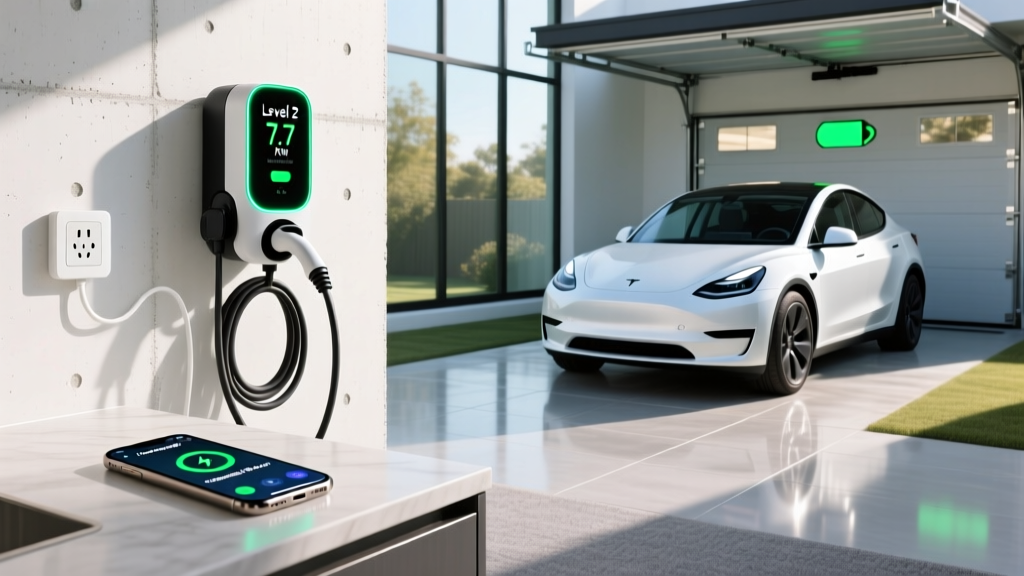
Installing a home Level 2 charger is the single biggest quality-of-life upgrade for any EV owner. For the Model 3 RWD, you'll want a 240V circuit capable of delivering at least 48 amps to maximize the car's onboard charger capacity (11.5 kW max AC charge rate).
Electrical Requirements
The Model 3's onboard charger accepts up to 11.5 kW (48A) on a 240V Level 2 circuit. Per National Electrical Code (NEC), continuous loads require a circuit rated at 125% of the draw, meaning you need a 60-amp breaker for a full 48A charge. A 50-amp breaker (delivering 40A/9.6 kW) is also common and adds roughly 30 miles per hour of charging — adequate for most daily needs.
Panel upgrade reality: If your home has a 100-amp main panel — common in homes built before 1990 — adding a 60-amp EV circuit may require a panel upgrade to 200 amps. This is a significant cost variable that many online guides gloss over.
| Component | Low Estimate | High Estimate | Notes |
|---|---|---|---|
| Level 2 Charger Equipment | $350 | $700 | Wall Connector, ChargePoint, Emporia |
| Electrician Labor (standard install) | $500 | $1,500 | Depends on run length, conduit, drywall |
| Permit Fees | $50 | $250 | Varies by municipality |
| Panel Upgrade (if needed) | $1,500 | $4,000 | 100A → 200A service upgrade |
| Total (no panel upgrade) | $900 | $2,450 | |
| Total (with panel upgrade) | $2,400 | $6,450 |
Always get at least two quotes from licensed electricians. Ask specifically whether your panel has spare capacity for a new 60A double-pole breaker. Some utility companies offer rebates of $250–$1,000 for Level 2 installations — check with your local provider before scheduling work.
Connector Compatibility: NACS, CCS, and Adapters
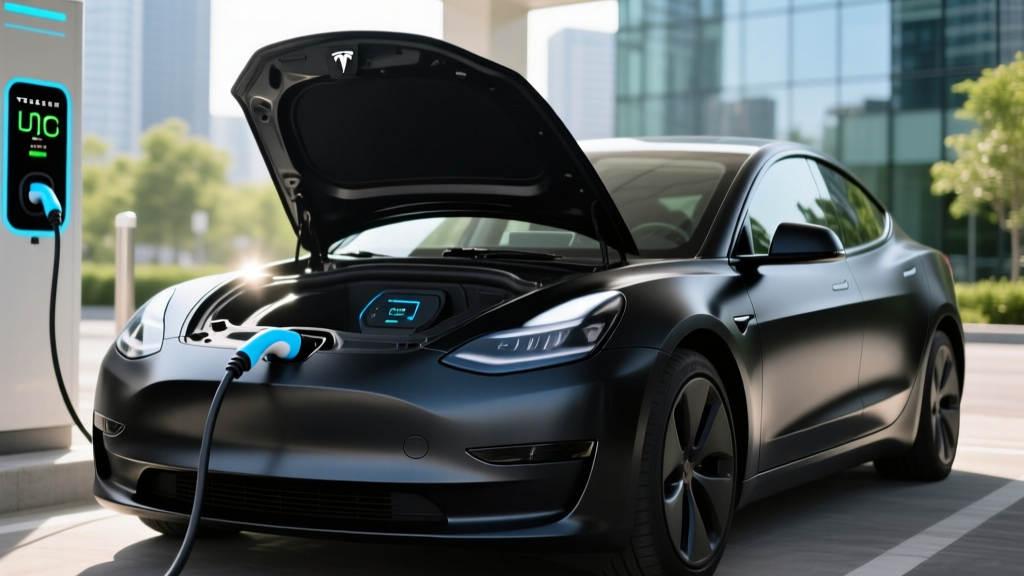
The Model 3 comes equipped with a NACS (North American Charging Standard) port — Tesla's proprietary connector, now adopted industry-wide. This gives you native access to Tesla's Supercharger network (over 25,000 stalls in North America as of 2025) without any adapter.
| Connector Type | Native to Model 3? | Adapter Needed? | Network Access |
|---|---|---|---|
| NACS (Tesla) | Yes | No | Tesla Superchargers, Tesla Destination |
| CCS1 | No | Yes (Tesla CCS Adapter, ~$175) | Electrify America, EVgo, ChargePoint DC |
| CHAdeMO | No | Not available from Tesla | Limited; legacy Nissan Leaf network |
| J1772 (Level 2 public) | No | Yes (included with car) | Public Level 2 stations, workplace chargers |
The Tesla CCS adapter is worth purchasing if you frequently travel in areas with sparse Supercharger coverage but robust Electrify America or EVgo presence. For daily Level 2 charging, the included J1772 adapter handles virtually every public Level 2 station in the country.
Equipment Recommendations: Best Home Chargers for Model 3 RWD
Here are three proven Level 2 chargers well-suited to the Model 3's 11.5 kW onboard charger:
Tesla Wall Connector (Gen 4)
- Power Output: Up to 48A / 11.5 kW (hardwired, 60A breaker)
- Connector: NACS native
- Cable Length: 24 feet
- Smart Features: Wi-Fi, OTA updates, power sharing between units, Tesla app integration
- Price: ~$475
- Best For: Tesla-only households wanting seamless integration
Emporia Vue Smart Charger
- Power Output: Up to 48A / 11.5 kW (hardwired) or 40A (NEMA 14-50 plug)
- Connector: J1772 (NACS adapter included or use Tesla's)
- Cable Length: 24 feet
- Smart Features: Energy monitoring, solar integration, scheduling, load management
- Price: ~$399
- Best For: Solar-equipped homes or multi-EV households wanting cost tracking
ChargePoint Home Flex
- Power Output: Up to 50A / 12 kW (hardwired, 60A breaker)
- Connector: J1772 (use included Tesla adapter)
- Cable Length: 23 feet
- Smart Features: Alexa integration, amperage adjustable via app, scheduling, energy reports
- Price: ~$549
- Best For: Mixed-EV households (non-Tesla + Tesla) needing flexibility
All three chargers are outdoor-rated (NEMA 4 or equivalent), UL-listed, and compatible with the Model 3's maximum AC charge rate. The Tesla Wall Connector is the most streamlined choice if you exclusively drive Teslas, while the ChargePoint or Emporia offer better flexibility if your household includes non-Tesla EVs.
Cost to Charge: Per Mile vs. Gasoline
Charging cost is where EV ownership economics shine — but the savings depend heavily on where and when you charge. Here's a realistic breakdown for the Model 3 RWD at its average efficiency of ~26 kWh/100 miles:
| Charging Scenario | $/kWh | Cost per 100 Miles | Cost per Mile | Equivalent MPG at $3.50/gal |
|---|---|---|---|---|
| Home (off-peak utility rate) | $0.08–$0.12 | $2.08–$3.12 | $0.02–$0.03 | 112–168 MPG |
| Home (standard rate) | $0.14–$0.18 | $3.64–$4.68 | $0.04–$0.05 | 75–96 MPG |
| Public Level 2 (workplace/retail) | $0.20–$0.30 | $5.20–$7.80 | $0.05–$0.08 | 45–67 MPG |
| DC Fast Charging (Tesla Supercharger) | $0.28–$0.38 | $7.28–$9.88 | $0.07–$0.10 | 35–50 MPG |
| DC Fast Charging (Electrify America) | $0.35–$0.48 | $9.10–$12.48 | $0.09–$0.12 | 29–39 MPG |
| Gasoline Car (30 MPG combined) | — | $11.67 | $0.12 | 30 MPG (baseline) |
At typical home electricity rates, the Model 3 RWD costs roughly 2–5 cents per mile to fuel — a fraction of the 12 cents per mile a 30 MPG gasoline car burns at $3.50/gallon. Even on the most expensive DC fast chargers, you're generally breaking even with or slightly beating a gas car on cost per mile.
The financial takeaway: home charging is where the savings live. If you can charge at home on off-peak rates, you'll spend roughly $400–$600 per year on electricity for 15,000 miles of driving. The equivalent gasoline cost would be $1,750. That's over $1,000 in annual fuel savings.
Safety and Code Considerations
A properly installed home charger should be a set-and-forget appliance. Here are the critical safety and code requirements your electrician must address:
- Dedicated circuit: Your Level 2 charger must have its own dedicated double-pole breaker — it cannot share a circuit with other appliances.
- GFCI protection: NEC 2020 and later require GFCI (ground-fault circuit interrupter) protection for all EV charging circuits, including hardwired units. Many modern chargers have built-in GFCI protection; confirm with your electrician.
- Outdoor rating: If your charger is mounted outside (garage exterior, carport, driveway), it must be rated NEMA 4 or NEMA 4X for weather resistance.
- Hardwired vs. plug: Hardwired installations (no plug) allow full 48A charging and eliminate the risk of plug overheating. NEMA 14-50 receptacles are limited to 40A continuous draw and require a quality industrial-grade receptacle (Hubbell or Bryant — not cheap hardware-store variants, which have been linked to melting under continuous EV load).
- Permit and inspection: Most jurisdictions require an electrical permit and post-installation inspection for new 240V circuits. Skipping this can void home insurance coverage in the event of an electrical fire.
Tesla's Wall Connector and most reputable third-party chargers are UL-listed (or ETL-listed to UL standards), which satisfies insurance and inspection requirements. Avoid unbranded chargers from online marketplaces that lack independent safety certification.
Frequently Asked Questions
How much does it cost to install a home EV charger for the Model 3?
Expect $900–$2,450 for a standard installation (equipment + electrician + permit) if your electrical panel has spare capacity. If a 200A panel upgrade is required, total costs can reach $2,400–$6,450. Always get an electrician's panel load calculation before committing.
How fast will each charging level add range to the Model 3 RWD?
Level 1 (120V) adds 3–5 miles per hour. Level 2 (240V, 48A) adds roughly 44 miles per hour. DC fast charging at a Tesla Supercharger adds up to 170 miles in about 15 minutes under ideal conditions, though the charge curve tapers significantly above 80% SoC.
Which charger connector is compatible with my Tesla Model 3?
The Model 3 uses NACS natively, giving you direct access to Tesla Superchargers. For CCS-based public DC chargers (Electrify America, EVgo), you'll need Tesla's CCS adapter (~$175). The included J1772 adapter handles public Level 2 stations. CHAdeMO is not supported.
How much does charging the Model 3 cost per mile vs. a gas car?
Home charging on off-peak rates costs roughly 2–3 cents per mile. Public DC fast charging runs 7–12 cents per mile. A comparable 30 MPG gas car at $3.50/gallon costs about 12 cents per mile. Home charging delivers the most dramatic savings.
What electrical upgrades might my home need for a Level 2 charger?
Homes with 100-amp main panels may need a 200-amp service upgrade ($1,500–$4,000). Homes with 200-amp panels usually have sufficient spare capacity for a 60-amp EV circuit. Your electrician will perform a load calculation per NEC Article 220 to determine available capacity. Some utilities offer smart-panel solutions (like Span) that can avoid a full upgrade by managing circuit priorities.
Should I charge the LFP battery to 100% daily?
Tesla recommends charging LFP Model 3 batteries to 100% at least once per week for accurate SoC calibration. Unlike NMC chemistry, LFP cells don't suffer accelerated degradation from regular full charges. This means your full 272-mile EPA range is practically usable on a daily basis — a significant advantage of the short-range model's battery chemistry.
Does cold weather significantly reduce the Model 3 RWD range?
Yes. In sustained below-freezing temperatures, expect a 20–30% range reduction due to battery resistance and cabin heating demands. The Model 3's heat pump (standard on current models) mitigates this compared to older resistive-heating EVs, but winter highway range may drop to ~190–215 miles. Preconditioning the battery while plugged in recovers significant efficiency.
The Tesla Short Range Model 3 delivers exceptional efficiency and practical range when paired with proper home charging infrastructure. A Level 2 installation pays for itself within the first year of ownership through fuel savings alone, and the LFP battery's tolerance for daily 100% charging means you can use every mile of that 272-mile EPA rating without babying the state of charge.