Why Tesla Semi Charging Time Is the Make-or-Break Fleet Question
For Class 8 operators evaluating electric trucks, range is only half the equation. The other half is downtime: how long a truck sits at a charger instead of earning revenue. The Tesla Semi, with its ~900 kWh usable battery pack (Tesla has confirmed a 500-mile and a 300-mile variant, with the long-range pack estimated at 900 kWh and the shorter at ~560 kWh), requires an entirely different charging paradigm than a passenger EV. You cannot plug a Semi into a 150 kW Supercharger and expect results proportional to a Model Y — the math simply doesn't scale.
This guide breaks down Tesla Semi charging time across every realistic scenario: Megacharger depots (1 MW+), third-party MCS (Megawatt Charging System) infrastructure, and future fleet depot options. We'll also cover what this means for operators considering their first electric Class 8 trucks in 2026.
Charging Levels Explained: From Level 1 to Megawatt
Before calculating Tesla Semi charge times, let's define the charging tiers available to electric vehicles — and clarify which ones actually apply to a 900 kWh battery.
| Charging Level | Voltage / Phase | Max Power (kW) | Miles of Range Added Per Hour | Relevance to Tesla Semi |
|---|---|---|---|---|
| Level 1 | 120V / Single | 1.4–1.9 kW | ~3–5 mi/hr (passenger EV) | Not applicable |
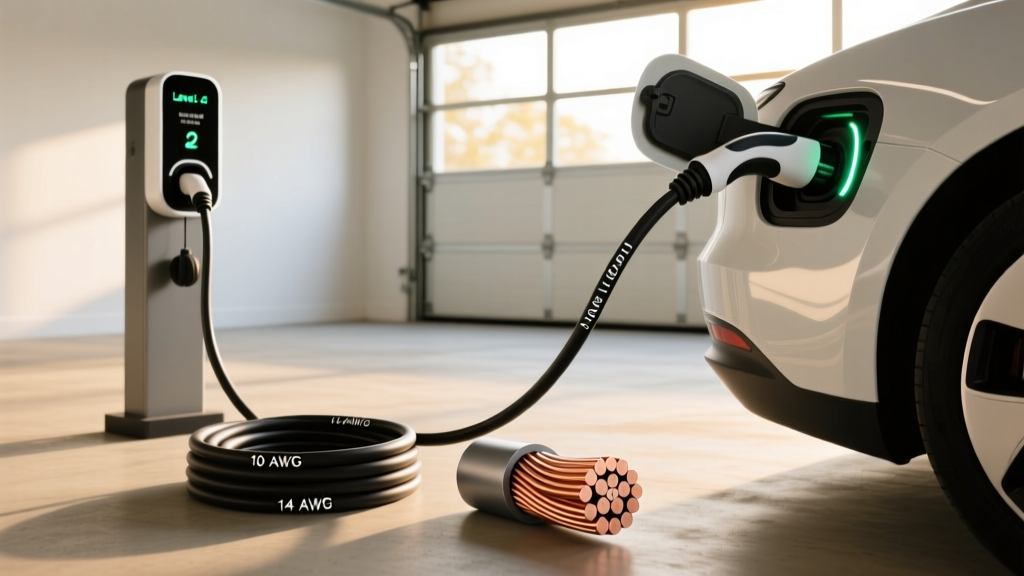
| Level 2 | 208–240V / Single | 7.2–19.2 kW | ~20–60 mi/hr (passenger EV) | Trickle/maintenance only (~3 mi/hr for Semi) |
| DC Fast (CCS/MCS) | 400–1000V DC | 150–350 kW (CCS) | ~60–140 mi/hr (passenger EV) | Partial depot use; ~70 mi/hr for Semi at 350 kW |
| Megawatt Charging (MCS/Tesla Megacharger) | Up to 1250V DC | 750–1200+ kW | ~300–500 mi/hr (Semi-specific) | Primary fast-charge solution for Semi |
Key distinction: kW (kilowatts) measures power — the rate of energy delivery. kWh (kilowatt-hours) measures energy — the total capacity stored in the battery. A 1 MW (1,000 kW) charger delivering power for one hour adds 1,000 kWh of energy. The Semi's ~900 kWh battery means a theoretical 10-100% charge in under an hour at sustained 1 MW — but real-world charging curves and thermal limits change that math significantly.
Tesla Semi Charging Time: Real-World Scenarios
Tesla has publicly stated that the Semi can recover up to 70% of range in approximately 30 minutes at a Megacharger. Let's unpack what that means in practice and model out the full charge curve.
Scenario 1: Tesla Megacharger (1 MW+ Peak)
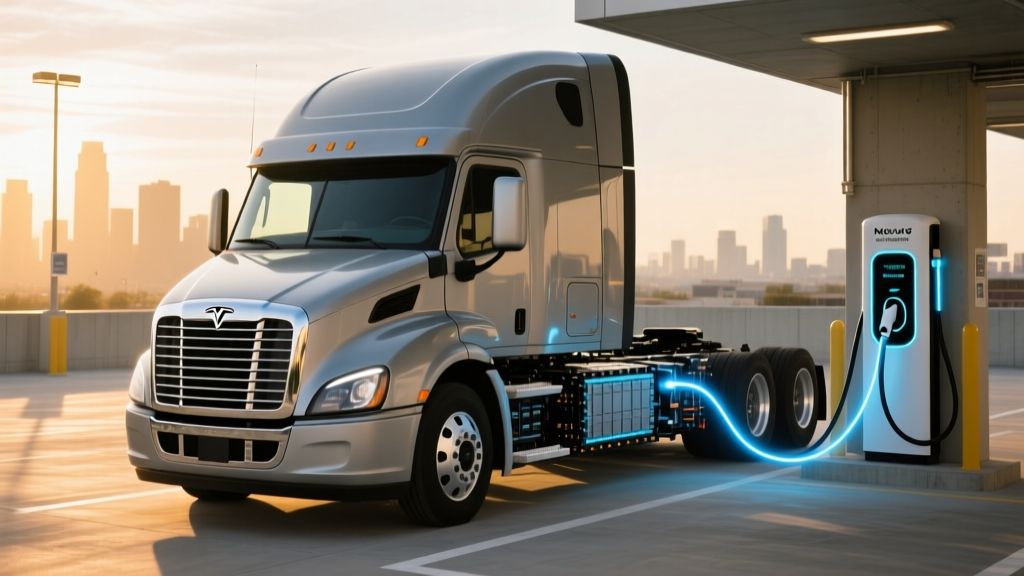
Tesla's proprietary Megacharger stations are designed specifically for the Semi's massive battery. Early installations near Tesla's Nevada Gigafactory and PepsiCo's Sacramento depot operate at power levels exceeding 750 kW per stall, with next-generation hardware targeting the full MCS standard of 1.2 MW (1,200 kW).
- 10–80% charge (500-mile variant, ~900 kWh): Estimated 35–45 minutes at sustained ~800–1,000 kW average
- 10–80% charge (300-mile variant, ~560 kWh): Estimated 25–35 minutes
- 70% range recovery: ~30 minutes (per Tesla's published claim)
- 80–100% top-off: Add another 25–40 minutes due to charge-curve taper — lithium-ion batteries accept power far more slowly above 80% State of Charge (SoC) to protect cell longevity
Real-world caveat: Peak charge rate of 1 MW+ is not sustained across the entire session. Expect the Semi to ramp up to peak power between 10–40% SoC, then gradually taper. Average power across a 10–80% session will be roughly 70–80% of peak, which is why a 900 kWh battery at a 1 MW charger still takes 35–45 minutes rather than a theoretical 54 minutes at full rate.
Scenario 2: Third-Party MCS Chargers (750 kW–1.2 MW)
The Megawatt Charging System (MCS) standard, developed by CharIN, is the industry-agreed connector and protocol for heavy-duty EVs. Companies like WattEV, TeraWatt Infrastructure, and Greenlane are building MCS-equipped truck depots along major freight corridors in California and Texas. These stations deliver 750 kW to 1.2 MW per stall.
Charging times at MCS stations are comparable to Tesla Megachargers, assuming the Semi is equipped with or can adapt to the MCS connector (Tesla's proprietary connector for Semi predates the finalized MCS standard, and adapter availability for third-party stations remains a key question for fleet operators in 2026).
Scenario 3: Existing CCS DC Fast Chargers (350 kW Max)
Can a Tesla Semi charge at a standard 350 kW CCS charger? Technically, yes — with the appropriate adapter and if the station's power cabinet can sustain that output. But the math changes dramatically:
- 10–80% at 350 kW average (~280 kW sustained): Approximately 2.5–3 hours for the 500-mile variant
- Practical use case: Overnight depot charging or opportunity charging during extended driver rest breaks (mandated 30-minute breaks under HOS rules won't recover meaningful range at this speed)
Scenario 4: Depot Level 2 Charging (19.2 kW per stall)
For fleet depots where trucks return nightly and have 8–10 hours of downtime, Level 2 charging at 19.2 kW (240V/80A) is viable:
- Range added per hour: ~3–4 miles (Semi consumes roughly 2 kWh/mile, so 19.2 kW yields ~9.6 miles per hour of charging — wait, let's correct that: at ~1.7–2.0 kWh/mile efficiency, 19.2 kW adds roughly 10–11 miles of range per hour)
- Full overnight session (10 hours): ~100–110 miles recovered
- Use case: Short-haul routes under 150 miles round-trip with nightly depot return
Home & Depot Installation: Electrical Requirements and Costs
While no one is installing a Megacharger in a residential garage, fleet operators building depot charging infrastructure face significant electrical requirements. Here's what a commercial Semi depot charging installation entails.
Electrical Requirements for Depot Charging
Each Semi charging stall at a depot typically requires one of the following:
- Level 2 (19.2 kW): 240V single-phase, 80A dedicated circuit per stall
- DC Fast (150–350 kW CCS): 480V three-phase service, 400–600A per charger cabinet (one cabinet can serve 2–4 stalls via power sharing)
- Megawatt-class (750–1200 kW): Medium-voltage utility service (12.47 kV or higher), dedicated transformer, switchgear, and potentially a new utility substation
Installation Cost Breakdown
| Component | Level 2 Depot (Per Stall) | DC Fast Depot (Per Cabinet) | Megawatt Depot (Per Stall) |
|---|---|---|---|
| Charging Equipment | $1,500–$4,000 | $80,000–$150,000 | $250,000–$450,000 |
| Electrical Work (Conduit, Wiring, Breaker) | $2,000–$6,000 | $30,000–$80,000 | $100,000–$300,000 |
| Transformer / Switchgear | Not required | $15,000–$50,000 | $150,000–$500,000 |
| Utility Service Upgrade | $0–$5,000 | $20,000–$100,000 | $200,000–$1,000,000+ |
| Permits & Engineering | $500–$2,000 | $5,000–$20,000 | $25,000–$100,000 |
| Total Per Stall/Cabinet | $4,000–$17,000 | $150,000–$400,000 | $725,000–$2,350,000 |
Panel and service upgrade reality: Most commercial properties do not have sufficient spare capacity on their existing electrical service to support multiple megawatt-class chargers. A fleet depot with 10 Semi trucks charging simultaneously at 750 kW each requires 7.5 MW of continuous power — equivalent to the electrical demand of a small neighborhood. Utility interconnection studies, new medium-voltage service drops, and dedicated pad-mounted transformers are standard requirements, and the utility lead time for new service can stretch 12–24 months in some jurisdictions.
Connector Compatibility: MCS, Tesla Proprietary, and CCS
The connector landscape for heavy-duty EVs is still consolidating. Here's where the Tesla Semi fits in.
| Connector Standard | Max Power | Used By | Tesla Semi Compatible? |
|---|---|---|---|
| Tesla Megacharger (Proprietary) | 1,000–1,200 kW | Tesla Semi only | Yes — native |
| MCS (Megawatt Charging System) | Up to 3,750 kW (theoretical); 1,200 kW practical | Daimler eCascadia, Volvo VNR Electric, future HD EVs | Adapter needed (availability TBD in 2026) |
| CCS1 (Combined Charging System) | Up to 350 kW | Most passenger EVs, some medium-duty trucks | Adapter needed; slow for 900 kWh pack |
| CHAdeMO | Up to 400 kW | Legacy (Nissan LEAF, Mitsubishi) | No — not applicable |
The Tesla Semi uses a proprietary connector at Megacharger stations that predates the finalized MCS standard. For fleet operators running mixed fleets (e.g., Tesla Semis alongside Freightliner eCascadias), this creates an infrastructure fragmentation challenge. Tesla has not publicly committed to offering an MCS-to-Tesla adapter for the Semi as of early 2026, though the broader industry pressure toward MCS standardization — and Tesla's own adoption of NACS for passenger vehicles as an open standard — suggests eventual interoperability is likely.
Cost to Charge the Tesla Semi: Per-Mile Economics vs. Diesel
The financial case for the Tesla Semi rests heavily on fuel-cost savings. Let's model the real numbers.
| Scenario | Electricity Cost | Energy Use (kWh/mi) | Cost Per Mile | Diesel Equivalent (at $4.20/gal, 6.5 MPG) |
|---|---|---|---|---|
| Depot charging (off-peak commercial rate) | $0.08–$0.12/kWh | 1.7 kWh/mi | $0.14–$0.20/mi | $0.65/mi |
| Depot charging (on-peak commercial rate) | $0.15–$0.22/kWh | 1.7 kWh/mi | $0.26–$0.37/mi | $0.65/mi |
| Public MCS / Megacharger | $0.25–$0.40/kWh | 1.7 kWh/mi | $0.43–$0.68/mi | $0.65/mi |
| California depot (with LCFS credits) | $0.04–$0.08/kWh (net) | 1.7 kWh/mi | $0.07–$0.14/mi | $0.65/mi |
The verdict: At off-peak depot rates, the Tesla Semi costs roughly $0.14–$0.20 per mile to "fuel" — a 70–78% savings over diesel at $4.20/gallon. Even at public megawatt-charger pricing, costs are competitive with or below diesel. For a truck running 100,000 miles per year, that translates to $45,000–$51,000 in annual fuel savings versus diesel.
Tesla's published efficiency figure for the Semi is less than 2 kWh per mile (fully loaded at 82,000 lbs GVWR). Independent testing by fleet operators like PepsiCo and EPA SmartWay verification data suggest real-world efficiency between 1.6–1.9 kWh/mile depending on route profile, terrain, and ambient temperature. Cold-weather operation (below 32°F) can increase consumption by 15–25% due to cabin/battery heating and reduced regenerative braking efficiency.
Equipment and Infrastructure Options for Semi Fleet Charging
For fleet operators evaluating depot charging equipment, here are the leading options as of 2026.
Tesla Megacharger V2
- Power output: Up to ~1,200 kW per stall
- Connector: Tesla proprietary (Semi only)
- Smart features: Tesla fleet management integration, remote monitoring, automatic power sharing
- Estimated equipment cost: $250,000–$400,000 per stall
- Availability: Deployed at Tesla-approved fleet depots; not sold direct to third parties
WattEV / TeraWatt MCS Stations
- Power output: 750 kW–1,200 kW per stall (MCS standard)
- Connector: MCS (CCS-compatible heavy-duty)
- Smart features: Fleet API integration, reservation systems, grid-balancing software
- Estimated cost per session: $0.25–$0.40/kWh (public pricing)
- Availability: Expanding along I-5, I-10, and major California freight corridors
ABB Terra 360 / ChargePoint Express 250 (Depot CCS)
- Power output: 250–360 kW per cabinet (power-shared across 2–4 stalls)
- Connector: CCS1 (with adapter for Semi)
- Smart features: Load management, OCPP 2.0.1, fleet telematics integration
- Estimated equipment cost: $80,000–$150,000 per cabinet
- Availability: Widely available from electrical distributors; 8–16 week lead times
Safety, Code, and Utility Interconnection Considerations
Megawatt-class charging installations are governed by a different tier of electrical code than residential or light-commercial Level 2 chargers. Key requirements include:
- NFPA 70 (National Electrical Code) Article 625: Covers EV charging systems; megawatt installations require engineered plans stamped by a licensed electrical engineer (PE)
- Utility interconnection agreement: Any installation exceeding 500 kW typically requires a formal interconnection study, protective relaying, and revenue-grade metering
- Dedicated medium-voltage service: Most megawatt depots require a dedicated 12.47 kV or 34.5 kV utility feeder, pad-mounted transformer(s), and medium-voltage switchgear with ground-fault protection
- Emergency disconnect: NEC requires a clearly marked, externally accessible emergency disconnect for each charging station
- Ventilation and thermal management: While MCS chargers are sealed and liquid-cooled, transformer enclosures and switchgear rooms require adequate ventilation per NEC and manufacturer specifications
- GFCI and ground monitoring: Ground-fault protection is required at the service entrance; MCS connectors include integrated ground-monitoring pilots per SAE J3105
Permit timeline reality: Expect 3–6 months for electrical permits on a megawatt-scale depot installation, with an additional 12–24 months for utility service upgrades in capacity-constrained areas. Fleet operators should begin utility engagement 18–24 months before planned charger energization.
Tesla Semi Charging Time: Summary by Scenario
| Charging Scenario | Power Level | 10–80% Time (500-mi / ~900 kWh) | 10–80% Time (300-mi / ~560 kWh) | Best Use Case |
|---|---|---|---|---|
| Tesla Megacharger | ~1,000–1,200 kW | 35–45 min | 25–35 min | En-route fast charging; hub-and-spoke operations |
| Third-party MCS | 750–1,200 kW | 35–50 min | 25–40 min | Mixed-fleet depots; public truck stops |
| CCS DC Fast | 250–350 kW | 2.5–3.5 hours | 1.5–2.5 hours | Overnight depot; opportunity charging |
| Level 2 Depot | 19.2 kW | ~47 hours (impractical) | ~29 hours (impractical) | Maintenance top-off only |
How much does it cost to install a Tesla Semi Megacharger at a fleet depot?
A single Tesla Megacharger stall, including equipment, medium-voltage utility service, transformer, switchgear, permits, and engineering, typically costs between $725,000 and $2.35 million. The wide range depends on existing utility capacity at the site — if a new medium-voltage feeder or substation upgrade is required, costs skew toward the upper end. Tesla does not publicly list Megacharger pricing; fleet operators negotiate directly with Tesla's commercial energy team.
How fast will a Tesla Semi charge at a Megacharger vs. a regular Supercharger?
A Tesla Megacharger delivers 750–1,200 kW, enabling a 10–80% charge in roughly 35–45 minutes for the 500-mile variant. A Tesla Supercharger V4 delivers up to 350 kW — but the Semi cannot use Supercharger stalls (the physical connector and stall geometry are designed for passenger vehicles). Even if adapted, 350 kW would take 2.5–3.5 hours for a 10–80% session on the long-range pack.
Which connector does the Tesla Semi use, and is it compatible with public truck chargers?
The Tesla Semi uses a proprietary Tesla connector at Megacharger stations. The broader heavy-duty industry is standardizing on the MCS (Megawatt Charging System) connector. As of 2026, Tesla has not publicly released an MCS adapter for the Semi, meaning the Semi can currently only fast-charge at Tesla-owned Megacharger stations. This is a significant consideration for fleet operators who need access to third-party public charging networks.
How much does charging a Tesla Semi cost per mile compared to diesel?
At off-peak depot electricity rates ($0.08–$0.12/kWh), the Semi costs approximately $0.14–$0.20 per mile to charge. A comparable diesel truck at $4.20/gallon and 6.5 MPG costs roughly $0.65 per mile in fuel. That's a savings of $0.45–$0.51 per mile, or roughly $45,000–$51,000 annually for a truck driving 100,000 miles per year. Public megawatt-charger pricing ($0.25–$0.40/kWh) narrows the gap but still undercuts diesel in most scenarios.
What electrical upgrades might a fleet depot need to support Semi charging?
Most commercial properties require a utility service upgrade to support megawatt-class charging. This typically includes a new medium-voltage (12.47 kV+) service drop, pad-mounted transformer(s), high-voltage switchgear, and protective relaying. For a 10-stall Megacharger depot drawing ~7.5 MW, expect a dedicated utility feeder and potentially a new substation. Lead times for utility infrastructure work range from 12 to 24 months. Fleet operators should contact their utility's commercial EV team early in the planning process and consult a licensed electrical engineer experienced in medium-voltage installations.
Sources: Tesla Semi specifications per Tesla.com; MCS standard details from CharIN; EPA SmartWay fuel-efficiency data via EPA.gov. Tax credit and incentive programs for commercial EV infrastructure vary by jurisdiction — consult the IRS §30C guidelines and your state energy office for current eligibility.