When Tesla revealed that the Tesla Semi could recover up to 70% of its battery in roughly 30 minutes at a Megacharger, the commercial trucking world took notice. But how does that headline Tesla Semi charging speed translate to real-world fleet operations—and what can passenger EV owners learn from the same DC fast-charging physics? This guide dissects charging speeds across every level, the actual cost to install a home charger in 2026, connector compatibility, and equipment picks that maximize your EV's charge curve.
Before we go further: kW (kilowatts) measures power—the rate at which electricity flows into your battery, like water pressure from a hose. kWh (kilowatt-hours) measures energy—the total capacity of your battery, like the size of the tank. A 1,000 kW (1 MW) charger delivers energy faster than a 7.2 kW Level 2 unit, but the total energy your battery holds is still measured in kWh. We'll use both precisely throughout this guide.
Tesla Semi Charging Speed: The Megacharger Advantage
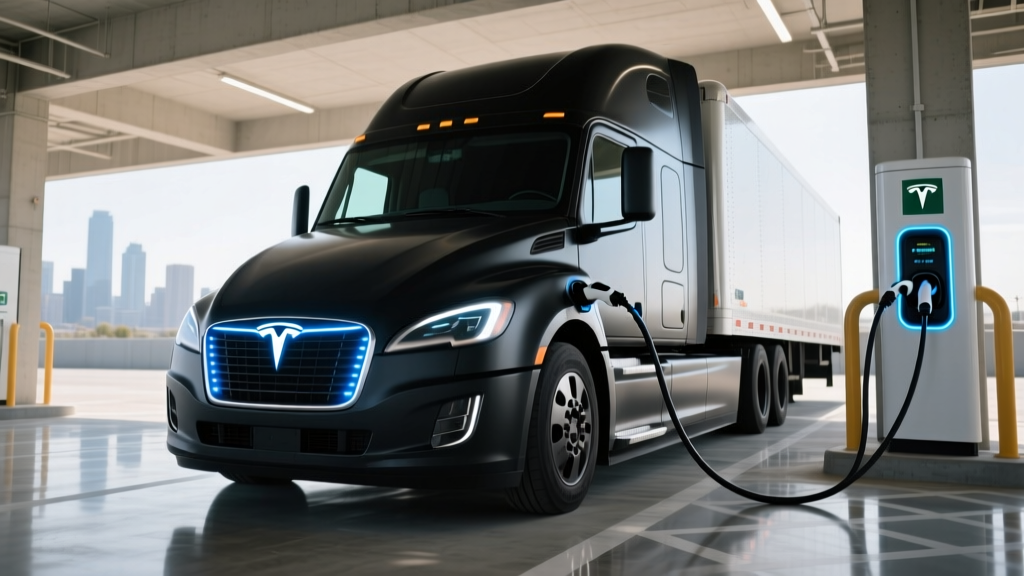
The Tesla Semi is equipped with an estimated 900 kWh battery pack (Tesla has not published an official usable capacity, but industry teardowns and energy-consumption modeling place it in the 800–900 kWh range). To charge a pack that massive in a timeframe compatible with federally mandated 30-minute driver rest breaks, Tesla developed the Megacharger, a DC fast-charging system capable of delivering up to 1.2 MW (1,200 kW) of peak power.
At peak rate, a Megacharger can push roughly 600+ kWh into the Semi's battery in 30 minutes, translating to approximately 70% state of charge—enough for roughly 350 miles of the Semi's estimated 500-mile EPA range when fully loaded. However, as with all DC fast charging, the charge curve tapers significantly above 80% SoC to protect battery cell health. Fleet operators planning depot charging should budget 45–60 minutes for a 10–90% session rather than assuming peak rates sustain linearly.
| Metric | Value |
|---|---|
| Battery Capacity (est.) | ~900 kWh (NMC chemistry) |
| EPA Range (loaded) | 500 miles |
| Peak DC Charge Rate | 1.2 MW (1,200 kW) |
| 10–70% Time (est.) | ~30 minutes |
| 10–90% Time (est.) | ~50–60 minutes |
| Connector | Tesla proprietary (CCS2-based MCS adapter for fleet) |
| Connector Type | Megacharging Connector (MCS standard for heavy-duty) |
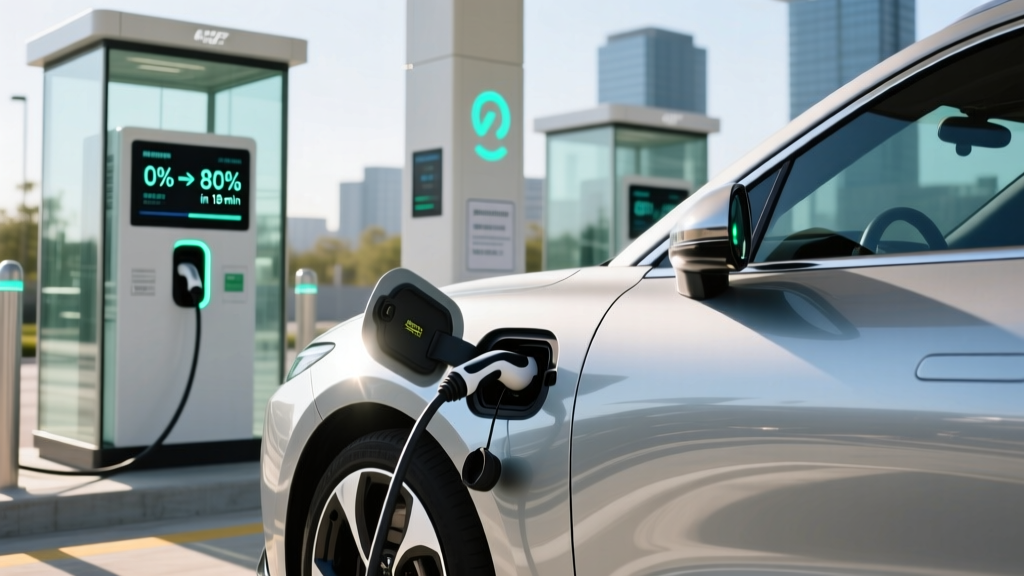
For context, a typical passenger EV like the Tesla Model Y Long Range has a 75 kWh usable battery and peaks at 250 kW on a V3 Supercharger—achieving 10–80% in approximately 25 minutes. The Semi's 1.2 MW rate is roughly 4.8× the peak power of a V3 Supercharger, but it's charging a battery 12× larger. The physics of thermal management and cell-level charge acceptance mean the Semi's sustained average rate over a 30-minute session is likely closer to 700–800 kW, not the full 1,200 kW the entire time.
Charging Levels Explained: Speeds in kW and Miles Per Hour
Whether you drive a Semi or a sedan, all EV charging falls into three tiers. Here's how each level performs in real-world terms:
| Level | Power (kW) | Voltage / Amperage | Miles of Range Added Per Hour | Best Use Case |
|---|---|---|---|---|
| Level 1 | 1.2–1.9 kW | 120V / 12–16A | 3–5 miles/hr | Overnight trickle, PHEVs, emergency top-ups |
| Level 2 | 3.3–19.2 kW | 240V / 16–80A | 12–70 miles/hr | Daily home/workplace charging |
| DC Fast | 50–350 kW (passenger) up to 1,200 kW (Semi/MCS) | 400–900V DC | 150–1,200+ miles/hr | Road trips, fleet depot charging |
A few practical notes: the "miles per hour" figures assume an average efficiency of 3–4 miles per kWh for passenger EVs and roughly 1.7–2.0 kWh/mile for the Tesla Semi under load. Your actual rate depends on your vehicle's onboard charger capacity (for Level 1 and 2), battery chemistry, ambient temperature, and state of charge. Lithium iron phosphate (LFP) batteries, for instance, can tolerate higher sustained charge rates near the top of their SoC window compared to NMC cells, which taper more aggressively above 80%.
Home EV Charger Installation: Costs, Electrical Requirements, and Panel Upgrades
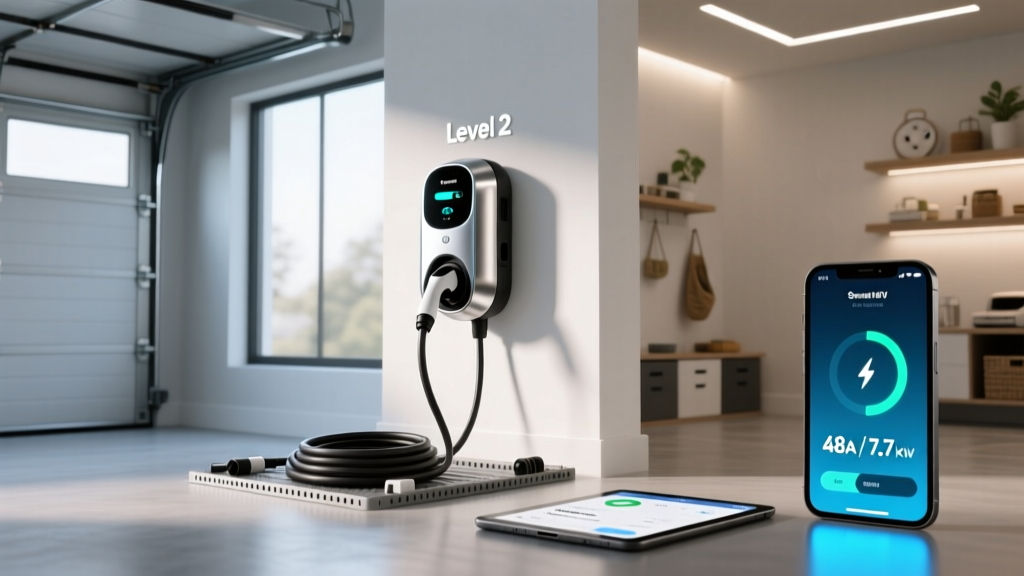
Most EV owners do the bulk of their charging at home on Level 2. A properly installed 240V home charger delivers 25–45 miles of range per hour of charging—enough to fully replenish any passenger EV overnight. But installation costs vary dramatically based on your home's electrical infrastructure.
Electrical Requirements for Level 2 Charging
A typical Level 2 home charger runs on a 240V dedicated circuit at 40A, 48A, or 60A. The most common setup in 2026 is a 48A hardwired charger on a 60A breaker (NEC code requires the continuous load to be no more than 80% of the breaker rating, so 48A continuous = 60A breaker). This delivers up to 11.5 kW of power—sufficient to add roughly 35–45 miles of range per hour to most EVs.
If your electrical panel is older (100A service) or already near capacity with HVAC, electric range, and dryer loads, you may need a panel upgrade to 200A service, which adds significant cost. Some newer solutions like the Span smart panel or load-management devices (e.g., Emporia Smart Load Management) can avoid a full panel upgrade by dynamically throttling the charger when other high-draw appliances activate.
| Component | Low End | Typical | High End |
|---|---|---|---|
| Level 2 Charger Equipment (40–48A) | $350 | $550 | $750 |
| Electrician Labor (short run, same wall as panel) | $300 | $600 | $1,200 |
| Electrician Labor (long run, conduit, garage detached) | $800 | $1,500 | $3,000 |
| Permit & Inspection | $50 | $150 | $350 |
| Panel Upgrade (100A → 200A, if needed) | $1,500 | $2,500 | $4,500 |
| Total (no panel upgrade) | $700 | $1,300 | $2,500 |
| Total (with panel upgrade) | $2,200 | $3,800 | $7,000 |
Connector Compatibility: NACS, CCS, CHAdeMO, and MCS
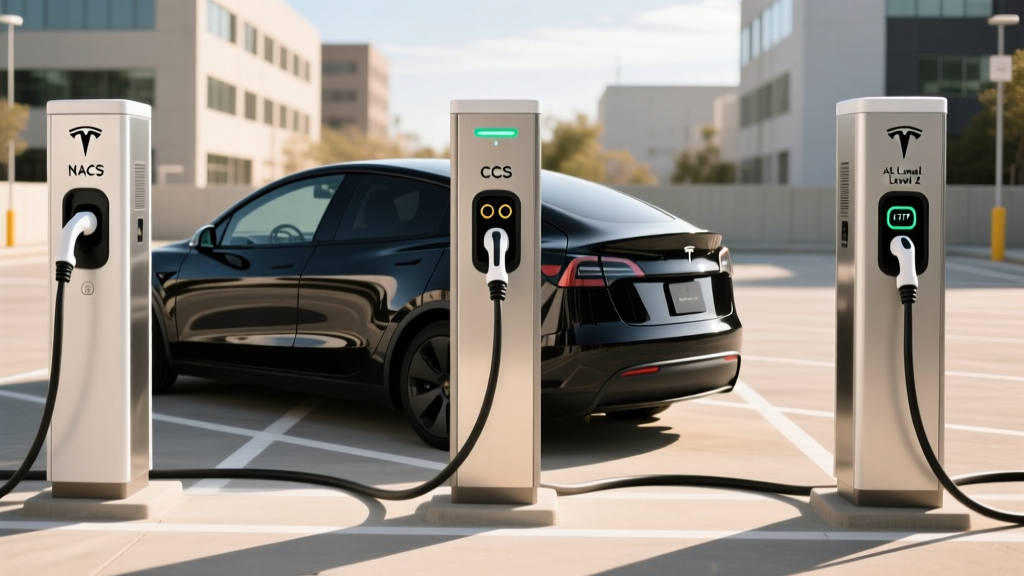
The connector landscape in 2026 has consolidated significantly since the North American Charging Standard (NACS) was adopted by nearly every major automaker starting in 2025. Here's where each connector stands:
| Connector | Status in 2026 | Vehicles Using It | Adapter Needed? |
|---|---|---|---|
| NACS (Tesla) | Dominant standard in North America | Tesla (all models), Ford, GM, Rivian, Hyundai, BMW, and most 2025+ EVs | CCS-to-NACS adapter for older CCS vehicles (~$200) |
| CCS1 | Legacy; still on pre-2025 models | VW ID.4 (pre-2025), older Hyundai/Kia, BMW iX (pre-2025) | NACS-to-CCS adapter for Tesla Superchargers |
| CHAdeMO | Effectively discontinued in US | Nissan Leaf (legacy only) | Limited adapter options; network shrinking |
| MCS (Megawatt) | Heavy-duty/commercial standard | Tesla Semi, electric school buses, fleet trucks | Proprietary to commercial depots |
For passenger EV buyers in 2026: if you're purchasing a new vehicle, NACS is the connector you want. If you own a 2023–2024 CCS-equipped EV, budget $175–$250 for a certified CCS-to-NACS adapter to access Tesla's Supercharger network, which now exceeds 30,000 stalls globally.
Charging Cost Per Mile: Home vs. Public vs. Gas
The economic case for EV charging hinges on where you charge. Here's a realistic cost comparison for 2026:
| Scenario | Rate | Cost Per Mile (EV avg. 3.5 mi/kWh) | Annual Cost (12,000 mi) |
|---|---|---|---|
| Home (off-peak utility rate) | $0.08–$0.14/kWh | $0.023–$0.040 | $275–$480 |
| Home (standard rate, no TOU) | $0.15–$0.22/kWh | $0.043–$0.063 | $515–$755 |
| Public Level 2 (ChargePoint, etc.) | $0.25–$0.49/kWh | $0.071–$0.140 | $855–$1,680 |
| DC Fast Charging (EA, EVgo, Tesla) | $0.32–$0.56/kWh | $0.091–$0.160 | $1,095–$1,920 |
| Gasoline (25 MPG avg, $3.40/gal) | $3.40/gallon | $0.136 | $1,632 |
The takeaway is clear: home charging is where EV economics win. At off-peak rates, an EV costs roughly 3–4 cents per mile to "fuel," compared to 13–14 cents for a 25 MPG gas car. But if you rely exclusively on DC fast charging, your per-mile cost can equal or exceed gasoline—which is why home Level 2 installation pays for itself within 1–2 years for most drivers.
For the Tesla Semi, fleet operators report depot-charging costs of roughly $0.06–$0.10/kWh via commercial utility rates, translating to approximately $0.10–$0.18 per mile under load—roughly 40–60% less than diesel at current prices.
Charging Time Examples: 10–80% for Common Battery Sizes
How long does a charging session actually take? Here are real-world estimates based on each vehicle's peak charge rate and typical charge-curve taper:
- Tesla Model 3 Highland (75 kWh, NMC, 250 kW peak): 10–80% in ~22 minutes at a V3 Supercharger. Expect taper to begin around 55% SoC; the last 20% (80–100%) can add another 25+ minutes.
- Hyundai Ioniq 5 (77.4 kWh, NMC, 240 kW peak): 10–80% in ~18 minutes at a 350 kW Electrify America station, thanks to its 800V architecture that sustains higher rates longer.
- Ford F-150 Lightning Extended Range (131 kWh, NMC, 150 kW peak): 10–80% in ~41 minutes at a 150 kW DC fast charger.
- Chevrolet Silverado EV (200+ kWh, NMC, 350 kW peak): 10–80% in ~30 minutes at a 350 kW charger.
- Tesla Semi (~900 kWh, 1,200 kW peak): 10–70% in ~30 minutes at a Megacharger; 10–90% estimated at 50–60 minutes due to taper above 80%.
Best Home EV Chargers for 2026: Equipment Picks
Here are the top-rated Level 2 home chargers we recommend, based on power output, reliability, smart features, and value:
Tesla Wall Connector (Gen 4)
- Power: 11.5 kW (48A, hardwired, 60A breaker)
- Connector: NACS (native Tesla)
- Cable Length: 24 ft
- Smart Features: Wi-Fi, OTA updates, Power Sharing with multiple units, load management
- Price: ~$475
- Best For: Tesla owners and any NACS-equipped EV
Emporia Vue Level 2 Charger
- Power: 11.5 kW (48A, hardwired or NEMA 14-50 plug)
- Connector: NACS (2025+ models) or J1772 with adapter
- Cable Length: 24 ft
- Smart Features: Energy monitoring, solar integration, dynamic load management, app scheduling
- Price: ~$399
- Best For: Budget-conscious buyers wanting smart features and solar integration
ChargePoint Home Flex
- Power: Up to 12 kW (50A, adjustable 16–50A)
- Connector: NACS or J1772 (configurable)
- Cable Length: 23 ft
- Smart Features: Alexa integration, scheduling, charge history, flexible amperage
- Price: ~$549
- Best For: Multi-EV households needing adjustable amperage for older panels
Safety, Code Compliance, and Installation Best Practices
EV charging draws significant continuous current—comparable to running an electric oven for 8 hours straight. Proper installation isn't optional; it's a fire-safety requirement. Here's what to verify with your licensed electrician:
- Dedicated circuit: Your Level 2 charger must be on its own dedicated breaker—never shared with other outlets or appliances.
- GFCI protection: The 2023 NEC update requires GFCI protection for all EV charging outlets (NEMA 14-50 receptacles). Hardwired chargers with integrated ground-fault protection may exempt you from a GFCI breaker, but check local code.
- Outdoor rating: If your charger is installed outdoors, it must carry a NEMA 4 or IP65 rating for weather resistance. All three chargers recommended above are rated for outdoor use.
- Wire gauge: A 60A circuit requires 6 AWG copper wire (or 4 AWG aluminum). Undersized wire is a fire hazard—never let an installer cut corners here.
- Permit and inspection: Most US jurisdictions require a permit and post-installation inspection for EV charger circuits. Skipping this can void your homeowner's insurance in the event of an electrical fire.
- NEMA 14-50 vs. hardwired: A NEMA 14-50 outlet offers portability (take the charger when you move) but requires GFCI breaker protection. Hardwired installations avoid GFCI requirements and are generally more reliable long-term since there's no plug to loosen or corrode.
What the Tesla Semi Means for the Future of Fast Charging
The Tesla Semi's 1.2 MW Megacharger isn't just a one-off engineering feat—it's driving the buildout of the Megawatt Charging System (MCS) standard, which will serve heavy-duty trucks, school buses, and eventually even marine and aviation applications. Several corridor-charging projects along I-5, I-10, and I-80 are already installing MCS-capable infrastructure in 2025–2026, funded in part by the NEVI Formula Program.
For passenger EV owners, the trickle-down benefit is clear: the same power-electronics innovations enabling 1.2 MW charging for the Semi are pushing passenger DC fast-charging rates higher, with 800V+ architectures and 350–400 kW peak rates becoming standard on 2026 models from Hyundai, Kia, Porsche, and GM.
Frequently Asked Questions
How much does it cost to install a home EV charger?
A typical Level 2 home charger installation costs between $700 and $2,500 when no panel upgrade is needed. This includes the charger ($350–$750), electrician labor ($300–$1,200), and permits ($50–$350). If your home requires a 200A panel upgrade, add $1,500–$4,500. The federal §30C tax credit can reimburse 30% of costs up to $1,000 in eligible census tracts.
How fast will each charging level add range?
Level 1 (120V) adds 3–5 miles per hour. Level 2 (240V, 48A) adds 30–45 miles per hour for most passenger EVs. DC fast charging (50–350 kW) adds 150–1,200+ miles per hour at peak rates, but sustained rates taper above 80% SoC. The Tesla Semi's Megacharger at 1.2 MW can add approximately 700+ miles of range per hour at peak rate.
Which connector/charger is compatible with my EV?
If you bought a 2025 or newer EV in North America, it almost certainly uses the NACS connector. Older CCS-equipped vehicles (2023–2024) need a CCS-to-NACS adapter (~$200) to use Tesla Superchargers. CHAdeMO vehicles (Nissan Leaf) have limited and shrinking public charging options. For home charging, a NACS Wall Connector or a J1772 charger with a NACS adapter covers all current vehicles.
How much does charging cost per mile vs gas?
Home charging at off-peak rates costs roughly $0.03–$0.04 per mile—about 70–75% less than gasoline at $3.40/gallon in a 25 MPG car ($0.136/mile). Public DC fast charging at $0.40–$0.56/kWh costs $0.11–$0.16 per mile, roughly comparable to gas. The economics strongly favor home charging.
What electrical upgrades might I need?
If your home has 100A service or your panel is already near capacity, you may need a panel upgrade to 200A ($1,500–$4,500). Alternatives include installing a smart load-management device ($200–$500) that throttles the charger when other appliances draw power, or switching to a Span smart panel. Always have a licensed electrician perform a load calculation before committing to a charger size.
Can I charge a Tesla Semi at home?
No. The Tesla Semi requires a Megacharger or MCS-compatible commercial charging station delivering up to 1.2 MW. Residential electrical service (typically 200A/240V = 48 kW maximum) cannot come close to supporting this. The Semi is designed for fleet depot charging and highway corridor Megacharger stops.