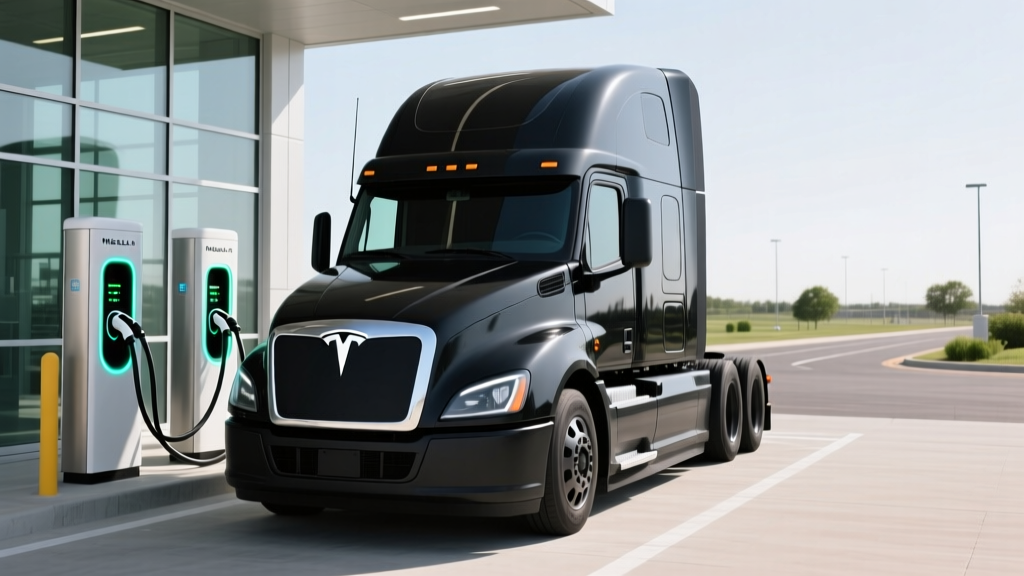
The Tesla Semi demands a charging ecosystem unlike anything in the passenger EV world. With a battery pack estimated at roughly 900 kWh and a gross vehicle weight rating of 82,000 lbs, Class 8 electric trucking requires megawatt-scale power delivery that makes a 350 kW passenger-car DC fast charger look like a trickle. This guide breaks down exactly how Tesla Semi charging works — from the Megacharger network to depot-based fleet charging — and what operators need to know about power requirements, connectors, and cost per mile in 2026.
Why the Tesla Semi Needs Its Own Charging Infrastructure
A typical passenger EV like the Tesla Model Y carries a ~75 kWh usable battery and charges at up to 250 kW on a V3 Supercharger. The Tesla Semi's battery is roughly 12 times larger — Tesla has not published an exact kWh figure, but teardown analyses and EPA filings point to approximately 900 kWh usable capacity. To charge that pack from 10% to 80% in a timeframe compatible with driver Hours of Service (HOS) regulations — roughly 30 to 45 minutes — you need sustained power delivery in the megawatt range.
That's the engineering problem the Tesla Megacharger was built to solve. Where a Supercharger delivers up to 350 kW, a Megacharger targets up to 1.2 MW (1,200 kW) per stall. That's enough power to run approximately 1,200 household microwaves simultaneously — and it requires dedicated medium-voltage utility connections, large-scale switchgear, and in many cases, on-site energy storage buffers to manage demand charges.
Charging Levels Explained: From Depot AC to Megawatt DC
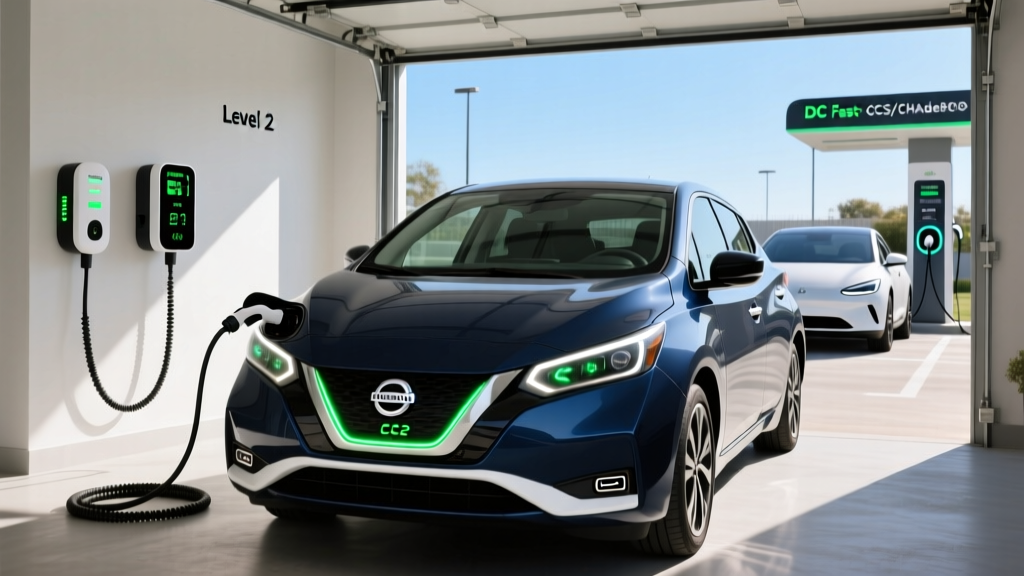
Understanding Tesla Semi charging requires a clear grasp of the three charging levels and how they apply to a Class 8 vehicle. Note: kW (kilowatts) measures power — the rate of energy delivery — while kWh (kilowatt-hours) measures energy — the total capacity stored. A 1.2 MW (1,200 kW) Megacharger can theoretically deliver 1,200 kWh in one hour, though the Semi's ~900 kWh battery will taper charge rate as it fills.
| Level | Power (kW) | Miles of Range Added per Hour | Typical Use Case | 10–80% Charge Time (~900 kWh pack) |
|---|---|---|---|---|
| Level 1 (120V AC) | ~1.4 kW | < 1 mi/hr | Not practical for Semi | Not applicable |
| Level 2 (240V–480V AC) | 19.2–40 kW | 10–22 mi/hr | Overnight depot charging | 16–30 hours |
| DC Fast (CCS/MCS) | 150–500 kW | 85–280 mi/hr | Third-party public fast charging | ~1.5–4 hours |
| Megacharger (Tesla DC) | Up to 1,200 kW (1.2 MW) | ~600+ mi/hr (peak) | Tesla Semi corridor & depot fast charging | ~30–45 minutes |
The charge curve matters enormously at this scale. The Semi will accept peak Megacharger power (up to 1.2 MW) only at lower states of charge — typically below 40–50% SoC. Above 80%, charge rate tapers significantly to protect battery health, just as with passenger EVs. Tesla's Megacharger stations also incorporate solar canopies and Megapack battery buffers, which store energy from the grid during off-peak hours and discharge it during charging sessions to reduce utility demand charges.
Megacharger Network: Where Tesla Semi Chargers Are Located
As of early 2026, Tesla has deployed Megacharger stations at select locations, primarily in California and Nevada, aligned with high-volume freight corridors. Key operational and announced Megacharger sites include:
- Giga Nevada (Sparks, NV): Adjacent to Tesla's battery and powertrain factory, serving as both a testing facility and fleet charging hub
- Fremont, CA: Near Tesla's original assembly plant for Semi production runs
- Lost Hills, CA: A solar-integrated Megacharger site along the I-5 corridor, a major north-south freight artery
- Barstow, CA: Serving the I-15 corridor between Southern California and Las Vegas
Expansion is ongoing, with Tesla targeting Megacharger deployment along major logistics corridors connecting ports, distribution centers, and rail yards. PepsiCo, one of the Semi's largest early fleet customers, operates its own depot Megachargers at distribution facilities in Sacramento and Modesto, California. Fleet operators purchasing Semis should plan for both corridor Megacharger access and on-site depot charging.
Connector Compatibility: Tesla's Proprietary Plug vs. MCS
The Tesla Semi uses a proprietary Tesla charging connector — not the North American Charging Standard (NACS) used on Tesla passenger vehicles, and not the CCS1 or Megawatt Charging System (MCS) connectors being standardized for other electric trucks. This is a deliberate choice by Tesla to maintain control over the high-power charging ecosystem for its Semi platform.
| Connector Type | Max Power | Vehicles Using It | Tesla Semi Compatible? |
|---|---|---|---|
| Tesla Megacharger Plug | Up to 1.2 MW | Tesla Semi only | Yes — native |
| MCS (Megawatt Charging System) | Up to 3.75 MW (design max) | Freightliner eCascadia, Volvo VNR Electric, Peterbilt 579EV | No (no adapter available) |
| CCS1 (Combo) | Up to 350–500 kW | Most non-Tesla passenger EVs; some medium-duty trucks | No |
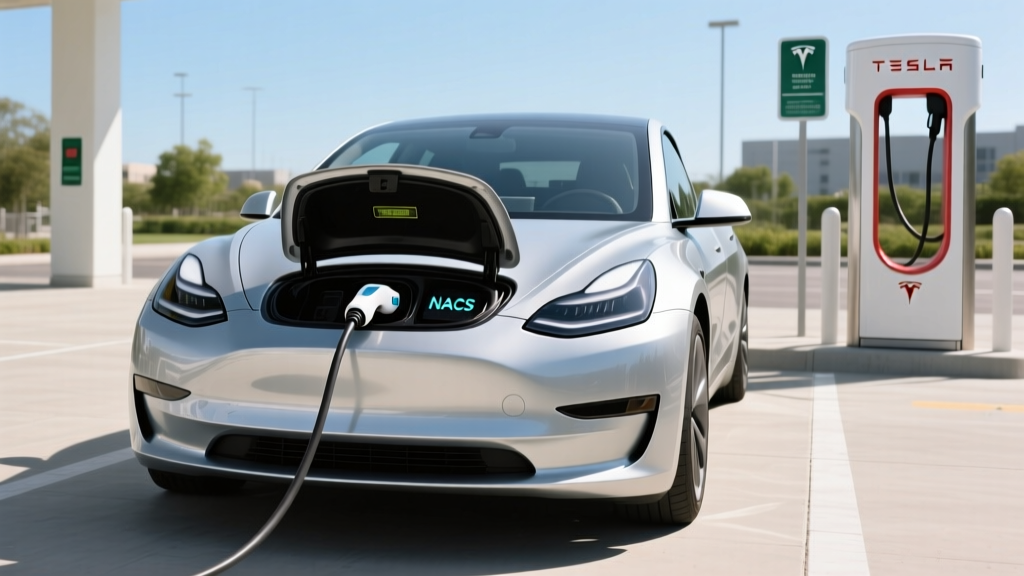
| NACS (Tesla passenger) | Up to 350 kW (V4 Supercharger) | Tesla Model 3/Y/S/X, Ford, GM, Rivian, etc. | No (different physical plug) |
This proprietary connector situation means Tesla Semi operators cannot currently use third-party MCS-equipped truck charging stations — a significant consideration for fleets that operate mixed electric truck brands. The MCS connector, developed by CharIN, is the emerging industry standard for heavy-duty EVs and is being deployed by providers like WattEV and TeraWatt Infrastructure. Tesla has not announced plans to adopt MCS or offer a Megacharger-to-MCS adapter.
Fleet Depot Charging: Electrical Requirements and Installation Costs
For fleet operators installing Tesla Semi depot charging, the electrical infrastructure requirements are substantial. Tesla offers depot Megacharger solutions that integrate with on-site Megapack battery storage. Here's what a typical depot installation involves:
Electrical Requirements for Depot Megacharging
A single Megacharger stall rated at 1.2 MW requires a medium-voltage utility feed — typically 12.47 kV or 34.5 kV three-phase service, stepped down through a dedicated pad-mounted transformer. Most commercial and industrial sites will need:
- Utility service upgrade: New or upgraded medium-voltage transformer (1–5 MVA depending on number of stalls)
- Switchgear: Medium-voltage switchgear with protective relaying
- DC dispensing equipment: Tesla Megacharger cabinet and cable management
- Battery buffer (recommended): Tesla Megapack or similar BESS (Battery Energy Storage System) to reduce demand charges and manage peak loads
- Permitting: Utility interconnection agreement, local electrical permits, potential environmental review for battery storage
| Component | Estimated Cost Range | Notes |
|---|---|---|
| Megacharger hardware (per stall) | $150,000 – $250,000 | Tesla-supplied, includes power cabinet and dispenser |
| Medium-voltage transformer + switchgear | $200,000 – $500,000 | Varies with utility service availability and distance |
| Utility interconnection + service upgrade | $100,000 – $400,000 | Utility-dependent; some offer make-ready incentives |
| Electrical contractor labor + engineering | $100,000 – $300,000 | Licensed MV electrician, civil work, conduit runs |
| Permitting + inspections | $15,000 – $50,000 | Varies by jurisdiction; includes utility interconnection agreement |
| Megapack battery buffer (optional, per unit) | $1,000,000 – $2,000,000+ | Reduces demand charges; may qualify for IRA investment tax credit |
| Total per stall (without battery buffer) | $565,000 – $1,500,000 | Multi-stall sites reduce per-stall cost via shared infrastructure |
These costs are orders of magnitude higher than passenger-EV home charging installations. However, for fleet operators, the economics are driven by cost per mile — and electric trucking can deliver significant fuel savings over diesel. Federal and state incentives, including the Alternative Fuel Vehicle Refueling Property Credit (§30C), can offset up to $100,000 per charging item placed in service in eligible census tracts.
Cost Per Mile: Electric vs. Diesel for the Tesla Semi
The operating-cost case for the Tesla Semi hinges on the electricity-vs-diesel spread. Here's how the numbers work out across common charging scenarios:
| Scenario | Rate ($/kWh) | Energy Use (kWh/mi) | Cost Per Mile | vs. Diesel ($0.65/mi est.) |
|---|---|---|---|---|
| Depot overnight (off-peak utility) | $0.08 – $0.12 | 1.8 | $0.14 – $0.22 | Saves $0.43 – $0.51/mi |
| Depot daytime (on-peak) | $0.15 – $0.22 | 1.8 | $0.27 – $0.40 | Saves $0.25 – $0.38/mi |
| Megacharger (Tesla network, announced) | $0.25 – $0.35 (est.) | 1.8 | $0.45 – $0.63 | Saves $0.02 – $0.20/mi |
| Solar + Megapack depot (amortized) | $0.04 – $0.07 | 1.8 | $0.07 – $0.13 | Saves $0.52 – $0.58/mi |
At an estimated diesel cost of $0.65 per mile (based on ~6.5 mpg at $4.25/gallon, a reasonable 2026 average for a loaded Class 8 truck), the Tesla Semi charged at depot off-peak rates saves roughly $0.43–$0.51 per mile. Over 100,000 miles per year, that translates to $43,000–$51,000 in annual fuel savings per truck. The payback period on the Semi's higher purchase price narrows significantly with high annual mileage and optimized depot charging.
However, demand charges — utility fees based on peak power draw — can dramatically alter depot charging economics. A fleet depot pulling 2–5 MW during peak hours could face demand charges of $10–$25 per kW per month, adding tens of thousands in monthly utility costs. This is precisely why Tesla pairs Megachargers with Megapack battery buffers: charge the batteries slowly from the grid during off-peak hours, then discharge them into trucks at megawatt speeds during the day, keeping the site's grid draw flat and demand charges minimal.
Charging Time Scenarios: What Fleet Schedulers Need to Know
For fleet dispatchers planning Tesla Semi routes, charging time is a critical scheduling variable. Here are realistic charge time estimates for the Semi's ~900 kWh pack at different power levels and states of charge:
Tesla Semi Charge Time Estimates (900 kWh Battery)
- Megacharger (1.2 MW peak): 10–80% in approximately 30–45 minutes. Peak power sustained to ~40% SoC, then tapering. Adds roughly 300+ miles of range in a 30-minute HOS-compliant stop.
- Third-party DC fast (350 kW, CCS with adapter if available): 10–80% in approximately 2–2.5 hours. Not currently compatible without Tesla providing an adapter.
- Depot Level 2 (40 kW AC): 10–80% in approximately 16–18 hours. Suitable for overnight charging of trucks on predictable daily routes under 250 miles.
- Depot DC fast (500 kW): 10–80% in approximately 1–1.5 hours. A practical middle ground for fleet depots with medium-voltage service but not full Megacharger infrastructure.
These times assume a preconditioned battery at optimal temperature. In cold weather (below 32°F / 0°C), charge acceptance rates decrease until the battery thermal management system warms the pack. Tesla's Semi includes active thermal preconditioning — when a Megacharger is set as the navigation destination, the truck preheats or precools the battery en route to maximize charge rate on arrival, mirroring the same feature in Tesla passenger vehicles.
Equipment Options: Megacharger, Megapack, and Fleet Depot Gear
Tesla Semi charging equipment is sold directly through Tesla's commercial energy division, not through consumer retail channels. Here's what's available or announced for fleet operators:
Tesla Megacharger
- Power output: Up to 1.2 MW (1,200 kW) DC per stall
- Connector: Proprietary Tesla Semi plug
- Features: Integrated solar canopy, Megapack buffer compatibility, OTA fleet management via Tesla API
- Cable length: ~15 ft (heavy-duty liquid-cooled cable)
- Estimated price: $150,000–$250,000 per stall (hardware only)
- Availability: Sold to verified fleet operators through Tesla commercial sales
Tesla Megapack (Battery Buffer)
- Capacity: ~3.9 MWh per unit
- Power: Up to 1 MW continuous discharge per unit
- Features: Integrated inverter, thermal management, Powerhub monitoring
- Purpose: Stores off-peak grid energy; dispatches at MW rates for truck charging; reduces demand charges
- Estimated price: $1.0M–$2.0M+ per unit (varies with configuration)
- Incentive eligible: May qualify for IRA §48E investment tax credit (30%+ with bonus adders)
Third-Party MCS Chargers (Non-Tesla)
- Power output: 600 kW – 3.75 MW (MCS standard max)
- Connector: MCS (Megawatt Charging System)
- Providers: WattEV, TeraWatt Infrastructure, ChargePoint (commercial)
- Tesla Semi compatible? No — no adapter currently available
- Relevant for: Mixed fleets with Freightliner, Volvo, Peterbilt electric trucks
Safety, Code, and Utility Interconnection Considerations
Megawatt-scale charging installations fall under a different regulatory framework than residential or light-commercial EV charging. Key considerations for fleet depot installations:
- NEC Article 625: Electric Vehicle Charging System Equipment is covered under the National Electrical Code, but megawatt-scale DC installations also require compliance with utility interconnection standards (IEEE 1547 for distributed energy resources)
- Medium-voltage safety: Installations at 12.47 kV or higher require utility-grade switchgear, protective relaying, and qualified high-voltage electricians — not standard commercial electrical contractors
- Battery storage codes: If pairing with Megapack or other BESS, NFPA 855 (Standard for the Installation of Stationary Energy Storage Systems) and local fire codes apply, including setback requirements, fire suppression, and deflagration analysis
- Utility demand charges: Most commercial utilities charge $10–$25/kW/month for peak demand. A 4-stall Megacharger site drawing 4.8 MW could face $48,000–$120,000/month in demand charges alone without battery buffering or managed charging software
- Environmental review: Large-scale battery installations and new utility substations may trigger CEQA (California) or NEPA (federal) environmental review, adding 6–18 months to project timelines
Fleet operators should engage with their utility's EV infrastructure team early — many utilities (PG&E, SCE, SDG&E, Southern California Edison) offer make-ready programs that cover the cost of utility-side infrastructure upgrades (transformers, service lines) for commercial EV charging sites. These programs can shave $100,000–$500,000 off a depot charging project.
Frequently Asked Questions
Can I charge a Tesla Semi at a regular Tesla Supercharger?
No. The Tesla Semi uses a proprietary Megacharger connector that is physically larger and designed for megawatt-scale power delivery. Standard Supercharger stalls (V3 at 250 kW, V4 at up to 350 kW) use the NACS connector, which is incompatible with the Semi. The Semi cannot physically plug into a Supercharger stall.
How much does a Tesla Megacharger cost to install?
A single Megacharger stall costs an estimated $565,000–$1,500,000 fully installed (hardware, transformer, utility interconnection, electrical labor, and permitting), excluding optional Megapack battery storage. Multi-stall installations reduce the per-stall cost by sharing medium-voltage infrastructure. Battery buffering adds $1M–$2M+ per Megapack unit but significantly reduces ongoing demand charges.
How fast does a Tesla Megacharger charge the Semi?
At peak power (up to 1.2 MW / 1,200 kW), a Megacharger can take the Semi's ~900 kWh battery from 10% to 80% in approximately 30–45 minutes. This aligns with federal Hours of Service (HOS) rest-break requirements, enabling a driver to recharge during a mandatory 30-minute break. Actual charge time varies with battery temperature, state of charge, and grid conditions.
Is the Tesla Semi compatible with other electric truck chargers (MCS)?
Not currently. The Tesla Semi uses Tesla's proprietary Megacharger connector and is not compatible with the Megawatt Charging System (MCS) standard used by Freightliner, Volvo, Peterbilt, and other electric truck manufacturers. Tesla has not announced an MCS adapter for the Semi. Fleets operating mixed-brand electric trucks will need separate charging infrastructure for Tesla Semis and MCS-equipped vehicles.
What's the real-world range of the Tesla Semi when loaded?
The Tesla Semi carries an EPA-estimated 500 miles of range at full gross combined weight (82,000 lbs). In real-world highway operation — accounting for terrain, wind, speed, and temperature — fleet operators report 350–420 miles of practical range. Energy consumption averages approximately 1.7–2.0 kWh/mile under loaded highway conditions. Cold weather (below freezing) can reduce range by 15–25% due to battery chemistry and cabin/battery heating loads.
Does the Tesla Semi qualify for federal tax credits or incentives?
The Tesla Semi may qualify for the Commercial Clean Vehicle Credit (§45W), which provides up to $40,000 for qualified commercial clean vehicles with a GVWR over 14,000 lbs. Eligibility depends on battery sourcing requirements, the buyer's tax liability, and other IRS rules that evolve annually. Fleet operators should consult a tax professional for current-year eligibility. Additionally, the §30C Alternative Fuel Vehicle Refueling Property Credit may provide up to $100,000 per charging item for depot Megacharger installations in eligible census tracts.
What electrical service does a Tesla Semi depot charger need?
A Megacharger stall requires medium-voltage electrical service — typically 12.47 kV or 34.5 kV three-phase — with a dedicated pad-mounted transformer rated for 1–5 MVA depending on the number of stalls. This is fundamentally different from the 240V residential service used for passenger EV charging. Most industrial sites already have medium-voltage service or can obtain it through a utility upgrade, but the cost and timeline vary significantly by location and utility.