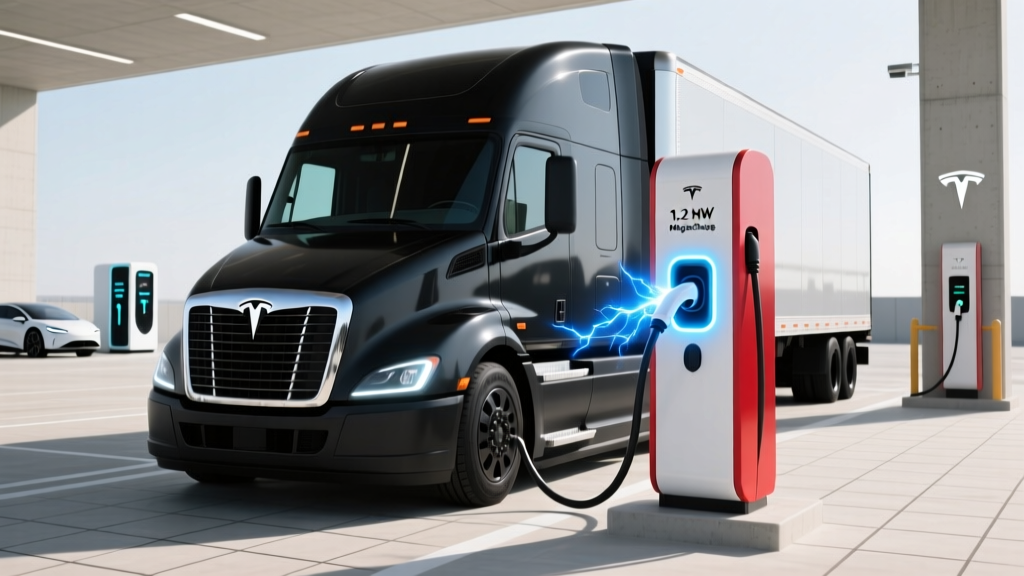
When Tesla began delivering the Semi to PepsiCo and other fleet operators, it didn't just debut an electric Class 8 truck — it introduced a charging architecture that dwarfs anything available to passenger EVs. The Tesla Semi's 1.2 MW (1,200 kW) charging capability via the company's Megacharger network represents a fundamentally different tier of DC fast charging, one that reshapes how we think about power delivery, grid infrastructure, and the future of high-capacity EV batteries.
For passenger EV owners, understanding this technology isn't academic. Megacharger architecture previews the charging speeds that will eventually trickle down to consumer vehicles. And if you're a fleet manager, logistics planner, or simply an EV enthusiast tracking where the industry is headed, the specifics of 1.2 MW charging — the connectors, the thermal management, the grid requirements — matter enormously.
Below, we break down exactly how Tesla Semi 1.2 MW charging works, the infrastructure behind it, and how it compares to the Level 2 and DC fast charging that passenger EV owners use every day.
Understanding Charging Levels: From Level 1 to Megawatt-Class DC
Before dissecting the Semi's Megacharger system, it's essential to ground the discussion in the charging tiers that all EV owners navigate daily. Power is measured in kilowatts (kW) — the rate at which energy flows — while battery capacity is measured in kilowatt-hours (kWh), the total energy stored. Confusing these two is the single most common EV literacy mistake.
| Level | Voltage | Max Power (kW) | Miles of Range Added Per Hour | Typical Use Case |
|---|---|---|---|---|
| Level 1 | 120V AC | 1.4–1.9 kW | 3–5 mi/hr | Overnight trickle, PHEVs, emergencies |
| Level 2 | 240V AC | 7.2–19.2 kW | 20–60 mi/hr | Home daily charging, workplace, destination |
| DC Fast (CCS/NACS) | 400–800V DC | 50–350 kW | 150–300+ mi in 20 min | Road trips, public fast-charging stations |
| Megawatt-Class (MCS) | 800–1,250V DC | 600–1,200+ kW | N/A (commercial vehicles) | Class 8 trucks, buses, fleet depots |
The Tesla Semi operates at the far right edge of this spectrum. At 1.2 MW, the Megacharger delivers roughly 3.4 times the peak power of the fastest consumer DC fast chargers currently deployed in the U.S. ( Electrify America's 350 kW CCS units). To put it another way: a single Megacharger stall can output more instantaneous power than 150 typical American homes consume at peak demand.
How Tesla Semi 1.2 MW Charging Actually Works
The Tesla Semi carries an estimated usable battery capacity of approximately 900 kWh — roughly 12 times the size of a Tesla Model Y Long Range's ~75 kWh pack. Charging that battery from a standard 250 kW Supercharger would take hours. At 1.2 MW, Tesla claims the Semi can recover up to 70% of its range in approximately 30 minutes, which translates to roughly 350 miles of the truck's ~500-mile EPA-estimated range.
Several engineering challenges make this possible:
- Massive cable diameter and liquid cooling: At 1,200 kW and approximately 1,000V DC, current flow exceeds 1,200 amps. Uncooled cables at that amperage would be impossibly thick and heavy. Tesla's Megacharger cables use liquid-cooled conductors, similar to the V4 Supercharger architecture but scaled up significantly.
- Multiple charge ports: The Tesla Semi uses multiple CCS-compatible charge ports (early production units have been photographed with up to four ports), allowing the battery management system to distribute incoming current across parallel charge circuits. This reduces heat concentration at any single connection point.
- On-site energy storage: Most Megacharger installations include Tesla Megapack battery buffers. These grid-tied storage units trickle-charge from the utility connection at a manageable rate, then discharge at 1.2 MW when a Semi plugs in. This approach avoids the demand charges and grid upgrades that a direct 1.2 MW utility connection would require.
- Thermal preconditioning: The Semi's battery management system actively preconditions the pack temperature as the truck navigates toward a Megacharger station, ensuring the cells can accept maximum charge rate upon arrival — the same principle Tesla uses in passenger vehicles, but at vastly greater scale.
The Megacharger Network: Where Can Tesla Semis Charge?
As of early 2026, Tesla's Megacharger network remains limited and primarily deployed at fleet customer depots and along key freight corridors in California, Nevada, and Texas. Unlike the Supercharger network, Megachargers are not broadly open to public use. Key installations include:
- PepsiCo depot (Sacramento, CA): One of the earliest operational Megacharger sites, supporting PepsiCo's fleet of Tesla Semis on regional delivery routes.
- Tesla Megafactory (Lathrop, CA): Adjacent to the factory producing Megapacks, this site serves as both an R&D hub and operational charging depot.
- I-5 corridor sites: Tesla has permitted and begun construction on Megacharger stations along the Interstate 5 freight corridor between Los Angeles and the Bay Area.
The U.S. Department of Energy has funded medium- and heavy-duty EV charging infrastructure through various grant programs, and Tesla has been a beneficiary of some state-level funding for Megacharger deployment in California through the California Energy Commission's Clean Transportation Program.
Megawatt Charging System (MCS) vs. Tesla's Connector Approach
The broader commercial vehicle industry is coalescing around the Megawatt Charging System (MCS) connector, developed by CharIN and standardized under SAE J3271. The MCS connector is rated for up to 3.75 MW (1,250V DC at 3,000A) and is designed to be the universal standard for Class 8 trucks, school buses, and other heavy-duty electric vehicles.
| Feature | Tesla Megacharger | MCS (SAE J3271) | CCS (Passenger) |
|---|---|---|---|
| Max Power | ~1.2 MW | Up to 3.75 MW | Up to 350 kW (400 kW emerging) |
| Max Voltage | ~1,000V DC | 1,250V DC | 1,000V DC |
| Max Current | ~1,200A | 3,000A | 500A (liquid-cooled) |
| Connector Type | Proprietary (multi-port CCS variant) | Single standardized connector | CCS1 (N. America) / CCS2 (EU) |
| Adoption | Tesla Semi only | Daimler, Volvo, PACCAR, Traton | Most non-Tesla passenger EVs |
Tesla's approach diverges from the MCS standard. Rather than adopting the single large MCS connector, Tesla uses multiple modified CCS-style ports on the Semi. This decision likely reflects Tesla's desire to leverage existing connector supply chains and maintain proprietary control over the Megacharger ecosystem — the same playbook it executed with the North American Charging Standard (NACS) for passenger vehicles.
Whether Tesla will eventually open Megachargers to non-Tesla commercial vehicles (as it has opened Superchargers via NACS adoption) remains an open question. If freight electrification accelerates, regulatory pressure for interoperability may force convergence.
What Megawatt Charging Means for Passenger EVs
Passenger EV owners won't be plugging into Megachargers — the voltage architecture, connector geometry, and billing systems are designed for commercial fleets. But the technology has downstream implications:
- Supercharger V4 architecture benefits: Tesla's V4 Supercharger cabinets, which support up to 350 kW for passenger vehicles, share power electronics DNA with Megacharger systems. As Tesla scales Megacharger production, component cost reductions will benefit Supercharger deployments.
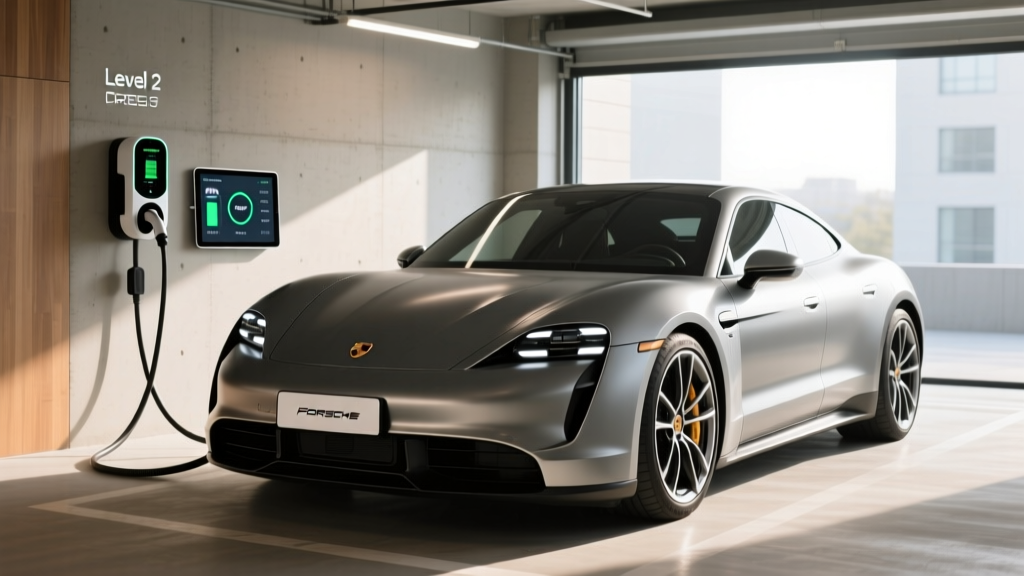
- 800V+ battery packs: The Semi's high-voltage architecture validates 800V-class battery packs at scale. Passenger vehicles like the Hyundai Ioniq 5 and Porsche Taycan already use 800V systems; expect this to become standard across Tesla's consumer lineup in coming years.
- On-site storage model: The Megacharger + Megapack buffering approach is being replicated at consumer-facing Supercharger stations in areas with constrained grid connections. Tesla has deployed Megapack buffers at several high-traffic Supercharger locations in California to avoid costly utility upgrades.
Charging Cost Comparison: Diesel vs. Megacharger Electricity
One of the Semi's core value propositions is operating cost reduction. Here's how the fuel economics compare:
| Metric | Tesla Semi (500 mi range) | Diesel Class 8 Truck |
|---|---|---|
| Energy Consumption | ~1.7 kWh/mi (estimated) | ~6.5 mpg (diesel) |
| Energy Cost | $0.12–$0.25/kWh (depot/utility rate) | $3.80–$4.50/gal (2026 diesel avg) |
| Cost Per Mile | $0.20–$0.43/mi | $0.58–$0.69/mi |
| 500-Mile Trip Fuel/Energy Cost | $100–$215 | $292–$346 |
At scale, a fleet running 100,000 miles per year per truck saves approximately $25,000–$35,000 annually in energy costs alone, according to analysis by the National Renewable Energy Laboratory. That payback timeline is a primary driver of fleet electrification economics, even with the Semi's estimated $250,000+ purchase price.
Home EV Charging: What Passenger EV Owners Actually Need
While Megachargers serve the Semi, passenger EV owners rely on Level 2 home charging as their primary refueling method. Here's a practical breakdown for 2026 EV buyers:
Electrical Requirements
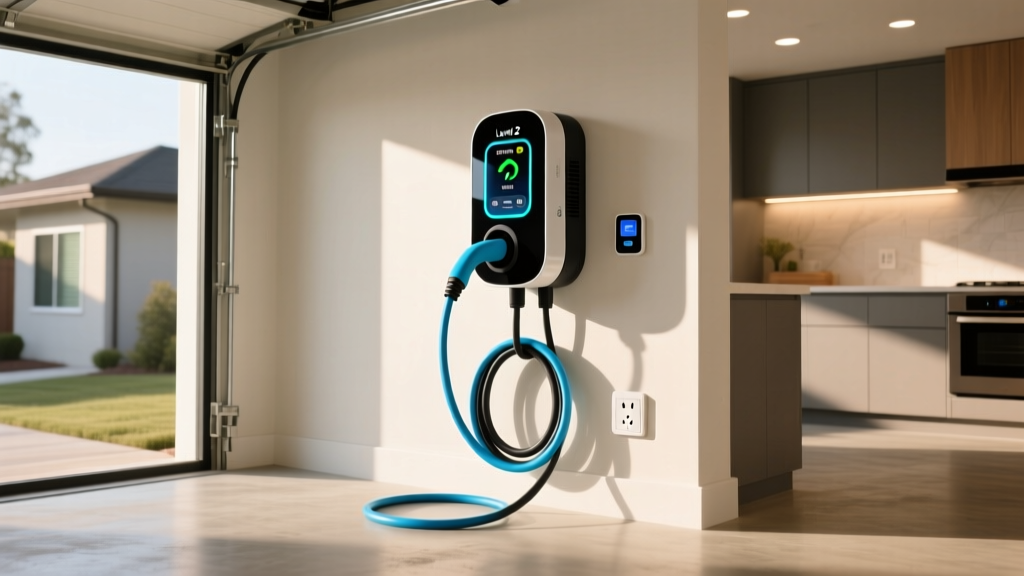
A typical Level 2 home charger requires a 240V dedicated circuit, similar to what an electric dryer or oven uses. The most common configurations:
- 40A circuit (NEMA 14-50 or hardwired): Delivers up to 9.6 kW (32A continuous, per NEC 80% rule). Adds roughly 30–40 miles of range per hour for a typical passenger EV. This is the sweet spot for most EV owners.
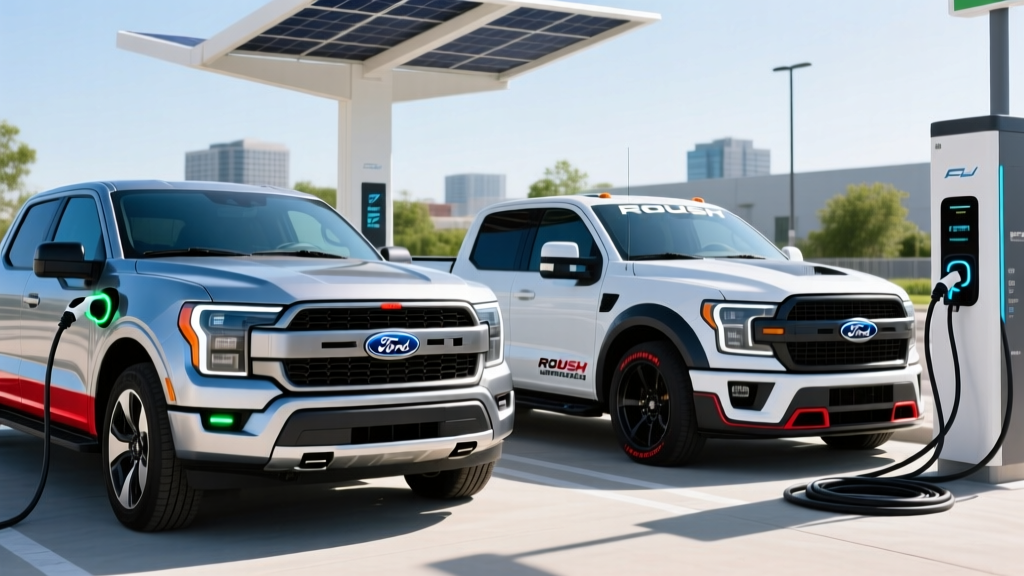
- 48A circuit (hardwired): Delivers up to 11.5 kW. Requires a 60A breaker. Adds roughly 35–45 miles of range per hour. Ideal for larger-battery vehicles like the Ford F-150 Lightning Extended Range or Rivian R1S.
- 60A circuit (hardwired): Delivers up to 19.2 kW on capable chargers. Requires a 75A or 80A breaker and a 200A+ electrical panel. Adds 50+ miles per hour. Overkill for most owners but future-proofs for larger packs.
Installation Cost Breakdown
| Component | Low Estimate | High Estimate | Notes |
|---|---|---|---|
| Level 2 Charger Unit | $350 | $750 | Smart Wi-Fi chargers (ChargePoint, Wallbox, Emporia) |
| Electrician Labor | $500 | $2,000 | Depends on run length, conduit, panel proximity |
| Electrical Permit | $50 | $250 | Varies by municipality |
| Panel Upgrade (if needed) | $1,500 | $4,000 | 100A to 200A service upgrade — common in pre-1990 homes |
| Total (no panel upgrade) | $900 | $3,000 | Most installations fall in $1,200–$2,000 |
| Total (with panel upgrade) | $2,400 | $7,000 | Older homes with 100A service |
The federal Residential Clean Energy Credit does not cover EV charger equipment for most taxpayers in 2026 (the Alternative Fuel Vehicle Refueling Property Credit, §30C, was modified under the Inflation Reduction Act and has specific census-tract eligibility requirements). Check with a tax professional for your specific situation.
Equipment Recommendations: Level 2 Chargers for Passenger EVs
For passenger EV owners, here are three proven Level 2 chargers that cover most needs:
Tesla Wall Connector
Power: Up to 11.5 kW (48A)
Connector: NACS (Tesla) — J1772 adapter included for newer versions
Cable Length: 24 ft
Smart Features: Wi-Fi, OTA updates, power sharing between units
Price: ~$475
Best For: Tesla owners who want a clean, integrated experience
ChargePoint Home Flex
Power: Up to 12 kW (50A, configurable)
Connector: J1772 (NACS adapter available)
Cable Length: 23 ft
Smart Features: Wi-Fi, app scheduling, Alexa integration, amperage configurable via DIP switch
Price: ~$550–$700
Best For: Non-Tesla EV owners wanting flexibility and app control
Emporia Vue Level 2 Charger
Power: Up to 11.5 kW (48A)
Connector: J1772 (NACS adapter included)
Cable Length: 24 ft
Smart Features: Wi-Fi, energy monitoring, integration with Emporia Vue home energy panel
Price: ~$400
Best For: Budget-conscious buyers who want energy tracking
Safety and Electrical Code Considerations
Home EV charger installation is not a DIY project. The National Electrical Code (NEC) treats EV chargers as continuous loads, meaning the circuit must be rated at 125% of the charger's maximum draw. A 48A charger requires a 60A breaker — not a 50A.
- Dedicated circuit: EV chargers must be on their own dedicated circuit. Sharing with other appliances is a code violation and a fire risk.
- GFCI protection: NEC 2020 and later require GFCI protection for outdoor receptacles used for EV charging. Hardwired installations may have different requirements depending on jurisdiction.
- Outdoor rating: If your charger is installed outdoors (garage-exterior wall, carport, driveway post), the unit must carry a NEMA 4 or IP65 rating for weather resistance.
- Wire gauge: A 60A circuit typically requires 6 AWG copper wire (THHN in conduit or NM-B for indoor runs). Longer runs may require 4 AWG to manage voltage drop.
- Permit and inspection: Virtually all jurisdictions require a permit and post-installation inspection. Skipping this step can void home insurance coverage in the event of an electrical fire.
Frequently Asked Questions
How much does it cost to install a home EV charger?
Most Level 2 home charger installations cost between $1,200 and $2,000 when no panel upgrade is needed. This includes the charger unit ($350–$750), electrician labor ($500–$2,000), and permit fees ($50–$250). If your home has an older 100A electrical panel that needs upgrading to 200A service, add $1,500–$4,000 to the total.
How fast will each charging level add range?
Level 1 (120V) adds roughly 3–5 miles of range per hour — adequate for plug-in hybrids with small batteries but impractical for full EVs. Level 2 (240V, 40A) adds 30–40 miles per hour, easily refilling most EVs overnight. DC fast charging (50–350 kW) can add 150–300+ miles in a 20–30 minute session, depending on the vehicle's charge acceptance rate and battery state of charge.
Which connector/charger is compatible with my EV?
If you own a Tesla, your vehicle uses the NACS connector and is compatible with Tesla Wall Connectors and the Supercharger network. Most non-Tesla EVs sold in North America through 2024 use CCS1 connectors, though nearly every major automaker has committed to adopting NACS starting with 2025–2026 model-year vehicles. CHAdeMO is largely legacy (Nissan Leaf, older Mitsubishi models) and is being phased out at public stations. Check your vehicle's charge port or owner's manual for the definitive connector type.
How much does charging cost per mile vs gas?
At the U.S. average residential electricity rate of approximately $0.16/kWh and a typical EV efficiency of 3.0 miles/kWh (roughly 112 MPGe), home charging costs about $0.053 per mile. Public DC fast charging at $0.35–$0.50/kWh raises that to $0.12–$0.17 per mile. Compare this to a 28 MPG gasoline vehicle at $3.40/gallon: $0.121 per mile. Home charging is dramatically cheaper; public DC fast charging is roughly cost-parity with gasoline.
What electrical upgrades might I need?
Homes built before 1990 often have 100A electrical service, which may not have sufficient spare capacity for a 40A or 48A EV charger circuit. An electrician will perform a load calculation per NEC Article 220 to determine if your panel can accommodate the additional draw. If not, a panel upgrade to 200A service is typically required — a $1,500–$4,000 project depending on your utility's requirements and local labor rates. Some homeowners opt for smart load-management systems (like the Emporia Vue or Span smart panel) that dynamically throttle charger amperage based on real-time household consumption, potentially avoiding a panel upgrade entirely.
Will Tesla open Megachargers to non-Tesla trucks?
Tesla has not announced plans to open the Megacharger network to competitors' vehicles. However, given the company's decision to open the Supercharger network via NACS adoption and the industry's movement toward the MCS standard, regulatory or market pressure could eventually force interoperability. For now, Megachargers are Tesla Semi-exclusive.
Can I charge a Tesla Semi at a regular Supercharger?
Technically, yes — but impractically. The Semi can connect to Superchargers (at significantly reduced charge rates relative to Megachargers), but filling a ~900 kWh battery at 250 kW would take several hours. Superchargers are designed for passenger vehicles and cannot deliver the sustained high-power delivery that the Semi's battery pack requires for efficient turnaround.