Your Tesla's EPA range sticker is only the starting point. How you charge—what equipment you use, when you plug in, and how often you rely on DC fast charging—directly determines how many of those Tesla range miles you actually get to use and how long your battery stays healthy over 100,000+ miles of ownership.
This guide breaks down every charging tier with exact kW speeds, miles-per-hour recovery rates, real-world installation costs for 2026, and a side-by-side cost analysis against gasoline. Whether you drive a Model 3, Model Y, Model S, or Model X, the physics and economics below apply.
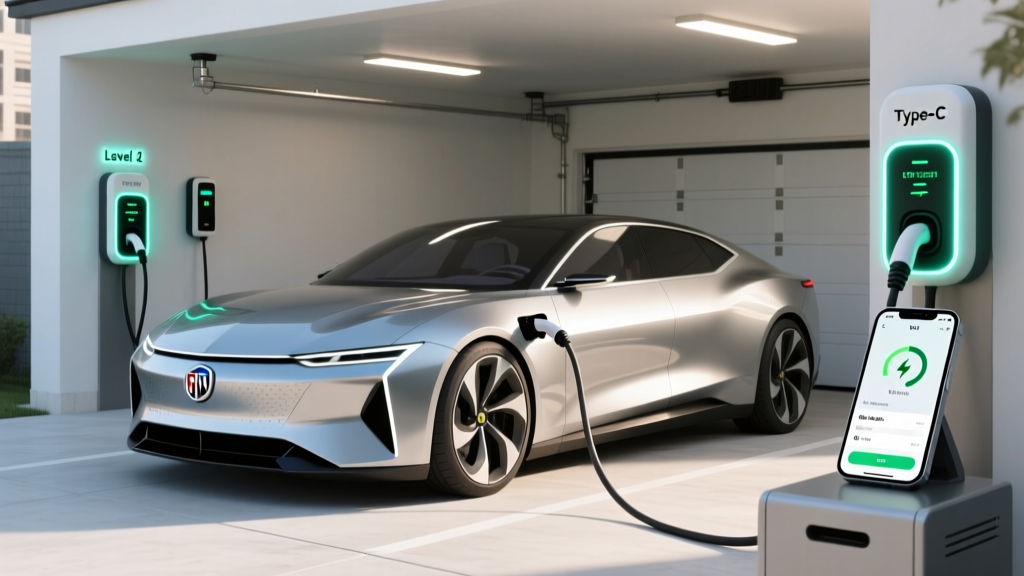
Charging Levels Explained: kW Speeds and Tesla Range Miles Per Hour
The single most important distinction in EV charging: kW (kilowatts) measures power—the rate at which energy flows into your battery. kWh (kilowatt-hours) measures energy—the total capacity stored. Think of kW as the width of a hose and kWh as the size of the bucket. A wider hose (higher kW) fills the bucket faster.
Tesla vehicles use different battery chemistries depending on trim. The Model 3 Rear-Wheel Drive uses a ~57.5 kWh LFP (lithium iron phosphate) battery, while Long Range and Performance variants use ~78-82 kWh NMC/NCA packs. This matters for charging habits—LFP batteries tolerate regular 100% charging, while NMC/NCA batteries last longer when daily-charged to 80-90%.
| Level | Voltage / Amperage | Max Power (kW) | Miles of Range Per Hour | Best Use Case |
|---|---|---|---|---|
| Level 1 (120V) | 120V / 12A | ~1.4 kW | 3-5 mi/hr | Overnight trickle, emergency top-off |
| Level 2 (240V) | 240V / 32-48A | 7.7-11.5 kW | 25-44 mi/hr | Daily home charging, workplace |
| DC Fast (Supercharger) | 400-800V DC | 170-250 kW | ~1,000 mi/hr (peak) | Road trips, rapid top-up |
Home Charger Installation: Electrical Requirements, Costs, and Panel Upgrades
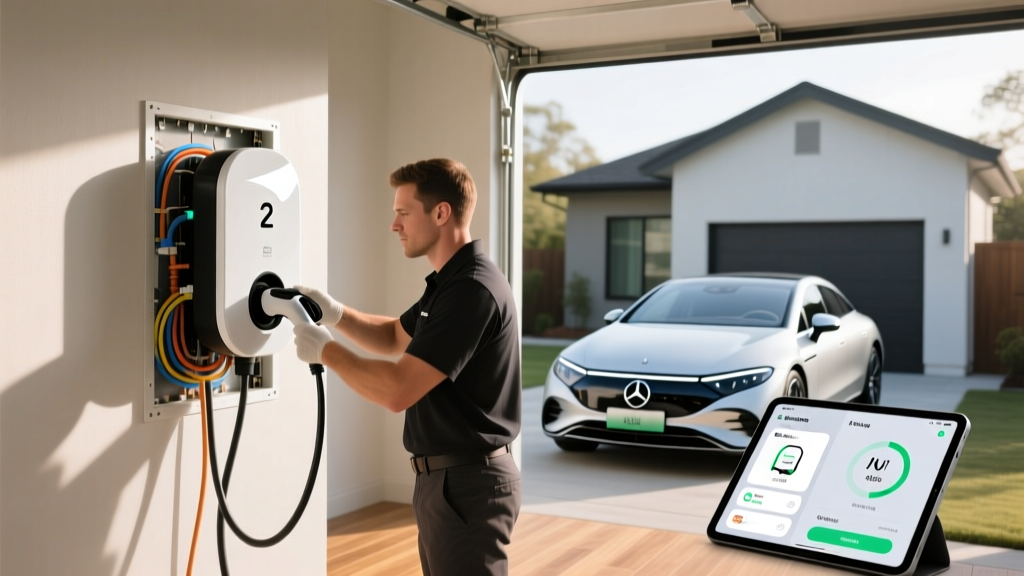
Installing a Level 2 home charger is the single most impactful upgrade for daily Tesla ownership. Here's exactly what's involved electrically and financially.
Electrical Requirements for Level 2 Charging
Tesla's Wall Connector and most third-party Level 2 chargers require a dedicated 240V circuit. The most common configurations:
- NEMA 14-50 outlet (50A circuit, 40A continuous): Delivers up to 9.6 kW. Most versatile—lets you unplug the charger and use the outlet for other 240V appliances.
- Hardwired 60A circuit (48A continuous): Delivers up to 11.5 kW. Tesla Wall Connector's maximum. Requires no outlet—wired directly to your panel.
- NEMA 6-50 outlet (50A circuit, 40A continuous): Similar to 14-50 but without a neutral wire. Common in older garages with existing dryer circuits.
Critical safety note: EV charging is a continuous load (3+ hours), so the National Electrical Code (NEC) requires circuits rated at 125% of the charger's draw. A 40A charger needs a 50A breaker. A 48A charger needs a 60A breaker. Never undersize the circuit.
Installation Cost Breakdown
| Component | Simple Install (Panel Nearby) | Complex Install (Panel Far / Upgrade Needed) |
|---|---|---|
| Level 2 Charger Equipment | $400-$650 | $400-$650 |
| Electrician Labor (2-6 hrs) | $500-$1,500 | $2,000-$5,000 |
| Electrical Permit | $50-$200 | $100-$300 |
| Conduit, Wire, Breaker | $100-$300 | $500-$1,500 |
| Panel Upgrade (if needed) | — | $1,500-$4,000 |
| Total Estimated Cost | $1,050-$2,650 | $4,500-$11,450 |
Connector Compatibility: NACS, CCS, and Adapter Requirements
As of 2026, the North American Charging Standard (NACS)—originally Tesla's proprietary connector—has become the dominant EV charging connector in the U.S. Tesla vehicles have always used NACS natively. For non-Tesla EVs, adapters are now widely available.
| Connector | Native Vehicles | Adapter Available? | DC Fast Charge Support |
|---|---|---|---|
| NACS (Tesla) | Tesla (all), Ford, GM, Rivian, Volvo, Polestar (2025+) | Yes (CCS-to-NACS) | Yes — up to 350 kW at compatible stations |
| CCS1 | Hyundai, Kia, BMW, VW, legacy non-Tesla EVs | Yes (NACS-to-CCS) | Yes — up to 350 kW |
| CHAdeMO | Nissan Leaf (legacy) | Limited | Yes — up to 100 kW (network shrinking) |
For Tesla owners: Your vehicle charges natively at all Tesla Superchargers and Destination Chargers. With a NACS-to-CCS adapter (~$150-$200 from Tesla or third parties), you can also use Electrify America, EVgo, and other CCS-equipped public networks—expanding your road-trip options significantly.
For non-Tesla EVs with NACS ports (2025+ models from Ford, GM, Rivian): You can access Tesla Superchargers directly. Older CCS-equipped vehicles need a CCS-to-NACS adapter to use the Supercharger network.
Cost to Charge: Per-Mile Economics vs. Gasoline
Charging cost depends entirely on where and when you plug in. Here are realistic 2026 scenarios using a Tesla Model Y Long Range (~78 kWh battery, EPA 310 mi, ~3.5 mi/kWh efficiency):
| Scenario | Rate ($/kWh) | Cost for 10-80% (54.6 kWh) | Cost Per Mile |
|---|---|---|---|
| Home Off-Peak (Time-of-Use) | $0.08-$0.12 | $4.37-$6.55 | $0.02-$0.03 |
| Home Standard Rate | $0.14-$0.18 | $7.64-$9.83 | $0.04-$0.05 |
| Public Level 2 (ChargePoint, etc.) | $0.20-$0.35 | $10.92-$19.11 | $0.06-$0.10 |
| Tesla Supercharger V3/V4 | $0.28-$0.42 | $15.29-$22.93 | $0.08-$0.12 |
| Electrify America DC Fast | $0.35-$0.55 | $19.11-$30.03 | $0.10-$0.16 |
Gas comparison: A comparable gas-powered crossover getting 28 MPG combined at $3.40/gallon costs $0.12 per mile in fuel alone. Home-charged Tesla owners pay $0.02-$0.05 per mile—a 60-85% fuel cost reduction. Even exclusive Supercharger users ($0.08-$0.12/mi) break even or save modestly versus gas, while gaining the convenience of home charging for daily driving.
For the latest state-specific electricity rates and utility EV time-of-use plans, the EPA's fuel economy site provides per-model efficiency data to calculate your local costs.
Charging Time Examples: 10-80% by Battery Size and Charger Type
Charging isn't linear. DC fast chargers deliver peak power (kW) only between roughly 10-50% State of Charge. Above 50%, the charge curve tapers to protect the battery. By 80%, speeds drop dramatically—which is why 10-80% is the standard benchmark rather than 0-100%.
| Model | Battery (Usable kWh) | Level 2 at 11.5 kW (48A) | V3 Supercharger (250 kW peak) | V4 Supercharger (est. 350 kW peak) |
|---|---|---|---|---|
| Model 3 RWD (LFP) | ~57.5 kWh | ~4.5 hours | ~25 min | ~20 min (est.) |
| Model 3 Long Range | ~78 kWh | ~5.5 hours | ~28 min | ~22 min (est.) |
| Model Y Long Range | ~78 kWh | ~5.5 hours | ~28 min | ~22 min (est.) |
| Model S Plaid | ~95 kWh | ~7 hours | ~35 min | ~27 min (est.) |
Recommended Home Charging Equipment for 2026
These chargers are selected for Tesla compatibility, build quality, smart features, and real-world reliability. All support NACS natively or via included adapter.
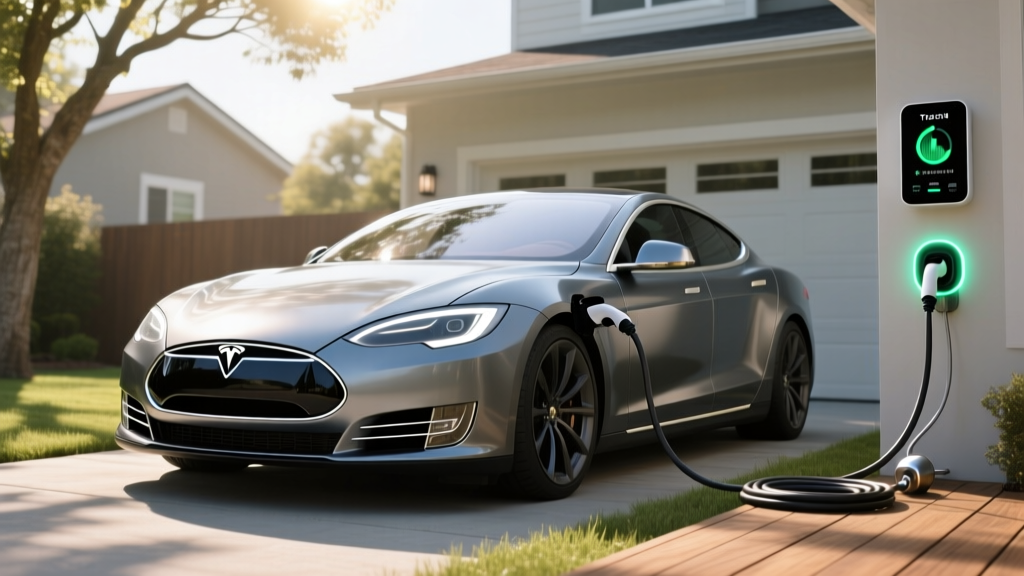
Tesla Wall Connector
- Power Output: Up to 11.5 kW (48A, hardwired 60A circuit)
- Connector: NACS (native Tesla)
- Cable Length: 24 ft
- Smart Features: Wi-Fi, OTA updates, Power-Sharing (link multiple units on one circuit), access control
- Price: ~$475
- Best For: Tesla-only households wanting maximum speed and ecosystem integration
ChargePoint Home Flex
- Power Output: Up to 12 kW (50A, configurable 16-50A)
- Connector: NACS or J1772 (select at purchase); CCS adapter included
- Cable Length: 23 ft
- Smart Features: Wi-Fi, app scheduling, Alexa integration, energy tracking
- Price: ~$550-$650
- Best For: Multi-EV households (Tesla + non-Tesla) needing flexible amperage
Grizzl-E Smart
- Power Output: Up to 10 kW (40A, NEMA 14-50)
- Connector: J1772 (NACS adapter required for Tesla) or NACS version available
- Cable Length: 24 ft
- Smart Features: Wi-Fi, OCPP support, adjustable amperage, extreme-weather rated (-40°F)
- Price: ~$450-$550
- Best For: Cold-climate garages and budget-conscious buyers
Emporia Vue Level 2
- Power Output: Up to 11.5 kW (48A, hardwired)
- Connector: NACS or J1772
- Cable Length: 24 ft
- Smart Features: Wi-Fi, solar integration, real-time energy monitoring, load management
- Price: ~$400-$500
- Best For: Solar-panel owners wanting charger-to-inverter integration
Safety, Electrical Code, and Permit Requirements
Level 2 EV charging draws sustained high current for hours—more similar to running an electric furnace than plugging in a phone. Proper installation isn't optional.
- Dedicated circuit required: Your EV charger must have its own breaker—never share a circuit with other high-draw appliances.
- GFCI protection: The 2020 NEC (and subsequent updates adopted by most states by 2026) requires GFCI protection for all EV charging outlets. Hardwired chargers typically have GFCI built into the unit. If using a NEMA 14-50 outlet, your electrician must install a GFCI breaker ($60-$120 additional).
- Outdoor rating: If your charger is mounted outside or in an open carport, it must carry a NEMA 4 (weatherproof) rating. All chargers listed above meet this standard.
- Permit and inspection: Most U.S. jurisdictions require an electrical permit for EV charger installation. The permit ensures a city/county inspector verifies the work. Cost: $50-$300 depending on locality. Skipping the permit risks insurance claim denial if an electrical fire occurs.
- Utility notification: Some utilities require you to notify them before installing a Level 2 charger, especially if you want a time-of-use (TOU) rate plan with discounted off-peak charging. Many offer rebates of $250-$1,000 for installation.
Frequently Asked Questions
How much does it cost to install a home EV charger?
A straightforward installation with your electrical panel near the garage typically costs $1,050-$2,650 total (equipment + electrician + permit + materials). If your panel is far from the garage or needs an upgrade from 100A to 200A service, expect $4,500-$11,450. Always get 2-3 quotes from licensed electricians who have specific EV charger installation experience.
How fast will each charging level add range to my Tesla?
Level 1 (120V) adds 3-5 miles per hour—suitable only for overnight trickle charging of ~30-50 miles. Level 2 (240V, 48A) adds 25-44 miles per hour, enough to fully replenish a day's driving in 1-3 hours. DC Fast Charging (Supercharger) adds roughly 1,000 miles per hour at peak power, delivering 200+ miles in a 20-25 minute session.
Which connector and charger is compatible with my Tesla?
All Tesla vehicles use the NACS connector natively. For home charging, the Tesla Wall Connector (NACS, 11.5 kW) is the most seamless option. Third-party chargers like the ChargePoint Home Flex are also available in NACS versions. To use CCS-equipped public chargers (Electrify America, EVgo), you'll need a NACS-to-CCS adapter (~$150-$200).
How much does charging cost per mile vs. gas?
Home charging on off-peak rates costs $0.02-$0.03 per mile for a Tesla Model Y—roughly 75-85% cheaper than a 28 MPG gas vehicle at $3.40/gallon ($0.12/mile). Even exclusive Supercharger use ($0.08-$0.12/mile) matches or beats gasoline. Over 15,000 annual miles, home charging saves $1,200-$1,500 per year in fuel costs.
What electrical upgrades might I need for a home charger?
The most common upgrade is a panel capacity increase. If your home has a 100A or 125A panel and you're adding a 50-60A EV circuit, a load calculation may show you need a 200A upgrade ($1,500-$4,000). Other potential needs: running new conduit from the panel to the garage ($5-$15/foot), upgrading the meter base, or installing a sub-panel if the main panel is full. A licensed electrician's load calculation is the definitive answer—never guess on circuit capacity.