Why Your Charger Choice Directly Impacts Tesla Range Mileage
Your Tesla's EPA-rated range is only half the equation. How you charge — the speed, the frequency of DC fast charging, and whether you precondition properly — shapes the real-world Tesla range mileage you'll actually experience over years of ownership. A 2026 Model Y Long Range carries an EPA estimate of 320 miles, but owners who rely exclusively on Superchargers and skip battery care best practices may see 8-12% more degradation over five years compared to those using a properly configured Level 2 home charger with smart scheduling.
This guide breaks down every charging tier, the exact electrical work your home needs, which NACS-compatible equipment to buy in 2026, and the real cost-per-mile math versus gasoline — all framed around preserving the range you paid for.
Charging Levels Explained: Speed, Range Added, and Real-World Times
| Level | Voltage / Phase | Power (kW) | Miles of Range Added per Hour | 10–80% Time (75 kWh Pack) | Best Use Case |
|---|---|---|---|---|---|
| Level 1 | 120V / Single | 1.0–1.4 kW | 3–5 mi/hr | ~50+ hours (impractical) | Emergency / overnight trickle for PHEVs |
| Level 2 (Home) | 240V / Single | 7.2–11.5 kW | 25–44 mi/hr | 5–7 hours | Daily home charging — recommended for battery health |
| Level 2 (Public/Commercial) | 208–240V | 11.5–19.2 kW | 44–52 mi/hr | 4–5.5 hours | Workplace, destination charging |
| DC Fast (Supercharger V3) | 400V DC | Up to 250 kW | ~170 mi in 15 min | ~25–28 minutes | Road trips, rapid top-ups |
| DC Fast (Supercharger V4) | 800V DC | Up to 350 kW (capable) | ~200 mi in 15 min | ~18–22 minutes | Newer architecture Teslas, future-proofed |
The Charging Curve Reality
DC fast charging does not sustain peak speed. A Supercharger V3 may deliver 250 kW at 10% state of charge (SoC), but by 50% SoC it tapers to roughly 100–120 kW, and above 80% it drops below 50 kW. This is why manufacturers quote 10–80% times rather than 0–100%. Charging from 80–100% on DC fast can take as long as 10–80%. For daily driving, set your charge limit to 80% (or 100% for LFP-equipped Model 3/Y RWD trims, which Tesla recommends charging fully at least weekly) and reserve 100% for road trips.
Home Charger Installation: Electrical Requirements, Costs, and Panel Upgrades
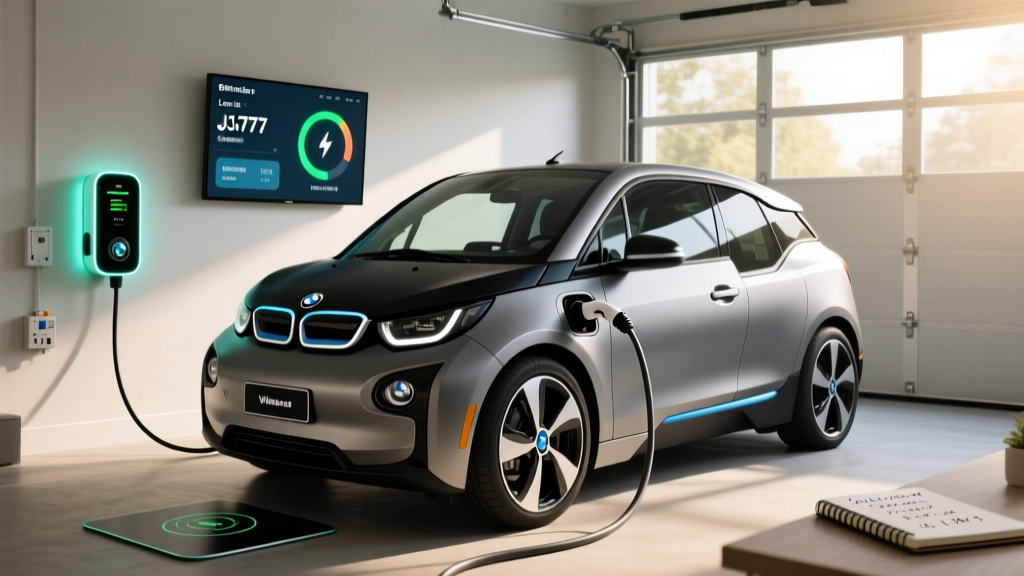
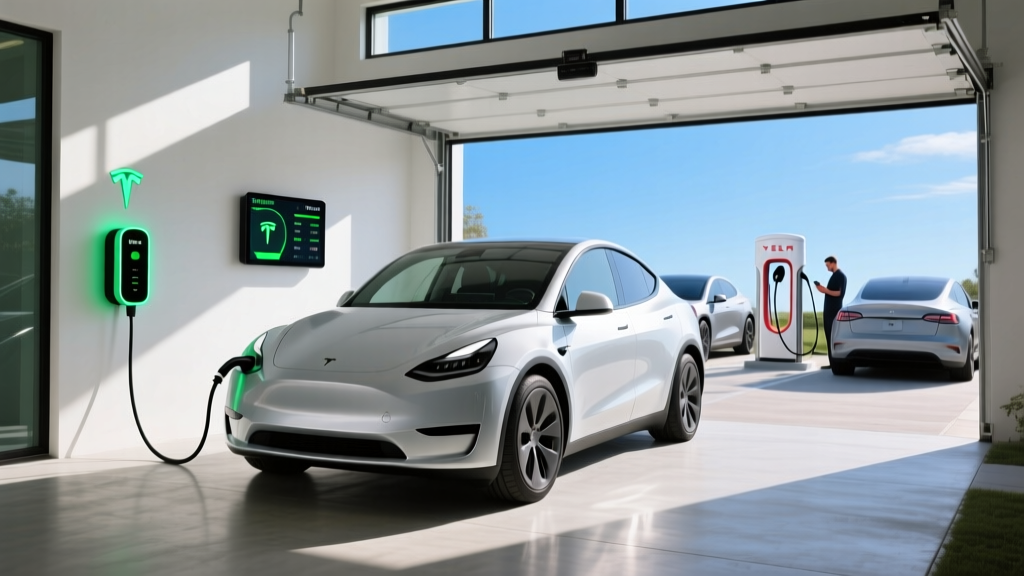
Installing a Level 2 home charger is the single highest-impact upgrade for preserving your Tesla range mileage over time. Slow, steady Level 2 charging generates less heat stress on battery cells than frequent DC fast charging, and the convenience of a full battery every morning eliminates range-compromise behavior.
Electrical Requirements
A full-speed Level 2 Tesla Wall Connector requires a 240V dedicated circuit at 60 amps, delivering up to 11.5 kW (48 amps continuous draw — electrical code requires circuits rated 125% above continuous load). If your electrical panel lacks capacity, a 40-amp circuit (9.6 kW / 32 amps continuous) is the next standard size down and still provides roughly 35 miles of range per hour of charging.
Homes built before 1990 often have 100-amp main panels that may be near capacity. Upgrading to a 200-amp panel typically costs $1,500–$3,000 before the charger circuit is even added. This is the single biggest variable in home charging cost — get a load calculation from a licensed electrician before committing.
| Component | Simple Install (Panel Adjacent) | Complex Install (Long Run / Panel Upgrade) |
|---|---|---|
| Level 2 Charger Equipment | $400–$600 | $400–$600 |
| Electrician Labor (2–4 hrs simple / 6–10 hrs complex) | $300–$700 | $900–$2,000 |
| Electrical Permit | $50–$150 | $50–$200 |
| Conduit, Wiring (6 AWG copper for 60A), Hardware | $50–$150 | $200–$600 |
| Panel Upgrade (if needed: 100A → 200A) | $0 | $1,500–$3,000 |
| Total Estimated Cost | $800–$1,600 | $3,050–$6,400 |
Safety and Code Considerations
- Dedicated circuit: Your Level 2 charger must have its own breaker — never share a circuit with appliances like a dryer or oven.
- GFCI protection: The 2023 NEC (adopted in most jurisdictions by 2026) requires GFCI protection for all EV charging outlets. Hardwired chargers (like the Tesla Wall Connector) often have built-in GFCI, eliminating the need for a GFCI breaker.
- Outdoor rating: If your charger is mounted outside or in an unsealed garage, ensure it carries a NEMA 4 or IP65 rating. The Tesla Wall Connector and ChargePoint Home Flex are both rated for outdoor use.
- Cable management: A 24-foot cable is the practical minimum for reaching all parking orientations; the Wall Connector ships with an 18-foot or 24-foot option.
Connector Compatibility: NACS, CCS, and the Adapter Landscape in 2026
Tesla's North American Charging Standard (NACS) has become the dominant connector in North America. As of 2026, every new Tesla ships with a native NACS port, and nearly every other major automaker (Ford, GM, Rivian, Hyundai, Kia, BMW, Mercedes, Volvo) has adopted NACS on new vehicles. The older CCS1 connector persists on many 2022–2025 non-Tesla EVs still on the road, and CHAdeMO remains only on the Nissan Leaf and a handful of legacy models.
| Connector | Native Vehicles | DC Fast Network Access | Adapter Needed? |
|---|---|---|---|
| NACS (Tesla) | All Tesla models; Ford F-150 Lightning / Mustang Mach-E (2025+); GM Ultium vehicles (2025+); Rivian R1T/R1S (2025+); Hyundai Ioniq 5/6 (2026+); Kia EV6/EV9 (2026+); BMW, Mercedes, Volvo new EVs | Tesla Supercharger network (20,000+ stalls); Electrify America, EVgo adding NACS | CCS→NACS adapter for older CCS vehicles accessing Superchargers (~$200–$250) |
| CCS1 | 2022–2025 non-Tesla EVs (Hyundai, Kia, VW ID.4, BMW i4 pre-adoption) | Electrify America, EVgo, ChargePoint DC network | NACS→CCS adapter if accessing Superchargers (limited availability) |
| CHAdeMO | Nissan Leaf (discontinued after 2025 model year) | Declining network; some Electrify America stalls | No practical adapter to NACS/CCS for DC fast charging |
For Tesla owners, the ecosystem is straightforward: your native NACS port connects to every Supercharger stall and, with Tesla's Magic Dock adapter built into many Superchargers, you can also charge non-Tesla CCS vehicles at select locations. If you drive a non-Tesla EV with a CCS port and want Supercharger access, Ford and GM provide approved CCS-to-NACS adapters — verify compatibility with your specific model year before purchasing.
Cost to Charge: Per-Mile Economics vs. Gasoline
The financial case for home charging is overwhelming when you compare it to gasoline. Here's the math for a 2026 Tesla Model Y Long Range (75 kWh usable battery, ~3.5 miles per kWh efficiency):
| Scenario | Rate | Cost for Full 75 kWh Charge | Cost per Mile (at 3.5 mi/kWh) |
|---|---|---|---|
| Home — Off-Peak Utility Rate (overnight) | $0.08–$0.12/kWh | $6.00–$9.00 | $0.023–$0.034 |
| Home — Standard Residential Rate | $0.14–$0.18/kWh | $10.50–$13.50 | $0.040–$0.051 |
| Public Level 2 (ChargePoint, workplace) | $0.20–$0.35/kWh | $15.00–$26.25 | $0.057–$0.100 |
| Tesla Supercharger (DC Fast) | $0.28–$0.40/kWh | $21.00–$30.00 | $0.080–$0.114 |
| Gasoline Equivalent (25 MPG vehicle at $3.40/gal) | $3.40/gallon | $35.88 (for ~262 mi equivalent) | $0.136 |
Even at the most expensive Supercharger rates, your Tesla costs roughly 15–20% less per mile than a 25 MPG gasoline car. At home off-peak rates, you're paying 75–80% less per mile than gasoline. Over 15,000 annual miles, that's a savings of $1,200–$1,700 per year by charging primarily at home.
Many utilities offer time-of-use (TOU) plans specifically designed for EV owners. Enrolling in a TOU plan and scheduling charging between 11 PM and 6 AM (when demand is lowest) can cut your per-kWh cost to $0.06–$0.09 in many regions. Your Tesla's built-in scheduled charging feature handles this automatically.
Best Level 2 Home Chargers for Tesla Owners in 2026
Tesla Wall Connector (Gen 4)
Power Output: Up to 11.5 kW (48A) on a 60A circuit
Connector: Native NACS
Cable Length: 24 feet
Smart Features: Wi-Fi, OTA firmware updates, Tesla app integration, load sharing between two units on one circuit, access control
Price: ~$475
Verdict: The default choice for Tesla-only households. Seamless integration, fastest Level 2 speed available, and the cleanest install since no adapter is needed.
ChargePoint Home Flex (2nd Gen)
Power Output: Up to 12 kW (50A) on a 60A circuit; adjustable down to 16A for smaller panels
Connector: NACS (2025+ models); J1772 with NACS adapter for older units
Cable Length: 24 feet
Smart Features: Wi-Fi, ChargePoint app with scheduling and cost tracking, Alexa integration, flexible amperage dip-switch settings
Price: ~$550–$650
Verdict: Best for multi-EV households with a mix of Tesla and non-Tesla vehicles (with adapter). The adjustable amperage is invaluable for homes with limited panel capacity.
Emporia Level 2 EV Charger
Power Output: Up to 11.5 kW (48A) on a 60A circuit
Connector: NACS (2025+ models)
Cable Length: 24 feet
Smart Features: Wi-Fi, Emporia energy monitoring ecosystem integration (pairs with Emporia Vue home energy monitor for real-time cost tracking), scheduling, solar-charging integration
Price: ~$399–$449
Verdict: Best value pick. Ideal if you have or plan to install solar and want to track exactly how much of your charging is solar-powered vs. grid-sourced.
Grizzl-E Smart (United Chargers)
Power Output: Up to 10 kW (40A) on a 50A circuit
Connector: NACS adapter available; native J1772 with included adapter
Cable Length: 24 feet
Smart Features: Wi-Fi, OCPP protocol support (future-proof for utility demand-response programs), adjustable output, extreme cold rating (-40°F)
Price: ~$499–$549
Verdict: Built for harsh climates. If you charge in an unheated garage or outdoor mount in northern states, the Grizzl-E's rugged construction and cold-weather certification make it a standout.
Preserving Tesla Range Mileage: Charging Habits That Protect Your Battery
Battery degradation is real but manageable. Tesla's battery warranty guarantees 70% capacity retention over 8 years or 120,000 miles (whichever comes first) for Long Range and Performance models, and 8 years/100,000 miles for RWD models with LFP batteries. Real-world data from fleet analyses shows most Tesla batteries retain 88–92% capacity at 100,000 miles when owners follow these practices:
- Charge to 80% daily (for NMC battery packs in Long Range/Performance models). Set your Tesla's charge limit to 80% and only raise it to 100% when departing on a road trip.
- LFP owners: charge to 100% at least once a week. The Model 3 and Model Y RWD trims use lithium iron phosphate (LFP) batteries, which tolerate full charges better and actually benefit from periodic 100% calibration.
- Minimize DC fast charging frequency. Occasional Supercharging is fine — Tesla's thermal management system is excellent — but daily DC fast charging accelerates degradation by an estimated 2–4% over five years compared to exclusive Level 2 charging.
- Use preconditioning. When you set a departure time in the Tesla app, the car warms or cools the battery to optimal temperature before you drive and before scheduled charging begins. This improves charging speed and reduces cell stress.
- Avoid storing at extreme SoC. If leaving your Tesla for more than a week, set the charge limit to 50% and leave it plugged in. Storing at 100% or below 10% for extended periods accelerates degradation.
Frequently Asked Questions
How much does it cost to install a home EV charger for my Tesla?
A straightforward Level 2 installation with an existing 200-amp panel and a short conduit run costs $800–$1,600 including the Tesla Wall Connector ($475), electrician labor, permit, and materials. If your home needs a panel upgrade from 100A to 200A, total costs rise to $3,050–$6,400. Always get a load calculation from a licensed electrician first — some homes have more capacity than owners assume.
How fast will each charging level add range to my Tesla?
Level 1 (120V) adds 3–5 miles per hour — essentially useless for a full-size EV. Level 2 (240V, 48A) adds 35–44 miles per hour, fully replenishing a 75 kWh pack overnight. DC fast charging at a Supercharger V3 adds up to 170 miles in 15 minutes, though the charge curve tapers significantly above 50% SoC.
Which connector and charger are compatible with my Tesla?
All Tesla vehicles use the NACS connector natively. For home charging, the Tesla Wall Connector provides the fastest Level 2 speed (11.5 kW) without any adapter. Third-party chargers like the ChargePoint Home Flex now offer native NACS cables. For public DC fast charging, your Tesla connects directly to Superchargers and, increasingly, to Electrify America and EVgo stations adding NACS cables.
How much does charging a Tesla cost per mile compared to gas?
Charging at home on an off-peak utility rate ($0.10/kWh) costs roughly $0.029 per mile in a Model Y Long Range. The 2026 US average for gasoline ($3.40/gal in a 25 MPG car) works out to $0.136 per mile — nearly 5x more expensive. Even Supercharging at $0.35/kWh costs about $0.10 per mile, still a 26% savings over gas.
What electrical upgrades might I need for a home charger?
The most common upgrade is a panel capacity increase from 100A to 200A ($1,500–$3,000). Homes with 200A panels usually have sufficient headroom for a 60A charger circuit. If your panel is full but rated 200A, a sub-panel addition ($400–$800) or a smart load management device like the Emporia Smart Panel ($300–$500 installed) can dynamically reduce charger draw when other appliances cycle on, avoiding a full panel upgrade.
Does frequent Supercharging hurt my Tesla's battery range over time?
Moderately. Tesla's battery management system actively cools and manages cell temperature during DC fast charging, which limits damage. However, fleet data suggests vehicles that Supercharge more than 3–4 times per week show approximately 2–4% additional degradation at 100,000 miles compared to those that charge primarily on Level 2. For preserving maximum Tesla range mileage, treat Supercharging as a road-trip tool, not a daily routine.
Sources: EPA Fuel Economy — Tesla Model Y; Tesla Home Charger Installation Guide; IRS §30D Clean Vehicle Credit