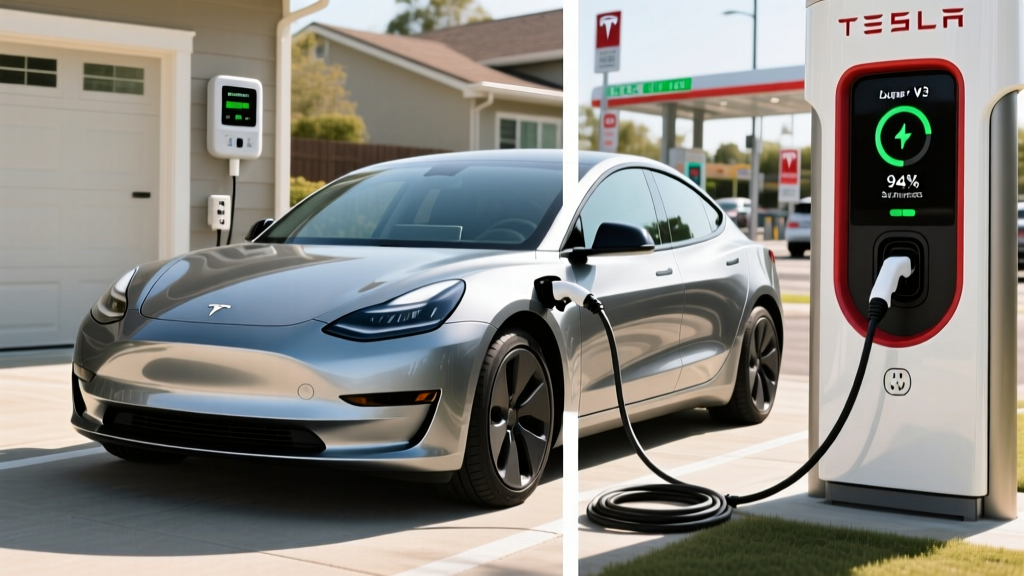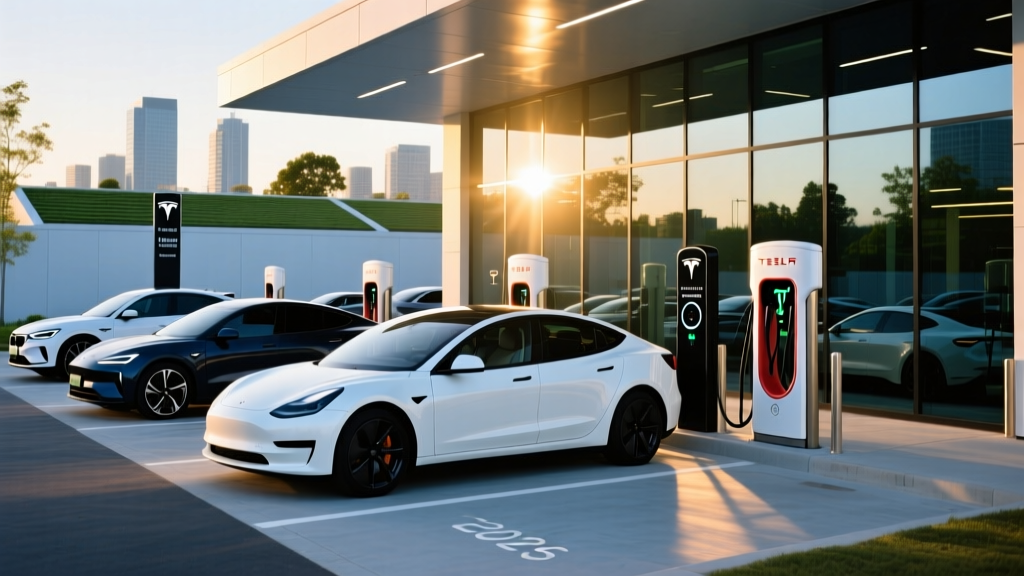
If you've searched for "Tesla-only Superchargers" while planning a road trip or considering an EV purchase, you've stumbled onto one of the most rapidly shifting landscapes in automotive history. As of 2026, Tesla's Supercharger network — once the walled garden that gave Tesla owners a massive charging advantage — has largely opened to rival EVs via the North American Charging Standard (NACS). But the transition hasn't been uniform, and understanding where Tesla-only Superchargers still exist, what adapters you need, and how home charging stacks up is critical to making a smart EV purchase.
This guide breaks down every layer of EV charging — from the 120V outlet in your garage to 350 kW DC fast chargers on the interstate — with exact numbers on speed, cost, installation, and equipment. Whether you drive a Tesla, a Ford F-150 Lightning, a Hyundai Ioniq 5, or a Nissan Ariya, you'll leave knowing exactly how to charge efficiently and what it will cost.
Charging Levels Explained: Speeds in kW and Miles Per Hour
The single most important distinction in EV charging is between kW (kilowatts) and kWh (kilowatt-hours). kW measures power — how fast energy flows into your battery, like water pressure from a hose. kWh measures energy — the total amount stored, like gallons in a tank. A 10 kW charger delivers 10 kWh of energy in one hour. Confusing the two is the most common EV literacy mistake.
| Level | Voltage | Power (kW) | Miles Added/Hour | Best For |
|---|---|---|---|---|
| Level 1 | 120V AC | 1.0–1.4 kW | 3–5 mi/hr | Overnight top-ups, PHEVs, emergencies |
| Level 2 | 240V AC | 3.3–19.2 kW | 12–75 mi/hr | Daily home charging, workplaces, destinations |
| DC Fast Charge | 400–800V DC | 50–350 kW | 150–1,200+ mi/hr (peak) | Road trips, rapid top-ups, commercial fleets |
Real-world context: A Level 2 home charger at 11.5 kW (48 amps) will fully replenish a Tesla Model Y Long Range (78 kWh usable battery) from 10% to 90% in roughly 6.5 hours — perfect for overnight charging. A 250 kW DC fast charger can add 200 miles to that same Model Y in about 15 minutes, but only during the peak portion of the charge curve. Charging slows significantly above 80% state of charge (SoC) to protect the battery, so a 10–80% session is the practical benchmark.
Are Superchargers Still Tesla-Only in 2026?
The short answer: mostly no, but it depends on the station and your vehicle's connector.
Starting in 2024, Tesla began opening its Supercharger network to non-Tesla EVs through the NACS (North American Charging Standard) connector. By 2026, the majority of new Supercharger stalls include the NACS connector natively, and most major automakers — Ford, GM, Rivian, Volvo, Polestar, Mercedes-Benz, and others — have adopted NACS as their standard charging port. Vehicles that shipped with CCS1 ports (like the Hyundai Ioniq 5 through 2024 and the VW ID.4) can access Superchargers using a Tesla-approved CCS-to-NACS adapter.
However, some older Supercharger stations — particularly those built before 2023 — may still operate with Tesla-proprietary connectors only, without the NACS adapter cable or the software handshake needed to authenticate non-Tesla vehicles. These are the "Tesla-only Superchargers" you may encounter in rural areas or at legacy installations. Tesla has been retrofitting these stations, but the rollout is uneven.
How to check: The Tesla app and in-car navigation now label each Supercharger station with its connector type. Stations marked "NACS Open" accept non-Tesla vehicles. Stations without this label remain Tesla-only. Third-party apps like PlugShare and A Better Routeplanner (ABRP) also flag connector availability.
Connector Compatibility: NACS, CCS1, and CHAdeMO
North America currently has three active DC fast-charging connector standards. Here's what you need to know:
| Connector | Used By | Max DC Fast Rate | Network Access |
|---|---|---|---|
| NACS (Tesla) | Tesla (all), Ford, GM, Rivian, Volvo, Polestar, Mercedes (2025+), Honda (2025+), Hyundai/Kia (2025+) | Up to 350 kW | Tesla Supercharger, Electrify America (select), EVgo, ChargePoint |
| CCS1 | Hyundai/Kia (pre-2025), VW ID.4, BMW iX, older Ford/GM EVs | Up to 350 kW | Electrify America, EVgo, ChargePoint, Tesla (via adapter) |
| CHAdeMO | Nissan Leaf (legacy), Mitsubishi Outlander PHEV | Up to 100 kW | Limited — being phased out |
Adapter reality check: If you drive a CCS1-equipped EV and want Supercharger access, you'll need a Tesla-approved CCS-to-NACS adapter, typically $150–$250. Not all adapters are equal — cheap third-party adapters may not support full charge speeds or may fail to authenticate at the stall. Stick with the OEM adapter from your vehicle manufacturer or Tesla's official adapter.
CHAdeMO is effectively a dead standard for new vehicles. If you own a Nissan Leaf with CHAdeMO, your public fast-charging options are shrinking as networks prioritize NACS and CCS1.
Home Charger Installation: Requirements, Costs, and Panel Upgrades
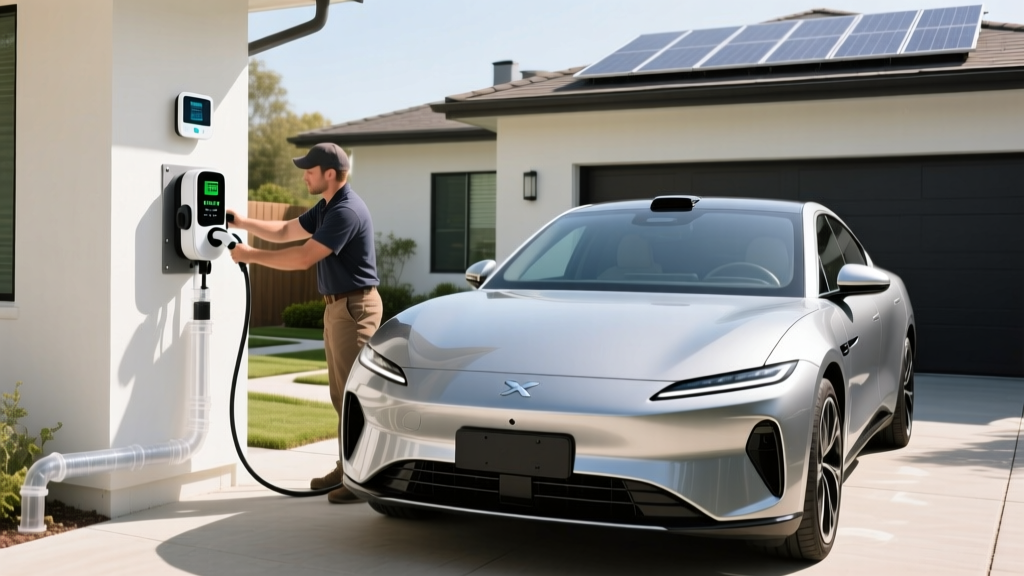
Installing a Level 2 home charger is the single best upgrade for EV ownership. Here's what's involved electrically and financially.
Electrical Requirements
A typical Level 2 home charger requires a 240V dedicated circuit, similar to what powers an electric dryer or oven. The most common setups:
- 40-amp circuit (32A continuous): Delivers up to 7.7 kW. Sufficient for most overnight charging.
- 50-amp circuit (40A continuous): Delivers up to 9.6 kW. Ideal for larger batteries (F-150 Lightning, Rivian R1T).
- 60-amp circuit (48A continuous): Delivers up to 11.5 kW. Fastest common residential setup.
- 80-amp circuit (64A continuous): Delivers up to 15.4–19.2 kW. Requires a 200A+ panel; overkill for most homes.
Panel upgrade warning: Many homes built before 2000 have 100-amp electrical panels. Adding a 50-amp EV circuit to an already-loaded 100A panel may require a panel upgrade to 200 amps, which costs $1,500–$4,000 depending on your utility and local code. Always have a licensed electrician perform a load calculation before committing to a charger circuit. Per the National Electrical Code (NEC), EV circuits must be dedicated — you cannot share the circuit with other appliances.
| Component | Cost Range | Notes |
|---|---|---|
| Level 2 Charger (Equipment) | $300–$800 | Varies by brand, power, smart features |
| Electrician Labor | $500–$2,500 | Depends on panel proximity, conduit run length |
| Electrical Permit | $50–$300 | Required in most jurisdictions |
| Panel Upgrade (if needed) | $1,500–$4,000 | 100A to 200A upgrade; not always required |
| Total (no panel upgrade) | $850–$3,600 | Typical for most modern homes |
| Total (with panel upgrade) | $2,350–$7,600 | Older homes with 100A panels |
Federal incentive: The IRS Residential Clean Energy Credit (§25C) covers 30% of home EV charger equipment and installation costs, up to $1,000. This is separate from the §30D vehicle tax credit. Check irs.gov for current-year eligibility rules, as income limits and equipment requirements can change.
Cost to Charge: Home vs. Public vs. DC Fast Charging
Charging cost varies enormously depending on where and when you plug in. Here's how the numbers break down for a typical midsize EV (like a Tesla Model Y or Hyundai Ioniq 5) averaging 3.5 miles per kWh:
| Charging Scenario | Cost per kWh | Cost per Mile | Gas Equivalent (MPG at $3.50/gal) |
|---|---|---|---|
| Home (off-peak utility rate) | $0.08–$0.14 | $0.023–$0.040 | 88–152 MPG |
| Home (standard rate, no TOU) | $0.13–$0.20 | $0.037–$0.057 | 61–95 MPG |
| Public Level 2 (workplace/mall) | $0.20–$0.49 | $0.057–$0.140 | 25–61 MPG |
| DC Fast (Electrify America, EVgo) | $0.35–$0.65 | $0.100–$0.186 | 19–35 MPG |
| Tesla Supercharger (varies by location) | $0.25–$0.55 | $0.071–$0.157 | 22–49 MPG |
The takeaway: Home charging on an off-peak rate is 3–6x cheaper per mile than gasoline. Even DC fast charging at highway rates is often cheaper than a 25 MPG gas car. But if you rely exclusively on expensive public DC fast chargers, your fuel savings narrow considerably. According to fueleconomy.gov, the average EV achieves 97–130 MPGe combined, translating to massive savings when charged at home.
Pro tip: Many utilities offer time-of-use (TOU) plans that drop electricity rates to $0.06–$0.10/kWh between midnight and 6 AM. Scheduling your EV to charge overnight on a TOU plan is the cheapest way to fuel any vehicle on the road.
Charging Time Examples: 10–80% for Common Battery Sizes
DC fast charging speed depends on the vehicle's onboard charge acceptance rate, the station's peak output, battery temperature, and the charge curve. Peak kW is never sustained — charging tapers as the battery fills. Here are realistic 10–80% times for popular 2026 EVs:
- Tesla Model Y Long Range (78 kWh, NMC): Peaks at 250 kW on V3 Superchargers; 10–80% in ~25 minutes.
- Hyundai Ioniq 5 (77.4 kWh, NMC, 800V architecture): Peaks at 240 kW on compatible 350 kW chargers; 10–80% in ~18 minutes.
- Ford F-150 Lightning Extended Range (131 kWh, NMC): Peaks at 150 kW; 10–80% in ~41 minutes due to massive battery.
- Chevrolet Equinox EV (85 kWh, NMC): Peaks at 150 kW; 10–80% in ~30 minutes.
- Tesla Cybertruck (123 kWh, NMC): Peaks at 250 kW; 10–80% in ~35 minutes.
Cold-weather caveat: In sub-freezing temperatures, battery chemistry slows ion movement, reducing charge acceptance. Without preconditioning (warming the battery before arrival at the charger), expect 10–80% times to increase by 30–50%. Tesla's navigation system automatically preconditioning when you route to a Supercharger is a significant real-world advantage. Most non-Tesla EVs now offer preconditioning as well — use it.
Recommended Home EV Chargers for 2026
Not all Level 2 chargers are created equal. Here are top picks based on power output, connector type, smart features, build quality, and value:
Emporia Level 2 Smart Charger
- Power: 11.5 kW (48A)
- Connector: J1772 (NACS adapter included or available)
- Cable length: 24 ft
- Smart features: Wi-Fi, app scheduling, solar integration, energy monitoring
- Price: ~$399
- Best for: Budget-conscious buyers who want smart scheduling and energy tracking
ChargePoint Home Flex
- Power: Up to 12 kW (50A, adjustable down to 16A)
- Connector: J1772 or NACS (select at purchase)
- Cable length: 23 ft
- Smart features: Wi-Fi, Alexa, app scheduling, flexible amperage
- Price: ~$649
- Best for: Homes with variable panel capacity — adjustable amperage avoids panel upgrades
Tesla Wall Connector
- Power: Up to 11.5 kW (48A)
- Connector: NACS native (J1772 adapter available separately)
- Cable length: 24 ft
- Smart features: Wi-Fi, OTA updates, power sharing (link multiple units on one circuit), Tesla app integration
- Price: ~$475
- Best for: Tesla owners who want seamless integration and clean aesthetics
Grizzl-E Smart
- Power: Up to 9.6 kW (40A)
- Connector: J1772 (NACS adapter available)
- Cable length: 24 ft
- Smart features: Wi-Fi, OCPP-compatible, rugged outdoor-rated enclosure
- Price: ~$499
- Best for: Outdoor installations in harsh climates — built in Canada, rated to -40°F
Safety, Code, and Installation Best Practices
EV charging involves sustained high-current draw — more like running a welder than plugging in a phone. Safety and code compliance are non-negotiable:
- Dedicated circuit: Your EV charger must have its own breaker — no sharing with outlets or appliances. The NEC requires this for all hardwired and plug-in EVSE above 16A.
- GFCI protection: The 2023 NEC update requires GFCI (Ground Fault Circuit Interrupter) protection for all outdoor EV receptacles. Many modern chargers have built-in GFCI; confirm with your electrician.
- Outdoor rating: If mounting outside, ensure the charger is rated NEMA 4 (weather-resistant). Indoor-only units will fail in rain or snow.
- NEMA 14-50 vs. hardwired: Plug-in chargers using a NEMA 14-50 outlet offer portability, but hardwired installations are generally safer for sustained high-current use and may be required for circuits above 50A in some jurisdictions.
- Permit and inspection: Most municipalities require an electrical permit and post-installation inspection. Skipping this can void your homeowner's insurance in the event of an electrical fire.
Load management: If your panel is near capacity but you don't want to pay for an upgrade, consider a smart charger with load-management features (like the ChargePoint Home Flex or Emporia). These devices communicate with your panel and automatically reduce charge rate when other high-draw appliances are running, keeping you under your panel's limit without a costly upgrade.
Frequently Asked Questions
How much does it cost to install a home EV charger?
Expect $850–$3,600 for a standard installation in a home with a 200A panel and a nearby garage. If your home has a 100A panel that needs upgrading, total costs can reach $2,350–$7,600. The IRS §25C credit covers 30% of equipment and installation up to $1,000.
How fast will each charging level add range?
Level 1 (120V): 3–5 miles per hour. Level 2 (240V): 12–75 miles per hour depending on amperage. DC Fast Charging: 150–1,200+ miles per hour at peak, but sessions are typically measured in minutes (10–80% in 18–41 minutes for most EVs).
Which connector/charger is compatible with my EV?
Check your vehicle's charge port. 2025+ Teslas, Fords, GMs, Rivians, and most new EVs use NACS. Older Hyundai, Kia, VW, and BMW EVs use CCS1 — you'll need a CCS-to-NACS adapter ($150–$250) for Supercharger access. Nissan Leaf uses CHAdeMO, which is being phased out.
How much does charging cost per mile vs gas?
Home charging at off-peak rates costs $0.02–$0.04 per mile — equivalent to 88–152 MPG at $3.50/gallon gas. Even public DC fast charging at $0.48/kWh works out to roughly $0.14/mile, comparable to a 25 MPG car. Gas at $3.50/gallon in a 25 MPG car costs $0.14/mile.
What electrical upgrades might I need?
The most common upgrade is a panel increase from 100A to 200A ($1,500–$4,000). You may also need a new conduit run from the panel to the charger location ($300–$1,200 depending on distance), a new breaker, and GFCI protection. A licensed electrician's load calculation will determine exactly what's required. According to the National Fire Protection Association, all EV installations must comply with NEC Article 625.
Can I still use Tesla-only Superchargers if I don't drive a Tesla?
Only if the station has been updated with NACS connectors or if you have a compatible CCS-to-NACS adapter. Legacy Tesla-only stations are being retrofitted, but some rural locations may still restrict access to Tesla vehicles. Always check the Tesla app or PlugShare before relying on a specific station.
Should I charge to 100% every night?
No. For NMC batteries (most EVs), daily charging to 80% maximizes battery lifespan. Reserve 100% charges for road trips. LFP batteries (used in some Tesla Model 3 Standard Range and base Model Y trims) can be charged to 100% daily without degradation concerns — check your vehicle's battery chemistry in the owner's manual.