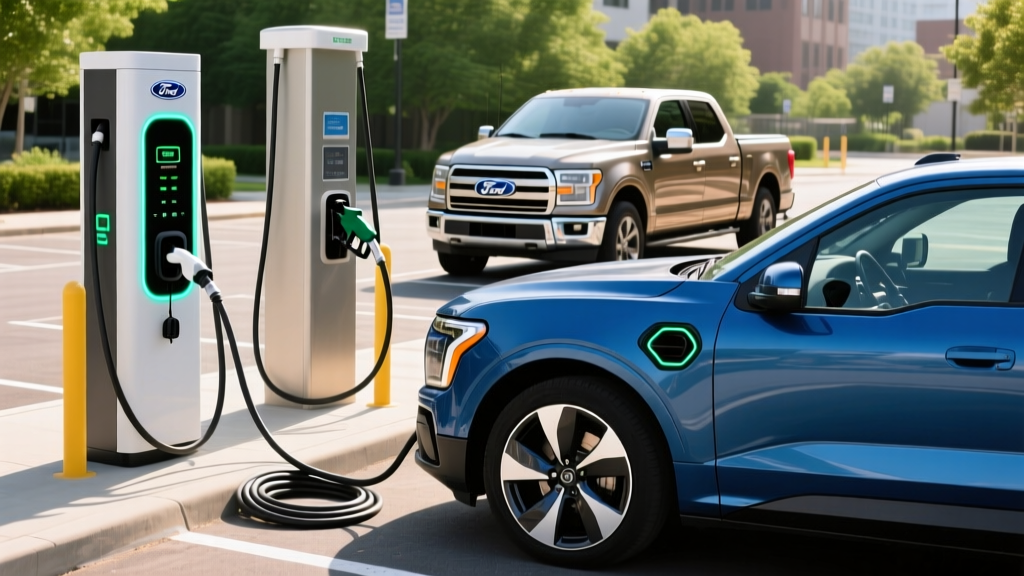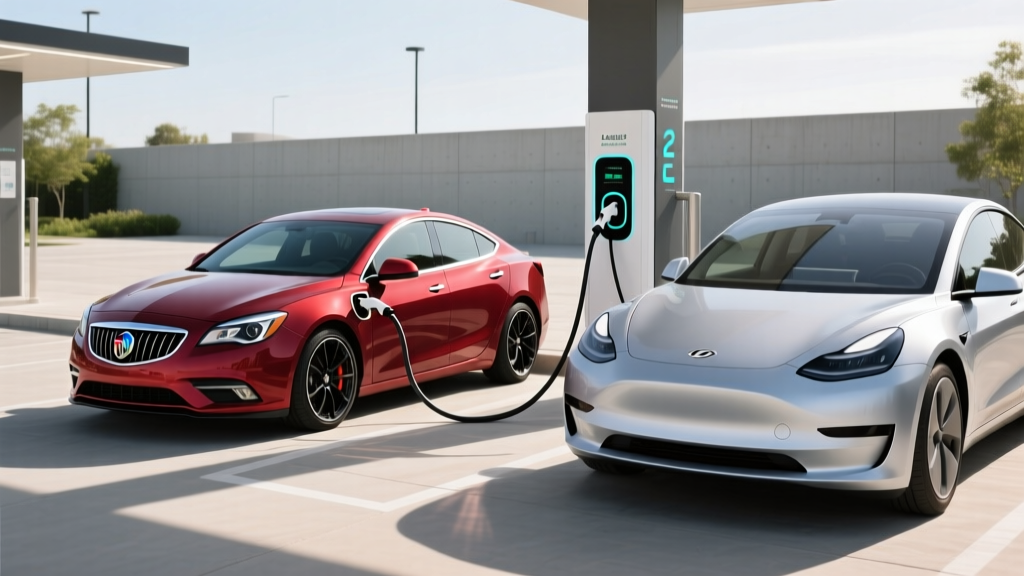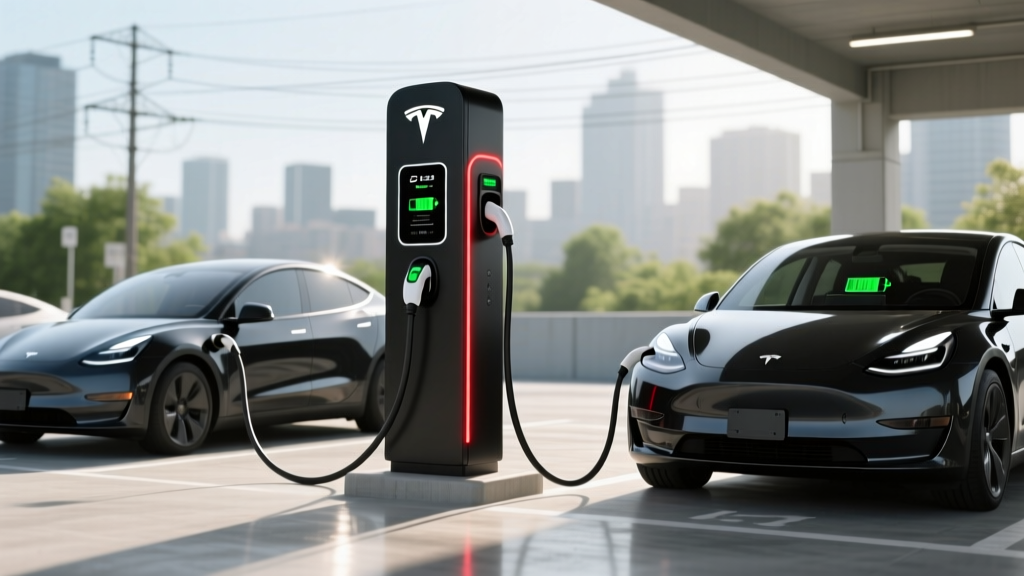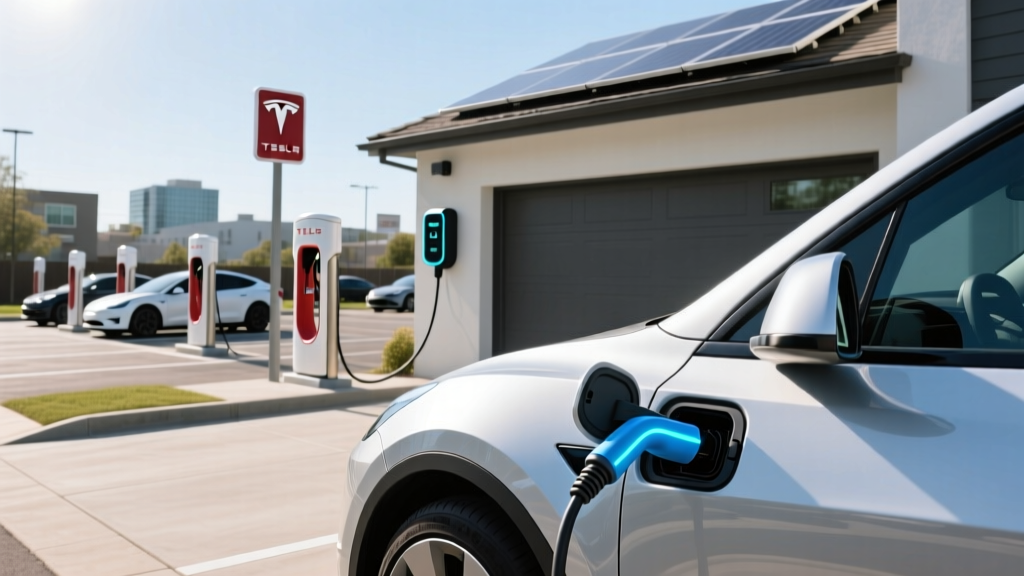
If you've searched for a Tesla Oasis Supercharger, you're likely looking for clarity on where Tesla's latest Supercharger hubs fit into the broader EV charging landscape — and how to replicate that speed and convenience at home. Tesla's Oasis stations represent the company's next-generation charging destinations, combining higher-power V4 Supercharger stalls with amenities like covered canopies, restrooms, Wi-Fi lounges, and on-site dining. But whether you're topping off at an Oasis hub in Coalinga, California, or plugging into your garage at 2 a.m., the physics of EV charging remain the same. This guide breaks down every charging level, the real cost of home installation, connector compatibility across the expanding NACS ecosystem, and what you'll actually pay per mile compared to gas.
What Is a Tesla Oasis Supercharger?
Tesla Oasis stations are the automaker's flagship charging destinations — large-scale hubs designed for long-distance travel comfort. Unlike older Supercharger plazas tucked into strip-mall parking lots, Oasis locations feature:
- V4 Supercharger cabinets capable of delivering up to 350 kW peak power to compatible vehicles (though most current Teslas peak between 170–250 kW depending on battery chemistry and state of charge).
- Integrated CCS1 and NACS connectors — since Tesla opened the Supercharger network to non-Tesla EVs via the NACS (North American Charging Standard) transition, many Oasis stalls now serve Ford, Rivian, GM, Volvo, and other NACS-equipped or adapter-enabled vehicles.
- Premium amenities: covered charging canopies with solar panels, dedicated restrooms, Wi-Fi, and in select locations, a Tesla-branded diner or lounge.
As of early 2026, Oasis locations remain limited — the Coalinga, CA site along I-5 being the most prominent — but Tesla has signaled expansion along major interstate corridors. For most owners, the practical question is: how do you match this experience at home?
Charging Levels Explained: Speeds, Power, and Range Added
Before evaluating equipment, you need to understand the three charging tiers. The critical distinction: kW (kilowatts) measures power — the rate of energy delivery, like water pressure from a hose. kWh (kilowatt-hours) measures energy — the total amount stored in your battery, like gallons in a tank. A 10 kW charger delivers 10 kWh of energy in one hour.
| Level | Voltage | Power (kW) | Miles of Range per Hour | Best For |
|---|---|---|---|---|
| Level 1 | 120V AC | 1.0–1.9 kW | 3–5 mi/hr | Overnight top-ups, PHEVs, emergencies |
| Level 2 | 240V AC | 3.3–19.2 kW | 12–75 mi/hr | Daily home charging, workplace |
| DC Fast Charging | 400–800V DC | 50–350 kW | 150–1,000+ mi/hr (peak) | Road trips, rapid top-ups |
Real-world context: A Tesla Model Y Long Range (75 kWh usable battery, EPA 310 miles) charging on a 48-amp Level 2 circuit (11.5 kW) gains roughly 44 miles of range per hour — a full 10–80% charge takes about 5 hours. At a Tesla Supercharger V4 stall, that same vehicle peaks around 250 kW and reaches 10–80% in approximately 22–25 minutes, though the charge curve tapers significantly above 80% to protect battery health.
Home Level 2 Installation: Electrical Requirements and Costs
Replicating the convenience of a Tesla Oasis Supercharger at home means installing a Level 2 charger on a dedicated 240V circuit. Here's what that involves:
Electrical Specifications
- Circuit: Dedicated 240V circuit, typically 40A, 50A, or 60A breaker (the charger's continuous draw must not exceed 80% of the breaker rating — so a 48A charger requires a 60A breaker).
- Wiring: 6 AWG copper wire for 40–50A circuits; 4 AWG for 60A. Aluminum wire is cheaper but requires a larger gauge.
- Outlet vs. hardwired: A NEMA 14-50 outlet offers portability (you can take the charger when you move), while hardwired installations support higher amperages (above 40A continuous) and are required by code in some jurisdictions for 48A+ chargers.
- Panel capacity: Most modern homes with 200A service can accommodate a 60A EV circuit. Older homes with 100A or 150A panels may require a service upgrade — a significant added cost.
Installation Cost Breakdown
| Component | Cost Range | Notes |
|---|---|---|
| Level 2 Charger (Equipment) | $300–$700 | Varies by brand, power output, smart features |
| Electrician Labor | $500–$2,000 | Depends on panel proximity, wall material, conduit run length |
| Electrical Permit | $50–$250 | Required in most jurisdictions; varies by city/county |
| Panel Upgrade (if needed) | $1,500–$4,000 | 100A → 200A service upgrade; not always necessary |
| Total (standard install) | $850–$2,950 | Without panel upgrade |
| Total (with panel upgrade) | $2,350–$6,950 | Older homes with insufficient panel capacity |
Connector Compatibility: NACS, CCS1, CHAdeMO, and Adapters
The connector landscape has shifted dramatically since Tesla opened its proprietary connector as the North American Charging Standard (NACS). Here's where each vehicle brand stands as of 2026:
| Connector | Brands Using It (Native) | Supercharger Access |
|---|---|---|
| NACS (Tesla) | Tesla (all), Ford (2025+), GM (2025+), Rivian (2025+), Volvo/Polestar (2025+), Fisker, Lucid (adapter) | Direct plug at Tesla Superchargers and Oasis stations |
| CCS1 | Hyundai/Kia (some 2025+), BMW, Mercedes, VW/ID.4, Subaru Solterra, Toyota bZ4X | Requires NACS-to-CCS adapter (provided by many automakers) for Tesla Supercharger access |
| CHAdeMO | Nissan Leaf (legacy), Mitsubishi Outlander PHEV | Limited public infrastructure; no Supercharger access; being phased out |
Adapter note: Ford, GM, and Rivian began shipping vehicles with native NACS ports for the 2025 model year. If you own a 2023–2024 model from these brands with a CCS port, the manufacturer typically provides a NACS-to-CCS adapter at no cost. Third-party adapters (e.g., Lectron, A2Z) range from $150–$300. Always verify that the adapter is rated for the full DC fast charging power your vehicle supports — a 150 kW-rated adapter will bottleneck a 250 kW-capable vehicle.
Charging Cost: Home vs. Public vs. Gas per Mile
One of the strongest arguments for home charging is cost. Let's compare real scenarios:
| Scenario | Rate | Cost per Mile (3.5 mi/kWh EV) | Cost per Mile (28 MPG Gas Car) |
|---|---|---|---|
| Home (off-peak utility rate) | $0.10/kWh | $0.029/mi | — |
| Home (average US rate) | $0.17/kWh | $0.049/mi | — |
| Tesla Supercharger (avg) | $0.32/kWh | $0.091/mi | — |
| Electrify America / EVgo DCFC | $0.38–$0.48/kWh | $0.109–$0.137/mi | — |
| Gasoline (US avg $3.40/gal) | $3.40/gal | — | $0.121/mi |
The takeaway: Home charging at average utility rates costs roughly $0.05 per mile — less than half the cost of gasoline. Even DC fast charging at Tesla Superchargers ($0.32/kWh average) undercuts gas on a per-mile basis. However, third-party DC fast networks at $0.45+/kWh can exceed gas costs, making home charging the clear economic winner for daily use.
Annual savings example: Driving 12,000 miles/year, a home-charged EV at $0.17/kWh costs ~$588 in electricity. A 28 MPG gas car at $3.40/gallon costs ~$1,457 in fuel. That's $869/year in fuel savings — before factoring in reduced maintenance (no oil changes, fewer brake replacements due to regenerative braking).
Charging Time Examples for Common Battery Sizes
How long does a charge actually take? Here are real-world estimates for popular 2025–2026 EV models:
| Vehicle | Battery (kWh usable) | Level 2 (11.5 kW / 48A) | DC Fast (Peak kW) | DC Fast 10–80% Time |
|---|---|---|---|---|
| Tesla Model Y LR | 75 kWh (NMC) | ~5 hours | 250 kW | ~22–25 min |
| Tesla Model 3 LR | 75 kWh (NMC) | ~5 hours | 250 kW | ~22–25 min |
| Ford Mustang Mach-E ER | 91 kWh (NMC) | ~6.5 hours | 150 kW | ~35–40 min |
| Hyundai Ioniq 5 LR | 77.4 kWh (NMC) | ~5.5 hours | 240 kW (800V) | ~18 min |
| Chevrolet Equinox EV | 85 kWh (NMC) | ~6 hours | 150 kW | ~35–40 min |
| Tesla Model Y Std Range | 60 kWh (LFP) | ~4 hours | 170 kW | ~25–28 min |
LFP vs. NMC charging behavior: Vehicles with lithium iron phosphate (LFP) batteries — like the Tesla Model Y Standard Range — can be charged to 100% regularly without degradation concerns. Tesla recommends 100% at least weekly for LFP packs for accurate state-of-charge calibration. NMC packs benefit from daily limits of 80–90% to maximize longevity. This means an LFP vehicle's "usable" range for daily driving is effectively higher relative to its sticker range.
Recommended Home Level 2 Chargers
Not all Level 2 chargers are equal. Here are top picks across budgets, all featuring NACS connectors (native or via included adapter) for Tesla and newer NACS-equipped vehicles:
Tesla Wall Connector
- Power: Up to 11.5 kW (48A) on a 60A circuit
- Connector: Native NACS
- Cable length: 24 ft
- Smart features: Wi-Fi, OTA updates, Power Sharing (load-manage two units on one circuit), access control
- Price: ~$475
- Best for: Tesla owners wanting seamless integration and the lowest cost at 48A
ChargePoint Home Flex
- Power: Up to 12 kW (50A) configurable; adjustable down to match panel capacity
- Connector: NACS (2025+ models) or J1772 with adapter
- Cable length: 23 ft
- Smart features: Wi-Fi, app scheduling, Alexa integration, amperage flexibility
- Price: ~$650
- Best for: Mixed-fleet households or homes needing adjustable amperage
Emporia Vue Level 2
- Power: Up to 11.5 kW (48A)
- Connector: J1772 (NACS adapter included in 2025+ kits)
- Cable length: 24 ft
- Smart features: Whole-home energy monitoring integration, solar-aware charging, load management
- Price: ~$400
- Best for: Budget-conscious buyers with solar panels or energy monitoring needs
Safety, Code, and Installation Best Practices
EV charging draws sustained high current for hours — far longer than a dryer or oven cycle. This makes proper installation critical:
- Dedicated circuit: Your EV charger must be on its own dedicated breaker. Sharing a circuit with other appliances risks tripping or overheating.
- GFCI protection: The 2023 NEC (National Electrical Code) requires GFCI protection for outdoor receptacles used for EV charging. Hardwired installations may not require a GFCI breaker, but consult your local AHJ (Authority Having Jurisdiction).
- Outdoor rating: If installing outside, ensure the charger carries a NEMA 4 or NEMA 4X rating for weather resistance. The Tesla Wall Connector and ChargePoint Home Flex both qualify.
- Cable management: A retractable cable holster prevents tripping hazards and protects the cable from UV damage and abrasion.
- Permit and inspection: Most jurisdictions require an electrical permit and post-installation inspection. Skipping this can void homeowner's insurance coverage in the event of an electrical fire.
Frequently Asked Questions
How much does it cost to install a home EV charger?
A standard Level 2 installation (no panel upgrade) typically costs $850–$2,950 total, including the charger ($300–$700), electrician labor ($500–$2,000), and permit ($50–$250). If your home needs a panel upgrade from 100A to 200A service, add $1,500–$4,000. Get at least two quotes from licensed electricians and confirm they have EV charger installation experience.
How fast will each charging level add range?
Level 1 (120V) adds 3–5 miles of range per hour — adequate for PHEVs with small batteries but impractical for full BEVs. Level 2 (240V, 48A) adds roughly 44 miles per hour to a typical EV like the Model Y. DC fast charging at a Tesla Supercharger V4 or Oasis station can add 200+ miles in 15 minutes at peak power, though the rate tapers as the battery fills.
Which connector/charger is compatible with my EV?
All Tesla vehicles use NACS natively. Ford, GM, Rivian, Volvo, and Polestar switched to NACS starting with 2025 model-year vehicles. Hyundai, Kia, BMW, Mercedes, and VW still use CCS1 as of 2026 but can access Tesla Superchargers (including Oasis locations) via a NACS-to-CCS adapter. Check your vehicle's charge port or consult your owner's manual to confirm. For home charging, buy a charger matching your vehicle's native connector to avoid daily adapter use.
How much does charging cost per mile vs gas?
Home charging at the US average electricity rate ($0.17/kWh) costs approximately $0.05 per mile in a typical EV achieving 3.5 miles per kWh. A 28 MPG gas car at $3.40/gallon costs $0.12 per mile. Even public DC fast charging at $0.35/kWh ($0.10/mile) undercuts gasoline. The savings widen further if your utility offers off-peak EV rates as low as $0.08–$0.10/kWh.
What electrical upgrades might I need?
The most common upgrade is a panel capacity increase if your existing electrical panel lacks headroom for a 40–60A dedicated circuit. Homes with 200A service and gas appliances (range, dryer, furnace) usually have sufficient capacity. Homes with 100A service or all-electric appliances may need an upgrade. A licensed electrician can perform a load calculation per NEC Article 220 to determine your exact situation. Some utilities offer rebates of $500–$1,000 for panel upgrades that support EV charging — check with your provider before proceeding.