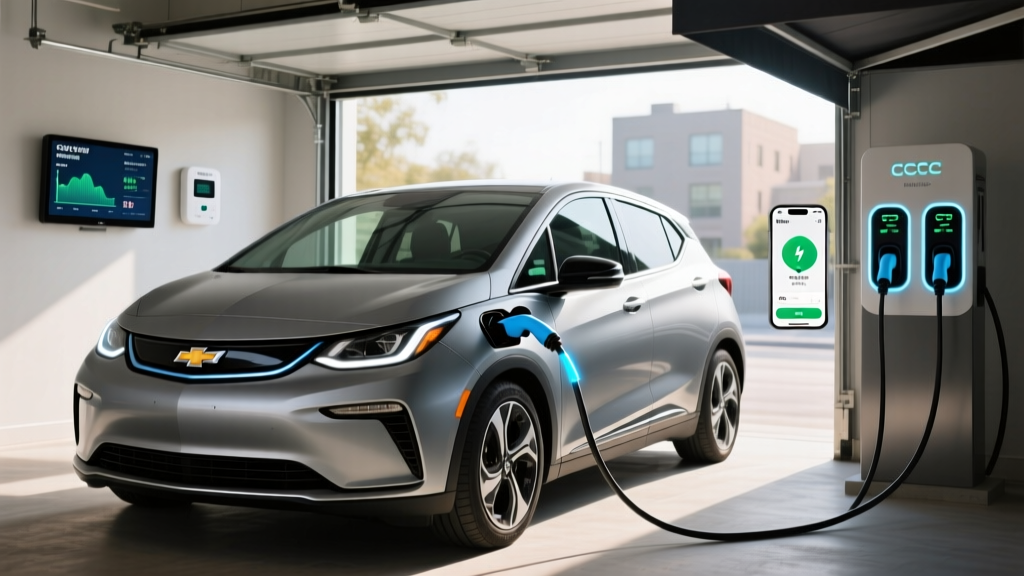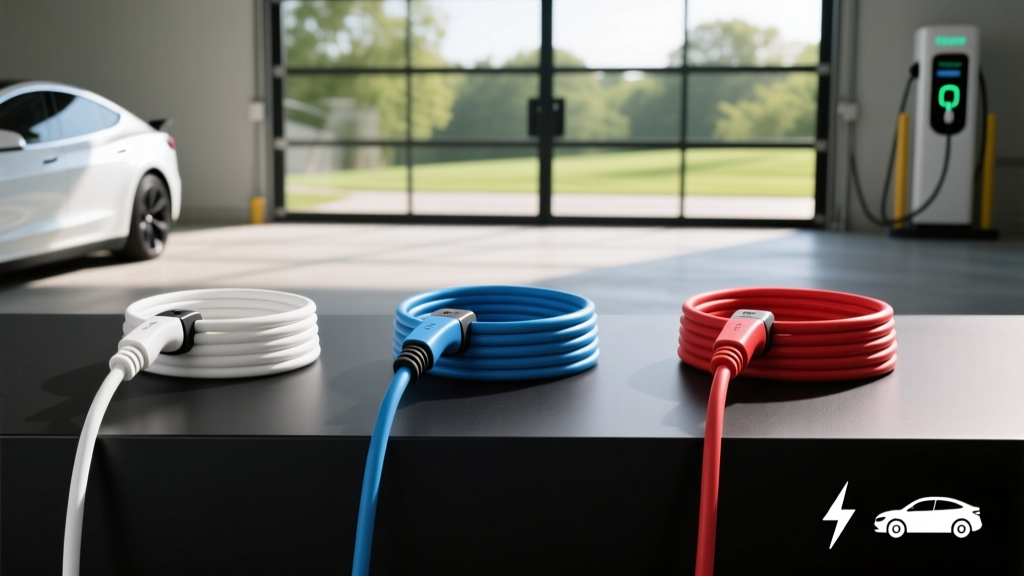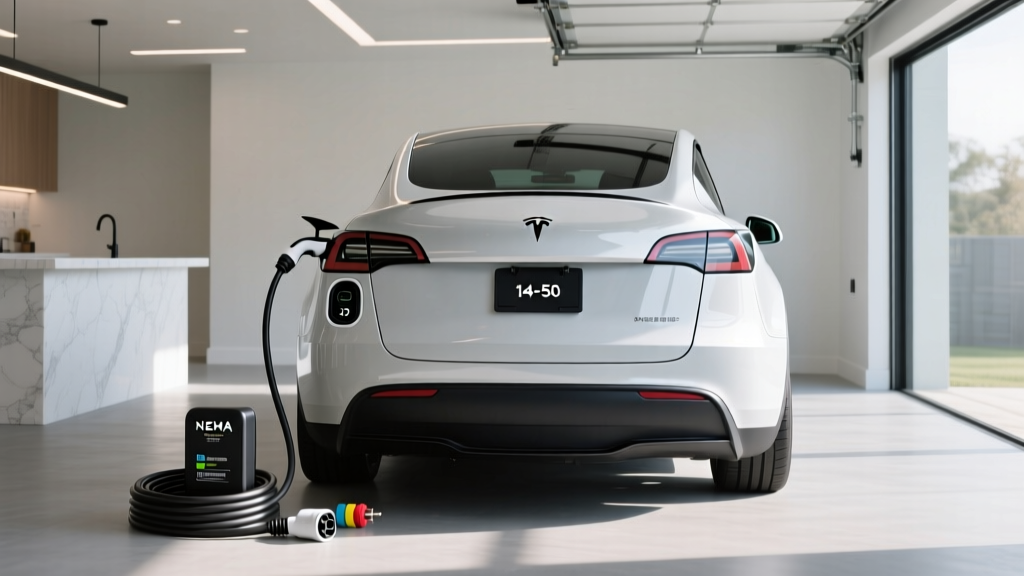
If you own a Tesla or any EV with a NACS charge port, the Tesla NEMA adapter bundle is one of the most practical accessories you can buy. Rather than hardwiring a dedicated wall connector immediately, these adapters let you plug into common 240V household and industrial outlets — the same types already found in garages, workshops, and RV parks across the country. But not all NEMA outlets deliver the same charging speed, and the electrical work required to install one varies enormously in cost.
This guide breaks down exactly what each adapter in the bundle does, the charging speeds you'll get from each outlet type, what your electrical panel needs to support, and the real-world costs of getting a 240V outlet installed in your garage.
Understanding EV Charging Levels and What They Deliver
Before matching adapters to outlets, here's the fundamental distinction every EV owner needs: kW (kilowatts) measures charging power — how fast energy flows into your car. kWh (kilowatt-hours) measures battery capacity — how much energy your car stores. A 75 kWh battery charged at 11.5 kW takes roughly 6.5 hours from empty to full. Confusing these two is the single most common mistake in EV ownership.
| Level | Voltage | Power (kW) | Miles of Range Added Per Hour | Typical Use Case |
|---|---|---|---|---|
| Level 1 | 120V (standard outlet) | 1.0–1.4 kW | 3–5 mi/hr | Overnight trickle; PHEVs with small batteries |
| Level 2 | 240V (dryer/RV outlet or hardwired) | 3.3–19.2 kW | 12–75 mi/hr | Daily home charging; destination charging |
| DC Fast Charging | 400–800V DC | 50–350 kW | 150–1,000+ mi/hr (peak) | Road trips; 10–80% in 15–30 minutes |
For home charging, Level 2 is the target. A Tesla Mobile Connector with the right NEMA adapter on a 240V outlet delivers between 3.3 kW and 11.5 kW depending on the outlet type — enough to fully recharge most EVs overnight.
- Tesla Model Y (75 kWh battery, ~60 kWh usable for 10-80%): ~5.2 hours at 11.5 kW (NEMA 14-50); ~15 hours at 3.8 kW (NEMA 6-20)
- Ford F-150 Lightning Extended Range (131 kWh battery, ~92 kWh for 10-80%): ~8 hours at 11.5 kW; ~24 hours at 3.8 kW
- Chevrolet Equinox EV (85 kWh battery, ~60 kWh for 10-80%): ~5.2 hours at 11.5 kW; ~16 hours at 3.8 kW
Note: Charging slows significantly above 80% SoC to protect battery health. Plan your 10–80% window for daily needs and only charge to 100% before road trips.
What's in the Tesla NEMA Adapter Bundle (and What Each One Does)
The Tesla NEMA adapter bundle typically includes adapters for the most common 240V outlet configurations. Each adapter plugs into the Tesla Mobile Connector (sold separately or included with new Tesla vehicles) and converts it to fit a specific wall receptacle. Here's what each outlet type delivers:
| NEMA Type | Outlet Description | Max Amperage | Continuous Draw (80% Rule) | Max Power (kW) | Mi/HR (approx.) |
|---|---|---|---|---|---|
| 14-50 | 4-prong, 50A (common in RV parks, newer garages) | 50A | 40A | 9.6 kW (Mobile Connector) / 11.5 kW (Wall Connector) | 30–44 |
| 6-50 | 3-prong, 50A (welder/dryer outlets, older shops) | 50A | 40A | 9.6 kW | 30–37 |
| 14-30 | 4-prong, 30A (modern dryer outlet) | 30A | 24A | 5.8 kW | 18–22 |
| 10-30 | 3-prong, 30A (older dryer outlet, no ground wire) | 30A | 24A | 5.8 kW | 18–22 |
| 6-20 | 3-prong, 20A (garage/shop 240V outlet) | 20A | 16A | 3.8 kW | 12–15 |
| 5-15 | Standard 120V household outlet (included adapter) | 15A | 12A | 1.4 kW | 3–5 |
The NEMA 14-50 is the gold standard for home EV charging via outlet. It's the most versatile — widely supported, delivers the highest power through a plug, and is the same outlet you'd find at RV parks if you need to charge on the road. If you're installing a new outlet specifically for EV charging, ask your electrician for a 14-50.
The 10-30 and 14-30 are practical if you already have a dryer outlet in your garage and can share it (unplug dryer, plug in car). The 6-20 works for lighter daily needs — if you drive under 40 miles per day, 3.8 kW overnight will easily replenish your battery.
Home Charger Installation Costs: What You'll Actually Pay
The total cost of installing a 240V outlet for your Tesla NEMA adapter bundle depends on three variables: your electrical panel's capacity, the distance from the panel to the garage, and local permit requirements. Here's a realistic breakdown based on 2026 electrician rates:
| Component | Simple Install (panel near garage, capacity available) | Moderate Install (long wire run, new breaker) | Complex Install (panel upgrade required) |
|---|---|---|---|
| NEMA 14-50 receptacle + parts | $50–$100 | $50–$100 | $50–$100 |
| Wire (6 AWG copper, per foot) | $100–$300 (10–30 ft) | $300–$700 (30–70 ft) | $300–$700 |
| Electrician labor (2–6 hours) | $300–$600 | $600–$1,200 | $800–$1,500 |
| Permit (varies by jurisdiction) | $50–$150 | $50–$200 | $100–$300 |
| Panel upgrade (100A → 200A) if needed | — | — | $1,500–$3,500 |
| Total estimated cost | $500–$1,150 | $1,000–$2,200 | $2,750–$6,100 |
Connector Compatibility: NACS, CCS, and Adapter Requirements
As of 2026, the North American Charging Standard (NACS) — originally Tesla's proprietary connector — has become the dominant EV charging connector. Ford, GM, Rivian, Volvo, Polestar, and most major automakers have switched to NACS ports on new vehicles. But millions of CCS1-equipped EVs remain on the road, and public charging infrastructure still includes a mix of connector types.
| Connector | Vehicle Brands (Native Port) | Home Charging | Public DC Fast Charging |
|---|---|---|---|
| NACS (Tesla standard) | Tesla, Ford, GM, Rivian, Volvo, Polestar, Hyundai/Kia (2025+), BMW, Mercedes | Tesla Mobile Connector + NEMA adapters; Tesla Wall Connector; NACS Level 2 stations | Tesla Superchargers (open to all NACS vehicles); Electrify America, EVgo NACS stalls |
| CCS1 | Older Ford/GM/VW/Hyundai/Kia (pre-NACS switch), Stellantis, Honda (pre-2025) | CCS Level 2 home chargers (ChargePoint, Emporia, Grizzl-E) | Electrify America, EVgo, ChargePoint CCS stalls; Tesla Superchargers with Magic Dock adapter |
| CHAdeMO | Nissan Leaf (legacy), Mitsubishi Outlander PHEV (legacy) | CHAdeMO home chargers (rare) | Limited and declining — most networks are removing CHAdeMO connectors |
If you own a CCS-equipped EV and want to use Tesla Superchargers, Tesla's Magic Dock adapter (built into select Supercharger stalls) enables CCS vehicles to charge without a separate adapter. For home charging with a CCS vehicle, you'll need a dedicated CCS Level 2 charger rather than the Tesla Mobile Connector.
For Tesla and NACS-vehicle owners, the NEMA adapter bundle is specifically relevant because it extends the utility of the Tesla Mobile Connector — you don't need a separate home charging unit for most use cases.
Charging Cost Per Mile: EV vs. Gas in 2026
One of the strongest arguments for home charging is the cost advantage over gasoline. But the savings depend heavily on where and when you charge. Here's how the numbers break down using the national average electricity rate of ~$0.17/kWh (residential) and ~$3.40/gallon for regular unleaded as of early 2026, per EIA data:
| Scenario | Rate | Cost to Add 200 Miles (at 3.5 mi/kWh efficiency) | Cost Per Mile |
|---|---|---|---|
| Home charging (off-peak TOU rate) | $0.09–$0.13/kWh | $5.14–$7.43 | $0.026–$0.037 |
| Home charging (standard residential rate) | $0.15–$0.20/kWh | $8.57–$11.43 | $0.043–$0.057 |
| Public Level 2 (ChargePoint, etc.) | $0.25–$0.49/kWh | $14.29–$28.00 | $0.071–$0.14 |
| DC Fast Charging (Electrify America, EVgo) | $0.35–$0.55/kWh | $20.00–$31.43 | $0.10–$0.16 |
| Tesla Supercharger (average 2026) | $0.25–$0.40/kWh | $14.29–$22.86 | $0.071–$0.11 |
| Gasoline car (28 MPG combined) | $3.40/gal | $24.29 | $0.12 |
The takeaway: Home charging on a standard rate saves roughly 50–65% per mile compared to gasoline. Off-peak time-of-use (TOU) rates push savings to 70–80%. Public DC fast charging, however, can equal or exceed the cost of gas — which is exactly why home charging infrastructure (and the NEMA adapter bundle that makes it affordable) matters so much for long-term ownership economics.
Recommended Home Charging Equipment for NEMA Outlets
If you're using the Tesla NEMA adapter bundle with a Mobile Connector, you already have the core hardware. But depending on your vehicle and needs, here are the top equipment options in 2026:
Tesla Mobile Connector (Gen 2)
- Power Output: Up to 9.6 kW (40A) on NEMA 14-50; up to 1.4 kW on 120V
- Connector: NACS (native); J1772 adapter included for non-Tesla Level 2 stations
- Cable Length: 20 feet
- Smart Features: None (no Wi-Fi, no scheduling via app — schedule in car)
- Price: ~$230 (included with new Tesla vehicles as of 2025+)
- Best For: Tesla/NACS owners who want maximum outlet flexibility via the NEMA adapter bundle
Tesla Wall Connector
- Power Output: Up to 11.5 kW (48A) hardwired; requires dedicated 60A circuit
- Connector: NACS (native)
- Cable Length: 24 feet
- Smart Features: Wi-Fi, OTA updates, power sharing between two units, Tesla app scheduling
- Price: ~$420 (hardwired — no NEMA adapter needed)
- Best For: Dedicated home charging at maximum Level 2 speed; no outlet flexibility needed
Emporia Vue + EV Charger
- Power Output: Up to 11.5 kW (48A) hardwired or 9.6 kW (40A) on NEMA 14-50
- Connector: J1772 (CCS-compatible); NACS adapter available
- Cable Length: 24 feet
- Smart Features: Wi-Fi, energy monitoring, solar integration, TOU scheduling, load management
- Price: ~$400 (charger) + ~$200 (Emporia Vue energy monitor)
- Best For: CCS/J1772 vehicles; solar homeowners who want energy tracking and load management
Grizzl-E Smart
- Power Output: Up to 10 kW (40A) on NEMA 14-50 or hardwired
- Connector: J1772 (NACS adapter available)
- Cable Length: 24 feet
- Smart Features: Wi-Fi, OCPP compatibility, adjustable amperage, extreme cold rating (-40°F)
- Price: ~$450
- Best For: Cold-climate owners; those wanting adjustable amperage to match panel capacity
Safety, Electrical Code, and Installation Requirements
Any 240V EV charging installation must comply with the National Electrical Code (NEC) and your local jurisdiction's amendments. Here are the non-negotiable requirements:
- Dedicated circuit: Your EV outlet must be on its own dedicated breaker — not shared with other appliances. A NEMA 14-50 requires a 50A breaker; a 14-30 requires a 30A breaker.
- 80% continuous load rule: The NEC requires that continuous loads (defined as running 3+ hours, which EV charging always does) not exceed 80% of the circuit rating. A 50A circuit supports 40A continuous; a 30A circuit supports 24A continuous. The Tesla Mobile Connector automatically limits draw to comply.
- GFCI protection: The 2020 NEC and later requires GFCI (Ground Fault Circuit Interrupter) protection for all 240V outlets in garages. This typically means a GFCI breaker in the panel (~$50–$120 more than a standard breaker). Some jurisdictions have adopted exceptions for dedicated EV circuits — your electrician will know local requirements.
- Outdoor rating: If your outlet is outdoors or in an exposed carport, it must be in a weatherproof (in-use) cover rated for wet locations (NEMA 3R or 4). The Tesla Mobile Connector itself is rated for outdoor use, but the outlet connection must be protected.
- Wire gauge: A 50A circuit requires 6 AWG copper wire (or 4 AWG aluminum). A 30A circuit requires 10 AWG copper. Undersized wire is a fire hazard — never let a contractor cut corners here.
- Permit and inspection: Most jurisdictions require an electrical permit for new 240V circuits ($50–$300 depending on locality). The work must pass inspection before use. Unpermitted work can void your homeowner's insurance if a fire occurs.
Federal Tax Credits and Utility Rebates for Home Charging
The federal residential clean energy credit (IRC §25D, sometimes conflated with the §30D vehicle credit) covers 30% of home EV charging equipment and installation costs, up to $1,000 per year. This applies to the charger hardware, wiring, conduit, and electrician labor — but not to a panel upgrade.
Key eligibility notes for 2026:
- The charger must be installed at your primary or secondary residence in the United States.
- The credit is non-refundable — it reduces your tax liability but won't generate a refund beyond what you owe.
- Many utilities offer separate rebates of $200–$750 for Level 2 charger installation, especially if you enroll in a time-of-use rate plan. Check the AFDC incentive database for your state and utility.
- Some states (California, Colorado, New York, Massachusetts) offer additional state tax credits or rebates of $250–$1,500 for home charging equipment.
Always consult a tax professional regarding credit eligibility — IRS rules change, and income limitations or specific equipment requirements may apply.
Frequently Asked Questions
How much does it cost to install a home EV charger?
For a NEMA 14-50 outlet (the most common EV charging outlet), expect $500–$1,150 if your electrical panel has capacity and is near the garage, $1,000–$2,200 for a longer wire run, and $2,750–$6,100 if a panel upgrade from 100A to 200A is required. The Tesla Mobile Connector with the NEMA adapter bundle then plugs directly into this outlet — no additional charger purchase needed. A hardwired Tesla Wall Connector installation typically costs $800–$2,000 total (equipment + labor), assuming no panel upgrade.
How fast will each charging level add range?
Level 1 (120V standard outlet) adds 3–5 miles of range per hour — adequate only for PHEVs or very low daily mileage. Level 2 on a NEMA 14-50 outlet (the best in the Tesla adapter bundle) adds 30–44 miles per hour, fully recharging a Tesla Model Y overnight. Level 2 on a NEMA 6-20 adds 12–15 miles per hour. DC fast charging adds 150–1,000+ miles per hour at peak power but is intended for road trips, not daily use — sustained DC fast charging accelerates battery degradation.
Which connector and charger is compatible with my EV?
If your EV has a NACS charge port (all Teslas, plus 2025+ Ford, GM, Rivian, Volvo, Hyundai, Kia, and others), the Tesla Mobile Connector with the NEMA adapter bundle is directly compatible. If your EV has a CCS1 port (most pre-2025 non-Tesla EVs), you'll need a CCS-compatible Level 2 charger like the Emporia, ChargePoint Home Flex, or Grizzl-E — the Tesla Mobile Connector won't fit without a third-party NACS-to-CCS adapter. Check your vehicle's charge port type before purchasing any equipment.
How much does charging cost per mile vs. gas?
Home charging on a standard residential rate (~$0.17/kWh) costs approximately $0.04–$0.06 per mile for an EV averaging 3.5 miles per kWh. Off-peak TOU rates drop this to $0.03–$0.04 per mile. A comparable gas car at 28 MPG and $3.40/gallon costs about $0.12 per mile. Public DC fast charging ($0.35–$0.55/kWh) costs $0.10–$0.16 per mile — roughly equal to or more than gasoline. This cost gap is the primary reason home charging infrastructure pays for itself within 1–3 years of ownership.
What electrical upgrades might I need?
The most common upgrade is a panel capacity increase from 100A to 200A, required when your existing panel doesn't have headroom for a 50A EV circuit. This costs $1,500–$3,500 and takes 1–2 days. Other potential upgrades include: replacing a NEMA 10-30 (ungrounded) with a 14-30 (grounded) outlet ($200–$500); adding a GFCI breaker if required by local code ($50–$120 above a standard breaker); or running new conduit for outdoor installations ($200–$600). An electrician's load calculation — typically $100–$200 or included in a free estimate — will identify exactly what your home needs.