The NACS Standard Has Won — Here's What That Means for Your EV
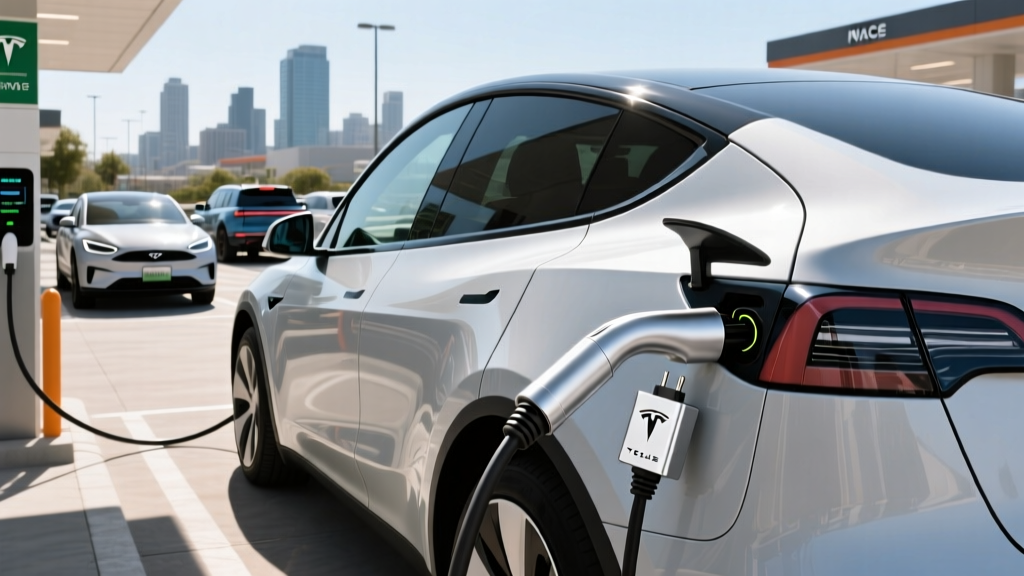
By 2026, the North American Charging Standard (NACS) has effectively become the default DC fast-charging connector in the United States. What began as Tesla's proprietary plug is now the SAE J3400 standard, adopted by Ford, GM, Rivian, Hyundai, Kia, BMW, and nearly every major automaker. If you drive a non-Tesla EV with a CCS1 port, a Tesla NACS adapter is your bridge to the largest, most reliable fast-charging network in the country — over 28,000 Supercharger stalls and growing.
This guide covers everything you need to know: which adapters exist, which vehicles they fit, how fast you'll actually charge, what a home Level 2 setup costs, and how charging per mile compares to filling up a gas car. We'll also break down the electrical work involved so you can budget realistically — including the panel upgrade that catches many older-home buyers off guard.
Charging Levels Explained: kW, Miles Per Hour, and Real-World Times
Before we get to adapters, let's nail down the three charging levels and what they actually deliver. Power is measured in kW (kilowatts) — the rate of energy flow. Energy is measured in kWh (kilowatt-hours) — the total amount stored in your battery. A 75 kWh battery charged at 7.7 kW takes roughly 10 hours from empty; that same battery at 150 kW DC fast charging reaches 80% in about 25 minutes. Never confuse the two.
| Level | Voltage | Power (kW) | Miles of Range Added Per Hour | Best For |
|---|---|---|---|---|
| Level 1 (120V) | 120V AC | 1.0–1.4 kW | 3–5 mi/hr | Overnight trickle, PHEVs, emergencies |
| Level 2 (240V) | 240V AC | 3.3–19.2 kW | 12–70 mi/hr | Daily home and workplace charging |
| DC Fast Charging | 200–900V DC | 50–350 kW | 150–1,200+ mi/hr | Road trips, rapid top-ups |
Real-world charging time examples (10–80% SoC):
- 60 kWh battery (e.g., base Hyundai Kona Electric) at a 150 kW DC fast charger: ~22 minutes, assuming the vehicle can accept that peak rate.
- 82 kWh battery (e.g., Ford Mustang Mach-E Extended Range) at a 150 kW charger: ~28 minutes.
- 100 kWh battery (e.g., Rivian R1S Dual-Motor) at a 200 kW charger: ~32 minutes.
These times assume optimal battery temperature (preconditioned) and taper above 80% SoC. Charging curves are not linear — the last 20% can take as long as the first 60%. Always plan road-trip stops around 10–80% charges for the best time efficiency.
Which Tesla NACS Adapter Do You Need? Connector Compatibility by Brand
Not all EVs need the same adapter, and some 2025–2026 models already ship with a native NACS port. Here's the compatibility landscape:
| Vehicle Brand / Model Year | Native Port | Adapter Needed for Superchargers | Adapter Source |
|---|---|---|---|
| Tesla (all years) | NACS | None | N/A |
| Ford F-150 Lightning, Mustang Mach-E (2025+) | NACS | None | N/A |
| GM Ultium vehicles (2025+): Equinox EV, Blazer EV, Silverado EV, Cadillac Lyriq | NACS | None | N/A |
| Rivian R1T / R1S (2025+) | NACS | None | N/A |
| Hyundai Ioniq 5 / 6, Kia EV6 / EV9 (2025+) | NACS | None | N/A |
| Ford / GM / Rivian (2024 and earlier with CCS1) | CCS1 | CCS1-to-NACS adapter | OEM or Tesla Magic Dock |
| Hyundai / Kia (2024 and earlier with CCS1) | CCS1 | CCS1-to-NACS adapter | OEM (Ford, GM provide to owners); aftermarket |
| Nissan Leaf, older Mitsubishi (CHAdeMO) | CHAdeMO | No NACS adapter available | N/A — CHAdeMO networks only |
Key adapter types in 2026:
- Tesla Magic Dock: Built into select Supercharger stalls — a CCS1 adapter integrated into the NACS connector. No separate adapter needed. Availability is limited; check the Tesla app for enabled stalls.
- OEM-provided CCS1-to-NACS adapters: Ford and GM shipped free adapters to registered EV owners starting in 2024. These are UL-listed and rated for up to 250 kW DC fast charging. Replacement adapters from Ford and GM dealers run $200–$400.
- Aftermarket CCS1-to-NACS adapters: Brands like Lectron and A2Z offer adapters in the $150–$300 range. Verify UL or ETL listing before purchasing — cheap, uncertified adapters pose fire and equipment-damage risks.
- NACS-to-CCS1 adapters (reverse): For Tesla owners who want to use CCS1-equipped public chargers (Electrify America, EVgo). Tesla sells this adapter for ~$250.
Home Level 2 Charger Installation: Electrical Requirements and Real Costs
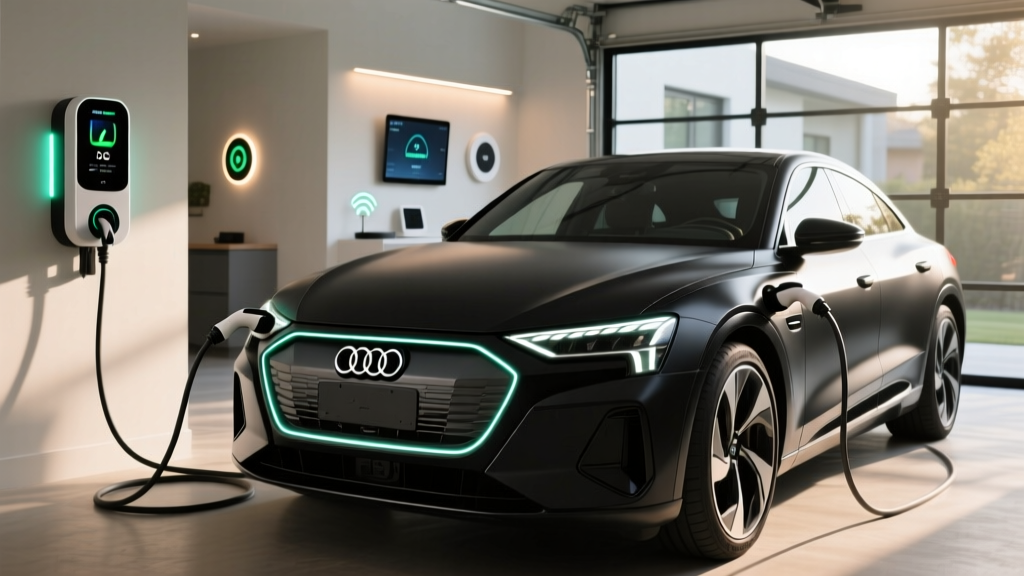
The single biggest factor in home charging satisfaction is a properly installed Level 2 charger. Here's what's involved electrically and financially.
Electrical requirements: A typical Level 2 home charger runs on a 240V dedicated circuit, similar to a dryer or oven outlet. Most homeowners install a 40-amp or 48-amp circuit, which supports continuous charging at 32A or 40A respectively (the National Electrical Code requires circuits rated at 125% of the continuous load). That translates to 7.7 kW or 9.6 kW of charging power — enough to fully replenish most EV batteries overnight.
Panel upgrade reality: If your home has a 100-amp electrical panel — common in homes built before the 1990s — adding a 40A EV circuit may exceed your panel's capacity. An upgrade to a 200-amp panel typically costs $1,500–$3,500 depending on your utility and local labor rates. This is the surprise cost that pushes some installations above $3,000 total. Homes with 200A panels usually have sufficient headroom.
| Component | Typical Cost Range | Notes |
|---|---|---|
| Level 2 charger (hardware) | $300–$750 | Varies by brand, power output, smart features |
| Electrician labor (standard install) | $400–$1,200 | Depends on run length from panel to garage |
| Electrical permit | $50–$200 | Required in most jurisdictions |
| Panel upgrade (if needed) | $1,500–$3,500 | 100A to 200A service upgrade |
| Total (no panel upgrade) | $750–$2,150 | Most homes with 200A panels |
| Total (with panel upgrade) | $2,250–$5,650 | Older homes with 100A panels |
Always hire a licensed electrician and pull a permit. Unpermitted EV charger installations can void homeowner's insurance claims and create code violations that surface during a home sale. Per the NEC, outdoor installations require GFCI protection and NEMA 4-rated (weatherproof) enclosures. Your electrician should also verify that your circuit breaker panel has two adjacent open slots for the double-pole breaker a 240V circuit requires.
Cost to Charge: Home vs. Public vs. Gas — The Per-Mile Breakdown
One of the strongest arguments for EV ownership is lower fueling cost per mile, but the savings depend heavily on where and when you charge.
| Scenario | Rate | Cost per kWh | Cost per Mile (at 3.5 mi/kWh) |
|---|---|---|---|
| Home, off-peak utility rate | Time-of-use plan | $0.08–$0.14 | $0.02–$0.04 |
| Home, standard residential rate | Flat rate | $0.14–$0.20 | $0.04–$0.06 |
| Public Level 2 (ChargePoint, etc.) | Per kWh or per session | $0.25–$0.49 | $0.07–$0.14 |
| DC fast charging (Electrify America, EVgo) | Per kWh | $0.35–$0.55 | $0.10–$0.16 |
| Tesla Supercharger (non-Tesla access) | Per kWh | $0.28–$0.48 | $0.08–$0.14 |
| Gas car (28 MPG combined, $3.40/gal) | Per gallon | N/A | $0.12 |
The takeaway: Home off-peak charging delivers the lowest cost — roughly $0.03 per mile, or about one-quarter the cost of a 28 MPG gas car at current fuel prices. Public DC fast charging narrows that gap significantly; frequent road-trip charging at $0.45/kWh pushes your per-mile cost to $0.13, essentially matching gas. The financial case for an EV is strongest when you can charge at home most nights.
For the federal residential clean energy credit, the IRS §25D provision allows a 30% tax credit on home EV charger equipment and installation costs (up to $1,000 per year for charger hardware). Consult a tax professional to confirm eligibility for your specific situation.
Recommended Home Level 2 Chargers for 2026
We've selected chargers based on reliability, power output, connector options, smart features, and value. All recommendations are available with either a NACS connector or a J1772 connector (with a NACS adapter included or available).
Emporia Level 2 EV Charger
- Power: 48A / 11.5 kW (hardwired) or 40A / 9.6 kW (NEMA 14-50 plug)
- Connector: J1772 (NACS adapter available) or native NACS (2025+ models)
- Cable length: 24 ft
- Smart features: Wi-Fi, app scheduling, solar integration, energy monitoring
- Price: ~$399 (hardwired) / ~$449 (plug-in)
- Best for: Budget-conscious buyers who want smart scheduling and solar pairing
ChargePoint Home Flex
- Power: Up to 50A / 12 kW (adjustable down to match circuit)
- Connector: J1772 (NACS adapter sold separately) or native NACS version
- Cable length: 23 ft
- Smart features: Wi-Fi, app control, Alexa integration, flexible amperage
- Price: ~$649–$699
- Best for: Flexibility — adjustable amperage lets you match any circuit from 20A to 60A
Tesla Wall Connector (Gen 3)
- Power: Up to 48A / 11.5 kW (hardwired on 60A circuit)
- Connector: Native NACS — no adapter needed for Tesla or 2025+ NACS vehicles
- Cable length: 24 ft
- Smart features: Wi-Fi, power sharing (link multiple units on one circuit), OTA updates
- Price: ~$475
- Best for: Tesla owners and any 2025+ NACS-equipped EV; excellent value for native NACS
Grizzl-E Smart
- Power: 40A / 9.6 kW (NEMA 14-50) or 48A / 11.5 kW (hardwired)
- Connector: J1772 or native NACS
- Cable length: 24 ft
- Smart features: Wi-Fi, OCPP support, adjustable output, extreme cold rated (-40°F)
- Price: ~$499–$599
- Best for: Cold-climate owners; rugged build with Canadian manufacturing
Important note on NACS home charging: If you own a CCS1-port EV and use a Tesla NACS adapter for Supercharger access, you still charge at home via your car's native CCS1/J1772 port with a standard J1772 Level 2 charger. The Tesla NACS adapter is for DC fast charging on the road — it does not change your home charging setup. Buy the charger that matches your car's native port for home use.
Safety, Code, and the Details That Prevent Expensive Mistakes
EV charging involves sustained high-current draw — more like running a welder for 8 hours than plugging in a lamp. Here are the code and safety requirements that matter:
- Dedicated circuit: Your EV charger must have its own double-pole breaker. Sharing a circuit with other appliances is a code violation and a fire hazard.
- Continuous load derating: Per NEC Article 625, EV charging is classified as a continuous load. A 40A charger requires a 50A circuit; a 48A charger requires a 60A circuit. Your electrician will size accordingly.
- GFCI protection: Required for all outdoor receptacles and recommended (and in many jurisdictions, required) for indoor garage installations as well.
- NEMA 4 rating: Outdoor chargers must be rated for weather exposure (rain, snow, dust). All the chargers above carry at minimum NEMA 4 ratings.
- Cable management: A holster or cable retractor keeps the connector off the garage floor, preventing damage and trip hazards.
- Utility notification: Some utilities require you to notify them before installing an EV charger, especially if you're on a time-of-use rate plan. A few offer rebates of $250–$500 for installation.
For more on electrical safety standards, see the National Electrical Code (NFPA 70) requirements for EV charging systems.
Frequently Asked Questions About Tesla NACS Adapters and EV Charging
How much does it cost to install a home EV charger?
A standard Level 2 home installation runs $750–$2,150 total (equipment, electrician, and permit) if your electrical panel has sufficient capacity. If a panel upgrade from 100A to 200A is needed, expect $2,250–$5,650 all-in. Get at least two quotes from licensed electricians.
How fast will each charging level add range?
Level 1 (120V) adds 3–5 miles per hour. Level 2 (240V, 40A) adds roughly 30–35 miles per hour for a typical EV. DC fast charging at 150 kW can add 150–200+ miles in 15–20 minutes, depending on battery size and charge-curve taper.
Which connector or charger is compatible with my EV?
Check your vehicle's charge port. If it's NACS (Tesla, or 2025+ Ford/GM/Rivian/Hyundai/Kia), you can use any NACS charger natively. If it's CCS1 (most 2024 and earlier non-Tesla EVs), you need a CCS1-to-NACS adapter for Tesla Superchargers and a J1772 charger or adapter for Level 2 home/public charging. CHAdeMO vehicles (Nissan Leaf) have no NACS adapter pathway.
How much does charging cost per mile compared to gas?
Home off-peak charging costs roughly $0.03 per mile — about 75% less than a 28 MPG gas car at $3.40/gallon ($0.12/mile). Public DC fast charging at $0.45/kWh costs about $0.13/mile, roughly matching gas. The economics strongly favor home charging.
What electrical upgrades might I need for a home charger?
If your home has a 200A panel with open breaker slots, you likely need only a new 50A or 60A double-pole breaker and wiring run. If your panel is 100A, fully loaded, or uses a fuse box, a panel upgrade ($1,500–$3,500) is required. An electrician can assess this during a site visit — always get this evaluation before purchasing equipment.
Can I use a Tesla NACS adapter on any Supercharger?
Most Supercharger stalls now support non-Tesla vehicles through the Tesla app's "Charge Your Non-Tesla Vehicle" feature, provided you have a compatible CCS1-to-NACS adapter. Some older stalls in dense urban areas may have short cables that don't reach non-Tesla charge ports — Tesla has been retrofitting these, but coverage isn't 100%. Always confirm stall compatibility in the Tesla app before driving to a location.
Is a Tesla NACS adapter safe for DC fast charging at 250 kW?
UL-listed OEM adapters from Ford, GM, and Tesla are rated for the full Supercharger power envelope (up to 250 kW at V3 stalls). Avoid unlisted or uncertified aftermarket adapters — they lack the thermal monitoring and safety interlocks that prevent overheating at high current. Check for a UL or ETL mark on any adapter you purchase.
For the latest on EV charging infrastructure, connector standards, and incentive programs, the U.S. Department of Energy's Alternative Fuels Data Center maintains up-to-date station maps and policy information. The charging landscape continues to evolve quickly — but with the right adapter, a properly installed home charger, and an understanding of your electrical system, you're set to charge efficiently and affordably regardless of which EV you drive.