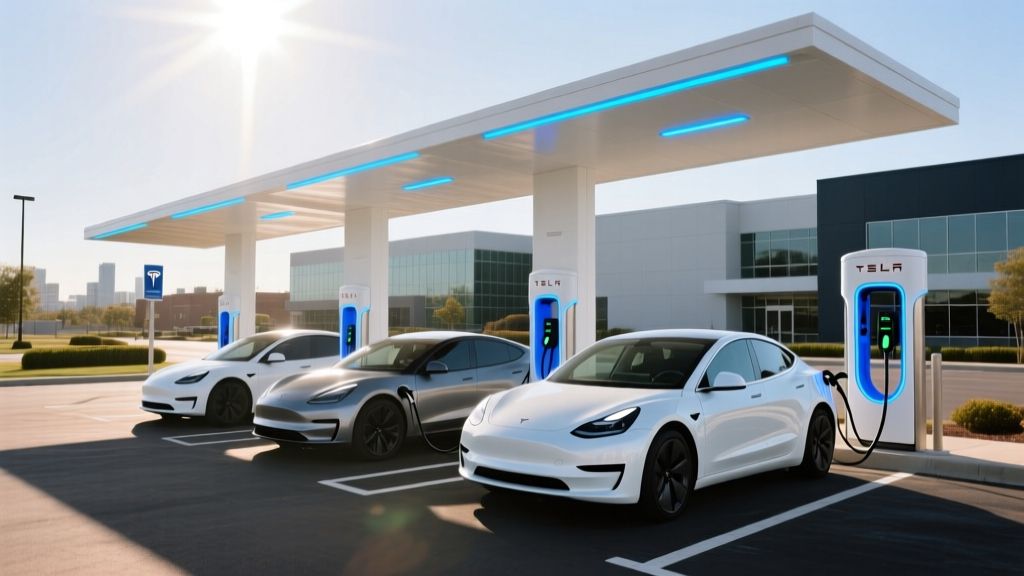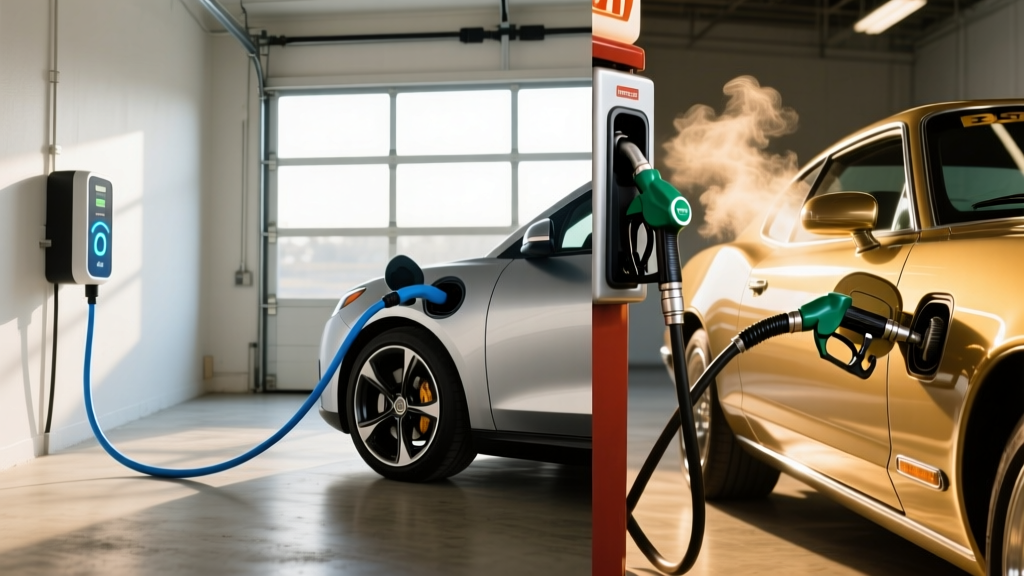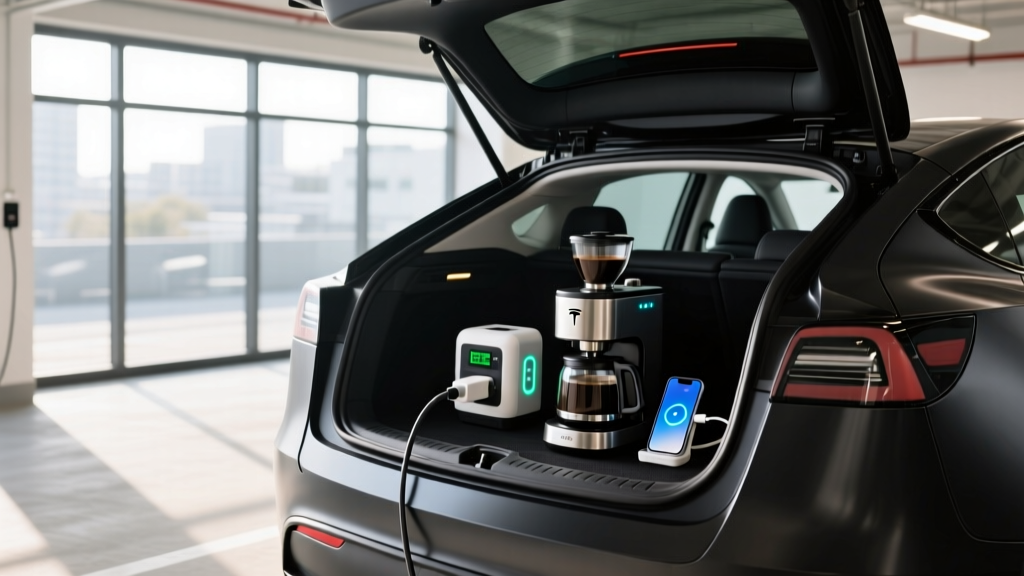
Tesla owners frequently ask whether a Tesla Model Y V2L adapter exists — a device that would let you plug standard 120V household appliances directly into your EV's charging port, similar to what Hyundai, Kia, and Ford offer on their electric vehicles. The short answer: Tesla does not currently offer a native V2L (Vehicle-to-Load) adapter for the Model Y in the U.S. market. But the longer answer involves understanding what V2L actually requires, what workarounds exist, and how your home charging setup fits into the broader picture of using your EV as a power source.
This guide covers everything Tesla Model Y owners need to know about V2L capability, practical alternatives, and the complete home charging ecosystem — from Level 1 basics to Level 2 installation costs, connector compatibility, and real-world charging economics.
What Is V2L and Why Doesn't the Model Y Support It Natively?
V2L (Vehicle-to-Load) allows an electric vehicle to discharge energy from its high-voltage traction battery through a standard AC outlet, powering devices like laptops, power tools, camping gear, or even small appliances during an outage. Vehicles like the Hyundai Ioniq 5, Kia EV6, and Ford F-150 Lightning include V2L hardware built into the vehicle, typically delivering 1.9 kW to 3.6 kW of continuous AC power through a 120V outlet either in the cabin or via an external adapter plugged into the charge port.
The Tesla Model Y (all trims, including the 2025 refresh and current 2026 production) does not include onboard V2L hardware. The vehicle's high-voltage DC-to-AC inverter is designed to manage thermal systems, drive the motors, and accept AC-to-DC conversion during charging — but Tesla has not enabled bidirectional power flow through the North American Charging Standard (NACS) port for consumer V2L use.
This is a deliberate engineering and product decision, not a technical impossibility. Tesla's Cybertruck includes a 120V/240V Powershare system (up to 9.6 kW), proving Tesla can implement bidirectional power when they choose. The Model Y simply hasn't received this feature as of 2026.
Tesla Model Y V2L Adapter Workarounds: What Actually Works
Despite the lack of native V2L, Model Y owners have explored several approaches to powering external devices:
1. The 12V Auxiliary Battery Route (Limited Power)
Every Model Y has a 12V lithium-ion auxiliary battery that powers lights, infotainment, and electronics. You can connect a portable power inverter (e.g., a 300W–1000W pure sine wave inverter) to the 12V system via the cigarette-lighter socket or direct battery terminals. However, this draws from a small auxiliary battery, not the main traction pack, and sustained high-draw use risks depleting it. The DC-DC converter replenishes the 12V battery from the main pack when the vehicle is on, so keeping the car powered on (in "Camp Mode") allows extended use — but you're limited to roughly 1,000W continuous through most inverters.
2. Portable Power Stations Charged by the EV
A more practical approach: use your Model Y's Level 1 (120V) mobile connector to charge a portable power station (e.g., EcoFlow Delta Pro, Bluetti AC300) from a standard outlet at your destination, then use the power station's AC outlets for devices. This isn't true V2L — it's using the car as a transport platform for a separate battery — but it achieves a similar result for camping and off-grid scenarios.
3. Third-Party NACS V2L Adapters (Not Yet Available)
As of early 2026, no reputable third-party manufacturer has released a certified NACS-to-AC V2L adapter that safely interfaces with the Model Y's charge port to extract power. Any product claiming to do so should be treated with extreme caution — improper high-voltage DC interfacing can damage the vehicle's power electronics, void the battery warranty, and create serious shock or fire hazards.
Charging Levels Explained: Level 1, Level 2, and DC Fast Charging
Whether or not you're pursuing V2L functionality, understanding the three EV charging levels is essential for every Model Y owner. Note the critical distinction: kW (kilowatts) measures power — the rate of energy delivery. kWh (kilowatt-hours) measures energy — the total capacity stored in your battery. A helpful analogy: kW is like the flow rate of a hose, while kWh is the total volume of water in the tank.
| Level | Voltage / Amperage | Max Power (kW) | Miles of Range Added per Hour | Typical Use Case |
|---|---|---|---|---|
| Level 1 | 120V / 12A | 1.4 kW | 3–5 mi/hr | Overnight top-up, emergencies |
| Level 2 | 240V / 32–48A | 7.7–11.5 kW | 25–44 mi/hr | Daily home charging |
| DC Fast | 400V+ DC / variable | Up to 250 kW (V3 Supercharger) | Up to ~1,000+ mi/hr (peak) | Road trips, rapid top-up |
For the current Tesla Model Y Long Range AWD (75 kWh usable battery, EPA-estimated 320 miles range), charging from 10% to 80% takes approximately:
- Level 1 (1.4 kW): ~52 hours — impractical for full charging, suitable only for maintenance
- Level 2 (11.5 kW / 48A): ~5 hours — ideal overnight charge
- V3 Supercharger (250 kW peak): ~25–30 minutes (10–80%), though the charge curve tapers significantly above 60% SoC
Home Level 2 Charger Installation: Costs, Electrical Requirements, and Upgrades
Installing a Level 2 home charger is the single most impactful upgrade for daily EV ownership. For the Model Y, Tesla's onboard charger accepts up to 11.5 kW (48A on a 60A circuit). Here's what a proper installation requires.
Electrical Requirements
- Circuit: Dedicated 60-amp, 240V circuit (NEMA 14-60 outlet or hardwired)
- Wire gauge: 6 AWG copper (or 4 AWG aluminum for longer runs)
- Breaker: 60A double-pole breaker in your main service panel
- GFCI protection: Required by NEC 2020+ for EV charging outlets in garages (hardwired chargers may not require a GFCI breaker depending on local code)
- Permit: Required in most U.S. jurisdictions; typically $50–$200
Panel Upgrade Considerations
This is the cost variable most guides underestimate. If your home has a 100-amp main service panel (common in homes built before 2000), adding a 60A EV circuit may exceed your panel's capacity — especially if you're also running electric range, dryer, and HVAC. A panel upgrade to 200A service typically costs $1,500–$3,500 including permits and utility coordination. Homes with existing 200A panels usually have sufficient headroom.
| Component | Low Estimate | High Estimate | Notes |
|---|---|---|---|
| Level 2 Charger (Equipment) | $350 | $750 | Tesla Wall Connector, ChargePoint, Emporia |
| Electrician Labor | $400 | $1,500 | Depends on panel distance, conduit run, wall type |
| Electrical Materials (wire, conduit, breaker) | $100 | $400 | Longer runs = more wire cost |
| Permit & Inspection | $50 | $250 | Varies by municipality |
| Panel Upgrade (if needed) | $1,500 | $3,500 | 100A → 200A service upgrade |
| TOTAL (no panel upgrade) | $900 | $2,900 | Most common scenario |
| TOTAL (with panel upgrade) | $2,400 | $6,400 | Older homes with 100A panels |
Always hire a licensed electrician for EV charger installation. Final specifications depend on your home's wiring, panel capacity, and local code. The National Electrical Contractors Association can help you find qualified installers.
Connector Compatibility: NACS, CCS1, CHAdeMO, and Adapter Needs
The 2026 Tesla Model Y uses the NACS (North American Charging Standard) connector — Tesla's proprietary design, now formally adopted as SAE J3400. This is the same connector used across all current Tesla vehicles and is increasingly adopted by non-Tesla automakers.
| Connector | Standard | Used By | Max DC Fast Power | Adapter Needed for Model Y? |
|---|---|---|---|---|
| NACS (J3400) | SAE J3400 | Tesla, Ford, GM, Rivian, Volvo, others (2025+) | Up to 350+ kW | Native — no adapter needed |
| CCS1 | SAE J1772 + DC pins | Hyundai, Kia, VW, BMW, older non-Tesla EVs | Up to 350 kW | Yes — NACS-to-CCS adapter (~$200–$300) |
| CHAdeMO | IEC 62196 Type 4 | Nissan Leaf, Mitsubishi (legacy/declining) | Up to 100 kW | No widely available adapter; avoid |
| J1772 (AC only) | SAE J1772 | All non-Tesla Level 2 public chargers | N/A (AC: up to 19.2 kW) | Tesla includes J1772-to-NACS adapter with vehicle |
For Level 2 home charging, Tesla's Wall Connector uses the native NACS plug. If you install a third-party J1772 Level 2 charger (e.g., ChargePoint Home Flex), you'll use the J1772-to-NACS adapter that ships with your Model Y.
Charging Cost per Mile: EV vs. Gasoline Compared
One of the strongest arguments for EV ownership is the lower per-mile energy cost — but the savings vary dramatically depending on where and when you charge.
| Scenario | Rate ($/kWh) | Model Y Efficiency (kWh/mi) | Cost per Mile | Equivalent Gas MPG at $3.50/gal |
|---|---|---|---|---|
| Home off-peak (utility TOU rate) | $0.09 | 0.28 | $0.025 | 140 MPG |
| Home average (national residential) | $0.16 | 0.28 | $0.045 | 78 MPG |
| Public Level 2 (ChargePoint, etc.) | $0.30 | 0.28 | $0.084 | 42 MPG |
| Tesla Supercharger (avg. 2026) | $0.35 | 0.28 | $0.098 | 36 MPG |
| Electrify America DC Fast | $0.48 | 0.28 | $0.134 | 26 MPG |
The Model Y Long Range AWD achieves approximately 3.6 mi/kWh (0.28 kWh/mi) in mixed driving, per EPA data on fueleconomy.gov. Highway-only driving at sustained speed increases consumption to roughly 0.30–0.33 kWh/mi.
For comparison, a 2026 Toyota RAV4 AWD (28 MPG combined) at $3.50/gallon costs $0.125/mile. Home-charged Model Y owners save roughly 60–80% on fuel costs compared to an equivalent gas crossover. Even at Supercharger rates, the Model Y remains cost-competitive with efficient gas vehicles.
Recommended Level 2 Home Chargers for the Tesla Model Y
Here are three proven Level 2 chargers compatible with the Model Y, each with distinct advantages:
Tesla Wall Connector
- Power output: 11.5 kW (48A, requires 60A circuit)
- Connector: Native NACS — no adapter needed
- Cable length: 24 ft
- Smart features: Wi-Fi, OTA updates, Power Sharing (link multiple units), access control
- Price: ~$475
- Best for: Tesla-only households seeking the cleanest integration
ChargePoint Home Flex
- Power output: Up to 12 kW (50A, requires 60A circuit) — configurable down to 16A
- Connector: J1772 (use included Tesla adapter) or NACS version (2025+)
- Cable length: 23 ft
- Smart features: Wi-Fi, app scheduling, Alexa integration, detailed energy reporting
- Price: ~$550–$650
- Best for: Multi-EV households (one Tesla, one non-Tesla)
Emporia Vue EV Charger
- Power output: Up to 11.5 kW (48A, requires 60A circuit)
- Connector: J1772 or NACS (select at purchase)
- Cable length: 24 ft
- Smart features: Integrates with Emporia Vue energy monitor, solar-aware scheduling, circuit-level energy tracking
- Price: ~$400–$500
- Best for: Solar-equipped homes wanting energy production/charging integration
All three chargers are NEMA 4-rated for outdoor installation and include built-in GFCI protection where required by code. For outdoor mounting, ensure the unit's operating temperature range covers your local climate extremes.
Safety, Code, and Installation Best Practices
EV charging involves sustained high-current draw — far more than typical household appliances. Proper installation is non-negotiable for safety and insurance compliance.
- Dedicated circuit: Your Level 2 charger must be on its own dedicated breaker — never shared with other loads. A 48A charger requires a 60A breaker (NEC requires 125% overhead for continuous loads).
- GFCI protection: NEC 2020 and later requires GFCI protection for EV charging receptacles. Hardwired installations may be exempt in some jurisdictions — confirm with your local AHJ (Authority Having Jurisdiction).
- Outdoor rating: If installing outside, use a NEMA 4 or NEMA 4X-rated charger and outdoor-rated conduit and wiring. The Tesla Wall Connector and ChargePoint Home Flex both meet this standard.
- Wire sizing: Undersized wire causes overheating and fire risk. Your electrician will calculate the correct gauge based on circuit amperage and run length (voltage drop matters on runs over 50 feet).
- Permit and inspection: Skipping the permit may void your homeowner's insurance coverage for electrical fires. Most jurisdictions require inspection before the circuit is energized.
- Cable management: Use a wall-mounted holster or cable organizer to prevent tripping hazards and protect the connector from ground moisture and physical damage.
Frequently Asked Questions
Can I buy a Tesla Model Y V2L adapter in 2026?
No. Tesla does not manufacture or sell a V2L adapter for the Model Y. The vehicle's hardware does not support bidirectional power flow through the NACS port for consumer V2L use. Third-party NACS V2L adapters are not available from reputable manufacturers as of 2026. The Cybertruck's Powershare system is the only Tesla vehicle with native bidirectional AC output.
How much does it cost to install a home EV charger for my Model Y?
A typical Level 2 installation (without a panel upgrade) costs between $900 and $2,900 including equipment, electrician labor, materials, and permits. If your home requires a 100A-to-200A panel upgrade, add $1,500–$3,500 to that total. Get at least three quotes from licensed electricians — prices vary significantly by region and installation complexity.
How fast will a Level 2 charger add range to my Model Y?
At the Model Y's maximum 11.5 kW (48A) acceptance rate on a 60A circuit, you'll add approximately 37–44 miles of range per hour of charging. A full overnight session (8–10 hours) easily replenishes the entire 75 kWh usable battery from near-empty. Level 1 (120V) adds only 3–5 miles per hour and is suitable only for emergency or supplemental use.
Which connector does my 2026 Tesla Model Y use?
The 2026 Model Y uses the NACS (North American Charging Standard) connector natively for both Level 2 AC and DC fast charging. This is the same connector used at all Tesla Superchargers. For non-Tesla J1772 Level 2 public chargers, use the J1772-to-NACS adapter included with your vehicle. To use CCS1 chargers, you'll need a separately purchased NACS-to-CCS adapter ($200–$300).
How much does charging cost per mile compared to gasoline?
Charging at home on an off-peak utility rate (~$0.09/kWh), the Model Y costs approximately $0.025 per mile — equivalent to a 140 MPG gas car. At the national residential average (~$0.16/kWh), it's about $0.045/mile (78 MPG equivalent). A comparable gas crossover at 28 MPG and $3.50/gallon costs $0.125/mile. Even Tesla Supercharging at ~$0.35/kWh ($0.098/mile) undercuts most gas vehicles.
What electrical upgrades might I need for a Level 2 charger?
The most common upgrade is a panel capacity increase. Homes with 100A service panels may need an upgrade to 200A to safely accommodate a 60A EV circuit alongside existing loads (HVAC, electric range, dryer). Other potential upgrades include: adding a sub-panel if your main panel is full, replacing a Federal Pacific or Zinsco panel (known safety hazards), or upgrading service entrance wiring. Your electrician will perform a load calculation to determine if your current panel can support the new circuit.
Does Tesla offer any bidirectional power features?
The Cybertruck includes Tesla's Powershare system with up to 9.6 kW of bidirectional AC output (120V and 240V outlets). Tesla has announced intentions to bring V2H capability to other vehicles via the Tesla Powerwall ecosystem, but as of 2026, no Model Y, Model 3, Model S, or Model X supports any form of vehicle-to-load, vehicle-to-home, or vehicle-to-grid power export. Watch for future OTA updates or hardware revisions that may enable this.