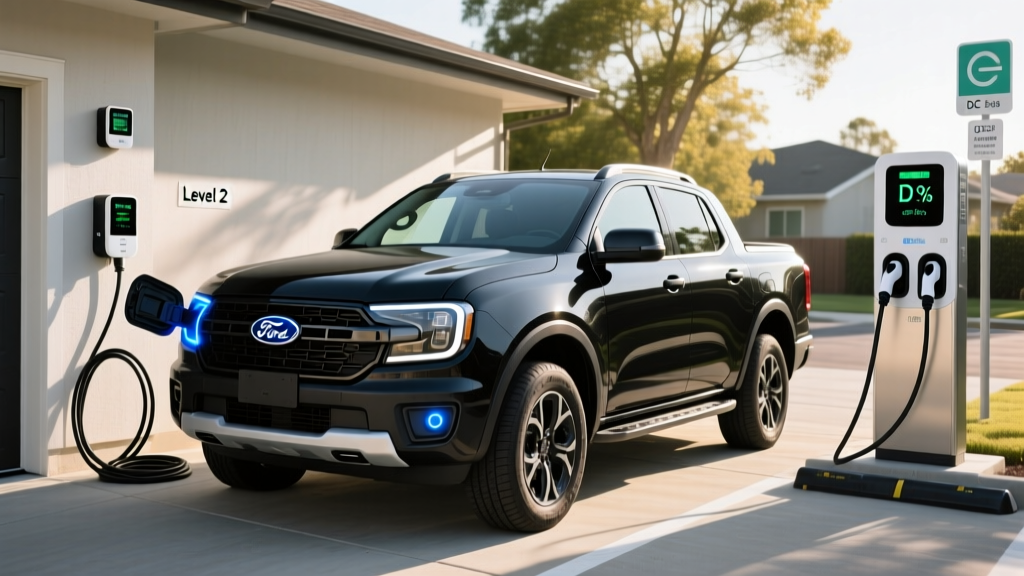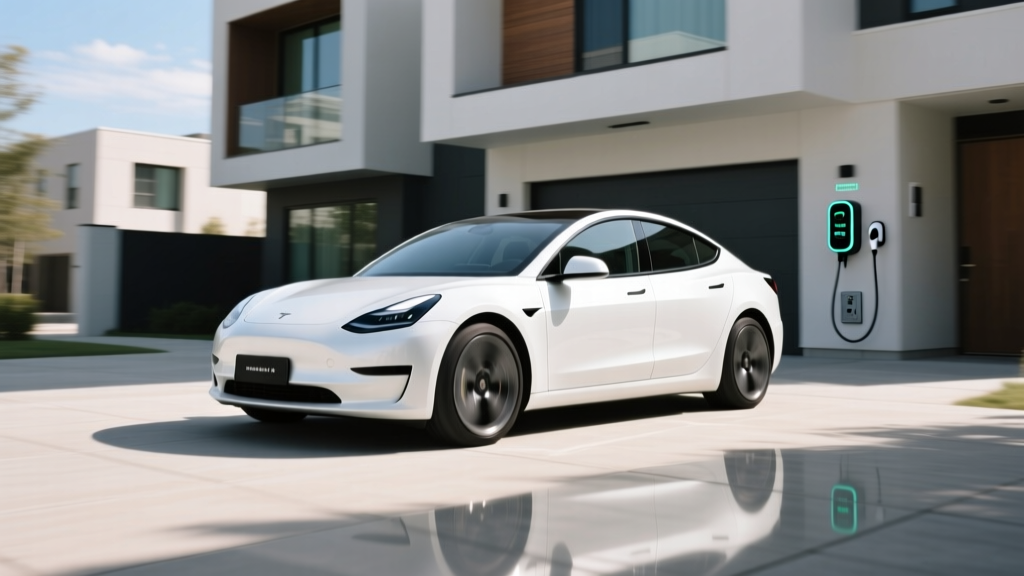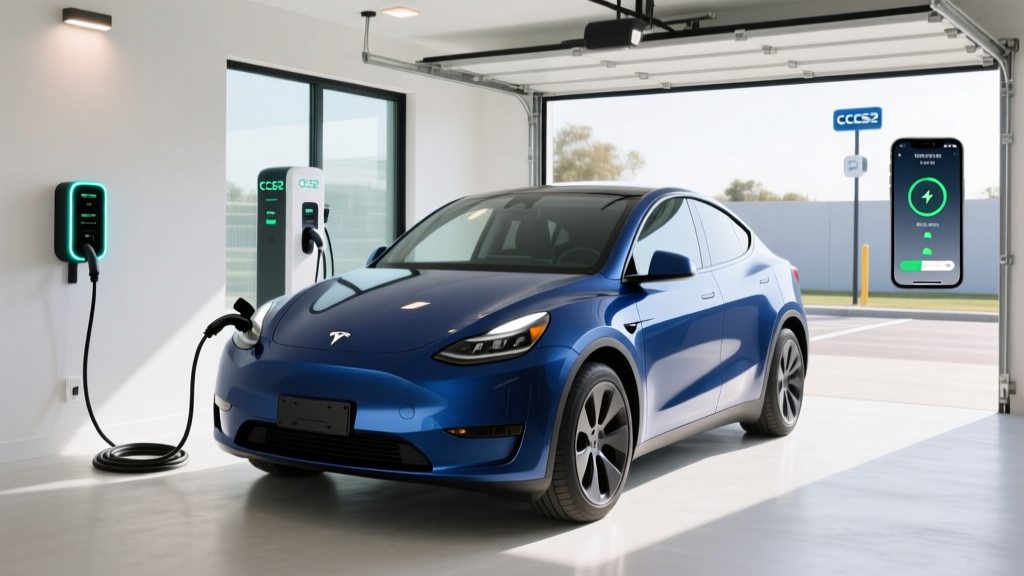
If you own or are considering a Tesla Model Y Standard Range, understanding how, where, and how fast you can charge is just as important as the vehicle's sticker price. The Model Y remains one of the best-selling EVs in the U.S., and the Standard Range (rear-wheel-drive) variant is the most accessible entry point into Tesla's ecosystem — but its smaller battery means charging strategy matters more than on Long Range or Performance trims.
This guide breaks down every charging scenario for the 2025–2026 Tesla Model Y Standard Range: home installation requirements and costs, public DC fast-charging performance, connector compatibility, and real-world cost-per-mile math compared to a gas crossover.
Tesla Model Y Standard Range: Battery, Range, and Charging Specs at a Glance
Before plugging in anywhere, here are the baseline numbers that govern every charging decision you'll make with this vehicle:
| Spec | Value |
|---|---|
| EPA Range | ~260 miles (2025 refresh RWD) |
| Real-World Highway (70 mph, moderate climate) | ~220–235 miles |
| Battery Capacity (usable) | ~60 kWh (LFP chemistry) |
| Max DC Fast Charge Rate | 170 kW peak |
| 10–80% DC Fast Charge Time | ~25 minutes (with preconditioning) |
| Max Level 2 AC Charge Rate | 11.5 kW (48A onboard charger) |
| Level 2 Full Charge Time (0–100%) | ~6.5 hours at 11.5 kW |
| Connector (North America) | NACS (native Tesla) |
| EPA Efficiency | ~123 MPGe combined / 27 kWh/100 mi |
| Starting MSRP (2025 RWD) | ~$44,990 (before incentives) |
| Battery Warranty | 8 years / 100,000 miles (≥70% retention) |
Charging Levels Explained: How Fast Does Each Add Range?
There are three tiers of EV charging. Understanding the difference between kW (kilowatts — the rate of power delivery) and kWh (kilowatt-hours — the total energy stored in your battery) is essential. Think of kW as the flow rate of a hose and kWh as the size of the bucket.
| Level | Voltage / Power | Miles of Range Added per Hour | Best For |
|---|---|---|---|
| Level 1 (Standard Outlet) | 120V / 1.0–1.4 kW | ~3–5 miles/hr | Emergency top-ups, overnight if you drive <30 mi/day |
| Level 2 (Home / Workplace) | 240V / 7.2–11.5 kW | ~25–44 miles/hr | Daily home charging, workplace charging |
| DC Fast Charging | 400V+ / 50–250 kW | ~150–300+ miles/hr (peak) | Road trips, rapid top-ups |
What this means for the Model Y Standard Range: With a ~60 kWh battery, Level 1 charging would take roughly 50+ hours for a full charge — impractical for most owners. Level 2 at 11.5 kW (the Model Y's max AC acceptance rate) will fully replenish the battery in about 6.5 hours, making overnight charging effortless. DC fast charging at a Tesla Supercharger V3 or V4 can add roughly 150 miles in 15 minutes when the battery is preconditioned and below 50% SoC.
Home Charger Installation: Requirements, Costs, and Panel Upgrades
Installing a Level 2 home charger is the single most impactful upgrade for EV ownership. For the Model Y Standard Range, a properly installed Level 2 station means waking up every morning with 200+ miles of range — eliminating routine visits to public chargers entirely.
Electrical Requirements for the Model Y
The Model Y's onboard charger accepts up to 11.5 kW (48 amps) on a 240V circuit. Per the National Electrical Code (NEC), continuous loads like EV charging can only use 80% of a circuit's rated capacity, so you need a 60-amp dedicated breaker to deliver the full 48A to the car. A 50-amp breaker (delivering 40A / 9.6 kW) is also common and still provides ~36 miles of range per hour — sufficient for most daily needs.
| Cost Component | Low Estimate | High Estimate | Notes |
|---|---|---|---|
| Level 2 Charger (Equipment) | $400 | $700 | Tesla Wall Connector, ChargePoint Home Flex, Emporia |
| Electrician Labor (standard install) | $500 | $1,500 | Depends on panel proximity, conduit run length |
| Electrical Permit | $50 | $300 | Varies by municipality |
| Panel Upgrade (if needed: 100A → 200A) | $1,500 | $4,000 | Required if panel lacks capacity for a new 60A circuit |
| Total (no panel upgrade) | $950 | $2,500 | Most homes with 200A panels |
| Total (with panel upgrade) | $2,450 | $6,500 | Older homes with 100A service |
Will You Need a Panel Upgrade?
This is the biggest cost wildcard. Homes built after ~2000 typically have 200-amp electrical panels with spare breaker slots — a straightforward install. Homes with 100-amp service, older fuse boxes, or panels already near capacity (running electric ranges, dryers, and HVAC) may require a service upgrade. A licensed electrician will perform a load calculation during the estimate to determine if your panel can handle an additional 60A continuous draw. If you're in an older home, budget for this possibility.
Safety and Code Considerations
Any compliant Level 2 installation must include:
- Dedicated circuit: The charger cannot share a breaker with other appliances.
- GFCI protection: Required by NEC 2020+ for EV charging outlets (hardwired Wall Connectors may have built-in GFCI).
- Outdoor rating: If installing outside, the charger must carry a NEMA 4 (weather-resistant) rating. The Tesla Wall Connector and ChargePoint Home Flex are both rated for outdoor use.
- Hardwired vs. plug: Hardwired installations (no plug) are simpler and avoid the need for a NEMA 14-50 receptacle, but a plug gives you portability if you move. Both are code-compliant.
Home Charger Equipment Recommendations
Here are three chargers well-matched to the Model Y Standard Range's 11.5 kW AC acceptance rate:
Tesla Wall Connector (Gen 3)
- Power Output: Up to 11.5 kW (48A)
- Connector: NACS (native Tesla)
- Cable Length: 24 ft
- Smart Features: Wi-Fi updates, power sharing (multiple units on one circuit), access control
- Price: ~$475
- Best For: Tesla-only households; cleanest integration
ChargePoint Home Flex
- Power Output: Up to 12 kW (50A), configurable down to 16A
- Connector: NACS (2025+ model) or J1772 with NACS adapter
- Cable Length: 23 ft
- Smart Features: App scheduling, utility demand-response, Alexa integration
- Price: ~$550–$650
- Best For: Multi-EV households; utility rebate programs
Emporia Vue Smart Charger
- Power Output: Up to 11.5 kW (48A)
- Connector: NACS (2025+ model) or J1772
- Cable Length: 24 ft
- Smart Features: Solar integration, real-time energy tracking, load management
- Price: ~$400–$500
- Best For: Budget-conscious buyers; solar homes
All three chargers will max out the Model Y's 11.5 kW onboard charger. If you install on a 50A breaker (40A delivery), any of these will deliver 9.6 kW — still adding roughly 36 miles per hour of charging.
Public DC Fast Charging: Tesla Superchargers and Beyond
The Model Y Standard Range charges natively on the Tesla Supercharger network using the NACS connector — no adapter needed. Tesla's V3 Superchargers deliver up to 250 kW, and V4 cabinets are rolling out with higher sustained power delivery, but the Standard Range's ~170 kW peak acceptance rate means you won't fully utilize those speeds.
Charging Curve Reality
Peak kW is not sustained kW. Here's what the actual DC fast-charge session looks like for the Model Y Standard Range's ~60 kWh LFP battery:
- 10–30% SoC: Peaks near 170 kW — adds roughly 3–4 miles per minute
- 30–60% SoC: Sustains around 120–140 kW
- 60–80% SoC: Tapers to 80–100 kW
- 80–100% SoC: Drops sharply below 40 kW — avoid waiting for this on road trips
Practical result: A 10–80% session takes approximately 25 minutes with proper battery preconditioning (the car does this automatically when you navigate to a Supercharger). Plan to charge to 80% and go — the last 20% takes nearly as long as the first 70%.
Non-Tesla DC Fast Chargers (CCS1 Networks)
With Tesla opening the Supercharger network to other brands, you might wonder about using non-Tesla chargers. The Model Y has a native NACS port, so you'll need a NACS-to-CCS1 adapter (approximately $150–$250) to use Electrify America, EVgo, or ChargePoint DC fast stations. Tesla sells an official adapter, and third-party options from Lectron and A2Z are available.
| Connector Standard | Native on Model Y? | Adapter Needed? | Networks |
|---|---|---|---|
| NACS (Tesla) | Yes | No | Tesla Supercharger, Rivian Adventure Network, open Tesla stalls |
| CCS1 | No | Yes (NACS-to-CCS1) | Electrify America, EVgo, ChargePoint, Ionity (EU) |
| CHAdeMO | No | Yes (rare, expensive) | Largely legacy; avoid relying on this |
| J1772 (AC Level 2) | No | Yes (J1772-to-NACS, included with car) | Public Level 2 stations, workplaces, hotels |
The Model Y ships with a J1772-to-NACS adapter in the glove box for public Level 2 charging. For DC fast charging outside the Supercharger network, purchase a NACS-to-CCS1 adapter and keep it in the frunk.
Cost to Charge: Home vs. Public vs. Gas
This is where EV ownership economics become concrete. Here's what charging the Model Y Standard Range actually costs across common scenarios, using the ~60 kWh battery and national average electricity rates:
| Scenario | Rate ($/kWh) | Full Charge Cost (0–100%) | Cost per Mile (at 27 kWh/100 mi) |
|---|---|---|---|
| Home Off-Peak (utility TOU plan) | $0.08–$0.12 | $4.80–$7.20 | $0.022–$0.032 |
| Home Standard Rate (national avg.) | $0.16 | $9.60 | $0.043 |
| Public Level 2 (ChargePoint, etc.) | $0.25–$0.40 | $15.00–$24.00 | $0.068–$0.108 |
| Tesla Supercharger (national avg.) | $0.28–$0.36 | $16.80–$21.60 | $0.076–$0.097 |
| Gas Crossover Baseline (25 MPG, $3.40/gal) | — | — | $0.136 |
The bottom line: Charging at home on an off-peak rate costs roughly one-quarter to one-third what a comparable gas crossover costs per mile. Even at Supercharger rates, you're paying 30–40% less per mile than gasoline. Over 15,000 miles per year, home charging saves approximately $1,300–$1,700 annually compared to gas at current prices.
However, if you rely exclusively on public DC fast charging, savings narrow to $400–$700 per year — making home charging access the single most important economic factor in EV ownership.
Tesla Model Y Standard Range: Federal Tax Credit and Incentive Eligibility
Under IRS §30D clean vehicle credit rules, the Tesla Model Y may qualify for up to $7,500 in federal tax credits, which can be applied as a point-of-sale rebate at the dealership. However, eligibility depends on several factors that change frequently:
- MSRP Cap: SUVs/crossovers must have an MSRP ≤ $80,000 (the Model Y Standard Range clears this easily at ~$44,990).
- Buyer Income Cap: Modified AGI ≤ $150,000 (single), $225,000 (head of household), or $300,000 (joint).
- Battery Sourcing Requirements: The critical minerals and battery component thresholds tighten each year. For 2025–2026, the required percentage of North American-sourced minerals and components increases, which may reduce or eliminate the credit for some builds. Always verify current eligibility on fueleconomy.gov before purchasing.
- Point-of-Sale Transfer: You can transfer the credit to the dealer at purchase, reducing your out-of-pocket cost immediately rather than waiting for a tax refund.
Check the latest eligibility details with your tax professional and on IRS.gov, as battery sourcing rules and qualifying VIN lists update regularly.
Frequently Asked Questions
How much does it cost to install a home EV charger for the Tesla Model Y?
Expect $950–$2,500 for a standard Level 2 installation (equipment, electrician labor, and permit) if your home has a 200-amp panel with available capacity. If you need a panel upgrade from 100A to 200A, add $1,500–$4,000, bringing the total to $2,450–$6,500. Get three quotes from licensed electricians — prices vary significantly by region and installation complexity.
How fast will each charging level add range to my Model Y Standard Range?
Level 1 (120V outlet): ~3–5 miles per hour. Level 2 (240V, 48A): ~44 miles per hour at the Model Y's 11.5 kW max. DC Fast Charging (Tesla Supercharger): up to ~150 miles in 15 minutes at peak rate, though sustained speed depends on state of charge and battery temperature.
Which charger and connector is compatible with the Tesla Model Y?
The Model Y uses the NACS (North American Charging Standard) connector natively. It plugs directly into all Tesla Superchargers and the growing number of NACS-equipped public stations. For CCS1-based DC fast chargers (Electrify America, EVgo), you'll need a NACS-to-CCS1 adapter. For J1772 Level 2 public chargers, the J1772-to-NACS adapter included with the car works fine.
How much does charging the Model Y cost per mile compared to gas?
At home on a national-average electricity rate ($0.16/kWh), the Model Y Standard Range costs about $0.043 per mile. A comparable gas crossover at 25 MPG and $3.40/gallon costs $0.136 per mile. Home charging saves roughly $0.09 per mile, or about $1,350 over 15,000 miles of annual driving.
What electrical upgrades might I need for a Level 2 home charger?
The most common upgrade is a panel capacity increase from 100A to 200A service, which costs $1,500–$4,000 depending on your utility and region. You may also need to replace a full panel if breaker slots are maxed out. In some cases, a utility transformer upgrade is required if your neighborhood infrastructure can't support additional 200A service — your electrician will identify this during the load calculation. Homes with existing 200A panels and spare slots typically need no upgrades beyond the dedicated 60A breaker and conduit run.
Should I charge the LFP battery to 100% daily?
Yes. Unlike NMC batteries, LFP chemistry (used in the Model Y Standard Range) benefits from regular 100% charges. Tesla recommends setting the charge limit to 100% and charging fully at least once per week to allow the battery management system to calibrate cell voltages accurately. This is a key ownership difference from Long Range and Performance trims, which use NMC chemistry and should typically be limited to 80–90% for daily use.