Tesla Model Y Speed, Range, and Charging: Beyond the EPA Sticker
If you've searched for a Tesla Model Y speed range test, you've likely noticed a gap between Tesla's published figures and what owners actually experience on the road. The 2026 Tesla Model Y Long Range AWD carries an EPA-estimated 320 miles of range, but real-world highway driving at 70-75 mph, cold-weather commutes, and DC fast-charging curve behavior all reshape that number in practice.
This guide breaks down the Model Y's tested performance and efficiency data, then maps those numbers directly to charging infrastructure — because knowing how far you can go is only useful if you know how fast you can refill. We'll cover Level 1 through DC fast charging speeds, home installation costs, connector compatibility across the expanding NACS ecosystem, and per-mile charging costs versus gas.
EPA Estimate: 320 miles
Real-World Highway (70-75 mph, 68°F): ~265–285 miles
Cold-Weather Highway (30°F or below): ~220–250 miles
Mixed City/Highway (moderate climate): ~290–310 miles
Range loss stems from higher aerodynamic drag at speed, cabin heating loads in winter, and battery thermal management overhead. Source: fueleconomy.gov, owner-reported data.
Model Y Performance and Efficiency Specs at a Glance
| Spec | Long Range AWD | Performance |
|---|---|---|
| EPA Range | 320 miles | 293 miles |
| Battery (usable) | ~75 kWh (NMC) | ~75 kWh (NMC) |
| Efficiency | 122 MPGe (27 kWh/100mi) | 117 MPGe (29 kWh/100mi) |
| Peak DC Fast Charge | 250 kW | 250 kW |
| 10–80% DC Fast Charge | ~25 min | ~25 min |
| Level 2 Max Acceptance | 11.5 kW (48A) | 11.5 kW (48A) |
| 0–60 mph | 4.8 sec | 3.5 sec |
| Horsepower | 384 hp | 456 hp |
| Base MSRP | $44,990 | $48,990 |
| Battery/Drive Warranty | 8 yr / 120,000 mi | 8 yr / 120,000 mi |
The Model Y Long Range's 27 kWh/100mi efficiency figure is among the best in the compact electric SUV segment. For context, that means every usable kWh in the ~75 kWh battery pack delivers roughly 3.7 miles of range under EPA test cycles. At sustained highway speeds, expect consumption to climb to 30–33 kWh/100mi, which compresses effective range accordingly.
Charging Levels Explained: How Fast Does Each Level Add Range?
Understanding charging speed requires distinguishing kW (kilowatts — the rate of power delivery, like water flow from a hose) from kWh (kilowatt-hours — the total energy stored, like the size of the bucket). A 250 kW DC fast charger delivers energy rapidly; a 75 kWh battery is the bucket being filled.
| Level | Power (kW) | Miles Added/Hour | Full Charge Time | Typical Use |
|---|---|---|---|---|
| Level 1 (120V) | 1.0–1.4 kW | 3–5 mi/hr | ~55–75 hours | Overnight trickle, emergencies |
| Level 2 (240V, 48A) | 11.5 kW | ~37–42 mi/hr | ~7–8 hours (0–100%) | Daily home charging |
| Level 2 (240V, 32A) | 7.7 kW | ~25–28 mi/hr | ~10–11 hours (0–100%) | Smaller circuits, NEMA 14-50 |
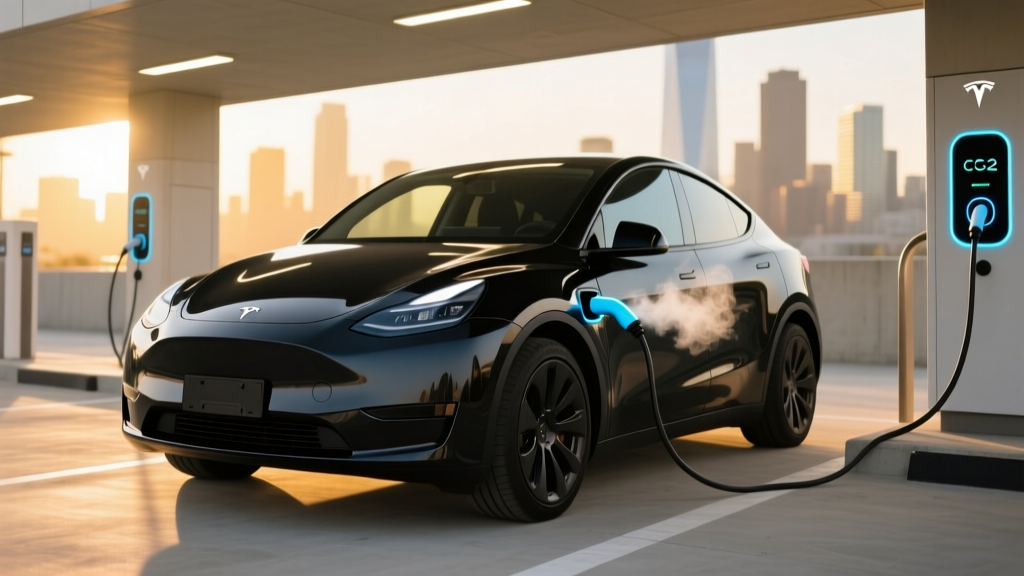
| DC Fast (Supercharger V3) | Peak 250 kW | Up to ~1,000 mi/hr (peak) | ~25 min (10–80%) | Road trips, quick top-ups |
The critical nuance with DC fast charging is the charge curve. The Model Y hits its 250 kW peak only between roughly 10–30% state of charge (SoC). As the battery fills, the rate tapers: expect ~150 kW around 50% SoC, ~75 kW at 70%, and under 40 kW above 85%. This is why the 10–80% metric (~25 minutes) is more useful than peak kW alone — it captures the sustained charging reality.
Home Charger Installation: Electrical Requirements and Real Costs
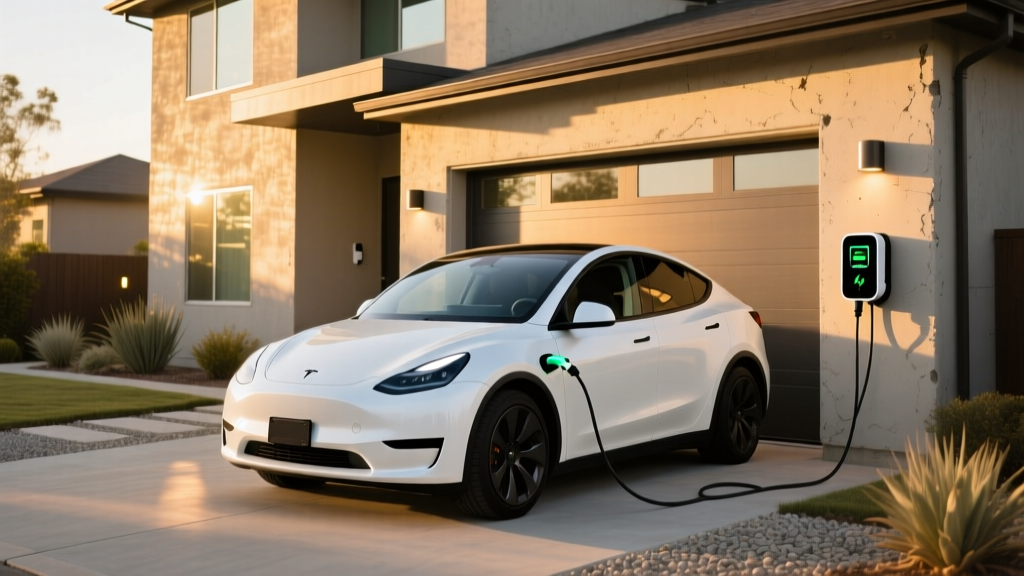
The single biggest question from new Model Y buyers: what does it actually cost to install a Level 2 home charger, and what electrical work is involved?
Electrical requirements for a full-speed Model Y home setup:
- Circuit: 60-amp dedicated breaker (to deliver 48 continuous amps per NEC 80% rule)
- Voltage: 240V split-phase (standard US residential)
- Wire: 6 AWG copper (THHN in conduit or NM-B depending on local code)
- Outlet or hardwire: NEMA 14-60 receptacle or direct hardwire (hardwire preferred for 48A+ circuits)
The Model Y's onboard charger accepts up to 11.5 kW (48A at 240V). A 40-amp circuit (NEMA 14-50, delivering 32A continuous / 7.7 kW) will work but adds range ~25% slower — adequate if your daily driving is under 60 miles.
| Component | Simple Install (panel nearby) | Complex Install (long run / upgrades) |
|---|---|---|
| Level 2 Charger Equipment | $400–$700 | $400–$700 |
| Electrician Labor | $500–$1,000 | $1,500–$3,000 |
| Permit & Inspection | $100–$250 | $150–$400 |
| Panel Upgrade (if needed) | $0 | $1,500–$3,500 |
| Conduit, Wire, Misc. | $100–$300 | $400–$1,200 |
| TOTAL | $1,100–$2,250 | $3,950–$8,800 |
For most homes with a 200-amp panel and a garage or carport within 30 feet of the panel, expect to pay $1,200–$2,500 total for a fully permitted 48A/60A circuit with a quality Level 2 charger. The IRS §30D credit does not cover home charging equipment directly, but the Residential Clean Energy Credit may apply to certain energy-storage installations — consult a tax professional for eligibility.
Connector Compatibility: NACS, CCS, and the 2026 Charging Landscape
The 2026 Tesla Model Y ships with the NACS (North American Charging Standard) connector — the same native Tesla plug now adopted by Ford, GM, Rivian, Hyundai, Kia, and most major automakers. This means Model Y owners can plug directly into any Tesla Supercharger without an adapter.
But what about non-Tesla public chargers?
| Connector Type | Native Support? | Adapter Needed? | Where You'll Find It |
|---|---|---|---|
| NACS (Tesla) | ✅ Yes — native | None | Tesla Superchargers, growing non-Tesla networks |
| CCS1 | ❌ No | NACS-to-CCS adapter (~$200–$250) | Electrify America, EVgo, ChargePoint DC stations |
| CHAdeMO | ❌ No | NACS-to-CHAdeMO (rare, ~$400+) | Legacy stations (declining) |
| J1772 (Level 2) | ✅ Adapter included | J1772-to-NACS (comes with car) | Public Level 2 stations, workplaces, hotels |
By 2026, most new DC fast-charging installations use NACS, but thousands of CCS1 stations remain operational. If you road-trip outside the Supercharger network regularly, a NACS-to-CCS adapter is a worthwhile $200 investment. Tesla includes a J1772-to-NACS adapter in the glovebox for Level 2 public charging.
Level 2 Home Charger Recommendations for the Model Y
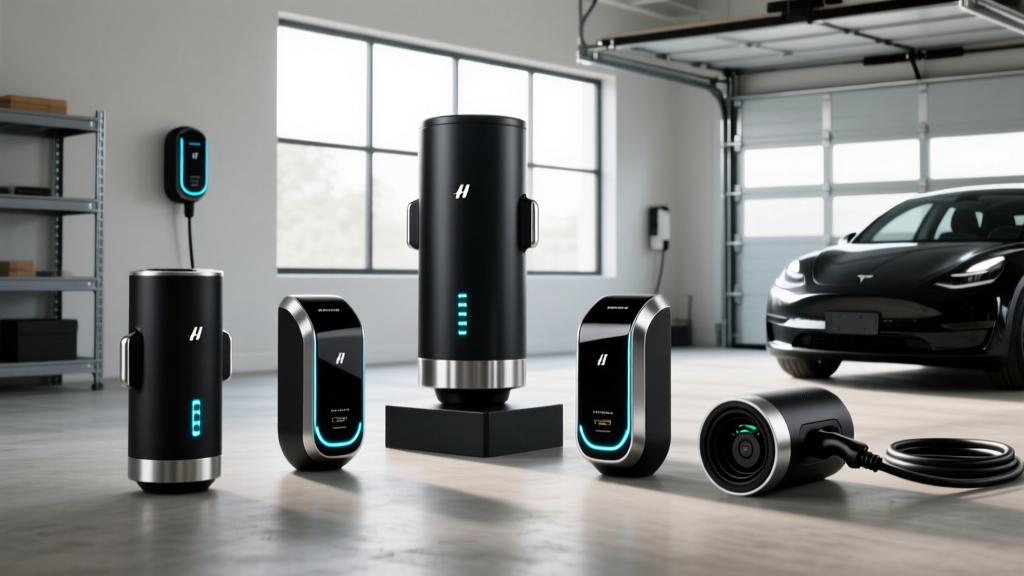
Since the Model Y can accept up to 11.5 kW (48A), pairing it with a 48A charger maximizes your home charging speed. Here are three proven units:
Tesla Wall Connector
- Power: 11.5 kW (48A)
- Connector: NACS native
- Cable: 24 ft
- Smart Features: Wi-Fi updates, load sharing, power metering via app
- Price: ~$425
- Verdict: Best value for Tesla owners. Seamless integration, sleek design, fastest home charging the Model Y can accept.
ChargePoint Home Flex
- Power: Up to 12 kW (50A) — adjustable down to match circuit
- Connector: NACS (2026 model) or J1772 with adapter
- Cable: 23 ft
- Smart Features: App scheduling, energy reports, Alexa integration
- Price: ~$550
- Verdict: Best for multi-EV households or those planning to add a non-Tesla EV later.
Emporia Vue Level 2
- Power: 11.5 kW (48A)
- Connector: NACS or J1772 options
- Cable: 24 ft
- Smart Features: Whole-home energy monitoring integration, scheduling, solar-aware charging
- Price: ~$400
- Verdict: Best budget smart charger with excellent energy-monitoring features for solar-equipped homes.
Cost to Charge: Model Y Per-Mile Cost vs. Gas
Charging economics vary dramatically depending on where and when you plug in. Below are realistic 2026 cost scenarios for a Model Y Long Range averaging 27 kWh/100mi (EPA) and 30 kWh/100mi (highway):
| Scenario | Rate ($/kWh) | Cost/Mile | Annual Cost (12,000 mi) |
|---|---|---|---|
| Home (off-peak TOU rate) | $0.09/kWh | $0.024 | $288 |
| Home (average US residential) | $0.16/kWh | $0.043 | $516 |
| Public Level 2 (workplace/mall) | $0.25/kWh | $0.068 | $816 |
| Tesla Supercharger (avg US) | $0.32/kWh | $0.086 | $1,032 |
| Non-Tesla DC Fast (EA, EVgo) | $0.43/kWh | $0.116 | $1,392 |
| Gas SUV (25 MPG, $3.40/gal) | — | $0.136 | $1,632 |
Even at Supercharger rates, the Model Y costs roughly 47% less per mile than a comparable gas SUV getting 25 MPG. At home off-peak rates, the savings are dramatic: $1,344/year versus gas. Over five years of home-dominant charging, that's $5,000–$6,500 in fuel savings alone — a meaningful offset to the Model Y's purchase price.
Safety, Code, and Installation Best Practices
EV charging equipment carries continuous high-current loads for hours at a time. Electrical safety is non-negotiable:
- Dedicated circuit: Your EV charger must have its own breaker — never share a circuit with other major appliances.
- GFCI protection: NEC 2023/2026 requires GFCI protection for all outdoor receptacles used for EV charging. Hardwired installations may be exempt in some jurisdictions — check local code.
- Outdoor rating: If your charger mounts outside, it must carry a NEMA 4 (weatherproof) rating. All units recommended above meet this standard.
- Permit required: Virtually all jurisdictions require an electrical permit for a new 240V circuit. Unpermitted work can void insurance coverage and create fire risk.
- Load calculation: A licensed electrician must calculate your panel's total load before adding a 40A or 60A breaker. This is where panel upgrades get triggered.
For the Model Y specifically, Tesla recommends hardwiring the Wall Connector rather than using a NEMA 14-60 receptacle when installing at 48A. Hardwired connections eliminate the plug/receptacle as a potential failure point under sustained high-current draw and avoid NEC receptacle-rating complications at 60A.
Frequently Asked Questions
How much does it cost to install a home EV charger for a Tesla Model Y?
Expect $1,200–$2,500 for a straightforward install (200A panel, short wire run, no panel upgrade). Complex installs requiring a panel upgrade or long conduit runs can reach $4,000–$8,800. Always get three quotes from licensed electricians and verify permit inclusion.
How fast will each charging level add range to my Model Y?
Level 1 (120V): 3–5 miles per hour. Level 2 (240V, 48A): ~37–42 miles per hour. DC fast charging at a V3 Supercharger: up to 175 miles in 15 minutes under ideal conditions, though the charge curve tapers significantly above 50% SoC.
Which connector does the 2026 Model Y use, and do I need adapters?
The 2026 Model Y uses NACS natively. No adapter is needed for Tesla Superchargers or the growing network of NACS-equipped public chargers. A NACS-to-CCS adapter (~$200–$250) is recommended if you'll use Electrify America or other legacy CCS networks. Tesla includes a J1772-to-NACS adapter for public Level 2 stations.
How much does charging a Model Y cost per mile compared to gas?
Home charging at average US electricity rates ($0.16/kWh) costs roughly $0.043/mile — about 68% cheaper than a 25 MPG gas SUV at $3.40/gallon ($0.136/mile). Even exclusive Supercharger use at $0.32/kWh ($0.086/mile) saves ~37% versus gas.
What electrical upgrades might I need for a home charger?
Homes with a 200-amp or larger panel typically need only a new 60-amp breaker and wire run. Homes with 100-amp panels often require a panel upgrade ($1,500–$3,500) to accommodate a 48A charger circuit while maintaining code-required headroom for other household loads. Older homes with knob-and-tube or aluminum wiring may need additional upgrades.
Does the Tesla Model Y's real-world range match the EPA estimate?
In mixed driving under moderate conditions, expect 290–310 miles from the Long Range's 320-mile EPA rating. Sustained highway driving at 75 mph drops this to roughly 265–285 miles. In freezing temperatures with cabin heat, plan for 220–250 miles. These figures are consistent with independent testing and align with the EPA's published data for the current Model Y.
Is the federal tax credit available for the 2026 Model Y?
The IRS §30D New Clean Vehicle Credit offers up to $7,500, but eligibility depends on MSRP caps (the Model Y qualifies as an SUV under the $80,000 cap), buyer income limits ($300K joint / $150K single), and battery critical-mineral sourcing requirements that change annually. The credit can now be transferred to the dealer as a point-of-sale discount. Verify current-year eligibility on IRS.gov before purchasing, as sourcing rules tighten each year.