The Tesla Model Y+ in Context: Range, Battery, and What Charging Looks Like
If you've been searching for tesla model y+ range china, you're likely looking at the refreshed "Juniper" Model Y Long Range (sometimes badged Model Y+ in Chinese-market materials) that Tesla began delivering in China in early 2025 and rolled into other markets through 2025–2026. The headline numbers are compelling: a WLTP rating of up to 593 km (~368 miles) on the Chinese/European spec, paired with a ~78.4 kWh (usable) LFP or NMC pack depending on trim and market. In the U.S., the equivalent Long Range AWD carries an EPA range of 320 miles on the 2025/2026 model year.
But range is only half the ownership equation. How you charge — at home, on the road, and at what cost — determines whether those 320 miles feel liberating or stressful. This guide breaks down exactly what the Model Y+ needs from your electrical panel, your wallet, and your daily routine.
EPA sticker: 320 miles
Highway (70 mph, 75°F): ~280–295 miles
Cold weather (30°F, mixed driving): ~230–260 miles
City/regen-heavy driving: ~300–315 miles
WLTP (China/EU spec Model Y+): 593 km / ~368 mi — note WLTP tests are more generous than EPA; expect roughly 85–90% of WLTP in mixed real-world driving.
Charging Levels Explained: kW, Miles Per Hour, and 10–80% Times
Before plugging in anything, let's nail the single most important distinction in EV ownership: kW (kilowatts) measures power — the rate of charging. kWh (kilowatt-hours) measures energy — the battery's capacity. Think of kW as the width of the hose and kWh as the size of the bucket. The Model Y+ battery holds roughly 78.4 kWh of usable energy. How fast you fill it depends on the kW the charger can deliver and what the car can accept.
| Level | Voltage / Amps | Power (kW) | Miles Added / Hour | 10–80% Time |
|---|---|---|---|---|
| Level 1 (120V outlet) | 120V / 12A | ~1.4 kW | 3–5 mi/hr | ~55+ hours (impractical) |
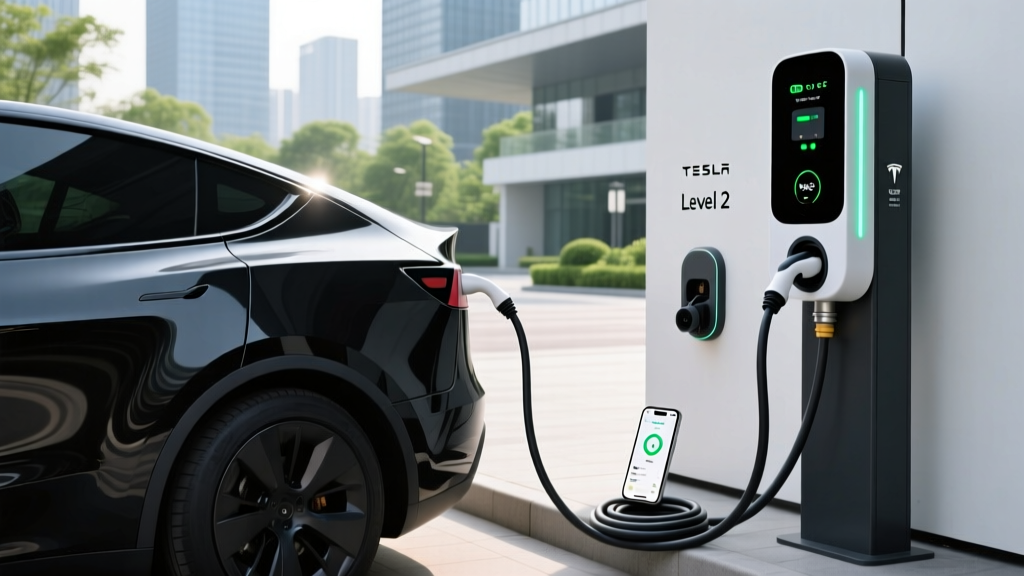
| Level 2 (240V home) | 240V / 48A | ~11.5 kW | 30–37 mi/hr | ~5.5 hours |
| Level 2 (240V / 32A) | 240V / 32A | ~7.7 kW | 20–25 mi/hr | ~8 hours |
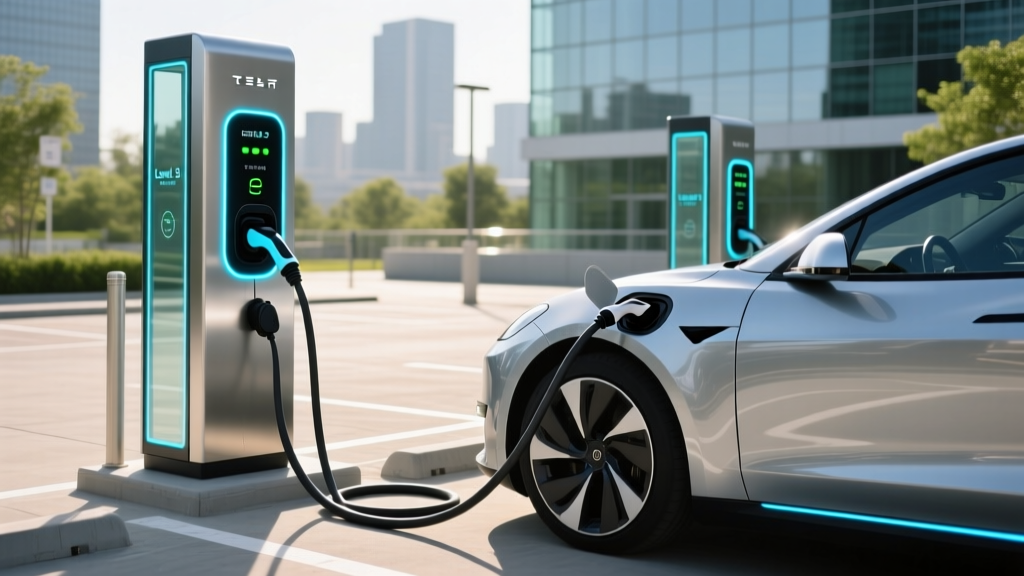
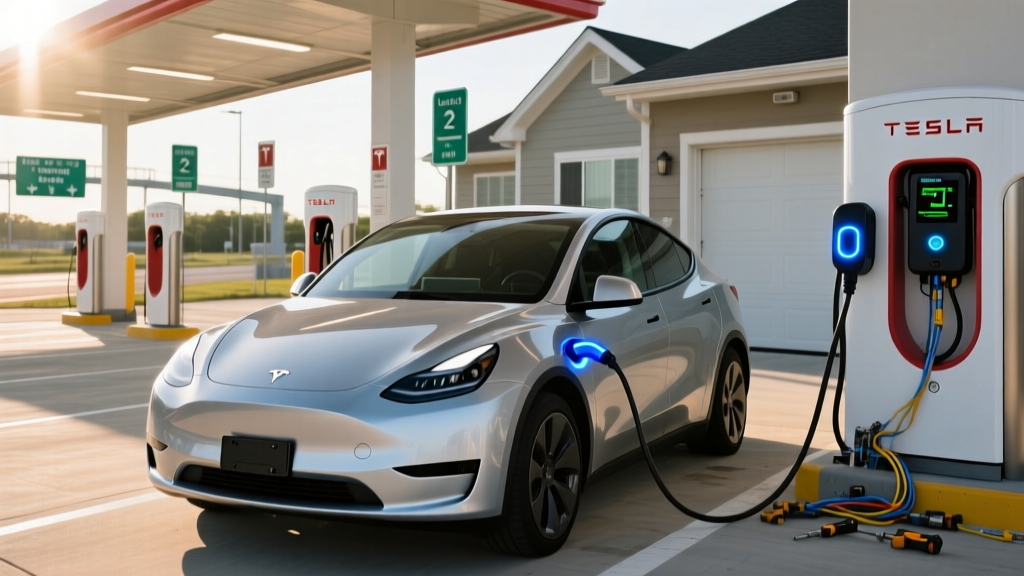
| DC Fast (V3 Supercharger) | 400V architecture | Peak 250 kW | Up to ~1,000 mi/hr (peak) | ~25 minutes |
| DC Fast (V4 Supercharger) | Newer cabinet | Peak 250–325 kW* | Similar to V3 at peak | ~20–23 minutes |
*V4 Supercharger peak rates vary by site and vehicle handshake; the Model Y's 400V architecture limits sustained rates compared to 800V vehicles like the Hyundai Ioniq 5. Expect the charge curve to taper significantly above 60% SoC — peak 250 kW is typically only sustained between 10–30% SoC before stepping down to ~150 kW, then ~100 kW, then ~50 kW above 80%.
Home Charging Installation: Electrical Requirements, Panel Upgrades, and Real Costs
Most Model Y+ owners will want a Level 2 home charger on a dedicated 240V circuit. Here's what that actually requires from your home's electrical system — and what it costs.
Electrical Requirements
The Tesla Wall Connector (Gen 3 or the updated 2025/2026 revision) supports up to 48 amps continuous draw, which requires a 60-amp dedicated breaker on a 240V circuit (NEC code requires breakers rated at 125% of continuous load: 48A × 1.25 = 60A). If your panel has the headroom, this is straightforward. If not, you may need a panel upgrade.
Do You Need a Panel Upgrade?
Homes built before 2000 often have 100A or 150A main service. Adding a 60A EV circuit to an already-loaded 100A panel (electric dryer, range, HVAC) may exceed safe capacity. A licensed electrician will perform a load calculation per NEC Article 220. If you're over capacity, options include:
- Panel upgrade to 200A: $1,800–$4,000 depending on your utility and region
- Smart load management: Devices like the Emporia Smart Panel or Tesla's own load-sharing feature can dynamically reduce charger amperage when other appliances draw power — potentially avoiding a panel upgrade entirely ($200–$500 for the device)
- Lower-amperage circuit: Running a 32A charger on a 40A breaker still delivers ~7.7 kW — enough to fully recharge a Model Y+ overnight in ~8 hours
| Item | Low End | Typical | High End |
|---|---|---|---|
| Level 2 Charger (hardware) | $350 | $500 | $700 |
| Electrician labor (run 240V/60A circuit, ~30 ft) | $600 | $1,200 | $2,500 |
| Permit & inspection | $50 | $150 | $350 |
| Panel upgrade (if needed) | $0 | $0 | $3,500 |
| Total (no panel upgrade) | $1,000 | $1,850 | $3,550 |
| Total (with panel upgrade) | $2,800 | $4,000 | $7,000 |
Note: The federal §30C alternative fuel vehicle refueling property credit covers up to 30% of home charger installation costs (max $1,000) if you live in an eligible census tract. Check IRS guidelines for current-year eligibility.
Connector Compatibility: NACS, CCS, and Adapter Realities
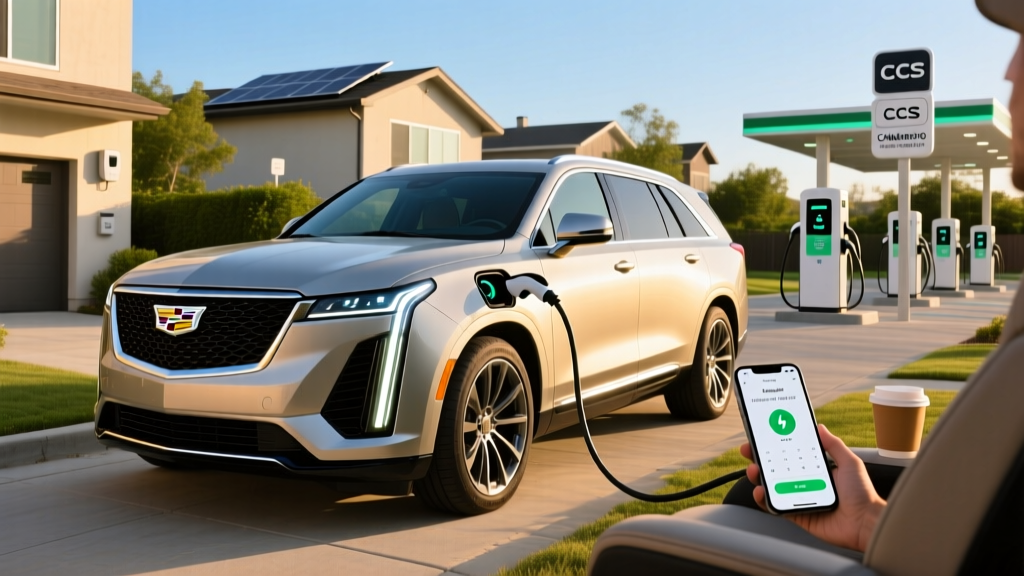
The Tesla Model Y sold in North America uses the NACS (North American Charging Standard) connector — Tesla's proprietary plug, now adopted by Ford, GM, Rivian, Hyundai, and most major automakers as of 2025–2026. In China and Europe, the Model Y+ uses GB/T (China) or CCS2 (Europe) connectors per local regulation.
| Market | AC (Level 2) Connector | DC Fast Connector | Adapter Needed for CCS Stations? |
|---|---|---|---|
| North America (2025+) | NACS | NACS (Supercharger native) | Yes — Tesla CCS adapter (~$175) for Electrify America, etc. |
| China | GB/T AC | GB/T DC | No — native GB/T network |
| Europe | Type 2 (Mennekes) | CCS2 | No — native CCS2 |
Key takeaway for U.S. buyers importing or comparing China-spec data: The Chinese Model Y+ charges natively on GB/T infrastructure. If you're in the U.S., your Model Y charges on NACS at Superchargers and needs a CCS adapter for third-party DC networks. As of 2026, most new public chargers in the U.S. are being built with NACS connectors, reducing the adapter need over time.
Charging Cost Per Mile: Home vs. Public vs. Gas
One of the strongest ownership arguments for the Model Y+ is fuel-cost savings — but only if you charge smartly. Here's how the math works for the U.S. Long Range AWD equivalent at ~3.5 miles/kWh (roughly 119 MPGe combined per fueleconomy.gov).
| Scenario | Rate | Cost / kWh or Gallon | Cost Per Mile |
|---|---|---|---|
| Home (off-peak utility rate) | $0.12/kWh | $0.12 | $0.034/mi |
| Home (national avg electricity) | $0.17/kWh | $0.17 | $0.049/mi |
| Public Level 2 (ChargePoint, etc.) | $0.25/kWh | $0.25 | $0.071/mi |
| DC Fast (Supercharger avg) | $0.30/kWh | $0.30 | $0.086/mi |
| DC Fast (Electrify America peak) | $0.48/kWh | $0.48 | $0.137/mi |
| Gas SUV (28 MPG, $3.40/gal) | — | $3.40/gal | $0.121/mi |
The bottom line: Charging at home on off-peak rates costs roughly one-quarter to one-third what a comparable gas SUV costs per mile. Even DC fast charging at Supercharger prices undercuts gasoline on a per-mile basis. However, frequent reliance on premium-priced public DC chargers ($0.48/kWh) can actually exceed gas costs — a critical reason home charging is the economic backbone of EV ownership.
Recommended Home Charging Equipment for the Model Y+
The Model Y+ with NACS (U.S.) or Type 2/CCS2 (Europe) has several excellent Level 2 options. Below are three proven picks spanning budget, native integration, and smart features.
Tesla Wall Connector (Gen 3)
- Power: Up to 11.5 kW (48A / 240V)
- Connector: NACS (native Tesla)
- Cable length: 24 ft
- Smart features: Wi-Fi, OTA updates, load sharing between multiple Wall Connectors, Tesla app integration
- Price: ~$475
- Best for: Tesla-only households wanting seamless integration
ChargePoint Home Flex
- Power: Up to 12 kW (50A / 240V) — configurable via DIP switch
- Connector: NACS or J1772 (NACS version shipping 2025+)
- Cable length: 24 ft
- Smart features: Wi-Fi, ChargePoint app scheduling, Alexa, amperage configurable from 16A–50A
- Price: ~$550–$650
- Best for: Multi-EV households (NACS + J1772 adapter flexibility)
Emporia Level 2 Smart Charger
- Power: Up to 11.5 kW (48A / 240V)
- Connector: J1772 (NACS adapter required for Tesla) or NACS (2025+ SKU)
- Cable length: 24 ft
- Smart features: Wi-Fi, energy monitoring, solar integration, scheduled charging, works with Emporia Vue panel monitor
- Price: ~$350–$400
- Best for: Budget-conscious buyers who want energy monitoring and solar pairing
Safety, Code, and Installation Considerations
EV charging is a high-draw, continuous-load application — it runs for hours at near-maximum circuit capacity. This makes code compliance non-negotiable for safety and insurance.
Key NEC and Safety Requirements
- Dedicated circuit: Your Level 2 charger must be on its own dedicated breaker — no sharing with outlets or appliances
- GFCI protection: NEC 2020+ requires GFCI protection for outdoor receptacles used for EV charging; hardwired installations (recommended) typically satisfy this via the breaker
- Outdoor rating: If installing outside, the charger must carry a NEMA 3R or NEMA 4 rating (all three units above qualify)
- Wire gauge: 60A circuits require 6 AWG copper (THHN in conduit) or 4 AWG aluminum; your electrician will spec this based on run length
- Permit and inspection: Most jurisdictions require a permit for new 240V circuits — don't skip this. An unpermitted install can void homeowner's insurance in the event of an electrical fire
- Hardwired vs. plug: Hardwired installations (no plug, direct wire to the unit) are preferred for 48A+ chargers because NEMA 14-50 receptacles are rated for intermittent, not continuous, use at 50A. If you use a 14-50 outlet, choose a commercial-grade receptacle (Hubbell, Bryant) — not a big-box-store residential unit
Frequently Asked Questions
How much does it cost to install a home EV charger for the Tesla Model Y+?
For a typical installation with a 60A dedicated circuit and no panel upgrade, expect $1,000–$3,500 total (charger hardware + electrician labor + permit). If your home needs a 200A panel upgrade, add $1,800–$4,000. The federal §30C credit can offset up to $1,000 of installation costs if your address qualifies — check the IRS eligibility tool.
How fast will each charging level add range to the Model Y+?
Level 1 (120V): 3–5 miles per hour — only useful for overnight trickle charging or PHEVs. Level 2 (240V/48A): 30–37 miles per hour — fully recharges the 78.4 kWh battery overnight in ~5.5 hours. DC fast charging (250 kW V3 Supercharger): adds up to ~200 miles in 15 minutes at peak rate, but expect 10–80% in ~25 minutes due to charge-curve taper above 60% SoC.
Which connector and charger is compatible with my Tesla Model Y+?
In North America, the Model Y uses NACS natively — it plugs directly into all Tesla Superchargers and the growing number of NACS-equipped public stations. For CCS-based networks (Electrify America, some ChargePoint/EA sites still transitioning), you need Tesla's CCS adapter (~$175). In China, the Model Y+ uses GB/T; in Europe, CCS2/Type 2. Always match your charger's connector to your vehicle's market-spec inlet.
How much does charging cost per mile compared to gas?
At home on off-peak electricity ($0.12/kWh), the Model Y+ costs roughly $0.034/mile — about 28% of what a 28 MPG gas SUV costs at $3.40/gallon ($0.121/mile). Even at average Supercharger pricing ($0.30/kWh), you're at $0.086/mile — still 29% cheaper than gas. The savings evaporate only when you rely exclusively on premium-priced public DC chargers at $0.48+/kWh.
What electrical upgrades might I need for a Level 2 charger?
The most common upgrade is a panel capacity increase from 100A or 150A to 200A, needed when your existing panel's load calculation can't accommodate a new 60A circuit. Alternatives include smart load-management devices ($200–$500) that throttle charger amperage dynamically, or simply installing a lower-amperage 32A/40A circuit that still delivers adequate overnight charging. Your electrician's load calculation will determine the path.
Does the China-spec Model Y+ have different charging capabilities than the U.S. model?
The China-spec Juniper Model Y+ uses a similar ~78.4 kWh battery and achieves a WLTP range of 593 km (vs. EPA 320 mi for the U.S. Long Range AWD). The charging architecture is comparable — peak ~250 kW DC, ~11 kW AC — but the physical connectors differ (GB/T in China vs. NACS in North America). If you're researching Chinese-market specs for comparison, note that WLTP range figures run 10–15% higher than EPA for the same vehicle due to different test-cycle assumptions.