Why Your Charging Setup Dictates Real-World Tesla Model Y Performance Range
The 2025 Tesla Model Y Performance carries an EPA-estimated 277 miles of range from its 75 kWh (usable) NMC lithium-ion battery. But that sticker number is just the starting point. In real-world highway driving at 70 mph, expect roughly 235–250 miles. Drop temperatures below freezing, and that figure can shrink to 200–220 miles. How you charge — the equipment you install, the networks you use, the timing of your sessions — directly determines how much of the Model Y Performance's 277-mile EPA estimate you actually access day to day.
This guide walks through every charging decision a Model Y Performance owner faces, from the 240V circuit in your garage to the 250 kW Supercharger on the interstate, with exact numbers for speeds, costs, and installation requirements.
EPA Estimate: 277 miles | Real-World Highway (70 mph): ~235–250 miles | Cold Weather (below 32°F): ~200–220 miles
Source: fueleconomy.gov
Charging Levels Explained: kW, Miles Per Hour, and What They Mean
Before selecting equipment, you need clarity on the three charging tiers. The single most important distinction in EV literacy: kW (kilowatts) measures power — the rate of energy delivery, while kWh (kilowatt-hours) measures energy — the total capacity of the battery. Think of kW as the width of a pipe and kWh as the size of the tank it fills.
| Level | Voltage / Amps | Power (kW) | Miles Added Per Hour | Typical Use Case |
|---|---|---|---|---|
| Level 1 | 120V / 12A | ~1.4 kW | 3–5 mi/hr | Emergency / overnight trickle (adds ~40 mi in 10 hrs) |
| Level 2 | 240V / 48A | ~11.5 kW | 30–44 mi/hr | Home daily charging, workplace, shopping centers |
| DC Fast Charging | 400V+ DC | Up to 250 kW (Model Y peak) | ~1,000+ mi/hr (at peak) | Road trips, Superchargers, 10–80% in ~25 min |
The Model Y Performance's onboard charger accepts up to 11.5 kW on Level 2 (48A at 240V). On DC fast charging, the peak rate is 250 kW at a V3 or V4 Supercharger. However, that peak is not sustained — the charge curve tapers significantly above 50% state of charge (SoC). A 10–80% session takes roughly 25 minutes; pushing from 80–100% can add another 25–30 minutes as the battery management system restricts current to protect cell longevity.
Home Charging Installation: Electrical Requirements and Real Costs
For daily driving, Level 2 home charging is the backbone of Tesla ownership. The Model Y Performance can accept up to 48 amps, which means you need a dedicated 60-amp circuit (electrical code requires circuits to be rated at 125% of the continuous load — 48A × 1.25 = 60A breaker).
What Your Electrical Panel Needs
Most modern homes with a 200-amp main panel can accommodate a 60-amp EV circuit without an upgrade. Older homes with 100-amp service, or panels already near capacity from electric ranges, dryers, and HVAC, may require a panel upgrade to 200A — a significant added cost. Have a licensed electrician perform a load calculation before committing to equipment.
| Component | Low Estimate | High Estimate | Notes |
|---|---|---|---|
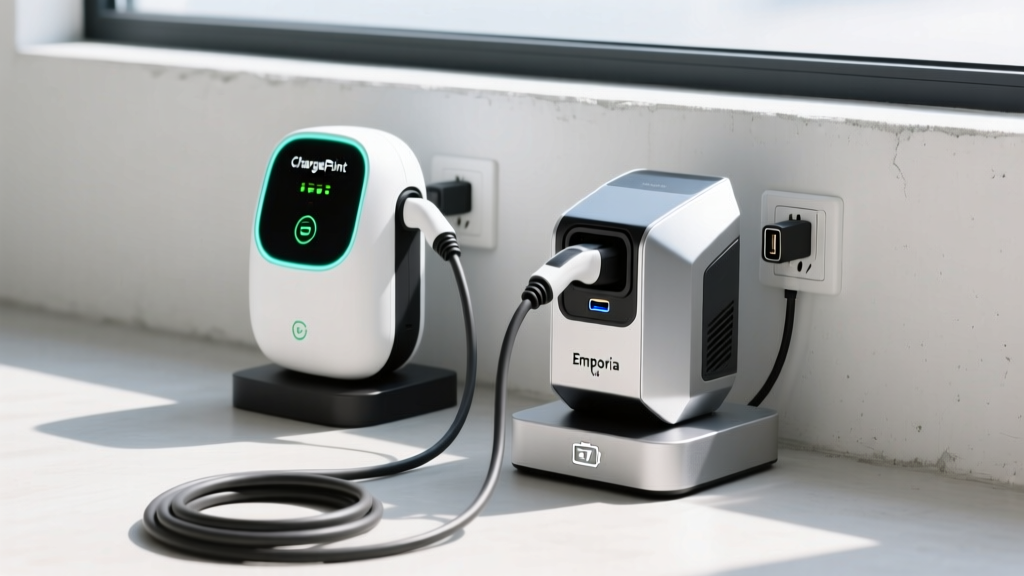
| Level 2 Charger Equipment | $250 | $650 | Tesla Wall Connector, ChargePoint, Emporia |
| Electrician Labor (standard install) | $500 | $1,500 | Depends on run length, wall type, conduit needs |
| Electrical Permit | $50 | $250 | Varies by municipality |
| Panel Upgrade (if needed) | $1,500 | $3,500 | 100A → 200A service upgrade; not always required |
| Total (no panel upgrade) | $800 | $2,400 | Typical scenario for most newer homes |
| Total (with panel upgrade) | $2,300 | $5,900 | Older homes or high-load panels |
Some utilities offer rebates of $200–$500 for Level 2 installations, and the federal §30C Alternative Fuel Vehicle Refueling Property Credit covers 30% of home charging equipment and installation costs up to $1,000, subject to income and census-tract eligibility. Always confirm current-year rules with a tax professional.
Connector Compatibility: NACS, CCS, and the Adapter Question
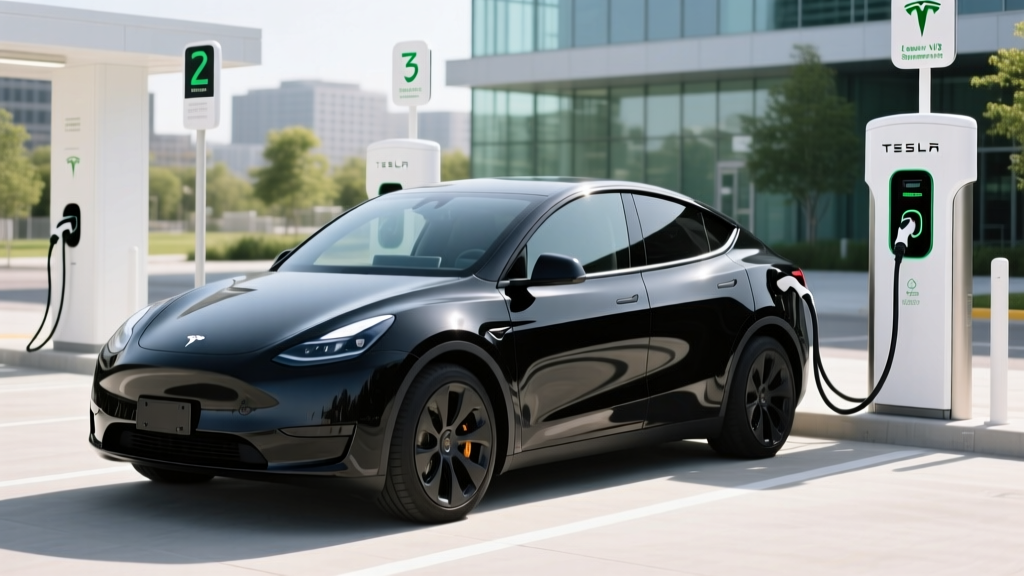
The 2025 Tesla Model Y uses the North American Charging Standard (NACS) connector natively — the same plug used across the Tesla Supercharger network. This is a significant advantage: no adapter is needed at any of the 6,500+ Supercharger stalls in North America.
However, the broader public charging ecosystem includes CCS1-equipped stations (Electrify America, EVgo, many ChargePoint DC locations). Tesla provides a CCS adapter (sold separately, ~$175) that allows Model Y owners to charge at CCS1 stations. For Level 2 public charging, Tesla includes a J1772 adapter in the vehicle, enabling use of the ubiquitous J1772 connector found at hotels, workplaces, and shopping centers.
| Connector Type | Network / Use | Adapter Needed? | Max Charge Rate |
|---|---|---|---|
| NACS (native) | Tesla Superchargers, Tesla Wall Connector, some third-party DC | No | 250 kW (DC) / 11.5 kW (L2) |
| CCS1 | Electrify America, EVgo, ChargePoint DC | Yes — Tesla CCS Adapter (~$175) | Up to station max (typically 150–350 kW) |
| J1772 | Public Level 2 (workplaces, hotels, malls) | Yes — included with vehicle | Up to 11.5 kW (vehicle-limited) |
| CHAdeMO | Legacy DC stations (declining) | No official Tesla adapter available | N/A — avoid reliance |
As of 2025, major automakers including Ford, GM, Rivian, and Volvo have adopted NACS, and networks like Electrify America are adding NACS cables. The adapter question is becoming less critical over time, but CCS compatibility still matters in areas with limited Supercharger coverage.
Charging Cost Per Mile: Home vs. Public vs. Gas
One of the strongest ownership arguments for the Model Y Performance is fuel cost. Here's how it breaks down with real numbers.
| Charging Scenario | Rate ($/kWh) | Model Y Efficiency (kWh/100 mi) | Cost Per Mile | Cost for 300-mi Trip |
|---|---|---|---|---|
| Home (off-peak utility rate) | $0.12 | 30 kWh | $0.036 | $10.80 |
| Home (average US residential) | $0.17 | 30 kWh | $0.051 | $15.30 |
| Tesla Supercharger (average) | $0.30 | 30 kWh | $0.090 | $27.00 |
| Electrify America / public DC | $0.40–$0.55 | 30 kWh | $0.12–$0.165 | $36–$49.50 |
| Gas car (28 MPG combined, $3.50/gal) | — | — | $0.125 | $37.50 |
At home off-peak rates, the Model Y Performance costs roughly 3.6 cents per mile — about one-quarter the cost of a 28 MPG gasoline vehicle. Even at Supercharger rates, the cost is competitive with gas. The economics shift unfavorably only at premium-priced public DC stations ($0.48–$0.55/kWh), where costs can exceed gasoline on a per-mile basis.
The Model Y Performance achieves an EPA-rated 111 MPGe combined (source), translating to approximately 30 kWh per 100 miles. This efficiency figure is what underpins all cost calculations above.
Equipment Recommendations: Best Level 2 Chargers for the Model Y
Since the Model Y accepts up to 48A / 11.5 kW on Level 2, you want a charger that can deliver that full rate. Here are three proven options, each suited to different priorities.
Tesla Wall Connector (Gen 3)
- Power Output: Up to 11.5 kW (48A at 240V)
- Connector: NACS (native, no adapter)
- Cable Length: 24 feet
- Smart Features: Wi-Fi updates, power sharing with second unit, load management
- Price: ~$475
- Best For: Tesla-only households wanting seamless integration and native NACS
ChargePoint Home Flex
- Power Output: Up to 12 kW (50A at 240V) — configurable down to 16A
- Connector: J1772 (use Tesla's included adapter) or NACS (newer versions)
- Cable Length: 23 feet
- Smart Features: App scheduling, utility integration, Alexa compatibility, flexible amperage
- Price: ~$550–$650
- Best For: Multi-EV households (non-Tesla + Tesla) or buyers wanting adjustable amperage for older panels
Emporia Vue EV Charger
- Power Output: Up to 11.5 kW (48A at 240V)
- Connector: J1772 (use Tesla adapter) or NACS
- Cable Length: 24 feet
- Smart Features: Energy monitoring via Emporia Vue panel integration, solar-aware scheduling
- Price: ~$300–$400
- Best For: Budget-conscious buyers or homes with solar panels wanting integrated energy tracking
For the Model Y Performance specifically, the Tesla Wall Connector is the default recommendation — native NACS means no adapter fumbling, and the 48A output matches the vehicle's onboard charger limit exactly. If you plan to add a non-Tesla EV in the future, the ChargePoint Home Flex offers more versatility.
DC Fast Charging Times: 10–80% Sessions and the Charge Curve
Road-trip charging speed is where the Model Y Performance's 250 kW peak DC rate matters. Here's what to expect at different charger types:
- Tesla V3 Supercharger (250 kW): 10–80% in approximately 25 minutes. Peak rate of 250 kW is available only between roughly 10–30% SoC, then tapers progressively. Above 60%, expect ~100 kW; above 80%, ~50 kW or less.
- Tesla V4 Supercharger (newer installations): Similar peak for Model Y (vehicle-limited to 250 kW), but improved cable management and CCS-native stalls with adapter.
- Electrify America 150 kW CCS (with adapter): 10–80% in approximately 35 minutes. The Model Y will accept the station's full 150 kW, limited by the vehicle's charge curve.
- Electrify America 350 kW CCS (with adapter): Still limited to the Model Y's 250 kW peak — no speed advantage over V3 Superchargers.
A practical road-trip strategy: plan stops at 15–20% SoC, charge to 70–80%, and move on. The time penalty of charging from 80–100% (roughly 25–30 additional minutes) is rarely worth the gained range unless you're at your overnight destination.
Preconditioning matters. Navigate to a Supercharger using the Tesla navigation system, and the vehicle will automatically warm the battery to optimal charging temperature before arrival. In cold weather (below 40°F), preconditioning can reduce 10–80% charge time by 5–10 minutes by avoiding the initial low-power warm-up phase.
Safety, Code, and Installation Considerations
EV charging is a continuous high-draw electrical load — comparable to running a dryer for 8 hours straight. Safety and code compliance are non-negotiable.
- Dedicated circuit: Your Level 2 charger must have its own dedicated breaker — never share a circuit with other appliances.
- GFCI protection: The 2023 NEC (National Electrical Code) requires GFCI protection for outdoor EV charging outlets. Hardwired installations (like the Tesla Wall Connector) are generally exempt from this requirement, which is one reason hardwired is preferred over plug-in for outdoor setups.
- Outdoor rating: If installing outdoors, ensure the charger carries a NEMA 4 or IP65 rating for weather resistance. The Tesla Wall Connector and ChargePoint Home Flex are both rated for outdoor use.
- Wire gauge: A 60-amp circuit requires 6 AWG copper wire (or 4 AWG aluminum) for runs up to ~100 feet. Longer runs may need thicker wire to minimize voltage drop.
- Permit and inspection: Nearly all jurisdictions require an electrical permit and post-installation inspection. Skipping this can void home insurance coverage in the event of a fire.
Frequently Asked Questions
How much does it cost to install a home EV charger for the Tesla Model Y Performance?
Expect $800–$2,400 for a standard installation (equipment, electrician labor, and permit) if your panel has sufficient capacity. If a panel upgrade from 100A to 200A is needed, total costs range from $2,300–$5,900. The federal §30C credit may cover 30% of equipment and installation, up to $1,000, subject to eligibility — consult IRS guidance and a tax professional.
How fast will each charging level add range to the Model Y Performance?
Level 1 (120V): 3–5 miles per hour. Level 2 (240V/48A): 30–44 miles per hour — enough to fully replenish overnight. DC Fast Charging (250 kW Supercharger): approximately 200 miles added in 15 minutes at peak rate, tapering as SoC rises.
Which connector and charger is compatible with my Tesla Model Y?
The Model Y uses NACS natively — no adapter needed for Superchargers or the Tesla Wall Connector. For CCS1 public DC stations, you'll need Tesla's CCS adapter (~$175). For J1772 public Level 2 stations, Tesla includes an adapter with the vehicle.
How much does charging cost per mile vs. gas?
At home off-peak rates ($0.12/kWh), the Model Y Performance costs about $0.036 per mile — roughly 71% cheaper than a 28 MPG gas car at $3.50/gallon ($0.125/mile). At Supercharger rates (~$0.30/kWh), it's $0.09/mile, still a 28% savings. Only premium-priced public DC stations ($0.48+/kWh) push costs above gasoline.
What electrical upgrades might I need for a Level 2 charger?
You'll need a dedicated 60-amp breaker with 6 AWG copper wiring. If your home has a 100-amp main panel or your existing loads are near capacity, a panel upgrade to 200 amps ($1,500–$3,500) may be required. A licensed electrician's load calculation will determine this before installation begins.
Does the Tesla Model Y Performance range hold up on road trips?
The 277-mile EPA estimate drops to roughly 235–250 miles at sustained 70 mph highway speeds, and further to 200–220 miles in sub-freezing temperatures. Plan Supercharger stops at 15–20% SoC for the fastest charging and best trip efficiency. With V3 Superchargers spaced every 120–180 miles along major US corridors, range is manageable with planning.