Tesla Model Y Efficiency: The Miles per kWh Baseline
Before you install a charger or calculate your monthly electric bill, you need one critical number: how far a Tesla Model Y actually travels on a single kilowatt-hour (kWh) of energy. This figure — miles per kWh — is the EV equivalent of miles per gallon, and it determines everything from your charging cost per mile to how many kWh you'll pull from the grid each month.
For the current-generation Tesla Model Y Long Range AWD, the EPA rates combined efficiency at approximately 3.6 miles per kWh (roughly 28 kWh/100 miles). The Performance trim drops slightly to about 3.3 miles per kWh (30 kWh/100 miles) due to its stickier tires and more aggressive tuning. These figures come from fueleconomy.gov, the EPA's official efficiency database.
Why does this matter for your charging setup? Because knowing your exact efficiency tells you precisely how many kWh you need to add for a given trip distance, which in turn tells you what charging speed (in kW — that's power, the rate of delivery) you actually need at home.
Charging Levels Explained: How Fast Each Adds Range
EV charging is measured in kilowatts (kW), which is the power — the rate at which energy flows into your battery. The battery's capacity is measured in kilowatt-hours (kWh), which is the energy — think of it as the tank size. The Model Y Long Range carries approximately 75 kWh of usable battery capacity (NMC chemistry). Here's how each charging level translates into actual miles added to your Model Y:
| Charging Level | Voltage / Amperage | Power (kW) | Miles of Range per Hour | Best For |
|---|---|---|---|---|
| Level 1 (120V) | 120V / 12A | ~1.4 kW | ~4–5 mi/hr | Overnight top-ups, emergency |
| Level 2 (240V) | 240V / 32–48A | 7.7–11.5 kW | ~28–42 mi/hr | Daily home charging |
| DC Fast (V3 Supercharger) | 400V architecture | Up to 250 kW peak | ~1,000+ mi/hr (peak) | Road trips, rapid top-ups |
| DC Fast (V4 Supercharger) | Higher-voltage capable | Up to 350 kW (CCS vehicles) | N/A for Model Y (capped by vehicle) | Future vehicles |
For a Model Y Long Range owner who drives 40 miles round-trip daily, a Level 2 charger delivering 11.5 kW will replenish that daily usage in roughly one hour — or fully charge a depleted 75 kWh battery in about 7–8 hours overnight. Level 1 is viable only if you drive fewer than 40 miles per day and can leave the car plugged in for 10+ hours.
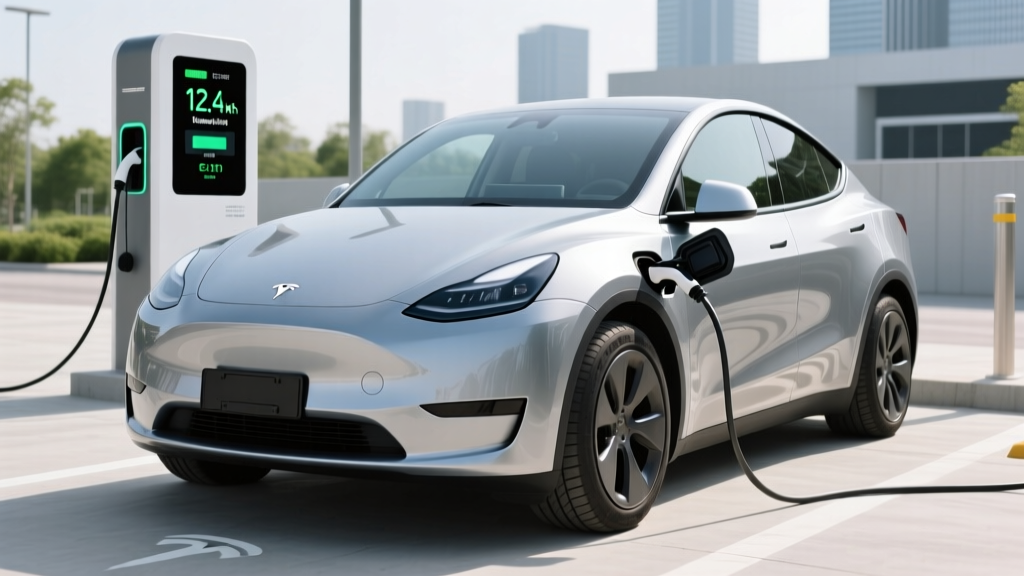
On a V3 Supercharger, the Model Y peaks at approximately 250 kW and charges from 10–80% in roughly 25–27 minutes under ideal conditions (battery preconditioned via navigation routing to the station). Above 80% state of charge, the charge curve tapers sharply — expect 80–100% to take nearly as long as 10–80%. This is a battery-protection feature common to all lithium-ion cells.
Home Charger Installation: Electrical Requirements and Costs
Installing a Level 2 home charger is the single most impactful upgrade for EV ownership convenience. But costs vary enormously depending on your home's electrical panel, the distance from the panel to your garage or driveway, and local permitting requirements. Here's what a typical Model Y owner needs to know.
Electrical Requirements for a Model Y Level 2 Charger
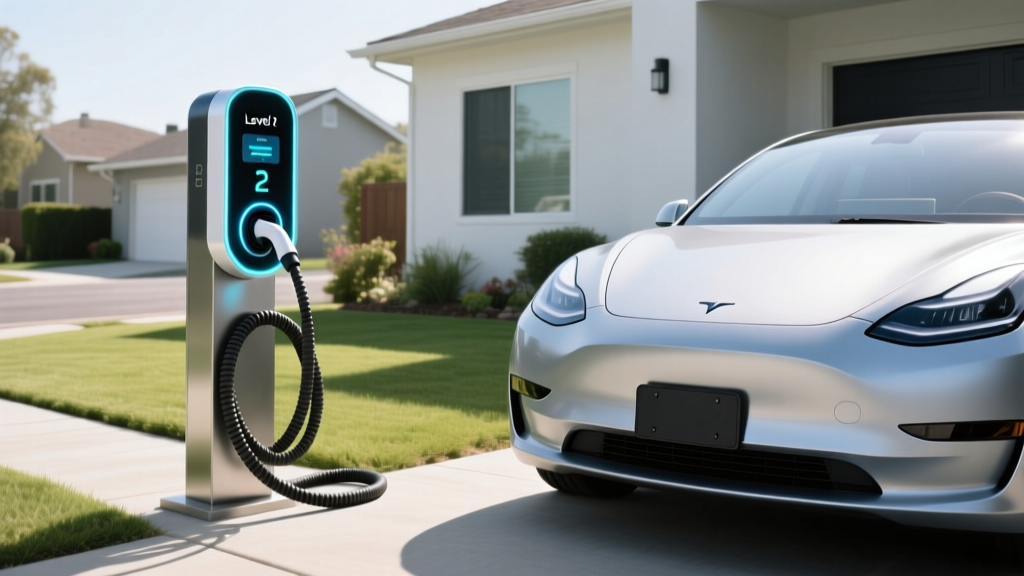
The Tesla Wall Connector supports up to 48 amps, which requires a dedicated 60-amp circuit breaker on a 240-volt line (the National Electrical Code requires circuits to be rated at 125% of continuous load, so 48A × 1.25 = 60A breaker). If your panel doesn't have capacity for a 60A breaker, you can configure the Wall Connector for lower amperage — 32A on a 40A breaker is a common fallback that still delivers 7.7 kW.
Your main service panel must have sufficient spare capacity. Most modern homes with 200-amp service can accommodate a 60A EV circuit without a panel upgrade. Older homes with 100A service often cannot — especially if you already run electric range, dryer, and HVAC. In those cases, a panel upgrade to 200A or a smart load-management device (like the Emporia Smart Load Management) becomes necessary.
| Cost Component | Basic Install (Short Run) | Complex Install (Long Run / Conduit) | Panel Upgrade Scenario |
|---|---|---|---|
| Level 2 Charger Equipment | $400–$600 | $400–$600 | $400–$600 |
| Electrician Labor (wiring, breaker, mount) | $500–$1,000 | $1,500–$3,000 | $1,000–$2,000 |
| Permit & Inspection | $50–$200 | $100–$300 | $150–$400 |
| Panel Upgrade (if needed) | N/A | N/A | $2,000–$4,500 |
| Total Estimated Cost | $950–$1,800 | $2,000–$3,900 | $3,550–$7,500 |
Always hire a licensed electrician and pull a permit. Unpermitted EV charger installations can void home insurance claims and create fire risk. The circuit must be dedicated — sharing with other appliances is a code violation for continuous loads.
Connector Compatibility: What Plugs Into a Model Y
The Tesla Model Y uses the North American Charging Standard (NACS) connector natively — the same slim plug used across all Tesla vehicles. As of 2025–2026, NACS has become the dominant connector standard in North America, adopted by Ford, GM, Rivian, Hyundai, and most other major automakers. Here's how connector compatibility breaks down:
| Connector Type | Tesla Model Y Native? | Adapter Needed? | Where You'll Find It |
|---|---|---|---|
| NACS (Tesla) | Yes — native | None | Tesla Superchargers, Tesla Wall Connector, most new public chargers |
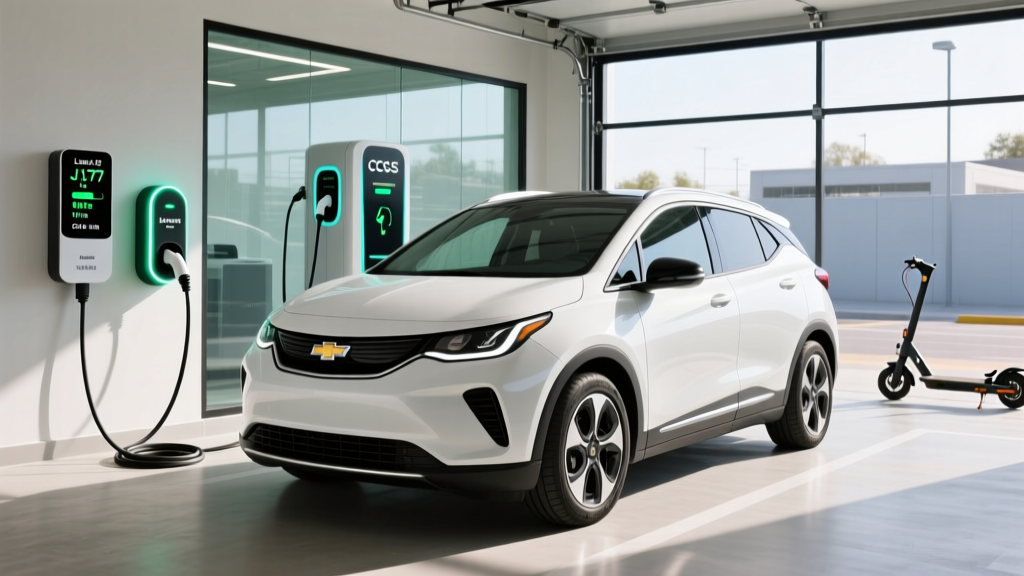
| J1772 (Level 2 public) | No | J1772-to-NACS adapter (included with Model Y) | Hotels, workplaces, older public Level 2 stations |
| CCS1 (DC fast) | No | CCS-to-NACS adapter (~$250 from Tesla) | Electrify America, EVgo, older ChargePoint DC stations |
| CHAdeMO | No | No widely available adapter | Legacy Nissan Leaf stations — largely phased out |
Every new Model Y ships with a J1772-to-NACS adapter in the glovebox or frunk. If you plan to use non-Tesla DC fast chargers (Electrify America, for example), purchasing Tesla's CCS-to-NACS adapter is strongly recommended — it unlocks roughly 30% more public fast-charging locations.
Charging Cost per Mile: Model Y vs Gasoline SUV
The economic case for the Model Y hinges on your cost per mile, which is a function of your local electricity rate divided by your vehicle's miles per kWh. Let's calculate real scenarios using the Model Y Long Range's 3.6 mi/kWh EPA efficiency and a comparable gasoline compact SUV averaging 28 MPG combined.
| Charging Scenario | Rate ($/kWh) | Cost per Mile (Model Y) | Cost per 1,000 Miles |
|---|---|---|---|
| Home — Off-Peak Utility Rate | $0.09/kWh | $0.025 | $25.00 |
| Home — Average US Rate | $0.17/kWh | $0.047 | $47.22 |
| Public Level 2 (ChargePoint, etc.) | $0.25–$0.39/kWh | $0.069–$0.108 | $69–$108 |
| Tesla Supercharger (V3) | $0.28–$0.36/kWh | $0.078–$0.100 | $78–$100 |
| Gasoline SUV (28 MPG, $3.40/gal) | $3.40/gallon | $0.121 | $121.43 |
Even at average residential rates, the Model Y costs roughly 60% less per mile to fuel than a comparable gasoline SUV. Home off-peak charging is the economic sweet spot — at $0.09/kWh, you're paying the equivalent of $0.85 per gallon of gasoline. However, exclusive reliance on public DC fast charging narrows the savings gap significantly, and in some markets with high Supercharger pricing, may approach gasoline parity on a per-mile basis.
To maximize savings, enroll in your utility's time-of-use (TOU) plan and schedule charging between 10 PM and 6 AM when rates are lowest. The Tesla app allows you to set scheduled charging windows directly.
Equipment Recommendations: Best Home Chargers for Model Y
Not all Level 2 chargers are equal. Here are three top-tier options for Model Y owners, evaluated on power output, cable management, smart features, and build quality:
Tesla Wall Connector — Best Overall for Model Y
- Power Output: Up to 11.5 kW (48A on 240V/60A circuit)
- Connector: Native NACS — no adapter needed
- Cable Length: 24 feet
- Smart Features: Wi-Fi, OTA updates, Tesla app integration, power sharing (link multiple units on one circuit)
- Price: ~$475
- Why: Seamless integration with Model Y, highest amperage for fastest Level 2 charging, cleanest install aesthetic. Power sharing is ideal for two-EV households on a single 60A circuit.
ChargePoint Home Flex — Best Universal Charger
- Power Output: Up to 12 kW (50A, configurable down to 16A)
- Connector: J1772 (use included adapter for Model Y) or NACS version available
- Cable Length: 23 feet
- Smart Features: Wi-Fi, ChargePoint app scheduling, Alexa integration, flexible amperage dip-switch
- Price: ~$550–$700
- Why: If you own or plan to own a non-Tesla EV alongside your Model Y, the Flex's J1772 connector serves both (with the Model Y's included adapter). Configurable amperage means it works on 20A through 60A circuits — future-proof if you move homes.
Emporia Level 2 EV Charger — Best Budget Smart Charger
- Power Output: Up to 11.5 kW (48A on 240V/60A circuit)
- Connector: J1772 (adapter needed for Model Y) or NACS version
- Cable Length: 24 feet
- Smart Features: Wi-Fi, detailed energy monitoring via Emporia app, integrates with Emporia Vue home energy panel monitor
- Price: ~$350–$400
- Why: Lowest-cost option that still delivers 48A and smart scheduling. Energy monitoring is particularly valuable if you're on a TOU rate and want to track exact charging costs.
Safety, Code, and Electrical Upgrade Considerations
EV charging is a continuous high-amperage load — your charger will draw maximum current for hours at a time. This places demands on your electrical system that far exceed intermittent loads like a microwave or hair dryer. Here are the non-negotiable safety requirements:
- Dedicated Circuit: NEC Article 625 requires EV charging equipment to be on a dedicated circuit — no sharing with outlets, lights, or other appliances.
- GFCI Protection: Outdoor installations require a GFCI (Ground Fault Circuit Interrupter) breaker. Most modern EV chargers have built-in ground-fault protection, but your local jurisdiction may still require a GFCI breaker at the panel.
- Outdoor Rating: If your charger is mounted outside or in an unenclosed carport, it must carry a NEMA 4 (weatherproof) rating. The Tesla Wall Connector and ChargePoint Home Flex are both NEMA 4 rated.
- Wire Gauge: A 60A circuit requires 6 AWG copper wire (THHN in conduit) or 4 AWG aluminum. Your electrician will size this based on run length — longer runs may require upsizing to prevent voltage drop.
- Permit and Inspection: Every jurisdiction requires a permit for a new 240V circuit. The inspection verifies wire gauge, breaker sizing, grounding, and GFCI compliance. Skipping this step risks insurance denial in the event of an electrical fire.
Frequently Asked Questions
How much does it cost to install a home EV charger for a Tesla Model Y?
A straightforward Level 2 installation with the Tesla Wall Connector typically costs $950–$1,800 total (equipment + electrician + permit) when your panel is nearby and has spare capacity. Complex installs with long conduit runs range from $2,000–$3,900. If a panel upgrade from 100A to 200A is needed, total project cost can reach $3,550–$7,500. Always get three quotes from licensed electricians.
How fast will each charging level add range to my Model Y?
Level 1 (120V standard outlet) adds roughly 4–5 miles of range per hour. Level 2 (240V home charger at 48A) adds approximately 38–42 miles per hour. A Tesla V3 Supercharger at peak 250 kW can add up to 200 miles in 15 minutes, though sustained rate tapers as the battery fills. For daily driving of 30–50 miles, Level 2 overnight charging fully replenishes usage.
Which connector and charger is compatible with my Tesla Model Y?
The Model Y uses NACS natively — Tesla's Wall Connector and all Superchargers plug in directly. For non-Tesla public Level 2 chargers using J1772, the adapter included with your Model Y handles it. For non-Tesla DC fast chargers (Electrify America, EVgo), you'll need Tesla's CCS-to-NACS adapter, sold separately for approximately $250.
How much does charging a Model Y cost per mile compared to gas?
At the US average residential electricity rate of $0.17/kWh and the Model Y's 3.6 mi/kWh efficiency, you'll pay approximately $0.047 per mile — roughly 60% less than a 28 MPG gasoline SUV at $3.40/gallon ($0.121/mile). Off-peak home charging at $0.09/kWh drops this to just $0.025 per mile. Public DC fast charging at $0.30/kWh costs about $0.083/mile — still below gasoline but significantly more than home charging.
What electrical upgrades might I need for a home charger?
The most common upgrade is a panel capacity increase from 100A to 200A service, needed in older homes with multiple electric appliances. You may also need a new dedicated 60A breaker slot (your panel must have physical space), conduit and wiring runs from the panel to the charger location, and potentially a GFCI breaker for outdoor installations. A licensed electrician's load calculation will determine exactly what's required for your home.
Does the Tesla Model Y's efficiency change in cold weather?
Yes. In temperatures below 32°F, expect efficiency to drop to approximately 2.5–3.0 mi/kWh — a 15–30% reduction. This is caused by battery heating demands, cabin heating, and reduced regenerative braking effectiveness. Using the Tesla app to precondition the battery and cabin while still plugged in at home recovers much of this loss and preserves range.
Sources: EPA efficiency data from fueleconomy.gov. Electrical code references per NEC Article 625 (EV charging) and Article 220 (load calculations). Federal tax credit eligibility for home charger equipment under IRS §30C (Alternative Fuel Vehicle Refueling Property Credit) — consult irs.gov for current-year qualification rules, census-tract requirements, and the 30% up to $1,000 cap.