Quick Verdict: What Model Y Long Range RWD Owners Need to Know About Charging
The Tesla Model Y Long Range Rear-Wheel Drive pairs a ~75 kWh usable battery pack (NMC chemistry) with the native NACS (North American Charging Standard) connector, giving owners access to the industry's most reliable DC fast-charging network without adapters. EPA-rated at 320 miles of range, this single-motor variant prioritizes efficiency over the dual-motor AWD trims, translating to lower charging costs per mile and slightly longer intervals between plug-ins. But the sticker range only tells half the story — how you charge at home, what you pay per kWh, and whether your electrical panel can handle a Level 2 circuit will define your actual ownership experience.
This guide breaks down every charging scenario for the Model Y Long Range RWD: home installation requirements and real costs, public DC fast-charging speeds and taper curves, connector compatibility as non-Tesla networks adopt NACS, and a precise cost-per-mile comparison against gasoline. All figures reflect 2026 model-year specifications and current electrical code requirements.
EPA estimate: 320 miles. Expect ~270–290 miles in mixed highway driving at 70–75 mph, and ~230–250 miles in freezing temperatures (below 32°F) due to cabin heating load and reduced battery efficiency. The Model Y Long Range RWD's heat pump mitigates some cold-weather loss compared to older resistive-heater EVs, but physics still applies.
Charging Levels Explained: Speeds, Power, and Range Added Per Hour
Before plugging in, it's critical to distinguish kW (kilowatts) — the rate of power delivery, like water pressure — from kWh (kilowatt-hours) — the total energy stored or delivered, like gallons in a tank. The Model Y Long Range RWD's battery holds approximately 75 kWh of usable energy. Charging speed is measured in kW; your electricity bill charges you per kWh.
| Level | Voltage / Amperage | Power (kW) | Miles of Range Added Per Hour | Full Charge Time (0–100%) |
|---|---|---|---|---|
| Level 1 (standard 120V outlet) | 120V / 12A | ~1.4 kW | 3–5 mi/hr | ~55+ hours |
| Level 2 (home/public 240V) | 240V / 32–48A | 7.7–11.5 kW | 25–44 mi/hr | 7–10 hours |
| DC Fast Charging (Supercharger/public) | 400V architecture | Peak ~250 kW | Up to ~1,000+ mi/hr (at peak) | 10–80% in ~25 min |
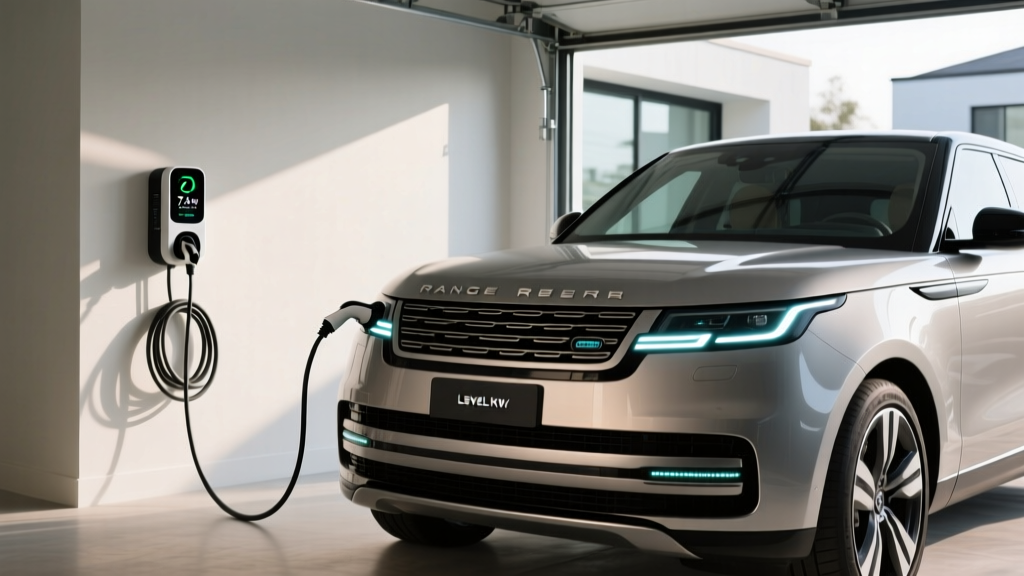
The Model Y Long Range RWD's onboard charger accepts up to 11.5 kW on Level 2 (48A at 240V). This means a 48-amp home circuit will max out the vehicle's AC charging capability. A 32-amp circuit (7.7 kW) will still add roughly 25–30 miles of range per hour — enough to fully replenish overnight for most drivers.
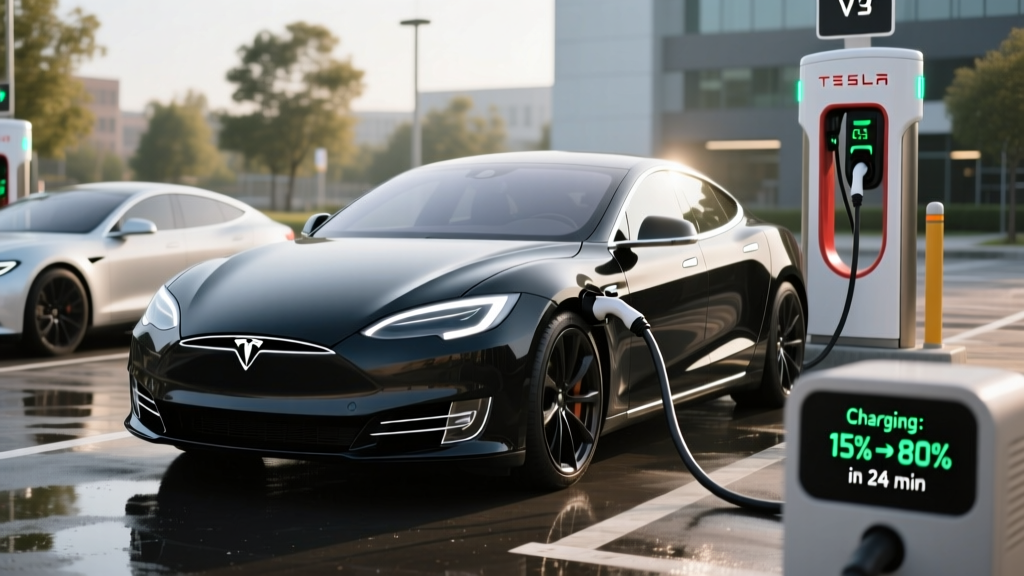
On DC fast charging, the Model Y Long Range RWD peaks at approximately 250 kW at Tesla V3 and V4 Superchargers. However, peak rate is not sustained rate. The charge curve tapers significantly above 50% state of charge (SoC), dropping to ~100 kW around 65% and below 50 kW past 85%. This is why manufacturers quote 10–80% times rather than 0–100% — the last 20% can take as long as the first 70%.
Home Charger Installation: Electrical Requirements, Panel Upgrades, and Real Costs
Installing a Level 2 home charger for the Model Y Long Range RWD requires a dedicated 240V circuit, typically rated at 40A, 50A, or 60A depending on the charger's maximum output. The National Electrical Code (NEC) requires that continuous loads (like EV charging, which runs for 3+ hours) not exceed 80% of the circuit breaker rating. So a 48A charger needs a 60A breaker; a 32A charger needs a 40A breaker.
Electrical Requirements at a Glance
- Voltage: 240V (split-phase, same as a dryer or oven circuit)
- Amperage: 40A–60A dedicated circuit, depending on charger
- Wire gauge: 6 AWG copper for 50A; 4 AWG for 60A (varies by run length)
- Breaker: Double-pole, correctly sized for continuous 80% load rule
- GFCI protection: Required by NEC 2020+ for EV outlets in garages (hardwired chargers may not require a GFCI breaker depending on local code interpretation)
- Outdoor rating: NEMA 4 or NEMA 4X enclosure if installed outside
Panel Upgrade: The Cost Most Guides Ignore
Many homes built before 2000 have 100A or 150A main service panels. Adding a 60A EV circuit to an already-loaded panel may require a service upgrade to 200A, which is the single largest variable in installation cost. Signs you might need a panel upgrade: your panel is near capacity (breaker slots full, or load calculation exceeds 80% of service rating), you have a Federal Pacific or Zinsco panel (known safety hazards that insurers flag), or your utility service drop is undersized.
| Component | Low Estimate | High Estimate | Notes |
|---|---|---|---|
| Level 2 charger (hardware) | $350 | $700 | Tesla Wall Connector, ChargePoint, Emporia |
| Electrician labor (standard install) | $400 | $1,200 | Depends on run length from panel to garage |
| Permit & inspection | $50 | $250 | Varies by municipality |
| Panel upgrade (if needed) | $1,500 | $3,500 | 100A→200A service upgrade |
| Total (no panel upgrade) | $800 | $2,150 | Most homes with 200A service |
| Total (with panel upgrade) | $2,300 | $5,650 | Older homes with 100A/150A panels |
Always get at least two quotes from licensed electricians. Some utilities offer rebates of $250–$1,000 for Level 2 installations, and the federal Alternative Fuel Vehicle Refueling Property Credit (IRC §30C) may cover up to 30% of installation costs (capped at $1,000) for homes in eligible census tracts — consult a tax professional for your specific eligibility.
Connector Compatibility: NACS, CCS, and the Adapter Landscape in 2026
The Tesla Model Y Long Range RWD uses the NACS (J3400) connector natively — the same compact plug now adopted by Ford, GM, Rivian, Hyundai, and most major automakers for the 2025–2026 model years. This gives Model Y owners first-class access to the Tesla Supercharger network (now 25,000+ stalls in North America) without any adapter.
| Connector Type | Compatible with Model Y Long Range RWD? | Adapter Needed? | Network Examples |
|---|---|---|---|
| NACS (Tesla) | Yes — native | None | Tesla Supercharger, Tesla Destination |
| CCS1 | Yes — with adapter | Tesla CCS Adapter (~$250) | Electrify America, EVgo, ChargePoint |
| CHAdeMO | No (legacy, no adapter) | N/A | Declining; mostly legacy Nissan Leaf stations |
| J1772 (Level 2 AC) | Yes — with included adapter | Tesla J1772 Adapter (included) | Public Level 2 stations, hotels, workplaces |
By 2026, many former CCS-only networks (Electrify America, EVgo) have added NACS cables to new and retrofitted stations. However, some older CCS-only stalls still require the Tesla CCS adapter. The adapter supports up to 250 kW DC and is a worthwhile $250 investment for road-trip redundancy. The J1772 adapter ships with every Model Y and handles AC Level 2 charging at non-Tesla public stations.
Cost to Charge: Home vs. Public vs. Gas — Price Per Mile Breakdown
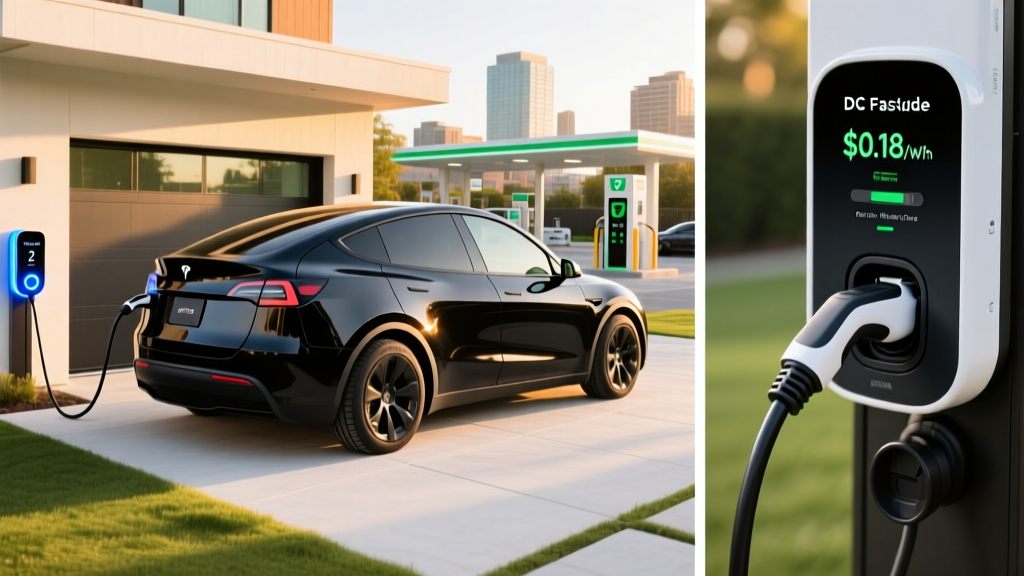
Charging economics vary dramatically depending on where and when you plug in. The Model Y Long Range RWD's efficiency is rated at approximately 28 kWh/100 miles (about 120 MPGe combined per fueleconomy.gov). Using that figure, we can calculate real cost per mile across scenarios.
| Scenario | Rate ($/kWh) | Cost per 100 Miles | Cost per Mile |
|---|---|---|---|
| Home (off-peak utility rate) | $0.09 | $2.52 | $0.025 |
| Home (national avg. residential) | $0.16 | $4.48 | $0.045 |
| Public Level 2 (network pricing) | $0.30 | $8.40 | $0.084 |
| Tesla Supercharger (avg.) | $0.32 | $8.96 | $0.090 |
| Electrify America DCFC | $0.48 | $13.44 | $0.134 |
| Gasoline comparison (25 MPG, $3.50/gal) | — | $14.00 | $0.140 |
At home on off-peak rates, the Model Y Long Range RWD costs roughly 2.5 cents per mile — about one-fifth the cost of a comparable gas crossover. Even at Supercharger pricing, you're paying ~9 cents per mile versus 14 cents for gas. The savings gap narrows on expensive public DC networks like Electrify America, where per-kWh rates can exceed $0.48 in some metro areas. This is why home charging isn't just convenient — it's the economic foundation of EV ownership.
Recommended Home Charging Equipment for the Model Y Long Range RWD
The Model Y's 11.5 kW onboard charger means you benefit from a 48-amp (60A circuit) Level 2 station. Here are three proven options matched to the vehicle's capabilities:
Tesla Wall Connector (Gen 4)
- Power output: Up to 11.5 kW (48A)
- Connector: NACS native
- Cable length: 24 ft
- Smart features: Wi-Fi, OTA updates, Power Share (load balancing with second unit), Tesla app integration
- Price: ~$475
- Best for: Tesla-only households wanting seamless integration and max charge rate
Emporia Vue Level 2 Charger
- Power output: Up to 11.5 kW (48A)
- Connector: J1772 (use Tesla adapter) or NACS version available
- Cable length: 24 ft
- Smart features: Energy monitoring, solar integration, scheduling, load management
- Price: ~$399
- Best for: Solar-panel owners and budget-conscious buyers wanting energy data
ChargePoint Home Flex (NACS)
- Power output: Up to 12 kW (50A, configurable to 48A)
- Connector: NACS (2025+ model) or J1772
- Cable length: 23 ft
- Smart features: Alexa integration, ChargePoint app, flexible amperage via DIP switch
- Price: ~$649
- Best for: Multi-EV households with mixed NACS/J1772 vehicles
All three units are hardwired or NEMA 14-50 plug compatible, UL-listed, and rated for indoor/outdoor installation. Hardwired installations avoid the GFCI breaker requirement that applies to receptacle-based (plug-in) setups under NEC 2020+, saving $50–$100 on breaker cost and eliminating nuisance trips.
DC Fast Charging on the Road: Supercharger Speeds and Charge Curve Reality
Tesla's Supercharger network remains the most reliable DC fast-charging infrastructure in North America, with uptime consistently above 99% at V3 and V4 stations. Here's what the Model Y Long Range RWD actually delivers at the plug:
- Peak charge rate: ~250 kW (at V3/V4 Superchargers, low SoC, preconditioned battery)
- 10–80% time: ~25–28 minutes (with battery preconditioning active)
- 10–50% time: ~12–15 minutes (the fastest portion of the curve)
- Miles added in 15 minutes: ~170–200 miles (at optimal SoC and temperature)
The 250 kW peak only applies between roughly 10–30% SoC with a warm, preconditioned battery. Above 50%, the rate drops to ~100–120 kW. Above 80%, it falls below 50 kW. Planning a road trip? Target charging stops between 10–80% SoC for the fastest sessions. Charging from 80–100% at a Supercharger wastes time and is discouraged by Tesla's battery management recommendations for daily use.
Battery preconditioning is essential for achieving peak DC charge rates. When you navigate to a Supercharger in the Tesla navigation system, the vehicle automatically warms the battery to optimal temperature — this can shave 5–10 minutes off your charge session, especially in cold weather. Always navigate to the charger rather than just driving there; the thermal management system needs 15–30 minutes of advance notice.
Safety, Code Compliance, and Installation Best Practices
EV charging draws sustained high current for hours — this is fundamentally different from intermittent loads like a microwave. Proper installation isn't optional; it protects your home and your vehicle.
- Dedicated circuit: Your Level 2 charger must be on its own dedicated breaker — never shared with other appliances.
- GFCI protection: Required for receptacle-based (NEMA 14-50) installations per NEC 2020+. Hardwired chargers may be exempt depending on local AHJ (Authority Having Jurisdiction) interpretation.
- Outdoor rating: If installing outside, ensure the charger is rated NEMA 4 (weatherproof) or NEMA 4X (corrosion-resistant). The Tesla Wall Connector and ChargePoint Home Flex both carry outdoor ratings.
- Cable management: Use a wall-mounted holster or cable organizer to prevent trip hazards and connector damage. Never let the cable rest on the ground where vehicles can run over it.
- Permit and inspection: Most jurisdictions require an electrical permit for new 240V circuits. The inspection ensures proper wire gauge, breaker sizing, grounding, and code compliance. Skipping the permit risks insurance claim denial in the event of an electrical fire.
- Utility notification: Some utilities require advance notice before installing a Level 2 charger, particularly if a service upgrade is involved. Check with your provider — they may also offer time-of-use (TOU) rates that cut charging costs by 40–60%.
Frequently Asked Questions
How much does it cost to install a home EV charger for the Model Y Long Range RWD?
Between $800 and $2,150 for a standard installation on an existing 200A panel, including the charger hardware ($350–$700), electrician labor ($400–$1,200), and permit ($50–$250). If your home needs a panel upgrade from 100A/150A to 200A, add $1,500–$3,500, bringing the total to $2,300–$5,650.
How fast will each charging level add range to my Model Y?
Level 1 (120V): 3–5 miles per hour. Level 2 (240V, 48A): ~37–44 miles per hour. DC fast charging (Supercharger): up to ~1,000+ miles per hour at peak (250 kW), but realistically 170–200 miles in a 15-minute session due to charge-curve taper.
Which connector and charger is compatible with my Model Y Long Range RWD?
The Model Y uses the NACS connector natively for DC fast charging and Level 2. For non-Tesla J1772 Level 2 stations, use the included J1772 adapter. For CCS1-only DC fast chargers, the optional Tesla CCS Adapter (~$250) is required. CHAdeMO is not supported.
How much does charging cost per mile compared to gasoline?
At home on the national average residential rate ($0.16/kWh), the Model Y Long Range RWD costs about $0.045 per mile. A comparable gas crossover at 25 MPG and $3.50/gallon costs $0.14 per mile — roughly 3× more. Off-peak home charging drops the EV cost to ~$0.025/mile.
What electrical upgrades might I need for a Level 2 charger?
You need a dedicated 240V circuit (40A–60A breaker). If your home's main panel is 100A or 150A and near capacity, a service upgrade to 200A will be required ($1,500–$3,500). Other potential upgrades include running new conduit for long wire runs, replacing outdated panels (Federal Pacific, Zinsco), or adding a sub-panel in a detached garage.
Does the federal tax credit cover home charger installation?
The IRC §30C Alternative Fuel Vehicle Refueling Property Credit covers up to 30% of home charger hardware and installation costs, capped at $1,000. However, eligibility is restricted to residents of census tracts that are not classified as "eligible census tracts" under specific criteria — consult the IRS guidelines or a tax professional to verify your address qualifies. This credit is separate from the §30D vehicle purchase credit.
Should I charge my Model Y to 100% every day?
No. For the NMC battery chemistry in the Model Y Long Range RWD, Tesla recommends a daily charge limit of 80% to maximize long-term battery health. Set the charge limit to 100% only when preparing for a road trip. The LFP chemistry found in some Standard Range variants can be charged to 100% regularly, but the Long Range uses NMC and benefits from the 80% daily cap.
Sources: EPA range and efficiency data via fueleconomy.gov; Tesla Model Y specifications via Tesla.com; federal tax credit rules via IRS.gov. Specifications reflect 2026 model year. Installation costs are estimates — always obtain quotes from licensed electricians in your area.