Understanding the Tesla Model Y Long Range EPA Range Miles
The 2026 Tesla Model Y Long Range AWD carries an official EPA range rating of 320 miles on a full charge, powered by an 82 kWh usable battery pack (NMC chemistry). That figure makes it one of the most efficient electric SUVs in its class, achieving approximately 122 MPGe combined. But EPA stickers tell only part of the story.
- City/suburban driving (moderate speeds, regen active): 300–320 miles
- Sustained highway driving (70–80 mph): 260–285 miles
- Cold weather (below 32°F, cabin heat on): 220–260 miles
- Mountain/towing scenarios: 200–240 miles
Efficiency matters because it directly dictates how often you charge, how long charging takes, and what your cost per mile looks like. The Model Y Long Range consumes roughly 26–28 kWh per 100 miles in mixed driving — a figure that anchors every charging calculation below.
Charging Levels Explained: Speed, Power, and Range Added
EV charging operates across three tiers. Understanding the distinction between kW (power — the rate of energy flow) and kWh (energy — total battery capacity) is non-negotiable for EV ownership. A 150 kW charger delivers energy faster than an 11 kW charger, but both ultimately fill the same 82 kWh battery.
| Level | Voltage / Amperage | Power (kW) | Miles Added per Hour | Typical Use Case |
|---|---|---|---|---|
| Level 1 | 120V / 12A | ~1.4 kW | 3–5 mi/hr | Emergency top-up, overnight for low-mileage drivers |
| Level 2 | 240V / 48A | ~11.5 kW | 30–44 mi/hr | Daily home charging, workplace, shopping centers |
| DC Fast | 400V+ / variable | 50–250 kW | 150–1,000+ mi/hr | Road trips, quick top-ups on the highway |
Charging Time Examples: Tesla Model Y Long Range (82 kWh)
Charging is not linear. Lithium-ion batteries accept power quickly at low states of charge, then taper as they approach full. The "10-80%" metric reflects the usable fast-charging window where the bulk of energy is added efficiently.
- Level 1 (1.4 kW): 0–100% in roughly 58+ hours — impractical for daily use but viable for emergencies.
- Level 2 (11.5 kW): 0–100% in approximately 7.5–8 hours; 10–80% in about 5 hours. Overnight charging fully replenishes the pack.
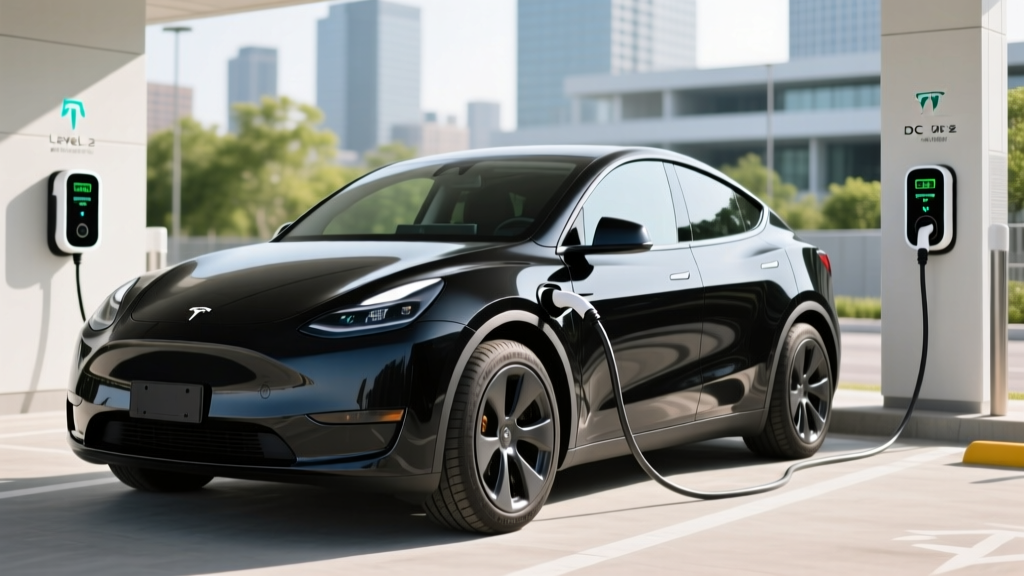
- DC Fast (250 kW peak): 10–80% in approximately 25–28 minutes at a V3/V4 Supercharger. Peak rate of 250 kW is sustained only up to roughly 40–50% SoC, then tapers progressively. Expect ~170 miles added in 15 minutes under ideal conditions.
- DC Fast (150 kW CCS station w/ adapter): 10–80% in roughly 35–40 minutes. Taper begins earlier.
Home Charger Installation: Requirements, Costs, and Electrical Upgrades
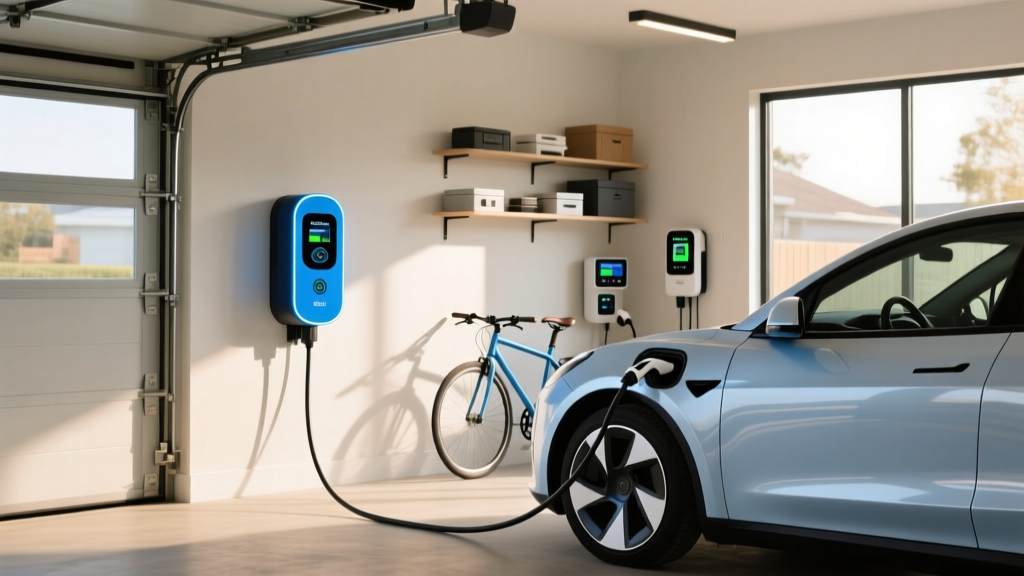
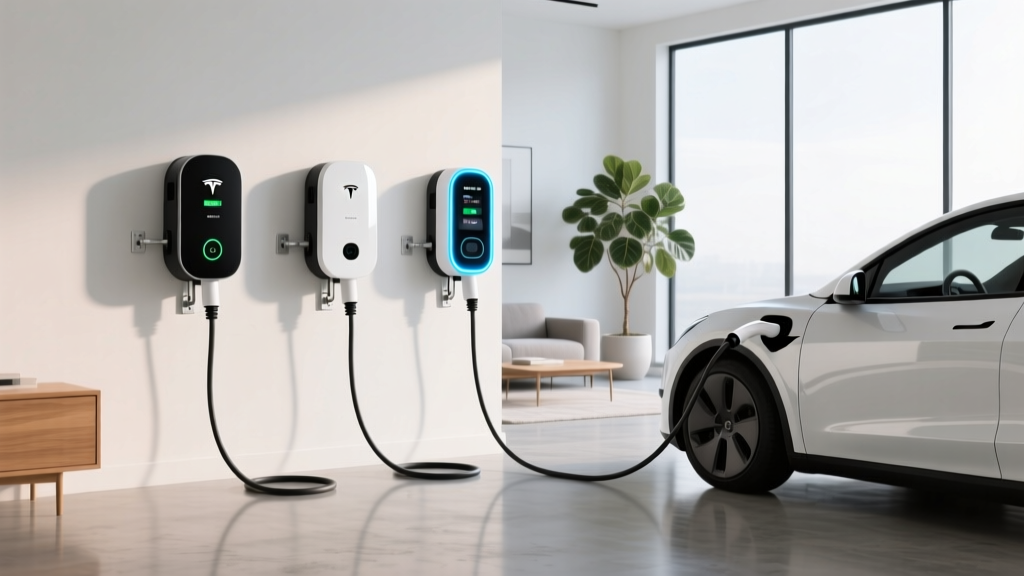
Home Level 2 charging is where most Model Y owners will add 80%+ of their energy. The Tesla Wall Connector (48A, 11.5 kW) is the default recommendation, but third-party options like the ChargePoint Home Flex or Emporia Vue also work with NACS or an adapter.
Electrical Requirements
A 48A Level 2 charger requires a dedicated 60A circuit on a 240V supply (NEC code requires circuits rated at 125% of continuous load: 48A × 1.25 = 60A). Most modern 200A electrical panels can accommodate this, but older homes with 100A panels may require a service upgrade — a significant added cost.
Installation Cost Breakdown
| Item | Cost Range | Notes |
|---|---|---|
| Level 2 Charger (hardware) | $400 – $700 | Tesla Wall Connector ~$475; ChargePoint Home Flex ~$550 |
| Electrician labor (standard install) | $500 – $1,500 | Depends on run length from panel to garage/driveway |
| Permit fees | $50 – $300 | Varies by municipality; some jurisdictions waive for EV |
| Panel upgrade (if needed) | $1,500 – $4,000 | 100A → 200A service upgrade for older homes |
| Total (no panel upgrade) | $950 – $2,500 | Typical for homes with adequate panel capacity |
| Total (with panel upgrade) | $2,450 – $6,500 | Older homes, long wire runs, or conduit challenges |
Always hire a licensed electrician familiar with NEC Article 625 (EV charging equipment). Some utilities offer rebates of $250–$1,000 for Level 2 installations — check with your local provider before scheduling work.
Connector Compatibility: NACS, CCS, and Adapters
The 2026 Tesla Model Y uses the North American Charging Standard (NACS) connector natively — the same port used across the Tesla Supercharger network. With the industry-wide shift to NACS, most new EVs from Ford, GM, Rivian, Hyundai, and others now share this standard.
| Connector | Used By | Tesla Model Y Compatibility |
|---|---|---|
| NACS (Tesla) | Tesla, Ford, GM, Rivian, Hyundai (new), Volvo (new) | Native — no adapter needed |
| CCS1 | Legacy: older BMW iX, VW ID.4, some Electrify America stations | Requires CCS-to-NACS adapter (~$175–$250) |
| CHAdeMO | Nissan Leaf (legacy), Mitsubishi Outlander PHEV | No practical adapter; avoid these stations |
If you plan to use Electrify America or other non-Tesla DC fast networks occasionally, a CCS-to-NACS adapter is a worthwhile $200 investment. Tesla also sells a J1772 adapter (included with the vehicle) for Level 2 public chargers that still use the older J1772 plug.
Charging Cost: Per Mile vs. Gasoline
One of the strongest ownership arguments for the Model Y Long Range is fuel-cost savings. Here's how the math works using 2026 average electricity and gasoline prices.
| Scenario | Rate | Cost per kWh | Cost per Mile | Annual Cost (12,000 mi) |
|---|---|---|---|---|
| Home (off-peak utility rate) | $0.13/kWh | $0.13 | $0.035 | $420 |
| Home (peak / high-cost state) | $0.28/kWh | $0.28 | $0.076 | $912 |
| Public Level 2 (ChargePoint, EVgo) | $0.35–$0.49/kWh | $0.42 avg | $0.114 | $1,368 |
| Tesla Supercharger (DC fast) | $0.28–$0.48/kWh | $0.36 avg | $0.098 | $1,176 |
| Gasoline equivalent (25 MPG SUV, $3.40/gal) | — | — | $0.136 | $1,632 |
Home-charging Model Y owners driving 12,000 miles annually spend roughly $400–$900 per year on electricity, compared to $1,600+ for a comparable gas SUV. Even exclusive Supercharger use undercuts gasoline on a per-mile basis. The savings widen further if your utility offers time-of-use (TOU) rates and you schedule charging overnight.
Recommended Home Charging Equipment
Tesla Wall Connector (Gen 4)
- Power Output: Up to 11.5 kW (48A / 240V)
- Connector: Native NACS
- Cable Length: 24 ft
- Smart Features: Wi-Fi, OTA updates, load sharing with multiple units, Power Sharing
- Price: ~$475
- Best For: Tesla owners wanting seamless integration and fastest Level 2 speeds
ChargePoint Home Flex
- Power Output: Up to 12 kW (50A / 240V, configurable down to 16A)
- Connector: J1772 (NACS adapter included or use Tesla J1772 adapter)
- Cable Length: 23 ft
- Smart Features: Wi-Fi, app scheduling, Alexa integration, energy tracking
- Price: ~$549
- Best For: Multi-EV households or renters who may move and need flexibility
Emporia Vue Level 2 Charger
- Power Output: Up to 11.5 kW (48A / 240V)
- Connector: J1772 (use Tesla adapter)
- Cable Length: 24 ft
- Smart Features: Wi-Fi, energy monitoring, solar integration, load management
- Price: ~$399
- Best For: Budget-conscious buyers or homes with solar panels seeking integration
Safety, Code, and Installation Best Practices
EV charging is a continuous high-draw electrical load — similar to running an electric oven for 8 hours straight. Proper installation protects your home and ensures reliable operation.
- Dedicated circuit: Your Level 2 charger must have its own breaker — never share a circuit with other appliances.
- GFCI protection: NEC 2023+ requires GFCI breakers for outdoor EV outlets; many jurisdictions now extend this indoors as well.
- Outdoor rating: If mounting outside, ensure the charger carries a NEMA 4 (weatherproof) rating. The Tesla Wall Connector is rated for indoor and outdoor use.
- Wire gauge: A 60A circuit typically requires 6 AWG copper wire for runs under 50 feet; longer runs may need 4 AWG to prevent voltage drop.
- Permit and inspection: Most jurisdictions require an electrical permit and post-installation inspection. Skipping this can void homeowner's insurance coverage for electrical fires.
For a detailed look at federal incentives that can offset charger installation costs, review the IRS Residential Clean Energy Credit guidelines, which may cover up to 30% of home charging equipment and installation through 2032.
Frequently Asked Questions
How much does it cost to install a home EV charger for a Tesla Model Y?
Expect $950–$2,500 for a standard installation (charger + electrician + permit) if your electrical panel has adequate capacity. Older homes needing a panel upgrade from 100A to 200A should budget $2,450–$6,500 total. Utility rebates can offset $250–$1,000 of this cost.
How fast will each charging level add range to the Model Y Long Range?
Level 1 (120V) adds 3–5 miles per hour — too slow for daily use. Level 2 (240V, 48A) adds 30–44 miles per hour, fully replenishing the 82 kWh battery overnight in ~7.5 hours. DC fast charging at a 250 kW Supercharger adds up to 170 miles in 15 minutes, with a 10–80% charge in roughly 25–28 minutes.
Which connector and charger are compatible with my Tesla Model Y?
The 2026 Model Y uses the NACS connector natively, compatible with all Tesla Superchargers and destination chargers without adapters. For non-Tesla DC fast stations still using CCS1, you'll need a CCS-to-NACS adapter ($175–$250). The included J1772 adapter handles public Level 2 chargers with the older plug standard.
How much does charging a Tesla Model Y cost per mile compared to gas?
Home charging at off-peak rates (~$0.13/kWh) costs approximately $0.035 per mile — roughly 75% cheaper than a 25 MPG gas SUV at $3.40/gallon ($0.136/mile). Even Tesla Supercharger use (~$0.36/kWh) comes in at $0.098/mile, still 28% less than gasoline. Annual savings for 12,000 miles of driving range from $450 to $1,200+ depending on your electricity rate.
What electrical upgrades might I need for a home charger?
If your home has a 200A electrical panel with available breaker slots, you likely need only a dedicated 60A circuit and wiring run. Homes with 100A panels, full breaker boxes, or panels over 30 years old may require a service upgrade ($1,500–$4,000). An electrician can assess your panel's spare capacity during a pre-installation evaluation. According to fueleconomy.gov, most modern homes can accommodate Level 2 charging without panel work.
Does the 320-mile EPA range hold up in winter?
Not entirely. Cold temperatures reduce battery efficiency and increase cabin heating demand. Expect 220–260 miles of real-world range in sustained sub-freezing conditions. Preconditioning the battery while plugged in (using the Tesla app to warm the pack before departure) mitigates some of this loss and improves regenerative braking performance. The Model Y's standard heat pump is significantly more efficient than resistive heating, helping preserve range compared to older EVs without one.
For official EPA range and efficiency data, consult the Model Y listing on fueleconomy.gov.