If you own or are shopping for a Tesla Model Y Long Range 2023, understanding how to charge it efficiently is just as important as understanding its 330-mile EPA range. The Model Y Long Range pairs a ~75 kWh usable battery (NMC chemistry) with Tesla's NACS connector, and it accepts up to 250 kW on DC fast chargers and up to 11.5 kW on Level 2 AC. Getting the charging setup right means the difference between waking up to a full battery every morning and wasting time and money on underpowered equipment.
This guide covers every charging scenario Model Y Long Range owners face — home installation, public networks, equipment picks, and the real cost per mile compared to gas. All figures reflect real-world conditions, not just marketing specs.
How Fast Will Each Charging Level Add Range to Your Model Y?
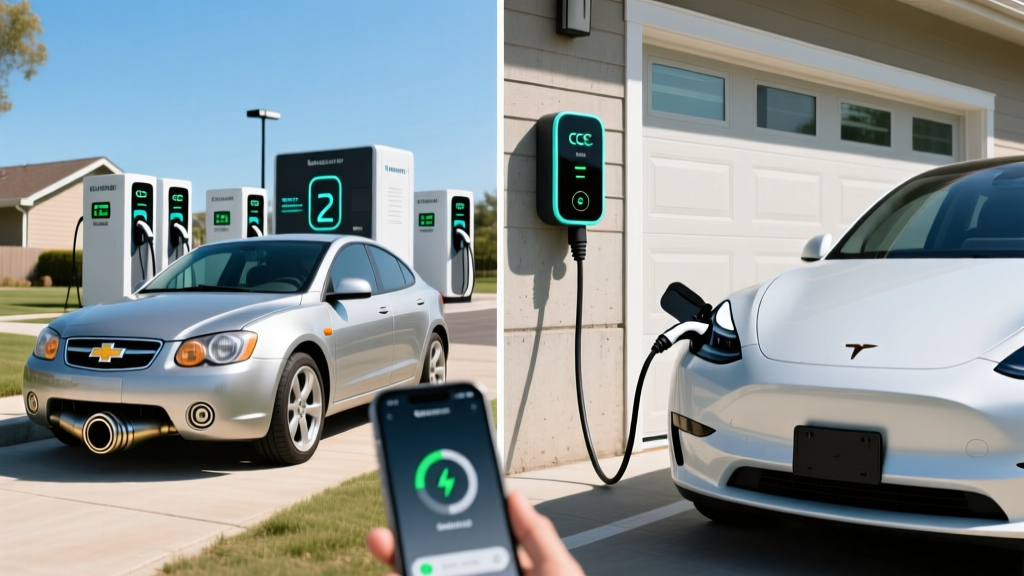
The single most common EV confusion is between kW (kilowatts — the rate of power delivery, like water pressure) and kWh (kilowatt-hours — the total energy stored, like gallons in a tank). Your Model Y Long Range has roughly 75 kWh of usable battery capacity. Charging speed is measured in kW. Here's how each level translates to real range added:
| Level | Voltage / Amperage | Max Power (kW) | Miles of Range Added per Hour | Typical Use Case |
|---|---|---|---|---|
| Level 1 (120V) | 120V / 12A | ~1.4 kW | ~3–4 miles/hr | Emergency / overnight trickle |
| Level 2 (240V) | 240V / 48A | 11.5 kW | ~37–44 miles/hr | Home daily charging |
| DC Fast (Supercharger V3) | DC / up to 250 kW | 250 kW (peak) | ~1,000+ miles/hr (peak) | Road trips, rapid top-ups |
Home Charger Installation: Electrical Requirements and Costs
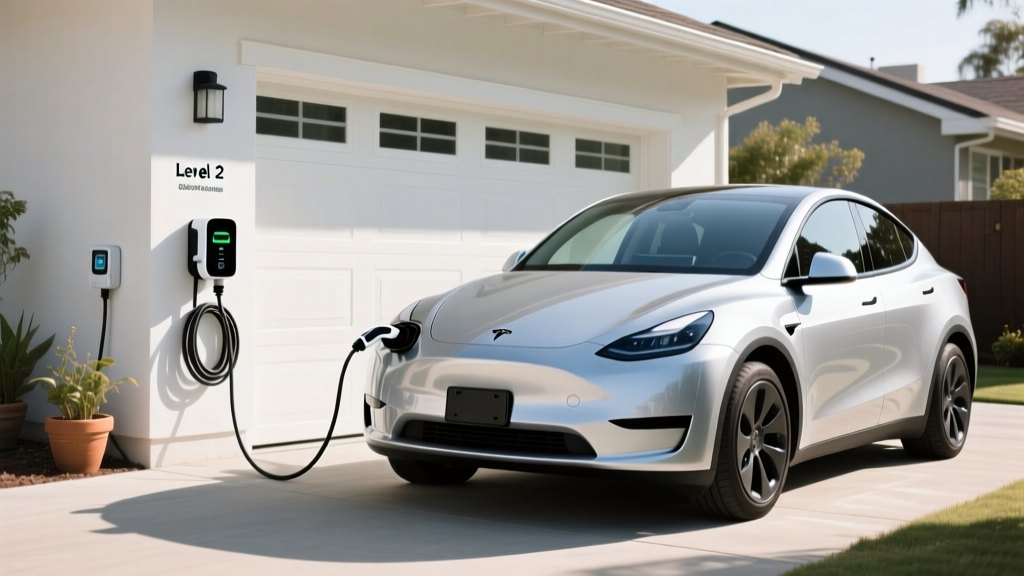
For a Tesla Model Y Long Range, a Level 2 home charger is the practical standard. Level 1 (a standard 120V outlet) adds only ~3–4 miles per hour — meaning a full charge from 10% would take roughly 60+ hours. Level 2 at 11.5 kW refills the ~75 kWh battery from 10% to full in about 7–8 hours, ideal for overnight charging.
What Electrical Service Does a Model Y Level 2 Charger Need?
The Tesla Wall Connector (Gen 3) supports up to 48 amps continuous draw, which requires a 60-amp dedicated breaker on a 240V circuit (NEC code requires breakers rated at 125% of continuous load). Your home's electrical panel must have capacity for this additional load.
Here's the reality many guides gloss over: older homes with 100-amp panels often cannot support a 60-amp EV circuit without a panel upgrade to 200 amps. This is the single biggest variable in installation cost.
| Component | Simple Install (panel has capacity, short run) | Complex Install (panel upgrade or long conduit run) |
|---|---|---|
| Level 2 Charger (equipment) | $400–$500 | $400–$500 |
| Electrician labor (240V circuit, wiring, breaker) | $600–$1,200 | $1,500–$3,000 |
| Permit and inspection | $50–$200 | $100–$300 |
| Electrical panel upgrade (if needed, 100A→200A) | N/A | $1,500–$3,500 |
| Total Estimated Cost | $1,050–$1,900 | $3,500–$7,300 |
According to the U.S. Department of Energy, most straightforward home Level 2 installations fall between $1,000 and $2,500 when the panel has sufficient capacity. Always get a load calculation from a licensed electrician before committing to equipment.
Safety and Electrical Code Considerations
Any Level 2 installation must comply with NEC Article 625 (Electric Vehicle Charging System Equipment). Key requirements:
- Dedicated circuit: The EV charger must have its own breaker — no sharing with dryers, ovens, or other large appliances.
- GFCI protection: NEC 2020 and later requires GFCI protection for all EV charging outlets (hardwired units like the Tesla Wall Connector have built-in ground-fault protection).
- Outdoor rating: If installing outside (garage exterior, driveway), the connector and enclosure must carry a NEMA 3R or NEMA 4 rating for weather resistance. The Tesla Wall Connector is rated NEMA 4.
- Wire gauge: A 60-amp circuit typically requires 6 AWG copper wire (THHN in conduit) or 4 AWG for longer runs to minimize voltage drop.
Which Connector and Charger Is Compatible with the 2023 Model Y?
The 2023 Tesla Model Y Long Range uses the North American Charging Standard (NACS) connector — Tesla's proprietary design, which was opened as an industry standard in late 2022 and has since been adopted by Ford, GM, Rivian, Volvo, and most major automakers for 2025+ models.
| Connector Type | Native Compatibility? | Adapter Needed? | Where You'll Find It |
|---|---|---|---|
| NACS (Tesla) | Yes — native | None | Tesla Superchargers, Tesla Wall Connector, newer public stations |
| CCS1 | No | Tesla CCS Adapter (~$250, included with some vehicles) | Electrify America, EVgo, ChargePoint DC stations |
| CHAdeMO | No | Third-party adapter (rare, ~$400+) | Legacy Nissan Leaf stations (being phased out) |
| J1772 (Level 2 AC) | No (for non-Tesla Level 2) | Tesla J1772 Adapter (included with vehicle) | Public Level 2 stations, workplaces, hotels |
The Model Y ships with a J1772 adapter in the glovebox, so you can use any public Level 2 station. For DC fast charging on non-Tesla networks (Electrify America, EVgo), you need the Tesla CCS1 adapter, which Tesla sells for approximately $250. Check your Tesla app or vehicle settings first — some 2023 Model Y vehicles received the adapter as standard equipment, and the car's software must support CCS charging (enabled via OTA update on all 2023 units).
Level 2 Charger Equipment Recommendations for the Model Y
Not all Level 2 chargers deliver the same power or features. The Model Y's onboard charger accepts up to 11.5 kW (48A at 240V), so pairing it with a charger that maxes out at 32A (7.7 kW) leaves performance on the table. Here are the top options for 2023 Model Y Long Range owners:
Tesla Wall Connector (Gen 3) — Best Overall
- Power Output: Up to 11.5 kW (48A)
- Connector: NACS (native)
- Cable Length: 24 feet
- Smart Features: Wi-Fi OTA updates, power sharing between two units, load management
- Price: ~$475
- Why: Maximizes the Model Y's 11.5 kW onboard charger. Seamless integration with Tesla app. No adapter needed.
ChargePoint Home Flex — Best Universal
- Power Output: Up to 12 kW (50A), configurable down to 16A
- Connector: J1772 (use Tesla adapter) or NACS version available
- Cable Length: 23 feet
- Smart Features: Wi-Fi, Alexa integration, scheduled charging, detailed energy tracking
- Price: ~$550–$700
- Why: Flexible amperage lets you match your circuit. Works with any EV via J1772 or NACS.
Emporia Vue Level 2 — Best Budget
- Power Output: Up to 11.5 kW (48A)
- Connector: J1772 (use Tesla adapter)
- Cable Length: 24 feet
- Smart Features: Wi-Fi, energy monitoring, solar integration, scheduled charging
- Price: ~$399
- Why: Full 48A output at the lowest price. Excellent energy monitoring pairs well with solar panels.
Grizzl-E Smart — Best for Cold Climates
- Power Output: Up to 10 kW (40A)
- Connector: J1772 (use Tesla adapter)
- Cable Length: 24 feet
- Smart Features: OCPP-compatible, adjustable amperage, extreme-weather rated (-40°F)
- Price: ~$499
- Why: Built in Canada for harsh winters. Rugged aluminum case. Slightly lower output (40A vs 48A) still adds ~30 mi/hr.
Cost to Charge: Model Y Long Range vs. Gas per Mile
The Model Y Long Range achieves 122 MPGe combined (per fueleconomy.gov), consuming roughly 28 kWh per 100 miles. Here's what that costs in real charging scenarios versus a comparable gas SUV:
| Charging / Fueling Scenario | Rate | Cost per 100 Miles | Cost per Mile |
|---|---|---|---|
| Home Level 2 (off-peak / time-of-use rate) | $0.08–$0.12/kWh | $2.24–$3.36 | $0.02–$0.03 |
| Home Level 2 (standard residential rate) | $0.14–$0.18/kWh | $3.92–$5.04 | $0.04–$0.05 |
| Public Level 2 (ChargePoint, workplace) | $0.20–$0.35/kWh | $5.60–$9.80 | $0.06–$0.10 |
| Tesla Supercharger V3 (average) | $0.28–$0.36/kWh | $7.84–$10.08 | $0.08–$0.10 |
| Non-Tesla DC Fast (Electrify America) | $0.35–$0.48/kWh | $9.80–$13.44 | $0.10–$0.13 |
| Gas SUV (28 MPG combined) | $3.40/gallon | $12.14 | $0.12 |
The numbers are clear: home charging is the economic killer app of EV ownership. At off-peak rates, the Model Y costs roughly 2–3 cents per mile to fuel — about one-quarter the cost of a gas SUV at $3.40/gallon. Even at Supercharger prices, you're paying less per mile than gasoline in most markets. However, relying exclusively on DC fast charging at premium public rates erodes the cost advantage significantly.
For a driver covering 12,000 miles annually with 80% home charging at $0.13/kWh and 20% Supercharging at $0.32/kWh, the annual fuel cost is approximately $500–$600. A comparable gas SUV at 28 MPG and $3.40/gallon would cost approximately $1,457 per year — a savings of $850–$950 annually for the Model Y.
DC Fast Charging on the Road: What to Expect
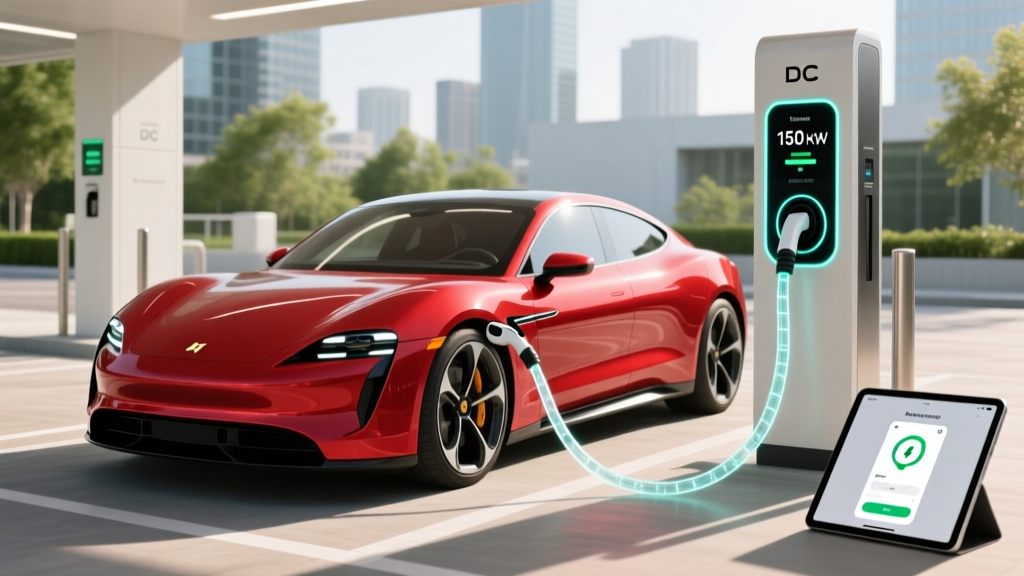
The 2023 Model Y Long Range supports up to 250 kW peak on Tesla V3 Superchargers. Here's what realistic road-trip charging looks like:
- 10–80% at a V3 Supercharger (250 kW peak): ~25–28 minutes (battery preconditioned via navigation routing)
- 10–80% at a V2 Supercharger (150 kW peak): ~35–40 minutes
- 10–80% on Electrify America (with CCS adapter, 150–350 kW station): ~28–35 minutes (the Model Y typically caps at ~170–190 kW on CCS)
- 10–80% at a 50 kW CHAdeMO/CCS station: ~70–80 minutes (avoid unless necessary)
Federal Tax Credits and Incentives for Home Charging
The Alternative Fuel Vehicle Refueling Property Credit (IRS Form 8911) covers 30% of the cost of home EV charging equipment and installation, up to a maximum of $1,000. Key caveats:
- The credit applies to both the charger hardware and installation labor.
- Your home must be located in an eligible census tract (non-urban or low-income area as defined by the IRS). Many suburban and rural locations qualify; dense urban cores may not.
- The credit is non-refundable — it reduces your tax liability but won't generate a refund beyond zero.
- This is separate from the §30D new clean vehicle credit (up to $7,500 for the vehicle itself, subject to MSRP caps, income limits, and battery sourcing requirements).
Check your eligibility using the IRS census tract locator before purchasing. Consult a tax professional — rules are subject to change and individual situations vary.
Frequently Asked Questions
How much does it cost to install a home EV charger for a Tesla Model Y?
A straightforward Level 2 installation (panel has capacity, short wire run) typically costs $1,050–$1,900 including the Tesla Wall Connector ($475), electrician labor ($600–$1,200), and permit ($50–$200). If your home needs a 200-amp panel upgrade, expect total costs of $3,500–$7,300. Always get a professional load calculation first.
How fast will each charging level add range to the Model Y Long Range?
Level 1 (120V) adds ~3–4 miles per hour. Level 2 (240V, 48A) adds ~37–44 miles per hour — enough to fully recharge overnight. DC fast charging at a V3 Supercharger adds up to ~200 miles in 15 minutes at peak rate, though the charge curve tapers significantly above 50% SoC.
Which connector does the 2023 Model Y use, and do I need adapters?
The 2023 Model Y uses NACS natively. It includes a J1772 adapter for non-Tesla Level 2 stations. For non-Tesla DC fast chargers (Electrify America, EVgo), you need the Tesla CCS1 adapter (~$250). CHAdeMO is not recommended — adapters are expensive and stations are being phased out.
How much does charging a Model Y cost per mile compared to gas?
At home off-peak rates ($0.10/kWh), the Model Y costs approximately $0.03 per mile. At Supercharger rates ($0.32/kWh), it costs ~$0.09 per mile. A comparable 28-MPG gas SUV at $3.40/gallon costs $0.12 per mile. Home charging delivers the largest savings — roughly $850–$950 less per year for a 12,000-mile driver.
What electrical upgrades might my home need for a Level 2 charger?
The Tesla Wall Connector at full 48A requires a 60-amp dedicated breaker on a 240V circuit. Homes with 100-amp electrical panels often need a panel upgrade to 200 amps ($1,500–$3,500). Homes with existing 200-amp service usually have sufficient headroom. Your electrician will perform a load calculation per NEC Article 220 to determine this. If a panel upgrade is cost-prohibitive, you can configure the Wall Connector to 32A or 40A on a smaller breaker, sacrificing ~5–12 miles/hr of charging speed.