Tesla Model Y Europe Range: WLTP vs Real-World Expectations
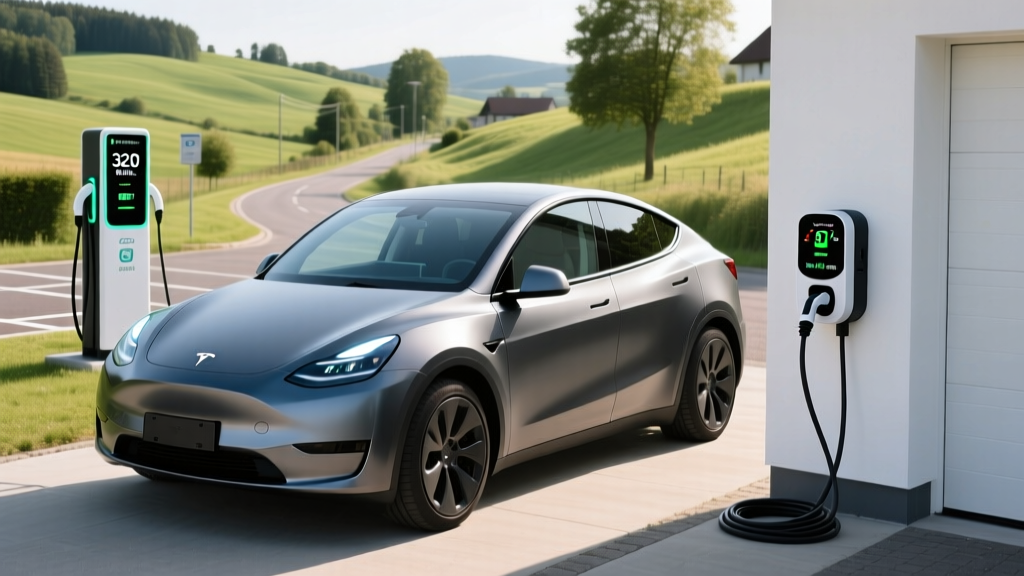
The Tesla Model Y Europe range varies significantly by trim and driving conditions. For 2026, the Model Y Long Range AWD carries a WLTP rating of 533 km (331 miles) with its 75 kWh usable battery pack, while the Performance variant drops to 514 km (319 miles) WLTP due to stickier tires and more aggressive powertrain tuning. The Standard Range RWD model achieves 455 km (283 miles) WLTP with an LFP (lithium iron phosphate) battery.
Real-World Range Reality Check: WLTP testing is more optimistic than US EPA cycles, and real-world European driving rarely matches lab conditions. Expect 400–450 km (248–280 miles) on highway trips at 120 km/h in mild weather, dropping to 300–340 km (186–211 miles) in sub-zero winter conditions. The LFP battery in the Standard Range model loses 15–25% range in cold weather versus 10–15% for the NMC chemistry in Long Range trims.
| Specification | Standard Range RWD | Long Range AWD | Performance AWD |
|---|---|---|---|
| WLTP Range | 455 km (283 mi) | 533 km (331 mi) | 514 km (319 mi) |
| Battery Chemistry | LFP | NMC | NMC |
| Usable Battery | 60 kWh | 75 kWh | 75 kWh |
| Real-World Highway (mild) | ~340 km | ~430 km | ~400 km |
| Real-World Winter | ~270 km | ~340 km | ~320 km |
| Peak DC Charge Rate | 170 kW | 250 kW | 250 kW |
| 10–80% DC Fast Charge | ~28 min | ~25 min | ~25 min |
| 0–100 km/h | 6.9 sec | 5.0 sec | 3.7 sec |
| Power | 295 hp | 384 hp | 450 hp |
| Starting Price (EU) | €44,990 | €54,990 | €61,990 |
Charging Levels Explained: Speeds, Power, and Range Added
Understanding the difference between kW (power — how fast energy flows) and kWh (energy — how much the battery stores) is essential. A 75 kWh battery charged at 11 kW takes roughly 7 hours from empty to full. A 250 kW DC fast charger delivers that same energy in under 30 minutes — but only up to about 80% state of charge, after which the charge curve tapers dramatically to protect the battery.
| Level | Voltage / Power | Range Added Per Hour | Typical Use Case |
|---|---|---|---|
| Level 1 (Granny Cable) | 230V / 2.3 kW (10A) | 12–15 km/h | Emergency / overnight trickle |
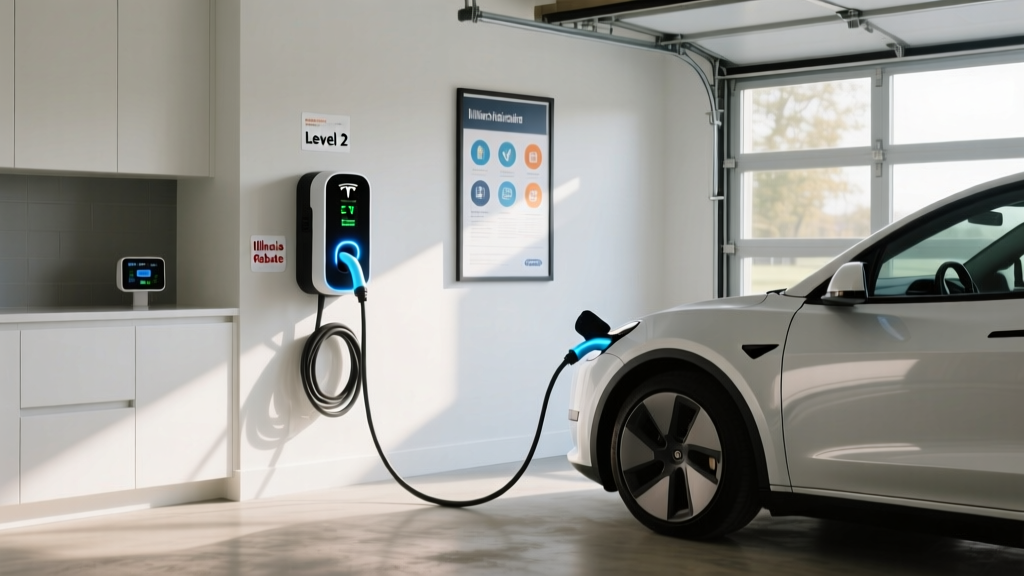
| Level 2 Home (Wallbox) | 230V single-phase / 7.4 kW (32A) | 40–50 km/h | Daily home charging |
| Level 2 Home (3-Phase) | 400V / 11 kW (16A) | 60–70 km/h | Faster home / workplace |
| DC Fast Charging | 400V+ / 50–250 kW | 300–1,200 km/h | Road trips, rapid top-ups |
For the Tesla Model Y in Europe, the onboard charger accepts up to 11 kW on 3-phase AC (common in many European homes and workplaces) or 7.4 kW on single-phase. The Model Y uses a CCS2 connector for both AC and DC charging in Europe — this is the regional standard and differs from the NACS connector used on North American Teslas.
Home Charger Installation: Electrical Requirements and Costs
Installing a dedicated home wallbox is the single most impactful upgrade for EV ownership. Most European Model Y owners charge at 7.4 kW (single-phase) or 11 kW (3-phase) at home, waking to a full battery every morning.
Electrical Requirements
- Single-phase (7.4 kW): Requires a 230V circuit with a 32A dedicated breaker. Most modern European homes can support this without a panel upgrade.
- 3-phase (11–22 kW): Requires a 400V supply with a 16A or 32A breaker per phase. Older homes or apartments may need a grid connection upgrade from the utility, which can cost €1,500–€4,000 depending on the building.
- Dedicated circuit: The charger must have its own circuit — no sharing with high-draw appliances like ovens or dryers.
- RCD/GFCI protection: European code requires a Type A or Type B residual current device. Many modern wallboxes include built-in DC fault detection (6 mA), which allows use with a cheaper Type A RCD rather than the more expensive Type B.
- Outdoor rating: For exterior installations, the unit must be rated IP54 or higher.
| Component | Single-Phase (7.4 kW) | 3-Phase (11 kW) |
|---|---|---|
| Wallbox unit | €400–€700 | €500–€900 |
| Electrician labor (3–6 hrs) | €300–€600 | €400–€800 |
| Cable, conduit, RCD, breaker | €150–€300 | €200–€450 |
| Permit / notification fee | €50–€150 | €50–€200 |
| Panel upgrade (if needed) | €0–€1,500 | €500–€4,000 |
| Total (typical) | €900–€1,750 | €1,150–€6,350 |
The wide cost range on 3-phase installations reflects the reality that some homes already have 3-phase power (common in Germany, Austria, and newer builds) while others require a utility upgrade. Always get a site assessment from a certified electrician before purchasing equipment.
Connector Compatibility: CCS2, Adapters, and European Networks
European Tesla Model Y vehicles come equipped with a CCS2 (Combined Charging System Type 2) port. This is the dominant standard across Europe and works natively with virtually all public AC and DC charging networks — Ionity, Fastned, EnBW, Allego, Shell Recharge, and Tesla's own Supercharger network in Europe.
| Connector | Type | Model Y Europe Compatible? | Notes |
|---|---|---|---|
| CCS2 | AC + DC | ✅ Native | Standard on all EU Model Y; works at Ionity, Fastned, Supercharger V3/V4 |
| Type 2 (Mennekes) | AC only | ✅ Native (upper portion of CCS2) | Public AC posts, destination chargers, home wallboxes |
| CHAdeMO | DC | ❌ No adapter available | Largely phased out in Europe; some legacy Nissan Leaf stations |
| NACS (Tesla North America) | AC + DC | ❌ Not used in Europe | North American standard; irrelevant for EU-spec vehicles |
The CCS2 ecosystem in Europe is mature. Tesla Superchargers in Europe (V3 at 250 kW, V4 rolling out with up to 350 kW capability) use CCS2 cables, and many are now open to non-Tesla EVs via the Tesla app. For Model Y owners, the Supercharger network remains the most reliable DC fast-charging option, with over 12,000 stalls across Europe as of early 2026.
Charging Cost Analysis: Electricity vs Petrol Per Kilometer
One of the strongest arguments for the Model Y in Europe is the per-kilometer fuel cost advantage. Electricity prices vary enormously across the continent — from under €0.10/kWh in parts of Scandinavia (off-peak) to over €0.40/kWh in Germany and Italy on standard tariffs.
| Charging Scenario | Price per kWh | Cost per 100 km | Cost per km |
|---|---|---|---|
| Home off-peak (varies by country) | €0.12 | €1.92 | €0.019 |
| Home standard tariff (EU avg) | €0.28 | €4.48 | €0.045 |
| Public AC (destination / street) | €0.40 | €6.40 | €0.064 |
| DC Fast — Ionity (subscription) | €0.49 | €7.84 | €0.078 |
| DC Fast — Tesla Supercharger | €0.37 | €5.92 | €0.059 |
| Petrol equivalent (6.5 L/100 km @ €1.75/L) | — | €11.38 | €0.114 |
Even at public DC fast-charging rates, the Model Y costs roughly 40–50% less per kilometer than a comparable petrol SUV. Home charging on an off-peak tariff delivers 80%+ savings. Over 20,000 km of annual driving, a German Model Y owner charging primarily at home saves approximately €900–€1,200 per year versus a petrol car averaging 6.5 L/100 km — and significantly more in high-fuel-tax countries like the Netherlands or Italy.
Recommended Home Charging Equipment for European Model Y Owners
The European wallbox market in 2026 is competitive, with several excellent options that pair well with the Model Y's 11 kW onboard charger. Here are top picks based on reliability, smart features, and value.
Wallbox Pulsar Max — 22 kW (3-Phase)
- Power Output: Up to 22 kW (3-phase, 32A); also available in 7.4 kW single-phase
- Connector: Type 2 tethered cable, 5m or 7m
- Smart Features: Wi-Fi, myWallbox app, solar integration, load balancing, scheduled charging, OTA updates
- Safety: Built-in 6 mA DC leak detection (Type A RCD sufficient), IP55 outdoor rated
- Price: €599–€749 depending on cable length and phase
- Best for: Homes with 3-phase power wanting maximum AC speed and solar optimization
KEBA KeContact P40 — 11 kW (3-Phase)
- Power Output: Up to 11 kW (3-phase, 16A); also 7.4 kW single-phase
- Connector: Type 2 socket (untethered) or 6m tethered cable
- Smart Features: Ethernet/Wi-Fi, KEBA app, RFID access, Modbus for home energy management, MID-certified meter (required for employer reimbursement in Germany)
- Safety: Integrated DC fault detection, IP54
- Price: €650–€850
- Best for: German/Austrian owners needing MID metering for company-car charging reimbursement
Tesla Wall Connector (Gen 3 EU) — 11 kW
- Power Output: Up to 11 kW (3-phase, 16A) or 7.4 kW single-phase
- Connector: Type 2 tethered cable, 7.3m
- Smart Features: Wi-Fi, Tesla app, OTA updates, Power-Share between two units on one circuit, load sharing
- Safety: IP55 outdoor rated, integrated protection
- Price: €530
- Best for: Tesla-only households wanting seamless integration and the longest tethered cable
For single-phase homes, any of these units at 7.4 kW will fully charge a Model Y Long Range (75 kWh) overnight in approximately 10 hours — more than adequate for daily use. The key decision factor is whether your home has 3-phase power, which cuts charge time to under 7 hours.
Safety, Code, and Installation Best Practices
EV charging draws sustained high current for hours — unlike a kettle or oven that cycles on and off. This places unique demands on your home's electrical system. Key safety requirements include:
- Dedicated circuit: The wallbox must be on its own circuit, not shared. A 7.4 kW unit needs a 32A MCB; an 11 kW 3-phase unit needs a 16A 3-pole MCB.
- RCD protection: Type A RCD (30 mA) is standard when the wallbox includes 6 mA DC fault detection. Without built-in DC detection, a more expensive Type B RCD (€200–€400) is required.
- Cable sizing: Minimum 6 mm² for single-phase 32A runs up to 15 meters; 10 mm² for longer runs to limit voltage drop below 3%. Your electrician will calculate this.
- Load management: If your home's total connected load is near the main fuse rating (common in older European homes at 35A or 50A main), a dynamic load-balancing module (€150–€300) monitors household consumption and reduces charger power to prevent tripping the main breaker.
- Permit and notification: Most European countries require the installation to be reported to the grid operator (not a full permit, but a notification). In Germany, §19 NAV requires notification for chargers up to 11 kW and approval for anything above 12 kW. Your electrician handles this.
- Outdoor installations: Use IP54+ rated equipment and ensure the cable management prevents water ingress at the connector. A simple weather hood (€20–€40) extends connector life in rainy climates.
Frequently Asked Questions
How much does it cost to install a home EV charger in Europe?
A typical single-phase 7.4 kW installation costs €900–€1,750 including the wallbox, electrician labor, materials, and notification fees. A 3-phase 11 kW installation ranges from €1,150–€2,500 in homes that already have 3-phase power, but can reach €4,000–€6,350 if a utility panel upgrade is required. Get a site survey before purchasing equipment.
How fast will each charging level add range to my Model Y?
A standard 230V household socket (Level 1, 2.3 kW) adds roughly 12–15 km of range per hour — sufficient for overnight top-ups if your daily drive is under 50 km. A 7.4 kW single-phase wallbox adds 40–50 km/h, while an 11 kW 3-phase unit adds 60–70 km/h. DC fast charging at 250 kW (Tesla Supercharger V3) adds up to 250 km in 15 minutes, though the charge curve tapers significantly above 80% state of charge.
Which connector and charger is compatible with my European Model Y?
All European-spec Tesla Model Y vehicles use the CCS2 connector. This is compatible with every public AC (Type 2) and DC (CCS2) charging station in Europe, including Tesla Superchargers, Ionity, Fastned, EnBW, and Allego networks. No adapters are needed. CHAdeMO stations (increasingly rare) are not compatible.
How much does charging cost per kilometer compared to petrol?
At a European average home electricity rate of €0.28/kWh and real-world consumption of 16 kWh/100 km, home charging costs approximately €0.045/km. A comparable petrol SUV at 6.5 L/100 km with fuel at €1.75/L costs €0.114/km — more than double. Off-peak home charging can reduce the EV cost to under €0.02/km. See the cost comparison table above for detailed scenarios.
What electrical upgrades might my home need for a charger?
Most modern European homes with a 63A or higher main fuse can accommodate a 7.4 kW or 11 kW charger without upgrades. Older homes with 35A or 50A main fuses may need dynamic load balancing (€150–€300) to avoid tripping the main breaker during simultaneous high-draw appliance use. Homes without 3-phase power who want 11 kW+ charging must request a grid connection upgrade from their utility, costing €500–€4,000 depending on local infrastructure. A certified electrician can assess your specific situation during a site survey.
Does cold weather affect the Model Y's range and charging speed in Europe?
Yes, significantly. In winter conditions (0°C to -10°C), expect 15–25% range reduction on the Long Range AWD (NMC battery) and 20–30% on the Standard Range RWD (LFP battery). DC fast charging also slows in cold weather unless the battery is preconditioned. Always enable "Navigate to Supercharger" or manually precondition via the Tesla app 15–20 minutes before arriving at a DC charger — this warms the battery to optimal temperature and can cut 10–80% charge times by 5–10 minutes in winter.
Sources: Tesla Model Y specifications (tesla.com), WLTP.info testing methodology, European Alternative Fuels Observatory (EAFO) charging infrastructure data.