Tesla Model Y Charge Time: What to Expect at Every Charging Level
If you own a Tesla Model Y or are considering one, understanding exactly how long it takes to charge — and what it costs — is essential for daily planning and road trips. The 2026 Tesla Model Y Long Range AWD carries a usable battery capacity of approximately 75 kWh (NMC chemistry) and an EPA-estimated range of 320 miles. Real-world highway driving at 75 mph typically yields 260–285 miles, with cold-weather (below 30°F) range dropping to roughly 230–250 miles depending on cabin heating and terrain.
Charging speed depends entirely on the equipment you use. The single most important distinction in EV charging: kW (kilowatts) measures power — how fast energy flows into the battery. kWh (kilowatt-hours) measures energy — the total capacity of the battery, like gallons in a tank. A 75 kWh battery charged at 7.5 kW takes 10 hours from empty; at 150 kW, it takes roughly 30 minutes to 80%.
EPA estimate: 320 miles
Real-world highway (75 mph, mild weather): ~260–285 miles
Cold weather (below 30°F, mixed driving): ~230–250 miles
Source: fueleconomy.gov
Charging Levels Explained: Speeds in kW and Miles per Hour
Every Tesla Model Y owner uses three tiers of charging. Here's exactly what each delivers:
| Level | Voltage | Max Power (kW) | Miles Added per Hour | Typical Use Case |
|---|---|---|---|---|
| Level 1 | 120V AC | 1.0–1.4 kW | 3–5 mi/hr | Emergency / trickle (standard outlet) |
| Level 2 | 240V AC | 7.2–19.2 kW | 22–56 mi/hr | Home daily charging, workplace |
| DC Fast Charging | 400V+ DC | Up to 250 kW | Up to ~1,000 mi/hr (peak) | Road trips, Tesla Superchargers |
Level 1 uses a standard household 120V outlet with the Tesla Mobile Connector. At roughly 1.2 kW continuous, you'll add about 4 miles of range per hour — meaning a full charge from 10% to 100% takes over 60 hours. This is viable only for PHEVs or as a backup. For a Model Y, Level 1 is not a practical daily solution.
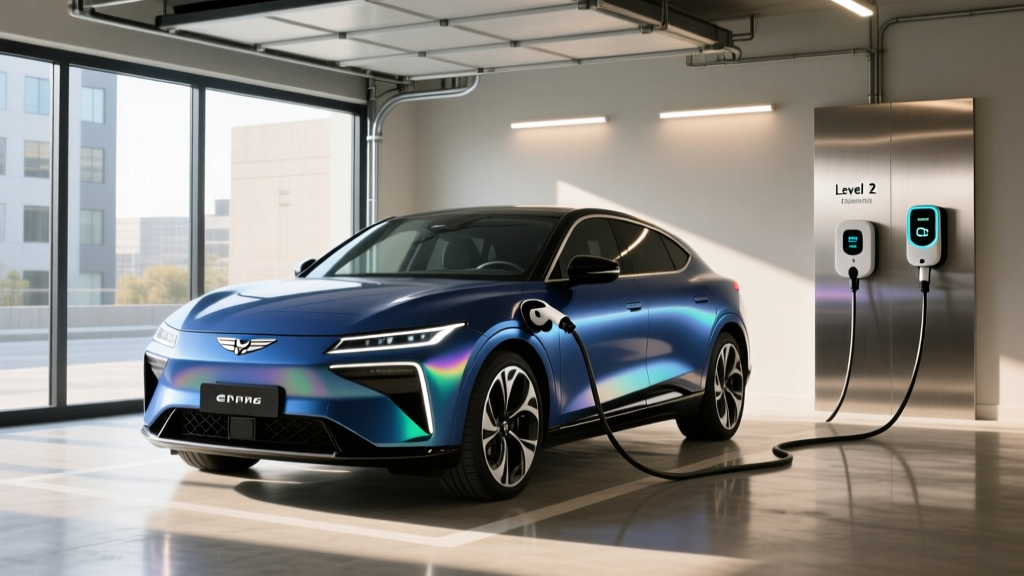
Level 2 is the backbone of home EV ownership. A 240V circuit at 48 amps delivers up to 11.5 kW to the Model Y (the car's onboard charger is rated for 11.5 kW / 48A). This adds roughly 34 miles of range per hour, replenishing a full battery in about 7–8 hours overnight.
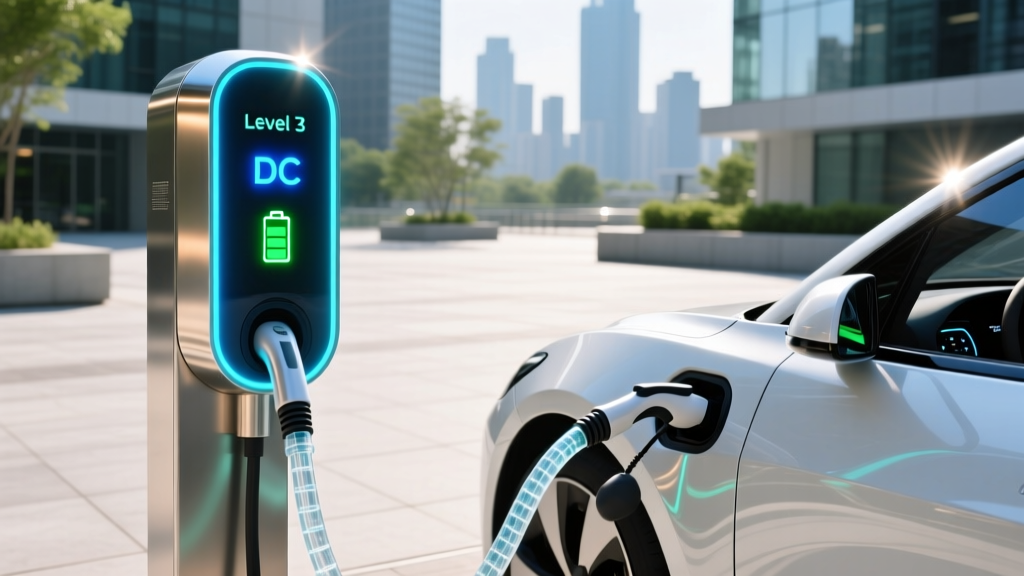
DC Fast Charging bypasses the onboard charger entirely, sending direct current straight to the battery. The 2026 Model Y supports a peak rate of 250 kW at V3 and V4 Tesla Superchargers. However, peak rate is not sustained rate — the charge curve tapers significantly above 50% State of Charge (SoC).
Exact Tesla Model Y Charge Time: 10–80% and Full Charge Scenarios
Here's how long it actually takes to charge the Model Y's ~75 kWh battery at each level, assuming starting from 10% SoC (roughly 7.5 kWh remaining):
| Charging Method | Power (kW) | 10–80% Time | 0–100% Time | Notes |
|---|---|---|---|---|
| Level 1 (120V / 12A) | ~1.2 kW | ~44 hours | ~63 hours | Emergency only |
| Level 2 (240V / 32A) | ~7.7 kW | ~7 hours | ~10 hours | NEMA 14-50 outlet |
| Level 2 (240V / 48A hardwired) | ~11.5 kW | ~4.5 hours | ~6.5 hours | Tesla Wall Connector |
| DC Fast (Tesla Supercharger V3) | Up to 250 kW | ~25–28 minutes | N/A (taper above 80%) | Peak rate to ~50%, then taper |
| DC Fast (CCS adapter + third-party) | Up to 150–350 kW | ~28–35 minutes | N/A | Depends on station output |
The charge curve matters. At a V3 Supercharger, the Model Y will pull close to 250 kW from roughly 10–30% SoC, then gradually step down. By 60% SoC, you might see 100–120 kW. Above 80%, the rate drops sharply to protect battery longevity — often below 40 kW. This is why Tesla (and most automakers) quote 10–80% times rather than 0–100%. Charging from 80% to 100% on DC fast can take as long as the entire 10–80% session. For road trips, plan to leave at 80%.
Home Charger Installation: Electrical Requirements, Costs, and Panel Upgrades
Installing a Level 2 home charger is the single biggest ownership decision for a Model Y. Here's what's involved electrically and financially.
Electrical Requirements for Level 2 Charging
For optimal Model Y charging at 11.5 kW (48A), you need:
- Circuit: Dedicated 60-amp breaker (EVSE draws 48A continuous; NEC requires 125% headroom = 60A circuit)
- Wire: 6 AWG copper (or 4 AWG aluminum) THHN in conduit
- Voltage: 240V split-phase (standard US residential)
- Connection: Hardwired (preferred for 48A+) or NEMA 14-50 receptacle (limited to 40A continuous / 50A breaker)
If your home has a 100-amp electrical panel that's already heavily loaded (central AC, electric oven, dryer, water heater), adding a 60A EV circuit may exceed 80% of panel capacity. This triggers a panel upgrade to 200A — a significant added cost.
| Component | Typical Cost Range | Notes |
|---|---|---|
| Level 2 EVSE equipment | $250–$600 | Tesla Wall Connector ~$420; third-party smart chargers $400–$600 |
| Electrician labor (standard install) | $500–$1,500 | Run from panel to garage/carport, ~20–50 ft |
| Permit and inspection | $50–$250 | Varies by municipality; some jurisdictions waive for EV |
| Electrical panel upgrade (if needed) | $1,500–$3,500 | 100A → 200A service upgrade; older homes common |
| Total (no panel upgrade) | $800–$2,350 | Most homes with 200A panel |
| Total (with panel upgrade) | $2,300–$5,850 | Older homes, 100A service |
Real-world tip: Before hiring an electrician, check your panel's amperage rating (sticker inside the door) and count existing breakers. Many utility companies offer free or discounted home energy assessments that identify panel capacity. Some utilities also offer rebates of $250–$500 for Level 2 charger installation — check your local provider.
Safety and Code Considerations
- Dedicated circuit: NEC Article 625 requires EVSE to be on its own dedicated circuit — no sharing with other appliances.
- GFCI protection: 2020 NEC and later requires GFCI protection for receptacles used for EV charging. Hardwired units have built-in ground-fault protection.
- Outdoor rating: If your charger is installed outside (driveway, carport), ensure the EVSE is rated NEMA 4 (weatherproof). The Tesla Wall Connector is NEMA 4 rated.
- Conduit and wire: All wiring must be in conduit where exposed. Your electrician will handle this to local code.
Connector Compatibility: NACS, CCS, and Adapters for the Model Y
The 2026 Tesla Model Y comes equipped with the North American Charging Standard (NACS) connector — Tesla's proprietary plug that has now been adopted by Ford, GM, Rivian, Hyundai, and most major automakers as the industry standard.
| Connector Type | Native to Model Y? | Where You'll Find It | Adapter Needed? |
|---|---|---|---|
| NACS (Tesla) | Yes — native | Tesla Superchargers (20,000+ stalls in North America), growing third-party networks | None |
| CCS1 | No | Electrify America, EVgo, ChargePoint DC stations | Tesla CCS Adapter (~$175, included with some models) |
| CHAdeMO | No | Limited legacy stations (Nissan Leaf network) | Not available — avoid relying on CHAdeMO |
| J1772 (Level 2 AC) | No (AC only) | Public Level 2 stations, non-Tesla destination chargers | Tesla J1772 Adapter (included with vehicle) |
Practical advice: For daily charging, the NACS connector and Tesla Supercharger network cover the vast majority of needs. Keep the included J1772 adapter in your frunk for public Level 2 stations at malls or workplaces. The CCS adapter is useful as a backup for road trips through areas with sparse Supercharger coverage — Electrify America stations along major interstates are increasingly reliable.
Recommended Home Chargers for the Tesla Model Y
These Level 2 chargers pair well with the Model Y's 11.5 kW onboard charger. All use the NACS connector or include adapters.
Tesla Wall Connector (Gen 3)
- Power output: Up to 11.5 kW (48A)
- Connector: NACS native
- Cable length: 24 feet
- Smart features: Wi-Fi, over-the-air updates, load sharing between multiple units, access control
- Price: ~$420
- Best for: Tesla-only households; seamless integration with Tesla app
ChargePoint Home Flex (NACS)
- Power output: Up to 12 kW (50A), adjustable down to 16A
- Connector: NACS (2025+ models) or J1772 with adapter
- Cable length: 23 feet
- Smart features: Wi-Fi, ChargePoint app scheduling, Alexa integration, energy tracking
- Price: ~$550
- Best for: Multi-EV households (Tesla + non-Tesla with adapter)
Emporia Level 2 Smart Charger
- Power output: Up to 11.5 kW (48A)
- Connector: J1772 (use Tesla adapter) or NACS version available
- Cable length: 24 feet
- Smart features: Wi-Fi, Emporia energy monitoring integration, solar-aware scheduling
- Price: ~$399
- Best for: Budget-conscious buyers with solar panels
Key selection criteria: Match the charger's amperage to your circuit. A 48A charger requires a 60A breaker. If your panel is tight on capacity, a 32A charger (requiring a 40A breaker) delivers 7.7 kW — still enough to fully charge the Model Y overnight in about 10 hours.
Cost to Charge: Per kWh, Per Mile, and vs. Gasoline
Charging economics vary dramatically based on where and when you plug in. Here's a realistic breakdown for the Model Y Long Range AWD (rated at approximately 28 kWh per 100 miles, or 3.57 miles/kWh):
| Charging Scenario | Cost per kWh | Cost per 100 Miles | Cost per Mile |
|---|---|---|---|
| Home (national avg residential) | $0.16 | $4.48 | $0.045 |
| Home (off-peak / time-of-use) | $0.08–$0.12 | $2.24–$3.36 | $0.022–$0.034 |
| Public Level 2 (workplace, mall) | $0.20–$0.35 | $5.60–$9.80 | $0.056–$0.098 |
| Tesla Supercharger (avg 2026) | $0.28–$0.38 | $7.84–$10.64 | $0.078–$0.106 |
| Electrify America / third-party DC | $0.31–$0.48 | $8.68–$13.44 | $0.087–$0.134 |
Gas comparison: A comparable gas-powered compact SUV averaging 28 MPG combined at $3.40/gallon costs $12.14 per 100 miles — or $0.121 per mile. Home charging the Model Y at national average rates saves roughly 60–65% per mile vs. gasoline. Even exclusive Supercharger use undercuts gas on a per-mile basis in most states.
Maximize savings: Enroll in your utility's time-of-use (TOU) plan. Charging between midnight and 6 AM can cut your per-kWh cost in half. Set your Model Y's scheduled charging feature (via the Tesla app or in-car settings) to begin at your off-peak window.
Tesla Model Y Charge Time FAQ
How much does it cost to install a home EV charger for a Tesla Model Y?
A standard Level 2 installation (Tesla Wall Connector, 60A circuit, 20–50 ft run) costs between $800 and $2,350 including equipment, electrician labor, and permit. If your home has a 100A electrical panel requiring a 200A upgrade, total costs can reach $2,300–$5,850. Get quotes from at least two licensed electricians — pricing varies significantly by region and run complexity.
How fast will each charging level add range to my Model Y?
Level 1 (120V) adds 3–5 miles per hour — essentially impractical for daily use. Level 2 (240V at 48A) adds approximately 34 miles per hour, fully recharging overnight. DC Fast Charging at a V3 Supercharger can add up to 200 miles in 15 minutes at peak rate (low SoC, preconditioned battery).
Which connector and charger is compatible with my Tesla Model Y?
The 2026 Model Y uses the NACS connector natively for both AC and DC charging. For public Level 2 stations using J1772, use the included Tesla J1772 adapter. For non-Tesla DC fast chargers (CCS1), use the Tesla CCS adapter. CHAdeMO is not supported and is being phased out across North America.
How much does charging cost per mile compared to gas?
Home charging at the national average electricity rate ($0.16/kWh) costs about $0.045 per mile. A comparable gas SUV at 28 MPG and $3.40/gallon costs about $0.121 per mile. Even at Supercharger rates ($0.28–$0.38/kWh), the Model Y costs $0.078–$0.106 per mile — still below gasoline in most markets.
What electrical upgrades might I need for a home charger?
If your home has a 200A panel with available capacity, you likely need only a new 60A breaker and wire run — no panel work. If you have a 100A panel (common in homes built before 1990), you'll likely need a service upgrade to 200A ($1,500–$3,500). An alternative: some smart chargers and panels (e.g., Emporia + Span smart panel) can dynamically limit EV charging to avoid overloading existing capacity, potentially avoiding a panel upgrade.
Should I precondition my Model Y before DC fast charging?
Yes. Navigate to a Supercharger in the Tesla navigation system, and the car will automatically begin battery preconditioning — warming or cooling the battery to its optimal charging temperature. This can reduce 10–80% charge time by 5–10 minutes, especially in cold weather. Arriving at a Supercharger without preconditioning (e.g., using third-party apps or manual routing) means slower initial charge rates.
Bottom Line: Planning Your Model Y Charging Setup
The Tesla Model Y's 75 kWh battery and 11.5 kW onboard charger make it one of the most straightforward EVs to own from a charging perspective. A hardwired Level 2 Tesla Wall Connector on a 60A circuit delivers a full overnight charge in roughly 6.5 hours at a cost of $3–$5 per fill-up. On the road, V3 Superchargers replenish 10–80% in about 25–28 minutes — fast enough for a rest stop and meal.
Your biggest variable is home installation cost. Homes with modern 200A panels will see a straightforward, affordable install. Older homes may face panel upgrade costs that push total investment above $4,000 — but the long-term fuel savings (often $1,000–$1,500 per year vs. gas) typically recoup that investment within 3–5 years.
For detailed federal incentive rules on home charger installation (the §30C Alternative Fuel Vehicle Refueling Property Credit covers up to $1,000 for residential equipment), consult a tax professional — eligibility depends on census-tract qualifications and income thresholds that vary by location.