Quick Verdict: Charging the 2026 Model Y Long Range RWD
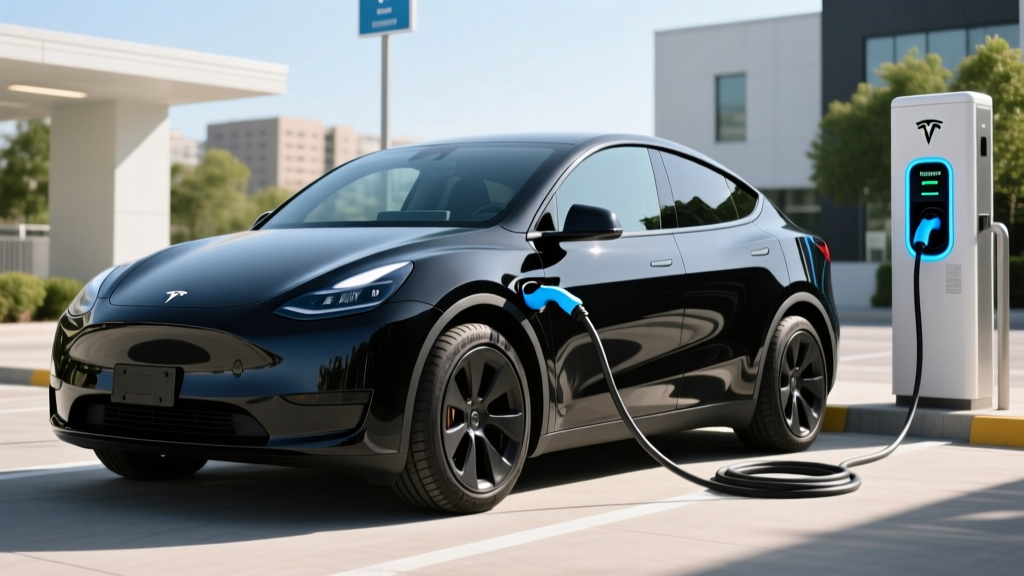
The 2026 Tesla Model Y Long Range RWD pairs a roughly 75 kWh usable battery with a native NACS charge port and a peak DC fast-charge rate around 250 kW, enabling 10–80% top-ups in roughly 22–25 minutes at V3 and V4 Superchargers. At home on a 48-amp Level 2 circuit, it adds about 30–33 miles of range per hour, easily replenishing a full day of driving overnight. This guide breaks down the exact electrical requirements, real-world charging speeds, and per-mile costs you need before you plug in.
EPA-estimated range: ~320 miles. Expect 260–290 miles at sustained 75 mph highway speeds, and 220–250 miles in sub-freezing winter conditions. Cold weather reduces battery efficiency and increases cabin-heating load even with the heat pump.
Charging Levels Explained: kW, Miles per Hour, and What Each Level Means
EV charging falls into three tiers. The critical distinction: kW (kilowatts) measures power — how fast energy flows into the battery. kWh (kilowatt-hours) measures energy — the total capacity stored. A 75 kWh battery charged at 75 kW for one hour would theoretically fill from empty to full; in reality, charge curves taper as the battery approaches full.
| Level | Voltage / Amps | Max Power (kW) | Miles of Range Added per Hour | Best Use Case |
|---|---|---|---|---|
| Level 1 | 120V / 12–15A | 1.4–1.8 kW | 3–5 miles/hr | Overnight trickle; emergency top-up |
| Level 2 | 240V / 40–48A | 9.6–11.5 kW | 28–38 miles/hr | Daily home charging; full overnight fill |
| DC Fast Charge | 400V+ architecture | Up to 250 kW (NACS) | ~1,000+ miles/hr (at peak) | Road trips; rapid top-ups (10–80%) |
For the 2026 Model Y Long Range RWD, Level 2 is the practical daily solution. The onboard charger accepts up to 11.5 kW on 240V AC, meaning a 48-amp hardwired wall connector delivers the maximum throughput the vehicle can accept.
DC Fast-Charging Reality: Peak vs. Sustained kW
Tesla advertises a 250 kW peak charge rate on V3 Superchargers. However, that peak only holds between roughly 10–30% state of charge. Above 50%, the rate tapers to ~100–120 kW, and above 80%, it drops further to protect battery longevity. A realistic 10–80% session takes 22–25 minutes at a V3 or V4 Supercharger. At Electrify America or other CCS networks using a NACS-to-CCS adapter, expect slightly slower speeds due to handshake and thermal limits — typically 180–220 kW peak.
Home Charger Installation: Electrical Requirements, Costs, and Panel Upgrades
Installing a Level 2 home charger for the Model Y Long Range RWD requires a dedicated 240V circuit. Here's what your electrician will evaluate:
- Circuit size: A 60-amp breaker feeding a 48-amp continuous-load wall connector (NEC requires breakers rated 125% of continuous load).
- Wire gauge: Typically 6 AWG copper (THHN in conduit or NM-B depending on local code).
- Panel capacity: Your main service panel must have enough spare amperage. A 200-amp panel is standard for modern homes; older 100-amp panels may require a service upgrade ($2,000–$5,000+).
- Permit: Most jurisdictions require an electrical permit ($50–$300) and a post-install inspection.
| Item | Typical Cost Range | Notes |
|---|---|---|
| Level 2 EVSE (Tesla Wall Connector or equivalent) | $400–$750 | 48-amp, 24-foot cable, Wi-Fi enabled |
| Electrician labor (standard install, panel to garage ≤50 ft) | $600–$1,500 | Varies by region, conduit run length, wall material |
| Electrical permit & inspection | $50–$300 | Required in most jurisdictions |
| Panel upgrade (if needed: 100A → 200A) | $2,000–$5,000+ | Major cost driver for older homes |
| Total (no panel upgrade) | $1,050–$2,550 | Most common scenario for 200A-panel homes |
| Total (with panel upgrade) | $3,050–$7,550+ | Older homes, high-load panels |
Before scheduling installation, check your panel's amp rating and available breaker slots. If you're running near capacity (common with electric ranges, dryers, and HVAC), a load calculation by a licensed electrician is essential. Some utilities offer rebates of $250–$1,000 for Level 2 installations — check with your local provider.
Safety and Code Considerations
The NEC (National Electrical Code) and local amendments govern EV charger installs. Key requirements:
- Dedicated circuit: The EVSE must have its own breaker — no shared circuits with other appliances.
- GFCI protection: Required for outdoor receptacles (NEC 2020+); hardwired units may be exempt depending on jurisdiction.
- Outdoor rating: If mounting outside, the EVSE must carry a NEMA 4 or IP65 weather rating.
- Cable management: Retractors or holsters prevent trip hazards and cable damage.
Always hire a licensed electrician familiar with EVSE installs. Tesla's certified installer network can provide quotes, though independent electricians often charge less.
Connector Compatibility: NACS, CCS, and Adapter Needs
The 2026 Model Y Long Range RWD ships with a native NACS (North American Charging Standard) port — the Tesla connector that has been adopted by Ford, GM, Rivian, Hyundai, and most major automakers through 2025–2026. This means:
| Connector Type | Compatibility with 2026 Model Y LR RWD | Adapter Needed? |
|---|---|---|
| NACS (Tesla Supercharger) | Native — plug and charge | No |
| CCS1 (Electrify America, EVgo, etc.) | Compatible with adapter | Yes — NACS-to-CCS1 adapter (~$150–$250) |
| CHAdeMO (Nissan Leaf legacy) | Not practical | No widely available adapter; avoid |
| J1772 (public Level 2) | Compatible with included adapter | Tesla ships a J1772-to-NACS adapter in-box |
For public Level 2 charging (shopping centers, workplaces, hotels), the included J1772 adapter handles virtually all non-Tesla stations. For DC fast charging on non-Tesla networks, you'll need a NACS-to-CCS1 adapter — Tesla sells one, and third-party options from Lectron and A2Z are also available.
Cost to Charge: Home vs. Public vs. Gas Comparison
Electricity prices vary widely by state and utility. Here are realistic per-mile costs for the 2026 Model Y Long Range RWD, which achieves approximately 3.5–4.0 miles per kWh (roughly 119 MPGe combined per fueleconomy.gov):
| Charging Scenario | Rate ($/kWh) | Cost per Mile | Equivalent Gas Price (at 28 MPG) |
|---|---|---|---|
| Home off-peak (utility TOU rate) | $0.08–$0.12 | $0.023–$0.034 | $0.64–$0.95/gallon |
| Home standard rate (national avg.) | $0.16 | $0.046 | $1.28/gallon |
| Public Level 2 (ChargePoint, etc.) | $0.25–$0.40 | $0.071–$0.114 | $1.99–$3.19/gallon |
| Tesla Supercharger (avg. 2026) | $0.28–$0.42 | $0.080–$0.120 | $2.24–$3.36/gallon |
| Gasoline (national avg. ~$3.40/gal, 28 MPG ICE) | — | $0.121 | $3.40/gallon |
Home charging on an off-peak rate delivers the lowest per-mile cost in transportation — roughly 75–80% cheaper than a comparable gas crossover. Even at Supercharger prices, the Model Y LR RWD undercuts gasoline per mile in most states.
Charging Time Examples for the 75 kWh Battery
| Charging Method | Power (kW) | 10–80% Time | 0–100% Time |
|---|---|---|---|
| 120V Level 1 (Mobile Connector) | 1.4 kW | ~50+ hours | ~54 hours |
| 240V Level 2 (48A Wall Connector) | 11.5 kW | ~5 hours | ~6.5 hours |
| 240V Level 2 (40A circuit) | 9.6 kW | ~6 hours | ~7.8 hours |
| Tesla V3 Supercharger (DC) | Up to 250 kW | ~22–25 min | ~50 min (taper above 80%) |
| CCS DC Fast (via adapter) | Up to ~200 kW | ~28–35 min | ~55–65 min |
Recommended Home Chargers for the Model Y Long Range RWD
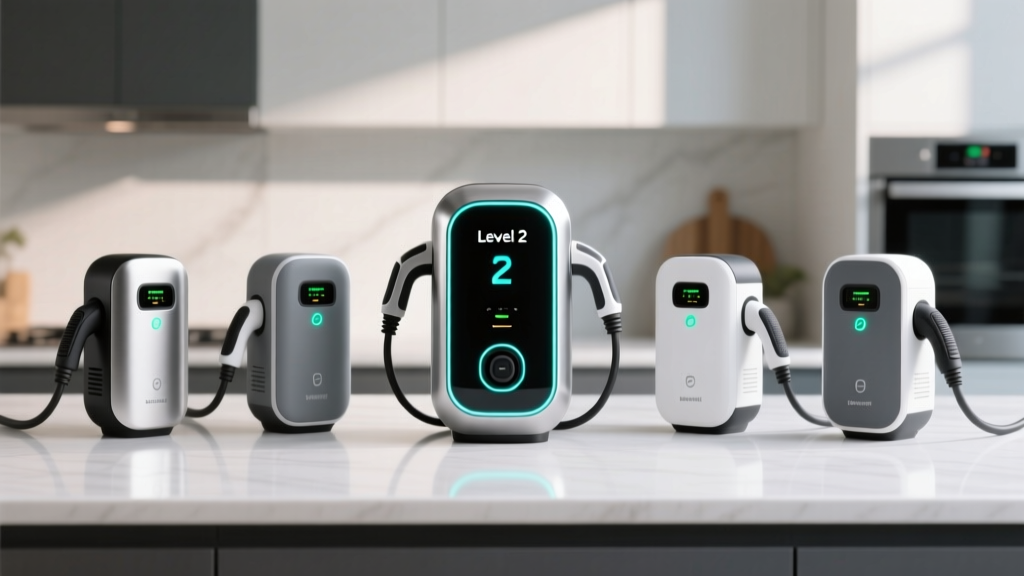
Any NACS-equipped Level 2 EVSE rated for 48 amps will max out the Model Y's onboard charger. Here are top picks with specs:
Tesla Wall Connector (Gen 4)
- Power output: Up to 11.5 kW (48A @ 240V)
- Connector: Native NACS — no adapter needed
- Cable length: 24 feet
- Smart features: Wi-Fi, OTA updates, Power Share (load balancing with a second unit), integrated Tesla app scheduling
- Price: ~$475
- Best for: Tesla-only households seeking seamless integration
ChargePoint Home Flex (NACS version)
- Power output: Up to 12 kW (50A @ 240V) — configurable down to 16A
- Connector: NACS (2025+ models); older CCS versions require adapter
- Cable length: 23 feet
- Smart features: Wi-Fi, app-based scheduling, Alexa integration, flexible amperage via DIP switch
- Price: ~$599–$699
- Best for: Multi-EV households or panels with limited headroom (dial down amps)
Emporia Vue Level 2 Charger
- Power output: Up to 11.5 kW (48A @ 240V)
- Connector: NACS (2025+); J1772 available
- Cable length: 24 feet
- Smart features: Wi-Fi, energy monitoring via Emporia Vue panel integration, TOU scheduling
- Price: ~$399–$499
- Best for: Budget-conscious buyers who want whole-home energy visibility
Federal Tax Credit and Incentives for Home Charging
The IRS §30D clean vehicle credit applies to the vehicle purchase, not the charger itself. However, the Alternative Fuel Vehicle Refueling Property Credit (IRS §30C) can cover up to 30% of home charger equipment and installation costs, capped at $1,000, if you live in an eligible census tract (typically lower-income or rural areas). Consult IRS guidance on §30C or a tax professional to confirm eligibility.
For the 2026 Model Y Long Range RWD itself, §30D credit eligibility depends on MSRP caps (under $55,000 for SUVs), buyer income limits ($150K single / $300K joint AGI), and battery critical-mineral sourcing requirements. Always verify current-year rules at IRS.gov before purchasing.
Frequently Asked Questions
How much does it cost to install a home EV charger for the 2026 Model Y?
Expect $1,050–$2,550 for a standard install (48-amp Wall Connector + electrician + permit) in a home with a 200-amp panel and a short conduit run. If your panel needs upgrading from 100A to 200A, add $2,000–$5,000+. Get three quotes from licensed electricians.
How fast will each charging level add range to the Model Y Long Range RWD?
Level 1 (120V): 3–5 miles per hour. Level 2 (240V, 48A): 30–33 miles per hour. DC fast charging at 250 kW: over 200 miles in 15 minutes at peak, tapering as the battery fills. For daily driving, Level 2 overnight is sufficient for virtually all commutes.
Which connectors and chargers are compatible with the 2026 Model Y LR RWD?
The vehicle has a native NACS port. It plugs directly into Tesla Superchargers and the growing network of NACS-equipped public chargers. A J1772 adapter (included) handles non-Tesla Level 2 stations. A NACS-to-CCS1 adapter (sold separately, ~$150–$250) enables Electrify America and other CCS DC fast chargers.
How much does charging the Model Y cost per mile vs. gasoline?
At home on an off-peak utility rate ($0.10/kWh), the Model Y LR RWD costs roughly $0.03 per mile — equivalent to $0.80/gallon gas. At Supercharger rates (~$0.35/kWh), it's ~$0.10/mile, or ~$2.80/gallon equivalent. A comparable 28 MPG gas crossover at $3.40/gallon costs ~$0.12/mile.
What electrical upgrades might I need before installing a Level 2 charger?
If your home has a 200-amp panel with available breaker slots and headroom in the load calculation, you likely need only a new 60-amp breaker and conduit run. If your panel is 100-amp, nearly full, or already near capacity (electric heat, dryer, range, AC), a panel upgrade to 200A or even 400A may be required — adding $2,000–$5,000+ to the project. A licensed electrician can perform a load calculation to determine this before you commit.
Should I precondition the battery before Supercharging?
Yes. When you navigate to a Supercharger in the Tesla navigation system, the car automatically begins preconditioning the battery to its optimal charging temperature (~95°F). This can shave 5–10 minutes off a 10–80% session, especially in cold weather. Without preconditioning, peak charge rates may be limited to 100–150 kW until the battery warms up.
Does frequent DC fast charging degrade the battery faster?
Research and fleet data show modest additional degradation from frequent DCFC compared to Level 2 charging — typically 1–3% more capacity loss over 100,000 miles. Tesla's battery management system limits peak charge rates when the battery is cold or near full, mitigating most risk. For daily use, Level 2 home charging is ideal; reserve DCFC for road trips.
Spec Summary: 2026 Tesla Model Y Long Range RWD
| Specification | Value |
|---|---|
| EPA-estimated range | ~320 miles |
| Battery (usable) | ~75 kWh, NMC chemistry |
| Onboard charger (AC) | 11.5 kW max (48A @ 240V) |
| Peak DC fast charge | 250 kW (NACS Supercharger) |
| 10–80% DCFC time | ~22–25 minutes |
| Efficiency | ~119 MPGe combined (~3.8 mi/kWh) |
| 0–60 mph | ~5.8 seconds |
| Horsepower | ~346 hp (single motor RWD) |
| Base MSRP | ~$44,990 (est.) |
| Battery warranty | 8 years / 120,000 miles (70% retention) |
| Charge port | Native NACS |
Sources: EPA fueleconomy.gov, Tesla Model Y specs, IRS §30D clean vehicle credit.