Owners searching for answers on Tesla Model X range loss are usually dealing with one of two distinct phenomena: the gradual reduction in maximum capacity over years of ownership (battery degradation), or the day-to-day range fluctuations caused by temperature, driving style, and charging behavior. Both are real, both are measurable, and both are heavily influenced by how and where you charge.
This guide breaks down the science behind Model X range loss, then walks through the home and public charging infrastructure you need to minimize it — including exact installation costs, equipment picks, and the charging habits that preserve your 100 kWh battery pack for the long haul.
Why Tesla Model X Range Loss Happens: Degradation vs. Daily Variance
Before we talk chargers, it's critical to separate two types of range loss that owners frequently conflate:
Battery degradation (permanent): Lithium-ion cells lose capacity over time through chemical side reactions. For the Model X's NMC (nickel manganese cobalt) battery pack, real-world fleet data shows approximately 8-12% capacity loss over the first 100,000 miles, with the steepest drop occurring in the first 15,000-20,000 miles before leveling into a gradual linear decline. A 2025 Model X Long Range with an EPA-rated 335 miles and a ~100 kWh usable pack might realistically deliver 295-305 miles at 100,000 miles.
Daily range variance (temporary): Cold weather alone can reduce usable range by 15-30% in a Model X. Highway driving at 75+ mph, cabin heating, roof rack drag, and towing all compound the effect. A Model X rated at 335 miles EPA might deliver 230-260 miles on a cold-weather highway road trip — and that's not degradation, that's physics.
EPA sticker: 335 miles
Expected highway (70 mph, 65°F): ~280-300 miles
Expected cold-weather highway (30°F): ~230-260 miles
After 100k miles (degradation-adjusted): ~295-310 miles
The connection to charging? How you charge directly determines which type of range loss you experience. Frequent DC fast charging to 100%, regularly draining below 10%, and leaving the car at full charge in hot weather all accelerate permanent degradation. The right home charging setup is your single most effective tool for slowing it.
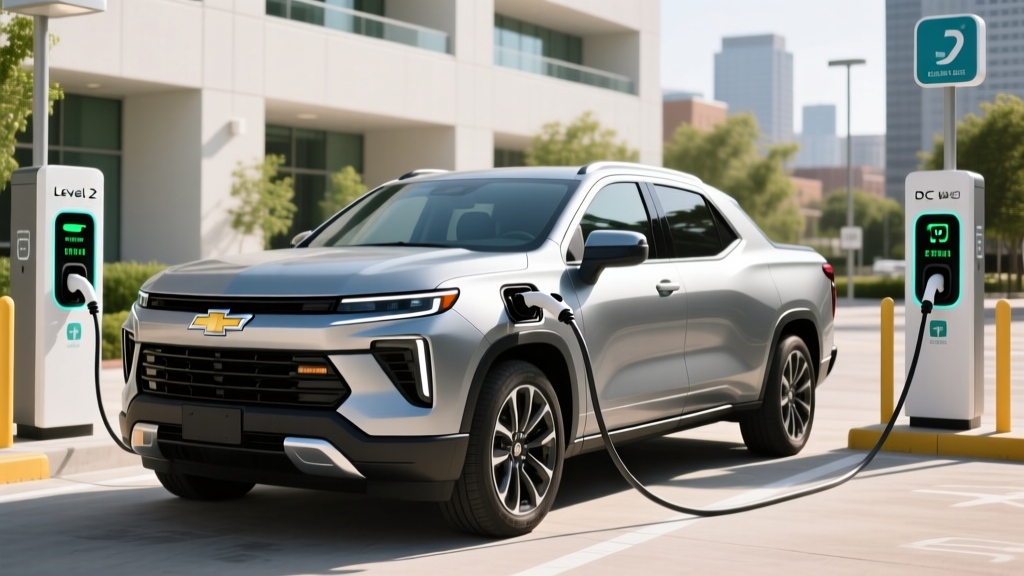
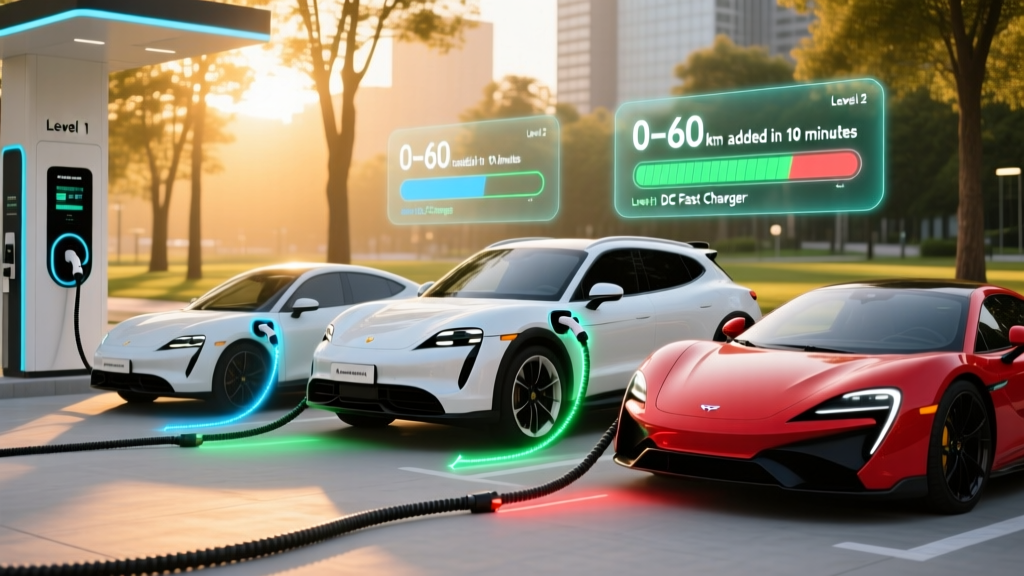
Charging Levels Explained: Speeds, Range Added, and When to Use Each
Understanding the three charging levels is essential before investing in equipment. Note: kW (kilowatts) measures power — the rate of energy flow. kWh (kilowatt-hours) measures energy — the total capacity stored. A 100 kWh battery charged at 10 kW takes roughly 10 hours; charged at 100 kW, roughly 1 hour (in theory, before taper).
| Level | Voltage | Max Power (kW) | Miles of Range Added Per Hour | Best For |
|---|---|---|---|---|
| Level 1 (120V) | 120V / 12A | ~1.4 kW | ~3-4 mi/hr | Emergency / overnight trickle |
| Level 2 (240V) | 240V / 48A | ~11.5 kW | ~30-35 mi/hr | Daily home charging (recommended) |
| DC Fast (Supercharger) | 400V+ DC | Up to 250 kW (V3) | ~175 mi in 15 min | Road trips, rapid top-ups |
For a Model X with a ~100 kWh pack, a full Level 2 charge from 10-80% takes roughly 7-8 hours at 11.5 kW — ideal for overnight charging. A V3 Supercharger delivers 10-80% in approximately 30-35 minutes, though the charge curve tapers significantly above 60% to protect the cells.
Degradation insight: Level 2 home charging at moderate power generates far less heat stress on cells than repeated DC fast charging. Tesla's own battery report data shows vehicles primarily charged at home retain measurably more capacity at high mileage than those reliant on Supercharging.
Home Charger Installation: Electrical Requirements, Costs, and Panel Upgrades
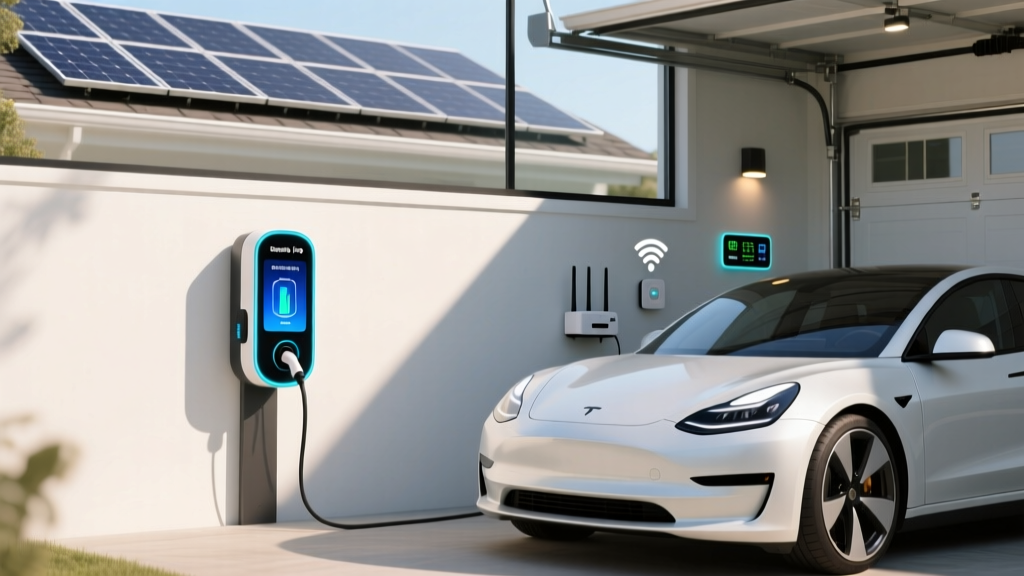
A proper Level 2 home installation for a Model X requires a dedicated 240V circuit. Here's what that entails and what it costs.
Electrical requirements: The Tesla Wall Connector supports up to 48 amps continuous draw, which requires a 60-amp dedicated breaker (NEC code requires breaker rated at 125% of continuous load). This means 6 AWG copper wire for most runs. If you opt for a 40A charger, a 50-amp breaker with 8 AWG wire suffices.
Panel upgrade reality: Many older homes have 100-amp or 150-amp main panels that may already be near capacity. Adding a 60-amp EV circuit to a maxed-out 100A panel requires a panel upgrade to 200A — a significant cost. A licensed electrician will perform a load calculation per NEC Article 220 to determine if your panel can handle the addition.
| Component | Cost Range | Notes |
|---|---|---|
| Level 2 Charger (hardware) | $400 – $700 | Tesla Wall Connector, ChargePoint, Emporia |
| Electrician labor (standard install) | $600 – $1,500 | Depends on run length, wall type, conduit |
| Electrical permit | $50 – $200 | Varies by municipality |
| Wire and conduit materials | $100 – $400 | Longer runs = higher cost |
| Panel upgrade (if needed) | $1,500 – $3,500 | 100A to 200A service upgrade |
| Total (no panel upgrade) | $1,150 – $2,800 | Most typical installations |
| Total (with panel upgrade) | $2,650 – $6,300 | Older homes with limited capacity |
Always get a permit and final inspection. Unpermitted EV charger installs can void home insurance claims and create fire risk. Per the National Electrical Code (NEC), outdoor installations require GFCI protection and weather-rated (NEMA 4) enclosures.
Connector Compatibility: NACS, CCS, and What the Model X Needs
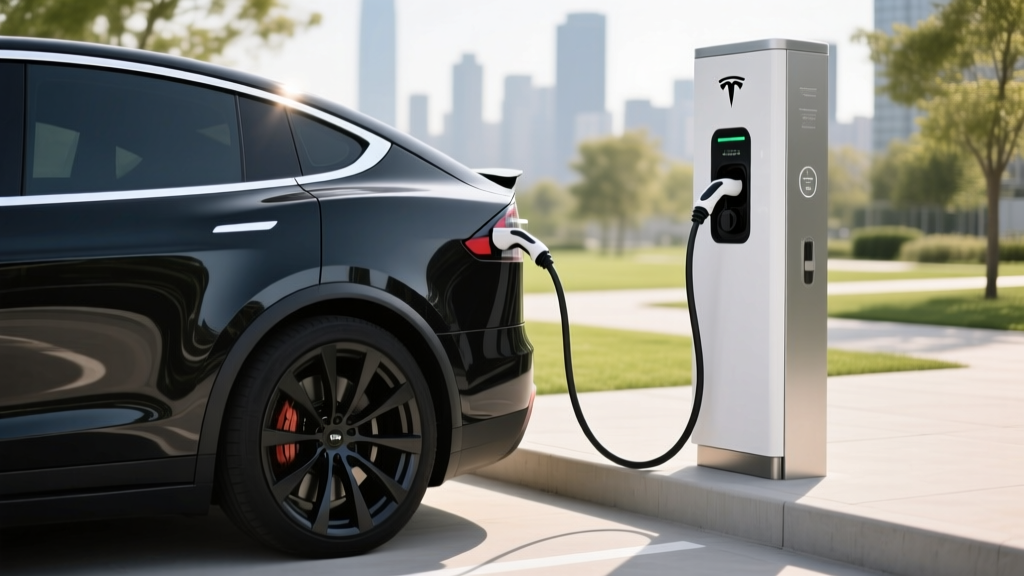
Tesla vehicles, including all Model X variants, use the NACS (North American Charging Standard) connector — Tesla's proprietary plug now adopted industry-wide. Here's how connector compatibility breaks down:
| Connector | Vehicles | Home Charging | Public DC Fast |
|---|---|---|---|
| NACS (Tesla) | Tesla Model S/3/X/Y, Cybertruck; 2025+ Ford, GM, Rivian, others | Tesla Wall Connector, native NACS chargers | Tesla Superchargers (20,000+ stalls); growing third-party NACS |
| CCS1 | Hyundai, Kia, VW, BMW, most non-Tesla EVs pre-2025 | J1772 (AC); CCS (DC) | Electrify America, EVgo, ChargePoint DC |
| CHAdeMO | Nissan Leaf (legacy) | J1772 (AC) | Limited and declining network |
For the Model X specifically: You can charge at any Tesla Supercharger natively. For non-Tesla Level 2 public chargers (which use J1772), Tesla includes a J1772-to-NACS adapter in the glovebox. For CCS DC fast chargers (Electrify America, etc.), you'll need Tesla's CCS adapter ($175 from Tesla's shop), though many newer Model X vehicles support CCS via software update with the adapter.
Cost to Charge: Home vs. Public vs. Gas Equivalent
One of the strongest arguments for home Level 2 charging is cost. Here's how Model X charging expenses compare to gasoline for a similar large SUV.
| Scenario | Rate | Cost to Add 300 Miles | Cost Per Mile |
|---|---|---|---|
| Home (off-peak utility rate) | $0.08 – $0.12/kWh | $8.00 – $12.00 | $0.027 – $0.040 |
| Home (standard rate) | $0.13 – $0.18/kWh | $13.00 – $18.00 | $0.043 – $0.060 |
| Public Level 2 | $0.25 – $0.49/kWh | $25.00 – $49.00 | $0.083 – $0.163 |
| Tesla Supercharger (V3) | $0.25 – $0.40/kWh | $25.00 – $40.00 | $0.083 – $0.133 |
| Gas SUV (20 MPG, $3.50/gal) | $3.50/gallon | $52.50 | $0.175 |
The Model X consumes approximately 33-36 kWh per 100 miles (per fueleconomy.gov). At home off-peak rates, that's roughly 3-4 cents per mile — about one-fifth the fuel cost of a comparable gas SUV. Even at Supercharger prices, you're typically paying less than half what gasoline costs per mile.
Range-loss cost insight: Aggressive DC fast charging habits that accelerate degradation by even 2-3% over 5 years translate to roughly $500-$1,000 in lost range value when factoring in reduced utility and potential resale impact. Home Level 2 charging pays for itself in both energy savings and battery preservation.
Best Level 2 Chargers for Tesla Model X (2025-2026 Picks)
Not all Level 2 chargers are equal. Here are the top picks for Model X owners, evaluated on power output, connector type, cable length, smart features, and price.
Tesla Wall Connector (Gen 3)
Power: Up to 11.5 kW (48A)
Connector: Native NACS (24-ft cable)
Smart features: Wi-Fi, OTA updates, power sharing, access control
Price: ~$475
Best for: Tesla-only households; seamless app integration
ChargePoint Home Flex
Power: Up to 12 kW (50A, configurable)
Connector: J1772 (23-ft cable) — use Tesla adapter
Smart features: Wi-Fi, Alexa, scheduling, energy tracking
Price: ~$699
Best for: Multi-EV households (Tesla + non-Tesla)
Emporia Vue Level 2
Power: Up to 11.5 kW (48A)
Connector: J1772 (24-ft cable) — use Tesla adapter
Smart features: Wi-Fi, energy monitoring, solar integration
Price: ~$399
Best for: Budget-conscious; solar-panel homes
Grizzl-E Smart
Power: Up to 10 kW (40A)
Connector: J1772 (24-ft cable) — use Tesla adapter
Smart features: Wi-Fi, OCPP, adjustable amperage
Price: ~$549
Best for: Cold-climate durability (rated to -40°F)
For Model X owners with no other EVs, the Tesla Wall Connector is the clear winner — native NACS means no adapter fumbling, and power-sharing lets you daisy-chain two units on one 60A circuit. If your household includes a non-Tesla EV, the ChargePoint Home Flex's J1772 connector serves both vehicles (the Tesla uses its included adapter).
Charging Habits That Minimize Tesla Model X Range Loss
Your charging routine is the single biggest variable you control in long-term battery health. Here's what fleet data and battery science recommend for NMC chemistry:
- Daily charge limit: 80-90%. Tesla's own guidance for NMC packs recommends a daily limit of 80-90%. Charging to 100% regularly stresses the cathode and accelerates capacity fade. Reserve 100% for road trips.
- Avoid dropping below 10-15% routinely. Deep discharges increase internal resistance. Plug in when you reach 15-20% rather than running the pack to near-empty.
- Precondition before Supercharging. The Model X navigation system automatically preconditions the battery when a Supercharger is set as your destination. This warms the cells to optimal charging temperature (~95°F), reducing charge time and heat stress. Never skip this — unpreconditioned fast charging can take 50% longer and generates more degradation.
- Use Scheduled Departure. Setting a departure time lets the car finish charging right before you leave, minimizing time spent at high SoC (state of charge) — a key degradation factor.
- Limit DC fast charging frequency. Occasional Supercharging is fine; daily Supercharging measurably accelerates degradation. Fleet studies suggest keeping DC fast charges to 2-3 times per week maximum for optimal longevity.
- Don't leave the car at 100% in heat. A full battery in 95°F+ ambient temperatures is the worst-case degradation scenario. If you must charge to 100%, do it just before departure, not the night before.
Safety, Code, and Installation Best Practices
EV charging draws sustained high current for hours — far longer than most household appliances. Safety is non-negotiable:
- Dedicated circuit required: Your Level 2 charger must be on its own dedicated breaker — never shared with other outlets or appliances.
- GFCI protection: NEC 2020 and later requires GFCI (ground-fault circuit interrupter) protection for outdoor EV receptacles. Hardwired chargers like the Tesla Wall Connector have built-in ground-fault protection.
- Outdoor rating: Outdoor installations need NEMA 4-rated (weatherproof) equipment. All recommended chargers above carry this rating.
- No extension cords: Never use an extension cord with an EV charger. If the cable doesn't reach, relocate the charger or have an electrician extend the conduit.
- Permit and inspect: A permitted, inspected installation protects your home insurance coverage and ensures code compliance. According to the National Highway Traffic Safety Administration (NHTSA), electrical fires from improper EV charging installations, while rare, are almost exclusively tied to unpermitted work.
Frequently Asked Questions
How much does it cost to install a home EV charger for a Tesla Model X?
A standard Level 2 installation (Tesla Wall Connector, 60A circuit, 240V) typically costs $1,150-$2,800 including equipment, electrician labor, and permits. If your home needs a panel upgrade from 100A to 200A service, add $1,500-$3,500. Get 2-3 quotes from licensed electricians — prices vary significantly by region and run complexity.
How fast will each charging level add range to my Model X?
Level 1 (120V) adds roughly 3-4 miles per hour — effectively useless for a 100 kWh pack unless you drive under 30 miles daily. Level 2 (240V/48A) adds 30-35 miles per hour, fully replenishing a daily-driven Model X overnight. DC fast charging at a V3 Supercharger adds up to 175 miles in 15 minutes, though the charge curve tapers significantly above 60% SoC.
Which connector and charger is compatible with the Tesla Model X?
The Model X uses the NACS connector natively. For home charging, the Tesla Wall Connector is the simplest native-NACS option. For public Level 2 chargers with J1772 connectors, use the J1772 adapter included with your vehicle. For CCS DC fast charging networks, you'll need Tesla's optional CCS adapter ($175).
How much does charging a Model X cost per mile vs. gas?
At home off-peak rates ($0.08-$0.12/kWh), a Model X costs roughly 3-4 cents per mile to charge — about one-fifth the cost of fueling a comparable gas SUV at $0.175/mile (20 MPG, $3.50/gal). Even at Supercharger rates ($0.25-$0.40/kWh), you're paying 8-13 cents per mile, still well below gasoline.
What electrical upgrades might I need for a Level 2 charger?
You'll need a dedicated 60-amp breaker (for 48A charging) on a 240V circuit, requiring 6 AWG wire. If your home's main panel is 100A or already near capacity, a panel upgrade to 200A may be required — costing $1,500-$3,500. An electrician will perform a NEC Article 220 load calculation to determine your panel's headroom. Homes built after 2000 with 200A service rarely need upgrades.
Does frequent Supercharging cause permanent Tesla Model X range loss?
Exclusive reliance on DC fast charging does measurably accelerate battery degradation compared to primarily Level 2 home charging, though the effect is moderate rather than dramatic. Tesla's battery reports show vehicles charged primarily at home retain roughly 1-3% more capacity at 100,000 miles. Occasional Supercharging for road trips has negligible impact; daily Supercharging is what shifts the curve.
How can I monitor my Model X battery health over time?
Tesla's in-car display shows estimated range at full charge, which serves as a proxy for State of Health (SoH). Third-party apps like Tessie or TeslaFi log detailed charge data and can track capacity trends over months and years. Under Tesla's battery warranty, the pack is covered for 8 years or 150,000 miles (whichever comes first) against degradation below 70% of original capacity, per Tesla's warranty documentation.