Getting the best range for Tesla Model X ownership isn't just about the EPA sticker — it's about how you charge, where you charge, and understanding the difference between power (kW) and energy (kWh). The 2025–2026 Model X Long Range carries roughly 100 kWh of usable battery capacity and achieves an EPA-estimated 348 miles of range. But real-world results depend heavily on your charging habits, equipment, and electrical infrastructure at home.
This guide breaks down exactly what you need to charge a Model X efficiently at home and on the road, with hard numbers on cost, speed, and installation.
EPA sticker: 348 miles (Long Range, 20" wheels).
Highway driving at 70–75 mph: expect ~280–310 miles.
Cold weather (below 32°F): expect ~240–270 miles without preconditioning.
Plaid variant (larger motors, more weight): EPA 326 miles; real-world highway ~260–290 miles.
Understanding Charging Levels: How Fast Can You Add Range?
EV charging operates at three primary levels. The critical distinction: kW (kilowatts) measures power — how fast energy flows into the battery. kWh (kilowatt-hours) measures energy — the total capacity of the battery. A 100 kWh battery charged at 10 kW takes 10 hours; at 100 kW, roughly one hour (with taper).
| Level | Voltage / Amps | Max Power (kW) | Miles of Range Added Per Hour | Best Use Case |
|---|---|---|---|---|
| Level 1 | 120V / 12A | ~1.4 kW | 3–5 mi/hr | Emergency / overnight trickle |
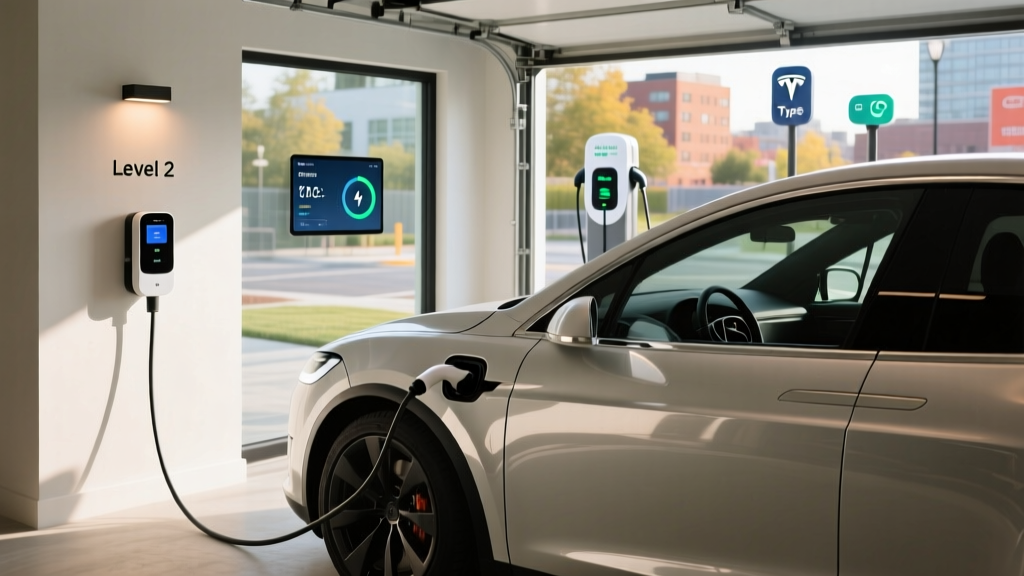
| Level 2 | 240V / 40–80A | 9.6–19.2 kW | 30–60 mi/hr | Daily home charging |
| DC Fast (Supercharger) | 400V+ architecture | up to 250 kW | ~200+ mi in 15 min (peak) | Road trips, rapid top-ups |
The Model X accepts up to 11.5 kW on Level 2 (48A) using the onboard charger. For DC fast charging, Tesla's V3 and V4 Superchargers deliver up to 250 kW peak, though sustained rates taper significantly above 60% State of Charge (SoC).
Home Charger Installation: Electrical Requirements & Costs
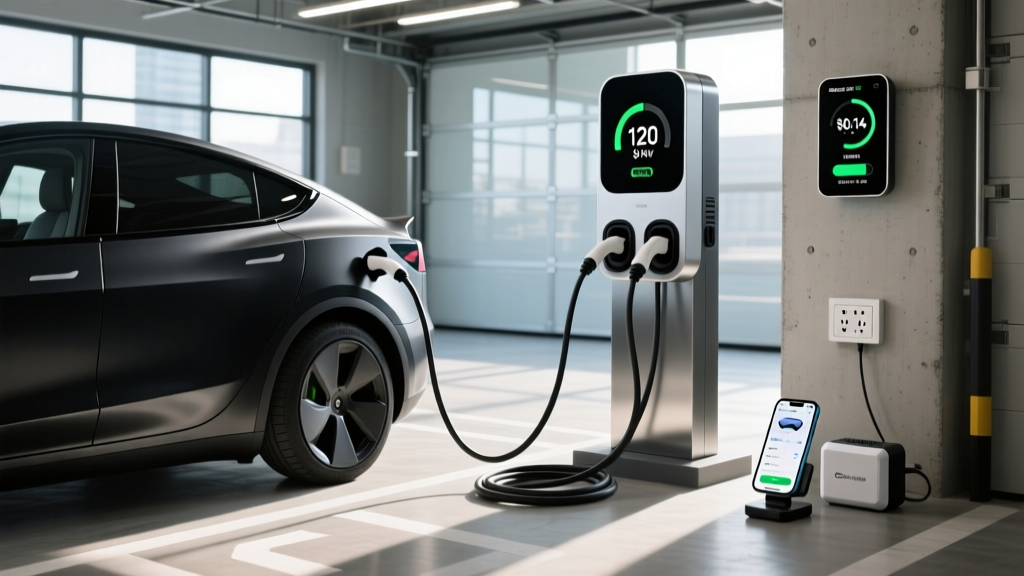
Charging a 100 kWh battery overnight requires a proper Level 2 setup. Here's what your home electrical system needs to support:
- Circuit: Dedicated 60A breaker (for 48A continuous charging) or 50A breaker (for 40A continuous)
- Wire gauge: 6 AWG copper for 60A; 8 AWG for 50A (run in conduit)
- Outlet vs. hardwired: NEMA 14-50 outlet offers portability; hardwired is safer for sustained high-amperage use and avoids GFCI nuisance trips
- Panel capacity: Your main service panel must have at least 60A of spare capacity. Many older homes with 100A total service will need a panel upgrade to 200A
| Component | Low Estimate | High Estimate | Notes |
|---|---|---|---|
| Level 2 Charger (Equipment) | $350 | $750 | Tesla Wall Connector, ChargePoint, Emporia |
| Electrician Labor (standard install) | $500 | $1,500 | Short wire run, accessible panel |
| Electrical Permit | $50 | $250 | Varies by municipality |
| Panel Upgrade (if needed) | $1,500 | $4,000 | 100A → 200A service upgrade |
| Total (No Panel Upgrade) | $900 | $2,500 | Typical scenario |
| Total (With Panel Upgrade) | $2,400 | $6,500 | Older homes |
The federal Residential Clean Energy Credit does not cover EV charger equipment for most taxpayers post-2022, though the Alternative Fuel Vehicle Refueling Property Credit (30C) may cover up to $1,000 of charger installation if you live in a qualifying census tract. Consult a tax professional for eligibility.
Connector Compatibility: NACS, CCS, and the Tesla Advantage
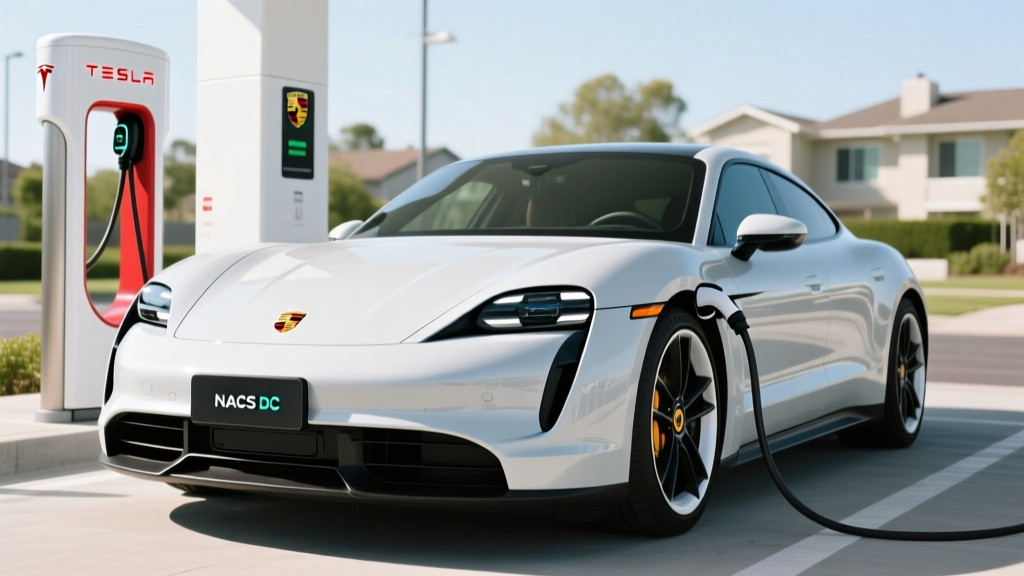
Tesla uses the North American Charging Standard (NACS) connector natively — the same compact plug now being adopted industry-wide. Here's what Model X owners need to know about connector compatibility across networks:
| Network / Standard | Connector | Model X Compatibility | Adapter Needed? |
|---|---|---|---|
| Tesla Supercharger | NACS (native) | Full access, 250 kW peak | No |
| Tesla Destination Charging | NACS (Level 2) | Full access | No |
| Electrify America / EVgo | CCS1 | Compatible with adapter | Yes — Tesla CCS Adapter (~$175) |
| Non-Tesla Level 2 (J1772) | J1772 | Compatible with adapter | Yes — included with vehicle |
| CHAdeMO | CHAdeMO | Not recommended | Third-party adapters exist; limited speed |
The Model X comes with a J1772 adapter in the glovebox for use at public Level 2 stations (hotels, workplaces, shopping centers). For DC fast charging outside the Supercharger network, Tesla sells an official CCS adapter that unlocks Electrify America, EVgo, and other CCS-equipped stations — useful in areas where Supercharger coverage has gaps.
Recommended Home Charging Equipment for Model X
With an 11.5 kW onboard charger, the Model X can accept up to 48 amps from a Level 2 station. Here are the top-performing chargers matched to that capability:
Power: 11.5 kW (48A)
Cable: 24 ft
Connector: NACS (native)
Smart features: Wi-Fi, OTA updates, load sharing, access control
Price: ~$475
Best for: Tesla-only households. Seamless integration with the Tesla app.
Power: 11.5 kW (48A)
Cable: 24 ft
Connector: J1772 (NACS adapter included)
Smart features: Energy monitoring, solar integration, scheduling, load management
Price: ~$399
Best for: Solar owners who want granular energy tracking and load balancing.
Power: up to 12 kW (50A, configurable)
Cable: 23 ft
Connector: J1772 (NACS adapter needed for Model X)
Smart features: App scheduling, Alexa integration, charge history
Price: ~$699
Best for: Multi-EV households with mixed connector types.
For a Tesla-only garage, the Wall Connector is the default recommendation. It charges at the Model X's maximum onboard rate, requires no adapter, and can share a single circuit with a second Wall Connector via load-sharing — ideal if you also own a second Tesla.
DC Fast Charging: Supercharger Speeds & Charge Curve Reality
The Model X peaks at 250 kW on a V3 Supercharger, but that peak only holds at low State of Charge (typically below 30–40%). Here's the real-world charge curve:
- 10–30% SoC: Peak ~250 kW, adding roughly 3 miles per minute
- 30–60% SoC: Tapers to ~150–180 kW
- 60–80% SoC: Drops to ~80–110 kW
- 80–100% SoC: Trickle phase, below 40 kW — avoid unless necessary
Real-world 10–80% charge time: approximately 30–35 minutes at a V3 Supercharger (250 kW capable). On a V2 Supercharger (150 kW max), expect 45–50 minutes for the same session.
Always precondition the battery before a fast-charge stop. The Model X does this automatically when you navigate to a Supercharger in the Tesla app or onboard navigation. Cold batteries without preconditioning can cut peak charge rates by 50% or more.
Charging Cost Per Mile: EV vs Gas Comparison
The Model X Long Range achieves approximately 100 MPGe combined (EPA), consuming roughly 33–35 kWh per 100 miles. Here's what that translates to in dollars:
| Scenario | Rate | Cost per 100 Miles | Cost per Mile |
|---|---|---|---|
| Home charging (off-peak utility rate) | $0.10/kWh | $3.40 | $0.034 |
| Home charging (average US rate) | $0.17/kWh | $5.78 | $0.058 |
| Tesla Supercharger (national avg) | $0.30/kWh | $10.20 | $0.102 |
| Electrify America / public DCFC | $0.43/kWh | $14.62 | $0.146 |
| Gas SUV (22 MPG combined, $3.50/gal) | $3.50/gallon | $15.91 | $0.159 |
At home on average electricity rates, the Model X costs roughly one-third as much per mile as a comparable gas-powered three-row SUV (like a BMW X5 or Mercedes GLE). Even at Supercharger rates, you break even or save slightly vs. premium gasoline. The savings compound: a driver covering 15,000 miles annually saves approximately $1,200–$1,800 per year charging at home vs. buying gas.
Safety, Code Compliance & Best Practices
EV charging draws sustained high current — more like an electric oven than a phone charger. Here's what the National Electrical Code (NEC) and best practices require:
- Dedicated circuit: Your Level 2 charger must have its own dedicated breaker — never share a circuit with other appliances
- Continuous load rule: EV charging is classified as a continuous load (3+ hours). NEC requires the breaker to be rated at 125% of the continuous draw. A 48A charger needs a 60A breaker
- GFCI protection: NEC 2020+ requires GFCI for outlets used for EV charging in garages. Hardwired installations avoid this requirement and eliminate nuisance trips — many electricians recommend hardwiring for this reason
- Outdoor rating: If mounting outside, the charger must carry a NEMA 3R or NEMA 4 rating. All three recommended chargers above are outdoor-rated
- Permit and inspection: Most jurisdictions require an electrical permit and final inspection for Level 2 installations. Skipping this can void homeowner's insurance coverage for electrical fires
Frequently Asked Questions
How much does it cost to install a home EV charger for a Tesla Model X?
Between $900 and $2,500 for a standard installation with adequate panel capacity. If your home needs a 100A-to-200A panel upgrade, total costs range from $2,400 to $6,500. The Tesla Wall Connector itself costs about $475.
How fast will each charging level add range to the Model X?
Level 1 (120V): 3–5 miles per hour. Level 2 (240V, 48A): approximately 35–44 miles per hour. DC Fast Charging (Supercharger V3): up to 200 miles in 15 minutes at peak rate, tapering above 60% SoC.
Which connector and charger is compatible with my Tesla Model X?
The Model X uses the NACS connector natively — compatible with all Tesla Superchargers and Tesla Wall Connectors without adapters. For CCS networks (Electrify America, EVgo), you need Tesla's CCS adapter (~$175). For J1772 public Level 2 stations, a J1772-to-NACS adapter is included with the vehicle.
How much does charging cost per mile vs gas?
Home charging at the US average rate of $0.17/kWh costs about $0.058 per mile in a Model X. A comparable gas SUV at 22 MPG and $3.50/gallon costs $0.159 per mile. Home charging saves roughly $0.10 per mile — or about $1,500 annually at 15,000 miles driven.
What electrical upgrades might I need?
A licensed electrician should perform a load calculation on your main service panel. Homes with 200A service typically have enough capacity for a 60A EV circuit. Homes with 100A service often require a panel upgrade ($1,500–$4,000). Older wiring, aluminum conductors, or long wire runs from the panel to the garage can also increase costs.
Does fast charging degrade the Model X battery?
Tesla's battery management system actively manages thermal conditions during DC fast charging. Occasional Supercharging has minimal impact on long-term battery health. For daily use, Tesla recommends setting the charge limit to 80% for NMC battery chemistry (standard on Long Range and Plaid). The battery warranty covers 8 years or 150,000 miles, whichever comes first, with a minimum 70% capacity retention threshold, per Tesla's official warranty documentation.