The Tesla Model X Long Range pairs a 100 kWh battery pack with an EPA-rated 335 miles of range — but that range is only useful if you can replenish it efficiently. Whether you're planning a home Level 2 installation, mapping out Supercharger stops, or comparing charging costs to your last gas SUV, this guide covers every number you need to make informed decisions about fueling the Model X Long Range in 2026.
We'll break down charging speeds in precise terms — kilowatts (kW) for power delivery rate and kilowatt-hours (kWh) for total energy stored — because confusing the two is the single most common mistake new EV owners make. Think of kW as how fast water flows from a hose, and kWh as the total volume in the bucket.
Model X Long Range Charging Specs at a Glance
| Spec | Value |
|---|---|
| Battery Capacity (usable) | ~100 kWh (NMC chemistry) |
| EPA Range | 335 miles |
| Real-World Highway Range | ~275–300 mi (70+ mph, moderate temps) |
| Real-World Cold-Weather Range | ~230–260 mi (below 32°F) |
| Max DC Fast Charge Rate | 250 kW peak (V3 Supercharger) |
| 10–80% DC Fast Charge Time | ~30 minutes (Supercharger V3/V4) |
| Max Level 2 AC Charge Rate | 11.5 kW (48A onboard charger) |
| Level 2 Charge Time (0–100%) | ~10 hours at 11.5 kW |
| Connector | NACS (native Tesla) |
| EPA Efficiency | 102 MPGe combined |
| Starting MSRP | ~$79,990 (before incentives) |
Charging Levels Explained: Speeds, Miles per Hour, and When to Use Each
Understanding the three charging tiers is essential for planning both daily routines and road trips. Here's how each level performs with the Model X Long Range's 100 kWh pack:
| Level | Voltage / Amperage | Max Power (kW) | Miles of Range Added per Hour | Best Use Case |
|---|---|---|---|---|
| Level 1 (120V) | 120V / 12A | ~1.4 kW | ~3–4 mi/hr | Emergency / overnight trickle |
| Level 2 (240V) | 240V / 48A | 11.5 kW | ~32–36 mi/hr | Daily home charging |
| DC Fast Charging | 400V+ DC | Up to 250 kW | ~180–220 mi in 15 min (peak) | Road trips / rapid replenishment |
Level 1 is essentially a trickle for a 100 kWh pack. Plugging into a standard 120V household outlet using Tesla's Mobile Connector adds roughly 3–4 miles of range per hour. A full charge from empty would take over 70 hours. This is adequate only for emergency situations or PHEVs with small batteries — not practical as a daily strategy for the Model X.
Level 2 is where the Model X Long Range is designed to live day-to-day. At the vehicle's maximum onboard acceptance rate of 11.5 kW (48 amps on a 240V circuit), you recover roughly 34 miles of range per hour. A full overnight session from 20% to 100% takes about 8–9 hours — perfectly aligned with a typical sleep schedule.
DC Fast Charging bypasses the onboard charger entirely, sending direct current straight to the battery. On a Tesla V3 or V4 Supercharger, the Model X Long Range can peak at 250 kW — but only at a low state of charge (typically below 30% SoC). As the battery fills, the charge rate tapers to protect cell health. Expect 10–80% in approximately 30 minutes, with the final 20% taking significantly longer. This taper is why you'll see experienced EV road-trippers charging to 80% and moving on rather than waiting for a full top-off.
Home Level 2 Installation: Electrical Requirements, Costs, and Panel Upgrades
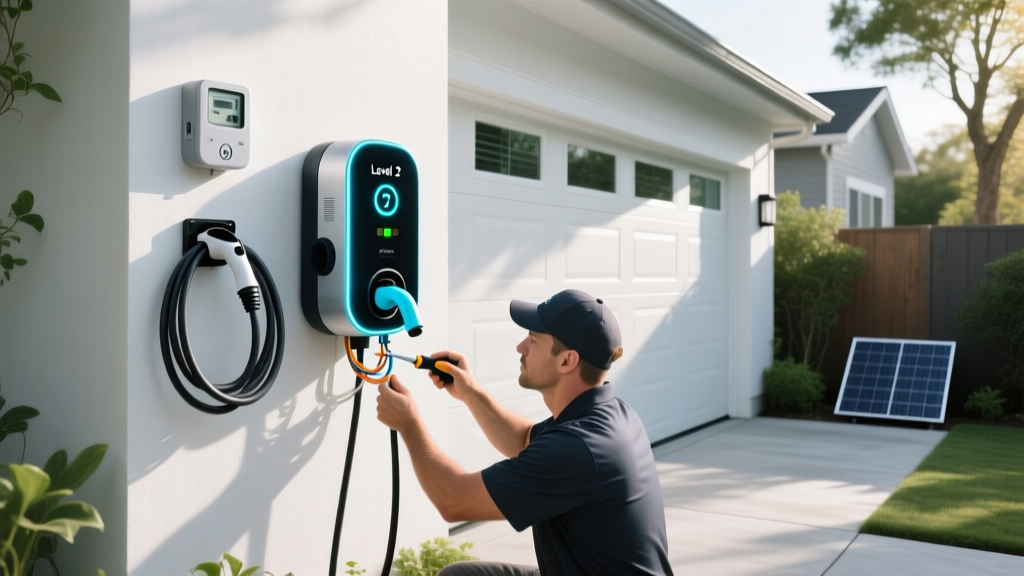
Installing a dedicated Level 2 home charger is the single most impactful upgrade for EV ownership convenience. Here's what's required for the Model X Long Range:
Electrical Requirements
To deliver the Model X's full 11.5 kW (48A) acceptance rate, you need a 240V circuit rated for at least 60 amps. The National Electrical Code (NEC) requires that continuous loads (anything running 3+ hours, which EV charging qualifies as) must not exceed 80% of the circuit breaker rating. So a 48A charger requires a 60A breaker.
If you install a lower-amperage circuit — say, a 40A breaker with a 32A charger — you'll still charge adequately, just more slowly (~22 mi/hr instead of ~34 mi/hr). Many homeowners opt for this if their electrical panel has limited capacity.
Panel Upgrade Considerations
Homes built before 2000 often have 100A or 150A main service panels. Adding a 60A EV circuit to an already-loaded panel may require a panel upgrade to 200A, which is a significant additional cost. Signs you may need an upgrade:
- Your panel is 100A or 150A main service
- You already run high-draw appliances (electric oven, dryer, HVAC, water heater)
- Your panel has no open slots for a double-pole breaker
- You have a Federal Pacific or Zinsco panel (these require replacement regardless)
Installation Cost Breakdown
| Component | Simple Install (panel nearby, no upgrade) | Complex Install (long run, panel upgrade) |
|---|---|---|
| Level 2 Charger Equipment | $400 – $750 | $400 – $750 |
| Electrician Labor (2–4 hrs standard) | $500 – $1,200 | $1,500 – $3,000 |
| Electrical Permit | $50 – $200 | $50 – $300 |
| Conduit / Wiring Materials | $100 – $300 | $300 – $800 |
| Panel Upgrade (if needed) | N/A | $1,500 – $4,000 |
| Total Estimated Range | $1,050 – $2,450 | $3,750 – $8,850 |
Always hire a licensed electrician and pull a permit — unpermitted electrical work can void your homeowner's insurance and create fire hazards. Many utilities offer rebates of $250–$1,000 for EV charger installations; check with your local provider before scheduling work.
The federal Alternative Fuel Vehicle Refueling Property Credit (IRS Form 8911) may cover up to 30% of home charger equipment and installation costs (capped at $1,000), subject to income and census-tract eligibility. Consult a tax professional to confirm qualification.
Connector Compatibility: NACS, Supercharger Network, and Adapters
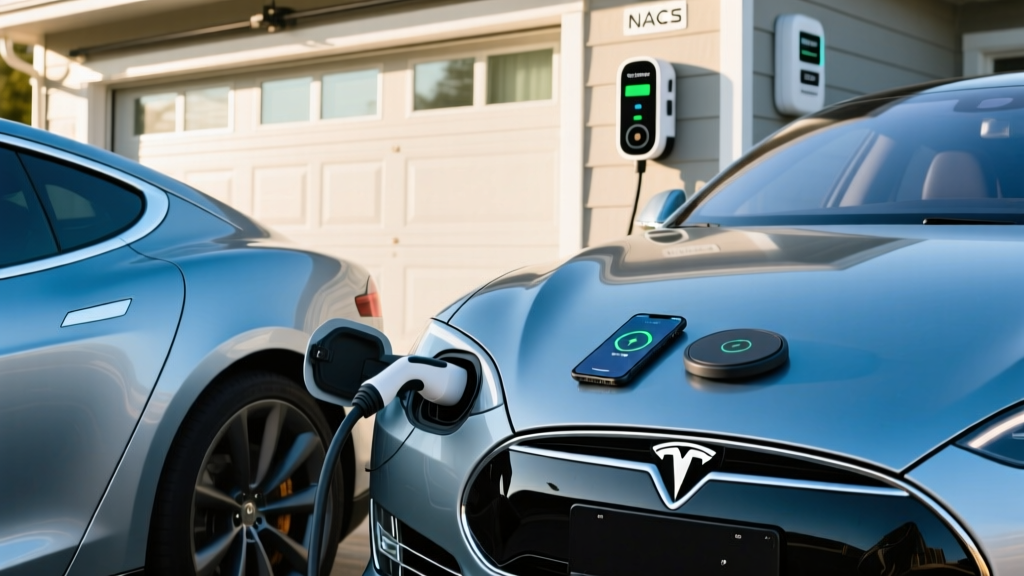
The Model X Long Range uses the North American Charging Standard (NACS) connector — Tesla's proprietary design that has since been adopted by Ford, GM, Rivian, Hyundai, and most major automakers as the industry standard. This gives the Model X a significant public-charging advantage.
| Connector Type | Native Compatibility | Network Access | Adapter Required? |
|---|---|---|---|
| NACS (Tesla) | Yes — native | Tesla Supercharger network (20,000+ stalls in North America) | No |
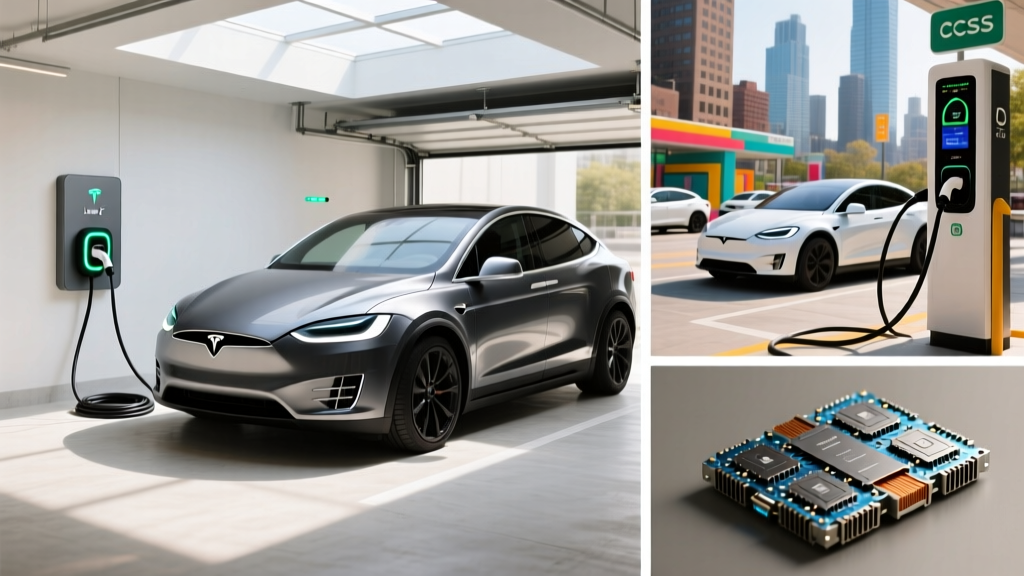
| CCS1 | No | Electrify America, EVgo, ChargePoint DC stations | Yes — Tesla CCS Adapter (~$250, included with some model years) |
| CHAdeMO | No | Largely legacy; minimal new deployment | Not available from Tesla; third-party adapters are unreliable |
| J1772 (Level 2 AC) | No | Public Level 2 stations, hotels, workplaces | Yes — J1772-to-NACS adapter (included with vehicle) |
The Tesla Supercharger network remains the gold standard for reliability, with stalls consistently delivering their rated power and minimal downtime. With the CCS adapter, the Model X can also access Electrify America and other CCS networks — useful in areas where Supercharger coverage is sparse. However, non-Tesla DC networks still lag in uptime; a J.D. Power EV charging study consistently ranks Tesla's network highest in customer satisfaction.
Cost to Charge: Home vs. Public vs. Gas Comparison
One of the strongest ownership arguments for the Model X Long Range is the fuel-cost advantage. Here's how the numbers break down across scenarios:
| Scenario | Rate ($/kWh) | Cost for Full 100 kWh Charge | Cost per Mile |
|---|---|---|---|
| Home — Off-Peak (utility time-of-use) | $0.08 – $0.12 | $8.00 – $12.00 | $0.027 – $0.040 |
| Home — Standard Residential Rate | $0.14 – $0.18 | $14.00 – $18.00 | $0.047 – $0.060 |
| Tesla Supercharger (average) | $0.28 – $0.36 | $28.00 – $36.00 | $0.093 – $0.120 |
| Third-Party DC Fast (Electrify America, etc.) | $0.35 – $0.55 | $35.00 – $55.00 | $0.117 – $0.183 |
| Comparable Gas SUV (22 MPG combined, $3.50/gal) | — | $53.00 (equiv. energy) | $0.159 |
Home charging on an off-peak rate delivers fuel savings of roughly 70–80% compared to a gas SUV achieving 22 MPG. Even at Supercharger rates, the Model X costs less per mile than gasoline. The economics shift less favorably on third-party DC fast networks charging above $0.45/kWh, where costs approach or exceed gasoline on a per-mile basis — another reason home Level 2 is the financial backbone of EV ownership.
According to fueleconomy.gov, the Model X Long Range achieves 102 MPGe combined. For context, MPGe (miles per gallon equivalent) maps electrical energy to the energy content of one gallon of gasoline (33.7 kWh) — it's a comparison tool, not a literal measure of liquid fuel consumed.
Best Home Chargers for the Model X Long Range: Equipment Picks
Since the Model X accepts up to 11.5 kW (48A) on Level 2, you'll want a charger that can deliver at least that rate to maximize overnight replenishment. Here are top picks for 2026:
Tesla Wall Connector (Gen 3)
- Power Output: Up to 11.5 kW (48A)
- Connector: NACS (native, no adapter needed)
- Cable Length: 24 ft
- Smart Features: Wi-Fi for OTA updates, load sharing (pair two units on one circuit), power-level adjustment via app
- Price: ~$475
- Verdict: The default choice for any Tesla. Seamless integration, native NACS, and load-sharing capability for multi-EV households. No third-party app required.
ChargePoint Home Flex
- Power Output: Up to 12 kW (50A), configurable down to 16A for lower-capacity panels
- Connector: NACS (2025+ models) or J1772 (use Tesla's included adapter)
- Cable Length: 23 ft
- Smart Features: Wi-Fi, Alexa integration, detailed energy tracking via ChargePoint app, scheduled charging
- Price: ~$550 – $700
- Verdict: Best for mixed-EV households (Tesla + non-Tesla). Flexible amperage settings let you dial down to match your panel without a separate unit.
Emporia Vue Level 2 Charger
- Power Output: Up to 11.5 kW (48A)
- Connector: J1772 (use Tesla adapter) or NACS (newer SKUs)
- Cable Length: 24 ft
- Smart Features: Integrated with Emporia energy monitoring ecosystem, solar-aware charging, time-of-use scheduling
- Price: ~$400 – $500
- Verdict: Budget pick with excellent energy-monitoring integration. Ideal if you have solar panels and want to charge only when excess solar production is available.
Safety, Code Compliance, and Installation Best Practices
EV charging draws sustained high current for hours — far longer than most household appliances. This makes proper installation non-negotiable:
- Dedicated Circuit: Your Level 2 charger must be on its own dedicated double-pole breaker. Never share the circuit with other appliances.
- GFCI Protection: The 2020 NEC and later require GFCI (Ground Fault Circuit Interrupter) protection for EV receptacles. Hardwired installations (like the Tesla Wall Connector) typically have GFCI built into the unit; if you're using a plug-in charger with a NEMA 14-60 outlet, your electrician must install a GFCI breaker.
- Outdoor Rating: If mounting outside, ensure the charger carries a NEMA 4 or NEMA 4X rating for weather resistance. All three units recommended above are outdoor-rated.
- Wire Gauge: A 60A circuit requires 6 AWG copper wire (or 4 AWG aluminum). Your electrician will size this correctly, but verify — undersized wire is a fire risk.
- Permit and Inspection: Every jurisdiction requires a permit for new circuit installation. The inspection ensures the work meets code and protects your insurance coverage.
DC Fast Charging on the Road: Supercharger Strategy for the Model X
The Model X Long Range's 250 kW peak DC fast-charge capability makes it one of the faster-charging large SUVs on the road. But peak rate isn't sustained rate — here's what the charge curve actually looks like:
- 10–30% SoC: Peak 200–250 kW — maximum charge speed, roughly 180+ miles added in 10 minutes
- 30–60% SoC: Sustained 120–170 kW — still fast, adding ~30 miles every 5 minutes
- 60–80% SoC: Tapering to 60–100 kW — charge slows to protect battery health
- 80–100% SoC: Below 40 kW — very slow; avoid waiting for a full charge at a Supercharger
Always use the Tesla navigation system to route to Superchargers — it automatically preconditions the battery (warming it to optimal temperature for fast charging) before you arrive. Skipping preconditioning in cold weather can cut your peak charge rate by 40–60%, turning a 30-minute stop into a 50-minute stop.
Tesla's Supercharger network now includes V4 cabinets with CCS-compatible cables at select locations, though NACS remains the primary connector. For the Model X, no adapters are needed at any Supercharger stall.
Frequently Asked Questions
How much does it cost to install a home EV charger for the Model X?
A straightforward installation with an adequate electrical panel runs $1,050–$2,450 including equipment, labor, and permit. If your home needs a panel upgrade (common in pre-2000 homes), expect $3,750–$8,850 total. The Tesla Wall Connector itself costs ~$475; the bulk of cost variability is in electrical labor and whether conduit runs are long or complex.
How fast will each charging level add range to the Model X Long Range?
Level 1 (120V) adds roughly 3–4 miles per hour — impractical for daily use on a 100 kWh pack. Level 2 (240V, 48A) adds approximately 32–36 miles per hour, fully replenishing overnight. DC fast charging at a V3 Supercharger can add up to 180+ miles in 15 minutes at peak rate, with 10–80% taking about 30 minutes.
Which charger connector is compatible with the Model X Long Range?
The Model X uses NACS natively — this is the Tesla connector, now adopted industry-wide. For non-Tesla DC fast chargers (Electrify America, EVgo), you'll need Tesla's CCS adapter. For public Level 2 J1772 stations, a J1772-to-NACS adapter is included with the vehicle. CHAdeMO is effectively obsolete and not supported.
How much does charging the Model X cost per mile compared to gas?
Home charging on off-peak rates costs roughly $0.03–$0.04 per mile — about 75% less than a comparable gas SUV at $0.16/mile. Even at Supercharger rates ($0.28–$0.36/kWh), the Model X costs $0.09–$0.12 per mile, still cheaper than gasoline. The savings are largest when you charge at home on a time-of-use plan.
What electrical upgrades might I need for a Level 2 charger?
You need a dedicated 240V circuit with a 60A breaker for full 48A (11.5 kW) charging. If your panel is 100A or 150A and already near capacity, a panel upgrade to 200A may be required — this adds $1,500–$4,000. Homes with modern 200A panels and open breaker slots typically need no upgrade. A licensed electrician's load calculation will determine your exact requirement.
Does the Model X Long Range qualify for the federal EV tax credit?
Under IRS §30D rules, the Model X Long Range may qualify for up to $7,500 in federal tax credits, but eligibility depends on multiple factors: buyer income caps ($300,000 MAGI for joint filers), MSRP caps ($80,000 for SUVs — the Model X base MSRP is near this threshold), battery component and critical mineral sourcing requirements, and point-of-sale transfer availability. Always verify current eligibility on the IRS website and with your tax professional before purchase, as sourcing rules change periodically.