If you're shopping for a Tesla Model X or recently acquired one, you've probably seen references to "free Supercharging" — a perk Tesla once used to drive sales. But in 2026, the landscape has shifted dramatically. Most new Model X buyers no longer receive unlimited free Supercharging, and the value of legacy free-charging transfers has become a key variable in the used-EV market. This guide dissects exactly who still qualifies, what you'll actually pay to charge a Model X at home and on the road, and how to set up a cost-effective home charging system for Tesla's largest SUV.
Does Tesla Model X Free Supercharging Still Exist?
As of 2026, Tesla no longer includes complimentary unlimited Supercharging as a standard perk with new Model X purchases. The program has gone through several iterations:
- Pre-2017 Model X: Vehicles ordered before January 15, 2017, came with free unlimited Supercharging that is transferable to subsequent owners. These cars command a premium on the used market.
- 2017–2019 Model X: Free Supercharging was tied to the original owner only and does not transfer upon resale.
- 2019–2023 Model X: Tesla occasionally offered limited free Supercharging credits (e.g., 10,000 miles or one year) as promotions, but these were non-transferable and time-bound.
- 2024–2026 Model X: No free Supercharging is included as standard. Tesla periodically runs referral-based or seasonal promotions offering temporary Supercharging credits, but these change frequently and should be verified on Tesla's official charging page.
Bottom line: if you're buying a new 2026 Model X, budget for paid Supercharging. If you're shopping used, a pre-2017 Model X with transferable free Supercharging can save $1,500–$3,000 annually depending on your driving habits.
Charging Levels Explained: How Fast Will Each Add Range?
The Tesla Model X uses a ~100 kWh usable battery pack (in current Dual Motor and Plaid trims). Understanding charging levels is essential to planning your routine. Note: kW (kilowatts) measures charging power — how fast energy flows. kWh (kilowatt-hours) measures battery capacity — how much energy is stored. They are not interchangeable.
| Charging Level | Power (kW) | Voltage / Amperage | Miles of Range Added per Hour | 10–80% Time (100 kWh Battery) |
|---|---|---|---|---|
| Level 1 (120V outlet) | 1.2–1.9 kW | 120V / 12–16A | 3–5 miles | ~55+ hours (impractical) |
| Level 2 (Home / Public AC) | 7.2–19.2 kW | 240V / 30–80A | 20–52 miles | 5–12 hours |
| DC Fast Charging (Supercharger V3/V4) | Up to 250 kW (V3), up to 350 kW (V4) | 400–800V DC | ~200 miles in 15 min (peak) | ~25–30 minutes (V3) |
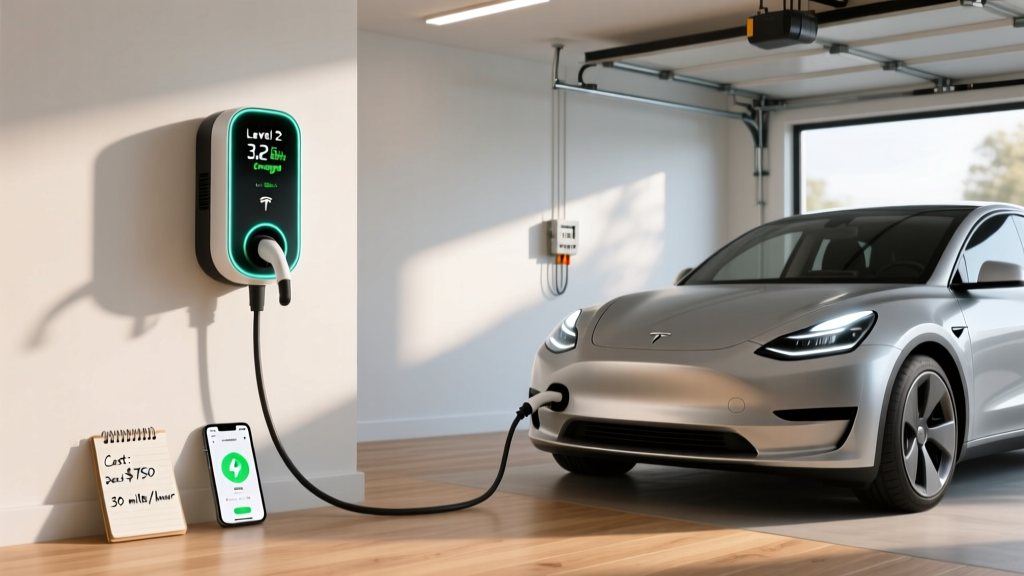
For daily driving, Level 2 is where most Model X owners live. A 48-amp home charger delivers roughly 11.5 kW, adding about 32 miles of range per hour — enough to fully replenish a daily commute overnight. DC fast charging is reserved for road trips. The Model X on a V3 Supercharger peaks at 250 kW but tapers significantly above 60% state of charge. Expect a realistic 10–80% session to take 25–30 minutes, not the 15 minutes marketing sometimes implies.
Home Charger Installation: Costs, Electrical Requirements, and Gotchas
Installing a Level 2 home charger is the single most impactful upgrade for Model X ownership. Here's what's involved:
Electrical Requirements
The Tesla Wall Connector is rated for up to 48 amps continuous draw, which requires a dedicated 60-amp circuit (the National Electrical Code requires circuits to be rated at 125% of continuous load: 48A × 1.25 = 60A). This means:
- Panel capacity: Your home's electrical panel must have enough spare capacity. Most modern 200-amp panels can accommodate a 60-amp breaker. Older 100-amp panels often cannot.
- Wire gauge: 6 AWG copper (or 4 AWG aluminum) for runs up to ~50 feet; thicker wire for longer runs to prevent voltage drop.
- Permit: Most jurisdictions require an electrical permit for a new 240V circuit. The permit ensures the installation meets local code and is inspected.
Panel Upgrade: The Hidden Cost
If your home has a 100-amp panel or your existing 200-amp panel is near capacity (common in homes with electric heating, water heaters, or dryers), you'll need a panel upgrade to 200A or even 400A. This is the single biggest variable in installation cost and can add $2,000–$5,000+ to the project. Always get a load calculation from your electrician before assuming your panel can handle the circuit.
| Component | Typical Cost Range | Notes |
|---|---|---|
| Tesla Wall Connector (equipment) | $420–$475 | 24-foot cable, Wi-Fi enabled, up to 48A |
| Electrician labor (standard install) | $600–$1,500 | Depends on panel-to-garage distance, wall type |
| Electrical permit | $50–$250 | Varies by municipality |
| Panel upgrade (if needed) | $2,000–$5,000+ | 100A→200A upgrade; 400A service can exceed $5,000 |
| Total (no panel upgrade) | $1,070–$2,225 | Most common scenario for modern homes |
| Total (with panel upgrade) | $3,070–$7,225+ | Older homes or high-load homes |
Safety and Code Considerations
- Dedicated circuit: Your Level 2 charger must be on its own dedicated circuit — never shared with other appliances.
- GFCI protection: NEC 2020 and later require GFCI protection for EV charging outlets in garages. Hardwired installations (like the Wall Connector) may be exempt in some jurisdictions, but check local code. Hardwiring also avoids the cost of a 60-amp NEMA 14-50 receptacle and eliminates a potential failure point.
- Outdoor rating: If installing outdoors, the Tesla Wall Connector is NEMA 4-rated (weatherproof). Ensure the conduit and junction box are also rated for outdoor use.
- Utility rebates: Many utilities offer $200–$1,000 rebates for Level 2 charger installation, and some offer time-of-use (TOU) rate plans that dramatically reduce charging cost. Check your local utility before installing.
Connector Compatibility: NACS, CCS, and Adapters
The Tesla Model X uses the North American Charging Standard (NACS) connector natively — Tesla's proprietary plug that has now been adopted industry-wide. Here's how connector compatibility breaks down for Model X owners:
| Connector Type | Compatible with Model X? | Where You'll Find It | Adapter Needed? |
|---|---|---|---|
| NACS (Tesla) | Yes — native | Tesla Superchargers, Destination Chargers, newer public stations | No |
| CCS1 | Yes, with adapter | Electrify America, EVgo, many non-Tesla DC fast stations | Tesla CCS Adapter (included with newer vehicles, ~$175 aftermarket) |
| CHAdeMO | Yes, with adapter | Limited and declining; some older Nissan/Mitsubishi stations | Aftermarket CHAdeMO adapter (~$300–$400) |
| J1772 (Level 2 AC) | Yes, with adapter | Public Level 2 stations, workplaces, hotels | Tesla J1772 adapter (included with vehicle) |
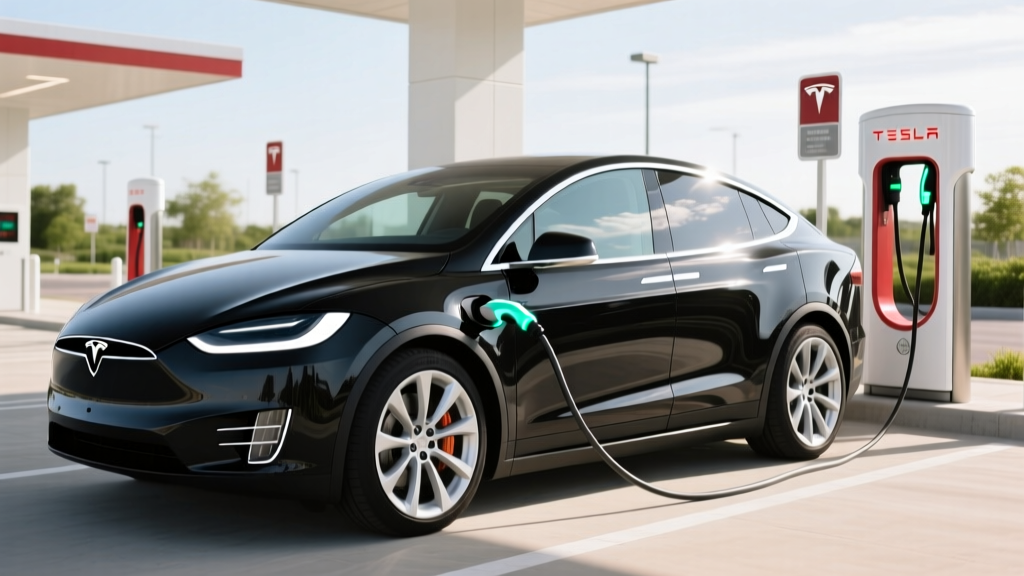
The expanding Supercharger network — now open to non-Tesla EVs — remains the Model X's primary fast-charging advantage. With over 6,000 Supercharger stalls in North America, coverage is unmatched. The CCS adapter opens additional networks as a backup, especially useful in areas where Supercharger density is lower.
Charging Cost: Home vs. Supercharger vs. Gas
One of the strongest arguments for the Model X is operating cost, even without free Supercharging. Here's a realistic cost breakdown for 2026:
| Charging Scenario | Cost per kWh | Cost to Charge 10–80% (~70 kWh) | Cost per Mile (at ~3.0 mi/kWh) |
|---|---|---|---|
| Home (off-peak TOU rate) | $0.08–$0.14 | $5.60–$9.80 | $0.03–$0.05 |
| Home (standard rate) | $0.13–$0.20 | $9.10–$14.00 | $0.04–$0.07 |
| Tesla Supercharger (paid) | $0.25–$0.40 | $17.50–$28.00 | $0.08–$0.13 |
| Non-Tesla DC fast (EA, EVgo) | $0.30–$0.55 | $21.00–$38.50 | $0.10–$0.18 |
| Gas equivalent (20 MPG SUV, $3.50/gal) | — | — | $0.18 |
At national average electricity rates, home charging a Model X costs roughly $0.04–$0.07 per mile — about 60–75% less than fueling a comparable gas SUV like the BMW X5 or Mercedes GLE. Even at paid Supercharger rates, the Model X is typically cheaper per mile than gasoline. For owners with pre-2017 transferable free Supercharging, road-trip fuel cost drops to effectively zero, which is why these vehicles remain highly sought after.
For the most current electricity rate data by state, the U.S. Energy Information Administration publishes monthly averages.
Recommended Home Charging Equipment for the Model X
Not all Level 2 chargers are equal. Here are top picks for Model X owners based on power output, build quality, and smart features:
Tesla Wall Connector (Best Overall for Tesla Owners)
- Power: Up to 11.5 kW (48A at 240V)
- Connector: NACS (native Tesla)
- Cable length: 24 feet
- Smart features: Wi-Fi updates, power sharing between two units, load management, access control
- Price: ~$420–$475
- Best for: Tesla-exclusive households wanting seamless integration
ChargePoint Home Flex (Best Multi-Vehicle Household)
- Power: Up to 12 kW (50A at 240V, adjustable down to 16A)
- Connector: J1772 (use included Tesla adapter) or NACS version available
- Cable length: 23 feet
- Smart features: Wi-Fi, app scheduling, Alexa integration, energy tracking
- Price: ~$650–$700
- Best for: Homes with both Tesla and non-Tesla EVs
Emporia Vue EV Charger (Best Budget Smart Charger)
- Power: Up to 11.5 kW (48A at 240V)
- Connector: J1772 (Tesla adapter required) or NACS
- Cable length: 24 feet
- Smart features: Wi-Fi, solar integration, energy monitoring, scheduling
- Price: ~$350–$400
- Best for: Solar-equipped homes wanting charge-from-sun optimization
All three chargers require a dedicated 60-amp circuit for maximum output. If your panel is tight on capacity, the ChargePoint Home Flex's adjustable amperage (down to 16A/3.8 kW on a 20-amp circuit) offers flexibility that the others don't.
Frequently Asked Questions
How much does it cost to install a home EV charger for a Tesla Model X?
A standard installation with a Tesla Wall Connector, dedicated 60-amp circuit, and permit typically runs $1,070–$2,225. If your home needs a panel upgrade (common in homes with 100-amp service), total cost can rise to $3,070–$7,225+. Always get a load calculation from a licensed electrician first.
How fast will each charging level add range to the Model X?
Level 1 (120V) adds 3–5 miles per hour — only useful for overnight trickle charging or emergencies. Level 2 (240V, 48A) adds roughly 32 miles per hour, fully replenishing a day's driving overnight. DC fast charging at a Tesla V3 Supercharger peaks at 250 kW, adding up to ~200 miles in 15 minutes under ideal conditions, but tapers above 60% SoC.
Which connector is compatible with my Tesla Model X?
The Model X natively uses NACS (Tesla's connector) at Superchargers and Destination Chargers. For non-Tesla public Level 2 stations (J1772), use the J1772 adapter included with your vehicle. For CCS-equipped DC fast stations, use the Tesla CCS Adapter (included with 2023+ vehicles or available aftermarket). CHAdeMO is possible with a third-party adapter but rarely worth the investment given CHAdeMO's declining infrastructure.
How much does charging a Model X cost per mile vs. gas?
Home charging at average rates costs $0.04–$0.07 per mile. Paid Supercharging costs $0.08–$0.13 per mile. A comparable gas SUV at 20 MPG with $3.50/gallon fuel costs about $0.18 per mile. Even without free Supercharging, the Model X is significantly cheaper to "fuel" than its gasoline competitors.
What electrical upgrades might I need for a home charger?
The most common upgrade is a panel capacity increase. If your home has a 100-amp electrical panel, you'll almost certainly need a 200-amp upgrade ($2,000–$4,000). Even 200-amp panels may need an upgrade if existing loads (electric heat, dryer, oven, AC) consume most of the capacity. Other potential upgrades include conduit runs for detached garages, sub-panel installations, and utility meter upgrades for high-capacity services.
Is Tesla Model X free Supercharging transferable to a new owner?
Only on Model X vehicles ordered before January 15, 2017. These pre-2017 vehicles carry transferable unlimited free Supercharging that follows the VIN, not the owner. All later free Supercharging programs were tied to the original purchaser and do not transfer on resale. Always verify Supercharging status through Tesla's app or account before purchasing a used Model X.
Does the 2026 Model X qualify for the federal EV tax credit?
The 2026 Tesla Model X may qualify for up to $7,500 under IRS §30D, but eligibility depends on your taxable income (capped at $300,000 joint / $150,000 single), the vehicle's MSRP (capped at $80,000 for SUVs), battery component and critical-mineral sourcing requirements, and whether you take delivery in the current tax year. Tesla lists current credit eligibility on its website, and the IRS maintains a list of eligible vehicles. Consult a tax professional for your specific situation. The credit can now be transferred to the dealer at point of sale as an upfront discount.
Final Take: Is Free Supercharging a Dealbreaker?
For new 2026 Model X buyers, free Supercharging is no longer part of the package — and it shouldn't be a dealbreaker. Home Level 2 charging at off-peak rates delivers fuel costs of $0.03–$0.05 per mile, which is cheaper than any gasoline vehicle and cheaper than paid Supercharging. The smart move is to invest in a quality home charging setup ($1,100–$2,200 installed), enroll in your utility's time-of-use plan, and use Superchargers primarily for road trips.
For used-EV shoppers, a pre-2017 Model X with transferable free Supercharging remains a compelling value — especially for high-mileage drivers who road-trip frequently. But weigh that benefit against the older vehicle's battery degradation (expect 10–15% capacity loss on 2016–2017 units), lack of modern ADAS hardware (HW3/HW4), and higher maintenance costs on an aging air suspension system.
Whether your Supercharging is free or paid, the Model X's 100 kWh battery, 250 kW peak DC charging, and access to the Supercharger network make it one of the most road-trip-capable EVs on the market. Just make sure your home charging setup is ready before delivery day.