Tesla Model S Range Miles: Real-World Expectations vs. EPA Sticker
The 2026 Tesla Model S Long Range carries an EPA-estimated range of 402 miles, while the Plaid variant delivers approximately 359 miles on a full charge. But if you're planning a road trip or evaluating daily usability, those numbers need context. Real-world range depends heavily on speed, temperature, terrain, and how aggressively you use the 1,020-horsepower Plaid powertrain.
EPA Sticker: 402 miles (Long Range) / 359 miles (Plaid)
Highway (70-75 mph): Expect ~320-340 miles (Long Range) due to aerodynamic drag scaling with velocity squared
Cold Weather (20°F): Plan for 20-30% reduction — roughly 280-320 miles for Long Range
Mixed Commute (sub-60 mph): You can often exceed EPA estimates thanks to regenerative braking
The Model S uses a 100 kWh battery pack (usable capacity approximately 95 kWh) with NMC (nickel-manganese-cobalt) chemistry, chosen for its high energy density. This pack powers dual motors in the Long Range or a tri-motor setup in the Plaid, delivering 0-60 mph times of 3.1 seconds and 1.99 seconds respectively.
| Specification | Model S Long Range | Model S Plaid |
|---|---|---|
| EPA Range | 402 miles | 359 miles |
| Battery (usable) | ~95 kWh | ~95 kWh |
| Peak DC Charge Rate | 250 kW | 250 kW |
| 10-80% DC Fast Charge | ~30 minutes | ~30 minutes |
| Level 2 Charge Rate | 11.5 kW (48A) | 11.5 kW (48A) |
| 0-60 mph | 3.1 seconds | 1.99 seconds |
| Horsepower | 670 hp | 1,020 hp |
| Base MSRP (2026) | $79,990 | $94,990 |
Charging Levels Explained: How Fast Will Each Add Range?
EV charging operates across three tiers, each serving different use cases. Understanding the difference between kW (power, or charge rate) and kWh (energy, or battery capacity) is essential — kW is how fast you're filling; kWh is how much the tank holds.
| Charging Level | Power Output | Miles Added Per Hour | Best Use Case |
|---|---|---|---|
| Level 1 (120V) | 1.4-1.9 kW | 4-6 miles/hour | Overnight top-ups, emergencies |
| Level 2 (240V) | 7.2-19.2 kW | 22-58 miles/hour | Daily home charging, workplace |
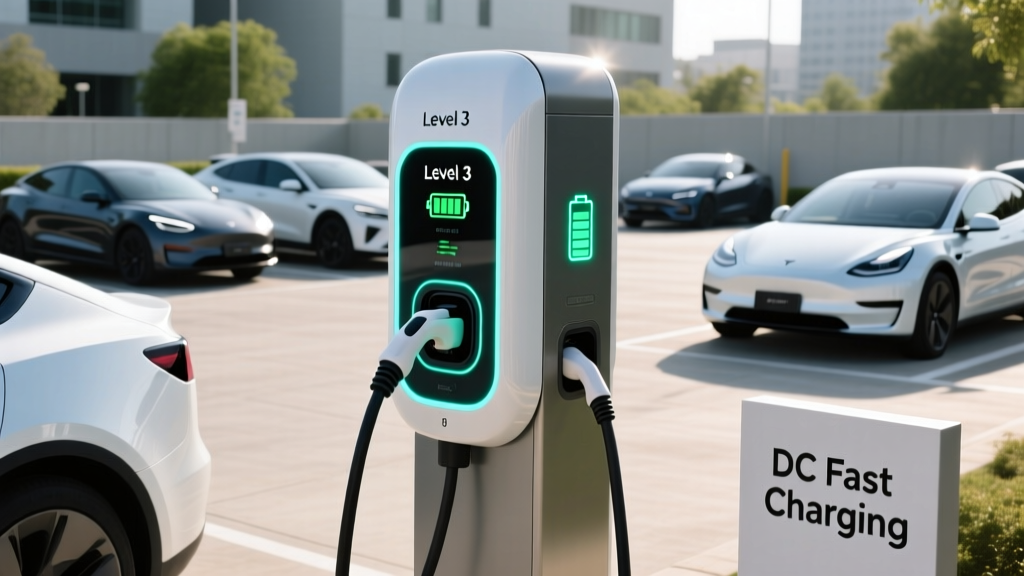
| DC Fast Charging | 50-350 kW | 150-1,000+ miles/hour | Road trips, rapid top-ups |
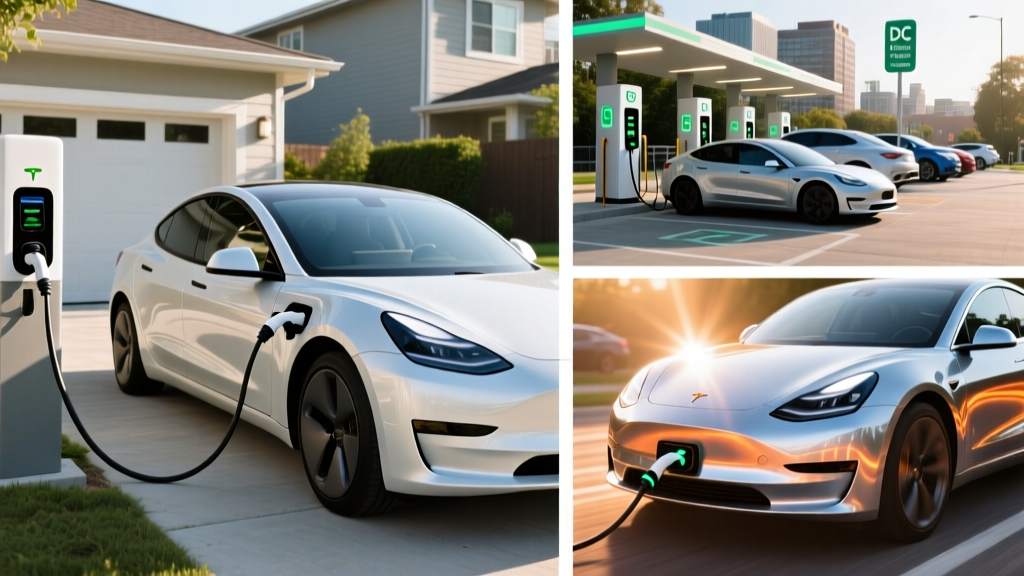
For the Tesla Model S with its 100 kWh pack, Level 1 charging is impractical for anything beyond maintaining charge — adding 402 miles would take roughly 67-100 hours. Level 2 at 11.5 kW (the Model S onboard charger limit) replenishes the full battery in about 9 hours, making overnight charging practical. DC fast charging at Tesla Superchargers (up to 250 kW for Model S) can add 200 miles in roughly 15 minutes under ideal conditions.
Understanding the Charge Curve
DC fast charging doesn't maintain peak speed throughout the session. The Model S peaks at 250 kW only at low state of charge (typically 10-30%), then progressively tapers to protect battery health. By 80% SoC, charge rate drops to roughly 70-90 kW. This is why 10-80% charge times are the industry standard — charging from 80-100% can take as long as 10-80% due to the taper. For road trips, plan to charge to 80% and move on rather than waiting for a full charge.
Home Charger Installation: Electrical Requirements and Costs
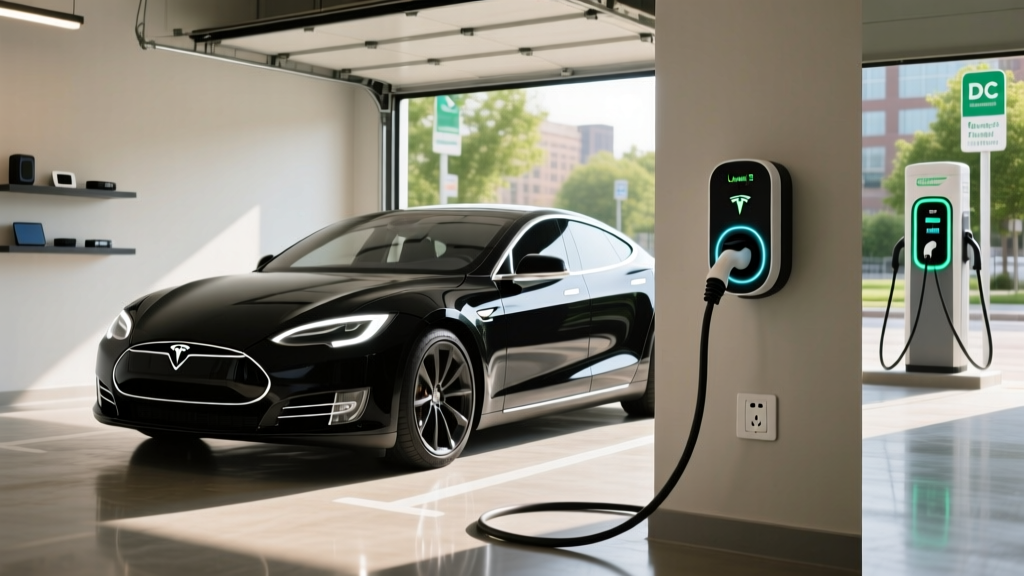
Installing a Level 2 home charger is the single most impactful upgrade for EV ownership convenience. For a Tesla Model S, you'll want a 240V circuit with sufficient amperage to match the vehicle's 11.5 kW onboard charger (48 amps draw).
Electrical Specifications
The National Electrical Code requires circuits rated for 125% of continuous load. For a 48-amp EV charger, you need a 60-amp breaker and appropriate wire gauge (typically 6 AWG copper for runs under 50 feet). Your electrical panel must have sufficient capacity — most modern homes have 200-amp service, which usually accommodates EV charging. Older homes with 100-amp service may require a panel upgrade.
| Component | Cost Range | Notes |
|---|---|---|
| Level 2 Charger (hardware) | $400-$750 | Tesla Wall Connector, ChargePoint, Emporia |
| Electrician labor | $500-$2,000 | Depends on panel proximity, wall type |
| Electrical permit | $50-$200 | Varies by municipality |
| Panel upgrade (if needed) | $1,500-$3,500 | 100A to 200A service upgrade |
| Total (no panel upgrade) | $950-$2,950 | Typical installation |
| Total (with panel upgrade) | $2,450-$6,450 | Older homes |
According to the U.S. Department of Energy, most homeowners spend $1,000-$2,500 for a standard Level 2 installation without panel upgrades. Factor in the Residential Clean Energy Credit, which covers 30% of charger installation costs (up to $1,000 annually) through 2032 — effectively reducing your out-of-pocket by several hundred dollars.
When You Need a Panel Upgrade
Homes built before 1980 often have 100-amp electrical service. Adding a 60-amp EV circuit may exceed safe capacity, especially if you're running electric heat, an electric oven, and a dryer simultaneously. An electrician will perform a load calculation to determine if your panel can handle the additional draw. If an upgrade is necessary, budget $1,500-$3,500 for a 200-amp panel replacement.
Connector Compatibility: NACS, CCS, and Adapters
Tesla vehicles use the North American Charging Standard (NACS) connector, which Tesla opened to other manufacturers in late 2022. As of 2025-2026, most new EVs from Ford, GM, Rivian, and others have adopted NACS, making Tesla's Supercharger network the de facto standard in North America.
| Connector Type | Vehicles Using It | Availability |
|---|---|---|
| NACS (Tesla) | Tesla (all), Ford, GM, Rivian, Volvo, others (2025+) | Tesla Superchargers, growing third-party networks |
| CCS1 | Hyundai, Kia, BMW, VW, legacy non-Tesla EVs | Electrify America, EVgo, ChargePoint |
| CHAdeMO | Nissan Leaf (legacy) | Limited and declining |
If you own a Tesla Model S, you can charge at any NACS-equipped station without adapters. For CCS stations (Electrify America, many ChargePoint locations), Tesla sells a CCS adapter for approximately $250, though availability varies. Most Tesla owners rely on the Supercharger network, which offers the most reliable DC fast charging experience with automatic authentication and billing.
Cost to Charge: Electricity vs. Gasoline Per Mile
One of the strongest economic arguments for EV ownership is lower fueling costs, but the savings depend heavily on where and when you charge.
| Charging Scenario | Cost per kWh | Cost for 402-Mile Charge | Cost Per Mile |
|---|---|---|---|
| Home (off-peak utility rate) | $0.12-$0.15 | $12-$15 | $0.030-$0.037 |
| Home (standard rate) | $0.18-$0.25 | $18-$25 | $0.045-$0.062 |
| Public Level 2 | $0.25-$0.40 | $25-$40 | $0.062-$0.100 |
| Tesla Supercharger | $0.28-$0.45 | $28-$45 | $0.070-$0.112 |
| Gasoline (30 MPG, $3.50/gal) | N/A | $47 | $0.117 |
For a Tesla Model S achieving roughly 3.0-3.5 miles per kWh (the EPA rates it at 120-124 MPGe combined), home charging at off-peak rates delivers fuel costs around $0.03-$0.04 per mile — roughly one-quarter the cost of gasoline at $3.50/gallon for a 30 MPG vehicle. Even public DC fast charging at $0.35-$0.45/kWh remains cost-competitive with gasoline in most markets.
However, if you lack home charging access and rely exclusively on public DC fast charging at $0.40+/kWh, your cost advantage narrows significantly. This is why home charging installation is critical for maximizing EV economics.
Recommended Level 2 Chargers for Tesla Model S
The Model S accepts up to 11.5 kW (48 amps) on Level 2, so you'll want a charger that can deliver at least that much power. Here are proven options as of 2026:
Tesla Wall Connector
Power: Up to 11.5 kW (48A)
Cable Length: 24 feet
Smart Features: Wi-Fi, power sharing (multiple units), Tesla app integration
Price: $475
Verdict: Seamless Tesla integration, native NACS connector, load sharing for multi-EV households
Emporia Vue Level 2 Charger
Power: Up to 11.5 kW (48A)
Cable Length: 24 feet
Smart Features: Energy monitoring, solar integration, scheduling, NACS connector included
Price: $399
Verdict: Best value for solar-equipped homes, detailed energy tracking
ChargePoint Home Flex
Power: Up to 12 kW (50A) — adjustable
Cable Length: 23 feet
Smart Features: Alexa integration, scheduling, charging reports, NACS adapter available
Price: $699
Verdict: Flexible amperage settings, robust app, good for mixed EV households
For Tesla-only households, the Wall Connector offers the cleanest experience. If you have solar panels or want granular energy monitoring, the Emporia Vue provides exceptional value. The ChargePoint Home Flex is ideal if you anticipate owning non-Tesla EVs in the future.
Safety and Code Requirements
EV charger installation must comply with the National Electrical Code (NEC Article 625) and local building codes. Key requirements include:
- Dedicated Circuit: Your EV charger must have its own breaker — no sharing with other appliances
- GFCI Protection: Required for outdoor installations and some jurisdictions for indoor (NEC 2020+)
- Outdoor Rating: If installing outdoors, use a NEMA 4-rated (weatherproof) enclosure and outdoor-rated cable
- Proper Wire Gauge: 6 AWG copper for 60-amp circuits (consult electrician for longer runs)
- Permit and Inspection: Required in most municipalities — skipping this can void home insurance
According to NHTSA and electrical safety organizations, properly installed EV chargers pose minimal risk. However, DIY installation or unpermitted work can create fire hazards and liability issues. Always use a licensed electrician and obtain required permits.
Frequently Asked Questions
How much does it cost to install a home EV charger?
A typical Level 2 home charger installation costs $950-$2,950 including equipment, electrician labor, and permits. If your home needs an electrical panel upgrade (common in pre-1980 homes), total costs range from $2,450-$6,450. The federal Residential Clean Energy Credit covers 30% of installation costs up to $1,000, reducing your effective expense.
How fast will each charging level add range to my Tesla Model S?
Level 1 (120V) adds 4-6 miles per hour — impractical for full charges. Level 2 (240V at 48A) adds approximately 35-40 miles per hour, fully charging the 402-mile Model S in about 9 hours. DC fast charging at 250 kW (Tesla Supercharger) can add 200 miles in 15 minutes, though charge rate tapers above 80% state of charge.
Which connector and charger are compatible with my Tesla?
Tesla vehicles use the NACS connector natively and can charge at any Tesla Supercharger or third-party NACS station without adapters. For CCS stations, Tesla offers a CCS adapter (~$250). For home charging, any Level 2 charger with a NACS connector or J1772 connector (with Tesla's included adapter) will work.
How much does charging cost per mile compared to gas?
Home charging at off-peak rates ($0.12-$0.15/kWh) costs $0.03-$0.04 per mile for a Tesla Model S. Gasoline at $3.50/gallon in a 30 MPG vehicle costs $0.12 per mile. Even public DC fast charging at $0.35-$0.45/kWh ($0.07-$0.11 per mile) remains competitive with gasoline.
What electrical upgrades might I need for a home charger?
You need a 240V circuit with a 60-amp breaker and 6 AWG wire for a 48-amp charger. If your home has 100-amp electrical service (common in homes built before 1980), you may need a panel upgrade to 200 amps, costing $1,500-$3,500. An electrician will perform a load calculation to determine if your panel can handle the additional draw.
Can I charge my Tesla Model S faster than 11.5 kW at home?
No. The Model S onboard charger is limited to 11.5 kW (48 amps) on AC power. Even if you install a more powerful charger, the vehicle will only draw 11.5 kW. DC fast charging bypasses the onboard charger and can deliver up to 250 kW, but this requires commercial-grade equipment not available for residential installation.