The Tesla Model S remains one of the most capable long-range electric sedans on the road. For 2026, the Long Range variant carries an EPA-estimated 402 miles of range, while the tri-motor Plaid delivers 396 miles. But those EPA numbers are only the starting point. How you charge—what equipment you use, when you plug in, and how you configure your home electrical system—determines whether you actually experience that range day to day or watch it erode through inefficient charging habits and cold-weather losses.
This guide covers everything a Model S owner (or prospective buyer) needs to know about charging infrastructure: from Level 1 trickle charging to DC fast charging on road trips, home Level 2 installation realities, connector compatibility in the NACS era, and the exact cost per mile compared to gasoline.
Understanding Model S Range: EPA vs. Real World
| Trim | EPA Range | Real-World Highway (70 mph) | Cold Weather (20°F) |
|---|---|---|---|
| Model S Long Range (AWD) | 402 mi | ~330–350 mi | ~280–310 mi |
| Model S Plaid (Tri-Motor AWD) | 396 mi | ~320–340 mi | ~270–300 mi |
Source: fueleconomy.gov. Real-world estimates based on highway-speed driving, minimal preconditioning, and cold-climate testing data. Actual results vary with terrain, HVAC use, and driving style.
The Model S Long Range uses a ~100 kWh battery pack (NMC chemistry), delivering roughly 131 MPGe combined. The Plaid's tri-motor setup and higher performance tuning reduce efficiency slightly to about 130 MPGe combined. At highway speeds above 70 mph, aerodynamic drag increases significantly—expect a 15–20% range reduction versus the EPA sticker. In sub-freezing temperatures without preconditioning, battery chemistry limitations and cabin heating can cut range by 20–30%.
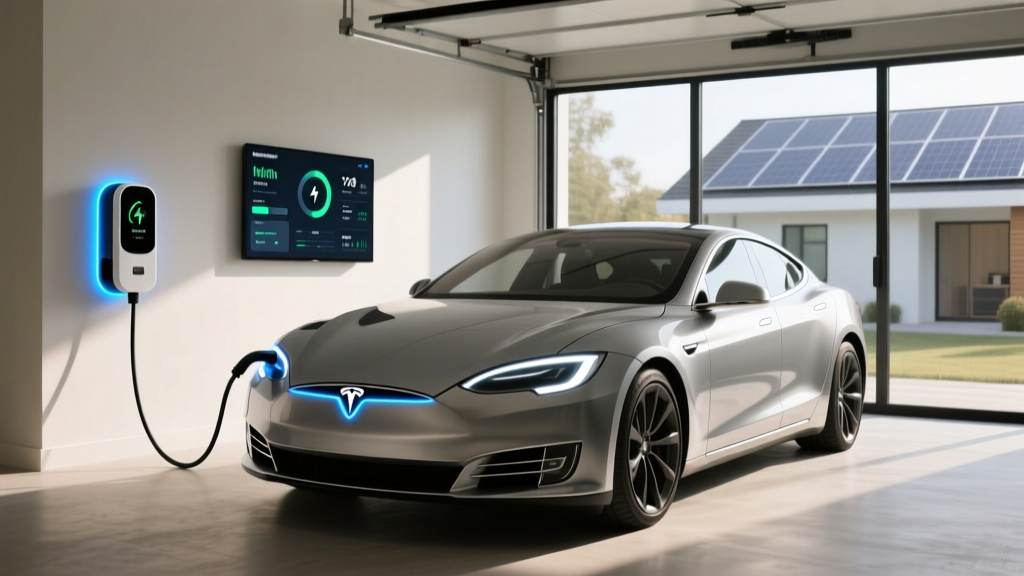
The key to preserving usable range is consistent, efficient home charging on a Level 2 circuit. Topping up each night between 20–80% state of charge (SoC) keeps the battery in its healthiest zone and ensures you start each morning with maximum available range.
Charging Levels Explained: Speeds and Range Added
Before we discuss specific equipment, let's clarify the most important distinction in EV charging: kW (kilowatts) measures power—how fast energy flows into your car. kWh (kilowatt-hours) measures energy—the total capacity of your battery. Think of kW as the width of a hose and kWh as the size of the bucket.
| Level | Voltage | Max Power (kW) | Miles of Range Added per Hour | Best Use Case |
|---|---|---|---|---|
| Level 1 | 120V AC | 1.4 kW | ~3–5 mi/hr | Overnight trickle, emergencies |
| Level 2 | 240V AC | 7.2–19.2 kW | ~22–60 mi/hr | Daily home charging |
| DC Fast Charge | 400V DC | Up to 250 kW (Model S) | ~200+ mi in 15 min | Road trips, rapid top-ups |
For a Model S with its ~100 kWh battery, Level 1 charging at 1.4 kW would take roughly 70+ hours from empty to full—impractical for daily use. Level 2 at 11.5 kW (48A on a 60A circuit) replenishes about 35–40 miles of range per hour, fully charging overnight in roughly 9–10 hours. At a Tesla V3 Supercharger (250 kW peak), the Model S can add up to 200 miles in about 15 minutes, though charge speed tapers significantly above 80% SoC to protect battery health.
Home Charger Installation: Costs, Electrical Requirements, and Panel Upgrades
Installing a dedicated Level 2 home charger is the single highest-impact upgrade any Model S owner can make. Here's what's involved electrically and financially.
Electrical Requirements
The Tesla Wall Connector supports up to 48 amps of continuous draw, which requires a dedicated 60-amp circuit breaker on a 240V line (NEMA 14-60 or hardwired). If you opt for a 40-amp circuit, you'll get up to 32 amps continuous—still sufficient for ~25–30 miles of range per hour.
- Ideal setup: 240V / 60A dedicated circuit → 48A continuous → 11.5 kW max
- Minimum practical: 240V / 40A dedicated circuit → 32A continuous → 7.7 kW
- Panel capacity check: Your home's main panel must have enough spare amperage (typically 200A total service for modern homes) to support the new circuit without overloading
Installation Cost Breakdown
| Component | Cost Range | Notes |
|---|---|---|
| Level 2 Charger (Equipment) | $400–$750 | Tesla Wall Connector, ChargePoint, Emporia |
| Electrician Labor (standard install) | $500–$1,500 | Depends on panel proximity, conduit run length |
| Electrical Permit | $50–$200 | Varies by municipality |
| Panel Upgrade (if needed) | $1,500–$3,500 | 100A → 200A service; common in older homes |
| Total (no panel upgrade) | $950–$2,450 | Most typical scenario |
| Total (with panel upgrade) | $2,450–$5,950 | Older homes with 100A service |
The most common surprise for homeowners is discovering they need a panel upgrade. Homes built before the 1990s often have 100-amp main panels that simply cannot accommodate a 60A EV circuit alongside existing loads. A licensed electrician will perform a load calculation per NEC Article 220 to determine if an upgrade is required. Don't skip this step—an overloaded panel is a fire hazard.
Safety and Code Considerations
- Dedicated circuit: Your Level 2 charger must be on its own breaker—never share with other appliances
- GFCI protection: NEC 2020 and later requires GFCI protection for outdoor receptacles used for EV charging; hardwired installations may also require it depending on jurisdiction
- Outdoor rating: If your charger is mounted outside (garage exterior, driveway), ensure it carries a NEMA 4 or IP65 weather-resistance rating
- Cable management: Use a holster or retractor to prevent cable damage and tripping hazards
- Permit and inspection: Most jurisdictions require a permit and final inspection—this protects your homeowner's insurance coverage
Connector Compatibility: NACS, CCS, and Adapter Needs
As of 2026, the North American Charging Standard (NACS)—originally developed by Tesla—is the dominant connector for new EVs. The Model S ships with a native NACS charge port, meaning it plugs directly into Tesla Superchargers and the growing number of third-party NACS stations without any adapter.
| Connector | Compatibility with Model S | Adapter Needed? |
|---|---|---|
| NACS (Tesla) | Native—direct plug | No |
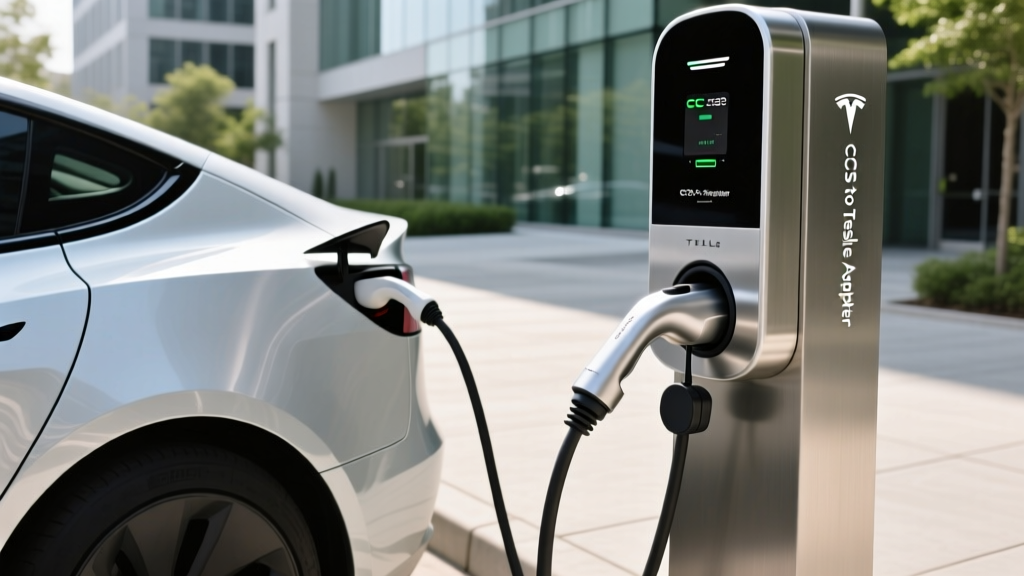
| CCS1 | Compatible via adapter | Yes—Tesla CCS adapter (~$250) or included with newer deliveries |
| CHAdeMO | Compatible via adapter | Yes—Tesla CHAdeMO adapter (legacy, being phased out) |
| J1772 (Level 2 public) | Compatible via adapter | Yes—Tesla J1772 adapter (typically included with vehicle) |
For home charging, the Tesla Wall Connector uses a native NACS plug. If you purchase a third-party charger like the ChargePoint Home Flex or Emporia Vue, it will likely ship with a J1772 connector—you'll need Tesla's J1772-to-NACS adapter (included with most Model S deliveries) to connect. Alternatively, some manufacturers now offer NACS-terminated cables as an option.
On road trips, the CCS adapter matters most for accessing Electrify America and other non-Tesla DC fast-charging networks. Tesla's Supercharger network remains the most reliable, but CCS coverage fills gaps in rural corridors.
Recommended Home Chargers for the Model S
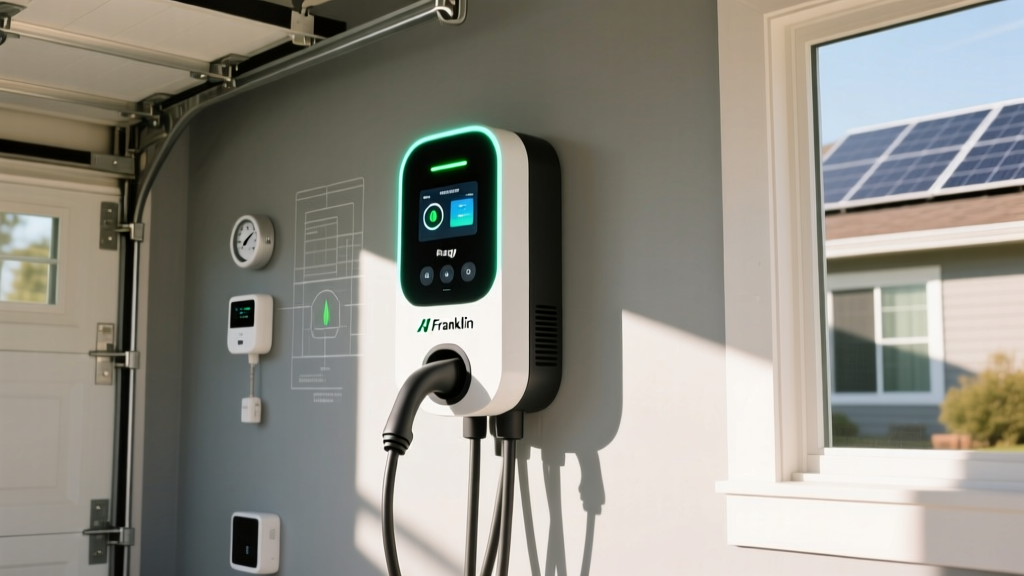
Tesla Wall Connector (Gen 4)
- Power Output: Up to 11.5 kW (48A on 60A circuit)
- Connector: Native NACS
- Cable Length: 24 ft
- Smart Features: Wi-Fi, OTA updates, power sharing with second unit, Tesla app integration, load management
- Price: ~$475
- Verdict: The default choice for Model S owners—seamless integration, excellent power output, and Tesla's power-sharing feature lets you install two units on a single circuit if you add a second EV.
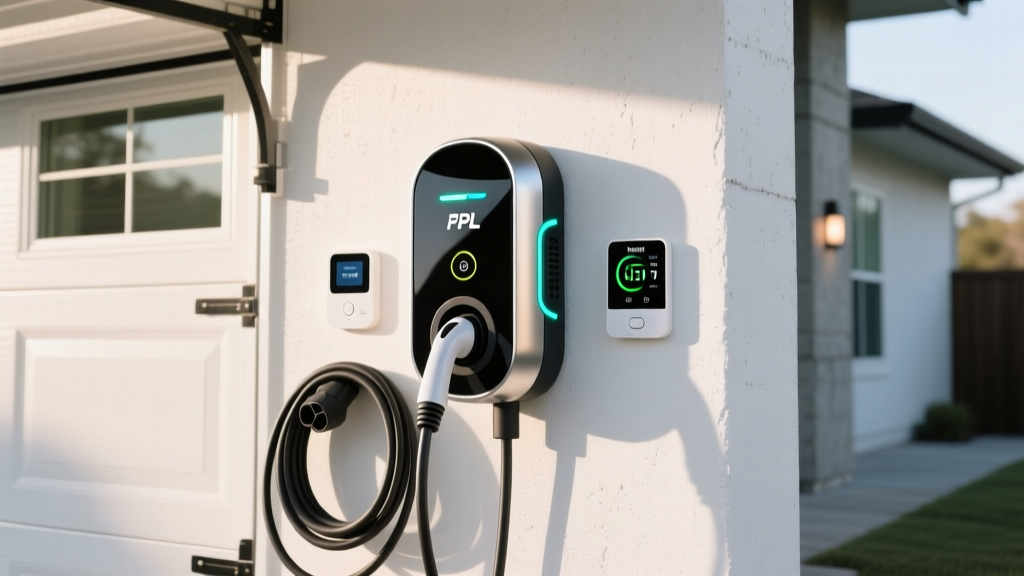
ChargePoint Home Flex
- Power Output: Up to 12 kW (50A on 60A circuit, configurable down to 16A)
- Connector: J1772 (NACS adapter required for Model S)
- Cable Length: 23 ft
- Smart Features: Wi-Fi, ChargePoint app, Alexa integration, scheduling, energy tracking
- Price: ~$649
- Verdict: Excellent flexibility with adjustable amperage (useful for older panels), robust app, and works with any EV—ideal for multi-EV households with mixed brands.
Emporia Level 2 EV Charger
- Power Output: Up to 11.5 kW (48A on 60A circuit)
- Connector: J1772 (NACS adapter required)
- Cable Length: 24 ft
- Smart Features: Wi-Fi, Emporia app, energy monitoring, solar integration, scheduling
- Price: ~$399
- Verdict: Best value pick—nearly identical power to the Tesla Wall Connector at a lower price. The solar integration feature is ideal for homes with rooftop panels.
For pure convenience with a Model S, the Tesla Wall Connector wins on seamless integration. If you own or plan to own non-Tesla EVs, the ChargePoint Home Flex's universal compatibility and adjustable amperage make it the more future-proof choice.
Charging Cost: Per-Mile Breakdown vs. Gasoline
One of the strongest financial arguments for the Model S is the per-mile energy cost. Let's compare realistic scenarios:
| Charging Scenario | Cost per kWh | Cost to Add 300 mi (Model S ~100 kWh usable) | Cost per Mile |
|---|---|---|---|
| Home (off-peak utility rate) | $0.11/kWh | ~$11.00 | $0.037/mi |
| Home (average US rate) | $0.17/kWh | ~$17.00 | $0.057/mi |
| Tesla Supercharger (average) | $0.30/kWh | ~$30.00 | $0.10/mi |
| Electrify America / Public DCFC | $0.43/kWh | ~$43.00 | $0.143/mi |
| Gasoline equivalent (30 MPG, $3.40/gal) | — | ~$34.00 | $0.113/mi |
At off-peak home rates, the Model S costs roughly $0.04 per mile—less than half the cost of a 30 MPG gasoline car at current fuel prices. Even at Tesla Supercharger rates, the per-mile cost is competitive with gas. The savings compound: driving 12,000 miles per year at home rates saves approximately $900–$1,100 annually versus gasoline.
However, if you rely exclusively on public DC fast charging (no home access), your per-mile cost can exceed gasoline in some markets. This is why home Level 2 installation is the critical economic decision for EV ownership.
DC Fast Charging on Road Trips: What to Expect
The Model S supports up to 250 kW peak DC fast charging on Tesla V3/V4 Superchargers. In practice, you'll see peak speeds between 10–30% SoC, after which the charge curve tapers to protect the battery.
Typical 10–80% charging time: approximately 25–30 minutes at a V3 Supercharger (250 kW peak). Expect to add roughly 200 miles in 15 minutes under optimal conditions (battery preconditioned, moderate ambient temperature, low starting SoC).
Preconditioning is essential. The Model S automatically warms the battery when you navigate to a Supercharger in the navigation system, enabling faster charge acceptance. Without preconditioning—especially in cold weather—your peak charge rate may be limited to 100–150 kW, adding 10–15 minutes to your stop.
The Model S also accesses non-Tesla DC fast chargers via the CCS adapter. Electrify America stations typically peak at 150–350 kW, but the Model S's charge architecture limits it to roughly 150 kW on CCS-equipped stations—slower than on native Superchargers.
Frequently Asked Questions
How much does it cost to install a home EV charger for a Tesla Model S?
A standard Level 2 installation with a 60A circuit runs $950–$2,450 total (equipment + electrician + permit). If your home requires an electrical panel upgrade from 100A to 200A service, add $1,500–$3,500. Always get a load calculation from a licensed electrician before committing.
How fast will each charging level add range to my Model S?
Level 1 (120V) adds 3–5 miles per hour. Level 2 (240V, 48A) adds 35–40 miles per hour—enough for a full overnight charge. DC fast charging at 250 kW adds up to 200 miles in 15 minutes during road trips.
Which connector and charger is compatible with the Model S?
The Model S uses a native NACS connector. The Tesla Wall Connector plugs in directly. For J1772 chargers (like ChargePoint Home Flex), use the included Tesla J1772 adapter. For non-Tesla DC fast chargers, you'll need a CCS adapter.
How much does charging a Model S cost per mile vs. gasoline?
Home charging at off-peak rates costs about $0.04/mile. Gasoline at 30 MPG and $3.40/gallon costs about $0.11/mile. Home-charged Model S owners save roughly $900–$1,100 per year at 12,000 miles driven.
What electrical upgrades might I need for a home charger?
If your home has a 200A main panel with available capacity, you likely need only a new 60A breaker and conduit run. Homes with 100A panels (common in pre-1990 construction) typically require a full panel upgrade to 200A, costing $1,500–$3,500.
Should I charge my Model S to 100% every night?
No. The Model S uses NMC battery chemistry, which degrades faster when held at extreme SoC levels. Tesla recommends setting your daily charge limit to 80% and only charging to 100% before long road trips. This practice significantly extends long-term battery health.