If you own or are considering a used 2021 Tesla Model S Plaid, understanding how to charge it efficiently is just as important as knowing its EPA range rating. The Plaid's tri-motor powertrain produces 1,020 horsepower and can deplete its battery quickly under hard driving — making a solid home charging setup and knowledge of public fast-charging networks essential. This guide covers everything from the real-world range you can expect to the exact cost of installing a Level 2 charger in your garage.
2021 Tesla Model S Plaid: EPA Range vs. Real-World Expectations
The 2021 Tesla Model S Plaid (with 19-inch wheels) carries an EPA-estimated range of 396 miles on a full charge, powered by a roughly 100 kWh battery pack (approximately 95 kWh usable). However, real-world range varies significantly based on driving style, temperature, and terrain.
EPA Estimate: 396 miles (19" wheels) / 348 miles (21" Arachnid wheels)
Highway (70 mph, moderate climate): ~310–340 miles
Cold weather (below 32°F, highway): ~250–290 miles
Aggressive/track driving: Range drops dramatically — expect 150–200 miles under sustained Plaid-mode use
Source: fueleconomy.gov
The Plaid's efficiency is rated at approximately 120 MPGe combined (roughly 28 kWh/100mi). That's slightly less efficient than the Long Range variant due to the tri-motor setup and performance-oriented tuning. When planning charging stops or sizing your home charger, use the real-world figures above — not the EPA sticker.
Charging Levels Explained: How Fast Each Adds Range to the Model S Plaid
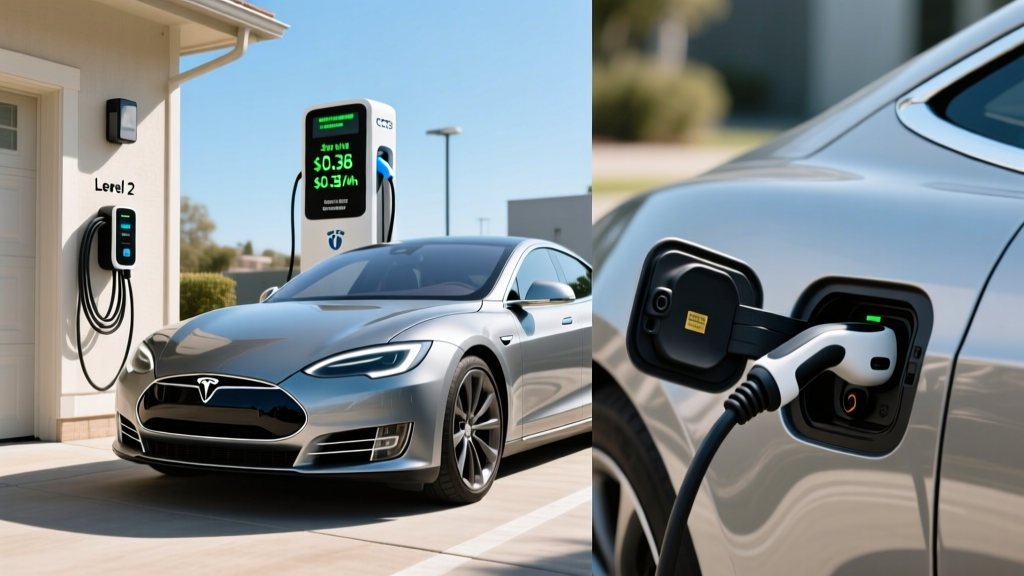
EV charging is measured in kW (kilowatts), which represents power — the rate at which energy flows into your battery. Your battery's capacity is measured in kWh (kilowatt-hours), which represents total energy stored. Think of kW as the flow rate of a hose and kWh as the size of the bucket. Here's how each charging level performs with the Model S Plaid's ~95 kWh usable battery:
| Level | Voltage / Amps | Power (kW) | Miles of Range per Hour | 10–80% Time |
|---|---|---|---|---|
| Level 1 (120V household) | 120V / 12A | ~1.4 kW | ~4–5 mi/hr | ~48+ hours |
| Level 2 (240V home/public) | 240V / 48A | ~11.5 kW | ~34–40 mi/hr | ~6–7 hours |
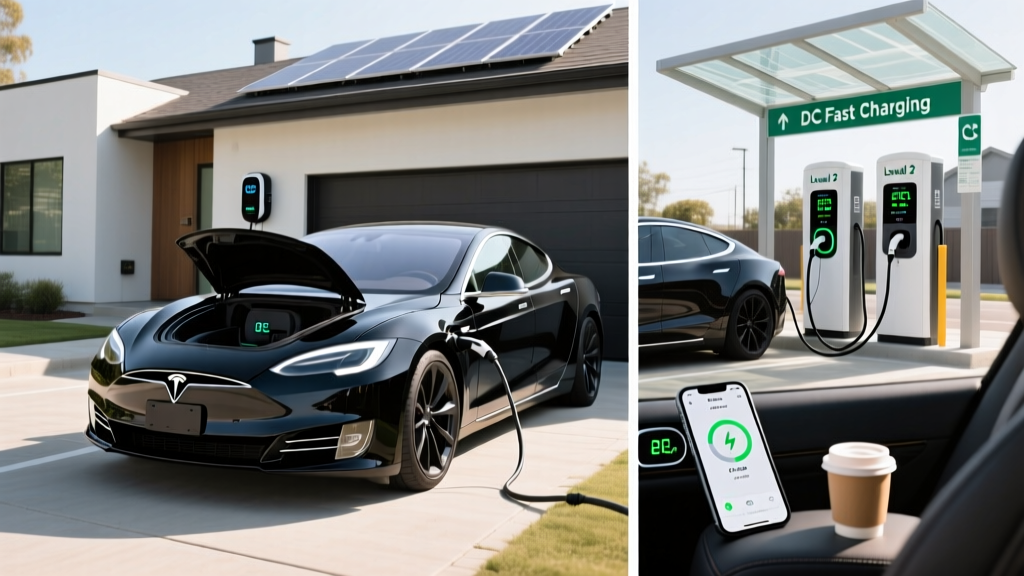
| DC Fast Charging (Supercharger V3) | 400V+ DC | Up to 250 kW peak | ~1,000+ mi/hr (peak) | ~27–32 minutes |
Key insight on DC fast charging: The Model S Plaid peaks at 250 kW on V3 Superchargers, but that peak is only sustained for a portion of the session. The charge curve tapers significantly above 50–60% SoC. Expect roughly 10–80% in about 27–32 minutes with battery preconditioning active. Charging from 80–100% can add another 20+ minutes due to taper — plan your road trips to charge to 80% and move on.
Home Charger Installation: Electrical Requirements, Costs & Panel Upgrades
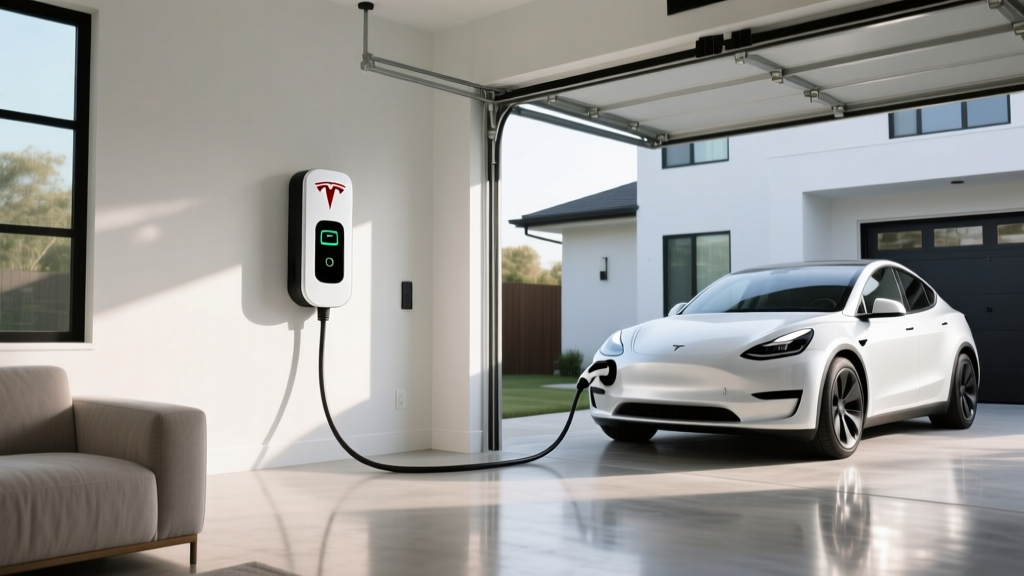
The Tesla Model S Plaid has an onboard charger rated at 11.5 kW (48 amps). To take full advantage, you'll need a 240V circuit rated for at least 60 amps (EV chargers are considered continuous loads, so the circuit must be rated 125% above the charger's max draw — 48A × 1.25 = 60A).
What Electrical Upgrades Might You Need?
Many homes built before 2000 have 100-amp or 150-amp electrical panels. Adding a 60-amp dedicated circuit for EV charging may require:
- Panel upgrade to 200A: Needed if your existing panel lacks capacity or open breaker slots. Cost: $1,500–$3,500.
- Dedicated 60A breaker and 6/2 or 4/2 NM-B cable run: Standard for new installs with sufficient panel capacity.
- Permit and inspection: Required by most jurisdictions. A licensed electrician will pull this for you.
- GFCI protection: NEC 2020+ requires GFCI protection for EV charging outlets (though hardwired chargers often have built-in ground-fault protection).
| Component | Simple Install (panel has room) | Complex Install (panel upgrade needed) |
|---|---|---|
| Level 2 Charger (Equipment) | $400–$700 | $400–$700 |
| Electrician Labor | $500–$1,200 | $1,000–$2,500 |
| Electrical Panel Upgrade | $0 (not needed) | $1,500–$3,500 |
| Permit & Inspection | $100–$300 | $150–$400 |
| Total Estimated Cost | $1,000–$2,200 | $3,050–$7,100 |
Pro tip: Request quotes from at least three licensed electricians. Ask specifically whether your panel has sufficient spare capacity for a 60A breaker. Some utility companies offer rebates of $250–$500 for home EV charger installation — check with your local provider.
Connector Compatibility: NACS, CCS, and Adapters for the Model S Plaid
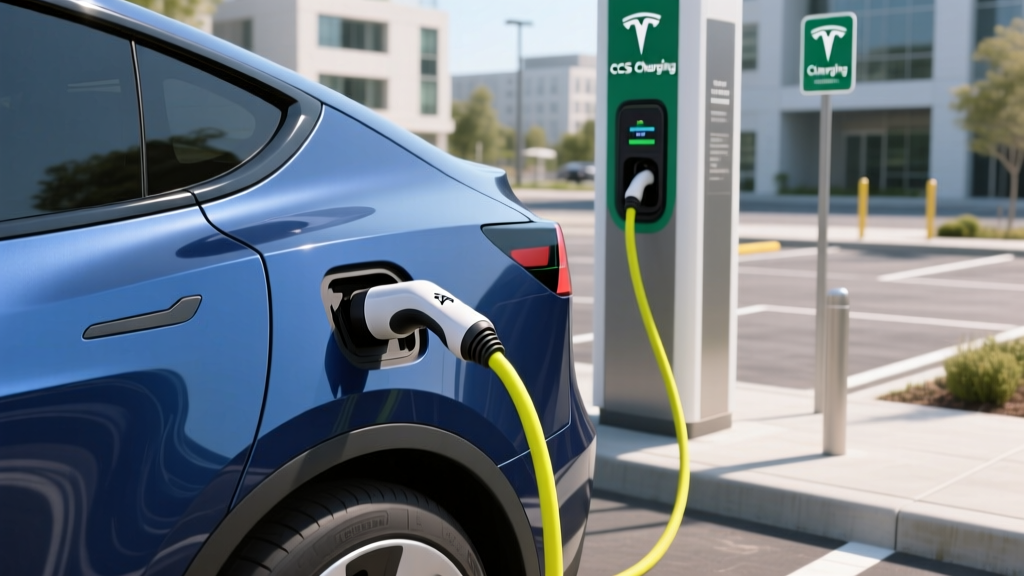
The 2021 Tesla Model S Plaid uses the Tesla proprietary connector (now formally designated as NACS — North American Charging Standard) for both Level 2 AC and DC fast charging. This gives you native access to the entire Tesla Supercharger network — currently the most reliable and extensive DC fast-charging network in North America.
| Connector Type | Native Support? | Adapter Needed? | Notes |
|---|---|---|---|
| NACS (Tesla) | ✅ Yes — native | No | Superchargers, Tesla Wall Connector, Tesla Destination Chargers |
| CCS1 | ❌ No | Yes — Tesla CCS Adapter (~$175) | Electrify America, EVgo, ChargePoint DC stations |
| CHAdeMO | ❌ No | Yes — third-party adapter (~$300–$450) | Declining network; rarely needed in 2026 |
| J1772 (public Level 2) | ❌ No | Yes — Tesla J1772 Adapter (included with car) | Hotels, workplaces, public Level 2 stations |
Since the 2021 Model S Plaid predates the industry-wide NACS adoption (which began in 2024–2025), you already have the connector that other brands are now switching to. Your main adapter need is the Tesla CCS Adapter if you plan to use Electrify America or other non-Tesla DC fast-charging networks. Purchase it directly from Tesla's shop or through the car's infotainment system.
Cost to Charge: Model S Plaid Per-Mile Cost vs. Gasoline
Charging cost depends on your electricity rate, which varies widely. The Model S Plaid consumes approximately 28 kWh per 100 miles under mixed driving. Here's what that translates to in real dollars:
| Scenario | Rate ($/kWh) | Cost per 100 mi | Cost per Mile |
|---|---|---|---|
| Home (off-peak utility rate) | $0.12 | $3.36 | $0.034 |
| Home (average US rate) | $0.17 | $4.76 | $0.048 |
| Tesla Supercharger (avg 2026) | $0.32 | $8.96 | $0.090 |
| Electrify America (peak) | $0.48 | $13.44 | $0.134 |
| Gas equivalent (BMW M5, 16 MPG, $3.60/gal) | — | $22.50 | $0.225 |
Even at Supercharger rates, the Model S Plaid costs less than half per mile compared to a performance gas sedan like the BMW M5. Home charging on off-peak rates is roughly 85% cheaper per mile than gasoline. Over 15,000 annual miles, home charging saves approximately $2,800–$3,200 per year versus premium gasoline.
Recommended Home Level 2 Chargers for the Model S Plaid
To maximize the Plaid's 11.5 kW onboard charger, you need a Level 2 unit capable of delivering at least 48 amps. Here are top picks for 2026:
Tesla Wall Connector
- Power Output: Up to 11.5 kW (48A)
- Connector: NACS (native Tesla)
- Cable Length: 24 feet
- Smart Features: Wi-Fi, OTA updates, power sharing with second unit, load management
- Price: ~$475
- Best For: Tesla-only households; simplest integration
ChargePoint Home Flex
- Power Output: Up to 12 kW (50A), adjustable down to 16A
- Connector: J1772 (NACS adapter needed for Tesla) or NACS version available
- Cable Length: 23 feet
- Smart Features: Wi-Fi, app scheduling, Alexa integration, amperage configurable via app
- Price: ~$550–$650
- Best For: Multi-EV households or flexible amperage needs
Emporia Vue Level 2 Charger
- Power Output: Up to 11.5 kW (48A)
- Connector: J1772 or NACS
- Cable Length: 24 feet
- Smart Features: Wi-Fi, solar integration, energy monitoring, scheduling
- Price: ~$400–$500
- Best For: Budget-conscious buyers with solar panels
Grizzl-E Smart
- Power Output: Up to 10 kW (40A)
- Connector: J1772 (NACS adapter needed) or NACS
- Cable Length: 24 feet
- Smart Features: OCPP-compatible, app control, outdoor-rated (NEMA 4)
- Price: ~$500–$600
- Best For: Outdoor installs; Canadian-built, extremely durable
Our pick for Model S Plaid owners: The Tesla Wall Connector is the obvious choice if you only own Teslas — it's the least expensive option, requires no adapters, and supports power sharing if you add a second unit later. If you have non-Tesla EVs or anticipate needing flexibility, the ChargePoint Home Flex's adjustable amperage is valuable for homes with limited panel capacity.
Safety, Code & Best Practices for Home EV Charging
Installing a high-amperage EV charger is not a DIY project. Here's what you need to know for a safe, code-compliant installation:
- Dedicated circuit: Your Level 2 charger must be on its own dedicated breaker — never shared with other appliances. For the Model S Plaid's 48A max draw, that means a 60A breaker.
- Hardwired vs. NEMA 14-50 outlet: Hardwired installations eliminate the GFCI breaker requirement (the charger has internal ground-fault protection) and are generally more reliable. A NEMA 14-50 outlet offers portability but requires a GFCI breaker under NEC 2020+, adding $50–$150 to the install.
- Outdoor rating: If your charger is mounted outside, ensure it carries a NEMA 4 (or IP65+) rating for weather resistance.
- Wire gauge: A 60A circuit requires 6 AWG copper wire for runs under 50 feet; longer runs may need 4 AWG to minimize voltage drop.
- Permit and inspection: Most municipalities require an electrical permit for EV charger installation. Your electrician should pull this — avoid anyone who suggests skipping it, as unpermitted work can void home insurance claims.
- Utility notification: Some utilities require notification before adding a large continuous load. Check with your provider; some offer time-of-use (TOU) rate plans that make overnight charging significantly cheaper.
Frequently Asked Questions
How much does it cost to install a home EV charger for a Tesla Model S Plaid?
For a straightforward installation with an adequate electrical panel, expect $1,000–$2,200 total (charger + electrician + permit). If your home needs a panel upgrade from 100A to 200A, costs rise to $3,050–$7,100. Always get multiple quotes from licensed electricians.
How fast will each charging level add range to the Model S Plaid?
Level 1 (120V) adds about 4–5 miles per hour — essentially useless for a 100 kWh battery. Level 2 (240V/48A) adds approximately 34–40 miles per hour, fully replenishing the battery overnight. DC fast charging on a V3 Supercharger peaks at 250 kW, adding up to 200 miles in roughly 15 minutes under ideal conditions.
Which charger connector is compatible with my 2021 Model S Plaid?
Your Plaid uses the NACS (Tesla) connector natively. This works with all Tesla Superchargers, Tesla Wall Connectors, and Tesla Destination Chargers. For CCS stations (Electrify America, EVgo), you'll need Tesla's CCS adapter (~$175). A J1772 adapter is included with the vehicle for public Level 2 stations.
How much does charging cost per mile compared to gas?
Home charging at average US electricity rates costs roughly $0.04–$0.05 per mile. Supercharging averages about $0.09 per mile. A comparable performance gas sedan (like the BMW M5 at ~16 MPG combined) costs approximately $0.22–$0.25 per mile on premium fuel. Home charging saves 75–85% per mile versus gasoline.
What electrical upgrades might I need for a Level 2 charger?
If your home has a 200A panel with open breaker slots, you likely just need a dedicated 60A breaker and wire run. Homes with 100A or 150A panels, or panels that are already near capacity, may require a full panel upgrade ($1,500–$3,500). An electrician can assess your panel's spare capacity during a site visit. Some homes benefit from a load-management device (like the Emporia VUE or Tesla Gateway) that dynamically limits charger draw when other appliances are running — this can avoid a panel upgrade entirely.
Should I precondition my Model S Plaid before DC fast charging?
Yes. Use the Tesla app or navigation to route to a Supercharger — the car will automatically begin preconditioning the battery, warming it to the optimal temperature for fast charging. Without preconditioning (especially in cold weather), peak charge rates can drop from 250 kW to under 100 kW, adding 10–15 minutes to your charging stop.
Sources: EPA / fueleconomy.gov, Tesla Home Charging, IRS §30D Clean Vehicle Credits